INTERNAL MIGRATION
RURAL-URBAN MIGRATON
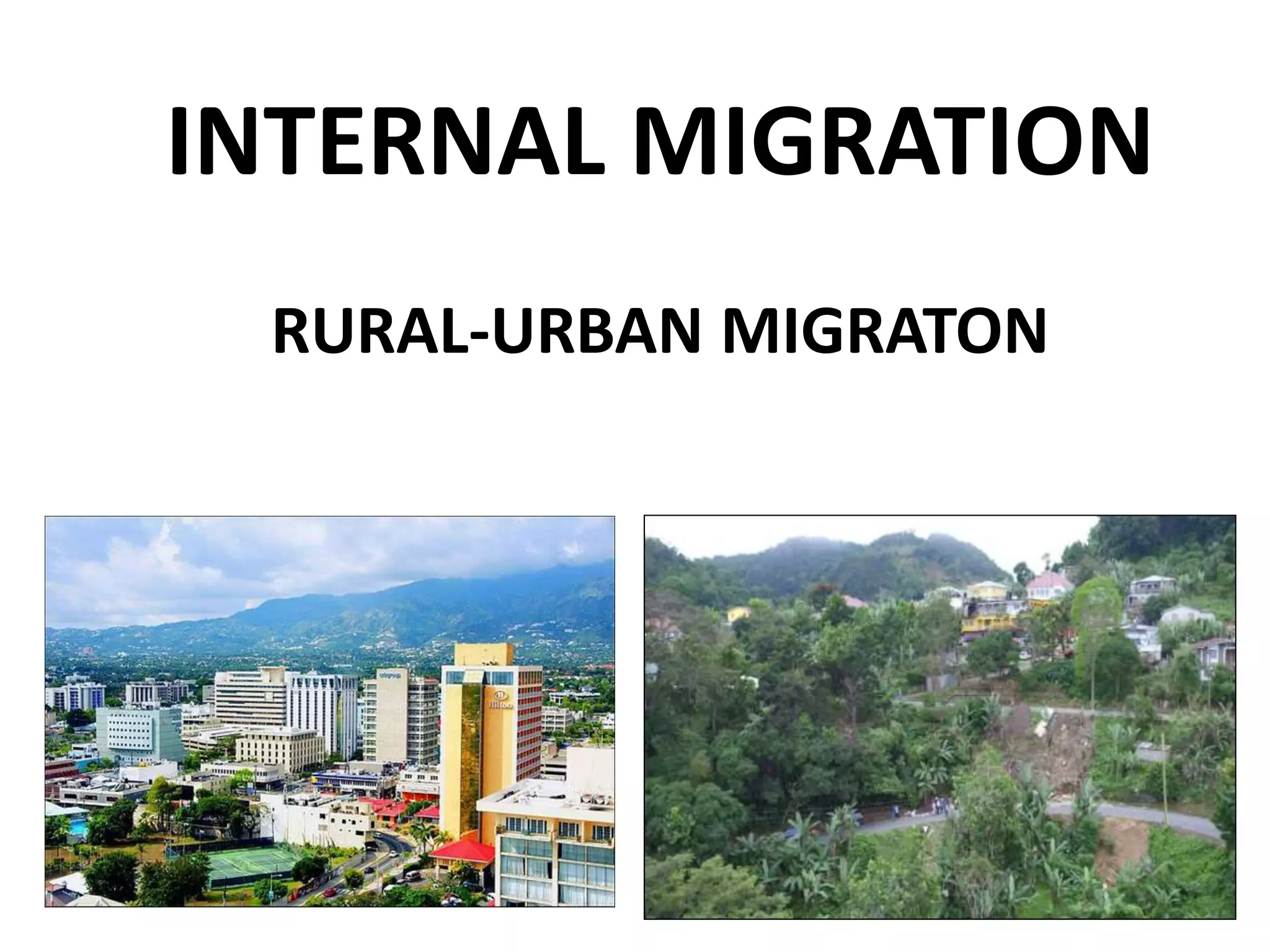
• An urban area is the region surrounding a city.
Urban areas are very developed, meaning there is
a high density of human structures such as houses,
commercial buildings, roads, bridges, and railways.
• "Urban area" can refer to towns, cities, and
suburbs. An urban area includes the city itself, as
well as the surrounding areas.
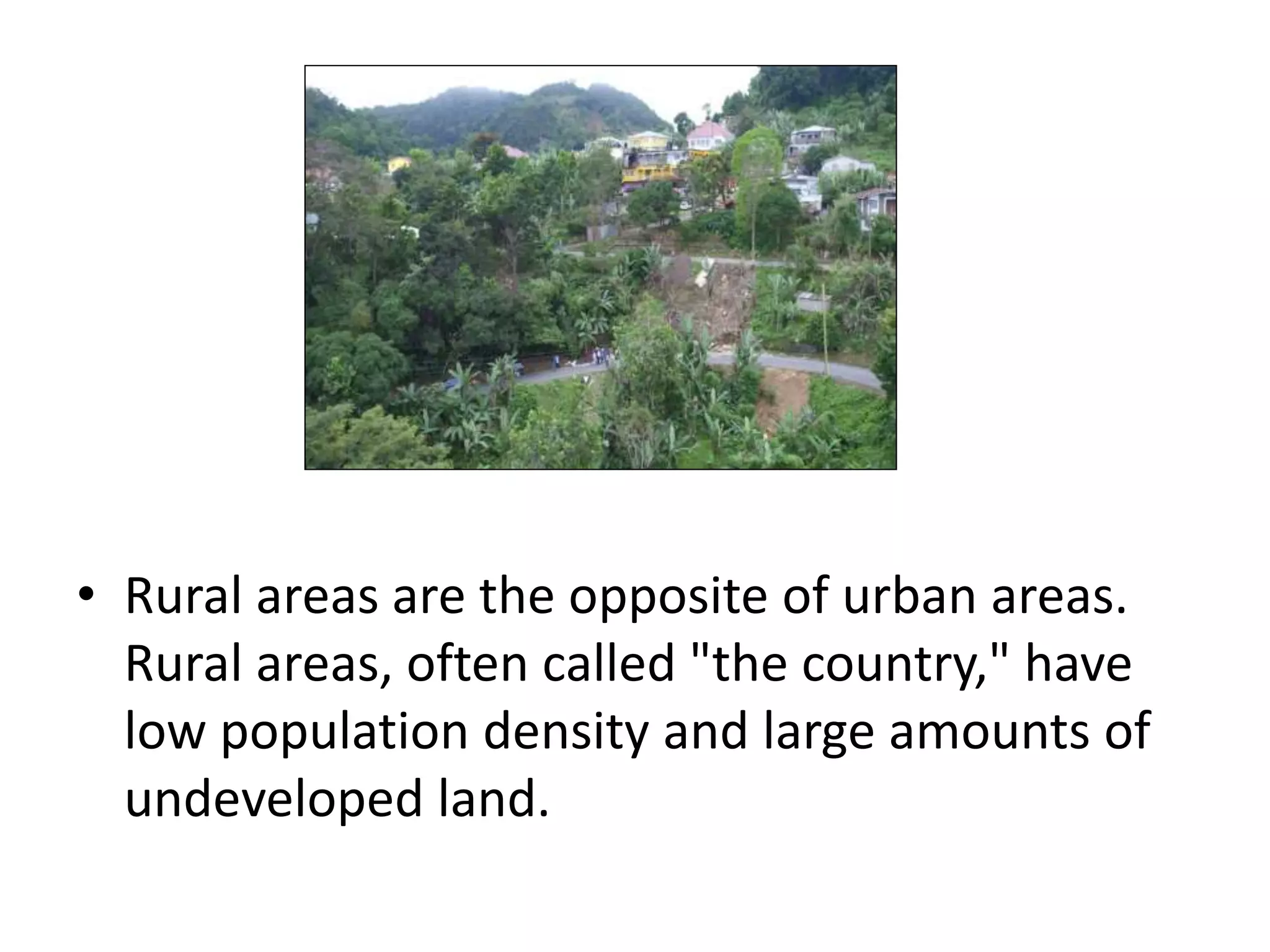
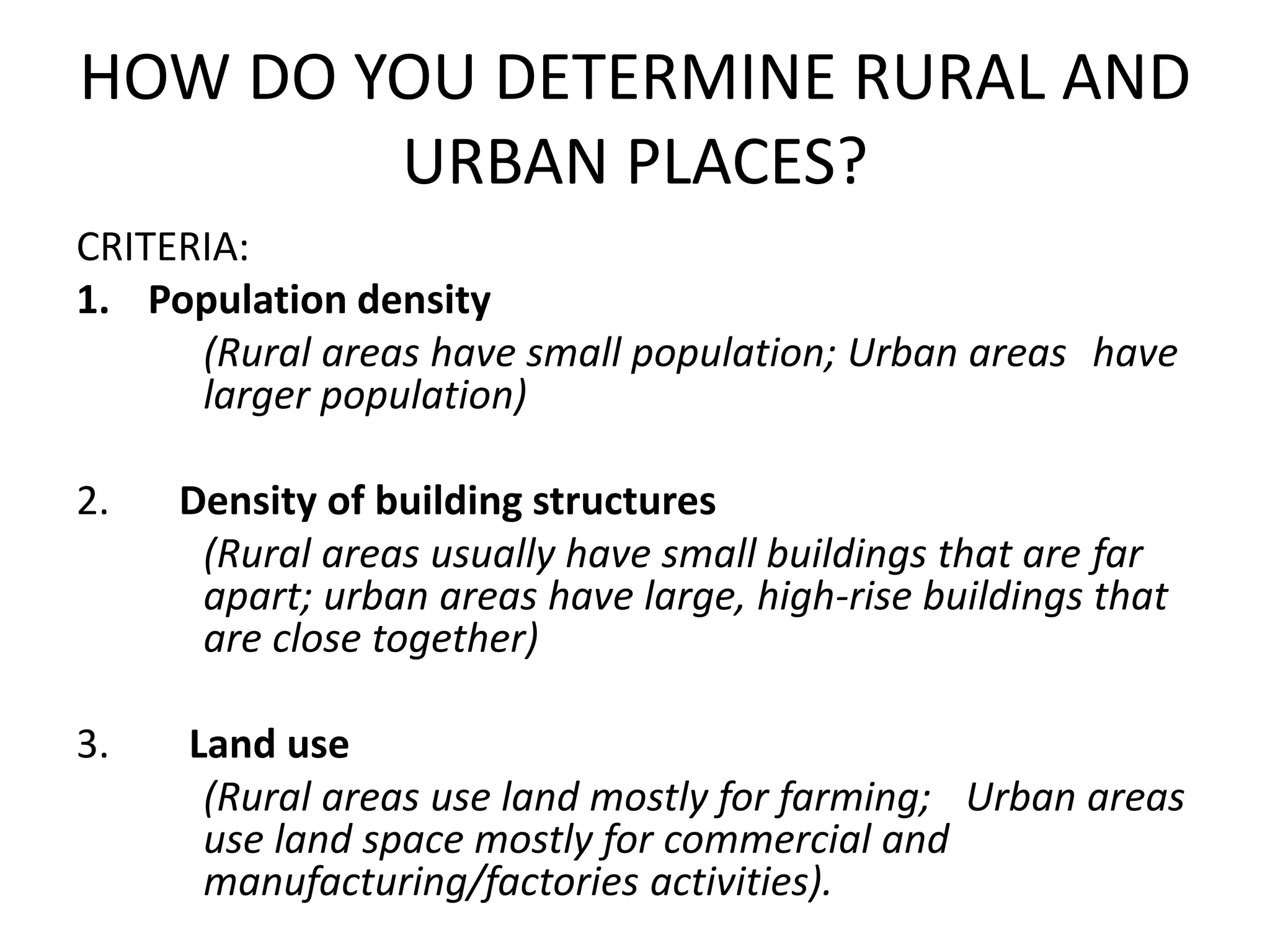
• Rural areas are the opposite of urban areas.
Rural areas, often called "the country," have
low population density and large amounts of
undeveloped land.
HOW DO YOU DETERMINE RURAL AND
URBAN PLACES?
CRITERIA:
1. Population density
(Rural areas have small population; Urban areas have
larger population)
2. Density of building structures
(Rural areas usually have small buildings that are far
apart; urban areas have large, high-rise buildings that
are close together)
3. Land use
(Rural areas use land mostly for farming; Urban areas
use land space mostly for commercial and
manufacturing/factories activities).
• Facilities and amenities
(example, transport, telephone & internet
services, recreation & entertainment;
colleges; urban areas have more and better
facilities and amenities)
• Job types/ economic activities
(Most inhabitants of rural areas have
farming jobs; most people in urban
areas have non- agricultural jobs.)
B: RURAL-URBAN MIGRATION
• Throughout the world, the dominant pattern of
migration within countries has been from rural to
urban areas.
• This is partly because improved technology has
decreased the need for agricultural workers and
partly because cities are seen as offering greater
economic opportunities.
• Rural-urban migration is the movement of
people from rural areas (the countryside) to
urban areas (cities). It is also called
URBANIZATION.
WHY DO PEOPLE MIGRATE FROM
RURAL AREAS TO URBAN AREAS?
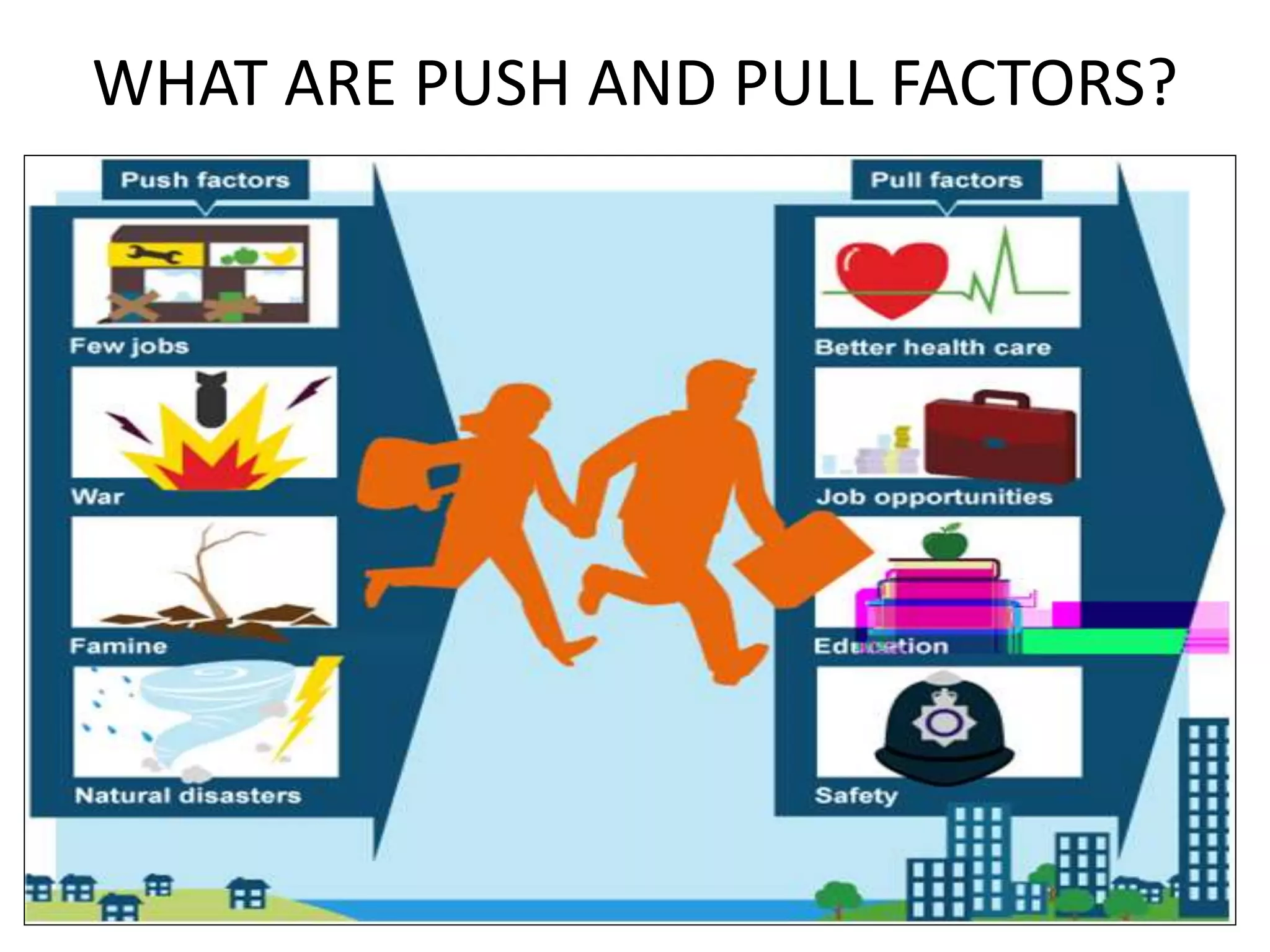
WHAT ARE PUSH AND PULL FACTORS?
PUSH FACTORS PULL FACTORS
Push Factors are
negative things in
a place that make
people want to
leave that
place/area.
Pull factors are
positive things in a
place that attract
people and make
them want to live
in that area.
PUSH AND PULL FACTORS IN
RURAL-URBAN MIGRATION
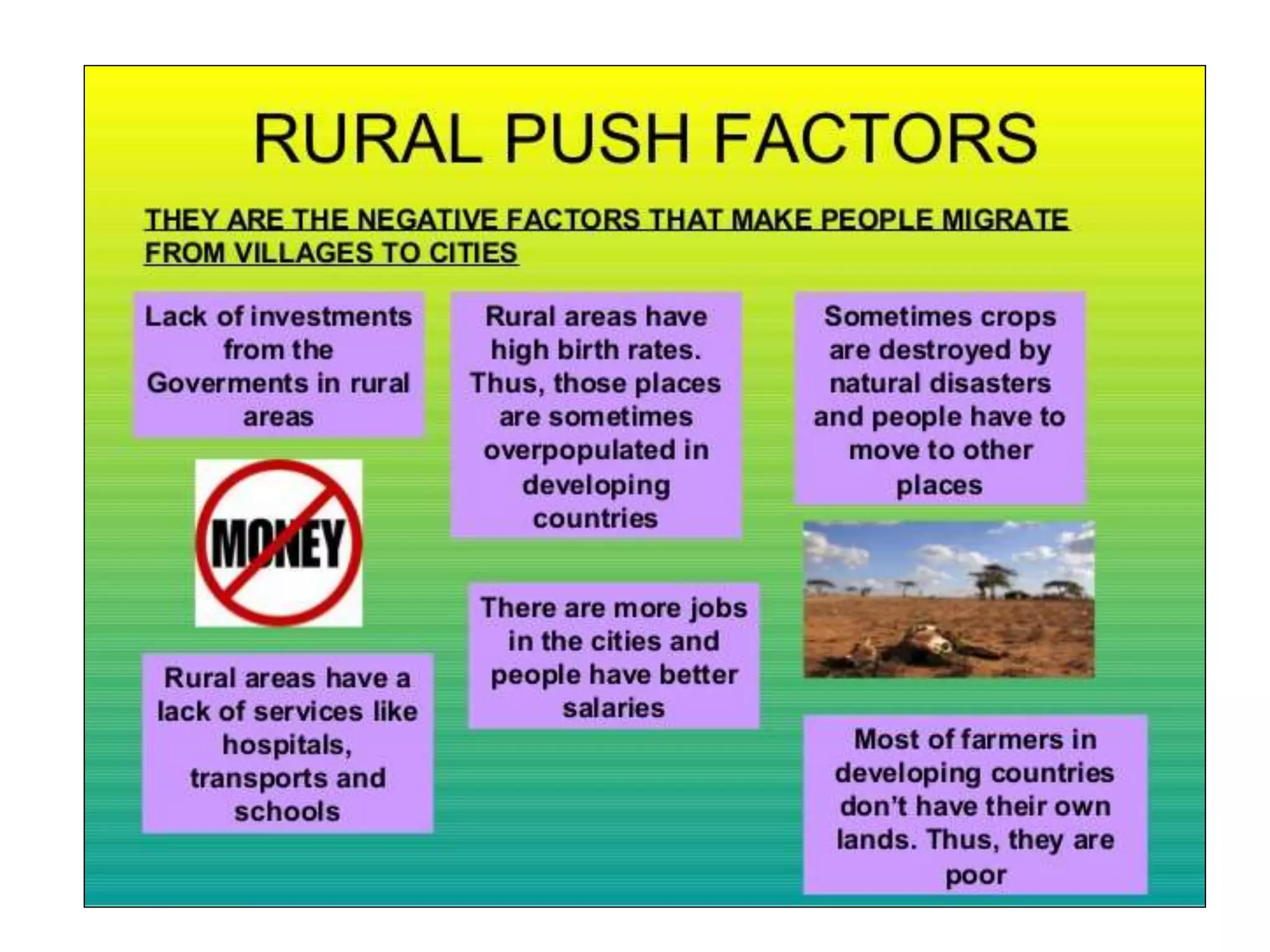
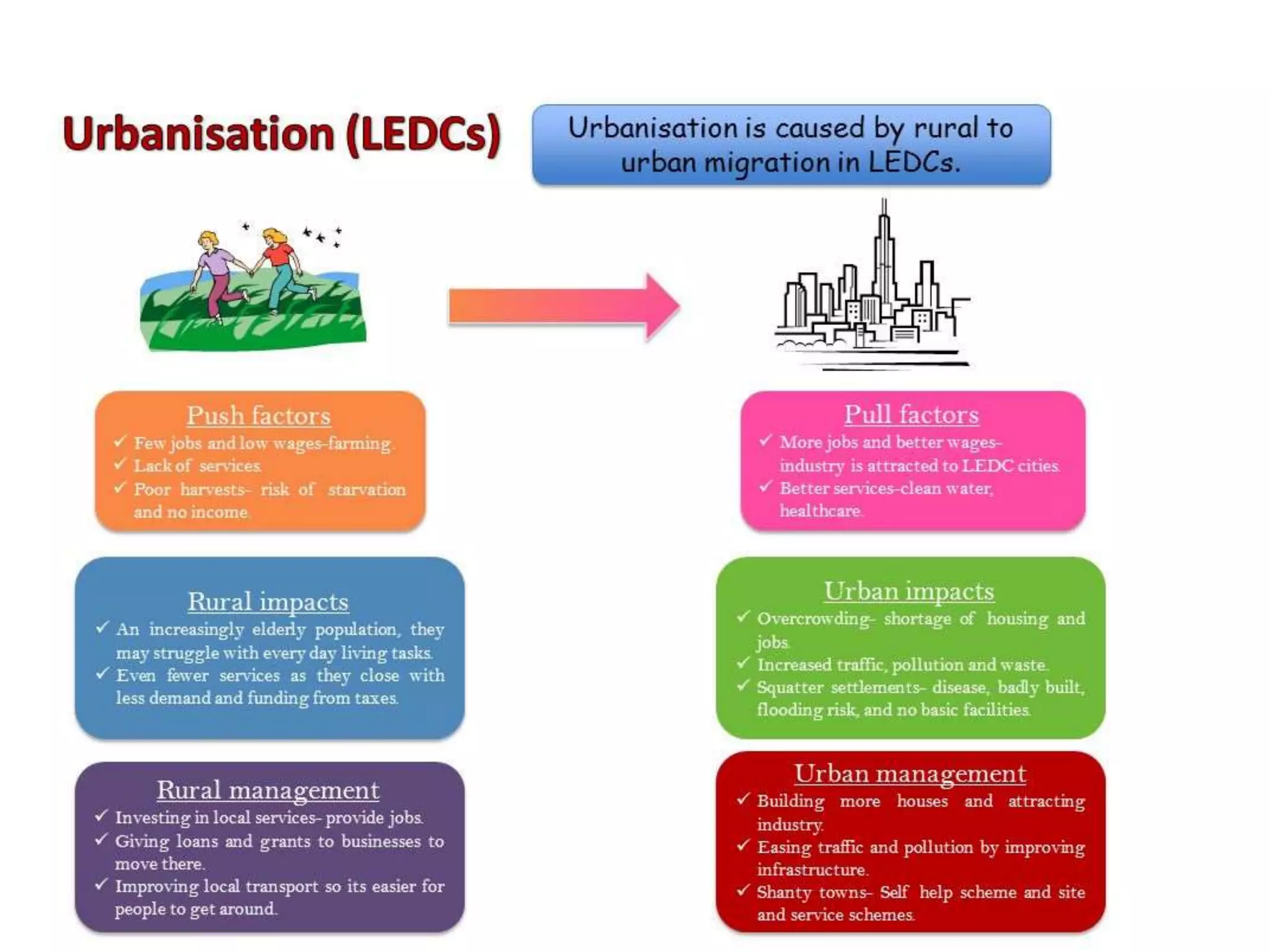
PUSH FACTORS
• CONDITIONS IN RURAL AREAS:
– Scarcity of jobs, except in farming, and most
people consider farming to be low-paying and
hard work.
• Lack of infrastructure. There are bad roads,
irregular water and electricity supply, limited or
no telephone/internet /cable service.
• Poor facilities in education and health care.
• Lack of entertainment and recreational
facilities, example cinemas and night clubs.
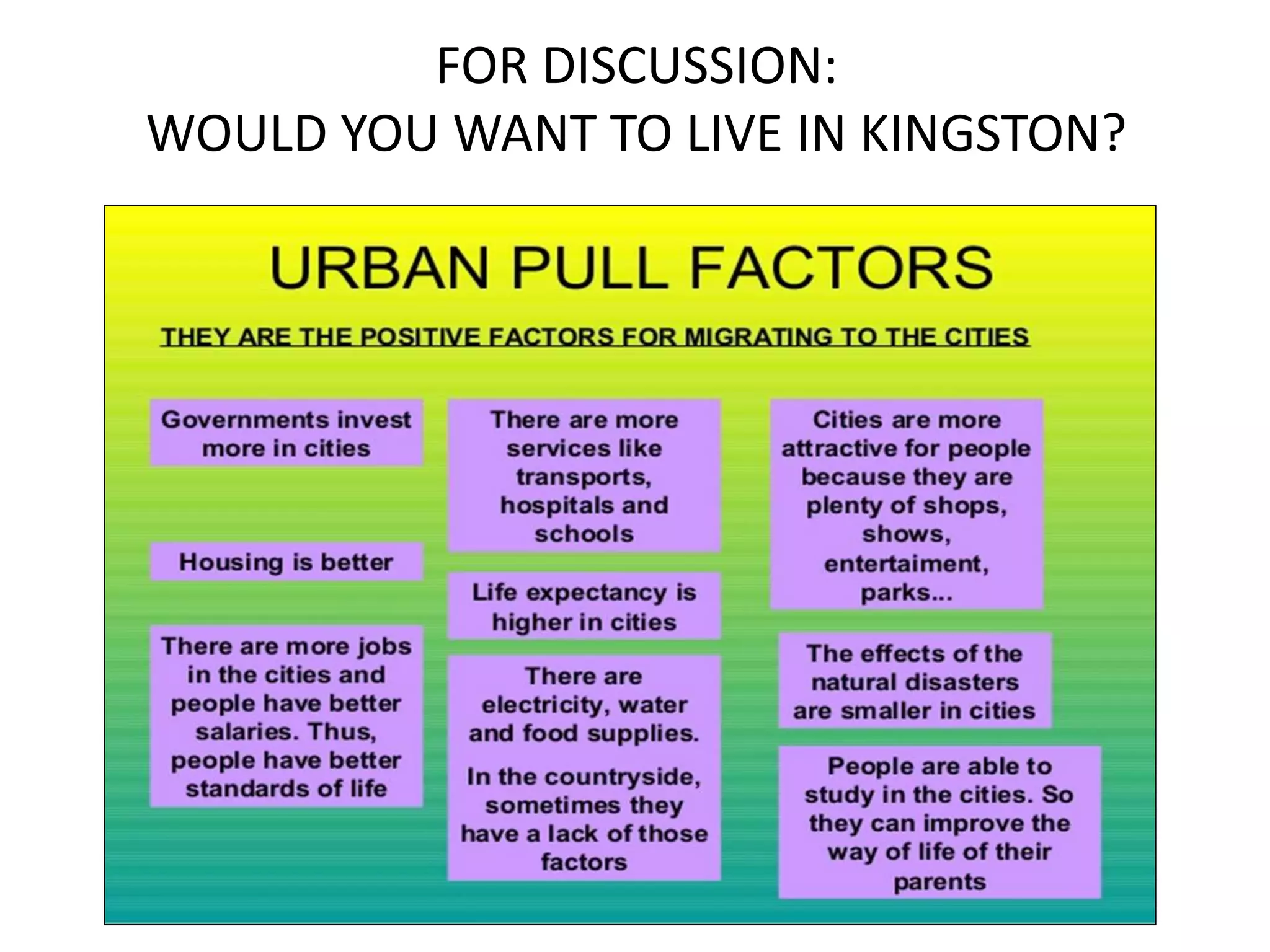
PULL FACTORS
• ATTRACTIONS OF THE URBAN AREAS:
• A large number of people are attracted to
urban areas because of the following factors:
– Availability of facilities such as health care
(hospitals, more doctors offices), education (better
equipped primary schools, more high schools,
colleges/universities).
– Availability of ‘white collar’ jobs (office jobs, jobs in
government agencies and private companies) as
well as jobs in factories.
– Proper infrastructure, example better roads, efficient
piped water and electricity supply and telephone and
internet & cable services, better transport service.
• Wide variety of entertainment and recreational or ‘night
life’ facilities, which is more attractive to younger people,
example cinemas and clubs, sports parks.
FOR DISCUSSION:
WOULD YOU WANT TO LIVE IN KINGSTON?
EFFECTS OF RURAL-URBAN
MIGRATION
WHAT ARE SOME OF THE PROBLEMS THAT
RURAL-URBAN MIGRATION CAUSE?
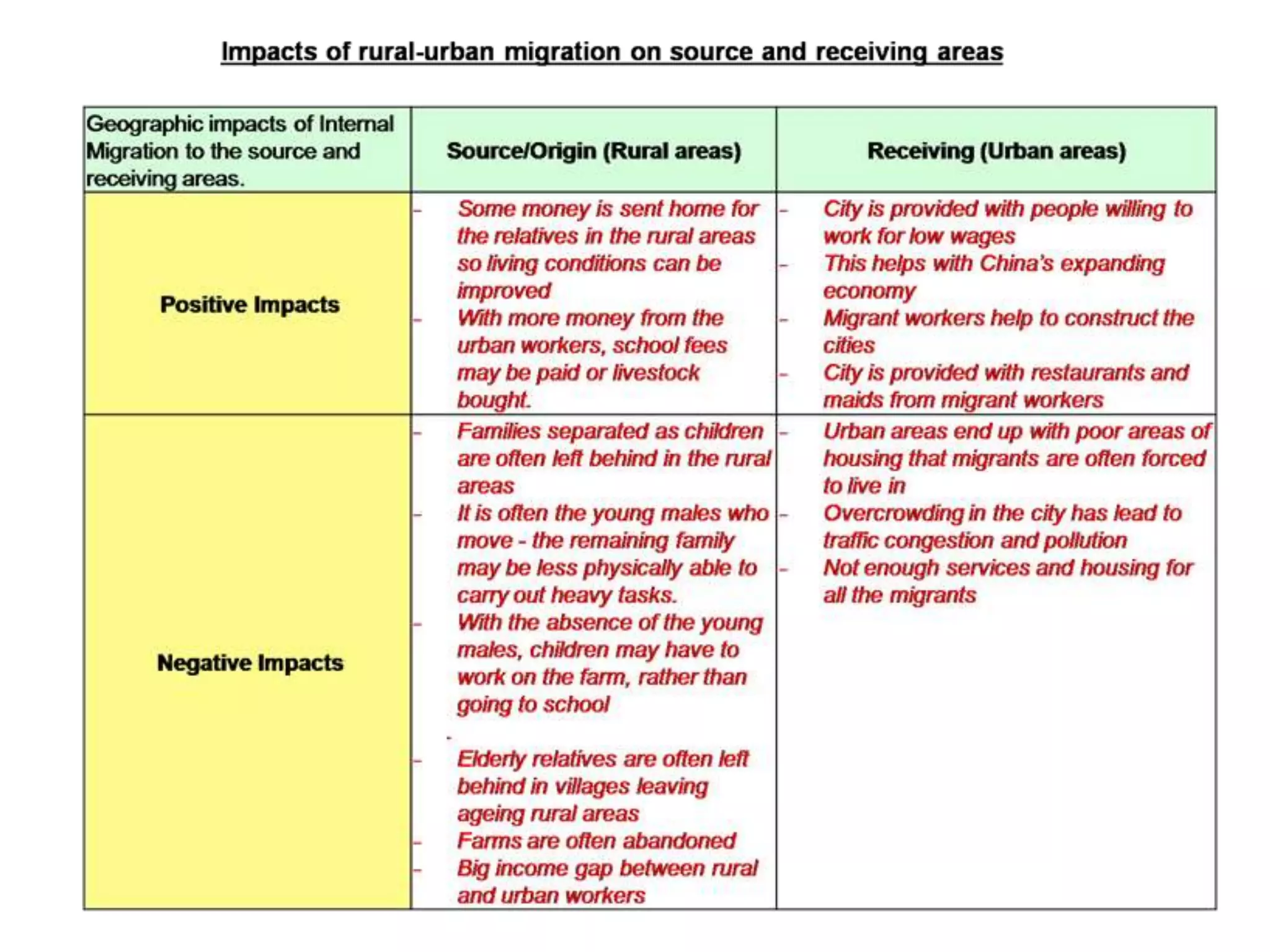
(1): IN RURAL AREAS
• Rural depopulation: - people of working age
migrate from the countryside to earn more
money in the city. They leave behind the old
and very young. Families also become separated
where one parent has to live and work in the
city.
• A positive impact is that money can be sent
back to the relatives in the rural areas to help
improve living conditions, send children to
school, buy more livestock and help with
living expenses.
(2): IN URBAN AREAS
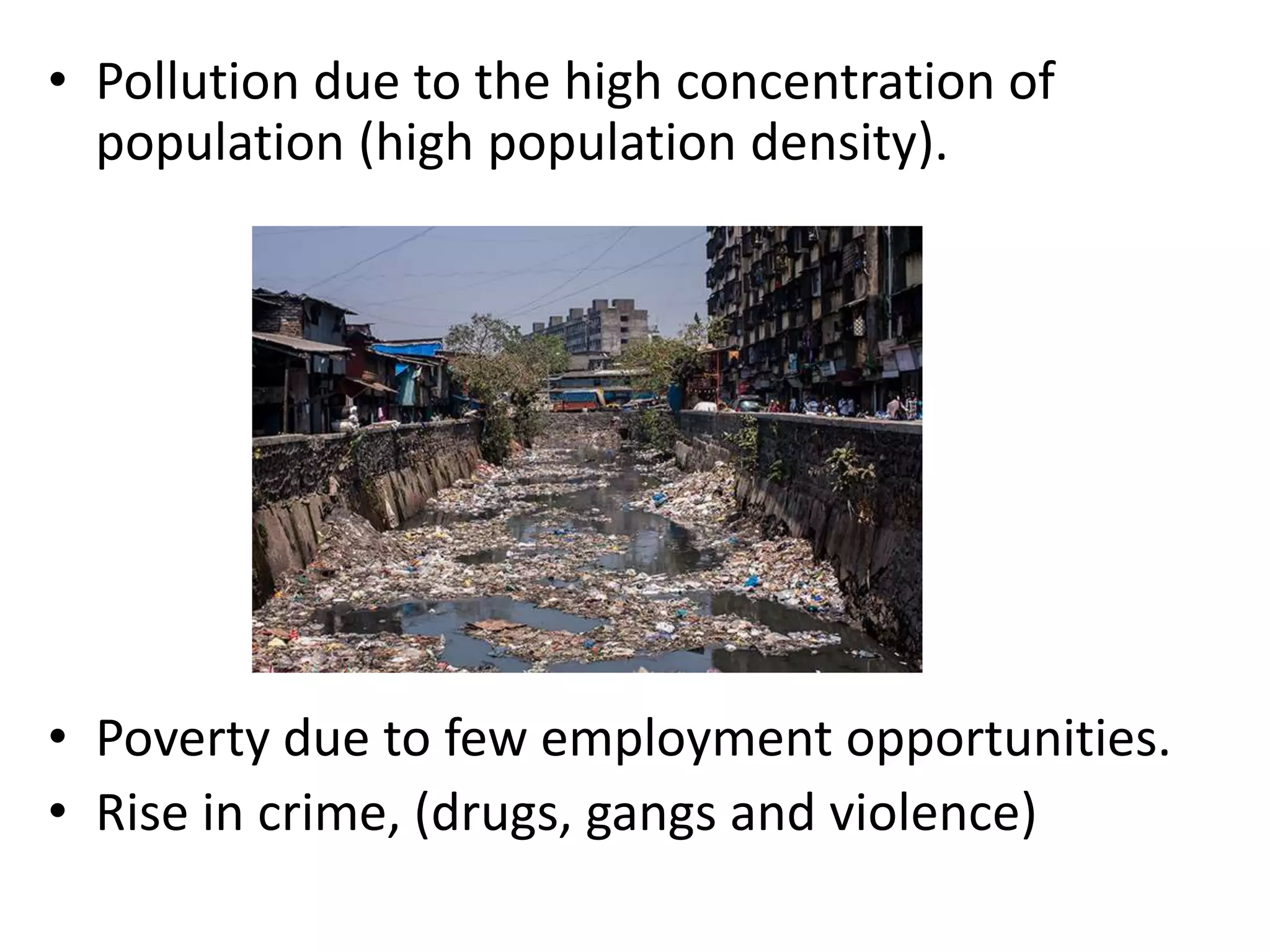
• Overcrowding in the cities
• Shortage of housing facilities which causes the
development of slums or shanty towns:-
– Where housing is often shacks made from various
materials collected. Most have no basic amenities such
as light, running water, no sewage system or garbage
collection.
• Pollution due to the high concentration of
population (high population density).
• Poverty due to few employment opportunities.
• Rise in crime, (drugs, gangs and violence)
• Traffic problems/congestion
• Positive impacts include that the city will have
more people willing to work for low wages; to
work as domestic servants, construction
workers and in restaurants. This helps to build
the economy in the city.
HOMEWORK
• Conduct an interview of a member of their
family or friend of the family who had migrated
from a rural area to a town (even urban centers
outside of Kingston and Montego Bay). Find out
the following information:
– the reason they migrated (tell whether the reason
was push or pull factor);
– what their life was like before leaving their home ,
and
– whether and how did their life change after living in
the town/urban area even years after.
END

Urban and rural areas

  • 1.
  • 2.
    • An urbanarea is the region surrounding a city. Urban areas are very developed, meaning there is a high density of human structures such as houses, commercial buildings, roads, bridges, and railways. • "Urban area" can refer to towns, cities, and suburbs. An urban area includes the city itself, as well as the surrounding areas.
  • 3.
    • Rural areasare the opposite of urban areas. Rural areas, often called "the country," have low population density and large amounts of undeveloped land.
  • 4.
    HOW DO YOUDETERMINE RURAL AND URBAN PLACES? CRITERIA: 1. Population density (Rural areas have small population; Urban areas have larger population) 2. Density of building structures (Rural areas usually have small buildings that are far apart; urban areas have large, high-rise buildings that are close together) 3. Land use (Rural areas use land mostly for farming; Urban areas use land space mostly for commercial and manufacturing/factories activities).
  • 5.
    • Facilities andamenities (example, transport, telephone & internet services, recreation & entertainment; colleges; urban areas have more and better facilities and amenities) • Job types/ economic activities (Most inhabitants of rural areas have farming jobs; most people in urban areas have non- agricultural jobs.)
  • 6.
    B: RURAL-URBAN MIGRATION •Throughout the world, the dominant pattern of migration within countries has been from rural to urban areas. • This is partly because improved technology has decreased the need for agricultural workers and partly because cities are seen as offering greater economic opportunities. • Rural-urban migration is the movement of people from rural areas (the countryside) to urban areas (cities). It is also called URBANIZATION.
  • 7.
    WHY DO PEOPLEMIGRATE FROM RURAL AREAS TO URBAN AREAS?
  • 8.
    WHAT ARE PUSHAND PULL FACTORS?
  • 9.
    PUSH FACTORS PULLFACTORS Push Factors are negative things in a place that make people want to leave that place/area. Pull factors are positive things in a place that attract people and make them want to live in that area. PUSH AND PULL FACTORS IN RURAL-URBAN MIGRATION
  • 10.
    PUSH FACTORS • CONDITIONSIN RURAL AREAS: – Scarcity of jobs, except in farming, and most people consider farming to be low-paying and hard work.
  • 11.
    • Lack ofinfrastructure. There are bad roads, irregular water and electricity supply, limited or no telephone/internet /cable service.
  • 12.
    • Poor facilitiesin education and health care. • Lack of entertainment and recreational facilities, example cinemas and night clubs.
  • 13.
    PULL FACTORS • ATTRACTIONSOF THE URBAN AREAS: • A large number of people are attracted to urban areas because of the following factors: – Availability of facilities such as health care (hospitals, more doctors offices), education (better equipped primary schools, more high schools, colleges/universities). – Availability of ‘white collar’ jobs (office jobs, jobs in government agencies and private companies) as well as jobs in factories.
  • 14.
    – Proper infrastructure,example better roads, efficient piped water and electricity supply and telephone and internet & cable services, better transport service.
  • 15.
    • Wide varietyof entertainment and recreational or ‘night life’ facilities, which is more attractive to younger people, example cinemas and clubs, sports parks.
  • 16.
    FOR DISCUSSION: WOULD YOUWANT TO LIVE IN KINGSTON?
  • 18.
    EFFECTS OF RURAL-URBAN MIGRATION WHATARE SOME OF THE PROBLEMS THAT RURAL-URBAN MIGRATION CAUSE? (1): IN RURAL AREAS • Rural depopulation: - people of working age migrate from the countryside to earn more money in the city. They leave behind the old and very young. Families also become separated where one parent has to live and work in the city.
  • 19.
    • A positiveimpact is that money can be sent back to the relatives in the rural areas to help improve living conditions, send children to school, buy more livestock and help with living expenses.
  • 20.
    (2): IN URBANAREAS • Overcrowding in the cities • Shortage of housing facilities which causes the development of slums or shanty towns:- – Where housing is often shacks made from various materials collected. Most have no basic amenities such as light, running water, no sewage system or garbage collection.
  • 21.
    • Pollution dueto the high concentration of population (high population density). • Poverty due to few employment opportunities. • Rise in crime, (drugs, gangs and violence)
  • 22.
  • 23.
    • Positive impactsinclude that the city will have more people willing to work for low wages; to work as domestic servants, construction workers and in restaurants. This helps to build the economy in the city.
  • 24.
    HOMEWORK • Conduct aninterview of a member of their family or friend of the family who had migrated from a rural area to a town (even urban centers outside of Kingston and Montego Bay). Find out the following information: – the reason they migrated (tell whether the reason was push or pull factor); – what their life was like before leaving their home , and – whether and how did their life change after living in the town/urban area even years after.
  • 27.