RURAL SETTLEMENT
CHANGES AND ISSUES IN
       THE UK


       Lesson 7
Key factors explaining changes
       in UK rural areas:
• Improvements in transport
• Increased standards of living
• Decreased size of households
• Industries and retailing
  are moving to rural
  areas…

• Three important factors:

1. Dissatisfaction of urban
   lifestyles

2. Increase in car ownership

3. Improving technology
   which allows industries
   to become ‘footloose’
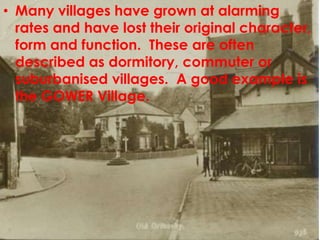
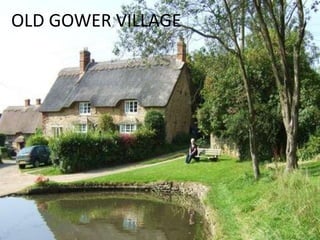
• Many villages have grown at alarming
  rates and have lost their original character,
  form and function. These are often
  described as dormitory, commuter or
  suburbanised villages. A good example is
  the GOWER Village.
OLD GOWER VILLAGE
Disadvantages of second homes:
• House and land price escalate

• Conflict between permanent population and temporary
  population

• Roads become congested

• Driving is hazardous and there is an increase number of
  accidents

• Local environment will be deteriorate

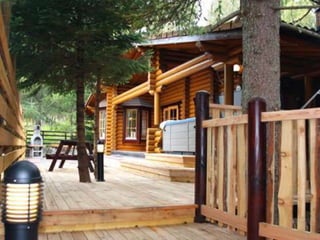
• New buildings may not fit into local surroundings such as
  Swiss-style chalets in Snowdonia
Advantages of second homes:
• Economic development of backward rural areas

• Taxes from second homes helps to support local
  services

• The competition between second home owners
  and young people may not as great as generally
  assumed. Most second home owners require an
  isolated home without electricity or a bath so
  that they can renovate it.
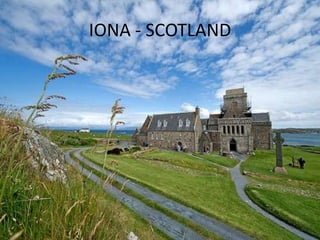
IONA - SCOTLAND
IONA - SCOTLAND
• A remote island off west coast of scotland

• Rural communities are experiencing rural depopulation

• 1980s – population fell by 40%

• Severe shortage of jobs – unemployment rates are high

• Difficult to attract young people and migrants to the island

• Traditional industries such as fishing and farming are
  gradually being eroded
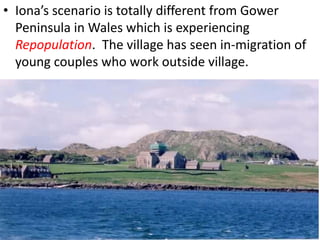
• Iona’s scenario is totally different from Gower
  Peninsula in Wales which is experiencing
  Repopulation. The village has seen in-migration of
  young couples who work outside village.
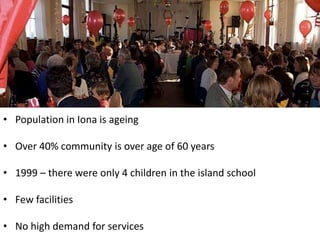
• Population in Iona is ageing

• Over 40% community is over age of 60 years

• 1999 – there were only 4 children in the island school

• Few facilities

• No high demand for services
Noting activities
• Read case study: Development pressures in
  Aylesbury Vale, Buckinghamshire (pg 166, Ross)

• Answer question 1 & 2 (Pg 167, Ross)

Rural settlement changes and issues in uk lesson 7

  • 1.
    RURAL SETTLEMENT CHANGES ANDISSUES IN THE UK Lesson 7
  • 2.
    Key factors explainingchanges in UK rural areas: • Improvements in transport • Increased standards of living • Decreased size of households
  • 4.
    • Industries andretailing are moving to rural areas… • Three important factors: 1. Dissatisfaction of urban lifestyles 2. Increase in car ownership 3. Improving technology which allows industries to become ‘footloose’
  • 6.
    • Many villageshave grown at alarming rates and have lost their original character, form and function. These are often described as dormitory, commuter or suburbanised villages. A good example is the GOWER Village.
  • 7.
  • 10.
    Disadvantages of secondhomes: • House and land price escalate • Conflict between permanent population and temporary population • Roads become congested • Driving is hazardous and there is an increase number of accidents • Local environment will be deteriorate • New buildings may not fit into local surroundings such as Swiss-style chalets in Snowdonia
  • 12.
    Advantages of secondhomes: • Economic development of backward rural areas • Taxes from second homes helps to support local services • The competition between second home owners and young people may not as great as generally assumed. Most second home owners require an isolated home without electricity or a bath so that they can renovate it.
  • 13.
  • 14.
    IONA - SCOTLAND •A remote island off west coast of scotland • Rural communities are experiencing rural depopulation • 1980s – population fell by 40% • Severe shortage of jobs – unemployment rates are high • Difficult to attract young people and migrants to the island • Traditional industries such as fishing and farming are gradually being eroded
  • 15.
    • Iona’s scenariois totally different from Gower Peninsula in Wales which is experiencing Repopulation. The village has seen in-migration of young couples who work outside village.
  • 17.
    • Population inIona is ageing • Over 40% community is over age of 60 years • 1999 – there were only 4 children in the island school • Few facilities • No high demand for services
  • 18.
    Noting activities • Readcase study: Development pressures in Aylesbury Vale, Buckinghamshire (pg 166, Ross) • Answer question 1 & 2 (Pg 167, Ross)