   Migration as part of the population change
     Types, definitions, patterns and causes


   Internal Migration

   External Migration

   Theories / Models of Migration

   Controls on immigration by governments
 A term which include both migration and
 circulation.


 MIGRABILITY:
 How likely is a person to migrate.
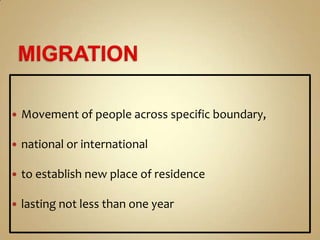
   Movement of people across specific boundary,

   national or international

   to establish new place of residence

   lasting not less than one year
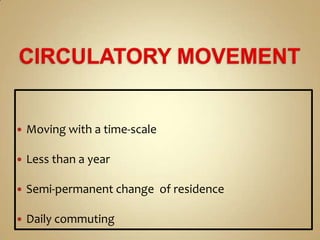
   Moving with a time-scale

   Less than a year

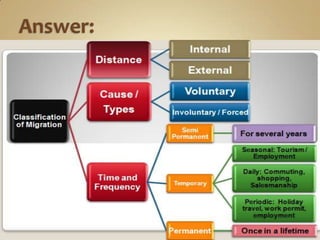
   Semi-permanent change of residence

   Daily commuting
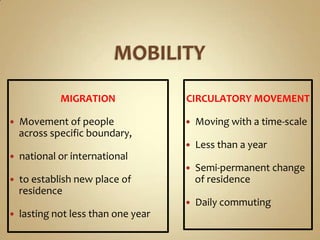
MIGRATION               CIRCULATORY MOVEMENT

   Movement of people                  Moving with a time-scale
    across specific boundary,
                                        Less than a year
   national or international
                                        Semi-permanent change
   to establish new place of            of residence
    residence
                                        Daily commuting
   lasting not less than one year
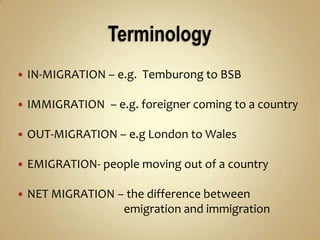
   IN-MIGRATION – e.g. Temburong to BSB

   IMMIGRATION – e.g. foreigner coming to a country

   OUT-MIGRATION – e.g London to Wales

   EMIGRATION- people moving out of a country

   NET MIGRATION – the difference between
                   emigration and immigration
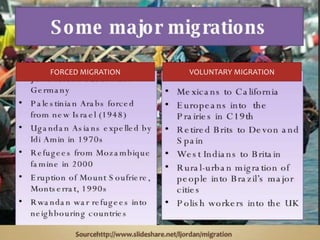
FORCED MIGRATION   VOLUNTARY MIGRATION
Migration  lesson 1
Migration  lesson 1
Migration  lesson 1

Migration lesson 1

  • 2.
    Migration as part of the population change  Types, definitions, patterns and causes  Internal Migration  External Migration  Theories / Models of Migration  Controls on immigration by governments
  • 3.
     A termwhich include both migration and circulation. MIGRABILITY:  How likely is a person to migrate.
  • 5.
    Movement of people across specific boundary,  national or international  to establish new place of residence  lasting not less than one year
  • 6.
    Moving with a time-scale  Less than a year  Semi-permanent change of residence  Daily commuting
  • 7.
    MIGRATION CIRCULATORY MOVEMENT  Movement of people  Moving with a time-scale across specific boundary,  Less than a year  national or international  Semi-permanent change  to establish new place of of residence residence  Daily commuting  lasting not less than one year
  • 8.
    IN-MIGRATION – e.g. Temburong to BSB  IMMIGRATION – e.g. foreigner coming to a country  OUT-MIGRATION – e.g London to Wales  EMIGRATION- people moving out of a country  NET MIGRATION – the difference between emigration and immigration
  • 12.
    FORCED MIGRATION VOLUNTARY MIGRATION