Information processing cycle
What is a computer?
• A computer is a machine that receives data
and processes that data in some way to
produce information.
• A computer is an electronic device that
accepts data, performs computations, and
makes logical decisions according to the data
it is given, to produce information in a form
that is meaningful to humans.
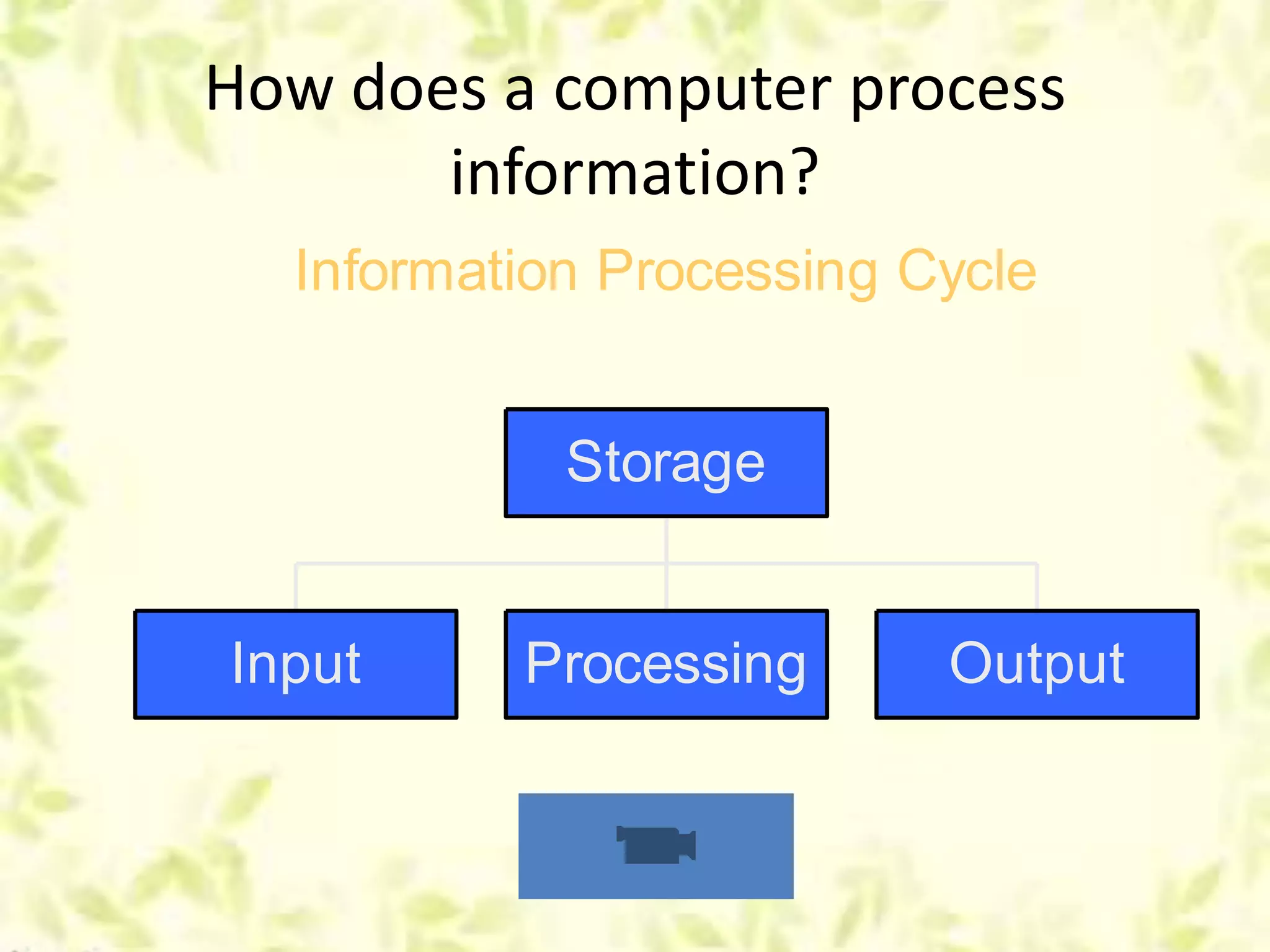
How does a computer process
information?
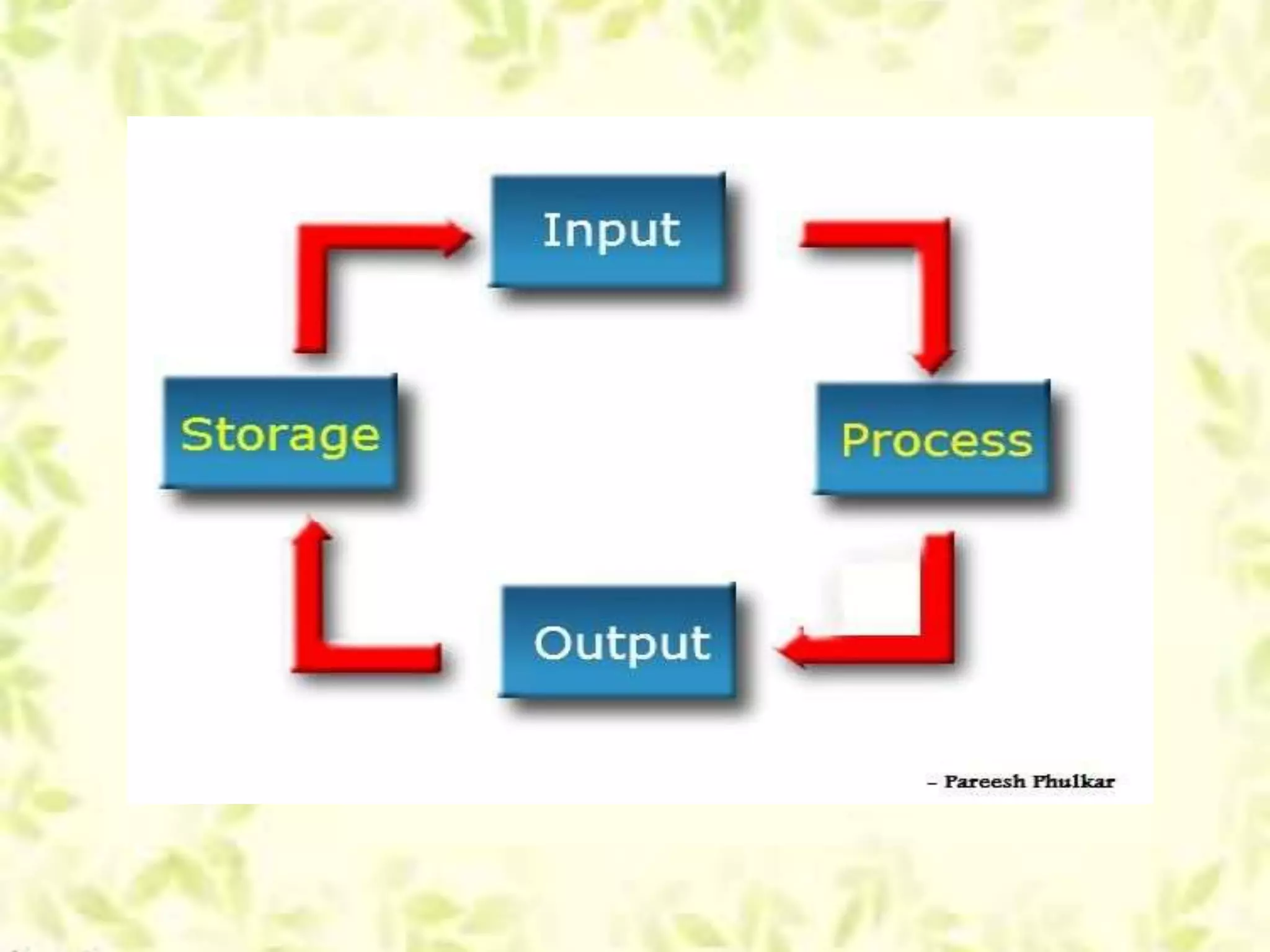
Information Processing Cycle
Input Processing Output
Storage
What is the information processing cycle?
The sequence of events in processing
information, which includes
• (1) input
• (2) processing
• (3) output
• (4) storage
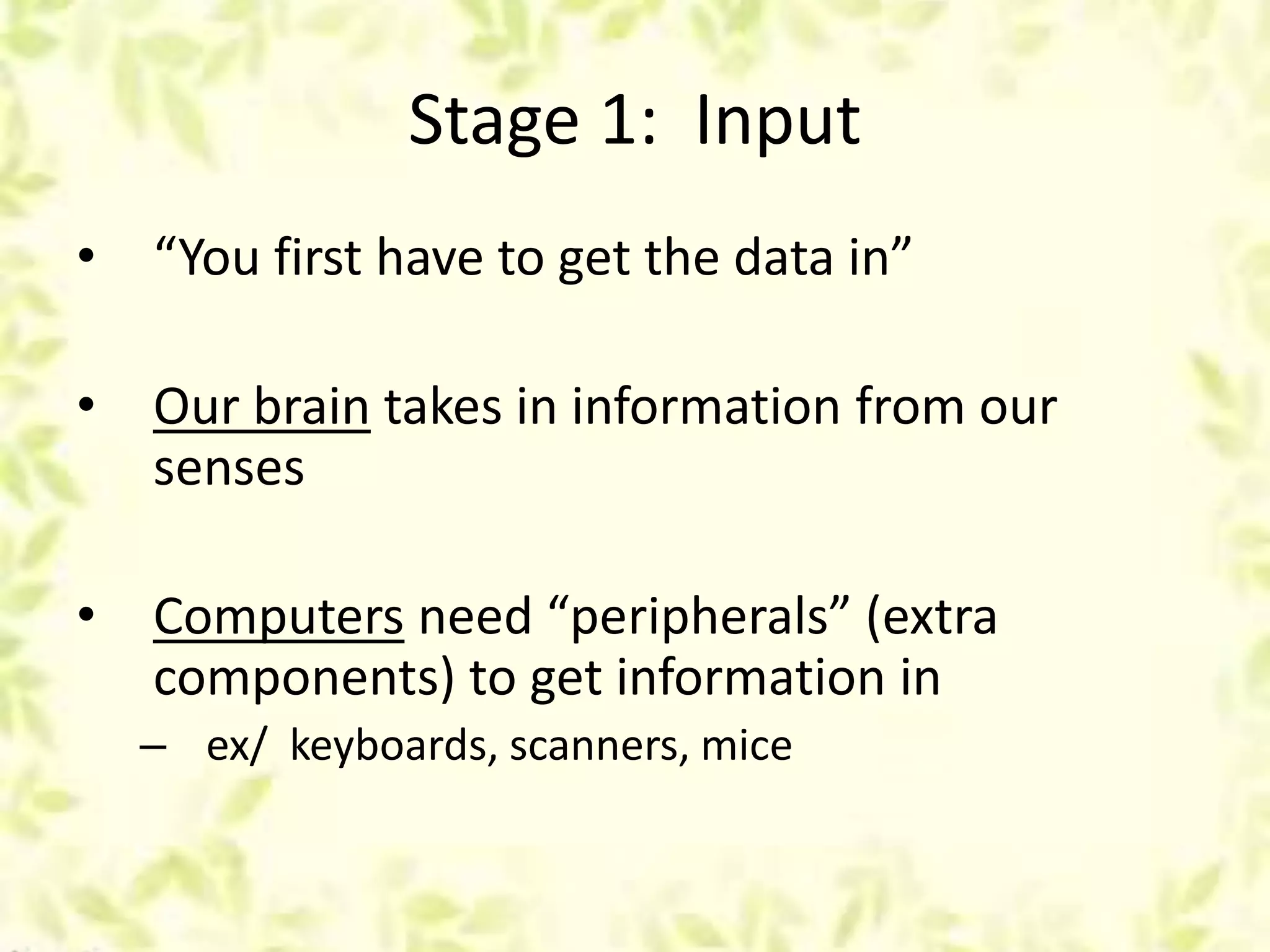
Stage 1: Input
• “You first have to get the data in”
• Our brain takes in information from our
senses
• Computers need “peripherals” (extra
components) to get information in
– ex/ keyboards, scanners, mice
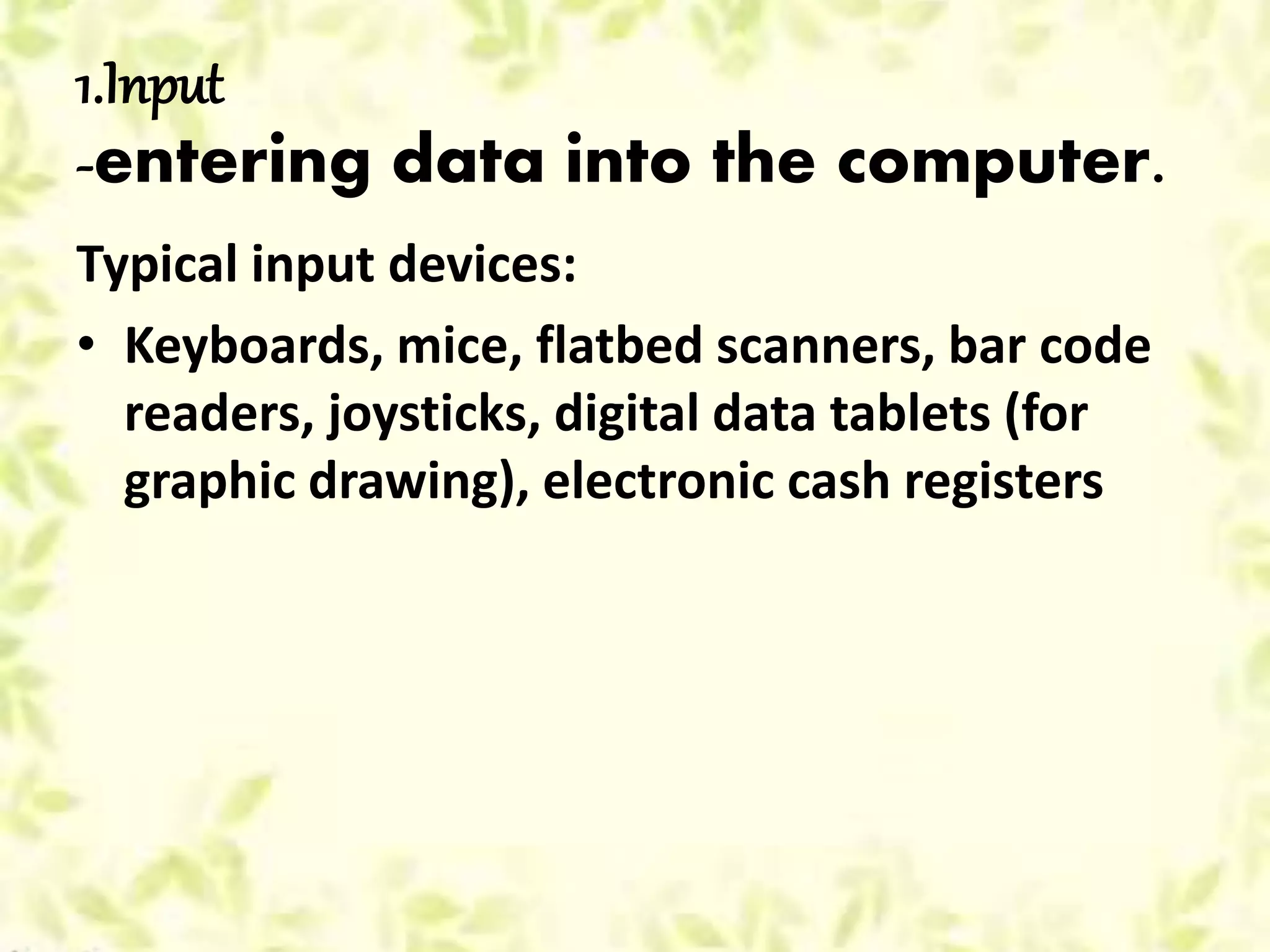
1.Input
-entering data into the computer.
Typical input devices:
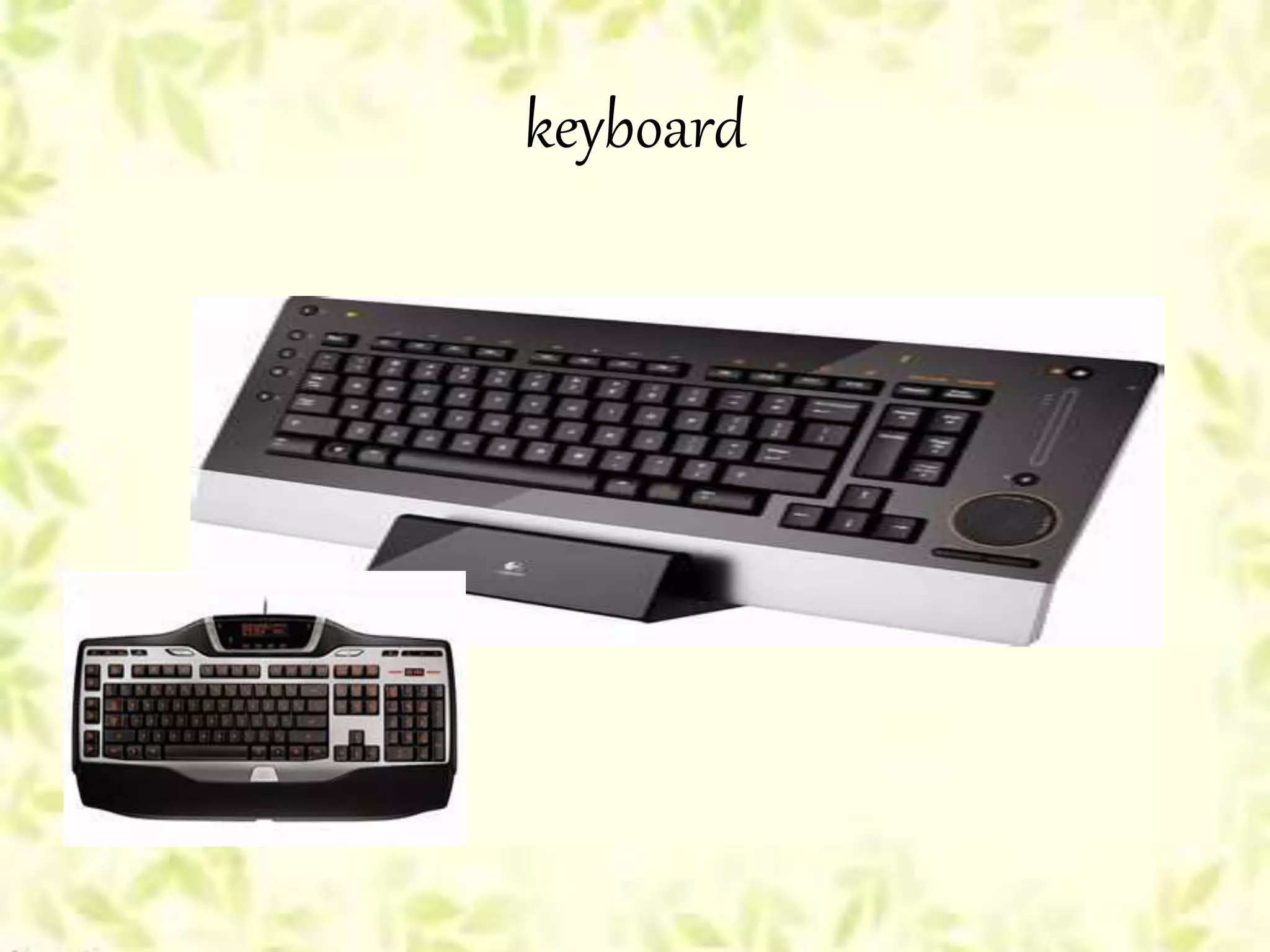
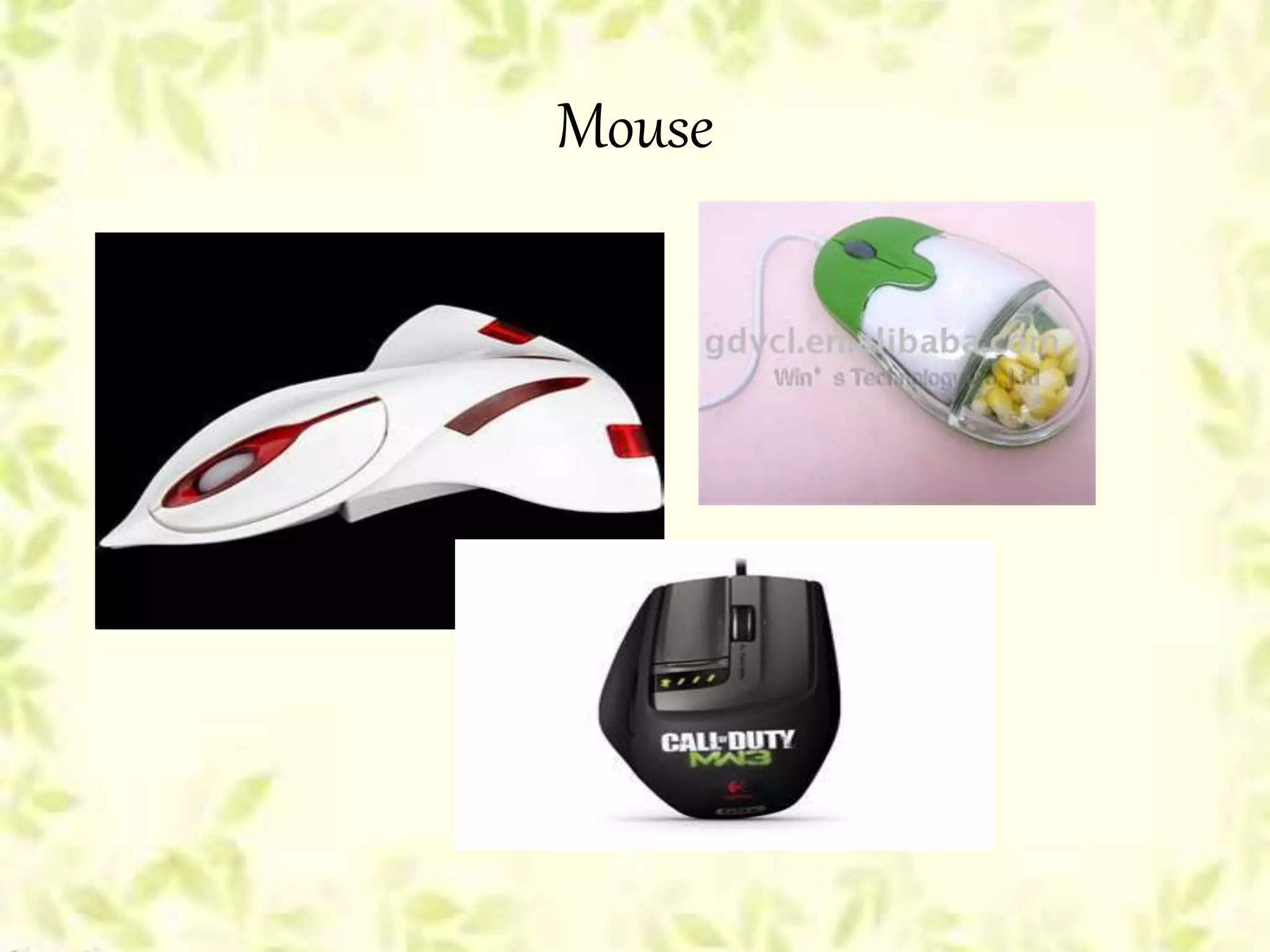
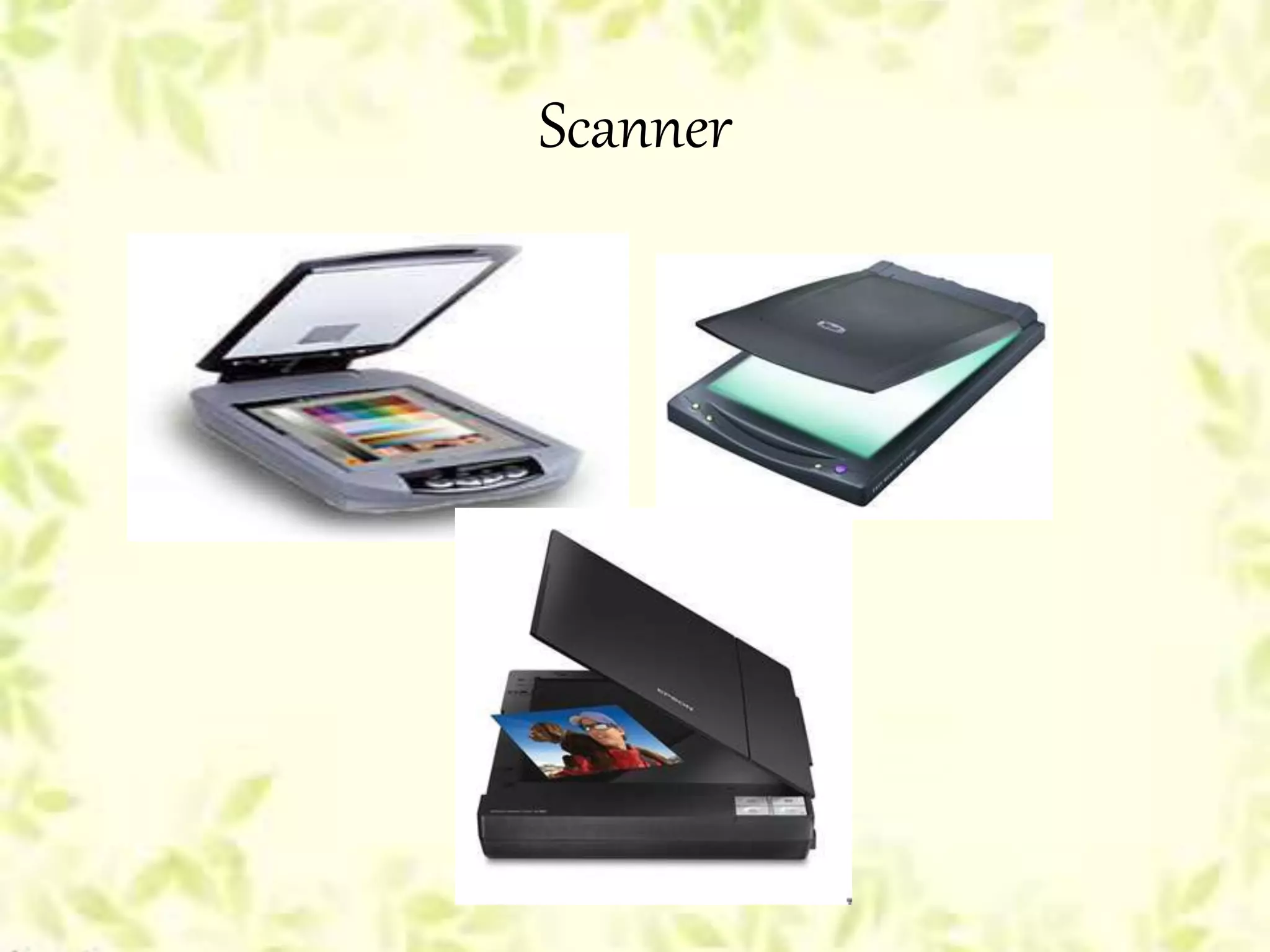
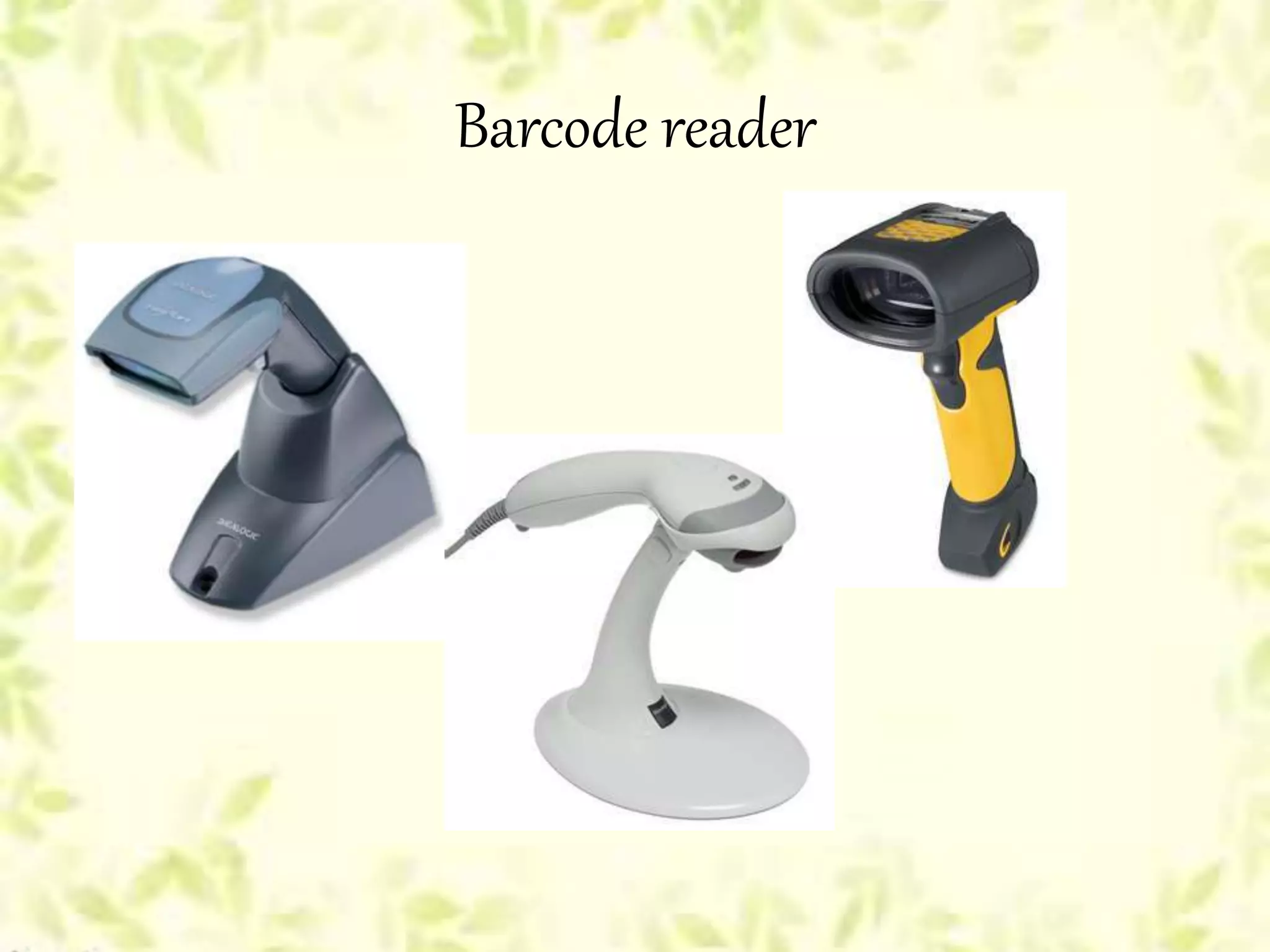
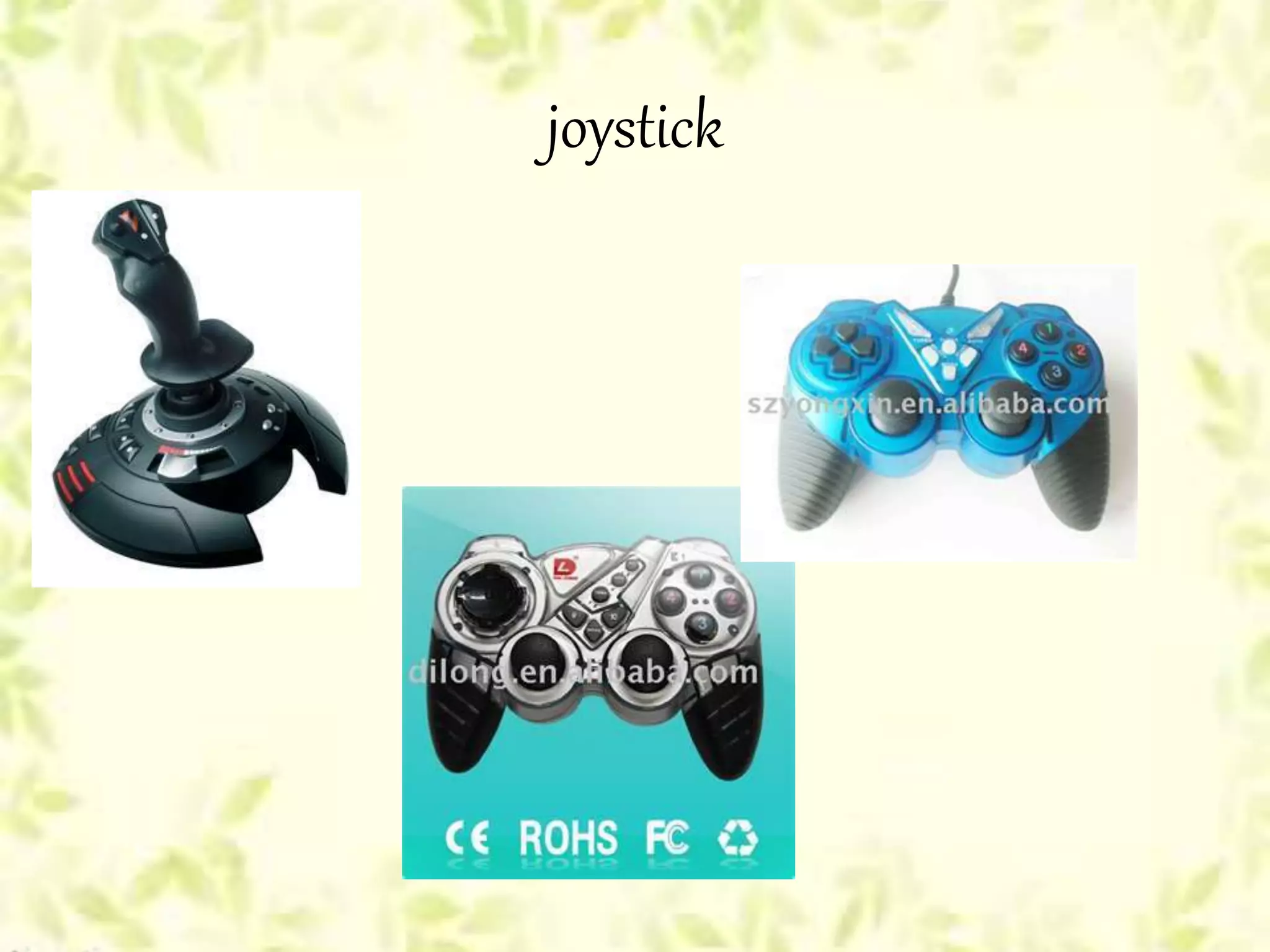
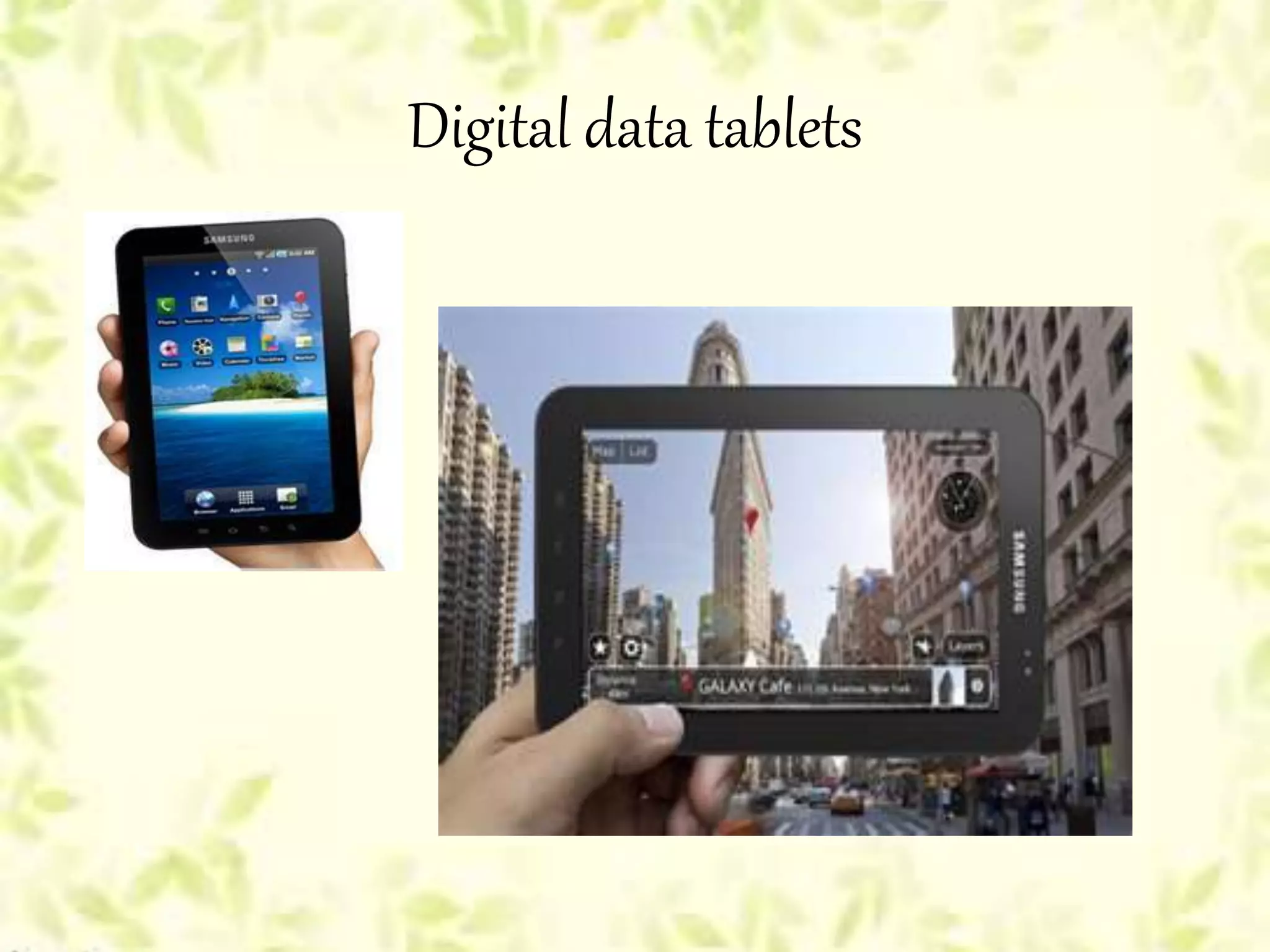
• Keyboards, mice, flatbed scanners, bar code
readers, joysticks, digital data tablets (for
graphic drawing), electronic cash registers
keyboard
Mouse
Scanner
Barcode reader
joystick
Digital data tablets
Stage 2: Process
• Next, we need to ‘make sense of’ the data we have
• Our brain compares this to what we know and decides
whether it is important enough to remember or not
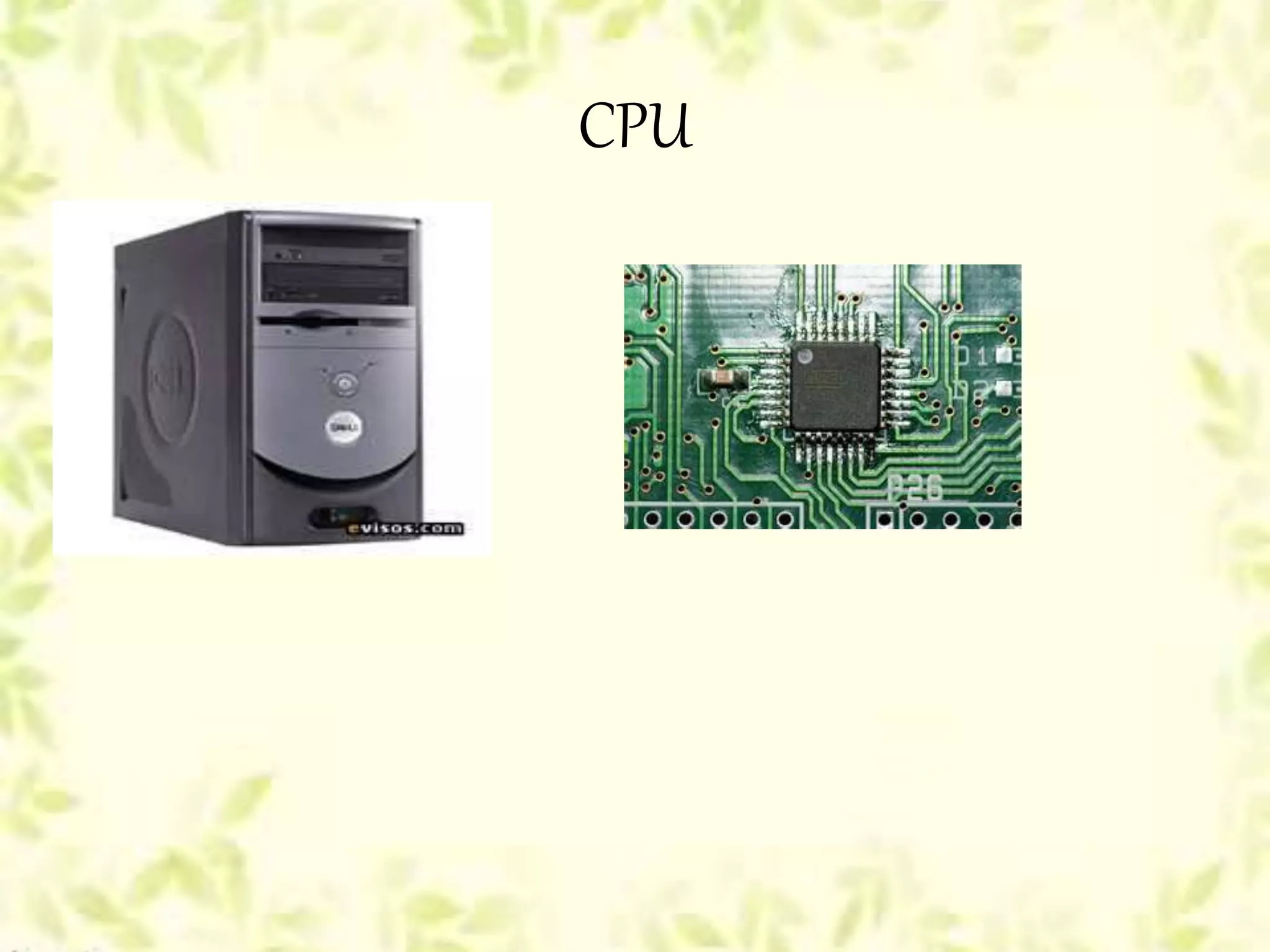
• Computers use the CPU (the main chip inside) to make
decisions, do calculations, and organize data
– ex/ Pentium-IV, Dual-Core
2.processing
-performing operations on the data.
• CPU Processor - Central Processing Unit
• A central processing unit (CPU), or sometimes
simply processor, is the key component in a
digital computer capable of executing a
program. It interprets computer program
instructions and processes data. CPUs provide
the fundamental digital computer trait of
programmability, and are one of the necessary
components found in computers of any era,
along with memory and input/output facilities.
2.processing
-performing operations on the data.
• A CPU that is manufactured as a single
integrated circuit is usually known as a
microprocessor. Beginning in the mid-
1970s, microprocessors of ever-
increasing complexity and power
gradually supplanted other designs,
and today the term "CPU" is usually
applied to some type of microprocessor.
CPU
Stage 3: Output
• The next step is to get the results out from the process,
and present them in a useable way
• Our brain makes our body respond by talking, moving, or
writing
• Computers need “peripherals” to do this
– ex/ monitor, printer, data projector
Stage 4: Distribute
• Finally, the information needs to be sent elsewhere (or
stored) so it can be used later
• Our brain makes “memories” of the information, and we
may write it down to look over later
• Computers use “peripherals” to do this
– ex/ hard drive, CDs or DVDs to burn, Internet

Information processing

  • 1.
  • 2.
    What is acomputer? • A computer is a machine that receives data and processes that data in some way to produce information. • A computer is an electronic device that accepts data, performs computations, and makes logical decisions according to the data it is given, to produce information in a form that is meaningful to humans.
  • 3.
    How does acomputer process information? Information Processing Cycle Input Processing Output Storage
  • 4.
    What is theinformation processing cycle? The sequence of events in processing information, which includes • (1) input • (2) processing • (3) output • (4) storage
  • 6.
    Stage 1: Input •“You first have to get the data in” • Our brain takes in information from our senses • Computers need “peripherals” (extra components) to get information in – ex/ keyboards, scanners, mice
  • 7.
    1.Input -entering data intothe computer. Typical input devices: • Keyboards, mice, flatbed scanners, bar code readers, joysticks, digital data tablets (for graphic drawing), electronic cash registers
  • 8.
  • 9.
  • 10.
  • 11.
  • 12.
  • 13.
  • 14.
    Stage 2: Process •Next, we need to ‘make sense of’ the data we have • Our brain compares this to what we know and decides whether it is important enough to remember or not • Computers use the CPU (the main chip inside) to make decisions, do calculations, and organize data – ex/ Pentium-IV, Dual-Core
  • 15.
    2.processing -performing operations onthe data. • CPU Processor - Central Processing Unit • A central processing unit (CPU), or sometimes simply processor, is the key component in a digital computer capable of executing a program. It interprets computer program instructions and processes data. CPUs provide the fundamental digital computer trait of programmability, and are one of the necessary components found in computers of any era, along with memory and input/output facilities.
  • 16.
    2.processing -performing operations onthe data. • A CPU that is manufactured as a single integrated circuit is usually known as a microprocessor. Beginning in the mid- 1970s, microprocessors of ever- increasing complexity and power gradually supplanted other designs, and today the term "CPU" is usually applied to some type of microprocessor.
  • 17.
  • 18.
    Stage 3: Output •The next step is to get the results out from the process, and present them in a useable way • Our brain makes our body respond by talking, moving, or writing • Computers need “peripherals” to do this – ex/ monitor, printer, data projector
  • 19.
    Stage 4: Distribute •Finally, the information needs to be sent elsewhere (or stored) so it can be used later • Our brain makes “memories” of the information, and we may write it down to look over later • Computers use “peripherals” to do this – ex/ hard drive, CDs or DVDs to burn, Internet