WHAT IS THE INFORMATION
PROCESSING CYCLE?
The sequence of events in processing information, which
includes
• (1) input
• (2) processing
• (3) output
• (4) storage
INFORMATION
PROCESSING CYCLE
1.INPUT
-ENTERING DATA INTO THE
COMPUTER.
Typical input devices:
• Keyboards, mice, flatbed scanners, bar code readers,
joysticks, digital data tablets (for graphic drawing),
electronic cash registers
KEYBOARD
MOUSE
SCANNER
BARCODE READER
JOYSTICK
DIGITAL DATA TABLETS
2.PROCESSING
-PERFORMING OPERATIONS
ON THE DATA.
• CPU Processor - Central Processing Unit
• A central processing unit (CPU), or sometimes simply processor,
is the key component in a digital computer capable of
executing a program. It interprets computer program
instructions and processes data. CPUs provide the fundamental
digital computer trait of programmability, and are one of the
necessary components found in computers of any era, along
with memory and input/output facilities. A CPU that is
manufactured as a single integrated circuit is usually known
as a microprocessor. Beginning in the mid-1970s,
microprocessors of ever-increasing complexity and power
gradually supplanted other designs, and today the term "CPU"
is usually applied to some type of microprocessor.
CPU
STORAGE
• Storage, also known as mass media or auxiliary
storage, refers to the various media on which a
computer system can store data.
• Storage devices hold programs and data in units
called files.
Hard Drive – storage
WHY IS STORAGE NECESSARY?
 Storage devices:
Retain data when the computer is turned off
Are cheaper than memory
Play an important role during startup
Are needed for output
STORAGE DEVICES
3. OUTPUT
• Output devices are peripheral devices that enable us
to view or hear the computer’s processed data.
• Visual output – Text, graphics, and video
• Audio output – Sounds, music, and synthesized speech
OUTPUT DEVICES
• Inkjet
Laser
Printers
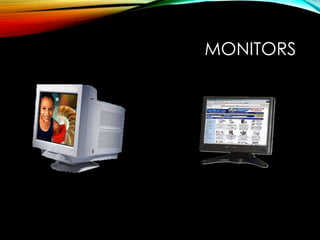
MONITORS
BY THE END OF THIS UNIT
LEARNERS SHOULD BE ABLE
TO:
• Learners should be able to define and identify the steps
in the information processing cycle
• Identify input, output and storage devices
• Show their own examples of the information processing
cycle using their own life experiences
CLASS ACTIVITY
• Access link below to follow activity
http://goo.gl/AmQ5HD

Informationprocessingcycle 120516065809-phpapp01

  • 1.
    WHAT IS THEINFORMATION PROCESSING CYCLE? The sequence of events in processing information, which includes • (1) input • (2) processing • (3) output • (4) storage
  • 2.
  • 3.
    1.INPUT -ENTERING DATA INTOTHE COMPUTER. Typical input devices: • Keyboards, mice, flatbed scanners, bar code readers, joysticks, digital data tablets (for graphic drawing), electronic cash registers
  • 4.
  • 5.
  • 6.
  • 7.
  • 8.
  • 9.
  • 10.
    2.PROCESSING -PERFORMING OPERATIONS ON THEDATA. • CPU Processor - Central Processing Unit • A central processing unit (CPU), or sometimes simply processor, is the key component in a digital computer capable of executing a program. It interprets computer program instructions and processes data. CPUs provide the fundamental digital computer trait of programmability, and are one of the necessary components found in computers of any era, along with memory and input/output facilities. A CPU that is manufactured as a single integrated circuit is usually known as a microprocessor. Beginning in the mid-1970s, microprocessors of ever-increasing complexity and power gradually supplanted other designs, and today the term "CPU" is usually applied to some type of microprocessor.
  • 11.
  • 12.
    STORAGE • Storage, alsoknown as mass media or auxiliary storage, refers to the various media on which a computer system can store data. • Storage devices hold programs and data in units called files. Hard Drive – storage
  • 13.
    WHY IS STORAGENECESSARY?  Storage devices: Retain data when the computer is turned off Are cheaper than memory Play an important role during startup Are needed for output
  • 14.
  • 15.
    3. OUTPUT • Outputdevices are peripheral devices that enable us to view or hear the computer’s processed data. • Visual output – Text, graphics, and video • Audio output – Sounds, music, and synthesized speech
  • 16.
  • 17.
  • 18.
    BY THE ENDOF THIS UNIT LEARNERS SHOULD BE ABLE TO: • Learners should be able to define and identify the steps in the information processing cycle • Identify input, output and storage devices • Show their own examples of the information processing cycle using their own life experiences
  • 19.
    CLASS ACTIVITY • Accesslink below to follow activity http://goo.gl/AmQ5HD