Inflammatory Bowel
Disease
By
Dr. Nousheen Saleem
House Officer
MU1
Inflammatory bowel disease


Refers to two chronic diseases that cause
inflammation of the intestines: ulcerative
colitis and Crohn's disease.



Although the diseases have some features in
common, there are some important differences.
Etiology


Familial




Common amongst 1st degree relative.

Environment




UC: Common in non smoker and in ex smoker.
CD: Common in smokers.
Appendicetomy protects against UC.
Cont…




Diet :associated with low residue and high
refined sugar diet
Genetics


Mutations in CARD 15/ NOD-2 Gene on CH16.
Cont…







Current evidence suggests that there's likely
a genetic defect that affects how our immune
system works and how the inflammation is
turned on and off in those people with
inflammatory bowel disease, in response to an
offending agent, like:
Bacteria: Mycobacterium, listeria, H.hepaticus
and endogenous bac.
Virus: Measeles…

or a protein in food
Ulcerative colitis


Is an inflammatory disease of the large
intestine. In which the mucosa - of the
intestine becomes inflamed and develops
ulcers with diffuse friability and erosions with
bleeding
Ulcerative colitis –gut involvement






40-50% of patients have disease limited to the rectum
and rectosigmoid (proctosigmoiditis)
30-40% of patients have disease extending beyond
the sigmoid (left sided colitis)
20% of patients have a total/extensive colitis
Ulcerative colitis – macroscopic features
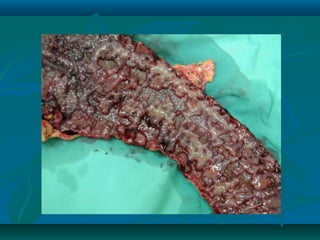
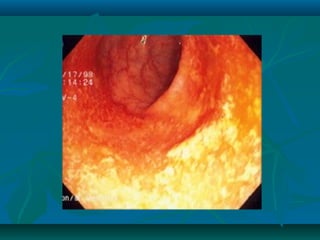
Mucosa is :
- erythematous, has a granular surface that looks like a sand
paper



In more severe diseases:
- hemorrhagic, edematous and ulcerated





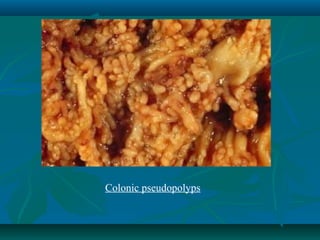
In fulminant disease a toxic colitis or a toxic megacolon may
develop ( wall become very thin and mucosa is severly
ulcerated)
Colonic pseudopolyps
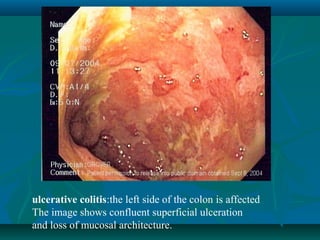
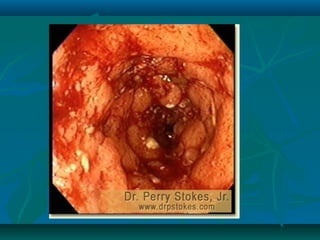
ulcerative colitis:the left side of the colon is affected
The image shows confluent superficial ulceration
and loss of mucosal architecture.
Ulcerative colitis – microscopic features


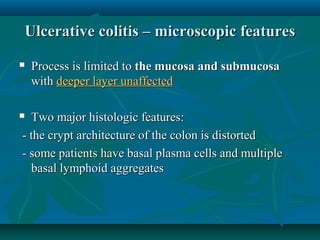
Process is limited to the mucosa and submucosa
with deeper layer unaffected

Two major histologic features:
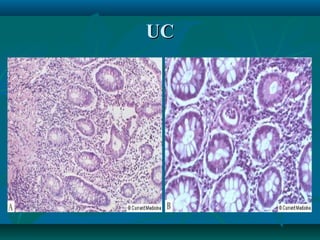
- the crypt architecture of the colon is distorted
- some patients have basal plasma cells and multiple
basal lymphoid aggregates


UC
Ulcerative colitis – clinical presentation


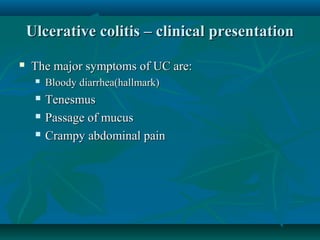
The major symptoms of UC are:


Bloody diarrhea(hallmark)



Tenesmus
Passage of mucus
Crampy abdominal pain



Ulcerative colitis – clinical presentation


Patients with proctitis usually pass fresh blood or bloodstained mucus either mixed with stool or streaked onto the
surface of normal or hard stool



When the disease extends beyond the rectum, blood is usually
mixed with stool or grossly bloody diarrhea may be noted



When the disease is severe, patients pass a liquid stool
containing blood, pus, fecal matter



Other symptoms in moderate to severe disease include:
anorexia, nausea, vomitting, fever, weight loss
EXAMINATION


PHYSICAL:






Hydration & volume status determined by B.P
Pulse rate
Nutritional status

ABDOMINAL:



Tenderness & evidence of peritoneal inflammation
Presence of red blood on DRE
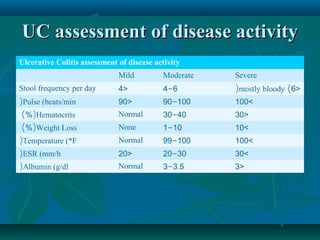
UC assessment of disease activity
Ulcerative Colitis assessment of disease activity
Mild

Moderate

Severe

Stool frequency per day

4>

4-6

(mostly bloody )6>

(Pulse (beats/min

90>

90-100

100<

)%(Hematocrits

Normal

30-40

30>

)%(Weight Loss

None

1-10

10<

(Temperature (*F

Normal

99-100

100<

(ESR (mm/h

20>

20-30

30<

(Albumin (g/dl

Normal

3-3.5

3>
MILD DISEASE (UC)
Gradual onset
Infrequent diarrhoea (<5movements/day)
Intermittent rectal bleeding
Stool may be formed or too loose in consistency
Fecal urgency ,tenesmus,left lower quadrant
pain relieved by defecation
NO significant abdominal tenderness
MODERATE DISEASE (UC)




More severe diarrhoea with frequent bleeding
Abdominal pain & tenderness but not severe
Mild fever , anemia & hypoalbuminemia
SEVERE DISEASE (UC)







Severe diarrhoea with >6-10 bloody bowel
movements /day
Severe anemia , hypovolemia ,imparied
nutrition & hypoalbuminemia
Abdominal pain & tenderness
FULMINANT COLITIS:


Subset of severe disease with rapidly worsening
symptoms & signs of toxicity
CHRON’S DISEASE




It is the chronic recurrent disease
characterised by patchy transmural
inflammation involving any segment of GIT
from mouth to anus
Cigarette smoking is strongly associated with
the development of chrons disease,resistance
to medical therapy and early disease relapse
Crohn’s disease – gut involvement


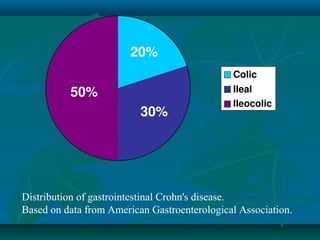
30-40% of patients have small bowel disease alone



40-55% of patients have both small and large intestines
disease



15-25% of patients have colitis alone



In 75% of patients with small intestinal disease the terminal
ileum in involved in 90%
Distribution of gastrointestinal Crohn's disease.
Based on data from American Gastroenterological Association.
Crohn’s disease – macroscopic features


CD is a transmural process



CD is segmental with skip leisions in the diseased
intestine.



In one –third of patients with CD perirectal fistulas,
fissures, abscesses, anal stenosis are present
Crohn’s disease – macroscopic features


mild disease is characterized by:
aphthous or small superficial ulcerations



In more active disease:
stellate ulcerations fuse longitudinally and
transversely to demarcate island of mucosa that are
histologically normal



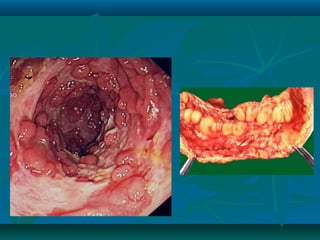
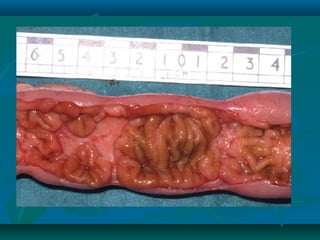
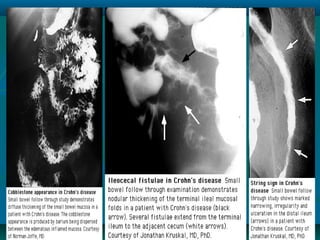
Cobblestone appearance is characteristic of CD (both
endoscopically and by barium radiography)
Cont…


Active CD is characterized by focal
inflammation and formation of fistula tracts



The bowel wall thickens and becomes
narrowed and fibrotic, leading to chronic,
recurrent bowel obstruction
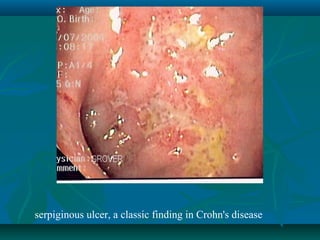
serpiginous ulcer, a classic finding in Crohn's disease
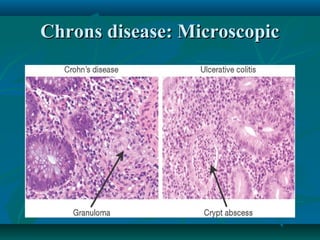
Chrons disease: Microscopic
Crohn’s disease – sign and
symptoms
Ileocolitis
- right lower quadrant pain and non bloody diarrhoea
- palpable mass, fever and leucocytosis
- pain is colickly and relieved by defecation
Right lower quadrant tenderness & a palpable mass
 Jejunoileitis
- inflammatory disease is associated with loss of
digestive and absorptive surface

Crohn’s disease – sign and symptoms


Colitis and perianal disease

- low grade fever, malaise, diarrhea, crampy abdominal pain,
sometimes hematochezia
- pain is caused by passage of fecal material through narrowed
and inflamed segments of large bowel


Gastroduodenal disease

- nusea, vomiting, epigastric pain
- second portion of duodenum is more commonly involved than
the bulb
Cont...


INTESTINAL OBSTRUCTION IN CD:
Postprandial bloating,cramping pains & loud
borborygmi
 (narrowing can occur due to inflammation spasm
or fibrosis)
FISTULATING DISEASE:
Can result in intra abdominal or retroperitoneal
abscess menifested by fever chills, a tender
abdominal mass & leucocytosis.

Cont…






Enterocolic fistulas :
presents with diarrhoea , weight loss &
malnutrition.
Enterovesical fistulas/enterovaginal fistulas:
presents with recurrent infections.
Enterocutaneous fistulas:
usually develop at site of surgical scars.
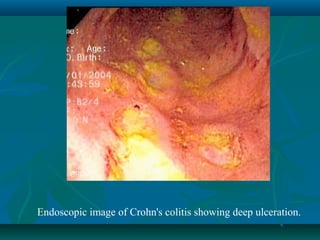
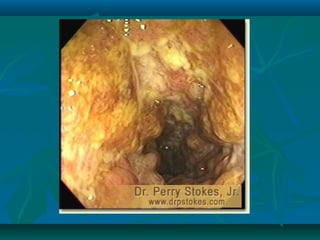
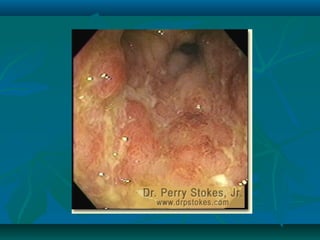
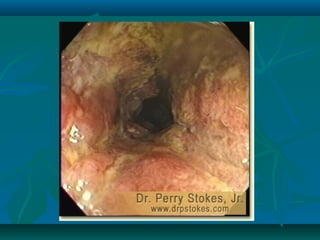
Endoscopic image of Crohn's colitis showing deep ulceration.
Extraintestianal Menifestation


25% of the pts develop a number of
extraintestinal menifestations



Almost one-third of the patients have at least
one.
Extraintestinal manifestation
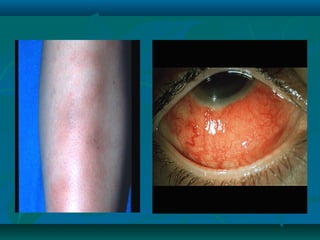
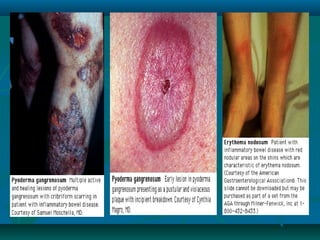
•Eyes: Uveitis, Episcleritis, Conjuctivitis
•Joints: Peripheral arthropathy, arthralgia, ankylosing
spondylits, inflammatory Back pain
•Skin: Erythema nodosum, pyoderma gangrenosum
•Liver and Biliary tree: Sclerosing cholangitis [UC]
•Nephrolithiasis [Oxalate Stone in pt with small bowel
disease or after resection] (CD)
•Oral apthous leisions (CD)
•Gall stone(CD)
•Venous thrombosis
Patients with IBD have an increased
prevelance of osteoporosis secondary to
vitamin D deficiency, calcium
malabsorbtion, malnutrition, corticosteroid
use
More common cardiopulmonary
manifestations include endocarditis,
myocarditis, pleuropericarditis and
interstitial lung disease.
Examination findings_in CD







Loss of weight
General ill health
Aphthous ulceration of mouth, glossitis
angular stomatitis
Abdominal tenderness and RIF mass
Perianal skin tags, fissures, fistulae
?








Extraintestinal menifestations common to
chrons disease & UC include all except
A) amyloidosis
B) gall stones
C) pyoderma gangreonosum
D) uveitis
E) ankylosing spondylitis


Answer is B
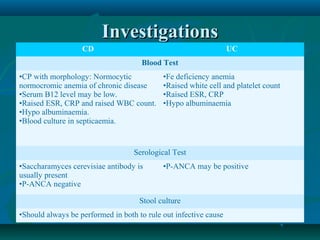
Investigations
CD

UC
Blood Test

•CP with morphology: Normocytic
normocromic anemia of chronic disease
•Serum B12 level may be low.
•Raised ESR, CRP and raised WBC count.
•Hypo albuminaemia.
•Blood culture in septicaemia.

•Fe deficiency anemia
•Raised white cell and platelet count
•Raised ESR, CRP
•Hypo albuminaemia

Serological Test
•Saccharamyces cerevisiae antibody is
usually present
•P-ANCA negative

•P-ANCA may be positive

Stool culture
•Should always be performed in both to rule out infective cause
Cont…..
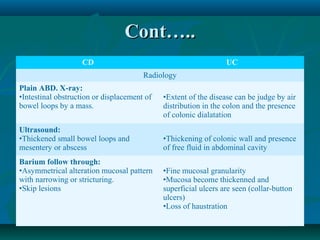
CD

UC
Radiology

Plain ABD. X-ray:
•Intestinal obstruction or displacement of
bowel loops by a mass.
Ultrasound:
•Thickened small bowel loops and
mesentery or abscess
Barium follow through:
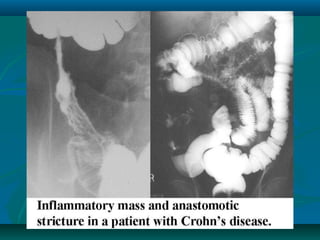
•Asymmetrical alteration mucosal pattern
with narrowing or stricturing.
•Skip lesions

•Extent of the disease can be judge by air
distribution in the colon and the presence
of colonic dialatation
•Thickening of colonic wall and presence
of free fluid in abdominal cavity
•Fine mucosal granularity
•Mucosa become thickenned and
superficial ulcers are seen (collar-button
ulcers)
•Loss of haustration
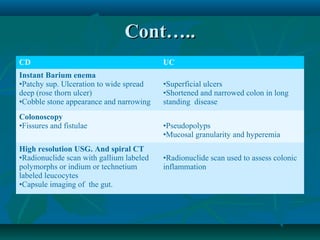
Cont…..
CD

UC

Instant Barium enema
•Patchy sup. Ulceration to wide spread
deep (rose thorn ulcer)
•Cobble stone appearance and narrowing

•Superficial ulcers
•Shortened and narrowed colon in long
standing disease

Colonoscopy
•Fissures and fistulae
High resolution USG. And spiral CT
•Radionuclide scan with gallium labeled
polymorphs or indium or technetium
labeled leucocytes
•Capsule imaging of the gut.

•Pseudopolyps
•Mucosal granularity and hyperemia
•Radionuclide scan used to assess colonic
inflammation
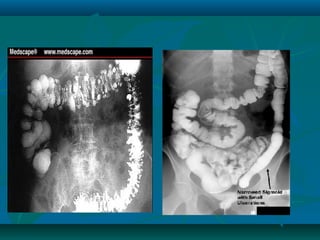
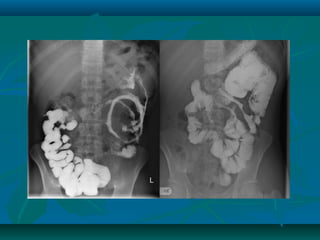
RADIOGRAPHS
Complication
IN UC:
Haemorrage
 Perforation
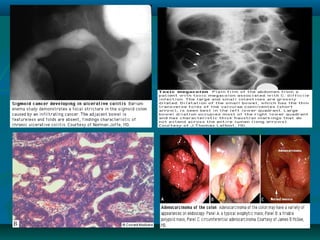
 Toxic megacolon (transverse colon with a
diameter of more than 5 cm to 6cm with loss
of haustration
 Cancer: in patient with active colitis of more
than eight year
Cont…


IN CD:




Strictures with intestinal obstruction
Abscesses
Fistulas
Treatment


Medical treatment









Amino salicylates
Cortico steroid
Thiopurines
Methotrexate
Ciclosporin
Infliximab
Antibiotic
Antidiarrhoeal agents
T/M OF UC


ACTIVE PROCTITIS: 1st line




Pt NOT RESPONDING:




Mesalazine enemas/suppositries+ oral mesalazine
Oral prednisolone 40mg daily

ACTIVE LEFT SIDED OR EXTENSIVE UC:


High dose aminosalicylates
Cont....



With topical aminosalicylates + corticosteroids
SEVERE/FULMINANT UC:
SUPPORTIVE T/M:
 I/V fluids,nutritional support,blood transfusion if
HB <100g/l
MEDICAL T/M:
I/V steroids,prophylaxis for venous thrombosis,
I/V cyclosporin or infliximab for non responders to
steroids

Cont….


MAINTAINANCE OF REMISSION:



Oral salicylates
Thiopurines should be considered for frequent
relapsers
Ulcerative Colitis


Nursing care
 Report S/S of problems
 Provide emotional
support
 Skin care
 Record # of stools and
type
 Monitor bowel sounds
 Vitals and I/O







Watch for dehydration
Monitor Electrolytes
Weigh daily
Dietary consult
Watch for
complications
T/M OF CD


INDUCTION OF REMISSION






Enteral nutrition
Oral or I/V steroids
Aminosalicylates

MAINTAINANCE OF REMISSION






Cessation of smoking
Aminosalicylates
Thiopurines
MTX with folic acid(resistant to thiopurines)
infliximab
Cont….


FISTULATING AND PERIANAL DISEASE




Metronidazole and ciprofloxacin
Thiopurines in chronic disease
infliximab
Crohn’s Disease


Nursing care




Identical to colitis
Watch for internal bleeding
Dietary changes




Restricted fiber diet with no raw fruit or vegetables and no nuts or
whole grains
Low fat diet to reduce fatty stools
Surgical Treatment



UC
IND:


Perforation



Toxic megacolon
Uncontrolled hemorrhage
Possibility of malignancy (surgery is indicated if dysplastic change
is present)
Intractability (Acute; fulminant colitis or chronic illness)
Extraintestinal manifestations









Panproctocolectomy with ileostmy or
proctocolectmy with ilealanal pouch
anastomosis
Cont…


CD






IND: fistulae, abscesses, perianal disease, small or
large bowel obstruction
For localized segment: segmental resection or
multiple stricturoplasties
For extensive colitis: total colectomy (ileoanal
pouch should be avoided)
Probiotic use in IBD
(lactobacilli, bifidobacterium, nonpathogenic
E.coli,)
They maintain remission in inflammation of
pouch which is created by surgrey;possibly by
increasing tissue levels of IL-10
May also be useful in maintaining remission in
UC
ESSENTIALS OF DIAGNOSIS
in UC






Bloody diarrhoea
Lower abdominal cramps & fecal urgency
Anemia and low serum albumin
Negative stool cultures
Sigmoidoscopy is the key to diagnosis
ESSENTIALS OF DIAGNOSIS
in CD







Insidious onset
Intermittent bouts of low grade fever diarrhoea
& right lower quadrant pain
Right lower quadrant mass & tenderness
Perianal disease with fistulas
Radiographic evidence of ulceration stricturing
or fistulas of the small intestine & colon
MCQs
Scenerio


A 23yr old women has chronic diarrhoea with
blood & mucus accompanied by lower
abdominal discomfort.she has about 8
stools/day,albumin is 29g/l,hb 9g/l,& ESR is
60mm/l.colonoscopy reveals left sided
proctocolitis.biopsy shows a chronic
inflammatory cell infiltrate in lamina propria
crypt abscess & goblet cell depeletion are
seen.
Select the best medication for this
patient.
A) Oral aminosalicylates only
B) Parentral aminosalicylates
C) Oral aminosalicylates with predisolone 20mg
enema
D) Oral aminosalicylates with oral prednisolone
E) Oral sulphapyridine
Answer is D
What is not true regarding
azathioprine use in IBD
A) May be useful in pt of chronic IBD
B) Helps to lower the dose of corticosteroids
C) Used more frequently in UC than CD
D) Bone marrow suppression with fetal
neutropenia may occur
E) Usual dose is 2.5mg/kg/day
Answer is C
Initial investigation of choice to
diagnose ulcerative colitis is
A) Sigmoidoscopy
B) Colonoscopy
C) Barium enema
D) Barium follow through
Answer is A
Lab investigations in IBD shows
all except
A) Anemia
B) Raised ESR
C) Leucocytosis
D) Raised amylase
E) Abnormal LFTs
Answer is D
Thank you

Inflammatory Bowel Disease

  • 1.
  • 2.
    Inflammatory bowel disease  Refersto two chronic diseases that cause inflammation of the intestines: ulcerative colitis and Crohn's disease.  Although the diseases have some features in common, there are some important differences.
  • 3.
    Etiology  Familial   Common amongst 1stdegree relative. Environment    UC: Common in non smoker and in ex smoker. CD: Common in smokers. Appendicetomy protects against UC.
  • 4.
    Cont…   Diet :associated withlow residue and high refined sugar diet Genetics  Mutations in CARD 15/ NOD-2 Gene on CH16.
  • 5.
    Cont…     Current evidence suggeststhat there's likely a genetic defect that affects how our immune system works and how the inflammation is turned on and off in those people with inflammatory bowel disease, in response to an offending agent, like: Bacteria: Mycobacterium, listeria, H.hepaticus and endogenous bac. Virus: Measeles… or a protein in food
  • 6.
    Ulcerative colitis  Is aninflammatory disease of the large intestine. In which the mucosa - of the intestine becomes inflamed and develops ulcers with diffuse friability and erosions with bleeding
  • 7.
    Ulcerative colitis –gutinvolvement    40-50% of patients have disease limited to the rectum and rectosigmoid (proctosigmoiditis) 30-40% of patients have disease extending beyond the sigmoid (left sided colitis) 20% of patients have a total/extensive colitis
  • 8.
    Ulcerative colitis –macroscopic features Mucosa is : - erythematous, has a granular surface that looks like a sand paper  In more severe diseases: - hemorrhagic, edematous and ulcerated   In fulminant disease a toxic colitis or a toxic megacolon may develop ( wall become very thin and mucosa is severly ulcerated)
  • 10.
  • 11.
    ulcerative colitis:the leftside of the colon is affected The image shows confluent superficial ulceration and loss of mucosal architecture.
  • 14.
    Ulcerative colitis –microscopic features  Process is limited to the mucosa and submucosa with deeper layer unaffected Two major histologic features: - the crypt architecture of the colon is distorted - some patients have basal plasma cells and multiple basal lymphoid aggregates 
  • 15.
  • 16.
    Ulcerative colitis –clinical presentation  The major symptoms of UC are:  Bloody diarrhea(hallmark)  Tenesmus Passage of mucus Crampy abdominal pain  
  • 17.
    Ulcerative colitis –clinical presentation  Patients with proctitis usually pass fresh blood or bloodstained mucus either mixed with stool or streaked onto the surface of normal or hard stool  When the disease extends beyond the rectum, blood is usually mixed with stool or grossly bloody diarrhea may be noted  When the disease is severe, patients pass a liquid stool containing blood, pus, fecal matter  Other symptoms in moderate to severe disease include: anorexia, nausea, vomitting, fever, weight loss
  • 18.
    EXAMINATION  PHYSICAL:     Hydration & volumestatus determined by B.P Pulse rate Nutritional status ABDOMINAL:   Tenderness & evidence of peritoneal inflammation Presence of red blood on DRE
  • 19.
    UC assessment ofdisease activity Ulcerative Colitis assessment of disease activity Mild Moderate Severe Stool frequency per day 4> 4-6 (mostly bloody )6> (Pulse (beats/min 90> 90-100 100< )%(Hematocrits Normal 30-40 30> )%(Weight Loss None 1-10 10< (Temperature (*F Normal 99-100 100< (ESR (mm/h 20> 20-30 30< (Albumin (g/dl Normal 3-3.5 3>
  • 20.
    MILD DISEASE (UC) Gradualonset Infrequent diarrhoea (<5movements/day) Intermittent rectal bleeding Stool may be formed or too loose in consistency Fecal urgency ,tenesmus,left lower quadrant pain relieved by defecation NO significant abdominal tenderness
  • 21.
    MODERATE DISEASE (UC)    Moresevere diarrhoea with frequent bleeding Abdominal pain & tenderness but not severe Mild fever , anemia & hypoalbuminemia
  • 22.
    SEVERE DISEASE (UC)     Severediarrhoea with >6-10 bloody bowel movements /day Severe anemia , hypovolemia ,imparied nutrition & hypoalbuminemia Abdominal pain & tenderness FULMINANT COLITIS:  Subset of severe disease with rapidly worsening symptoms & signs of toxicity
  • 23.
    CHRON’S DISEASE   It isthe chronic recurrent disease characterised by patchy transmural inflammation involving any segment of GIT from mouth to anus Cigarette smoking is strongly associated with the development of chrons disease,resistance to medical therapy and early disease relapse
  • 24.
    Crohn’s disease –gut involvement  30-40% of patients have small bowel disease alone  40-55% of patients have both small and large intestines disease  15-25% of patients have colitis alone  In 75% of patients with small intestinal disease the terminal ileum in involved in 90%
  • 25.
    Distribution of gastrointestinalCrohn's disease. Based on data from American Gastroenterological Association.
  • 26.
    Crohn’s disease –macroscopic features  CD is a transmural process  CD is segmental with skip leisions in the diseased intestine.  In one –third of patients with CD perirectal fistulas, fissures, abscesses, anal stenosis are present
  • 27.
    Crohn’s disease –macroscopic features  mild disease is characterized by: aphthous or small superficial ulcerations  In more active disease: stellate ulcerations fuse longitudinally and transversely to demarcate island of mucosa that are histologically normal  Cobblestone appearance is characteristic of CD (both endoscopically and by barium radiography)
  • 29.
    Cont…  Active CD ischaracterized by focal inflammation and formation of fistula tracts  The bowel wall thickens and becomes narrowed and fibrotic, leading to chronic, recurrent bowel obstruction
  • 30.
    serpiginous ulcer, aclassic finding in Crohn's disease
  • 31.
  • 32.
    Crohn’s disease –sign and symptoms Ileocolitis - right lower quadrant pain and non bloody diarrhoea - palpable mass, fever and leucocytosis - pain is colickly and relieved by defecation Right lower quadrant tenderness & a palpable mass  Jejunoileitis - inflammatory disease is associated with loss of digestive and absorptive surface 
  • 33.
    Crohn’s disease –sign and symptoms  Colitis and perianal disease - low grade fever, malaise, diarrhea, crampy abdominal pain, sometimes hematochezia - pain is caused by passage of fecal material through narrowed and inflamed segments of large bowel  Gastroduodenal disease - nusea, vomiting, epigastric pain - second portion of duodenum is more commonly involved than the bulb
  • 34.
    Cont...  INTESTINAL OBSTRUCTION INCD: Postprandial bloating,cramping pains & loud borborygmi  (narrowing can occur due to inflammation spasm or fibrosis) FISTULATING DISEASE: Can result in intra abdominal or retroperitoneal abscess menifested by fever chills, a tender abdominal mass & leucocytosis. 
  • 35.
    Cont…    Enterocolic fistulas : presentswith diarrhoea , weight loss & malnutrition. Enterovesical fistulas/enterovaginal fistulas: presents with recurrent infections. Enterocutaneous fistulas: usually develop at site of surgical scars.
  • 36.
    Endoscopic image ofCrohn's colitis showing deep ulceration.
  • 41.
    Extraintestianal Menifestation  25% ofthe pts develop a number of extraintestinal menifestations  Almost one-third of the patients have at least one.
  • 42.
    Extraintestinal manifestation •Eyes: Uveitis,Episcleritis, Conjuctivitis •Joints: Peripheral arthropathy, arthralgia, ankylosing spondylits, inflammatory Back pain •Skin: Erythema nodosum, pyoderma gangrenosum •Liver and Biliary tree: Sclerosing cholangitis [UC] •Nephrolithiasis [Oxalate Stone in pt with small bowel disease or after resection] (CD) •Oral apthous leisions (CD) •Gall stone(CD) •Venous thrombosis
  • 45.
    Patients with IBDhave an increased prevelance of osteoporosis secondary to vitamin D deficiency, calcium malabsorbtion, malnutrition, corticosteroid use More common cardiopulmonary manifestations include endocarditis, myocarditis, pleuropericarditis and interstitial lung disease.
  • 46.
    Examination findings_in CD      Lossof weight General ill health Aphthous ulceration of mouth, glossitis angular stomatitis Abdominal tenderness and RIF mass Perianal skin tags, fissures, fistulae
  • 47.
    ?       Extraintestinal menifestations commonto chrons disease & UC include all except A) amyloidosis B) gall stones C) pyoderma gangreonosum D) uveitis E) ankylosing spondylitis
  • 48.
  • 49.
    Investigations CD UC Blood Test •CP withmorphology: Normocytic normocromic anemia of chronic disease •Serum B12 level may be low. •Raised ESR, CRP and raised WBC count. •Hypo albuminaemia. •Blood culture in septicaemia. •Fe deficiency anemia •Raised white cell and platelet count •Raised ESR, CRP •Hypo albuminaemia Serological Test •Saccharamyces cerevisiae antibody is usually present •P-ANCA negative •P-ANCA may be positive Stool culture •Should always be performed in both to rule out infective cause
  • 50.
    Cont….. CD UC Radiology Plain ABD. X-ray: •Intestinalobstruction or displacement of bowel loops by a mass. Ultrasound: •Thickened small bowel loops and mesentery or abscess Barium follow through: •Asymmetrical alteration mucosal pattern with narrowing or stricturing. •Skip lesions •Extent of the disease can be judge by air distribution in the colon and the presence of colonic dialatation •Thickening of colonic wall and presence of free fluid in abdominal cavity •Fine mucosal granularity •Mucosa become thickenned and superficial ulcers are seen (collar-button ulcers) •Loss of haustration
  • 51.
    Cont….. CD UC Instant Barium enema •Patchysup. Ulceration to wide spread deep (rose thorn ulcer) •Cobble stone appearance and narrowing •Superficial ulcers •Shortened and narrowed colon in long standing disease Colonoscopy •Fissures and fistulae High resolution USG. And spiral CT •Radionuclide scan with gallium labeled polymorphs or indium or technetium labeled leucocytes •Capsule imaging of the gut. •Pseudopolyps •Mucosal granularity and hyperemia •Radionuclide scan used to assess colonic inflammation
  • 52.
  • 57.
    Complication IN UC: Haemorrage  Perforation Toxic megacolon (transverse colon with a diameter of more than 5 cm to 6cm with loss of haustration  Cancer: in patient with active colitis of more than eight year
  • 58.
    Cont…  IN CD:    Strictures withintestinal obstruction Abscesses Fistulas
  • 60.
    Treatment  Medical treatment         Amino salicylates Corticosteroid Thiopurines Methotrexate Ciclosporin Infliximab Antibiotic Antidiarrhoeal agents
  • 61.
    T/M OF UC  ACTIVEPROCTITIS: 1st line   Pt NOT RESPONDING:   Mesalazine enemas/suppositries+ oral mesalazine Oral prednisolone 40mg daily ACTIVE LEFT SIDED OR EXTENSIVE UC:  High dose aminosalicylates
  • 62.
    Cont....   With topical aminosalicylates+ corticosteroids SEVERE/FULMINANT UC: SUPPORTIVE T/M:  I/V fluids,nutritional support,blood transfusion if HB <100g/l MEDICAL T/M: I/V steroids,prophylaxis for venous thrombosis, I/V cyclosporin or infliximab for non responders to steroids 
  • 63.
    Cont….  MAINTAINANCE OF REMISSION:   Oralsalicylates Thiopurines should be considered for frequent relapsers
  • 64.
    Ulcerative Colitis  Nursing care Report S/S of problems  Provide emotional support  Skin care  Record # of stools and type  Monitor bowel sounds  Vitals and I/O      Watch for dehydration Monitor Electrolytes Weigh daily Dietary consult Watch for complications
  • 65.
    T/M OF CD  INDUCTIONOF REMISSION     Enteral nutrition Oral or I/V steroids Aminosalicylates MAINTAINANCE OF REMISSION      Cessation of smoking Aminosalicylates Thiopurines MTX with folic acid(resistant to thiopurines) infliximab
  • 66.
    Cont….  FISTULATING AND PERIANALDISEASE    Metronidazole and ciprofloxacin Thiopurines in chronic disease infliximab
  • 67.
    Crohn’s Disease  Nursing care    Identicalto colitis Watch for internal bleeding Dietary changes   Restricted fiber diet with no raw fruit or vegetables and no nuts or whole grains Low fat diet to reduce fatty stools
  • 68.
    Surgical Treatment   UC IND:  Perforation  Toxic megacolon Uncontrolledhemorrhage Possibility of malignancy (surgery is indicated if dysplastic change is present) Intractability (Acute; fulminant colitis or chronic illness) Extraintestinal manifestations      Panproctocolectomy with ileostmy or proctocolectmy with ilealanal pouch anastomosis
  • 69.
    Cont…  CD    IND: fistulae, abscesses,perianal disease, small or large bowel obstruction For localized segment: segmental resection or multiple stricturoplasties For extensive colitis: total colectomy (ileoanal pouch should be avoided)
  • 70.
    Probiotic use inIBD (lactobacilli, bifidobacterium, nonpathogenic E.coli,) They maintain remission in inflammation of pouch which is created by surgrey;possibly by increasing tissue levels of IL-10 May also be useful in maintaining remission in UC
  • 71.
    ESSENTIALS OF DIAGNOSIS inUC      Bloody diarrhoea Lower abdominal cramps & fecal urgency Anemia and low serum albumin Negative stool cultures Sigmoidoscopy is the key to diagnosis
  • 72.
    ESSENTIALS OF DIAGNOSIS inCD      Insidious onset Intermittent bouts of low grade fever diarrhoea & right lower quadrant pain Right lower quadrant mass & tenderness Perianal disease with fistulas Radiographic evidence of ulceration stricturing or fistulas of the small intestine & colon
  • 73.
  • 74.
    Scenerio  A 23yr oldwomen has chronic diarrhoea with blood & mucus accompanied by lower abdominal discomfort.she has about 8 stools/day,albumin is 29g/l,hb 9g/l,& ESR is 60mm/l.colonoscopy reveals left sided proctocolitis.biopsy shows a chronic inflammatory cell infiltrate in lamina propria crypt abscess & goblet cell depeletion are seen.
  • 75.
    Select the bestmedication for this patient. A) Oral aminosalicylates only B) Parentral aminosalicylates C) Oral aminosalicylates with predisolone 20mg enema D) Oral aminosalicylates with oral prednisolone E) Oral sulphapyridine
  • 76.
  • 77.
    What is nottrue regarding azathioprine use in IBD A) May be useful in pt of chronic IBD B) Helps to lower the dose of corticosteroids C) Used more frequently in UC than CD D) Bone marrow suppression with fetal neutropenia may occur E) Usual dose is 2.5mg/kg/day
  • 78.
  • 79.
    Initial investigation ofchoice to diagnose ulcerative colitis is A) Sigmoidoscopy B) Colonoscopy C) Barium enema D) Barium follow through
  • 80.
  • 81.
    Lab investigations inIBD shows all except A) Anemia B) Raised ESR C) Leucocytosis D) Raised amylase E) Abnormal LFTs
  • 82.
  • 83.