PYROSIS 
DYSPEPSIA
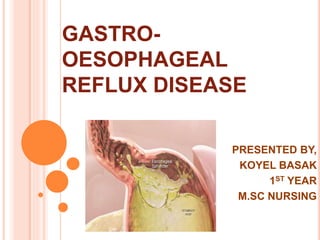
GASTRO-OESOPHAGEAL 
REFLUX DISEASE 
PRESENTED BY, 
KOYEL BASAK 
1ST YEAR 
M.SC NURSING
DEFINITION: 
Gastro esophageal reflux disease is a 
chronic and relapsing condition in which 
prolonged reflux of hydrochloric acid, 
pepsin and bile salts in esophagus, oral 
cavity and respiratory system occurs that 
leads to esophagitis
INCIDENCE: 
 In India, 18.7% of the older adult population 
suffers from GERD. Among pregnant 
women, 9.5% women suffer in first trimester, 
43.1% women suffer in second trimester 
and 54.1% women suffer in third trimester 
[according to Indian J Gastroentrol (May- 
June 2011) 30(3):105-107]. Approximately 

14% to 20% population in USA experience 
GERD symptoms at least once a week.
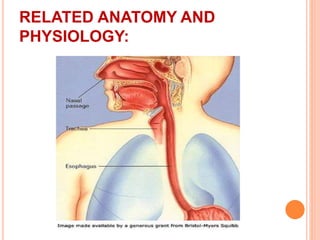
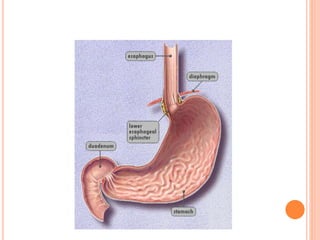
RELATED ANATOMY AND 
PHYSIOLOGY:
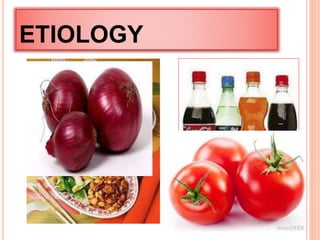
ETIOLOGY 
Dietary factors:
ETIOLOGY
LIFE-STYLES
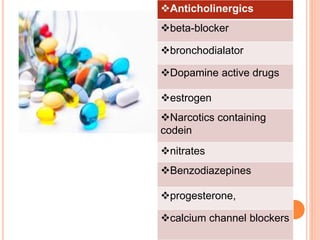
Anticholinergics 
beta-blocker 
bronchodialator 
Dopamine active drugs 
estrogen 
Narcotics containing 
codein 
nitrates 
Benzodiazepines 
• 
progesterone, 
calcium channel blockers
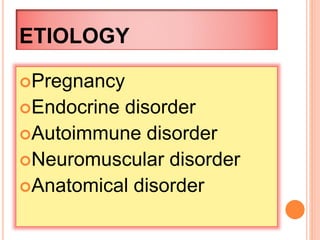
ETIOLOGY 
Pregnancy 
Endocrine disorder 
Autoimmune disorder 
Neuromuscular disorder 
Anatomical disorder
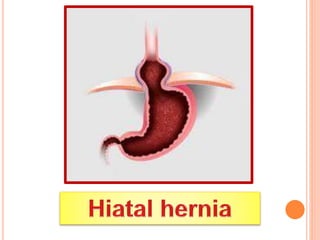
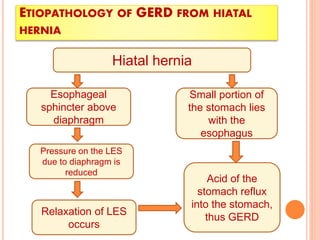
ETIOPATHOLOGY OF GERD FROM HIATAL 
HERNIA 
Hiatal hernia 
Small portion of 
the stomach lies 
with the 
esophagus 
Esophageal 
sphincter above 
diaphragm 
Pressure on the LES 
due to diaphragm is 
reduced 
Relaxation of LES 
occurs 
Acid of the 
stomach reflux 
into the stomach, 
thus GERD
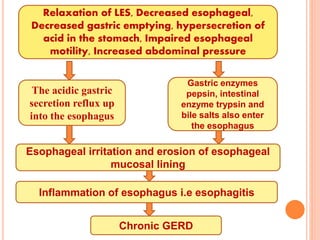
Relaxation of LES, Decreased esophageal, 
Decreased gastric emptying, hypersecretion of 
acid in the stomach, Impaired esophageal 
motility, Increased abdominal pressure 
The acidic gastric 
secretion reflux up 
into the esophagus 
Gastric enzymes 
pepsin, intestinal 
enzyme trypsin and 
bile salts also enter 
the esophagus 
Esophageal irritation and erosion of esophageal 
mucosal lining 
Inflammation of esophagus i.e esophagitis 
Chronic GERD
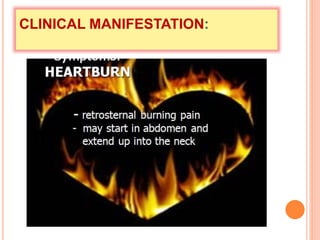
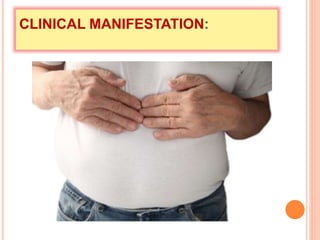
CLINICAL MANIFESTATION:
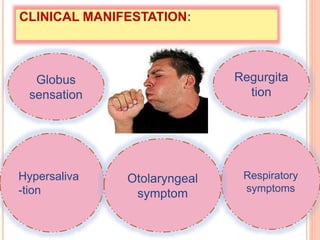
CLINICAL MANIFESTATION: 
Globus 
sensation 
Hypersaliva 
-tion 
Regurgita 
tion 
Respiratory 
symptoms 
Otolaryngeal 
symptom
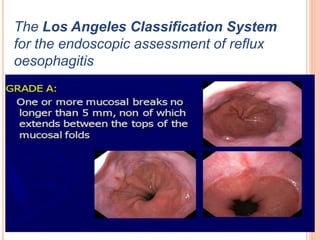
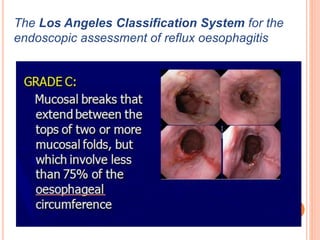
The Los Angeles Classification System 
for the endoscopic assessment of reflux 
oesophagitis
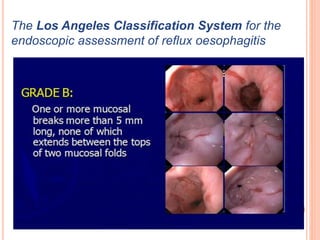
The Los Angeles Classification System for the 
endoscopic assessment of reflux oesophagitis
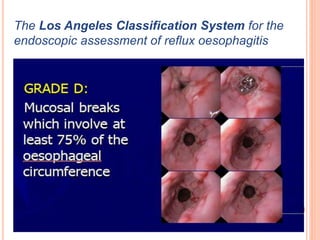
The Los Angeles Classification System for the 
endoscopic assessment of reflux oesophagitis
The Los Angeles Classification System for the 
endoscopic assessment of reflux oesophagitis
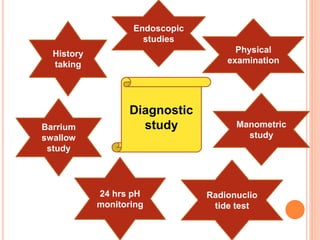
Diagnostic 
study 
History 
taking 
Manometric 
study 
24 hrs pH 
monitoring 
Radionuclio 
tide test 
Endoscopic 
studies 
Barrium 
swallow 
study 
Physical 
examination
COLLABORATIVE 
MANAGEMENT
Nutritional 
therapy 
Lifestyle 
modification
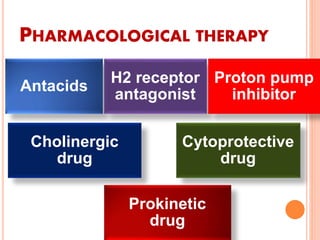
PHARMACOLOGICAL THERAPY 
Antacids 
H2 receptor 
antagonist 
Proton pump 
inhibitor 
Cytoprotective 
drug 
Cholinergic 
drug 
Prokinetic 
drug
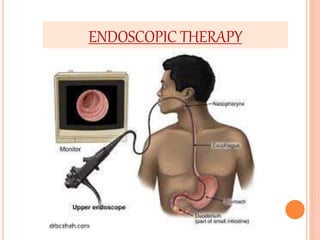
ENDOSCOPIC THERAPY
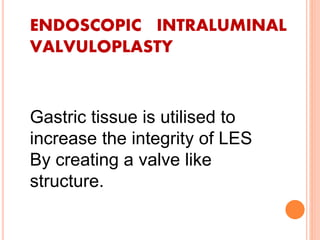
ENDOSCOPIC INTRALUMINAL 
VALVULOPLASTY 
Gastric tissue is utilised to 
increase the integrity of LES 
By creating a valve like 
structure.
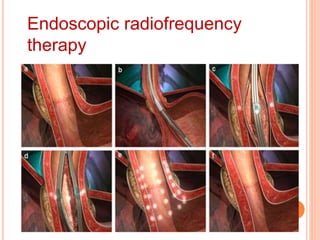
Endoscopic radiofrequency 
therapy
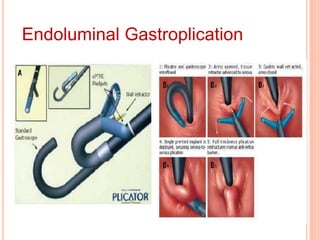
Endoluminal Gastroplication
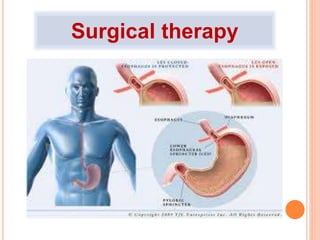
Surgical therapy
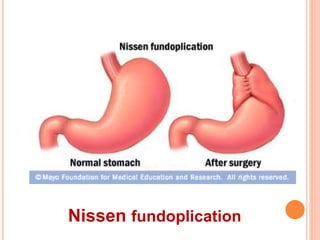
Nissen fundoplication
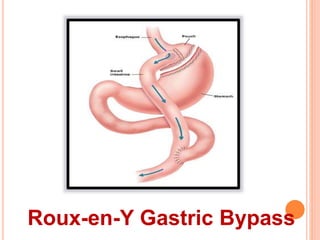
Roux-en-Y Gastric Bypass
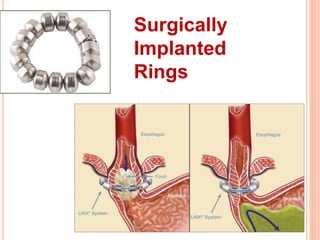
Surgically 
Implanted 
Rings
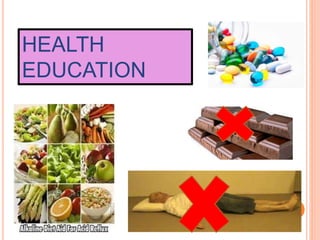
HEALTH 
EDUCATION
Nursing 
management
ACUTE PAIN AT EPIGASTRIC REGION RELATED 
TO REFLUX OF THE GASTRIC CONTENTS INTO 
THE ESOPHAGUS 
Plan of Intervention: 
 A comprehensive assessment of pain including 
location, characteristic, onset, duration, frequency, 
quality is to be done to determine the appropriate 
intervention. 
 Comfortable position is to be provided (head end 
elevated). 
 Diet therapy is to be provided that is providing 
water or any alkaline agent. 
 Non-pharmacological techniques e.g guided 
imagery, music therapy, diversional therapy is to be 
given. 
 Analgesics are to be given as per prescription.
NAUSEA RELATED TO GLOBUS SENSATION, 
REGURGITATION, DELAYED ESOPHAGEAL 
EMPTYING. 
Plan of intervention: 
 A complete assessment of nausea including 
severity, duration, frequency, precipitating factors. 
 Head end is to be elevated. 
 Personal factors are to be eliminated that increase 
nausea such as anxiety, fatigue, fear. 
 Oral hygiene is to be maintained. 
 Small and frequent diet is to be given to prevent 
overdistention of the stomach. 
 Adequate rest and avoiding of bending after meal is 
to be promoted. 
 Non-pharmacological techniques are to be taught 
i.e relaxation, distraction etc. 
 Anti-emetic drugs are to be administered.
IMBALANCED NUTRITION: LESS THAN BODY 
REQUIREMENT RELATED TO NAUSEA, 
INABILITY TO INTAKE FOOD ADEQUATELY 
SECONDARY TO GLOBUS SENSATION IN 
THROAT, PYROSIS. 
Plan of intervention: 
 A complete assessment of the nutritional is to be 
done. 
 Foods that decreases LES pressure is to be 
avoided. 
 Small amount of meal is to be encouraged. 
 Intake output chart is to be monitored. 
 Weight is to be checked at frequent interval. 
 Preference is to be given to patient’s desire during 
preparing food. 
 Food is to be served in attractive way.
HEMORRHAGE RELATED TO ERODED 
MUCOSAL TISSUE OF ESOPHAGUS. 
Plan of intervention: 
 Assess the evidence of hematemesis, brigh red blood in 
stool or malena, abdominal pain or discomfort, 
symptoms of shock (cool and calmy skin, tachycardia, 
tachyonea etc) 
 If ulcer is actively bleeding, NG tube is to be inserted 
gently and NG aspiration is to be monitored for amount, 
color and degree of bleeding. 
 Vital signs are to be checked every 15mins. 
 IV infusion is to be started and fluid replacement is to be 
done. 
 Hematocrit and hemoglobin level is to be checked. 
 Intake output is to be monitored and fluid balance is to 
be maintained. 
 Infusion of proton pump inhibitor is started continuously. 
 Antiplatelet drugs may be administered.
INEFFECTIVE THERAPEUTIC REGIMEN RELATED 
TO LACK OF KNOWLEDGE OF LONG-TERM 
MANAGEMENT OF GERD, LIFESTYLE 
MODIFICATION, APPROAPRIATE DIET THERAPY. 
Plan of intervention: 
 Patient’s knowledge about the disease and its 
therapy is to be assessed. 
 Pathophysiology and treatment modalities of the 
disease are to explained. 
 Health teaching is to be given to the patient. 
 Patient is to be instructed on which sign and 
symptoms to report to health care provider to 
ensure early initiation of treatment. 
 Psychological support is given. 
 All the questions of the patient about the disease 
and its treatment is to answered with rationale.
COMPLICATION 
Chronic erosive Oesophagitis: It is 
responsible for 40-60% of GERD 
symptoms. 
Esophageal stricture: It is the result of 
healing of erosive esophagitis. 
Barrett’s esophagus: It accounts for 8-15% 
of all GERD cases.
Gerd ppt

Gerd ppt

  • 2.
  • 3.
    GASTRO-OESOPHAGEAL REFLUX DISEASE PRESENTED BY, KOYEL BASAK 1ST YEAR M.SC NURSING
  • 4.
    DEFINITION: Gastro esophagealreflux disease is a chronic and relapsing condition in which prolonged reflux of hydrochloric acid, pepsin and bile salts in esophagus, oral cavity and respiratory system occurs that leads to esophagitis
  • 5.
    INCIDENCE:  InIndia, 18.7% of the older adult population suffers from GERD. Among pregnant women, 9.5% women suffer in first trimester, 43.1% women suffer in second trimester and 54.1% women suffer in third trimester [according to Indian J Gastroentrol (May- June 2011) 30(3):105-107]. Approximately 14% to 20% population in USA experience GERD symptoms at least once a week.
  • 6.
    RELATED ANATOMY AND PHYSIOLOGY:
  • 8.
  • 9.
  • 10.
  • 12.
    Anticholinergics beta-blocker bronchodialator Dopamine active drugs estrogen Narcotics containing codein nitrates Benzodiazepines • progesterone, calcium channel blockers
  • 13.
    ETIOLOGY Pregnancy Endocrinedisorder Autoimmune disorder Neuromuscular disorder Anatomical disorder
  • 15.
    ETIOPATHOLOGY OF GERDFROM HIATAL HERNIA Hiatal hernia Small portion of the stomach lies with the esophagus Esophageal sphincter above diaphragm Pressure on the LES due to diaphragm is reduced Relaxation of LES occurs Acid of the stomach reflux into the stomach, thus GERD
  • 16.
    Relaxation of LES,Decreased esophageal, Decreased gastric emptying, hypersecretion of acid in the stomach, Impaired esophageal motility, Increased abdominal pressure The acidic gastric secretion reflux up into the esophagus Gastric enzymes pepsin, intestinal enzyme trypsin and bile salts also enter the esophagus Esophageal irritation and erosion of esophageal mucosal lining Inflammation of esophagus i.e esophagitis Chronic GERD
  • 17.
  • 18.
  • 19.
    CLINICAL MANIFESTATION: Globus sensation Hypersaliva -tion Regurgita tion Respiratory symptoms Otolaryngeal symptom
  • 20.
    The Los AngelesClassification System for the endoscopic assessment of reflux oesophagitis
  • 21.
    The Los AngelesClassification System for the endoscopic assessment of reflux oesophagitis
  • 22.
    The Los AngelesClassification System for the endoscopic assessment of reflux oesophagitis
  • 23.
    The Los AngelesClassification System for the endoscopic assessment of reflux oesophagitis
  • 24.
    Diagnostic study History taking Manometric study 24 hrs pH monitoring Radionuclio tide test Endoscopic studies Barrium swallow study Physical examination
  • 25.
  • 26.
  • 27.
    PHARMACOLOGICAL THERAPY Antacids H2 receptor antagonist Proton pump inhibitor Cytoprotective drug Cholinergic drug Prokinetic drug
  • 28.
  • 29.
    ENDOSCOPIC INTRALUMINAL VALVULOPLASTY Gastric tissue is utilised to increase the integrity of LES By creating a valve like structure.
  • 30.
  • 31.
  • 32.
  • 33.
  • 34.
  • 35.
  • 36.
  • 37.
  • 38.
    ACUTE PAIN ATEPIGASTRIC REGION RELATED TO REFLUX OF THE GASTRIC CONTENTS INTO THE ESOPHAGUS Plan of Intervention:  A comprehensive assessment of pain including location, characteristic, onset, duration, frequency, quality is to be done to determine the appropriate intervention.  Comfortable position is to be provided (head end elevated).  Diet therapy is to be provided that is providing water or any alkaline agent.  Non-pharmacological techniques e.g guided imagery, music therapy, diversional therapy is to be given.  Analgesics are to be given as per prescription.
  • 39.
    NAUSEA RELATED TOGLOBUS SENSATION, REGURGITATION, DELAYED ESOPHAGEAL EMPTYING. Plan of intervention:  A complete assessment of nausea including severity, duration, frequency, precipitating factors.  Head end is to be elevated.  Personal factors are to be eliminated that increase nausea such as anxiety, fatigue, fear.  Oral hygiene is to be maintained.  Small and frequent diet is to be given to prevent overdistention of the stomach.  Adequate rest and avoiding of bending after meal is to be promoted.  Non-pharmacological techniques are to be taught i.e relaxation, distraction etc.  Anti-emetic drugs are to be administered.
  • 40.
    IMBALANCED NUTRITION: LESSTHAN BODY REQUIREMENT RELATED TO NAUSEA, INABILITY TO INTAKE FOOD ADEQUATELY SECONDARY TO GLOBUS SENSATION IN THROAT, PYROSIS. Plan of intervention:  A complete assessment of the nutritional is to be done.  Foods that decreases LES pressure is to be avoided.  Small amount of meal is to be encouraged.  Intake output chart is to be monitored.  Weight is to be checked at frequent interval.  Preference is to be given to patient’s desire during preparing food.  Food is to be served in attractive way.
  • 41.
    HEMORRHAGE RELATED TOERODED MUCOSAL TISSUE OF ESOPHAGUS. Plan of intervention:  Assess the evidence of hematemesis, brigh red blood in stool or malena, abdominal pain or discomfort, symptoms of shock (cool and calmy skin, tachycardia, tachyonea etc)  If ulcer is actively bleeding, NG tube is to be inserted gently and NG aspiration is to be monitored for amount, color and degree of bleeding.  Vital signs are to be checked every 15mins.  IV infusion is to be started and fluid replacement is to be done.  Hematocrit and hemoglobin level is to be checked.  Intake output is to be monitored and fluid balance is to be maintained.  Infusion of proton pump inhibitor is started continuously.  Antiplatelet drugs may be administered.
  • 42.
    INEFFECTIVE THERAPEUTIC REGIMENRELATED TO LACK OF KNOWLEDGE OF LONG-TERM MANAGEMENT OF GERD, LIFESTYLE MODIFICATION, APPROAPRIATE DIET THERAPY. Plan of intervention:  Patient’s knowledge about the disease and its therapy is to be assessed.  Pathophysiology and treatment modalities of the disease are to explained.  Health teaching is to be given to the patient.  Patient is to be instructed on which sign and symptoms to report to health care provider to ensure early initiation of treatment.  Psychological support is given.  All the questions of the patient about the disease and its treatment is to answered with rationale.
  • 43.
    COMPLICATION Chronic erosiveOesophagitis: It is responsible for 40-60% of GERD symptoms. Esophageal stricture: It is the result of healing of erosive esophagitis. Barrett’s esophagus: It accounts for 8-15% of all GERD cases.