Downloaded 153 times


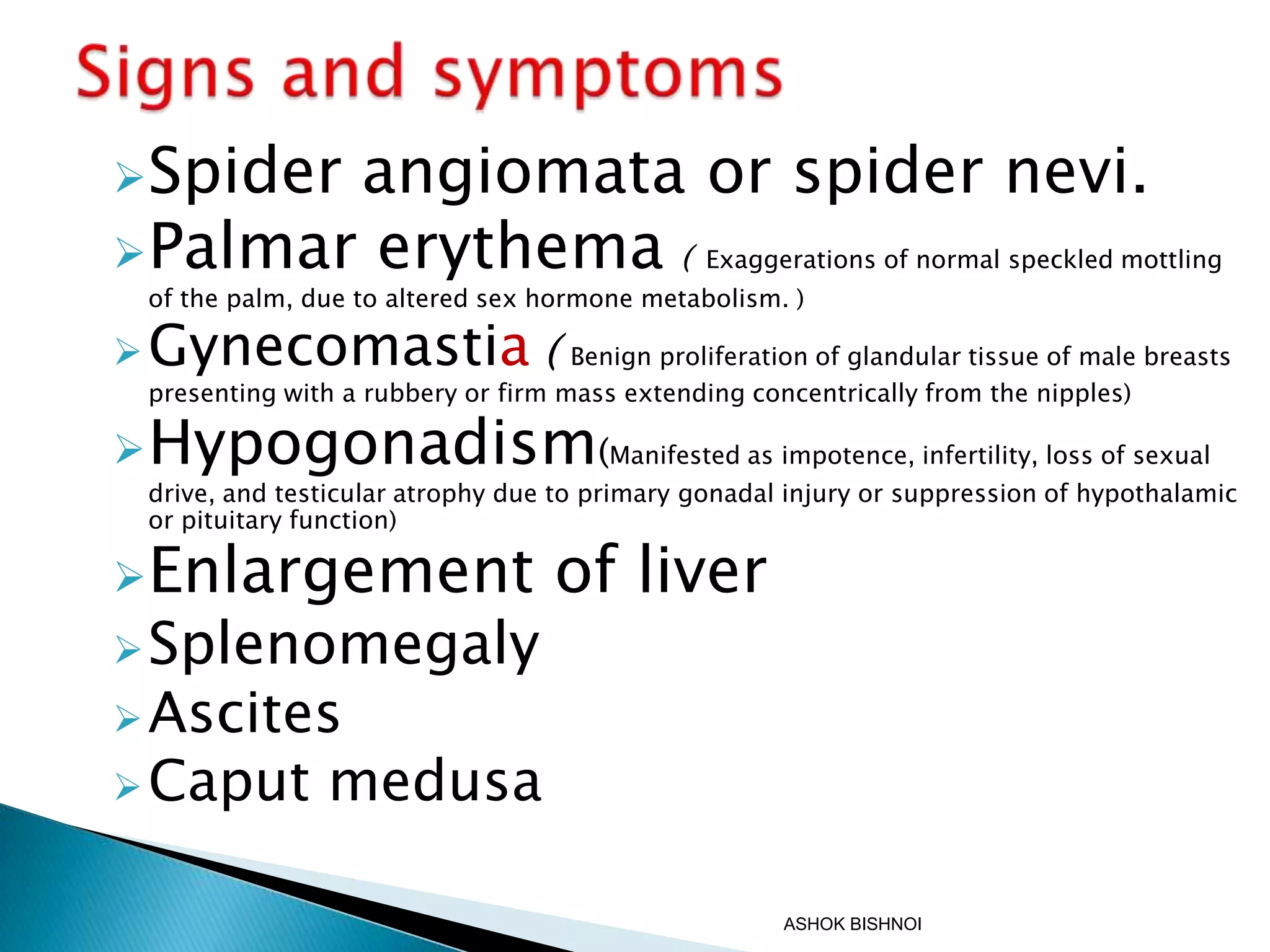


This document discusses liver disorders and cirrhosis of the liver. It provides information on the anatomy and functions of the liver. Cirrhosis is defined as a chronic liver disease characterized by inflammation and fibrosis that results in structural changes and loss of liver function. Causes of cirrhosis include alcoholism, viral hepatitis, bile duct obstruction, and certain drugs. Symptoms may include nausea, fatigue, jaundice, and abdominal swelling. Diagnosis involves medical history, physical exam, blood tests, imaging, and biopsy. Treatment depends on the underlying cause but generally involves rest, diet modification, medications, and procedures such as shunts or transplantation in severe cases.


