
SWATILEKHA DAS
(RN,MSN)
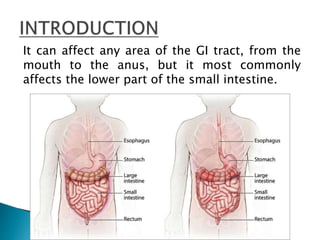
It can affect any area of the GI tract, from the
mouth to the anus, but it most commonly
affects the lower part of the small intestine.
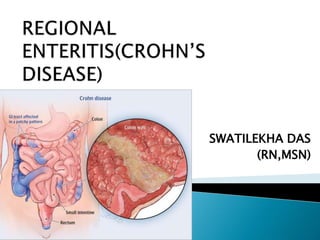
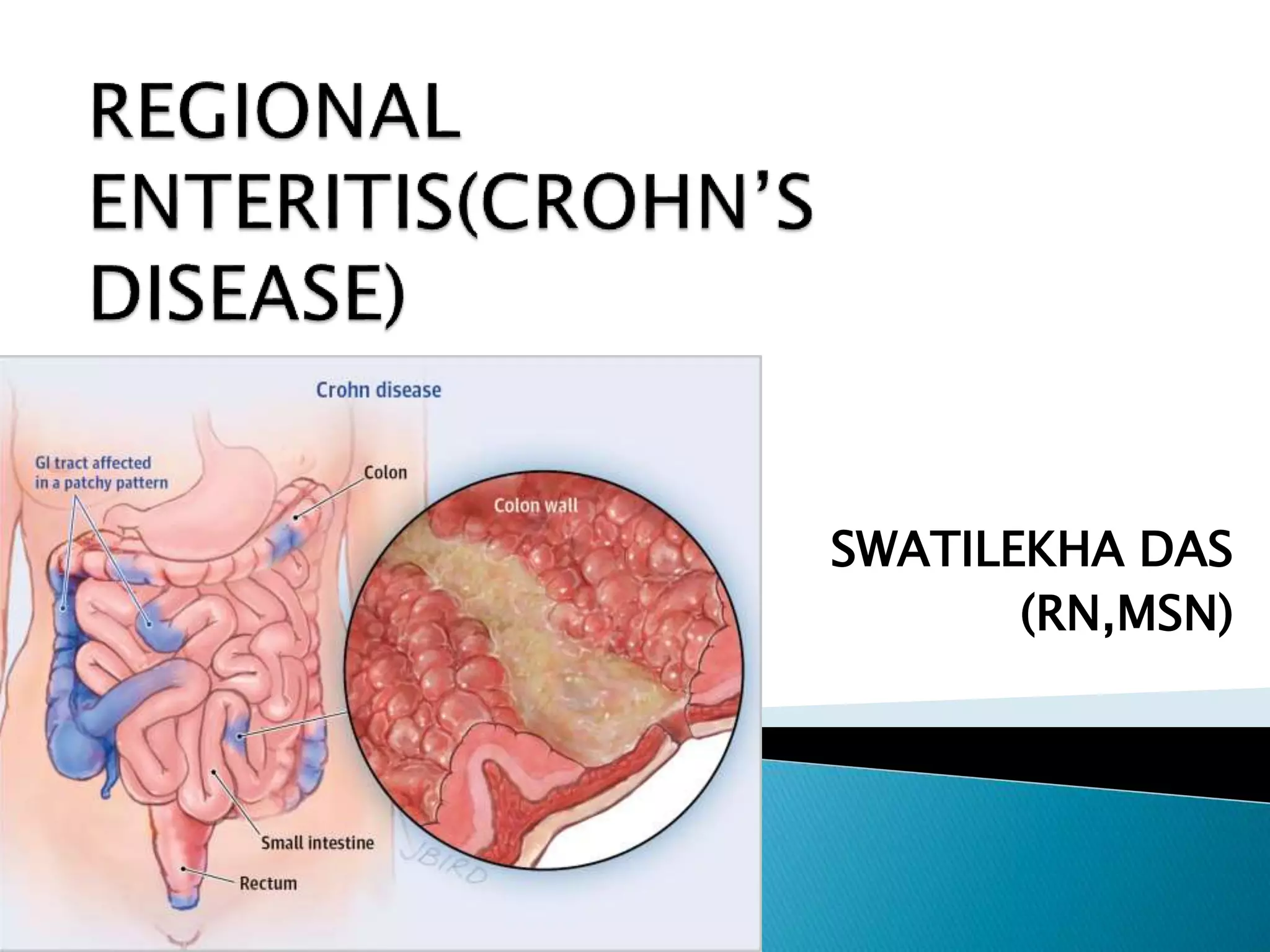
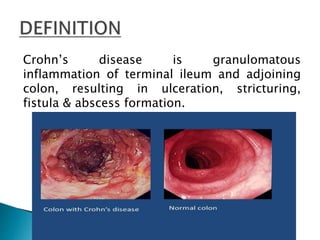
Crohn’s disease is granulomatous
inflammation of terminal ileum and adjoining
colon, resulting in ulceration, stricturing,
fistula & abscess formation.
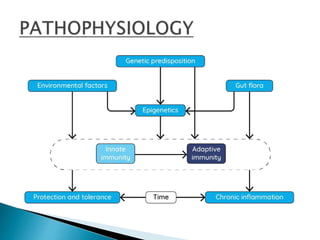
Exact cause is unknown.
 Familial
 Genetic disorders
 Environmental factors(Intestinal helminth
infection)
 Immunological disorders(due to
production of inflammatory cytokines,
interleukins, chemokines & TNF- α)
 Smoking –strong association
 Non-steroidal anti-inflammatory
drugs(NSAIDs)
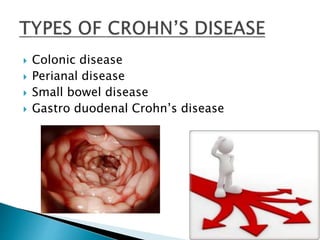
 Colonic disease
 Perianal disease
 Small bowel disease
 Gastro duodenal Crohn’s disease
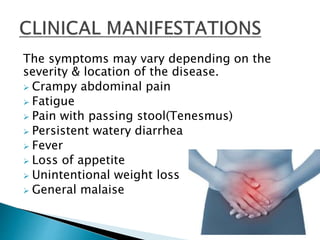
The symptoms may vary depending on the
severity & location of the disease.
 Crampy abdominal pain
 Fatigue
 Pain with passing stool(Tenesmus)
 Persistent watery diarrhea
 Fever
 Loss of appetite
 Unintentional weight loss
 General malaise
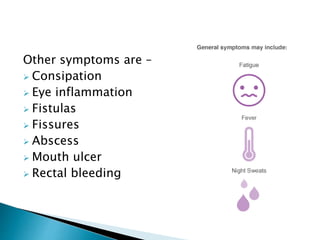
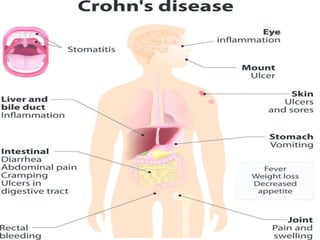
Other symptoms are –
 Consipation
 Eye inflammation
 Fistulas
 Fissures
 Abscess
 Mouth ulcer
 Rectal bleeding
 Thorough physical examination
 Blood tests to check for anemia, WBC count
 Stool test
 Barium x-ray
 Sigmoidoscopy/Colonoscopy
 Biopsy from the lesion
Depends on the severity & extent of the
disease.
A. PHARMACOLOGIC INTERVENTIONS-
1. Anti-inflammatory drugs-
• Mesalamine
• Sulfasalazine
• 5-ASA agents, such as Asacol, Dipentum, or
Pentase
2. Cortisone or steroids
3. Immune system suppressors-
6- mercaptopurine/ Azathioprine
4. Infliximab(Remicade)
5. Antibiotics
6. Anti-Diarrheals- Diphenoxylate,
Loperamide, Codeine
7. Fluid replacement- treat dehydrated patients
with fluids & electrolytes.
 High protein, high calorie diet is given by oral or
parenteral route.
 Plasma & blood transfusions are given for anemia &
hypoproteinaemia.
 Low fat diet or milk free diet improves lactose
deficiency or malabsorption.
 Low residue or high fibre diet is also supplemented to
reduce colics.
 Supplementation of iron, folic acid, calcium, vitamin
D, electrolytes whenever deficiency occurs.
 Total parenteral nutrition (TPN) has been
demonstrated to be effective in controlling the disease
actively & complications of crohn’s disease.
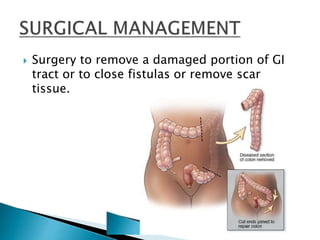
 Surgery to remove a damaged portion of GI
tract or to close fistulas or remove scar
tissue.
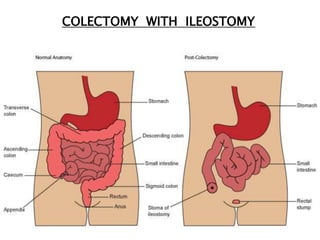
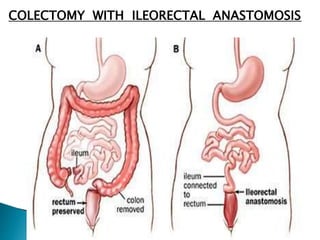
 Surgical procedures include resection of the
affected area with anastomosis, colectomy
with ileostomy, or colectomy with ileorectal
anastomosis, depending on the area of bowel
involved.
COLECTOMY WITH ILEOSTOMY
COLECTOMY WITH ILEORECTAL ANASTOMOSIS
 Diarrhea related to inflammatory bowel disease
 Impaired nutrition less than body requirements related
to anorexia & malabsorption
 Fluid volume deficit related to anorexia, nausea, diarrhea
 Acute pain related to increased peristalsis & cramping
 Impaired skin integrity related to frequent loose stools
 Ineffective coping related to repeated episodes of
diarrhea
 Intestinal obstruction
 Peritonitis
 Fistula formation( Enterovesical fistula,
enterovaginal fistula)
 Extraintestinal manifestations(Arthritis,uveitis)
 Slight increased risk of development of
carcinoma of the colon
Crohn's disease with Nursing management

Crohn's disease with Nursing management

  • 1.
  • 2.
    It can affectany area of the GI tract, from the mouth to the anus, but it most commonly affects the lower part of the small intestine.
  • 4.
    Crohn’s disease isgranulomatous inflammation of terminal ileum and adjoining colon, resulting in ulceration, stricturing, fistula & abscess formation.
  • 5.
    Exact cause isunknown.  Familial  Genetic disorders  Environmental factors(Intestinal helminth infection)  Immunological disorders(due to production of inflammatory cytokines, interleukins, chemokines & TNF- α)  Smoking –strong association  Non-steroidal anti-inflammatory drugs(NSAIDs)
  • 7.
     Colonic disease Perianal disease  Small bowel disease  Gastro duodenal Crohn’s disease
  • 8.
    The symptoms mayvary depending on the severity & location of the disease.  Crampy abdominal pain  Fatigue  Pain with passing stool(Tenesmus)  Persistent watery diarrhea  Fever  Loss of appetite  Unintentional weight loss  General malaise
  • 9.
    Other symptoms are–  Consipation  Eye inflammation  Fistulas  Fissures  Abscess  Mouth ulcer  Rectal bleeding
  • 11.
     Thorough physicalexamination  Blood tests to check for anemia, WBC count  Stool test  Barium x-ray  Sigmoidoscopy/Colonoscopy  Biopsy from the lesion
  • 12.
    Depends on theseverity & extent of the disease. A. PHARMACOLOGIC INTERVENTIONS- 1. Anti-inflammatory drugs- • Mesalamine • Sulfasalazine • 5-ASA agents, such as Asacol, Dipentum, or Pentase 2. Cortisone or steroids
  • 13.
    3. Immune systemsuppressors- 6- mercaptopurine/ Azathioprine 4. Infliximab(Remicade) 5. Antibiotics 6. Anti-Diarrheals- Diphenoxylate, Loperamide, Codeine 7. Fluid replacement- treat dehydrated patients with fluids & electrolytes.
  • 14.
     High protein,high calorie diet is given by oral or parenteral route.  Plasma & blood transfusions are given for anemia & hypoproteinaemia.  Low fat diet or milk free diet improves lactose deficiency or malabsorption.  Low residue or high fibre diet is also supplemented to reduce colics.  Supplementation of iron, folic acid, calcium, vitamin D, electrolytes whenever deficiency occurs.  Total parenteral nutrition (TPN) has been demonstrated to be effective in controlling the disease actively & complications of crohn’s disease.
  • 15.
     Surgery toremove a damaged portion of GI tract or to close fistulas or remove scar tissue.
  • 16.
     Surgical proceduresinclude resection of the affected area with anastomosis, colectomy with ileostomy, or colectomy with ileorectal anastomosis, depending on the area of bowel involved.
  • 17.
  • 18.
  • 19.
     Diarrhea relatedto inflammatory bowel disease  Impaired nutrition less than body requirements related to anorexia & malabsorption  Fluid volume deficit related to anorexia, nausea, diarrhea  Acute pain related to increased peristalsis & cramping  Impaired skin integrity related to frequent loose stools  Ineffective coping related to repeated episodes of diarrhea
  • 20.
     Intestinal obstruction Peritonitis  Fistula formation( Enterovesical fistula, enterovaginal fistula)  Extraintestinal manifestations(Arthritis,uveitis)  Slight increased risk of development of carcinoma of the colon