HYPOTHESIS
 TESTING
Quantitative Analysis / Statistical Techniques


                                 Madhuranath R
                                 MBA 2012 | Cohort-7
                                 Asian Institute of Management
OVERVIEW
   Hypothesis

   Hypothesis Testing

   Types of Hypotheses – Null, Alternate

   Example of Hypotheses

   Type I & Type II Errors (Level of Significance)

   α, β and the inter-relationship

   Interpreting Results (Weight of evidence from p-value)
HYPOTHESIS
What do you mean by a Hypothesis?
A hypothesis is a proposition that is –

      assumed as a premise in an argument / claim

      set forth as an explanation for the occurrence of some
       specified group of phenomena
HYPOTHESIS TESTING
Why do we make hypotheses?
   The practice of science traditionally involves
    formulating and testing hypotheses
   Hypotheses are assertions that are capable of being
    proven false using a test of observed data


Definition
    The process of proving assertions false using a test of
    observed data (sample data) is called Hypothesis Testing
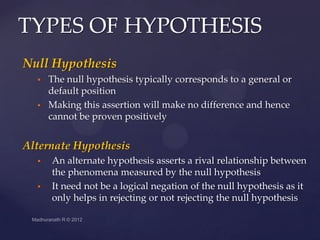
TYPES OF HYPOTHESIS
Null Hypothesis
     The null hypothesis typically corresponds to a general or
      default position
     Making this assertion will make no difference and hence
      cannot be proven positively


Alternate Hypothesis
     An alternate hypothesis asserts a rival relationship between
      the phenomena measured by the null hypothesis
     It need not be a logical negation of the null hypothesis as it
      only helps in rejecting or not rejecting the null hypothesis
EXAMPLES OF HYPOTHESES
              Null Hypothesis
              Ho : Mean Sea Level trend is
              5.38 mm / year


              Alternate Hypothesis
              Ha : Mean Sea Level trend is
              not 5.38 mm / year

              The α in this case maybe
              assumed as 0.05 to reject the
              Null Hypothesis with a 95%
              confidence level
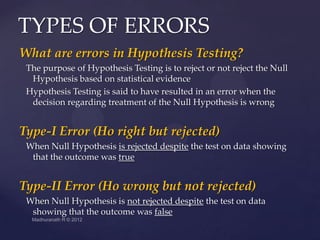
TYPES OF ERRORS
What are errors in Hypothesis Testing?
 The purpose of Hypothesis Testing is to reject or not reject the Null
  Hypothesis based on statistical evidence
 Hypothesis Testing is said to have resulted in an error when the
  decision regarding treatment of the Null Hypothesis is wrong


Type-I Error (Ho right but rejected)
 When Null Hypothesis is rejected despite the test on data showing
  that the outcome was true


Type-II Error (Ho wrong but not rejected)
 When Null Hypothesis is not rejected despite the test on data
  showing that the outcome was false
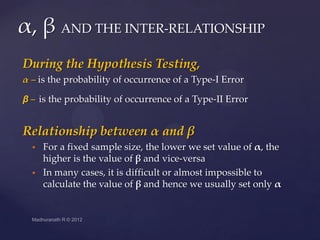
α, β AND THE INTER-RELATIONSHIP
During the Hypothesis Testing,
α – is the probability of occurrence of a Type-I Error

β – is the probability of occurrence of a Type-II Error


Relationship between α and β
     For a fixed sample size, the lower we set value of α, the
      higher is the value of β and vice-versa
     In many cases, it is difficult or almost impossible to
      calculate the value of β and hence we usually set only α
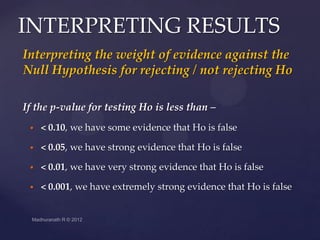
INTERPRETING RESULTS
Interpreting the weight of evidence against the
Null Hypothesis for rejecting / not rejecting Ho

If the p-value for testing Ho is less than –
    < 0.10, we have some evidence that Ho is false

    < 0.05, we have strong evidence that Ho is false

    < 0.01, we have very strong evidence that Ho is false

    < 0.001, we have extremely strong evidence that Ho is false
To be continued …

Hypothesis testing

  • 1.
    HYPOTHESIS TESTING Quantitative Analysis/ Statistical Techniques Madhuranath R MBA 2012 | Cohort-7 Asian Institute of Management
  • 2.
    OVERVIEW  Hypothesis  Hypothesis Testing  Types of Hypotheses – Null, Alternate  Example of Hypotheses  Type I & Type II Errors (Level of Significance)  α, β and the inter-relationship  Interpreting Results (Weight of evidence from p-value)
  • 3.
    HYPOTHESIS What do youmean by a Hypothesis? A hypothesis is a proposition that is –  assumed as a premise in an argument / claim  set forth as an explanation for the occurrence of some specified group of phenomena
  • 4.
    HYPOTHESIS TESTING Why dowe make hypotheses?  The practice of science traditionally involves formulating and testing hypotheses  Hypotheses are assertions that are capable of being proven false using a test of observed data Definition The process of proving assertions false using a test of observed data (sample data) is called Hypothesis Testing
  • 5.
    TYPES OF HYPOTHESIS NullHypothesis  The null hypothesis typically corresponds to a general or default position  Making this assertion will make no difference and hence cannot be proven positively Alternate Hypothesis  An alternate hypothesis asserts a rival relationship between the phenomena measured by the null hypothesis  It need not be a logical negation of the null hypothesis as it only helps in rejecting or not rejecting the null hypothesis
  • 6.
    EXAMPLES OF HYPOTHESES Null Hypothesis Ho : Mean Sea Level trend is 5.38 mm / year Alternate Hypothesis Ha : Mean Sea Level trend is not 5.38 mm / year The α in this case maybe assumed as 0.05 to reject the Null Hypothesis with a 95% confidence level
  • 7.
    TYPES OF ERRORS Whatare errors in Hypothesis Testing? The purpose of Hypothesis Testing is to reject or not reject the Null Hypothesis based on statistical evidence Hypothesis Testing is said to have resulted in an error when the decision regarding treatment of the Null Hypothesis is wrong Type-I Error (Ho right but rejected) When Null Hypothesis is rejected despite the test on data showing that the outcome was true Type-II Error (Ho wrong but not rejected) When Null Hypothesis is not rejected despite the test on data showing that the outcome was false
  • 8.
    α, β ANDTHE INTER-RELATIONSHIP During the Hypothesis Testing, α – is the probability of occurrence of a Type-I Error β – is the probability of occurrence of a Type-II Error Relationship between α and β  For a fixed sample size, the lower we set value of α, the higher is the value of β and vice-versa  In many cases, it is difficult or almost impossible to calculate the value of β and hence we usually set only α
  • 9.
    INTERPRETING RESULTS Interpreting theweight of evidence against the Null Hypothesis for rejecting / not rejecting Ho If the p-value for testing Ho is less than –  < 0.10, we have some evidence that Ho is false  < 0.05, we have strong evidence that Ho is false  < 0.01, we have very strong evidence that Ho is false  < 0.001, we have extremely strong evidence that Ho is false
  • 10.