Reviewing the literature
Kumar: Research Methodology
Chapter 3
Topics covered
 Function of literature review
 How to review the literature
 Searching for existing literature
 Reviewing selected literature
 Developing theoretical and conceptual frameworks
 How to write a literature review
Function of literature review
 A literature review is an integral part of the research
process
 Providing a theoretical background to a study:
 Bringing clarity and focus to the research problem
 Improving research methodology
 Broadening knowledge base in the research area of
interest
 Contextualising findings by integrating with the exiting
body of knowledge
How to review the literature
 Start with broad area of interest if research problem
is not known and narrow down
 Focused around the research problem
 What is already known in the area?
 What is not known or what are the gaps in the existing
body of knowledge?
 What questions have remained unanswered?
 Are there any areas of professional conflict?
 What theories have been put forward relevant to the area
of research?
 What suggestions have been made for further research?
 What research strategies have been employed by others
undertaking similar research?
Four steps of doing a literature review
1. Searching for the existing literature in the area of
interest
2. Reviewing the selected literature
3. Developing a theoretical framework
4. Developing a conceptual framework
Searching for existing literature
 Set parameters for the search
 Compile a reading list
 Start with:
 Books
 Journals
 Conference papers
 The Internet
Reviewing selected literature
 Read existing literature and examine critically:
 Note whether the knowledge relevant to a theoretical
framework has been confirmed beyond doubt
 Note the theories put forward, the criticisms of these and
their basis, the methodologies adopted (study design,
sample size and its characteristics, measurement
procedures, etc.) and the criticisms of them
 Examine to what extent the findings can be generalised to
other situations
 Notice where there are significant differences of opinion
among researchers, giving an opinion about their validity
in addition to putting forward a position with reasons
 Ascertain the areas in which little or nothing is known –
the gaps that exist in the body of knowledge
Developing theoretical and conceptual
frameworks
 Theoretical frameworks
 Find the roots of the problem you want to investigate in a
number of theories.
 Read with focus in mind
 Sort information into main themes and theories
 Literature fits in two categories:
 Universal or general
 More specific
 Conceptual framework is the basis of enquiry and
stems from the theoretical framework
Theoretical and conceptual frameworks
 The theoretical framework consists of the theories or
issues in which your study is embedded.
 The conceptual framework describes the aspects
you selected from the theoretical framework to
become the basis of your enquiry.
How to write a literature review
Write about the literature reviewed to provide a
theoretical background and contextualise findings to
existing body of literature:
 Describe various theories
 Specify gaps in the existing knowledge area
 Write about recent advances in the area of study
 State current trends
 Refine own methodology
 Quote findings from existing studies
Writing a literature review
 Thematic, based on the main theme of enquiry
 Following a logical order
 Arguments referenced with supporting evidence from
the existing literature
 Use academic referencing style
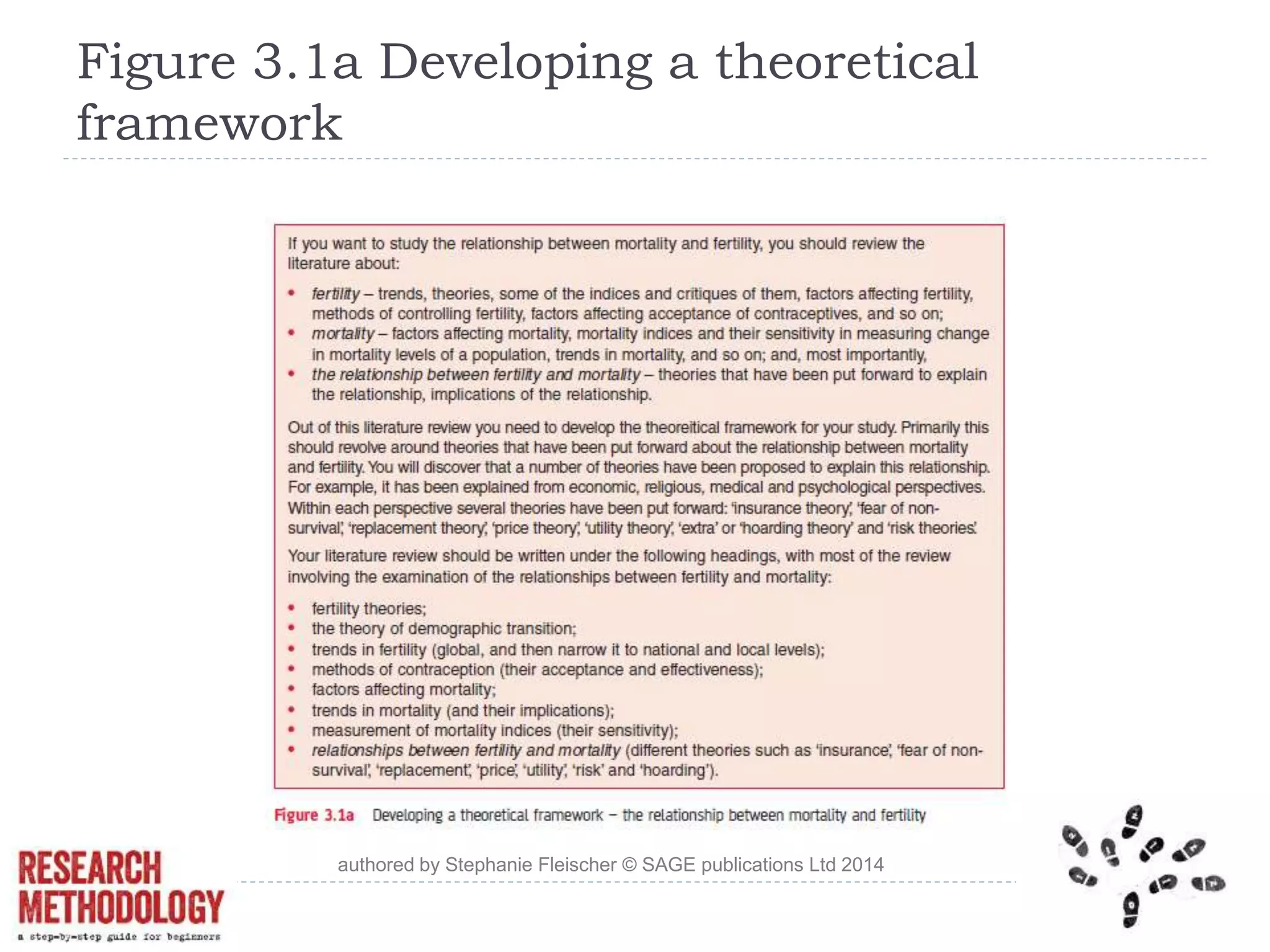
Figure 3.1a Developing a theoretical
framework
authored by Stephanie Fleischer © SAGE publications Ltd 2014
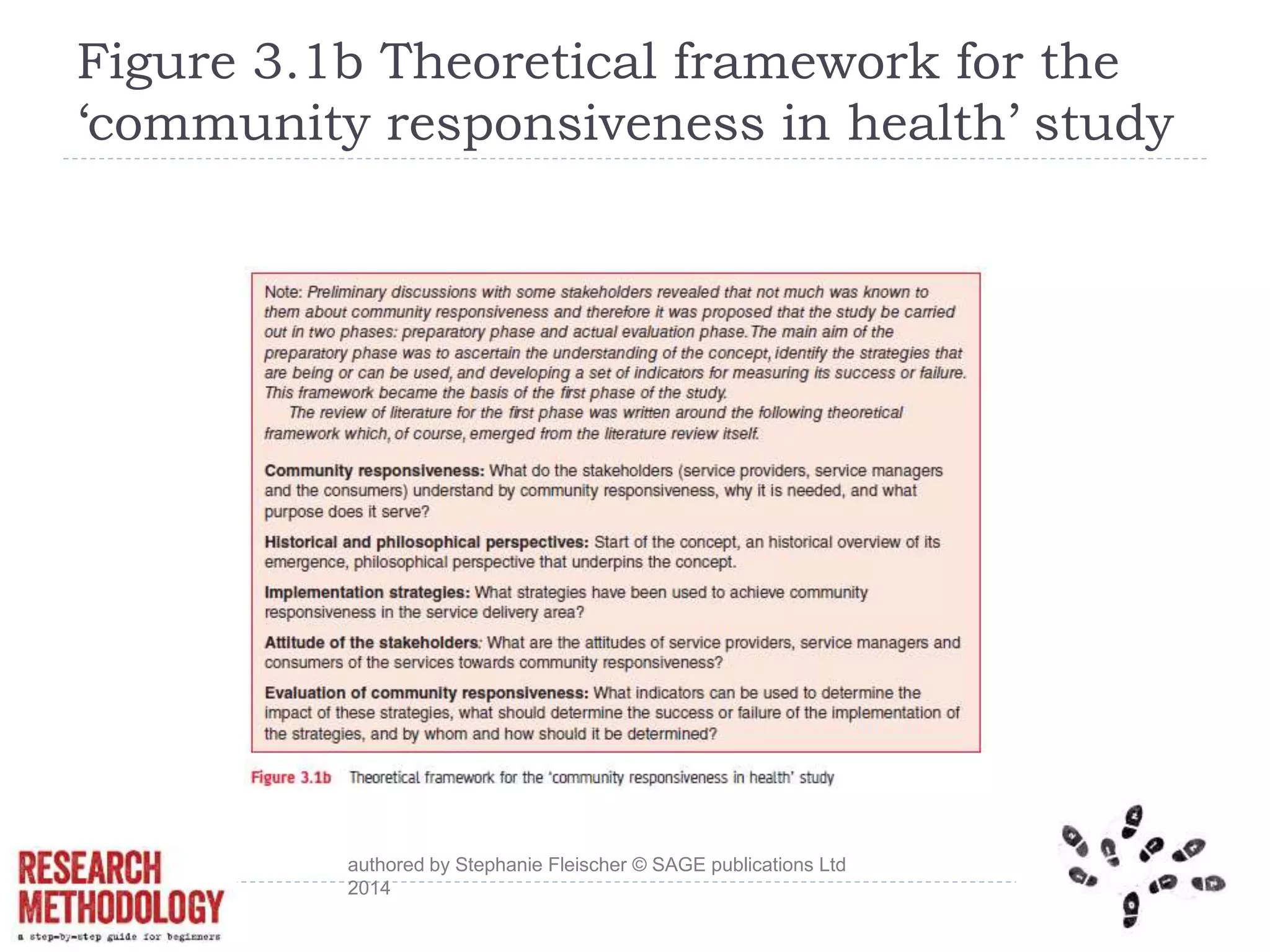
Figure 3.1b Theoretical framework for the
‘community responsiveness in health’ study
authored by Stephanie Fleischer © SAGE publications Ltd
2014
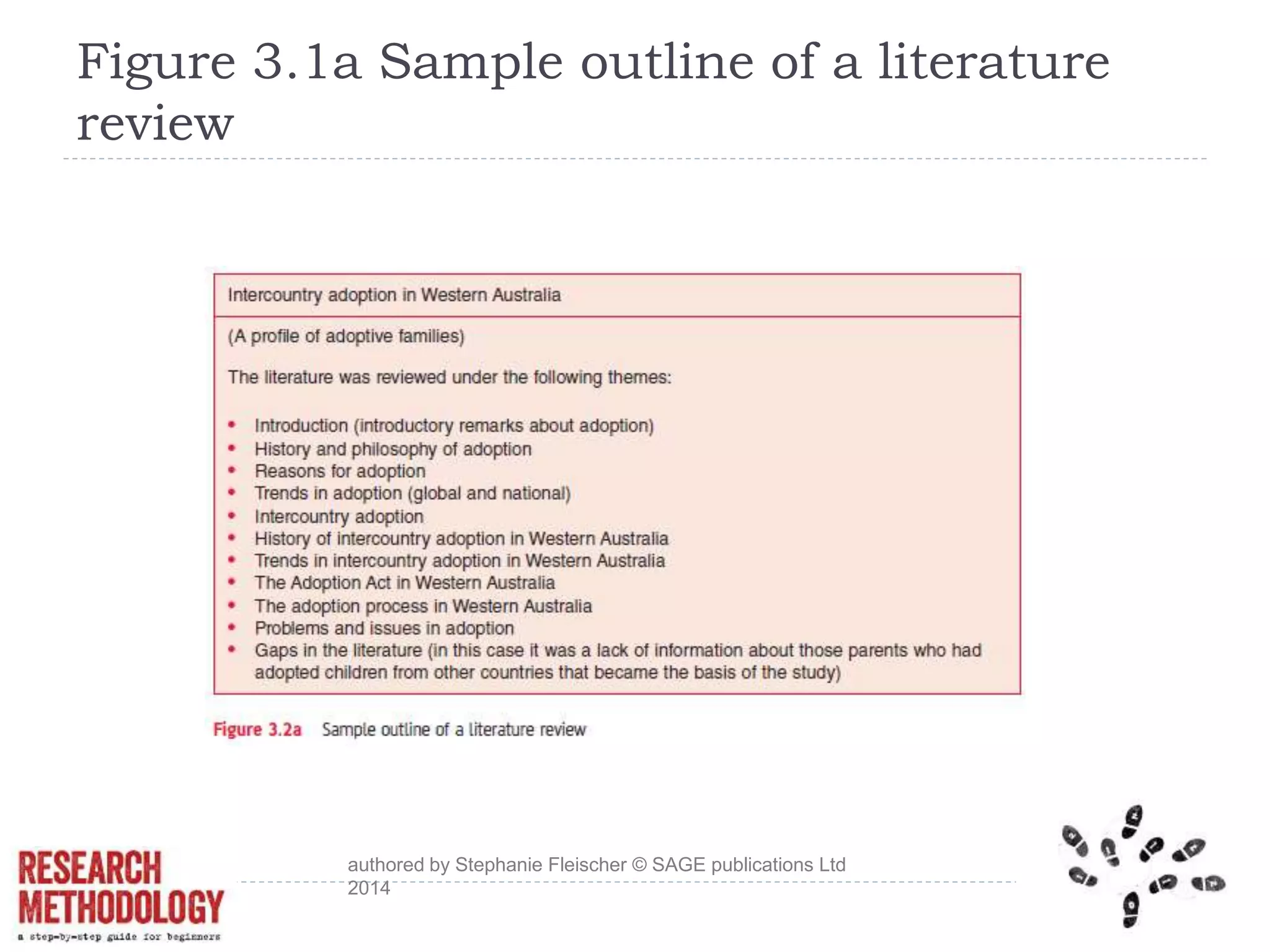
Figure 3.1a Sample outline of a literature
review
authored by Stephanie Fleischer © SAGE publications Ltd
2014
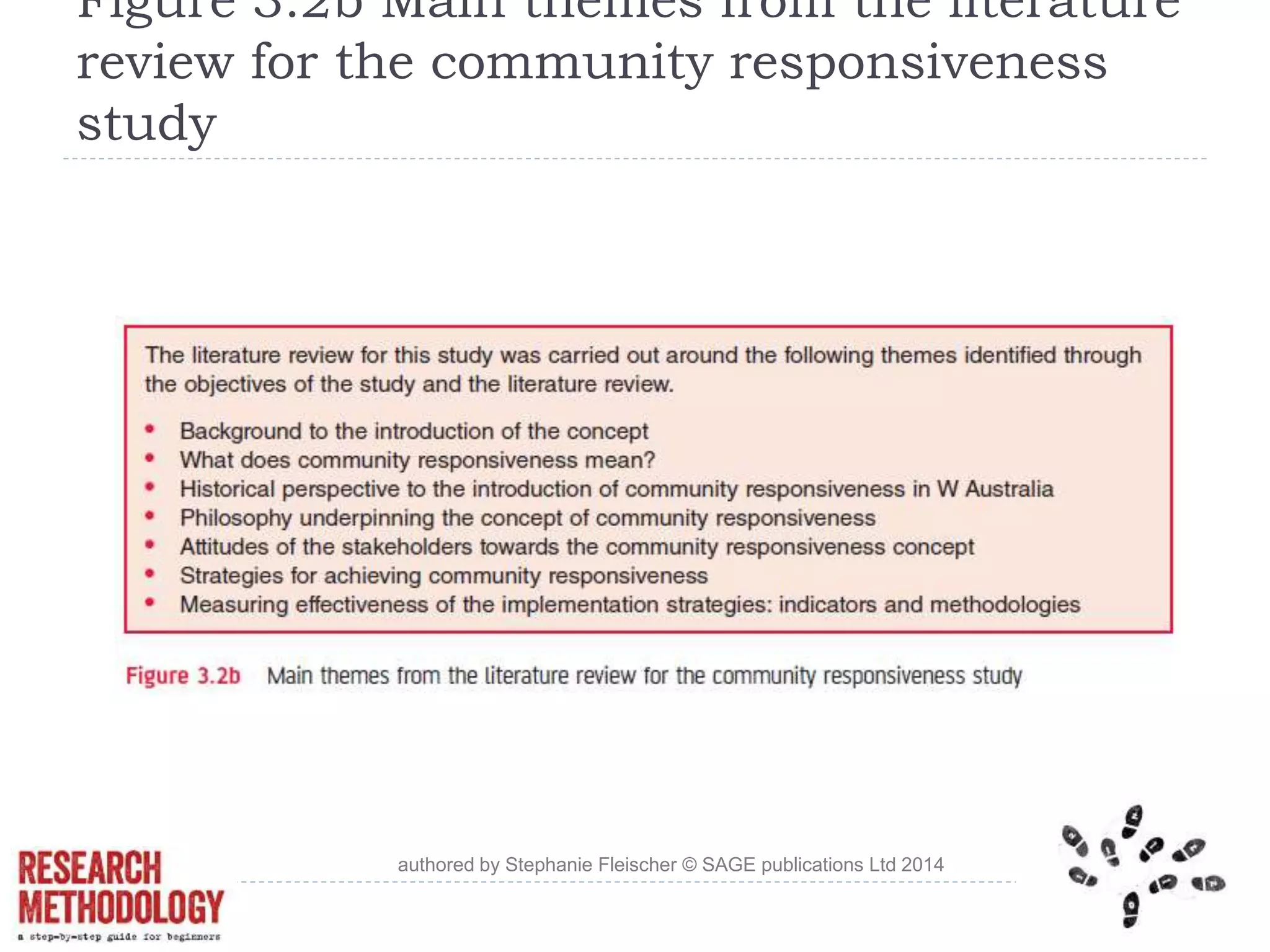
Figure 3.2b Main themes from the literature
review for the community responsiveness
study
authored by Stephanie Fleischer © SAGE publications Ltd 2014
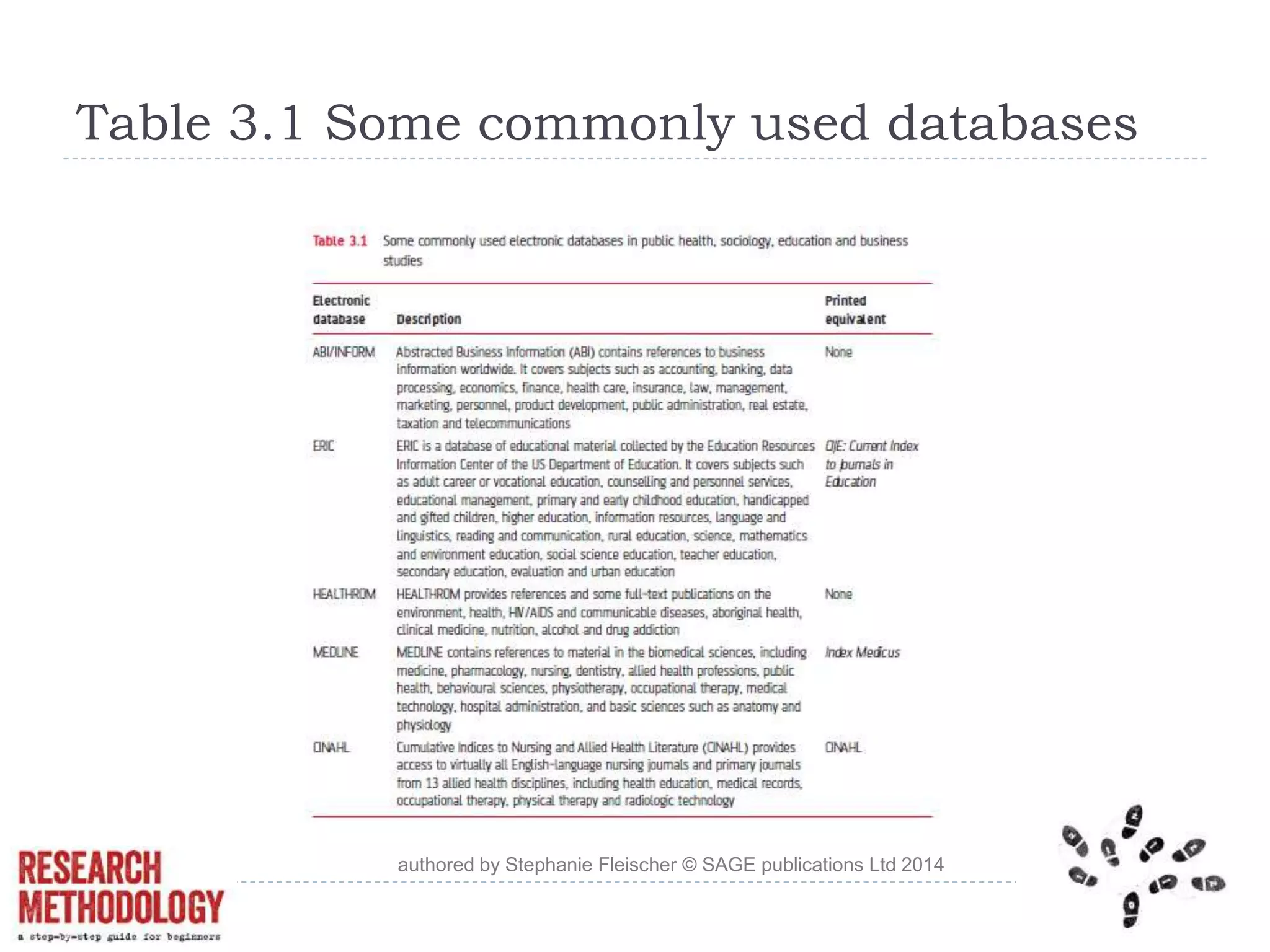
Table 3.1 Some commonly used databases
authored by Stephanie Fleischer © SAGE publications Ltd 2014

Chapter 3

  • 1.
    Reviewing the literature Kumar:Research Methodology Chapter 3
  • 2.
    Topics covered  Functionof literature review  How to review the literature  Searching for existing literature  Reviewing selected literature  Developing theoretical and conceptual frameworks  How to write a literature review
  • 3.
    Function of literaturereview  A literature review is an integral part of the research process  Providing a theoretical background to a study:  Bringing clarity and focus to the research problem  Improving research methodology  Broadening knowledge base in the research area of interest  Contextualising findings by integrating with the exiting body of knowledge
  • 4.
    How to reviewthe literature  Start with broad area of interest if research problem is not known and narrow down  Focused around the research problem  What is already known in the area?  What is not known or what are the gaps in the existing body of knowledge?  What questions have remained unanswered?  Are there any areas of professional conflict?  What theories have been put forward relevant to the area of research?  What suggestions have been made for further research?  What research strategies have been employed by others undertaking similar research?
  • 5.
    Four steps ofdoing a literature review 1. Searching for the existing literature in the area of interest 2. Reviewing the selected literature 3. Developing a theoretical framework 4. Developing a conceptual framework
  • 6.
    Searching for existingliterature  Set parameters for the search  Compile a reading list  Start with:  Books  Journals  Conference papers  The Internet
  • 7.
    Reviewing selected literature Read existing literature and examine critically:  Note whether the knowledge relevant to a theoretical framework has been confirmed beyond doubt  Note the theories put forward, the criticisms of these and their basis, the methodologies adopted (study design, sample size and its characteristics, measurement procedures, etc.) and the criticisms of them  Examine to what extent the findings can be generalised to other situations  Notice where there are significant differences of opinion among researchers, giving an opinion about their validity in addition to putting forward a position with reasons  Ascertain the areas in which little or nothing is known – the gaps that exist in the body of knowledge
  • 8.
    Developing theoretical andconceptual frameworks  Theoretical frameworks  Find the roots of the problem you want to investigate in a number of theories.  Read with focus in mind  Sort information into main themes and theories  Literature fits in two categories:  Universal or general  More specific  Conceptual framework is the basis of enquiry and stems from the theoretical framework
  • 9.
    Theoretical and conceptualframeworks  The theoretical framework consists of the theories or issues in which your study is embedded.  The conceptual framework describes the aspects you selected from the theoretical framework to become the basis of your enquiry.
  • 10.
    How to writea literature review Write about the literature reviewed to provide a theoretical background and contextualise findings to existing body of literature:  Describe various theories  Specify gaps in the existing knowledge area  Write about recent advances in the area of study  State current trends  Refine own methodology  Quote findings from existing studies
  • 11.
    Writing a literaturereview  Thematic, based on the main theme of enquiry  Following a logical order  Arguments referenced with supporting evidence from the existing literature  Use academic referencing style
  • 12.
    Figure 3.1a Developinga theoretical framework authored by Stephanie Fleischer © SAGE publications Ltd 2014
  • 13.
    Figure 3.1b Theoreticalframework for the ‘community responsiveness in health’ study authored by Stephanie Fleischer © SAGE publications Ltd 2014
  • 14.
    Figure 3.1a Sampleoutline of a literature review authored by Stephanie Fleischer © SAGE publications Ltd 2014
  • 15.
    Figure 3.2b Mainthemes from the literature review for the community responsiveness study authored by Stephanie Fleischer © SAGE publications Ltd 2014
  • 16.
    Table 3.1 Somecommonly used databases authored by Stephanie Fleischer © SAGE publications Ltd 2014