Hypertrophic cardiomyopathy
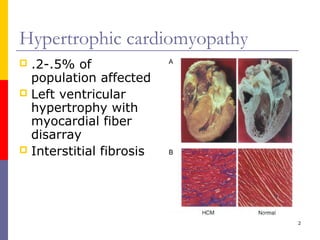
 .2-.5% of
  population affected
 Left ventricular
  hypertrophy with
  myocardial fiber
  disarray
 Interstitial fibrosis


                              2
Hypertrophic cardiomyopathy
 Familial (autosomal dominant) or sporadic
  (50%)
 Abnormalities in sarcomere proteins
       beta-myosin heavy chain (45%--chromosome
        14) , cardiac myosin binding protein-C
       D/D genotype for ACE alters phenotype with
        more hypertrophy


                                                     3
Hypertrophic cardiomyopathy
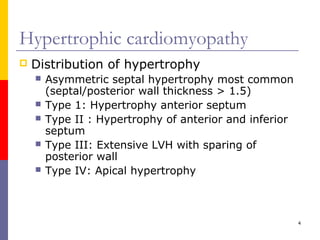
   Distribution of hypertrophy
       Asymmetric septal hypertrophy most common
        (septal/posterior wall thickness > 1.5)
       Type 1: Hypertrophy anterior septum
       Type II : Hypertrophy of anterior and inferior
        septum
       Type III: Extensive LVH with sparing of
        posterior wall
       Type IV: Apical hypertrophy


                                                         4
Hypertrophic cardiomyopathy: May have resting
LVOT obstruction, latent obstruction or non-obstructive
   Normal systolic function but increased afterload if
    LVOT obstruction
   Dynamic outflow tract obstruction created by
    anterior motion of mitral leaflet during systole
    obstructing the outflow tract
       Venturi forces b/o septal hypertrophy
       Anterior papillary muscle displacement and abnormally
        long anterior mitral leaflet
   Gradient worse with decreased preload, increased
    contractility
   Primarily diastolic dysfunction
       Decreased relaxation
       Increased stiffness
                                                                5
Hypertrophic cardiomyopathy:
Symptoms
     May be asymptomatic
          Found on screening ECG, echocardiogram
     Dyspnea: High LV diastolic pressure because
      of impaired LV relaxation and increased
      stiffness. High afterload if LVOT obstruction
     Angina: Inadequate coronary arterial blood
      supply for degree of hypertrophy and increased
      demand
     Syncope: Arrhythmias or hypotension
      secondary to LVOT obstruction
     Palpitations—AF is common
     Sudden cardiac death: Ventricular fibrillation6
Ischemia in HCM
 Myocardial bridging
 Impaired vasodilator reserve
 Decreased capillary density and increased
  capillary separation
 Myocardial fibrosis
 Small vessel disease/microvascular
  dysfunction


                                              7
Apical hypertrophic cardiomyopathy
 Apical segment >/=15 mm
 Good prognosis (95% survival at 15
  years)
 Often need contrast echo or cardiac MR to
  make diagnosis
Apical hypertrophic cardiomyopathy
 1/3 of patients had complications—atrial
  fibrillation, myocardial infarction, HF,
  TIA/stroke, VT/VF
 May have mid cavitary obstruction and
  apical aneurysm
Hypertrophic cardiomyopathy: Signs
 Spike and dome carotid pulse
 Triple ripple apical impulse
 Fourth heart sound (increased filling with
  atrial contraction because of decreased LV
  relaxation)
 Systolic ejection murmur of LV outflow
  tract obstruction
       Increases if decreased preload ie increases
        with standing from squat
   Murmur of mitral regurgitation
                                                      10
Hypertrophic cardiomyopathy:
Diagnosis
   Echocardiogram shows left ventricular
    hypertrophy in the absence of
    hypertension or aortic stenosis
       LVOT obstruction caused by mitral leaflet SAM
       Eccentric lateral jet of MR
   ECG: Usually abnormal
       Left ventricular hypertrophy
       Abnormal Q waves
 Family history/genetic testing
 Cardiac MR: LV/RV thickness, late
  gadolinium enhancement
                                                        11
Increased wall thickness
 LVH for other reasons: hypertension,
  aortic stenosis, athlete’s heart (< 14 mm)
 Sigmoid septum of the elderly
 Infiltrative : amyloidosis, hypereosinophilic
  syndrome
 Children with HCM
      Idiopathic (75%)
      Inborn errors of metabolism (Fabry, Danon disease)

      Malformation syndromes (Noonan’s)

      Neuromuscular disorders (Friedrich’s ataxia)


                                                            12
Brockenbrough-Braunwald-Morrow sign
After a PVC, there is a decrease in carotid pulse pressure
in patients with HOCM. Increased contractility results in
increased LVOT obstruction.

                                                             13
Hypertrophic Cardiomyopathy:
Management
   Medical therapy for symptomatic
    dynamic LVOT obstruction:
       Beta-blockers, verapamil, disopyramide
 Interventions for symptomatic LVOT
  obstruction: septal myomectomy or septal
  alcohol ablation
 Prevent death from ventricular
  arrhythmias:
       Assess all patients with HCM for SCD risk factors
            Syncope, non-sustained VT, family history SCD, exercise induced
             hypotension, septum > 30mm (class IIA for ICD), gradient > 30
             mm Hg, high risk mutations                                        14
       Defibrillator if VF or sustained VT (class 1)
Septal myectomy
 3-15 gm of septal muscle removed
 Indicated in severely symptomatic
  patients with resting LVOT obstruction
  despite medical therapy
 Dramatic improvement of symptoms
 Probable decrease in SCD rates
 Complications
       VSD
       LBBB/CHB (5-10%)
       Aortic regurgitation
                                           15
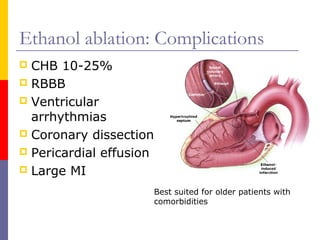
Ethanol ablation: Complications
 CHB 10-25%
 RBBB
 Ventricular
  arrhythmias
 Coronary dissection
 Pericardial effusion
 Large MI

                         Best suited for older patients with
                         comorbidities
Management of asymptomatic
patient with HCM
 Screen first degree relatives with echo
 Assess for SCD risk with Holter and stress
  test
 Avoid competitive sports. Avoid extreme
  exertion and dehydration
 Annual F/U
 No endocarditis prophylaxis
 No beta-blocker if no symptoms
 Pregnancy well tolerated—50% chance of
  affected child                               17
Patient with HCM and PAF
 Beta-blocker
 Disopyramide if LVOT obstruction
 Otherwise amiodarone or sotalol
 Anticoagulation


                                     18
Patient with HCM, NYHA class III,
severe LVOT obstruction
 Beta-blocker
 Disopyramide 100 mg QID or 200 mg TID
 Surgical myectomy (preferred in younger
  patients—90% long term symptom
  improvement)
 Septal alcohol ablation—localized septal
  infarct
 DDD pacing—no long term benefits


                                             19
Post-operative severe LVOT
obstruction
 Volume expansion
 Avoid beta-agonists
 Phenyephrine
 iv metoprolol/esmolol


                             20

Hocm

  • 1.
  • 2.
    Hypertrophic cardiomyopathy  .2-.5%of population affected  Left ventricular hypertrophy with myocardial fiber disarray  Interstitial fibrosis 2
  • 3.
    Hypertrophic cardiomyopathy  Familial(autosomal dominant) or sporadic (50%)  Abnormalities in sarcomere proteins  beta-myosin heavy chain (45%--chromosome 14) , cardiac myosin binding protein-C  D/D genotype for ACE alters phenotype with more hypertrophy 3
  • 4.
    Hypertrophic cardiomyopathy  Distribution of hypertrophy  Asymmetric septal hypertrophy most common (septal/posterior wall thickness > 1.5)  Type 1: Hypertrophy anterior septum  Type II : Hypertrophy of anterior and inferior septum  Type III: Extensive LVH with sparing of posterior wall  Type IV: Apical hypertrophy 4
  • 5.
    Hypertrophic cardiomyopathy: Mayhave resting LVOT obstruction, latent obstruction or non-obstructive  Normal systolic function but increased afterload if LVOT obstruction  Dynamic outflow tract obstruction created by anterior motion of mitral leaflet during systole obstructing the outflow tract  Venturi forces b/o septal hypertrophy  Anterior papillary muscle displacement and abnormally long anterior mitral leaflet  Gradient worse with decreased preload, increased contractility  Primarily diastolic dysfunction  Decreased relaxation  Increased stiffness 5
  • 6.
    Hypertrophic cardiomyopathy: Symptoms  May be asymptomatic  Found on screening ECG, echocardiogram  Dyspnea: High LV diastolic pressure because of impaired LV relaxation and increased stiffness. High afterload if LVOT obstruction  Angina: Inadequate coronary arterial blood supply for degree of hypertrophy and increased demand  Syncope: Arrhythmias or hypotension secondary to LVOT obstruction  Palpitations—AF is common  Sudden cardiac death: Ventricular fibrillation6
  • 7.
    Ischemia in HCM Myocardial bridging  Impaired vasodilator reserve  Decreased capillary density and increased capillary separation  Myocardial fibrosis  Small vessel disease/microvascular dysfunction 7
  • 8.
    Apical hypertrophic cardiomyopathy Apical segment >/=15 mm  Good prognosis (95% survival at 15 years)  Often need contrast echo or cardiac MR to make diagnosis
  • 9.
    Apical hypertrophic cardiomyopathy 1/3 of patients had complications—atrial fibrillation, myocardial infarction, HF, TIA/stroke, VT/VF  May have mid cavitary obstruction and apical aneurysm
  • 10.
    Hypertrophic cardiomyopathy: Signs Spike and dome carotid pulse  Triple ripple apical impulse  Fourth heart sound (increased filling with atrial contraction because of decreased LV relaxation)  Systolic ejection murmur of LV outflow tract obstruction  Increases if decreased preload ie increases with standing from squat  Murmur of mitral regurgitation 10
  • 11.
    Hypertrophic cardiomyopathy: Diagnosis  Echocardiogram shows left ventricular hypertrophy in the absence of hypertension or aortic stenosis  LVOT obstruction caused by mitral leaflet SAM  Eccentric lateral jet of MR  ECG: Usually abnormal  Left ventricular hypertrophy  Abnormal Q waves  Family history/genetic testing  Cardiac MR: LV/RV thickness, late gadolinium enhancement 11
  • 12.
    Increased wall thickness LVH for other reasons: hypertension, aortic stenosis, athlete’s heart (< 14 mm)  Sigmoid septum of the elderly  Infiltrative : amyloidosis, hypereosinophilic syndrome  Children with HCM  Idiopathic (75%)  Inborn errors of metabolism (Fabry, Danon disease)  Malformation syndromes (Noonan’s)  Neuromuscular disorders (Friedrich’s ataxia) 12
  • 13.
    Brockenbrough-Braunwald-Morrow sign After aPVC, there is a decrease in carotid pulse pressure in patients with HOCM. Increased contractility results in increased LVOT obstruction. 13
  • 14.
    Hypertrophic Cardiomyopathy: Management  Medical therapy for symptomatic dynamic LVOT obstruction:  Beta-blockers, verapamil, disopyramide  Interventions for symptomatic LVOT obstruction: septal myomectomy or septal alcohol ablation  Prevent death from ventricular arrhythmias:  Assess all patients with HCM for SCD risk factors  Syncope, non-sustained VT, family history SCD, exercise induced hypotension, septum > 30mm (class IIA for ICD), gradient > 30 mm Hg, high risk mutations 14  Defibrillator if VF or sustained VT (class 1)
  • 15.
    Septal myectomy  3-15gm of septal muscle removed  Indicated in severely symptomatic patients with resting LVOT obstruction despite medical therapy  Dramatic improvement of symptoms  Probable decrease in SCD rates  Complications  VSD  LBBB/CHB (5-10%)  Aortic regurgitation 15
  • 16.
    Ethanol ablation: Complications CHB 10-25%  RBBB  Ventricular arrhythmias  Coronary dissection  Pericardial effusion  Large MI Best suited for older patients with comorbidities
  • 17.
    Management of asymptomatic patientwith HCM  Screen first degree relatives with echo  Assess for SCD risk with Holter and stress test  Avoid competitive sports. Avoid extreme exertion and dehydration  Annual F/U  No endocarditis prophylaxis  No beta-blocker if no symptoms  Pregnancy well tolerated—50% chance of affected child 17
  • 18.
    Patient with HCMand PAF  Beta-blocker  Disopyramide if LVOT obstruction  Otherwise amiodarone or sotalol  Anticoagulation 18
  • 19.
    Patient with HCM,NYHA class III, severe LVOT obstruction  Beta-blocker  Disopyramide 100 mg QID or 200 mg TID  Surgical myectomy (preferred in younger patients—90% long term symptom improvement)  Septal alcohol ablation—localized septal infarct  DDD pacing—no long term benefits 19
  • 20.
    Post-operative severe LVOT obstruction Volume expansion  Avoid beta-agonists  Phenyephrine  iv metoprolol/esmolol 20