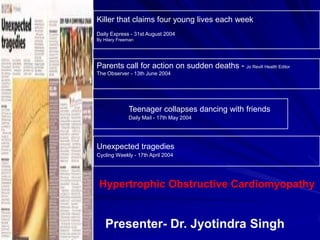
Killer that claims four young lives each week
Daily Express - 31st August 2004
By Hilary Freeman

Parents call for action on sudden deaths - Jo Revill Health Editor
The Observer - 13th June 2004

Teenager collapses dancing with friends
Daily Mail - 17th May 2004

Unexpected tragedies
Cycling Weekly - 17th April 2004

Hypertrophic Obstructive Cardiomyopathy

Presenter- Dr. Jyotindra Singh
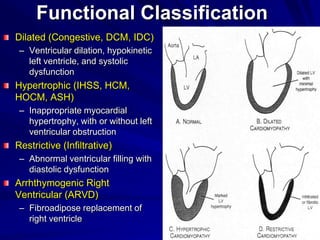
Functional Classification
Dilated (Congestive, DCM, IDC)
– Ventricular dilation, hypokinetic
left ventricle, and systolic
dysfunction

Hypertrophic (IHSS, HCM,
HOCM, ASH)
– Inappropriate myocardial
hypertrophy, with or without left
ventricular obstruction

Restrictive (Infiltrative)
– Abnormal ventricular filling with
diastolic dysfunction

Arrhthymogenic Right
Ventricular (ARVD)
– Fibroadipose replacement of
right ventricle
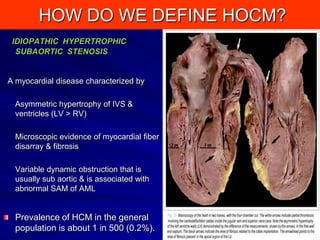
HOW DO WE DEFINE HOCM?
IDIOPATHIC HYPERTROPHIC
SUBAORTIC STENOSIS

A myocardial disease characterized by
Asymmetric hypertrophy of IVS &
ventricles (LV > RV)

Microscopic evidence of myocardial fiber
disarray & fibrosis
Variable dynamic obstruction that is
usually sub aortic & is associated with
abnormal SAM of AML

Prevalence of HCM in the general
population is about 1 in 500 (0.2%).

2
Historical Perspctive
HCM was initially described by Teare in 1958
Braunwald was the first to diagnose HCM clinically
Goodwin & colleagus- namd it HOCM

SAM was described by Fix in 1964
Brock (1957) & Cleland (1958) did Ist myotomy- myectomy

Dobell & scott

/ Lillehi & Levy-

Cooley & colleagues- RV approach

LA approach
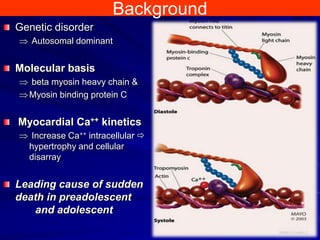
Background
Genetic disorder
Autosomal dominant

Molecular basis
beta myosin heavy chain &
Myosin binding protein C

Myocardial Ca++ kinetics
Increase Ca++ intracellular 
hypertrophy and cellular
disarray

Leading cause of sudden
death in preadolescent
and adolescent
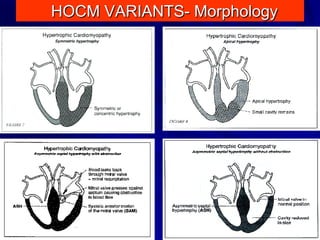
HOCM VARIANTS- Morphology

2
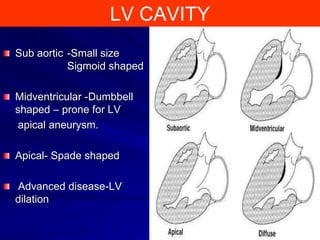
LV CAVITY
Sub aortic -Small size
Sigmoid shaped
Midventricular -Dumbbell
shaped – prone for LV
apical aneurysm.
Apical- Spade shaped
Advanced disease-LV
dilation
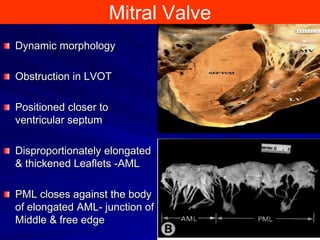
Mitral Valve
Dynamic morphology
Obstruction in LVOT
Positioned closer to
ventricular septum
Disproportionately elongated
& thickened Leaflets -AML

PML closes against the body
of elongated AML- junction of
Middle & free edge
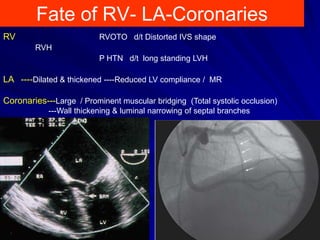
Fate of RV- LA-Coronaries
RV

RVOTO d/t Distorted IVS shape
RVH
P HTN d/t long standing LVH

LA ----Dilated & thickened ----Reduced LV compliance / MR
Coronaries---Large / Prominent muscular bridging (Total systolic occlusion)
---Wall thickening & luminal narrowing of septal branches
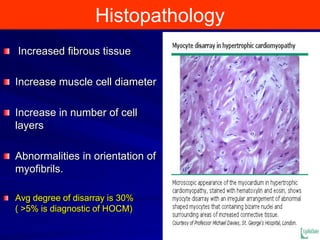
Histopathology
Increased fibrous tissue

Increase muscle cell diameter
Increase in number of cell
layers
Abnormalities in orientation of
myofibrils.
Avg degree of disarray is 30%
( >5% is diagnostic of HOCM)
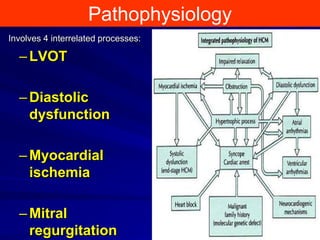
Pathophysiology
Involves 4 interrelated processes:

– LVOT
– Diastolic
dysfunction
– Myocardial
ischemia
– Mitral
regurgitation
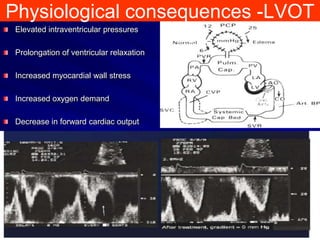
Physiological consequences -LVOT
Elevated intraventricular pressures
Prolongation of ventricular relaxation
Increased myocardial wall stress
Increased oxygen demand
Decrease in forward cardiac output
DIASTOLIC DYSFUNCTION
Diastolic Dysfunction
- Due to prolongation of isovolumic relaxation
time
-  LV filling pressure
-  Ventricular volume
- Atrial contribution to ventricular filling ~ 75%

Poor Compliance
-  LVEDP for any LVEDV
- Subendocardial ischemia
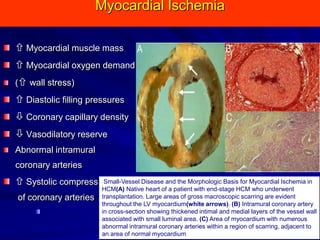
Myocardial Ischemia
 Myocardial muscle mass
 Myocardial oxygen demand
( wall stress)

 Diastolic filling pressures
 Coronary capillary density

 Vasodilatory reserve
Abnormal intramural
coronary arteries
Small-Vessel Disease and the Morphologic Basis for Myocardial Ischemia in
 Systolic compression

of coronary arteries

HCM(A) Native heart of a patient with end-stage HCM who underwent
transplantation. Large areas of gross macroscopic scarring are evident
throughout the LV myocardium(white arrows). (B) Intramural coronary artery
in cross-section showing thickened intimal and medial layers of the vessel wall
associated with small luminal area. (C) Area of myocardium with numerous
abnormal intramural coronary arteries within a region of scarring, adjacent to
an area of normal myocardium.
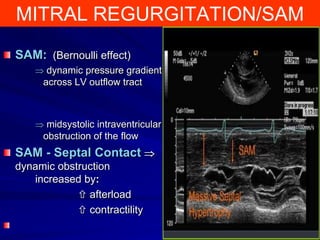
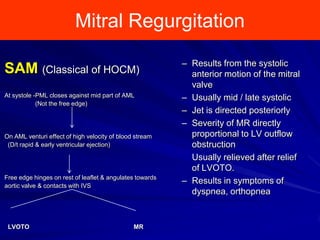
MITRAL REGURGITATION/SAM
SAM: (Bernoulli effect)
dynamic pressure gradient
across LV outflow tract

midsystolic intraventricular
obstruction of the flow

SAM - Septal Contact
dynamic obstruction
increased by:
 afterload
 contractility
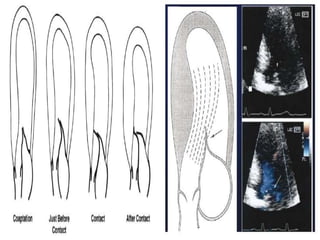
Mitral Regurgitation
SAM (Classical of HOCM)
At systole -PML closes against mid part of AML
(Not the free edge)

On AML venturi effect of high velocity of blood stream
(D/t rapid & early ventricular ejection)

Free edge hinges on rest of leaflet & angulates towards
aortic valve & contacts with IVS

LVOTO

MR

– Results from the systolic
anterior motion of the mitral
valve
– Usually mid / late systolic
– Jet is directed posteriorly
– Severity of MR directly
proportional to LV outflow
obstruction
Usually relieved after relief
of LVOTO.
– Results in symptoms of
dyspnea, orthopnea
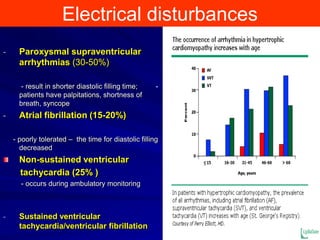
Electrical disturbances
-

Paroxysmal supraventricular
arrhythmias (30-50%)
- result in shorter diastolic filling time;
patients have palpitations, shortness of
breath, syncope

-

-

Atrial fibrillation (15-20%)
- poorly tolerated – the time for diastolic filling
decreased

Non-sustained ventricular
tachycardia (25% )
- occurs during ambulatory monitoring

-

Sustained ventricular
tachycardia/ventricular fibrillation
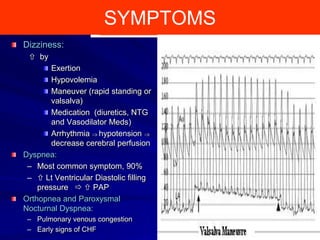
SYMPTOMS
Dizziness:
 by
Exertion
Hypovolemia
Maneuver (rapid standing or
valsalva)
Medication (diuretics, NTG
and Vasodilator Meds)
Arrhythmia hypotension
decrease cerebral perfusion
Dyspnea:
– Most common symptom, 90%
–  Lt Ventricular Diastolic filling
pressure   PAP
Orthopnea and Paroxysmal
Nocturnal Dyspnea:
– Pulmonary venous congestion
– Early signs of CHF

19
SYMPTOMS
Angina:
– Common with no CAD
– Impaired diastolic relaxation +  MVO2
Sub-endocardial
ischemia
–  Capillary density leads to  flow to hypertrophic muscle
– Extramural compression of coronaries
–  Systolic ejection time leads to  diastolic interval for
coronaries perfusion

Syncope and pre-syncope:
–
–
–
–

Very common
 CO with exertion or arrhythmia
High risk of sudden death
Urgent work-up and aggressive treatment
20
SYMPTOMS
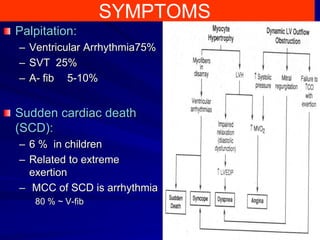
Palpitation:
– Ventricular Arrhythmia75%
– SVT 25%
– A- fib 5-10%

Sudden cardiac death
(SCD):
– 6 % in children
– Related to extreme
exertion
– MCC of SCD is arrhythmia
80 % ~ V-fib
21
PHYSICAL SIGNS

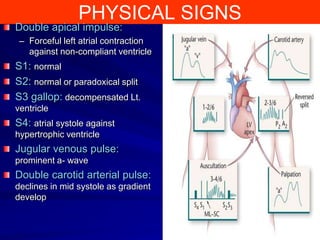
Double apical impulse:

– Forceful left atrial contraction
against non-compliant ventricle

S1: normal
S2: normal or paradoxical split
S3 gallop: decompensated Lt.
ventricle

S4: atrial systole against
hypertrophic ventricle

Jugular venous pulse:
prominent a- wave

Double carotid arterial pulse:
declines in mid systole as gradient
develop

22
MURMURS
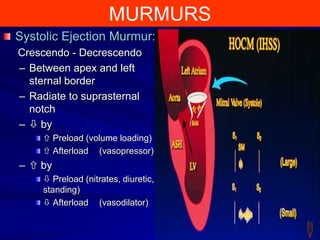
Systolic Ejection Murmur:
Crescendo - Decrescendo
– Between apex and left
sternal border
– Radiate to suprasternal
notch
–  by
 Preload (volume loading)
 Afterload (vasopressor)

–  by
 Preload (nitrates, diuretic,
standing)
 Afterload (vasodilator)
23
MURMURS
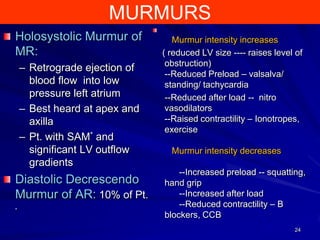
Holosystolic Murmur of
MR:
– Retrograde ejection of
blood flow into low
pressure left atrium
– Best heard at apex and
axilla
– Pt. with SAM* and
significant LV outflow
gradients

Diastolic Decrescendo
Murmur of AR: 10% of Pt.
*

Murmur intensity increases
( reduced LV size ---- raises level of
obstruction)
--Reduced Preload – valsalva/
standing/ tachycardia
--Reduced after load -- nitro
vasodilators
--Raised contractility – Ionotropes,
exercise
Murmur intensity decreases
--Increased preload -- squatting,
hand grip
--Increased after load
--Reduced contractility – B
blockers, CCB
24
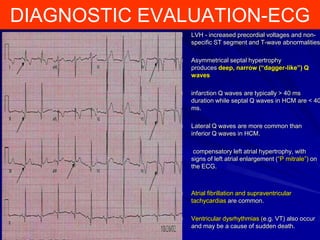
DIAGNOSTIC EVALUATION-ECG

LVH - increased precordial voltages and nonspecific ST segment and T-wave abnormalities.
Asymmetrical septal hypertrophy
produces deep, narrow (“dagger-like”) Q
waves

infarction Q waves are typically > 40 ms
duration while septal Q waves in HCM are < 40
ms.
Lateral Q waves are more common than
inferior Q waves in HCM.
compensatory left atrial hypertrophy, with
signs of left atrial enlargement (“P mitrale”) on
the ECG.

Atrial fibrillation and supraventricular
tachycardias are common.
Ventricular dysrhythmias (e.g. VT) also occur
and may be a cause of sudden death.
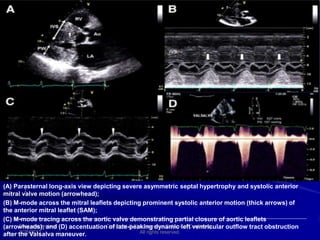
(A) Parasternal long-axis view depicting severe asymmetric septal hypertrophy and systolic anterior
:
mitral valve motion (arrowhead);
(B) M-mode across the mitral leaflets depicting prominent systolic anterior motion (thick arrows) of
the anterior mitral leaflet (SAM);
(C) M-mode tracing across the aortic valve demonstrating partial closure of aortic leaflets
Date of download:
(arrowheads); and (D) accentuationCopyright © The American Collegeleft ventricular outflow tract obstruction
of late-peaking dynamic of Cardiology.
3/28/2013
All rights reserved.
after the Valsalva maneuver.
CARDIAC CATH
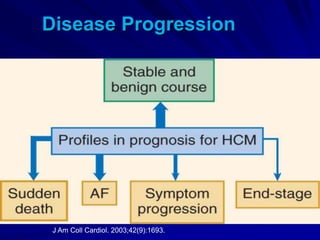
Disease Progression

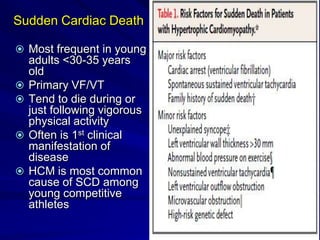
J Am Coll Cardiol. 2003;42(9):1693.
Sudden Cardiac Death
 Most frequent in young






adults <30-35 years
old
Primary VF/VT
Tend to die during or
just following vigorous
physical activity
Often is 1st clinical
manifestation of
disease
HCM is most common
cause of SCD among
young competitive
athletes

J Am Coll Cardiol. 2003;42(9):1693.
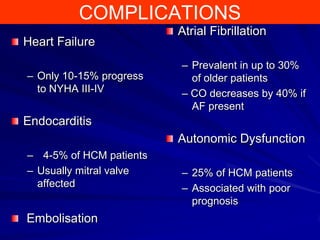
COMPLICATIONS
Complications
Atrial Fibrillation
Heart Failure
– Only 10-15% progress
to NYHA III-IV

– Prevalent in up to 30%
of older patients
– CO decreases by 40% if
AF present

Endocarditis

Autonomic Dysfunction
– 4-5% of HCM patients
– Usually mitral valve
affected

Embolisation

– 25% of HCM patients
– Associated with poor
prognosis
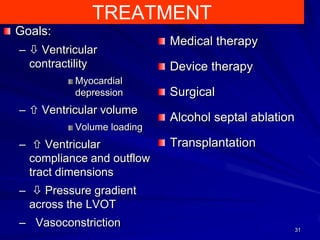
TREATMENT
Goals:
–  Ventricular
contractility
Myocardial
depression

–  Ventricular volume
Volume loading

–  Ventricular
compliance and outflow
tract dimensions

Medical therapy
Device therapy

Surgical
Alcohol septal ablation

Transplantation

–  Pressure gradient
across the LVOT
– Vasoconstriction

31
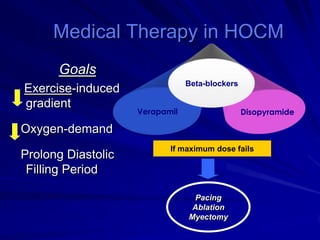
Medical Therapy in HOCM
Goals
Exercise-induced
gradient

Beta-blockers
Verapamil

Disopyramide

Oxygen-demand
Prolong Diastolic
Filling Period

If maximum dose fails

Pacing
Ablation
Myectomy
TREATMENT
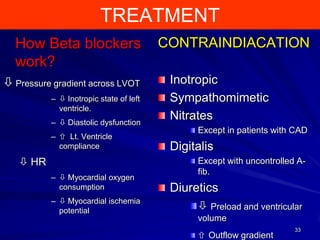
How Beta blockers
work?
 Pressure gradient across LVOT
–  Inotropic state of left
ventricle.
–  Diastolic dysfunction

–  Lt. Ventricle
compliance

 HR
–  Myocardial oxygen
consumption
–  Myocardial ischemia
potential

CONTRAINDIACATION
Inotropic
Sympathomimetic
Nitrates
Except in patients with CAD

Digitalis
Except with uncontrolled Afib.

Diuretics
 Preload and ventricular
volume
 Outflow gradient

33
SURGICAL MANAGEMENT

Septal myectomy
Trans aortic / Left ventriculotomy

Extended septal myectomy

myectomy with Plication of Aml
Modified konno operation
Mitral valve replacement
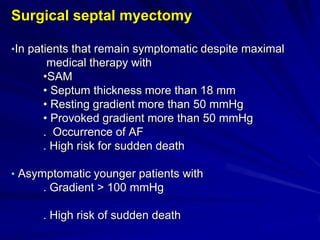
Surgical septal myectomy
•In patients that remain symptomatic despite maximal

medical therapy with
•SAM
• Septum thickness more than 18 mm
• Resting gradient more than 50 mmHg
• Provoked gradient more than 50 mmHg
. Occurrence of AF
. High risk for sudden death
• Asymptomatic younger patients with

. Gradient > 100 mmHg
. High risk of sudden death
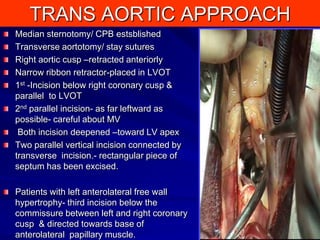
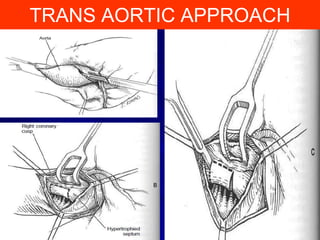
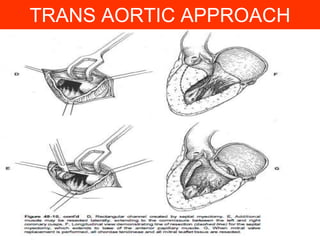
TRANS AORTIC APPROACH
Median sternotomy/ CPB estsblished
Transverse aortotomy/ stay sutures
Right aortic cusp –retracted anteriorly
Narrow ribbon retractor-placed in LVOT
1st -Incision below right coronary cusp &
parallel to LVOT
2nd parallel incision- as far leftward as
possible- careful about MV
Both incision deepened –toward LV apex
Two parallel vertical incision connected by
transverse incision.- rectangular piece of
septum has been excised.

Patients with left anterolateral free wall
hypertrophy- third incision below the
commissure between left and right coronary
cusp & directed towards base of
anterolateral papillary muscle.
TRANS AORTIC APPROACH

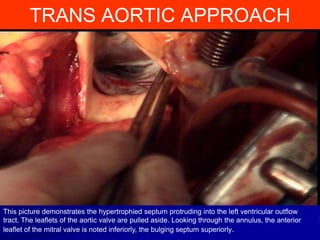
This picture demonstrates the hypertrophied septum protruding into the left ventricular outflow
tract. The leaflets of the aortic valve are pulled aside. Looking through the annulus, the anterior
leaflet of the mitral valve is noted inferiorly, the bulging septum superiorly.
TRANS AORTIC APPROACH

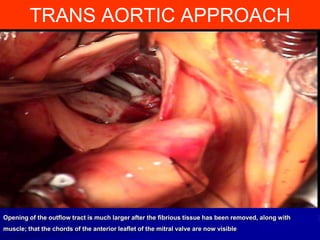
Opening of the outflow tract is much larger after the fibrious tissue has been removed, along with
muscle; that the chords of the anterior leaflet of the mitral valve are now visible
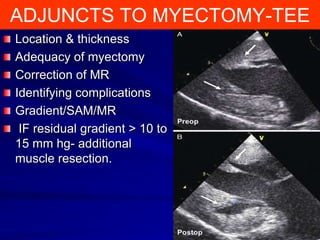
ADJUNCTS TO MYECTOMY-TEE
Location & thickness
Adequacy of myectomy
Correction of MR
Identifying complications
Gradient/SAM/MR
IF residual gradient > 10 to
15 mm hg- additional
muscle resection.
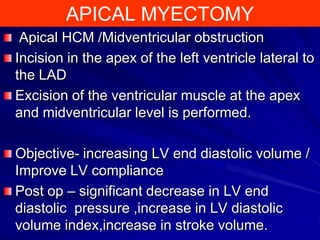
APICAL MYECTOMY
Apical HCM /Midventricular obstruction
Incision in the apex of the left ventricle lateral to
the LAD
Excision of the ventricular muscle at the apex
and midventricular level is performed.
Objective- increasing LV end diastolic volume /
Improve LV compliance
Post op – significant decrease in LV end
diastolic pressure ,increase in LV diastolic
volume index,increase in stroke volume.
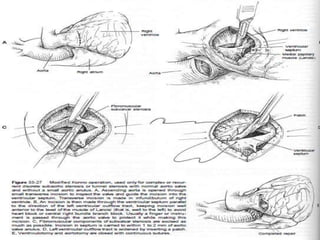
Modified konno operation
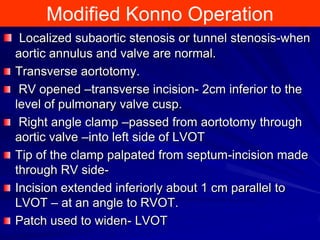
Modified Konno Operation
Localized subaortic stenosis or tunnel stenosis-when
aortic annulus and valve are normal.
Transverse aortotomy.
RV opened –transverse incision- 2cm inferior to the
level of pulmonary valve cusp.
Right angle clamp –passed from aortotomy through
aortic valve –into left side of LVOT
Tip of the clamp palpated from septum-incision made
through RV sideIncision extended inferiorly about 1 cm parallel to
LVOT – at an angle to RVOT.
Patch used to widen- LVOT
Extended myectomy with reconstruction of
subvalvular apparatus -- Messmer
Septal myectomy extended into the LV cavity- wide
toward the apex
Providing access to both the papillary musclemobilized down to the apex
All hypertrophied portions and muscle trabeculae are
resected.
Mobilization of malpositioned papillary musclepermits mitral leaflets to deflect from LVOT during
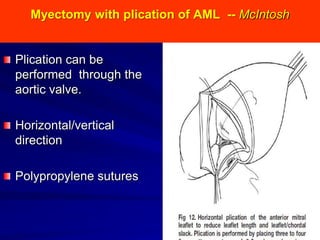
Myectomy with plication of AML -- McIntosh

Plication can be
performed through the
aortic valve.
Horizontal/vertical
direction
Polypropylene sutures
ANTERIOR LEAFLET EXTENSION
Insertion of a pericardial patch.

Increases leaflet stiffness.
Causes lateral displacement of the secondary
chordae tendinae.
Functions haemodynamically as a spinnakar sail to
eliminate SAM.
MITRAL VALVE REPLACEMENT/REPAIR
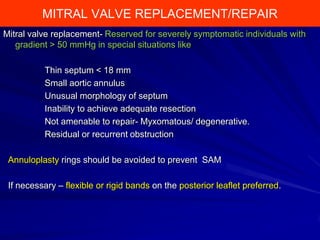
Mitral valve replacement- Reserved for severely symptomatic individuals with
gradient > 50 mmHg in special situations like
Thin septum < 18 mm
Small aortic annulus
Unusual morphology of septum
Inability to achieve adequate resection
Not amenable to repair- Myxomatous/ degenerative.
Residual or recurrent obstruction
Annuloplasty rings should be avoided to prevent SAM
If necessary – flexible or rigid bands on the posterior leaflet preferred.
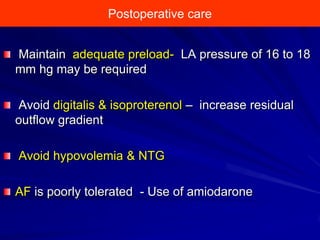
Postoperative care
Maintain adequate preload- LA pressure of 16 to 18
mm hg may be required
Avoid digitalis & isoproterenol – increase residual
outflow gradient
Avoid hypovolemia & NTG

AF is poorly tolerated - Use of amiodarone
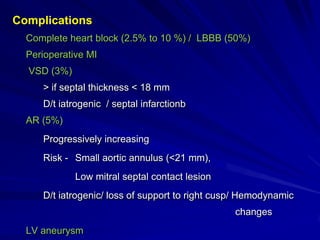
Complications
Complete heart block (2.5% to 10 %) / LBBB (50%)
Perioperative MI
VSD (3%)

> if septal thickness < 18 mm
D/t iatrogenic / septal infarctionb
AR (5%)

Progressively increasing
Risk - Small aortic annulus (<21 mm),
Low mitral septal contact lesion

D/t iatrogenic/ loss of support to right cusp/ Hemodynamic
changes
LV aneurysm
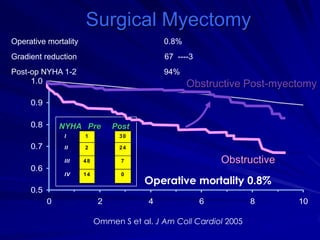
Surgical Myectomy
Operative mortality

0.8%

Gradient reduction

67 ----3

Post-op NYHA 1-2
1.0

94%

Obstructive Post-myectomy

0.9
0.8

NYHA Pre

Post

I

2

24

III

48

7

IV

0.6

30

II

0.7

1

14

0

Obstructive

Operative mortality 0.8%

0.5
0

2

4

6

Ommen S et al. J Am Coll Cardiol 2005

8

10
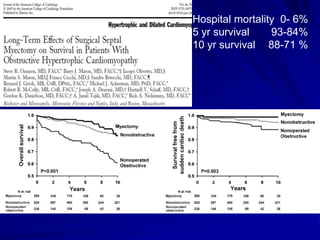
Hospital mortality 0- 6%
5 yr survival
93-84%
10 yr survival 88-71 %
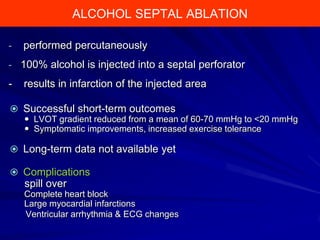
ALCOHOL Ablation
Alcohol SeptalSEPTAL ABLATION
-

performed percutaneously

- 100% alcohol is injected into a septal perforator

-

results in infarction of the injected area

 Successful short-term outcomes
 LVOT gradient reduced from a mean of 60-70 mmHg to <20 mmHg
 Symptomatic improvements, increased exercise tolerance

 Long-term data not available yet
 Complications

spill over
Complete heart block
Large myocardial infarctions
Ventricular arrhythmia & ECG changes
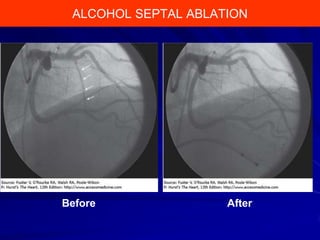
ALCOHOL SEPTAL Ablation
Alcohol Septal ABLATION

Before

After
DUAL CHAMBER PACING

Dual-Chamber Pacing

Proposed benefit: pacing the RV apex will
Decrease the outflow tract gradient

By – Decreased septal motion
Reduced SAM of the AML
Late activation of base of septum
Decreased LV contractility
used in patients with significant symptoms who would not tolerate
surgical therapy
Objective measures such as exercise capacity and oxygen consumption
are not improved
No correlation has been found between pacing and reduction of LVOT
gradient
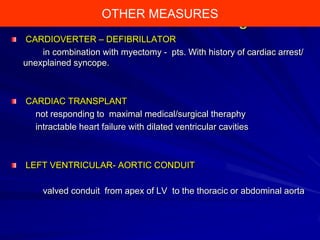
OTHER MEASURES

Dual-Chamber Pacing
CARDIOVERTER – DEFIBRILLATOR
in combination with myectomy - pts. With history of cardiac arrest/
unexplained syncope.

CARDIAC TRANSPLANT
not responding to maximal medical/surgical theraphy
intractable heart failure with dilated ventricular cavities

LEFT VENTRICULAR- AORTIC CONDUIT

valved conduit from apex of LV to the thoracic or abdominal aorta
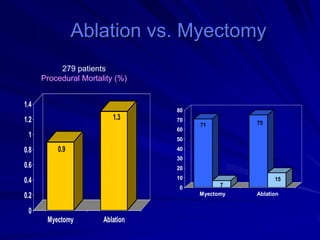
Ablation vs. Myectomy
279 patients
Procedural Mortality (%)

1.4

80

1.3

1.2

60

1
0.8

70

75

71

50

0.9

40
30

0.6

20
10

0.4

0

15
7
Myectomy

0.2
0
Myectomy

Ablation

Ablation
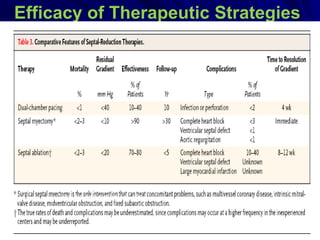
Efficacy of Therapeutic Strategies

Nishimura et al. NEJM. 2004. 350(13):1323.
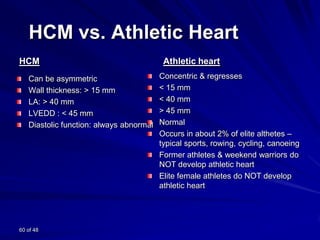
HCM vs. Athletic Heart
HCM
Can be asymmetric
Wall thickness: > 15 mm
LA: > 40 mm
LVEDD : < 45 mm
Diastolic function: always abnormal

60 of 48

Athletic heart
Concentric & regresses
< 15 mm
< 40 mm
> 45 mm
Normal
Occurs in about 2% of elite althetes –
typical sports, rowing, cycling, canoeing
Former athletes & weekend warriors do
NOT develop athletic heart
Elite female athletes do NOT develop
athletic heart
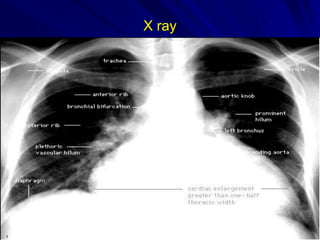
X ray

Cardiomegaly
LA enlargement

Small aorta
Pulmonary edema

Hocm

  • 1.
    Killer that claimsfour young lives each week Daily Express - 31st August 2004 By Hilary Freeman Parents call for action on sudden deaths - Jo Revill Health Editor The Observer - 13th June 2004 Teenager collapses dancing with friends Daily Mail - 17th May 2004 Unexpected tragedies Cycling Weekly - 17th April 2004 Hypertrophic Obstructive Cardiomyopathy Presenter- Dr. Jyotindra Singh
  • 2.
    Functional Classification Dilated (Congestive,DCM, IDC) – Ventricular dilation, hypokinetic left ventricle, and systolic dysfunction Hypertrophic (IHSS, HCM, HOCM, ASH) – Inappropriate myocardial hypertrophy, with or without left ventricular obstruction Restrictive (Infiltrative) – Abnormal ventricular filling with diastolic dysfunction Arrhthymogenic Right Ventricular (ARVD) – Fibroadipose replacement of right ventricle
  • 3.
    HOW DO WEDEFINE HOCM? IDIOPATHIC HYPERTROPHIC SUBAORTIC STENOSIS A myocardial disease characterized by Asymmetric hypertrophy of IVS & ventricles (LV > RV) Microscopic evidence of myocardial fiber disarray & fibrosis Variable dynamic obstruction that is usually sub aortic & is associated with abnormal SAM of AML Prevalence of HCM in the general population is about 1 in 500 (0.2%). 2
  • 4.
    Historical Perspctive HCM wasinitially described by Teare in 1958 Braunwald was the first to diagnose HCM clinically Goodwin & colleagus- namd it HOCM SAM was described by Fix in 1964 Brock (1957) & Cleland (1958) did Ist myotomy- myectomy Dobell & scott / Lillehi & Levy- Cooley & colleagues- RV approach LA approach
  • 5.
    Background Genetic disorder Autosomal dominant Molecularbasis beta myosin heavy chain & Myosin binding protein C Myocardial Ca++ kinetics Increase Ca++ intracellular  hypertrophy and cellular disarray Leading cause of sudden death in preadolescent and adolescent
  • 6.
  • 7.
    LV CAVITY Sub aortic-Small size Sigmoid shaped Midventricular -Dumbbell shaped – prone for LV apical aneurysm. Apical- Spade shaped Advanced disease-LV dilation
  • 8.
    Mitral Valve Dynamic morphology Obstructionin LVOT Positioned closer to ventricular septum Disproportionately elongated & thickened Leaflets -AML PML closes against the body of elongated AML- junction of Middle & free edge
  • 9.
    Fate of RV-LA-Coronaries RV RVOTO d/t Distorted IVS shape RVH P HTN d/t long standing LVH LA ----Dilated & thickened ----Reduced LV compliance / MR Coronaries---Large / Prominent muscular bridging (Total systolic occlusion) ---Wall thickening & luminal narrowing of septal branches
  • 10.
    Histopathology Increased fibrous tissue Increasemuscle cell diameter Increase in number of cell layers Abnormalities in orientation of myofibrils. Avg degree of disarray is 30% ( >5% is diagnostic of HOCM)
  • 11.
    Pathophysiology Involves 4 interrelatedprocesses: – LVOT – Diastolic dysfunction – Myocardial ischemia – Mitral regurgitation
  • 12.
    Physiological consequences -LVOT Elevatedintraventricular pressures Prolongation of ventricular relaxation Increased myocardial wall stress Increased oxygen demand Decrease in forward cardiac output
  • 13.
    DIASTOLIC DYSFUNCTION Diastolic Dysfunction -Due to prolongation of isovolumic relaxation time -  LV filling pressure -  Ventricular volume - Atrial contribution to ventricular filling ~ 75% Poor Compliance -  LVEDP for any LVEDV - Subendocardial ischemia
  • 14.
    Myocardial Ischemia  Myocardialmuscle mass  Myocardial oxygen demand ( wall stress)  Diastolic filling pressures  Coronary capillary density  Vasodilatory reserve Abnormal intramural coronary arteries Small-Vessel Disease and the Morphologic Basis for Myocardial Ischemia in  Systolic compression of coronary arteries HCM(A) Native heart of a patient with end-stage HCM who underwent transplantation. Large areas of gross macroscopic scarring are evident throughout the LV myocardium(white arrows). (B) Intramural coronary artery in cross-section showing thickened intimal and medial layers of the vessel wall associated with small luminal area. (C) Area of myocardium with numerous abnormal intramural coronary arteries within a region of scarring, adjacent to an area of normal myocardium.
  • 15.
    MITRAL REGURGITATION/SAM SAM: (Bernoullieffect) dynamic pressure gradient across LV outflow tract midsystolic intraventricular obstruction of the flow SAM - Septal Contact dynamic obstruction increased by:  afterload  contractility
  • 17.
    Mitral Regurgitation SAM (Classicalof HOCM) At systole -PML closes against mid part of AML (Not the free edge) On AML venturi effect of high velocity of blood stream (D/t rapid & early ventricular ejection) Free edge hinges on rest of leaflet & angulates towards aortic valve & contacts with IVS LVOTO MR – Results from the systolic anterior motion of the mitral valve – Usually mid / late systolic – Jet is directed posteriorly – Severity of MR directly proportional to LV outflow obstruction Usually relieved after relief of LVOTO. – Results in symptoms of dyspnea, orthopnea
  • 18.
    Electrical disturbances - Paroxysmal supraventricular arrhythmias(30-50%) - result in shorter diastolic filling time; patients have palpitations, shortness of breath, syncope - - Atrial fibrillation (15-20%) - poorly tolerated – the time for diastolic filling decreased Non-sustained ventricular tachycardia (25% ) - occurs during ambulatory monitoring - Sustained ventricular tachycardia/ventricular fibrillation
  • 19.
    SYMPTOMS Dizziness:  by Exertion Hypovolemia Maneuver (rapidstanding or valsalva) Medication (diuretics, NTG and Vasodilator Meds) Arrhythmia hypotension decrease cerebral perfusion Dyspnea: – Most common symptom, 90% –  Lt Ventricular Diastolic filling pressure   PAP Orthopnea and Paroxysmal Nocturnal Dyspnea: – Pulmonary venous congestion – Early signs of CHF 19
  • 20.
    SYMPTOMS Angina: – Common withno CAD – Impaired diastolic relaxation +  MVO2 Sub-endocardial ischemia –  Capillary density leads to  flow to hypertrophic muscle – Extramural compression of coronaries –  Systolic ejection time leads to  diastolic interval for coronaries perfusion Syncope and pre-syncope: – – – – Very common  CO with exertion or arrhythmia High risk of sudden death Urgent work-up and aggressive treatment 20
  • 21.
    SYMPTOMS Palpitation: – Ventricular Arrhythmia75% –SVT 25% – A- fib 5-10% Sudden cardiac death (SCD): – 6 % in children – Related to extreme exertion – MCC of SCD is arrhythmia 80 % ~ V-fib 21
  • 22.
    PHYSICAL SIGNS Double apicalimpulse: – Forceful left atrial contraction against non-compliant ventricle S1: normal S2: normal or paradoxical split S3 gallop: decompensated Lt. ventricle S4: atrial systole against hypertrophic ventricle Jugular venous pulse: prominent a- wave Double carotid arterial pulse: declines in mid systole as gradient develop 22
  • 23.
    MURMURS Systolic Ejection Murmur: Crescendo- Decrescendo – Between apex and left sternal border – Radiate to suprasternal notch –  by  Preload (volume loading)  Afterload (vasopressor) –  by  Preload (nitrates, diuretic, standing)  Afterload (vasodilator) 23
  • 24.
    MURMURS Holosystolic Murmur of MR: –Retrograde ejection of blood flow into low pressure left atrium – Best heard at apex and axilla – Pt. with SAM* and significant LV outflow gradients Diastolic Decrescendo Murmur of AR: 10% of Pt. * Murmur intensity increases ( reduced LV size ---- raises level of obstruction) --Reduced Preload – valsalva/ standing/ tachycardia --Reduced after load -- nitro vasodilators --Raised contractility – Ionotropes, exercise Murmur intensity decreases --Increased preload -- squatting, hand grip --Increased after load --Reduced contractility – B blockers, CCB 24
  • 25.
    DIAGNOSTIC EVALUATION-ECG LVH -increased precordial voltages and nonspecific ST segment and T-wave abnormalities. Asymmetrical septal hypertrophy produces deep, narrow (“dagger-like”) Q waves infarction Q waves are typically > 40 ms duration while septal Q waves in HCM are < 40 ms. Lateral Q waves are more common than inferior Q waves in HCM. compensatory left atrial hypertrophy, with signs of left atrial enlargement (“P mitrale”) on the ECG. Atrial fibrillation and supraventricular tachycardias are common. Ventricular dysrhythmias (e.g. VT) also occur and may be a cause of sudden death.
  • 26.
    (A) Parasternal long-axisview depicting severe asymmetric septal hypertrophy and systolic anterior : mitral valve motion (arrowhead); (B) M-mode across the mitral leaflets depicting prominent systolic anterior motion (thick arrows) of the anterior mitral leaflet (SAM); (C) M-mode tracing across the aortic valve demonstrating partial closure of aortic leaflets Date of download: (arrowheads); and (D) accentuationCopyright © The American Collegeleft ventricular outflow tract obstruction of late-peaking dynamic of Cardiology. 3/28/2013 All rights reserved. after the Valsalva maneuver.
  • 27.
  • 28.
    Disease Progression J AmColl Cardiol. 2003;42(9):1693.
  • 29.
    Sudden Cardiac Death Most frequent in young     adults <30-35 years old Primary VF/VT Tend to die during or just following vigorous physical activity Often is 1st clinical manifestation of disease HCM is most common cause of SCD among young competitive athletes J Am Coll Cardiol. 2003;42(9):1693.
  • 30.
    COMPLICATIONS Complications Atrial Fibrillation Heart Failure –Only 10-15% progress to NYHA III-IV – Prevalent in up to 30% of older patients – CO decreases by 40% if AF present Endocarditis Autonomic Dysfunction – 4-5% of HCM patients – Usually mitral valve affected Embolisation – 25% of HCM patients – Associated with poor prognosis
  • 31.
    TREATMENT Goals: –  Ventricular contractility Myocardial depression – Ventricular volume Volume loading –  Ventricular compliance and outflow tract dimensions Medical therapy Device therapy Surgical Alcohol septal ablation Transplantation –  Pressure gradient across the LVOT – Vasoconstriction 31
  • 32.
    Medical Therapy inHOCM Goals Exercise-induced gradient Beta-blockers Verapamil Disopyramide Oxygen-demand Prolong Diastolic Filling Period If maximum dose fails Pacing Ablation Myectomy
  • 33.
    TREATMENT How Beta blockers work? Pressure gradient across LVOT –  Inotropic state of left ventricle. –  Diastolic dysfunction –  Lt. Ventricle compliance  HR –  Myocardial oxygen consumption –  Myocardial ischemia potential CONTRAINDIACATION Inotropic Sympathomimetic Nitrates Except in patients with CAD Digitalis Except with uncontrolled Afib. Diuretics  Preload and ventricular volume  Outflow gradient 33
  • 34.
    SURGICAL MANAGEMENT Septal myectomy Transaortic / Left ventriculotomy Extended septal myectomy myectomy with Plication of Aml Modified konno operation Mitral valve replacement
  • 35.
    Surgical septal myectomy •Inpatients that remain symptomatic despite maximal medical therapy with •SAM • Septum thickness more than 18 mm • Resting gradient more than 50 mmHg • Provoked gradient more than 50 mmHg . Occurrence of AF . High risk for sudden death • Asymptomatic younger patients with . Gradient > 100 mmHg . High risk of sudden death
  • 36.
    TRANS AORTIC APPROACH Mediansternotomy/ CPB estsblished Transverse aortotomy/ stay sutures Right aortic cusp –retracted anteriorly Narrow ribbon retractor-placed in LVOT 1st -Incision below right coronary cusp & parallel to LVOT 2nd parallel incision- as far leftward as possible- careful about MV Both incision deepened –toward LV apex Two parallel vertical incision connected by transverse incision.- rectangular piece of septum has been excised. Patients with left anterolateral free wall hypertrophy- third incision below the commissure between left and right coronary cusp & directed towards base of anterolateral papillary muscle.
  • 37.
  • 38.
  • 39.
    TRANS AORTIC APPROACH Thispicture demonstrates the hypertrophied septum protruding into the left ventricular outflow tract. The leaflets of the aortic valve are pulled aside. Looking through the annulus, the anterior leaflet of the mitral valve is noted inferiorly, the bulging septum superiorly.
  • 40.
    TRANS AORTIC APPROACH Openingof the outflow tract is much larger after the fibrious tissue has been removed, along with muscle; that the chords of the anterior leaflet of the mitral valve are now visible
  • 41.
    ADJUNCTS TO MYECTOMY-TEE Location& thickness Adequacy of myectomy Correction of MR Identifying complications Gradient/SAM/MR IF residual gradient > 10 to 15 mm hg- additional muscle resection.
  • 42.
    APICAL MYECTOMY Apical HCM/Midventricular obstruction Incision in the apex of the left ventricle lateral to the LAD Excision of the ventricular muscle at the apex and midventricular level is performed. Objective- increasing LV end diastolic volume / Improve LV compliance Post op – significant decrease in LV end diastolic pressure ,increase in LV diastolic volume index,increase in stroke volume.
  • 43.
  • 44.
    Modified Konno Operation Localizedsubaortic stenosis or tunnel stenosis-when aortic annulus and valve are normal. Transverse aortotomy. RV opened –transverse incision- 2cm inferior to the level of pulmonary valve cusp. Right angle clamp –passed from aortotomy through aortic valve –into left side of LVOT Tip of the clamp palpated from septum-incision made through RV sideIncision extended inferiorly about 1 cm parallel to LVOT – at an angle to RVOT. Patch used to widen- LVOT
  • 45.
    Extended myectomy withreconstruction of subvalvular apparatus -- Messmer Septal myectomy extended into the LV cavity- wide toward the apex Providing access to both the papillary musclemobilized down to the apex All hypertrophied portions and muscle trabeculae are resected. Mobilization of malpositioned papillary musclepermits mitral leaflets to deflect from LVOT during
  • 46.
    Myectomy with plicationof AML -- McIntosh Plication can be performed through the aortic valve. Horizontal/vertical direction Polypropylene sutures
  • 47.
    ANTERIOR LEAFLET EXTENSION Insertionof a pericardial patch. Increases leaflet stiffness. Causes lateral displacement of the secondary chordae tendinae. Functions haemodynamically as a spinnakar sail to eliminate SAM.
  • 48.
    MITRAL VALVE REPLACEMENT/REPAIR Mitralvalve replacement- Reserved for severely symptomatic individuals with gradient > 50 mmHg in special situations like Thin septum < 18 mm Small aortic annulus Unusual morphology of septum Inability to achieve adequate resection Not amenable to repair- Myxomatous/ degenerative. Residual or recurrent obstruction Annuloplasty rings should be avoided to prevent SAM If necessary – flexible or rigid bands on the posterior leaflet preferred.
  • 49.
    Postoperative care Maintain adequatepreload- LA pressure of 16 to 18 mm hg may be required Avoid digitalis & isoproterenol – increase residual outflow gradient Avoid hypovolemia & NTG AF is poorly tolerated - Use of amiodarone
  • 50.
    Complications Complete heart block(2.5% to 10 %) / LBBB (50%) Perioperative MI VSD (3%) > if septal thickness < 18 mm D/t iatrogenic / septal infarctionb AR (5%) Progressively increasing Risk - Small aortic annulus (<21 mm), Low mitral septal contact lesion D/t iatrogenic/ loss of support to right cusp/ Hemodynamic changes LV aneurysm
  • 51.
    Surgical Myectomy Operative mortality 0.8% Gradientreduction 67 ----3 Post-op NYHA 1-2 1.0 94% Obstructive Post-myectomy 0.9 0.8 NYHA Pre Post I 2 24 III 48 7 IV 0.6 30 II 0.7 1 14 0 Obstructive Operative mortality 0.8% 0.5 0 2 4 6 Ommen S et al. J Am Coll Cardiol 2005 8 10
  • 52.
    Hospital mortality 0-6% 5 yr survival 93-84% 10 yr survival 88-71 %
  • 53.
    ALCOHOL Ablation Alcohol SeptalSEPTALABLATION - performed percutaneously - 100% alcohol is injected into a septal perforator - results in infarction of the injected area  Successful short-term outcomes  LVOT gradient reduced from a mean of 60-70 mmHg to <20 mmHg  Symptomatic improvements, increased exercise tolerance  Long-term data not available yet  Complications spill over Complete heart block Large myocardial infarctions Ventricular arrhythmia & ECG changes
  • 54.
    ALCOHOL SEPTAL Ablation AlcoholSeptal ABLATION Before After
  • 55.
    DUAL CHAMBER PACING Dual-ChamberPacing Proposed benefit: pacing the RV apex will Decrease the outflow tract gradient By – Decreased septal motion Reduced SAM of the AML Late activation of base of septum Decreased LV contractility used in patients with significant symptoms who would not tolerate surgical therapy Objective measures such as exercise capacity and oxygen consumption are not improved No correlation has been found between pacing and reduction of LVOT gradient
  • 56.
    OTHER MEASURES Dual-Chamber Pacing CARDIOVERTER– DEFIBRILLATOR in combination with myectomy - pts. With history of cardiac arrest/ unexplained syncope. CARDIAC TRANSPLANT not responding to maximal medical/surgical theraphy intractable heart failure with dilated ventricular cavities LEFT VENTRICULAR- AORTIC CONDUIT valved conduit from apex of LV to the thoracic or abdominal aorta
  • 58.
    Ablation vs. Myectomy 279patients Procedural Mortality (%) 1.4 80 1.3 1.2 60 1 0.8 70 75 71 50 0.9 40 30 0.6 20 10 0.4 0 15 7 Myectomy 0.2 0 Myectomy Ablation Ablation
  • 59.
    Efficacy of TherapeuticStrategies Nishimura et al. NEJM. 2004. 350(13):1323.
  • 60.
    HCM vs. AthleticHeart HCM Can be asymmetric Wall thickness: > 15 mm LA: > 40 mm LVEDD : < 45 mm Diastolic function: always abnormal 60 of 48 Athletic heart Concentric & regresses < 15 mm < 40 mm > 45 mm Normal Occurs in about 2% of elite althetes – typical sports, rowing, cycling, canoeing Former athletes & weekend warriors do NOT develop athletic heart Elite female athletes do NOT develop athletic heart
  • 61.