Cardiomyopathy
Sanket
• Cardiomyopathy, is a disease of the heart muscle
itself, not associated with congenital, valvular, or
coronary heart disease or systemic disorders.
• WHO in 1995 defined Cardiomyopathies as diseases of
myocardium associated with cardiac dysfunction
Types
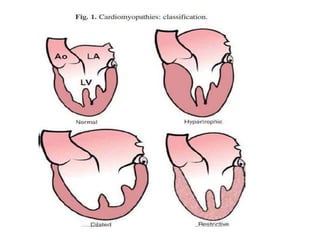
• Dilated Cardiomyopathy(DCM)
• Hypertrophic Cardiomyopathy(HCM)
• Restrictive Cardiomyopathy(RCM)
• Arrythmogenic RVCardiomyopathy(ARVC)
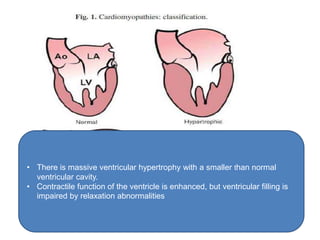
• There is massive ventricular hypertrophy with a smaller than normal
ventricular cavity.
• Contractile function of the ventricle is enhanced, but ventricular filling is
impaired by relaxation abnormalities
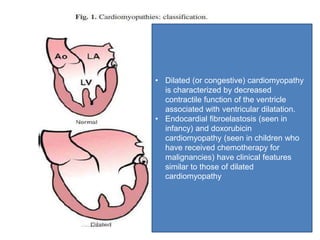
• Dilated (or congestive) cardiomyopathy
is characterized by decreased
contractile function of the ventricle
associated with ventricular dilatation.
• Endocardial fibroelastosis (seen in
infancy) and doxorubicin
cardiomyopathy (seen in children who
have received chemotherapy for
malignancies) have clinical features
similar to those of dilated
cardiomyopathy
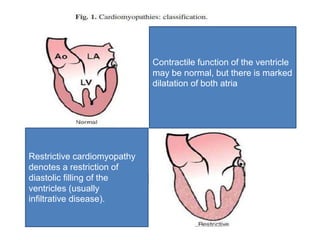
Restrictive cardiomyopathy
denotes a restriction of
diastolic filling of the
ventricles (usually
infiltrative disease).
Contractile function of the ventricle
may be normal, but there is marked
dilatation of both atria
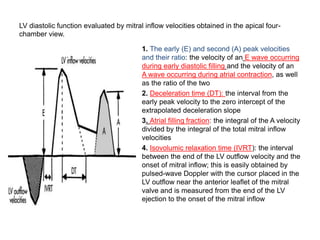
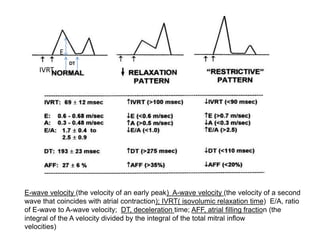
LV diastolic function evaluated by mitral inflow velocities obtained in the apical four-
chamber view.
1. The early (E) and second (A) peak velocities
and their ratio: the velocity of an E wave occurring
during early diastolic filling and the velocity of an
A wave occurring during atrial contraction, as well
as the ratio of the two
2. Deceleration time (DT): the interval from the
early peak velocity to the zero intercept of the
extrapolated deceleration slope
3. Atrial filling fraction: the integral of the A velocity
divided by the integral of the total mitral inflow
velocities
4. Isovolumic relaxation time (IVRT): the interval
between the end of the LV outflow velocity and the
onset of mitral inflow; this is easily obtained by
pulsed-wave Doppler with the cursor placed in the
LV outflow near the anterior leaflet of the mitral
valve and is measured from the end of the LV
ejection to the onset of the mitral inflow
E-wave velocity (the velocity of an early peak) A-wave velocity (the velocity of a second
wave that coincides with atrial contraction); IVRT( isovolumic relaxation time) E/A, ratio
of E-wave to A-wave velocity; DT, deceleration time; AFF, atrial filling fraction (the
integral of the A velocity divided by the integral of the total mitral inflow
velocities)
IVRT
DT
E
Hypertrophic Cardiomyopathy
• In about 50% of cases, HCM is inherited as autosomal
dominant and is caused by mutations in one of 10 genes
encoding protein components of the cardiac sarcomere (such
as β-myosin heavy chain, myosin binding protein C, and
cardiac troponin-T).
• The remainder of the cases occurs sporadically.
• HCM is usually seen in adolescents and young adults
• It may be seen in children with LEOPARD syndrome
Hypertrophic cardiomyopathy (HCM)
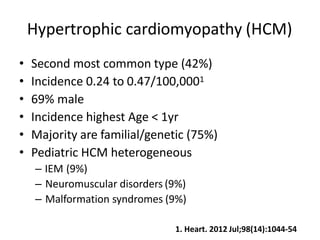
• Second most common type (42%)
• Incidence 0.24 to 0.47/100,0001
• 69% male
• Incidence highest Age < 1yr
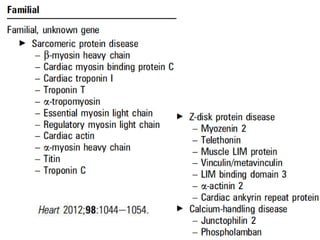
• Majority are familial/genetic (75%)
• Pediatric HCM heterogeneous
– IEM (9%)
– Neuromuscular disorders (9%)
– Malformation syndromes (9%)
1. Heart. 2012 Jul;98(14):1044-54
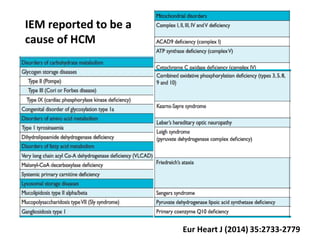
IEM reported to be a
cause of HCM
Eur Heart J (2014) 35:2733-2779
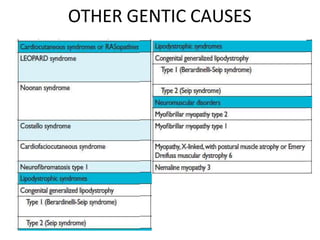
OTHER GENTIC CAUSES
PATHOLOGY AND PATHOPHYSIOLOGY
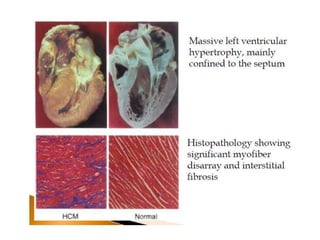
• The most characteristic abnormality is the hypertrophied left ventricle
(LV), with the ventricular cavity usually small or normal in size
• Microscopically, an extensive disarray of hypertrophied myocardial cells,
myocardial scarring, and abnormalities of the small intramural coronary
arteries are present.
• In some patients, an intracavitary pressure gradient develops during systole,
either at subaortic or less commonly (about 5%) at midcavity.
• Subaortic obstruction is caused by systolic anterior motion (SAM) of the
mitral valve against the hypertrophied septum, which is called hypertrophic
obstructive cardiomyopathy (HOCM)
• In apical HCM, hypertrophy is confined to the left ventricular apex,
without intracavitary obstruction (and with giant negative T waves on the
ECG).
• diastolic ventricular filling is impaired by abnormal stiffness of the LV,
which may lead to left atrial enlargement pulmonary venous congestion,
(exertional dyspnea, orthopnea, paroxysmal nocturnal dyspnea).
• LVOT obstruction are more disabled by LV pressure and concomitant
mitral regurgitation than by diastolic dysfunction.
• Variability of the degree of obstruction from moment to moment, intensity
of the heart murmur varies from time to time.
• The obstruction of the LVOT results from SAM of the mitral valve against
the hypertrophied ventricular septum, any influence that reduces the LV
systolic volume (such as positive inotropic agents, reduced blood volume,
or lowering of the systemic vascular resistance) increases the obstruction.
• On the other hand, any influence that increases the LV systolic volume
(such as negative inotropic agents, leg raising, blood transfusion, or
increasing systemic vascular resistance) lessens the obstruction
• Patients with severe hypertrophy and obstruction may experience
anginal chest pain, lightheadedness, near syncope, or syncope.
Patients are also likely to develop arrhythmias, which may lead to
sudden death (presumably).
CLINICAL MANIFESTATIONS
1. Easy fatigability, dyspnea, palpitation, dizziness, syncope, or
anginal pain may be present.
2. Family history is positive for the disease in 30% to 60% of
patients.
Physical examination:
• A sharp upstroke of the arterial pulse is characteristic (in contrast to a slow
upstroke seen with fixed aortic stenosis [AS]).
• A grade 1 to 3/6 ejection systolic murmur of medium pitch is most audible
at the middle and lower left sternal borders or at the apex.
• A soft holosystolic murmur of mitral regurgitation (MR) is often present.
• The intensity and even the presence of the murmur vary from examination
to examination.
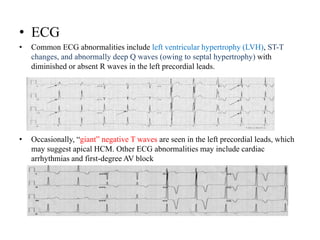
• ECG
• Common ECG abnormalities include left ventricular hypertrophy (LVH), ST-T
changes, and abnormally deep Q waves (owing to septal hypertrophy) with
diminished or absent R waves in the left precordial leads.
• Occasionally, “giant” negative T waves are seen in the left precordial leads, which
may suggest apical HCM. Other ECG abnormalities may include cardiac
arrhythmias and first-degree AV block
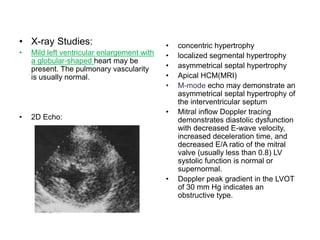
• X-ray Studies:
• Mild left ventricular enlargement with
a globular-shaped heart may be
present. The pulmonary vascularity
is usually normal.
• 2D Echo:
• concentric hypertrophy
• localized segmental hypertrophy
• asymmetrical septal hypertrophy
• Apical HCM(MRI)
• M-mode echo may demonstrate an
asymmetrical septal hypertrophy of
the interventricular septum
• Mitral inflow Doppler tracing
demonstrates diastolic dysfunction
with decreased E-wave velocity,
increased deceleration time, and
decreased E/A ratio of the mitral
valve (usually less than 0.8) LV
systolic function is normal or
supernormal.
• Doppler peak gradient in the LVOT
of 30 mm Hg indicates an
obstructive type.
• MANAGEMENT
• Goal is to reduce ventricular contractility, increase ventricular volume, increase ventricular
compliance, and increase LV outflow tract dimensions
• General management:
a) Avoid strenuous exercise
b) Digitalis,cardiotonic drugs and vasodilators is contraindicated. increases the degree of obstruction
c) Judicious use of diuretics
d) Prophylaxis against SBE
e) Clinical screening of first-degree relatives
f) Annual evaluation during adolescence
A. With symptoms
• β-adrenergic blocker
• Calcium channel blockers (principally verapamil) Vasodilating properties.
• Disopyramide + β-adrenergic blockers
B. Asyptomatic :
• Prophylaxis withβ- blockers or the CCB verapamil is controversial
C. Drug-refractory patients with obstruction
a) Morrow's myotomy-myectomy
b) Percutaneous alcohol septal ablation
c) Pacemaker implantation not reommended
D. Implantable cardioverter-defibrillator(ICD)
E. Cardiac arrhythmias : propranolol, amiodarone
• atrial fibrillation may trigger ventricular arrhythmias. For a new-onset atrial fibrillation,
electrical cardioversion followed by anticoagulation with warfarin (superior to aspirin)
is recommended.
• Amiodarone is generally considered the most effective agent for preventing
recurrence of atrial fibrillation.
• Mitral valve replacement basal anterior septum is relatively thin (<18 mm)
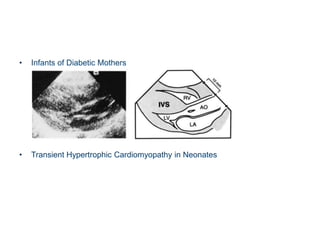
• Infants of Diabetic Mothers
• Transient Hypertrophic Cardiomyopathy in Neonates
DILATED CARDIOMYOPATHY
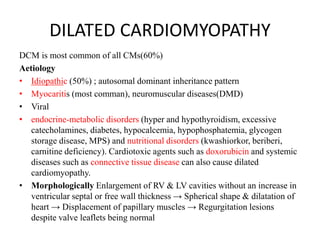
DCM is most common of all CMs(60%)
Aetiology
• Idiopathic (50%) ; autosomal dominant inheritance pattern
• Myocaritis (most comman), neuromuscular diseases(DMD)
• Viral
• endocrine-metabolic disorders (hyper and hypothyroidism, excessive
catecholamines, diabetes, hypocalcemia, hypophosphatemia, glycogen
storage disease, MPS) and nutritional disorders (kwashiorkor, beriberi,
carnitine deficiency). Cardiotoxic agents such as doxorubicin and systemic
diseases such as connective tissue disease can also cause dilated
cardiomyopathy.
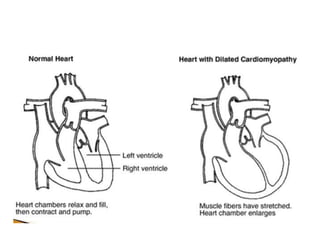
• Morphologically Enlargement of RV & LV cavities without an increase in
ventricular septal or free wall thickness → Spherical shape & dilatation of
heart → Displacement of papillary muscles → Regurgitation lesions
despite valve leaflets being normal
PATHOPHYSIOLOGY
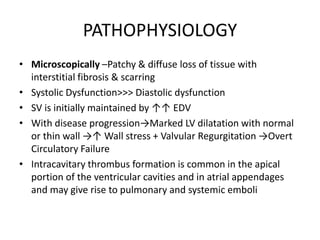
• Microscopically –Patchy & diffuse loss of tissue with
interstitial fibrosis & scarring
• Systolic Dysfunction>>> Diastolic dysfunction
• SV is initially maintained by ↑↑ EDV
• With disease progression→Marked LV dilatation with normal
or thin wall →↑ Wall stress + Valvular Regurgitation →Overt
Circulatory Failure
• Intracavitary thrombus formation is common in the apical
portion of the ventricular cavities and in atrial appendages
and may give rise to pulmonary and systemic emboli
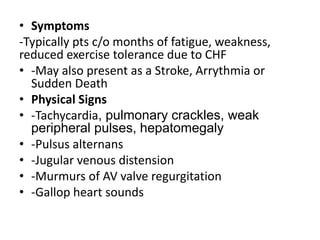
• Symptoms
-Typically pts c/o months of fatigue, weakness,
reduced exercise tolerance due to CHF
• -May also present as a Stroke, Arrythmia or
Sudden Death
• Physical Signs
• -Tachycardia, pulmonary crackles, weak
peripheral pulses, hepatomegaly
• -Pulsus alternans
• -Jugular venous distension
• -Murmurs of AV valve regurgitation
• -Gallop heart sounds
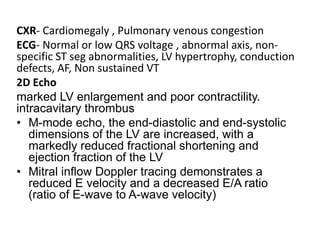
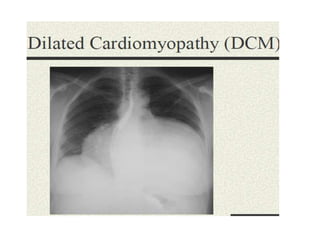
CXR- Cardiomegaly , Pulmonary venous congestion
ECG- Normal or low QRS voltage , abnormal axis, non-
specific ST seg abnormalities, LV hypertrophy, conduction
defects, AF, Non sustained VT
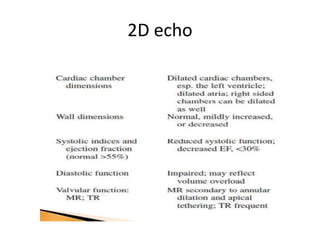
2D Echo
marked LV enlargement and poor contractility.
intracavitary thrombus
• M-mode echo, the end-diastolic and end-systolic
dimensions of the LV are increased, with a
markedly reduced fractional shortening and
ejection fraction of the LV
• Mitral inflow Doppler tracing demonstrates a
reduced E velocity and a decreased E/A ratio
(ratio of E-wave to A-wave velocity)
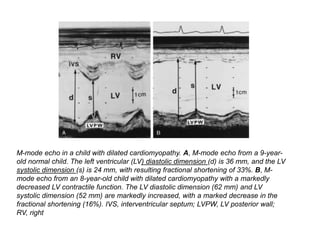
M-mode echo in a child with dilated cardiomyopathy. A, M-mode echo from a 9-year-
old normal child. The left ventricular (LV) diastolic dimension (d) is 36 mm, and the LV
systolic dimension (s) is 24 mm, with resulting fractional shortening of 33%. B, M-
mode echo from an 8-year-old child with dilated cardiomyopathy with a markedly
decreased LV contractile function. The LV diastolic dimension (62 mm) and LV
systolic dimension (52 mm) are markedly increased, with a marked decrease in the
fractional shortening (16%). IVS, interventricular septum; LVPW, LV posterior wall;
RV, right
2D echo
Management
Aim of treatment
• -Manage the symptoms
• -Reduce the progression of disease
• -Prevent Complications
Mainstay of Therapy
• Critically ill children may require intubation and mechanical
ventilation. Rapidly acting intravenous inotropic support
(dobutamine, dopamine)
Vasodilators
+
Digoxin
+
Diuretics
VASODIALATORS (afterload reducing drugs)
ACE Inhibitors
• -Indicated for all patients
• - Reduce symptoms & improve effort tolerance
• - Suppress ventricular remodelling & endothelial
dysfunction
• -Reduce CV mortality
Milrinone
• -Selective PDE-3 inhibitor
• -may improve quality of life but doesn’t affect
• mortality
• -rarely adm in chronic situations
Spironolactone
• used along with ACE Inhibitors has shown to reduce mortality by 30% in a
large double blind randomized trial
Digoxin
• clinically beneficial as reaffirmed by two large trials in adults
β Blockers
• untill recently contraindicated but recent studies show that they not only
provide symptomatic improvement but substantial reduction in sudden
death in NYHA class II & III HF pts
• beneficial effects by a negative chronotropic effect, with reduced oxygen
demand, reduction in catecholamine toxicity, inhibition of sympathetically
mediated vasoconstriction, or reduction of potentially lethal ventricular
arrhythmias. improve LV ejection fraction
Amiodarone
• -High grade ventricular arrythmias (Sustained VT
or VF) are common in DCM→↑ risk of SCD
• -Preferred antiarrythmic agent as it has least
negative inotropic effect & proarrythmogenic
potential
• -Implantable Defibrillators are used for refractory
arrythmias
• Anticoagulants
• -indicated for pts with moderate ventricular
dilatation+mod-severe systolic dysfunction
• -H/O stroke , AF or evidence of Intracardiac
thrombus
PATIENT REFRACTORY TO PHARMACOLOGICAL
THERAPY OF CHF
• Dual Chamber Pacing
• Cardiomyoplasty :
• LV Assist Devices
improved pts sufficiently to avoid transplant or
enable later transplant
• Cardiac Transplantation
has substantially prolonged survival in DCM pts
with 5 yr survival rate of 78%
Endocardial Fibroelastosis
PATHOLOGY
• Primary endocardial fibroelastosis is a form of dilated cardiomyopathy seen in infants.
• Cause unknown. mumps virus, systemic carnitine deficiency
• diffuse changes in the endocardium with a white, opaque, glistening appearance
• The heart chambers, primarily the left atrium (LA) and LV, are notably dilated and
hypertrophied
• Late presentation: Deformities and shortening of the papillary muscles (MR) and
chordae tendineae
• Symptoms and signs of CHF (feeding difficulties, tachypnea, sweating, irritability,
pallor, failure to thrive) develop in the first 10 months of life
• ECG: LVH with “strain” is typical of the condition. Occasionally, myocardial infarction
patterns, arrhythmias, and varying degrees of AV block may be seen
• 2DEcho: A markedly dilated and poorly contracting LV, LA is also markedly dilated.
Bright endocardial echoes.
MANAGEMENT
• Early diagnosis and long-term treatment with digoxin, diuretics, and
afterload-reducing agents are mandatory.
• Digoxin is continued for a minimum of 2 to 3 years and is then gradually
discontinued if symptoms are absent, heart size is normal, and the ECG has
reverted to normal.
• An afterload-reducing agent (hydralazine up to 4 mg/kg per day, in four
divided doses) reported to be beneficial.
• SBE prophylaxis should be observed, especially when MR is present.
• PROGNOSIS
• 1/3rd Die. 1/3rd persistant symptomatic. 1/3rd recover completely
Glycogen Storage Disease.
• deficiency of α-1,4-glycosidase.
• generalized muscle weakness, macroglossia, hepatomegaly, and
signs of CHF or severe arrhythmias
• onset of CHF is around 2 to 3 months of age, with a fatal outcome
usually during infancy
• The ECG may show a short PR interval, LVH in the majority of
patients, occasional BVH, and ST-T changes in the left precordial
leads.
• Diagnosis: Excessive glycogen deposits in a skeletal muscle biopsy
Doxorubicin Cardiomyopathy
• the most common cause of chronic CHF in children
• C-13 anthracycline metabolites, which are inhibitors of adenosine
triphosphatases of sarcoplasmic reticulum, mitochondria, and sarcolemma,
have been implicated in the mechanism of cardiotoxicity.
• PATHOLOGY AND PATHOPHYSIOLOGY
• Dilated LV, decreased contractility, elevated filling pressures of the LV, and
reduced cardiac output characterize pathophysiologic features.
• Microscopically, interstitial edema without evidence of inflammatory
changes, loss of myofibrils within the myocyte, vacuolar degeneration,
necrosis, and fibrosis are present
• CLINICAL MANIFESTATIONS
• Tachypnea and dyspnea, palpitation, cough, and substernal discomfort
• ECH & ECHO: sinus tachycardia with ST-T changes
• size of the LV, LV contractility reduced.
MANAGEMENT
• cardioprotective agents, such as dexrazoxane (an iron chelator)
arvedilol (a β-receptor antagonist with antioxidant property),
coenzyme Q10 antimalignancy effect of the drug.
• Digoxin, diuretics, and afterload-reducing agents (ACE inhibitors)
are useful
• β-Blockers have been shown to be beneficial. Metoprolol (starting at
0.1 mg/kg per dose twice a day and increasing to a maximal dose of
0.9 mg/kg per day) increases LV fractional shortening and ejection
fraction and improves symptoms.
• Cardiac transplantation may be an option for selected patients.
• PROGNOSIS:
• a high mortality rate. The 2-year survival rate is about 20%, and all
patients die by 9 years after the onset of the illness
Carnitine Deficiency
• a rare cause of cardiomegaly
• Carnitine deficiency leads to depressed mitochondrial oxidation of
fatty acids, resulting in storage of fat in muscle and functional
abnormalities of cardiac and skeletal muscle
• muscle weakness, cardiomyopathy, abnormal liver
function,encephalopathy, impaired ketogenesis, and hypoglycemia
during fasting
• hypertrophic and dilated cardiomyopathies have been reported with
carnitine deficiency.
• Progressive cardiomyopathy that begins at 2 to 4 years of age
• Treatment with oral carnitine (L-carnitine: 50 to 100 mg/kg/day by
mouth, divided twice or three times a day; maximum daily dose 3 g)
may improve myocardial function, reduce cardiomegaly, and
improve muscle weaknes
Restrictive Cardiomyopathy
• extremely rare
• Idiopathic
• associated with a systemic disease such as scleroderma,
amyloidosis, sarcoidosis, or an inborn error of metabolism
(mucopolysaccharidosis).
• Malignancies or radiation therapy may result in restrictive
cardiomyopathy.
• PATHOLOGY AND PATHOPHYSIOLOGY
• characterized by markedly dilated atria and generally normal
ventricular dimensions.
• Ventricular diastolic filling is impaired, resulting from excessively stiff
ventricular walls.
• Contractile function of the ventricle is normal. Therefore, this
condition resembles constrictive pericarditis in clinical presentation
and hemodynamic abnormalities.
• areas of myocardial fibrosis and hypertrophy of myocytes, or the
myocardium may be infiltrated by various materials
• Infiltrative restrictive cardiomyopathy may be due to conditions such as
amyloidosis, sarcoidosis, hemochromatosis, glycogen deposit, Fabry's
disease (with deposition of glycosphingolipids), or neoplastic infiltration.
• C/F : exercise intolerance, weakness and dyspnea, or chest pain
• Jugular venous distention, gallop rhythm, and a systolic murmur of AV valve
regurgitation
• Chest x-ray : cardiomegaly, pulmonary venous congestion, and occasional
pleural effusion.
• ECG usually shows atrial hypertrophy.May show PSVT, AF. AV block may
be seen in familial restrictive cardiomyopathy
• ECHO:
• biatrial enlargement with normal dimension of the LV and RV.
• LV systolic function is normal
• Atrial thrombus may be present
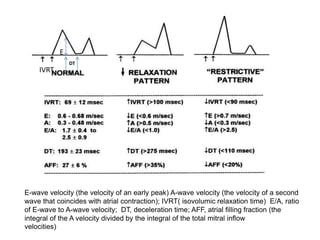
• diastolic dysfunction are present the mitral inflow Doppler tracing shows an
increased E velocity, shortened deceleration time, and increased E/A ratio.
E-wave velocity (the velocity of an early peak) A-wave velocity (the velocity of a second
wave that coincides with atrial contraction); IVRT( isovolumic relaxation time) E/A, ratio
of E-wave to A-wave velocity; DT, deceleration time; AFF, atrial filling fraction (the
integral of the A velocity divided by the integral of the total mitral inflow
velocities)
IVRT
DT
E
• Cardiac catheterization: PA pressure and RV and LV end-diastolic
pressures are elevated.
• MANAGEMENT :
• Treatment is supportive because the prognosis is generally poor
• Judicious use of diuretics as resulting reduction in end-diastolic pressure
may make symptoms worse
• Digoxin is not indicated because systolic function is unimpaired.
• ACE inhibitors may reduce systemic blood pressure without increasing
cardiac output and, therefore, should probably be avoided
• Calcium channel blockers may be used to increase diastolic compliance.
• Anticoagulants (warfarin) and antiplatelet drugs (aspirin and dipyridamole)
may help prevent thrombosis
• A permanent pacemaker is indicated for complete heart block.
• Early transplantation is preferable
• In patients with systemic disease (such as sarcoidosis), recurrence is a
major concern
Right Ventricular Dysplasia
• PATHOLOGY:
• the myocardium of the RV is partially or totally replaced by fibrous or
adipose tissue.
• RV wall may assume a paper-thin appearance because of the total absence
of myocardial tissue, RV wall thickness is normal or near normal.
• Most cases appear to be sporadic.
• CLINICAL MANIFESTATIONS:
• onset is in infancy, childhood, or adulthood
• with a history of palpitation, syncopal episodes arrhythmias (ventricular
tachycardia, supraventricular arrhythmias) or signs of CHF.
• Sudden death may be the first sign of the disease.
• Echo shows selective RV enlargement and often areas of akinesia or
dyskinesia
• A substantial portion of patients die before 5 years of age from CHF and
intractable ventricular tachycardia.
Management
• Various antiarrhythmic agents may be tried, but they are often unsuccessful.
• Surgical intervention (ventricular incision or complete electrical
disarticulation of the RV free wall) may be tried if antiarrhythmic therapy is
unsuccessful
• ICD (implantable Cardioverter- defibrillator) in selected cases.

Cardiomyopathy

  • 1.
  • 2.
    • Cardiomyopathy, isa disease of the heart muscle itself, not associated with congenital, valvular, or coronary heart disease or systemic disorders. • WHO in 1995 defined Cardiomyopathies as diseases of myocardium associated with cardiac dysfunction Types • Dilated Cardiomyopathy(DCM) • Hypertrophic Cardiomyopathy(HCM) • Restrictive Cardiomyopathy(RCM) • Arrythmogenic RVCardiomyopathy(ARVC)
  • 4.
    • There ismassive ventricular hypertrophy with a smaller than normal ventricular cavity. • Contractile function of the ventricle is enhanced, but ventricular filling is impaired by relaxation abnormalities
  • 5.
    • Dilated (orcongestive) cardiomyopathy is characterized by decreased contractile function of the ventricle associated with ventricular dilatation. • Endocardial fibroelastosis (seen in infancy) and doxorubicin cardiomyopathy (seen in children who have received chemotherapy for malignancies) have clinical features similar to those of dilated cardiomyopathy
  • 6.
    Restrictive cardiomyopathy denotes arestriction of diastolic filling of the ventricles (usually infiltrative disease). Contractile function of the ventricle may be normal, but there is marked dilatation of both atria
  • 8.
    LV diastolic functionevaluated by mitral inflow velocities obtained in the apical four- chamber view. 1. The early (E) and second (A) peak velocities and their ratio: the velocity of an E wave occurring during early diastolic filling and the velocity of an A wave occurring during atrial contraction, as well as the ratio of the two 2. Deceleration time (DT): the interval from the early peak velocity to the zero intercept of the extrapolated deceleration slope 3. Atrial filling fraction: the integral of the A velocity divided by the integral of the total mitral inflow velocities 4. Isovolumic relaxation time (IVRT): the interval between the end of the LV outflow velocity and the onset of mitral inflow; this is easily obtained by pulsed-wave Doppler with the cursor placed in the LV outflow near the anterior leaflet of the mitral valve and is measured from the end of the LV ejection to the onset of the mitral inflow
  • 9.
    E-wave velocity (thevelocity of an early peak) A-wave velocity (the velocity of a second wave that coincides with atrial contraction); IVRT( isovolumic relaxation time) E/A, ratio of E-wave to A-wave velocity; DT, deceleration time; AFF, atrial filling fraction (the integral of the A velocity divided by the integral of the total mitral inflow velocities) IVRT DT E
  • 10.
    Hypertrophic Cardiomyopathy • Inabout 50% of cases, HCM is inherited as autosomal dominant and is caused by mutations in one of 10 genes encoding protein components of the cardiac sarcomere (such as β-myosin heavy chain, myosin binding protein C, and cardiac troponin-T). • The remainder of the cases occurs sporadically. • HCM is usually seen in adolescents and young adults • It may be seen in children with LEOPARD syndrome
  • 11.
    Hypertrophic cardiomyopathy (HCM) •Second most common type (42%) • Incidence 0.24 to 0.47/100,0001 • 69% male • Incidence highest Age < 1yr • Majority are familial/genetic (75%) • Pediatric HCM heterogeneous – IEM (9%) – Neuromuscular disorders (9%) – Malformation syndromes (9%) 1. Heart. 2012 Jul;98(14):1044-54
  • 13.
    IEM reported tobe a cause of HCM Eur Heart J (2014) 35:2733-2779
  • 14.
  • 15.
    PATHOLOGY AND PATHOPHYSIOLOGY •The most characteristic abnormality is the hypertrophied left ventricle (LV), with the ventricular cavity usually small or normal in size • Microscopically, an extensive disarray of hypertrophied myocardial cells, myocardial scarring, and abnormalities of the small intramural coronary arteries are present. • In some patients, an intracavitary pressure gradient develops during systole, either at subaortic or less commonly (about 5%) at midcavity. • Subaortic obstruction is caused by systolic anterior motion (SAM) of the mitral valve against the hypertrophied septum, which is called hypertrophic obstructive cardiomyopathy (HOCM) • In apical HCM, hypertrophy is confined to the left ventricular apex, without intracavitary obstruction (and with giant negative T waves on the ECG).
  • 17.
    • diastolic ventricularfilling is impaired by abnormal stiffness of the LV, which may lead to left atrial enlargement pulmonary venous congestion, (exertional dyspnea, orthopnea, paroxysmal nocturnal dyspnea). • LVOT obstruction are more disabled by LV pressure and concomitant mitral regurgitation than by diastolic dysfunction. • Variability of the degree of obstruction from moment to moment, intensity of the heart murmur varies from time to time. • The obstruction of the LVOT results from SAM of the mitral valve against the hypertrophied ventricular septum, any influence that reduces the LV systolic volume (such as positive inotropic agents, reduced blood volume, or lowering of the systemic vascular resistance) increases the obstruction. • On the other hand, any influence that increases the LV systolic volume (such as negative inotropic agents, leg raising, blood transfusion, or increasing systemic vascular resistance) lessens the obstruction
  • 18.
    • Patients withsevere hypertrophy and obstruction may experience anginal chest pain, lightheadedness, near syncope, or syncope. Patients are also likely to develop arrhythmias, which may lead to sudden death (presumably).
  • 19.
    CLINICAL MANIFESTATIONS 1. Easyfatigability, dyspnea, palpitation, dizziness, syncope, or anginal pain may be present. 2. Family history is positive for the disease in 30% to 60% of patients.
  • 20.
    Physical examination: • Asharp upstroke of the arterial pulse is characteristic (in contrast to a slow upstroke seen with fixed aortic stenosis [AS]). • A grade 1 to 3/6 ejection systolic murmur of medium pitch is most audible at the middle and lower left sternal borders or at the apex. • A soft holosystolic murmur of mitral regurgitation (MR) is often present. • The intensity and even the presence of the murmur vary from examination to examination.
  • 21.
    • ECG • CommonECG abnormalities include left ventricular hypertrophy (LVH), ST-T changes, and abnormally deep Q waves (owing to septal hypertrophy) with diminished or absent R waves in the left precordial leads. • Occasionally, “giant” negative T waves are seen in the left precordial leads, which may suggest apical HCM. Other ECG abnormalities may include cardiac arrhythmias and first-degree AV block
  • 22.
    • X-ray Studies: •Mild left ventricular enlargement with a globular-shaped heart may be present. The pulmonary vascularity is usually normal. • 2D Echo: • concentric hypertrophy • localized segmental hypertrophy • asymmetrical septal hypertrophy • Apical HCM(MRI) • M-mode echo may demonstrate an asymmetrical septal hypertrophy of the interventricular septum • Mitral inflow Doppler tracing demonstrates diastolic dysfunction with decreased E-wave velocity, increased deceleration time, and decreased E/A ratio of the mitral valve (usually less than 0.8) LV systolic function is normal or supernormal. • Doppler peak gradient in the LVOT of 30 mm Hg indicates an obstructive type.
  • 23.
    • MANAGEMENT • Goalis to reduce ventricular contractility, increase ventricular volume, increase ventricular compliance, and increase LV outflow tract dimensions • General management: a) Avoid strenuous exercise b) Digitalis,cardiotonic drugs and vasodilators is contraindicated. increases the degree of obstruction c) Judicious use of diuretics d) Prophylaxis against SBE e) Clinical screening of first-degree relatives f) Annual evaluation during adolescence A. With symptoms • β-adrenergic blocker • Calcium channel blockers (principally verapamil) Vasodilating properties. • Disopyramide + β-adrenergic blockers B. Asyptomatic : • Prophylaxis withβ- blockers or the CCB verapamil is controversial C. Drug-refractory patients with obstruction a) Morrow's myotomy-myectomy b) Percutaneous alcohol septal ablation c) Pacemaker implantation not reommended D. Implantable cardioverter-defibrillator(ICD) E. Cardiac arrhythmias : propranolol, amiodarone
  • 24.
    • atrial fibrillationmay trigger ventricular arrhythmias. For a new-onset atrial fibrillation, electrical cardioversion followed by anticoagulation with warfarin (superior to aspirin) is recommended. • Amiodarone is generally considered the most effective agent for preventing recurrence of atrial fibrillation. • Mitral valve replacement basal anterior septum is relatively thin (<18 mm)
  • 25.
    • Infants ofDiabetic Mothers • Transient Hypertrophic Cardiomyopathy in Neonates
  • 26.
    DILATED CARDIOMYOPATHY DCM ismost common of all CMs(60%) Aetiology • Idiopathic (50%) ; autosomal dominant inheritance pattern • Myocaritis (most comman), neuromuscular diseases(DMD) • Viral • endocrine-metabolic disorders (hyper and hypothyroidism, excessive catecholamines, diabetes, hypocalcemia, hypophosphatemia, glycogen storage disease, MPS) and nutritional disorders (kwashiorkor, beriberi, carnitine deficiency). Cardiotoxic agents such as doxorubicin and systemic diseases such as connective tissue disease can also cause dilated cardiomyopathy. • Morphologically Enlargement of RV & LV cavities without an increase in ventricular septal or free wall thickness → Spherical shape & dilatation of heart → Displacement of papillary muscles → Regurgitation lesions despite valve leaflets being normal
  • 28.
    PATHOPHYSIOLOGY • Microscopically –Patchy& diffuse loss of tissue with interstitial fibrosis & scarring • Systolic Dysfunction>>> Diastolic dysfunction • SV is initially maintained by ↑↑ EDV • With disease progression→Marked LV dilatation with normal or thin wall →↑ Wall stress + Valvular Regurgitation →Overt Circulatory Failure • Intracavitary thrombus formation is common in the apical portion of the ventricular cavities and in atrial appendages and may give rise to pulmonary and systemic emboli
  • 29.
    • Symptoms -Typically ptsc/o months of fatigue, weakness, reduced exercise tolerance due to CHF • -May also present as a Stroke, Arrythmia or Sudden Death • Physical Signs • -Tachycardia, pulmonary crackles, weak peripheral pulses, hepatomegaly • -Pulsus alternans • -Jugular venous distension • -Murmurs of AV valve regurgitation • -Gallop heart sounds
  • 30.
    CXR- Cardiomegaly ,Pulmonary venous congestion ECG- Normal or low QRS voltage , abnormal axis, non- specific ST seg abnormalities, LV hypertrophy, conduction defects, AF, Non sustained VT 2D Echo marked LV enlargement and poor contractility. intracavitary thrombus • M-mode echo, the end-diastolic and end-systolic dimensions of the LV are increased, with a markedly reduced fractional shortening and ejection fraction of the LV • Mitral inflow Doppler tracing demonstrates a reduced E velocity and a decreased E/A ratio (ratio of E-wave to A-wave velocity)
  • 31.
    M-mode echo ina child with dilated cardiomyopathy. A, M-mode echo from a 9-year- old normal child. The left ventricular (LV) diastolic dimension (d) is 36 mm, and the LV systolic dimension (s) is 24 mm, with resulting fractional shortening of 33%. B, M- mode echo from an 8-year-old child with dilated cardiomyopathy with a markedly decreased LV contractile function. The LV diastolic dimension (62 mm) and LV systolic dimension (52 mm) are markedly increased, with a marked decrease in the fractional shortening (16%). IVS, interventricular septum; LVPW, LV posterior wall; RV, right
  • 32.
  • 34.
    Management Aim of treatment •-Manage the symptoms • -Reduce the progression of disease • -Prevent Complications Mainstay of Therapy • Critically ill children may require intubation and mechanical ventilation. Rapidly acting intravenous inotropic support (dobutamine, dopamine) Vasodilators + Digoxin + Diuretics
  • 35.
    VASODIALATORS (afterload reducingdrugs) ACE Inhibitors • -Indicated for all patients • - Reduce symptoms & improve effort tolerance • - Suppress ventricular remodelling & endothelial dysfunction • -Reduce CV mortality Milrinone • -Selective PDE-3 inhibitor • -may improve quality of life but doesn’t affect • mortality • -rarely adm in chronic situations
  • 36.
    Spironolactone • used alongwith ACE Inhibitors has shown to reduce mortality by 30% in a large double blind randomized trial Digoxin • clinically beneficial as reaffirmed by two large trials in adults β Blockers • untill recently contraindicated but recent studies show that they not only provide symptomatic improvement but substantial reduction in sudden death in NYHA class II & III HF pts • beneficial effects by a negative chronotropic effect, with reduced oxygen demand, reduction in catecholamine toxicity, inhibition of sympathetically mediated vasoconstriction, or reduction of potentially lethal ventricular arrhythmias. improve LV ejection fraction
  • 37.
    Amiodarone • -High gradeventricular arrythmias (Sustained VT or VF) are common in DCM→↑ risk of SCD • -Preferred antiarrythmic agent as it has least negative inotropic effect & proarrythmogenic potential • -Implantable Defibrillators are used for refractory arrythmias • Anticoagulants • -indicated for pts with moderate ventricular dilatation+mod-severe systolic dysfunction • -H/O stroke , AF or evidence of Intracardiac thrombus
  • 38.
    PATIENT REFRACTORY TOPHARMACOLOGICAL THERAPY OF CHF • Dual Chamber Pacing • Cardiomyoplasty : • LV Assist Devices improved pts sufficiently to avoid transplant or enable later transplant • Cardiac Transplantation has substantially prolonged survival in DCM pts with 5 yr survival rate of 78%
  • 39.
    Endocardial Fibroelastosis PATHOLOGY • Primaryendocardial fibroelastosis is a form of dilated cardiomyopathy seen in infants. • Cause unknown. mumps virus, systemic carnitine deficiency • diffuse changes in the endocardium with a white, opaque, glistening appearance • The heart chambers, primarily the left atrium (LA) and LV, are notably dilated and hypertrophied • Late presentation: Deformities and shortening of the papillary muscles (MR) and chordae tendineae • Symptoms and signs of CHF (feeding difficulties, tachypnea, sweating, irritability, pallor, failure to thrive) develop in the first 10 months of life • ECG: LVH with “strain” is typical of the condition. Occasionally, myocardial infarction patterns, arrhythmias, and varying degrees of AV block may be seen • 2DEcho: A markedly dilated and poorly contracting LV, LA is also markedly dilated. Bright endocardial echoes.
  • 40.
    MANAGEMENT • Early diagnosisand long-term treatment with digoxin, diuretics, and afterload-reducing agents are mandatory. • Digoxin is continued for a minimum of 2 to 3 years and is then gradually discontinued if symptoms are absent, heart size is normal, and the ECG has reverted to normal. • An afterload-reducing agent (hydralazine up to 4 mg/kg per day, in four divided doses) reported to be beneficial. • SBE prophylaxis should be observed, especially when MR is present. • PROGNOSIS • 1/3rd Die. 1/3rd persistant symptomatic. 1/3rd recover completely
  • 42.
    Glycogen Storage Disease. •deficiency of α-1,4-glycosidase. • generalized muscle weakness, macroglossia, hepatomegaly, and signs of CHF or severe arrhythmias • onset of CHF is around 2 to 3 months of age, with a fatal outcome usually during infancy • The ECG may show a short PR interval, LVH in the majority of patients, occasional BVH, and ST-T changes in the left precordial leads. • Diagnosis: Excessive glycogen deposits in a skeletal muscle biopsy
  • 43.
    Doxorubicin Cardiomyopathy • themost common cause of chronic CHF in children • C-13 anthracycline metabolites, which are inhibitors of adenosine triphosphatases of sarcoplasmic reticulum, mitochondria, and sarcolemma, have been implicated in the mechanism of cardiotoxicity. • PATHOLOGY AND PATHOPHYSIOLOGY • Dilated LV, decreased contractility, elevated filling pressures of the LV, and reduced cardiac output characterize pathophysiologic features. • Microscopically, interstitial edema without evidence of inflammatory changes, loss of myofibrils within the myocyte, vacuolar degeneration, necrosis, and fibrosis are present • CLINICAL MANIFESTATIONS • Tachypnea and dyspnea, palpitation, cough, and substernal discomfort • ECH & ECHO: sinus tachycardia with ST-T changes • size of the LV, LV contractility reduced.
  • 44.
    MANAGEMENT • cardioprotective agents,such as dexrazoxane (an iron chelator) arvedilol (a β-receptor antagonist with antioxidant property), coenzyme Q10 antimalignancy effect of the drug. • Digoxin, diuretics, and afterload-reducing agents (ACE inhibitors) are useful • β-Blockers have been shown to be beneficial. Metoprolol (starting at 0.1 mg/kg per dose twice a day and increasing to a maximal dose of 0.9 mg/kg per day) increases LV fractional shortening and ejection fraction and improves symptoms. • Cardiac transplantation may be an option for selected patients. • PROGNOSIS: • a high mortality rate. The 2-year survival rate is about 20%, and all patients die by 9 years after the onset of the illness
  • 45.
    Carnitine Deficiency • arare cause of cardiomegaly • Carnitine deficiency leads to depressed mitochondrial oxidation of fatty acids, resulting in storage of fat in muscle and functional abnormalities of cardiac and skeletal muscle • muscle weakness, cardiomyopathy, abnormal liver function,encephalopathy, impaired ketogenesis, and hypoglycemia during fasting • hypertrophic and dilated cardiomyopathies have been reported with carnitine deficiency. • Progressive cardiomyopathy that begins at 2 to 4 years of age • Treatment with oral carnitine (L-carnitine: 50 to 100 mg/kg/day by mouth, divided twice or three times a day; maximum daily dose 3 g) may improve myocardial function, reduce cardiomegaly, and improve muscle weaknes
  • 46.
    Restrictive Cardiomyopathy • extremelyrare • Idiopathic • associated with a systemic disease such as scleroderma, amyloidosis, sarcoidosis, or an inborn error of metabolism (mucopolysaccharidosis). • Malignancies or radiation therapy may result in restrictive cardiomyopathy. • PATHOLOGY AND PATHOPHYSIOLOGY • characterized by markedly dilated atria and generally normal ventricular dimensions. • Ventricular diastolic filling is impaired, resulting from excessively stiff ventricular walls. • Contractile function of the ventricle is normal. Therefore, this condition resembles constrictive pericarditis in clinical presentation and hemodynamic abnormalities.
  • 47.
    • areas ofmyocardial fibrosis and hypertrophy of myocytes, or the myocardium may be infiltrated by various materials • Infiltrative restrictive cardiomyopathy may be due to conditions such as amyloidosis, sarcoidosis, hemochromatosis, glycogen deposit, Fabry's disease (with deposition of glycosphingolipids), or neoplastic infiltration. • C/F : exercise intolerance, weakness and dyspnea, or chest pain • Jugular venous distention, gallop rhythm, and a systolic murmur of AV valve regurgitation • Chest x-ray : cardiomegaly, pulmonary venous congestion, and occasional pleural effusion. • ECG usually shows atrial hypertrophy.May show PSVT, AF. AV block may be seen in familial restrictive cardiomyopathy • ECHO: • biatrial enlargement with normal dimension of the LV and RV. • LV systolic function is normal • Atrial thrombus may be present • diastolic dysfunction are present the mitral inflow Doppler tracing shows an increased E velocity, shortened deceleration time, and increased E/A ratio.
  • 48.
    E-wave velocity (thevelocity of an early peak) A-wave velocity (the velocity of a second wave that coincides with atrial contraction); IVRT( isovolumic relaxation time) E/A, ratio of E-wave to A-wave velocity; DT, deceleration time; AFF, atrial filling fraction (the integral of the A velocity divided by the integral of the total mitral inflow velocities) IVRT DT E
  • 49.
    • Cardiac catheterization:PA pressure and RV and LV end-diastolic pressures are elevated. • MANAGEMENT : • Treatment is supportive because the prognosis is generally poor • Judicious use of diuretics as resulting reduction in end-diastolic pressure may make symptoms worse • Digoxin is not indicated because systolic function is unimpaired. • ACE inhibitors may reduce systemic blood pressure without increasing cardiac output and, therefore, should probably be avoided • Calcium channel blockers may be used to increase diastolic compliance. • Anticoagulants (warfarin) and antiplatelet drugs (aspirin and dipyridamole) may help prevent thrombosis • A permanent pacemaker is indicated for complete heart block. • Early transplantation is preferable • In patients with systemic disease (such as sarcoidosis), recurrence is a major concern
  • 50.
    Right Ventricular Dysplasia •PATHOLOGY: • the myocardium of the RV is partially or totally replaced by fibrous or adipose tissue. • RV wall may assume a paper-thin appearance because of the total absence of myocardial tissue, RV wall thickness is normal or near normal. • Most cases appear to be sporadic. • CLINICAL MANIFESTATIONS: • onset is in infancy, childhood, or adulthood • with a history of palpitation, syncopal episodes arrhythmias (ventricular tachycardia, supraventricular arrhythmias) or signs of CHF. • Sudden death may be the first sign of the disease. • Echo shows selective RV enlargement and often areas of akinesia or dyskinesia • A substantial portion of patients die before 5 years of age from CHF and intractable ventricular tachycardia.
  • 51.
    Management • Various antiarrhythmicagents may be tried, but they are often unsuccessful. • Surgical intervention (ventricular incision or complete electrical disarticulation of the RV free wall) may be tried if antiarrhythmic therapy is unsuccessful • ICD (implantable Cardioverter- defibrillator) in selected cases.