GRAMMAR BOOK
Javier Polhemus
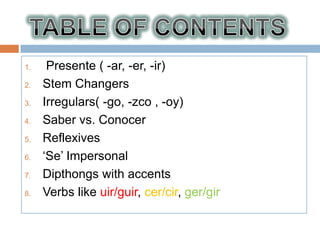
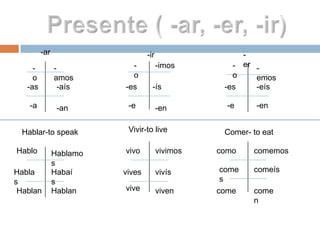
1.    Presente ( -ar, -er, -ir)
2.   Stem Changers
3.   Irregulars( -go, -zco , -oy)
4.   Saber vs. Conocer
5.   Reflexives
6.   „Se‟ Impersonal
7.   Dipthongs with accents
8.   Verbs like uir/guir, cer/cir, ger/gir
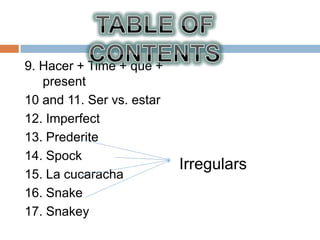
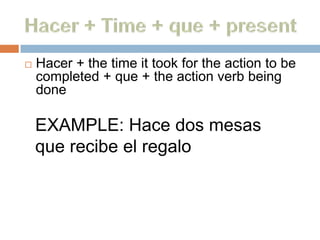
9. Hacer + Time + que +
   present
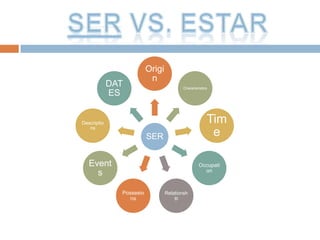
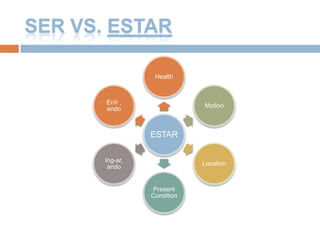
10 and 11. Ser vs. estar
12. Imperfect
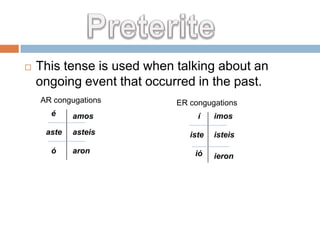
13. Prederite
14. Spock
                           Irregulars
15. La cucaracha
16. Snake
17. Snakey
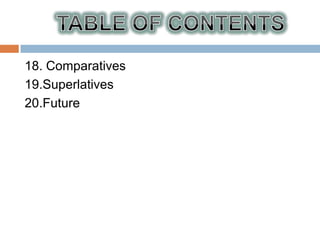
18. Comparatives
19.Superlatives
20.Future
-ar                     -ir                  -
     -         -           -           -imos        - er -
     o         amos        o                        o    emos
   -as           -aís    -es       -ís            -es    -eís

    -a          -an       -e           -en         -e     -en


  Hablar-to speak         Vivir-to live           Comer- to eat

Hablo          Hablamo   vivo          vivimos   como    comemos
               s
Habla          Habaí     vives         vivís      come   comeís
s              s                                  s
 Hablan        Hablan    vive          viven     come    come
                                                         n
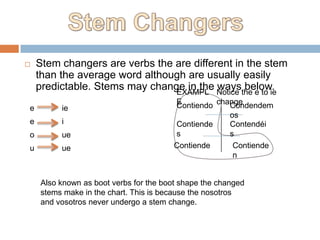
   Stem changers are verbs the are different in the stem
    than the average word although are usually easily
    predictable. Stems may change in the Notice the e to ie
                                EXAMPL
                                          ways below.
                                        E
                                        Contiendo change
                                                     Condendem
e         ie
                                                     os
e         i                             Contiende    Contendéi
o         ue                            s            s
u         ue                            Contiende     Contiende
                                                      n


     Also known as boot verbs for the boot shape the changed
     stems make in the chart. This is because the nosotros
     and vosotros never undergo a stem change.
)


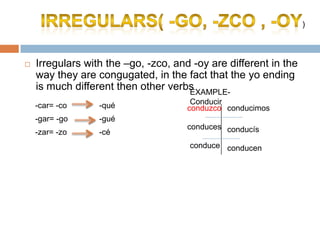
   Irregulars with the –go, -zco, and -oy are different in the
    way they are congugated, in the fact that the yo ending
    is much different then other verbsEXAMPLE-
    -car= -co     -qué                 Conducir
                                      conduzco conducimos
    -gar= -go     -gué
                                      conduces conducís
    -zar= -zo     -cé
                                      conduce conducen
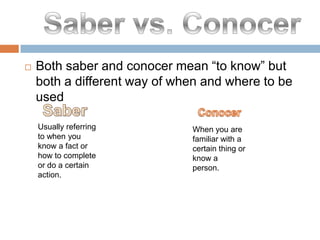
   Both saber and conocer mean “to know” but
    both a different way of when and where to be
    used

    Usually referring         When you are
    to when you               familiar with a
    know a fact or            certain thing or
    how to complete           know a
    or do a certain           person.
    action.
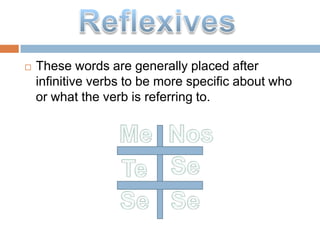
   These words are generally placed after
    infinitive verbs to be more specific about who
    or what the verb is referring to.
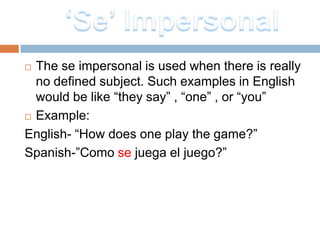
 The se impersonal is used when there is really
  no defined subject. Such examples in English
  would be like “they say” , “one” , or “you”
 Example:

English- “How does one play the game?”
Spanish-”Como se juega el juego?”
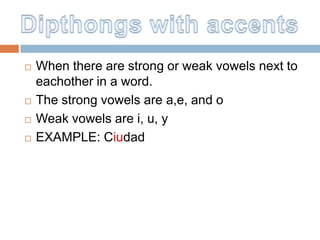
   When there are strong or weak vowels next to
    eachother in a word.
   The strong vowels are a,e, and o
   Weak vowels are i, u, y
   EXAMPLE: Ciudad
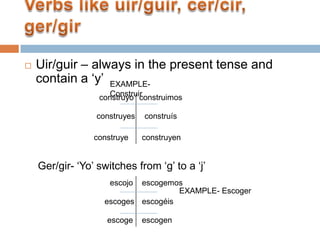
   Uir/guir – always in the present tense and
    contain a „y‟ EXAMPLE-
                     Construir
                  construyo construimos

                 construyes   construís

                 construye    construyen


    Ger/gir- „Yo‟ switches from „g‟ to a „j‟
                     escojoescogemos
                                    EXAMPLE- Escoger
                   escoges escogéis

                    escoge    escogen
   Hacer + the time it took for the action to be
    completed + que + the action verb being
    done

    EXAMPLE: Hace dos mesas
    que recibe el regalo
Origi
                           n
             DAT                          Characteristics
             ES


Descriptio                                              Tim
   ns
                          SER                            e

   Event                                           Occupati
                                                     on
     s

               Possesio           Relationsh
                  ns                  ip
SER VS. ESTAR

                  Health


       Er/ir ,
                             Motion
       endo


                 ESTAR

       Ing-ar,
                             Location
        ando


                  Present
                 Condition
   This tense is used when talking about an
    ongoing event that occurred in the past.
    AR congugations         ER congugations
      é     amos                 í    imos
     aste   asteis             iste   isteis
      ó     aron                ió    ieron
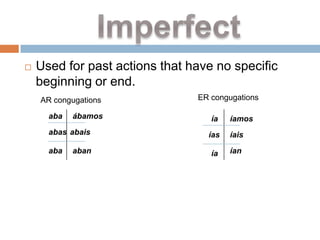
   Used for past actions that have no specific
    beginning or end.
    AR congugations             ER congugations

      aba   ábamos                 ía   íamos
      abas abais                  ías   íais
      aba   aban                   ía   ían
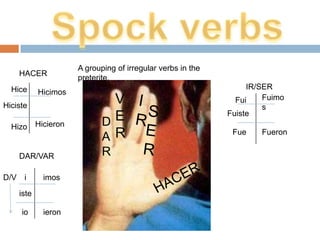
A grouping of irregular verbs in the
    HACER
                      preterite.
  Hice                                                            IR/SER
           Hicimos
Hiciste
                               V                               Fui    Fuimo
                                                                      s

                             DE
                                                             Fuiste
  Hizo     Hicieron
                             A R                              Fue    Fueron


    DAR/VAR                  R
D/V i        imos

    iste

     io      ieron
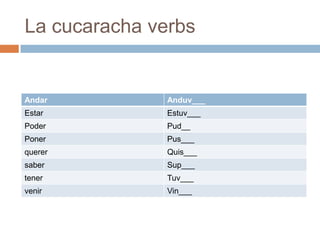
La cucaracha verbs


Andar          Anduv___
Estar          Estuv___
Poder          Pud__
Poner          Pus___
querer         Quis___
saber          Sup___
tener          Tuv___
venir          Vin___
SNAKE Verbs
In the present tense you change the root of the
 word in the third person tenses.
Example: Dormir

      DORMI             DORMIMOS
      DORMISTE
      DURMIO            DURMIERON
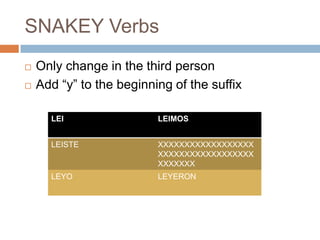
SNAKEY Verbs
   Only change in the third person
   Add “y” to the beginning of the suffix

      LEI                 LEIMOS


      LEISTE              XXXXXXXXXXXXXXXXXX
                          XXXXXXXXXXXXXXXXXX
                          XXXXXXX
      LEYO                LEYERON
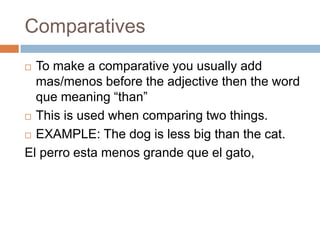
Comparatives
 To make a comparative you usually add
  mas/menos before the adjective then the word
  que meaning “than”
 This is used when comparing two things.

 EXAMPLE: The dog is less big than the cat.

El perro esta menos grande que el gato,
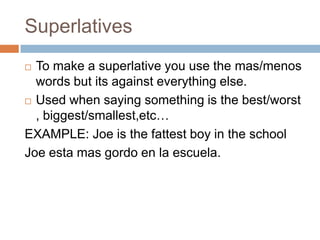
Superlatives
 To make a superlative you use the mas/menos
  words but its against everything else.
 Used when saying something is the best/worst

  , biggest/smallest,etc…
EXAMPLE: Joe is the fattest boy in the school
Joe esta mas gordo en la escuela.
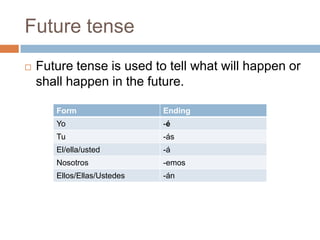
Future tense
   Future tense is used to tell what will happen or
    shall happen in the future.

       Form                  Ending
       Yo                    -é
       Tu                    -ás
       El/ella/usted         -á
       Nosotros              -emos
       Ellos/Ellas/Ustedes   -án

Grammar book

  • 1.
  • 2.
    1. Presente ( -ar, -er, -ir) 2. Stem Changers 3. Irregulars( -go, -zco , -oy) 4. Saber vs. Conocer 5. Reflexives 6. „Se‟ Impersonal 7. Dipthongs with accents 8. Verbs like uir/guir, cer/cir, ger/gir
  • 3.
    9. Hacer +Time + que + present 10 and 11. Ser vs. estar 12. Imperfect 13. Prederite 14. Spock Irregulars 15. La cucaracha 16. Snake 17. Snakey
  • 4.
  • 5.
    -ar -ir - - - - -imos - er - o amos o o emos -as -aís -es -ís -es -eís -a -an -e -en -e -en Hablar-to speak Vivir-to live Comer- to eat Hablo Hablamo vivo vivimos como comemos s Habla Habaí vives vivís come comeís s s s Hablan Hablan vive viven come come n
  • 6.
    Stem changers are verbs the are different in the stem than the average word although are usually easily predictable. Stems may change in the Notice the e to ie EXAMPL ways below. E Contiendo change Condendem e ie os e i Contiende Contendéi o ue s s u ue Contiende Contiende n Also known as boot verbs for the boot shape the changed stems make in the chart. This is because the nosotros and vosotros never undergo a stem change.
  • 7.
    )  Irregulars with the –go, -zco, and -oy are different in the way they are congugated, in the fact that the yo ending is much different then other verbsEXAMPLE- -car= -co -qué Conducir conduzco conducimos -gar= -go -gué conduces conducís -zar= -zo -cé conduce conducen
  • 8.
    Both saber and conocer mean “to know” but both a different way of when and where to be used Usually referring When you are to when you familiar with a know a fact or certain thing or how to complete know a or do a certain person. action.
  • 9.
    These words are generally placed after infinitive verbs to be more specific about who or what the verb is referring to.
  • 10.
     The seimpersonal is used when there is really no defined subject. Such examples in English would be like “they say” , “one” , or “you”  Example: English- “How does one play the game?” Spanish-”Como se juega el juego?”
  • 11.
    When there are strong or weak vowels next to eachother in a word.  The strong vowels are a,e, and o  Weak vowels are i, u, y  EXAMPLE: Ciudad
  • 12.
    Uir/guir – always in the present tense and contain a „y‟ EXAMPLE- Construir construyo construimos construyes construís construye construyen Ger/gir- „Yo‟ switches from „g‟ to a „j‟ escojoescogemos EXAMPLE- Escoger escoges escogéis escoge escogen
  • 13.
    Hacer + the time it took for the action to be completed + que + the action verb being done EXAMPLE: Hace dos mesas que recibe el regalo
  • 14.
    Origi n DAT Characteristics ES Descriptio Tim ns SER e Event Occupati on s Possesio Relationsh ns ip
  • 15.
    SER VS. ESTAR Health Er/ir , Motion endo ESTAR Ing-ar, Location ando Present Condition
  • 16.
    This tense is used when talking about an ongoing event that occurred in the past. AR congugations ER congugations é amos í imos aste asteis iste isteis ó aron ió ieron
  • 17.
    Used for past actions that have no specific beginning or end. AR congugations ER congugations aba ábamos ía íamos abas abais ías íais aba aban ía ían
  • 18.
    A grouping ofirregular verbs in the HACER preterite. Hice IR/SER Hicimos Hiciste V Fui Fuimo s DE Fuiste Hizo Hicieron A R Fue Fueron DAR/VAR R D/V i imos iste io ieron
  • 19.
    La cucaracha verbs Andar Anduv___ Estar Estuv___ Poder Pud__ Poner Pus___ querer Quis___ saber Sup___ tener Tuv___ venir Vin___
  • 20.
    SNAKE Verbs In thepresent tense you change the root of the word in the third person tenses. Example: Dormir DORMI DORMIMOS DORMISTE DURMIO DURMIERON
  • 21.
    SNAKEY Verbs  Only change in the third person  Add “y” to the beginning of the suffix LEI LEIMOS LEISTE XXXXXXXXXXXXXXXXXX XXXXXXXXXXXXXXXXXX XXXXXXX LEYO LEYERON
  • 22.
    Comparatives  To makea comparative you usually add mas/menos before the adjective then the word que meaning “than”  This is used when comparing two things.  EXAMPLE: The dog is less big than the cat. El perro esta menos grande que el gato,
  • 23.
    Superlatives  To makea superlative you use the mas/menos words but its against everything else.  Used when saying something is the best/worst , biggest/smallest,etc… EXAMPLE: Joe is the fattest boy in the school Joe esta mas gordo en la escuela.
  • 24.
    Future tense  Future tense is used to tell what will happen or shall happen in the future. Form Ending Yo -é Tu -ás El/ella/usted -á Nosotros -emos Ellos/Ellas/Ustedes -án