EL LIBRO DE LA
 GRAMÁTICA
  Camila Boyd
TABLE OF
               CONTENTS
   1. PRESENT TENSE          7. DIPTHONGS
  2. STEM CHANGERS     8. –UIR/GUIR, -CER/CIR
  3. IREEGULARS “YO”      9. -GER/GIR VERBS
4. SABER VS. CONOCER              LIKE…
      5. REFLEXIVE       10. HACE+___+QUE+
                       PRESENT/ PRETERATE
 6. “SE” IMPERSONAL
                             11. IMPERFECT
PRESENT
                TENSE
 AR           ER            IR
 O            O             O
 AS           ES            ES
 A            E             E
 AMOS         EMOS          IMOS
 AN           EN            EN


• HABLO, COMPRAS, BUSCA, CENAMOS, ESPERAN
• APRENDO, PERDES, BEBE, VENDEMOS, COMEN
• PEDO, VIVES, MORE, ADVERTIMOS, SENTEN
STEM CHANGERS

•   E  IE
•   EI
•   O  UE
•   U  UE


***VERBS DON’T
CHANGE IN
NOSOTROS AND
VOSOTROS***
IRREGULARS
                     “YO”
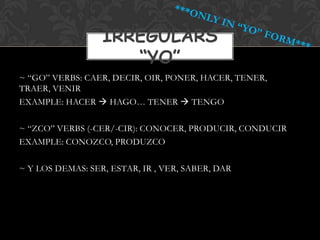
~ “GO” VERBS: CAER, DECIR, OIR, PONER, HACER, TENER,
TRAER, VENIR
EXAMPLE: HACER  HAGO… TENER  TENGO

~ “ZCO” VERBS (-CER/-CIR): CONOCER, PRODUCIR, CONDUCIR
EXAMPLE: CONOZCO, PRODUZCO

~ Y LOS DEMAS: SER, ESTAR, IR , VER, SABER, DAR
SABER VS. CONOCER

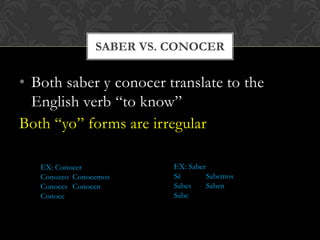
• Both saber y conocer translate to the
  English verb “to know”
Both “yo” forms are irregular

   EX: Conocer            EX: Saber
   Conozco Conocemos      Sé        Sabemos
   Conoces Conocen        Sabes     Saben
   Conoce                 Sabe
REFLEXIVES

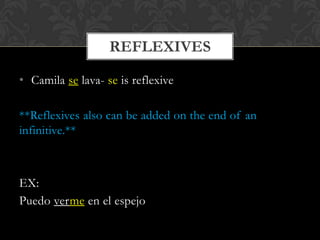
• Camila se lava- se is reflexive

**Reflexives also can be added on the end of an
infinitive.**


EX:
Puedo verme en el espejo
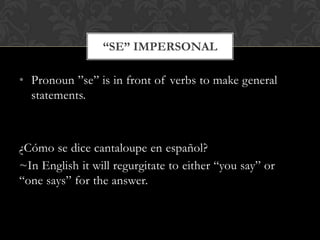
“SE” IMPERSONAL

• Pronoun ”se” is in front of verbs to make general
  statements.


¿Cómo se dice cantaloupe en español?
~In English it will regurgitate to either “you say” or
“one says” for the answer.
DIPTHONGS WITH
                           ACCENTS

• Dipthongs are the strong or weak vowels in a word next to
  each other.

**Strong vowel sounds are a,e,o.
**Weak vowel sounds are i,u,y.

EX:                                          *two strong
puerto, ciudad, siete, hay.                  vowels cannot
                                             be in the same
                                             syllable.
-UIR/-GUIR
Guir                                 Uir
                                     -Nosotros form is the only form that
-Yo form only changes from Gu to G
                                     doesn’t change.
                                     -Verbs that end in -uir add y before the
                                     letters o, e, and a .

EX: Conseguir                        EX: Atribuir
consigo                              atribuyo
consigues                            atribuyes
consigue                             atribuye
conseguimos                          atribuimos
consiguen                            atribuyen
-CER/-CIR
• Verbs that end in a vowel + cer or cir add z before the c.
• Verbs that end in a consonant + cer or cir change the c to z.


                              EX:
                      conducir = conduzco
                        ejercer = ejerzo
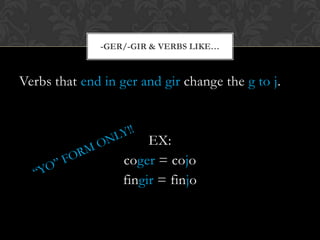
-GER/-GIR & VERBS LIKE…


Verbs that end in ger and gir change the g to j.


                        EX:
                   coger = cojo
                   fingir = finjo
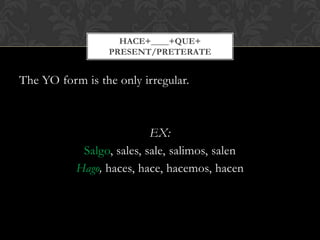
HACE+____+QUE+
                 PRESENT/PRETERATE


The YO form is the only irregular.


                           EX:
            Salgo, sales, sale, salimos, salen
           Hago, haces, hace, hacemos, hacen
IMPERFECTO

The imperfect tense is used to refer to actions in the past that occurred
repeatedly.
                                      EX:
                          Yo caminaba todo los días.


Ser-       Ir-            Ver-               Ar-                    Er/Ir-
                                             aba                    ía
era        iba            veía
                                             abas                   ías
eras       ibas           veías
                                             aba                    ía
era        iba            veía
                                             ábamos                 íamos
éramos     íbamos         veíamos
                                             aban                   ían
eran       iban           veían

Gramm

  • 1.
    EL LIBRO DELA GRAMÁTICA Camila Boyd
  • 2.
    TABLE OF CONTENTS 1. PRESENT TENSE 7. DIPTHONGS 2. STEM CHANGERS 8. –UIR/GUIR, -CER/CIR 3. IREEGULARS “YO” 9. -GER/GIR VERBS 4. SABER VS. CONOCER LIKE… 5. REFLEXIVE 10. HACE+___+QUE+ PRESENT/ PRETERATE 6. “SE” IMPERSONAL 11. IMPERFECT
  • 3.
    PRESENT TENSE AR ER IR O O O AS ES ES A E E AMOS EMOS IMOS AN EN EN • HABLO, COMPRAS, BUSCA, CENAMOS, ESPERAN • APRENDO, PERDES, BEBE, VENDEMOS, COMEN • PEDO, VIVES, MORE, ADVERTIMOS, SENTEN
  • 4.
    STEM CHANGERS • E  IE • EI • O  UE • U  UE ***VERBS DON’T CHANGE IN NOSOTROS AND VOSOTROS***
  • 5.
    IRREGULARS “YO” ~ “GO” VERBS: CAER, DECIR, OIR, PONER, HACER, TENER, TRAER, VENIR EXAMPLE: HACER  HAGO… TENER  TENGO ~ “ZCO” VERBS (-CER/-CIR): CONOCER, PRODUCIR, CONDUCIR EXAMPLE: CONOZCO, PRODUZCO ~ Y LOS DEMAS: SER, ESTAR, IR , VER, SABER, DAR
  • 6.
    SABER VS. CONOCER •Both saber y conocer translate to the English verb “to know” Both “yo” forms are irregular EX: Conocer EX: Saber Conozco Conocemos Sé Sabemos Conoces Conocen Sabes Saben Conoce Sabe
  • 7.
    REFLEXIVES • Camila selava- se is reflexive **Reflexives also can be added on the end of an infinitive.** EX: Puedo verme en el espejo
  • 8.
    “SE” IMPERSONAL • Pronoun”se” is in front of verbs to make general statements. ¿Cómo se dice cantaloupe en español? ~In English it will regurgitate to either “you say” or “one says” for the answer.
  • 9.
    DIPTHONGS WITH ACCENTS • Dipthongs are the strong or weak vowels in a word next to each other. **Strong vowel sounds are a,e,o. **Weak vowel sounds are i,u,y. EX: *two strong puerto, ciudad, siete, hay. vowels cannot be in the same syllable.
  • 10.
    -UIR/-GUIR Guir Uir -Nosotros form is the only form that -Yo form only changes from Gu to G doesn’t change. -Verbs that end in -uir add y before the letters o, e, and a . EX: Conseguir EX: Atribuir consigo atribuyo consigues atribuyes consigue atribuye conseguimos atribuimos consiguen atribuyen
  • 11.
    -CER/-CIR • Verbs thatend in a vowel + cer or cir add z before the c. • Verbs that end in a consonant + cer or cir change the c to z. EX: conducir = conduzco ejercer = ejerzo
  • 12.
    -GER/-GIR & VERBSLIKE… Verbs that end in ger and gir change the g to j. EX: coger = cojo fingir = finjo
  • 13.
    HACE+____+QUE+ PRESENT/PRETERATE The YO form is the only irregular. EX: Salgo, sales, sale, salimos, salen Hago, haces, hace, hacemos, hacen
  • 14.
    IMPERFECTO The imperfect tenseis used to refer to actions in the past that occurred repeatedly. EX: Yo caminaba todo los días. Ser- Ir- Ver- Ar- Er/Ir- aba ía era iba veía abas ías eras ibas veías aba ía era iba veía ábamos íamos éramos íbamos veíamos aban ían eran iban veían