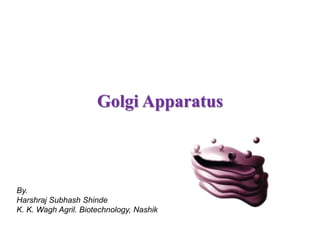
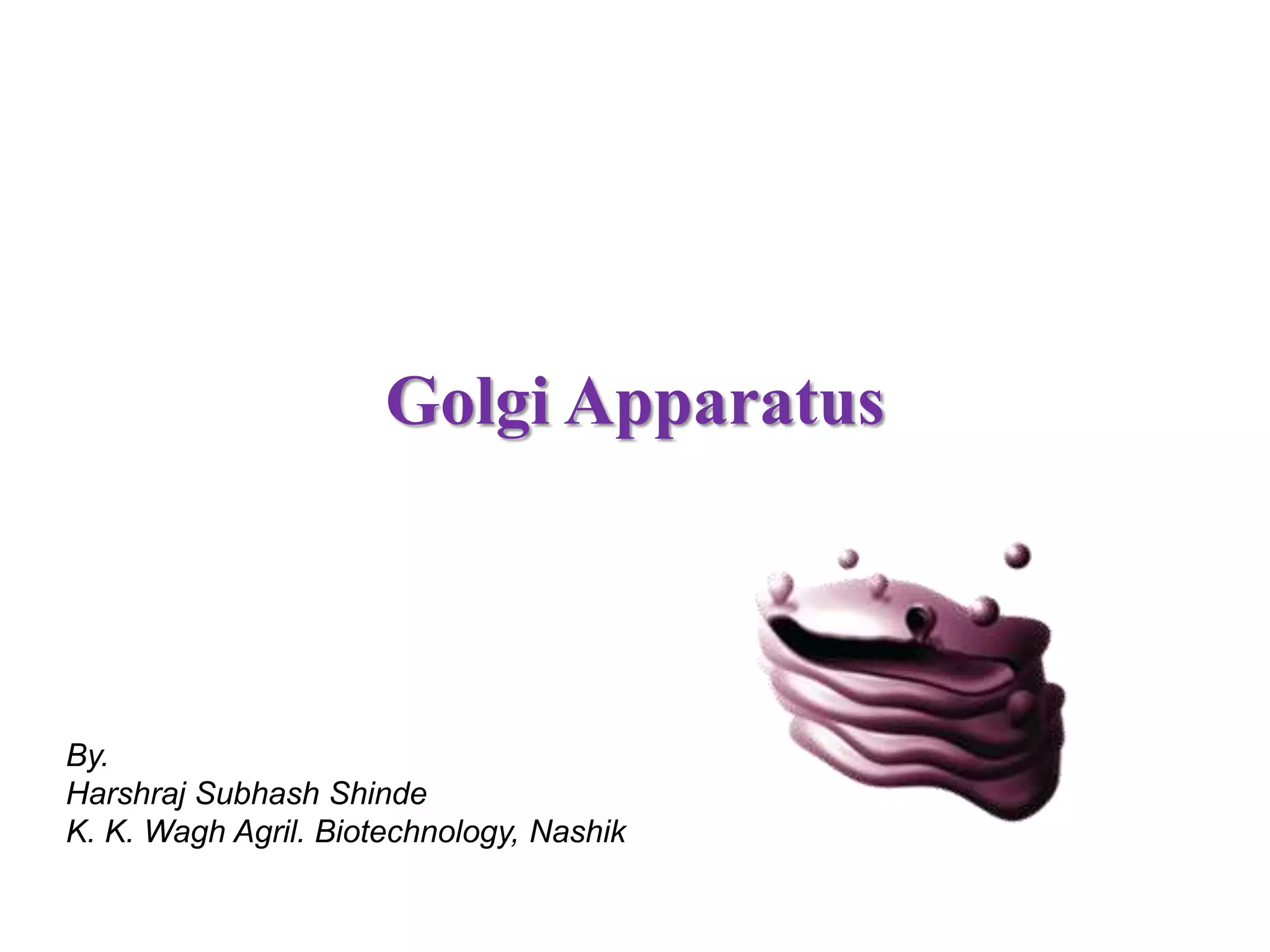
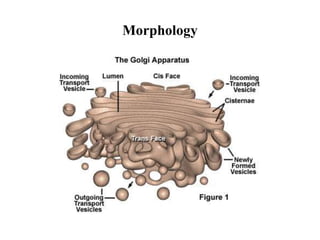
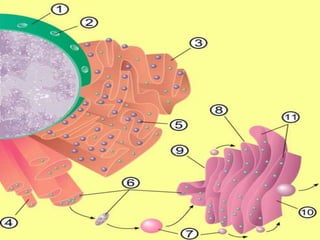
The Golgi apparatus was discovered in 1873 by Camillo Golgi and serves important functions in eukaryotic cells. It appears as a complex network of flattened sacs called cisternae, tubules, and vesicles. The Golgi apparatus modifies and packages proteins and lipids and directs them to their proper destinations within the cell or for secretion. It plays a key role in sorting cellular components and is often referred to as the "traffic police of the cell". The Golgi apparatus is involved in processes like cell wall secretion in plants and mucus, lactoprotein, and collagen secretion in animals.