Downloaded 60 times


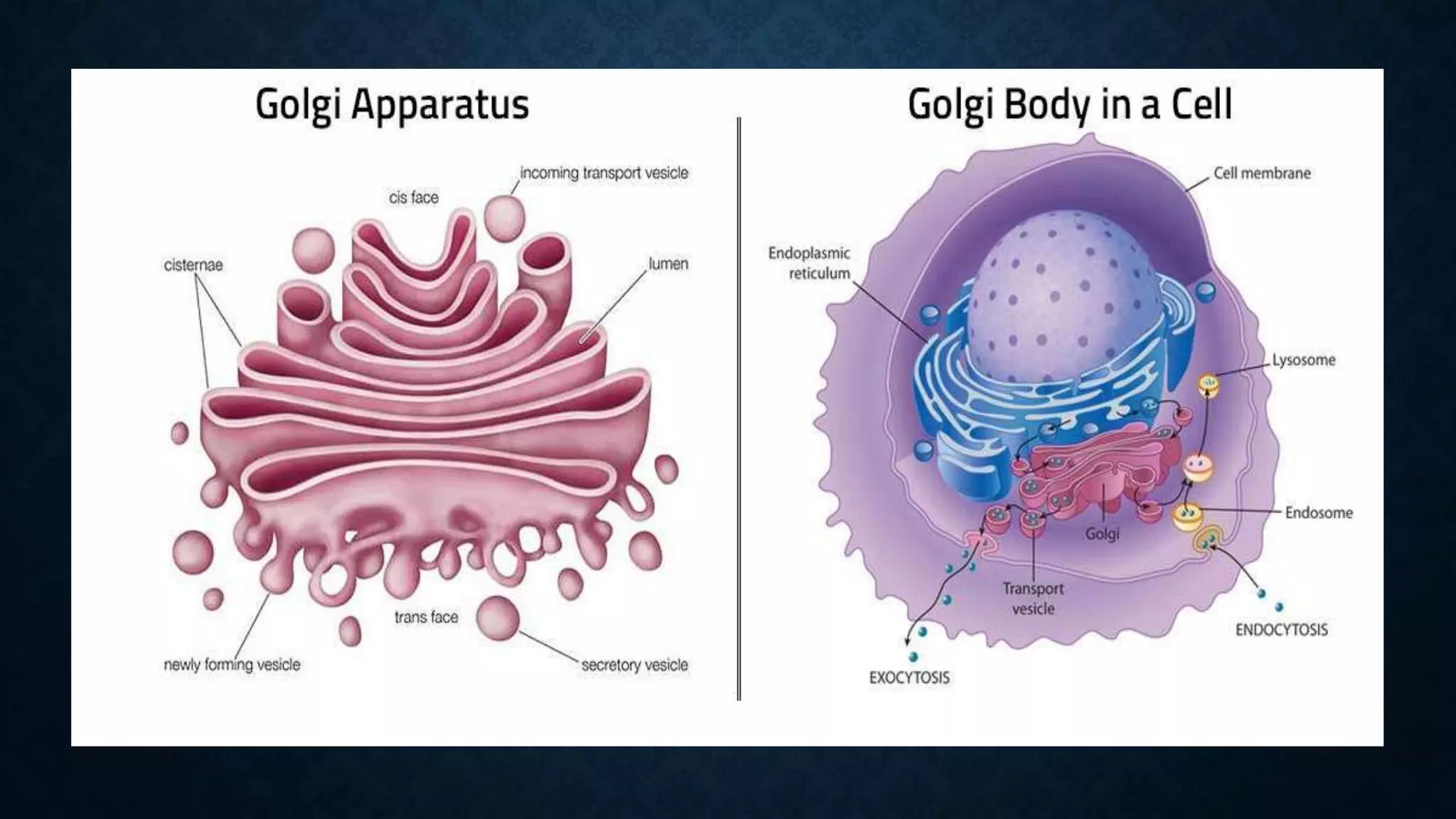
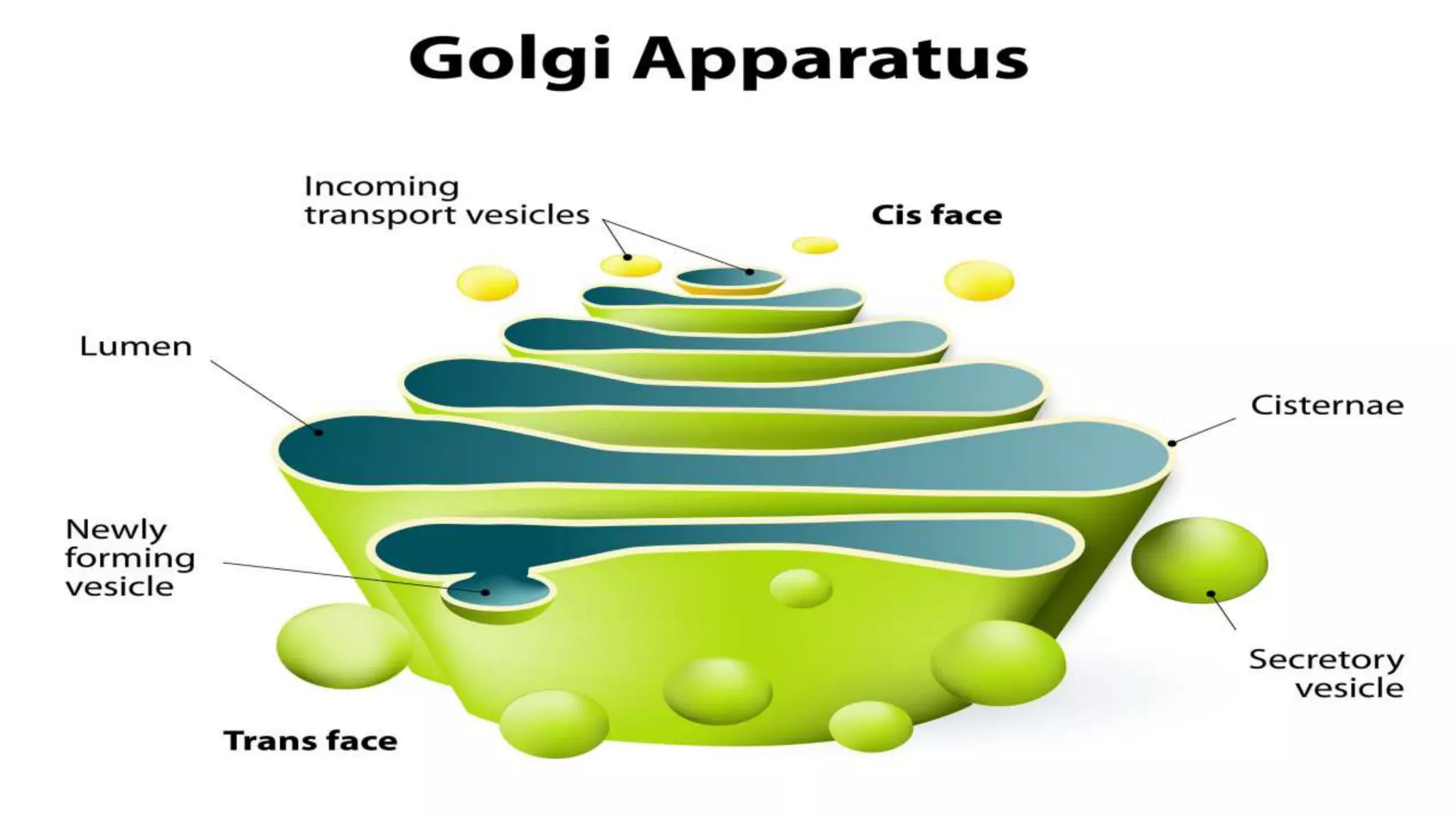
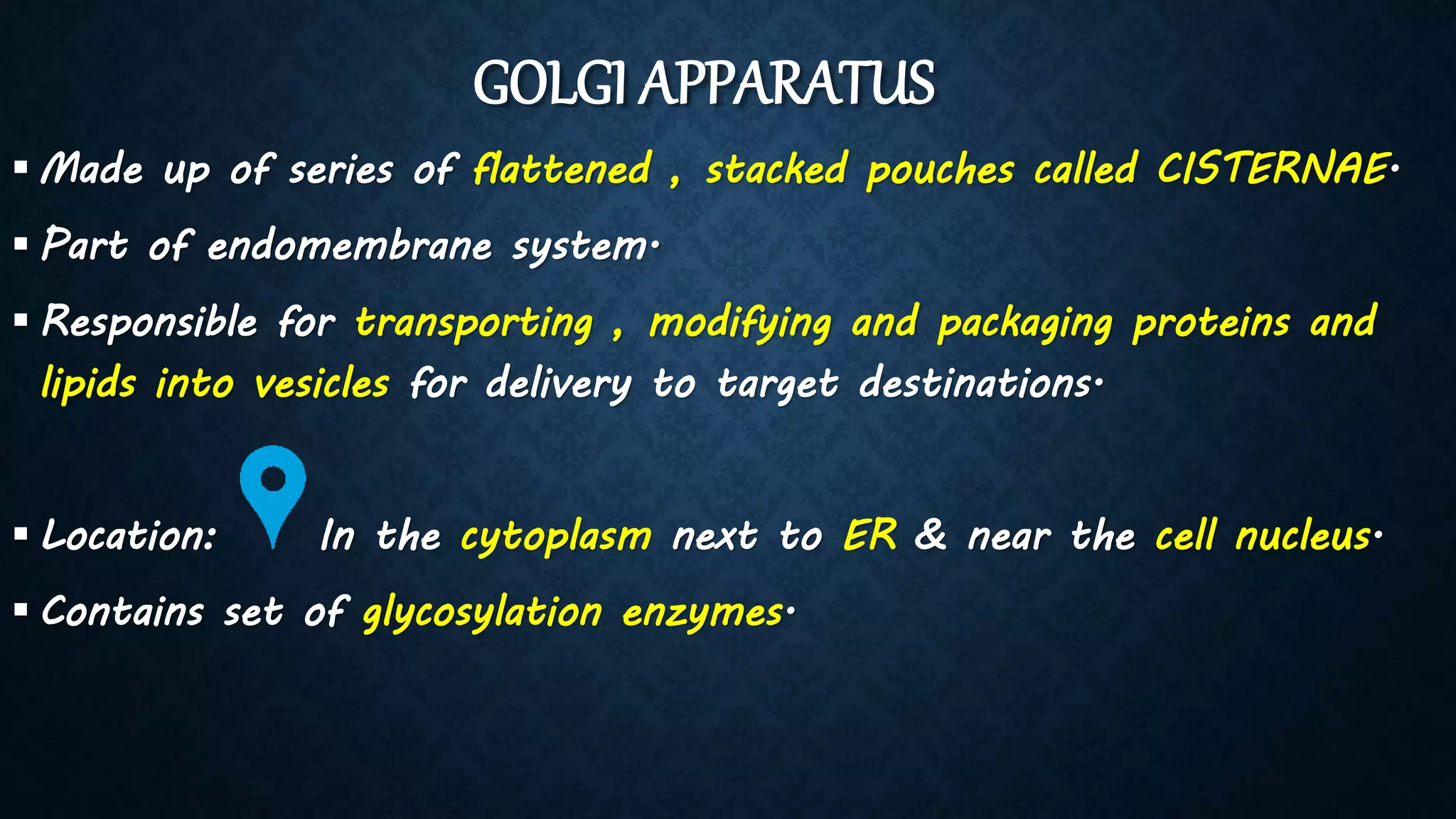


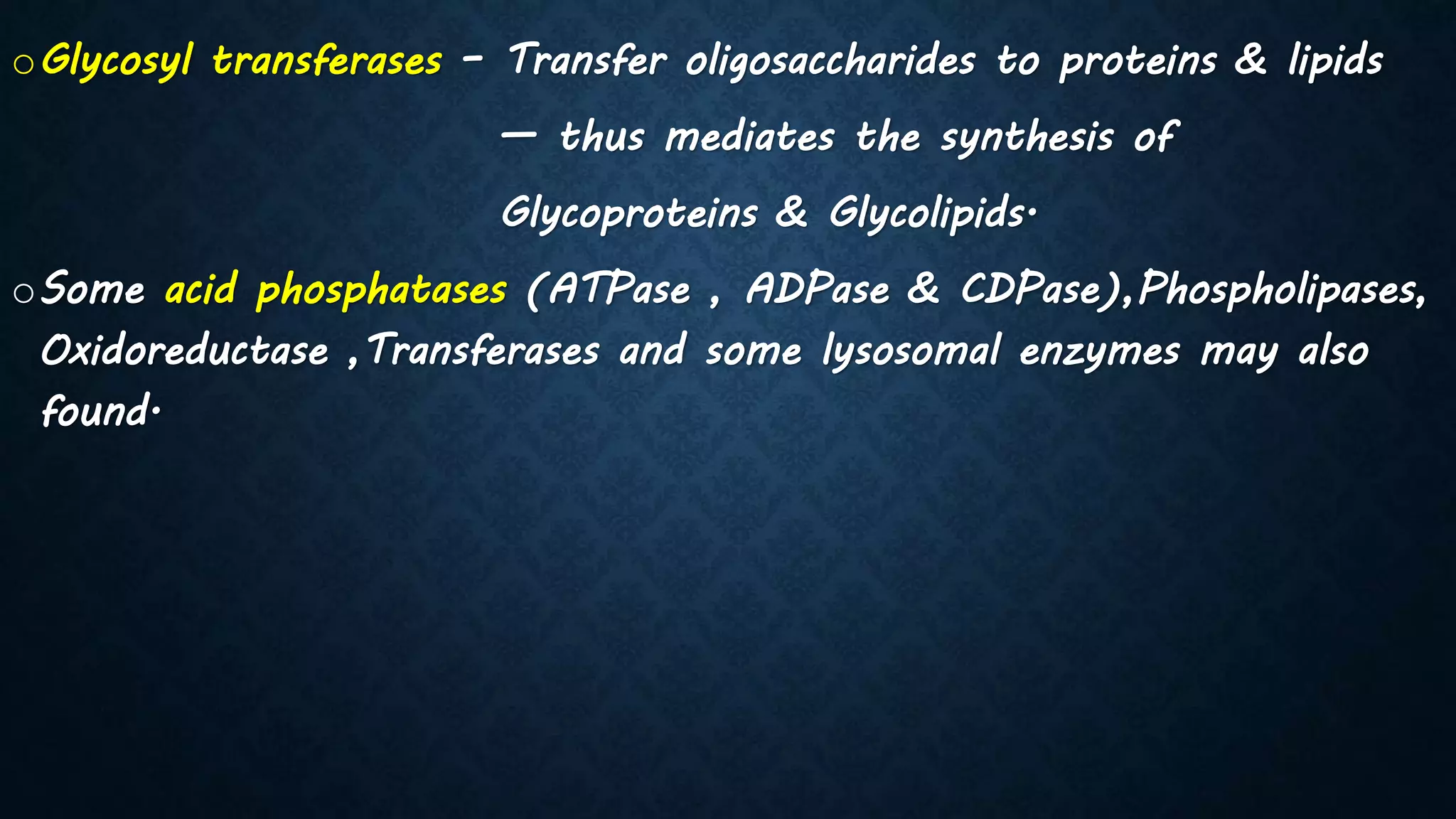

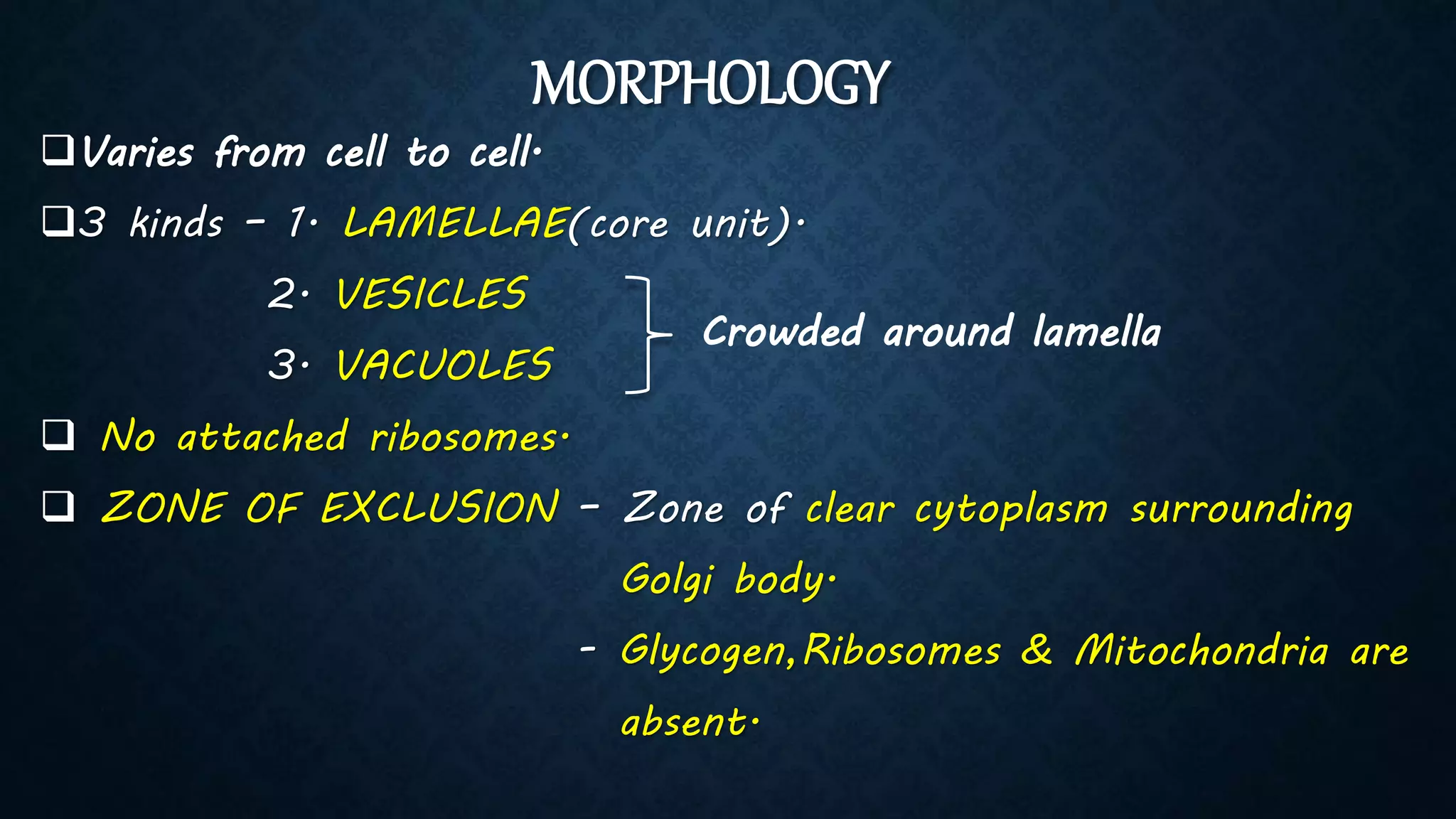


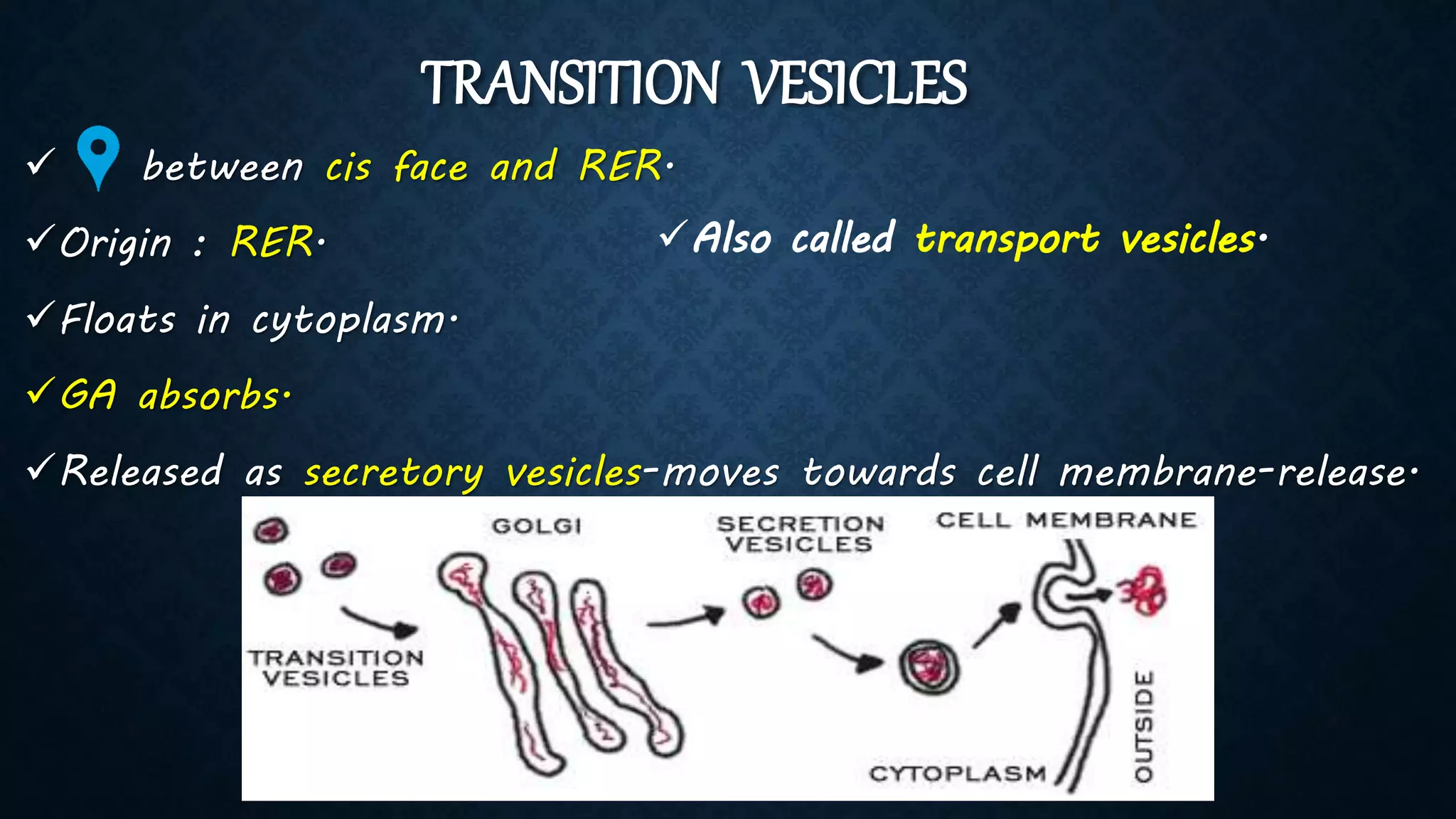




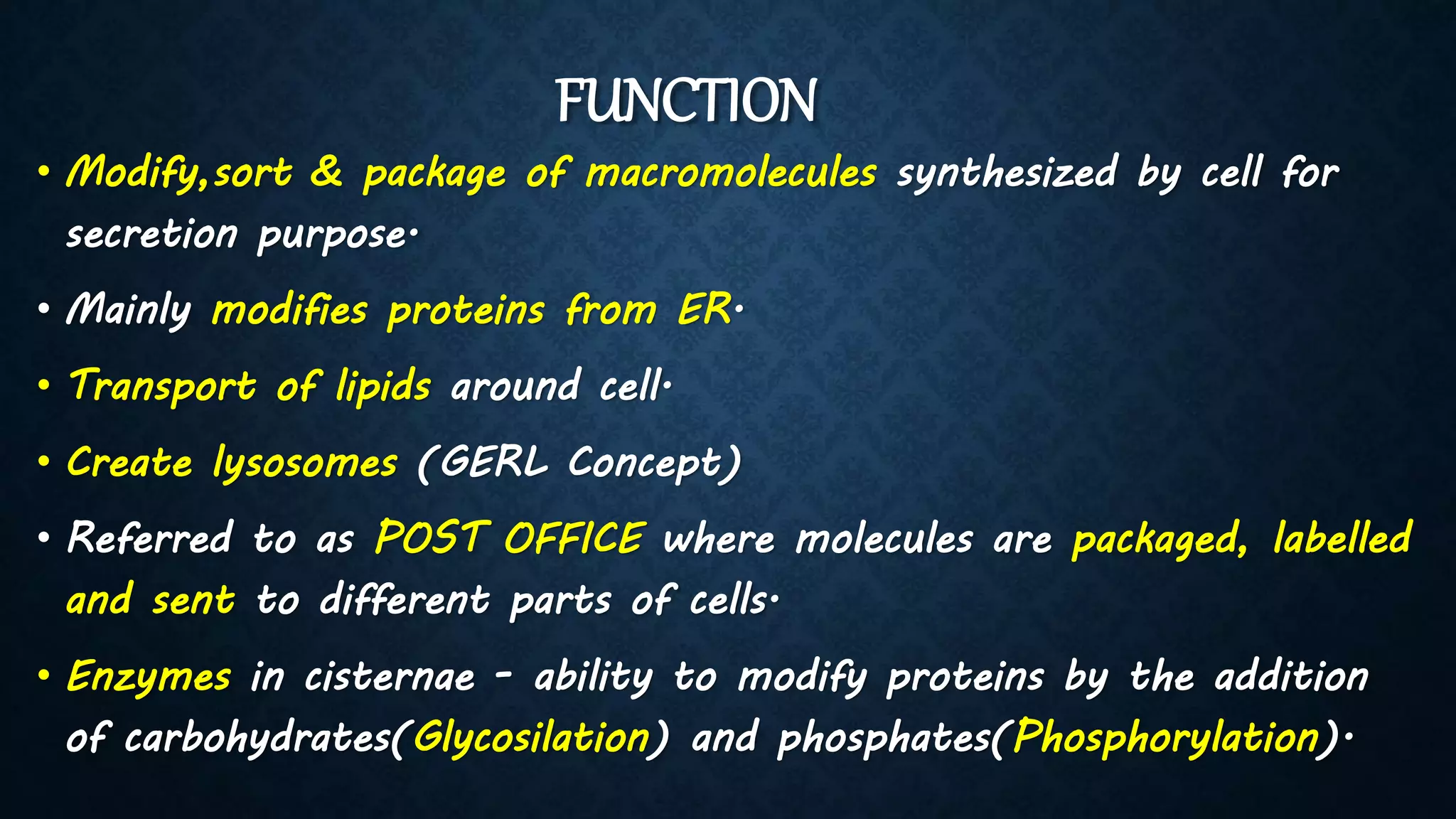
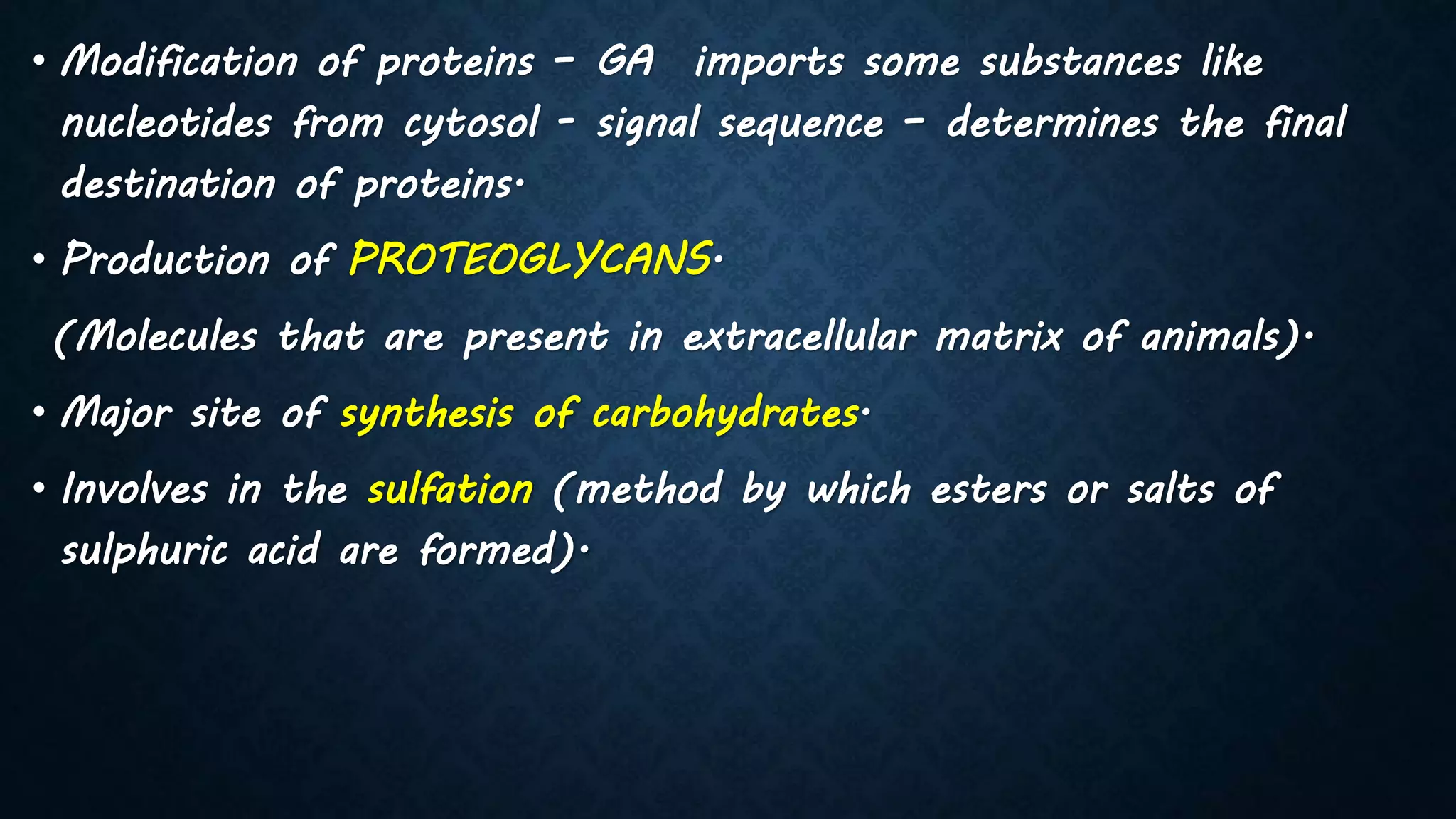




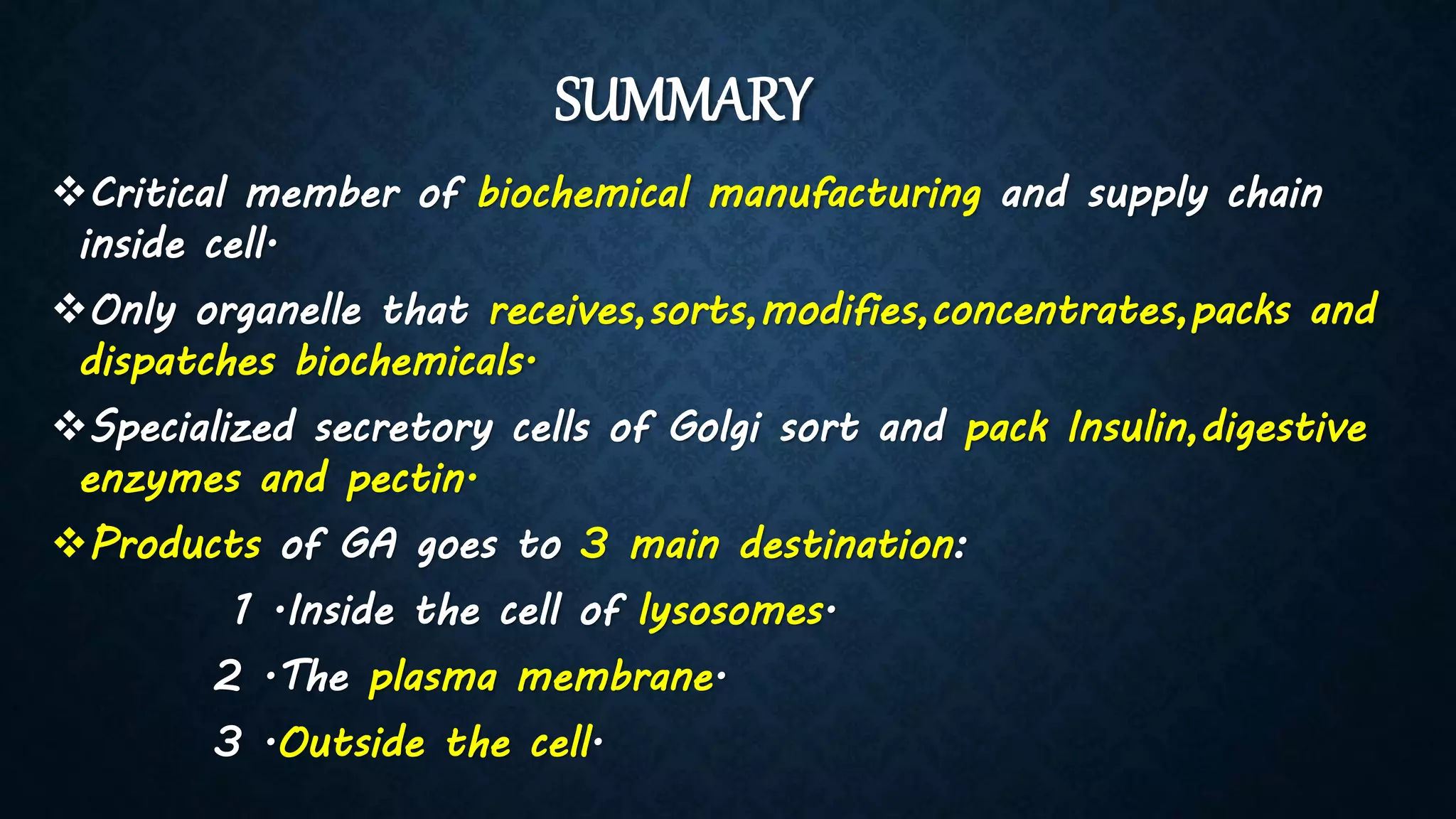
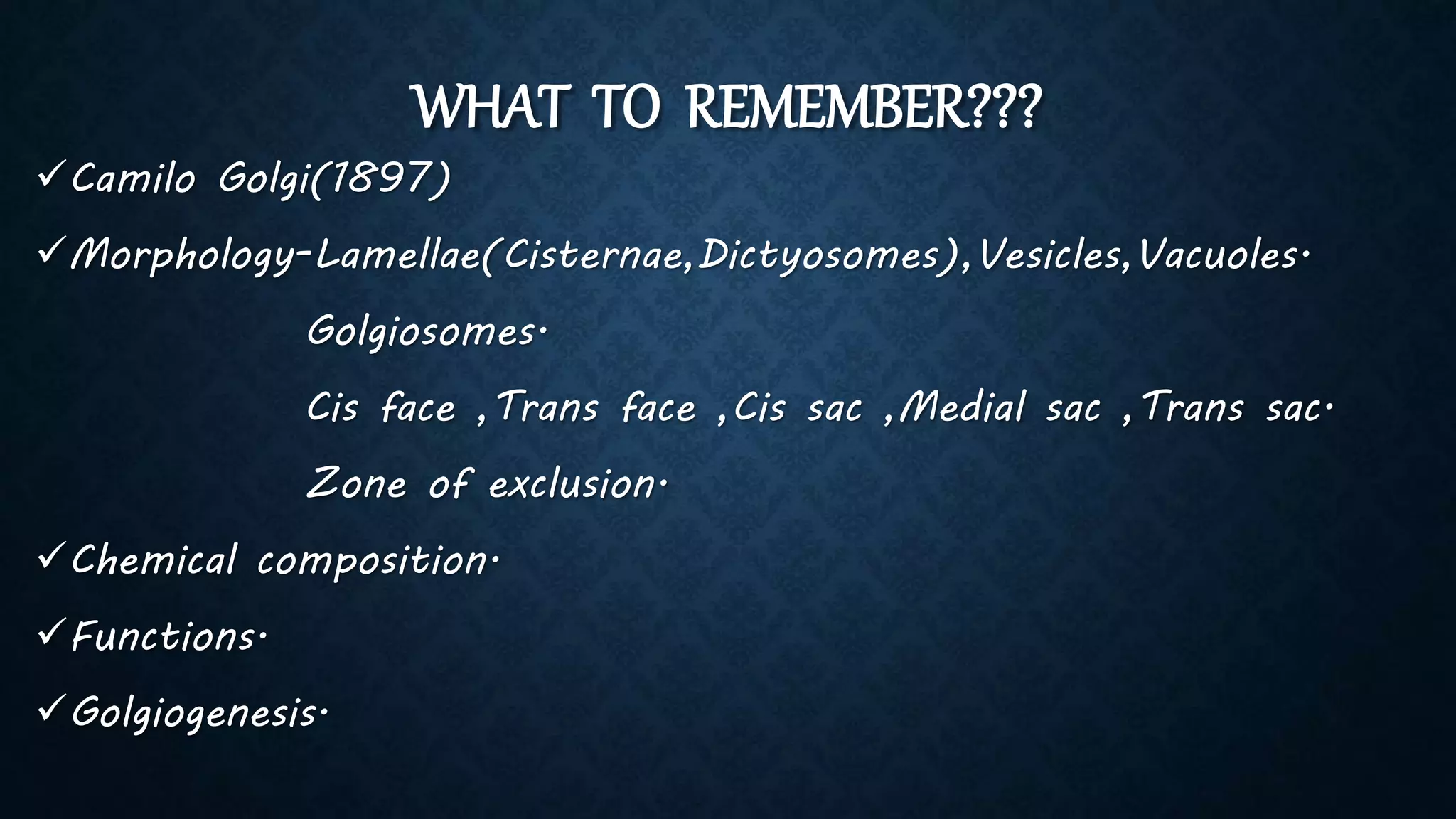

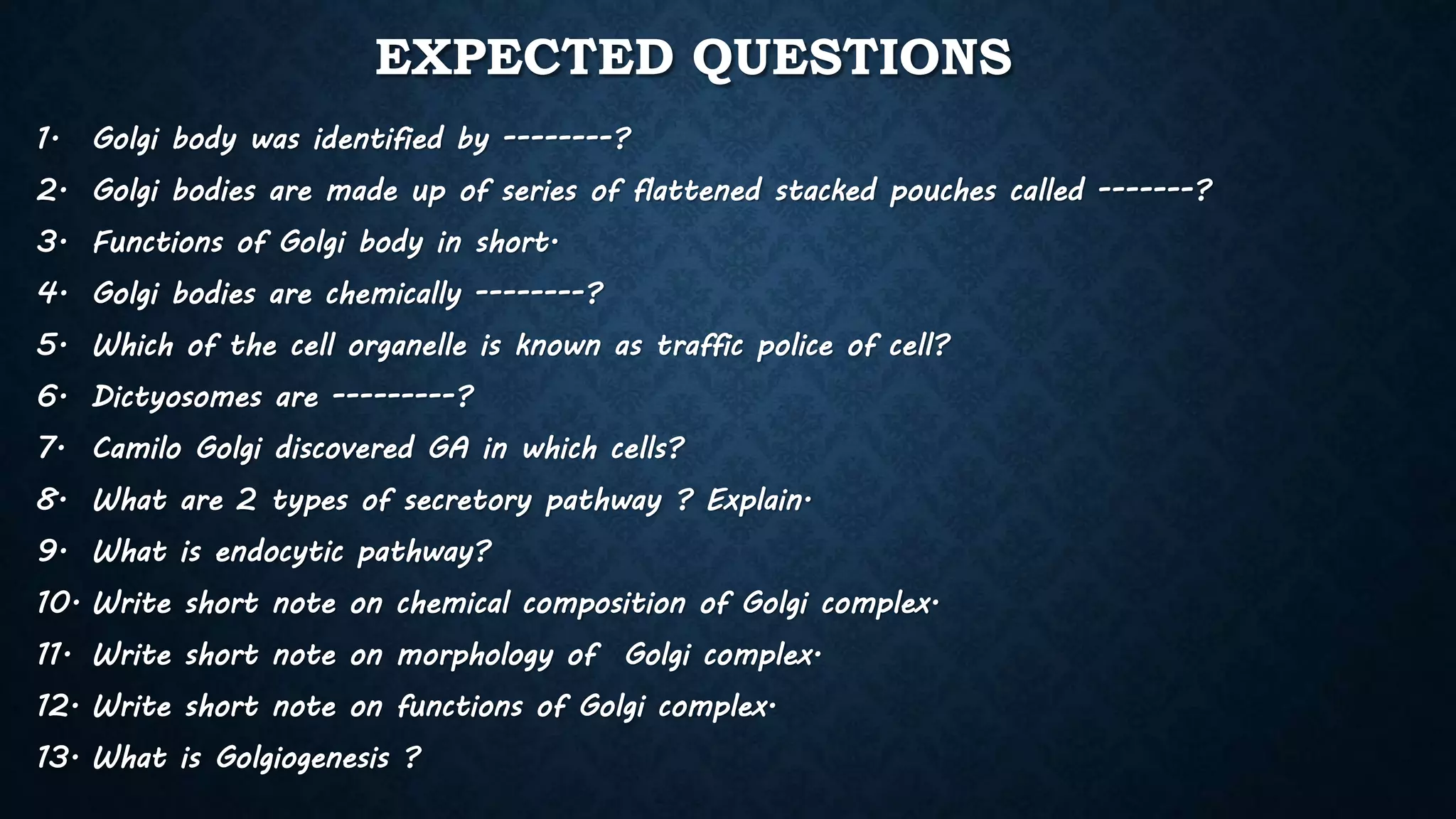


The Golgi complex is a critical organelle that receives, sorts, modifies, packages and distributes biochemicals inside the cell. It is composed of a series of flattened membrane-bound sacs called cisternae that are stacked together. The cisternae contain enzymes that modify and package proteins and lipids into vesicles for transport to different parts of the cell or outside the cell. The Golgi complex was discovered in 1898 by Camilo Golgi during his investigation of the nervous system, where he identified it and named it the "internal reticular apparatus." It plays an essential role in the post-translational modification and transport of macromolecules within cells.


![Coded Agents – with UiPath SDK + LangGraph [Virtual Hands-on Workshop]](https://cdn.slidesharecdn.com/ss_thumbnails/codedagentsdeck-251215155422-5497c599-thumbnail.jpg?width=640&height=640&fit=bounds)


