
Structure of nucleus and nuclear pore complex:
By
Dr. Harinatha Reddy A
Department of Biotechnology
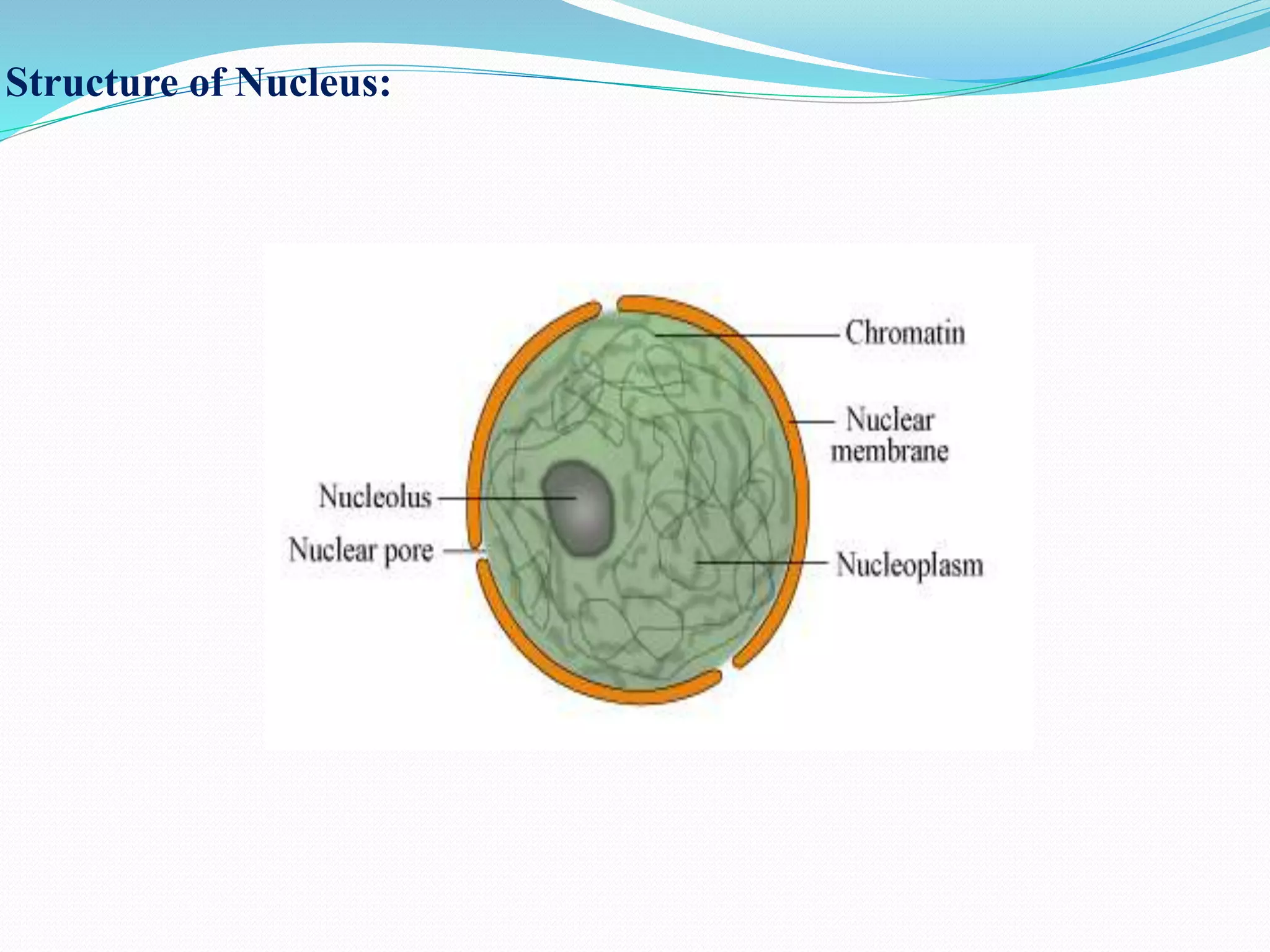
Structure of Nucleus:
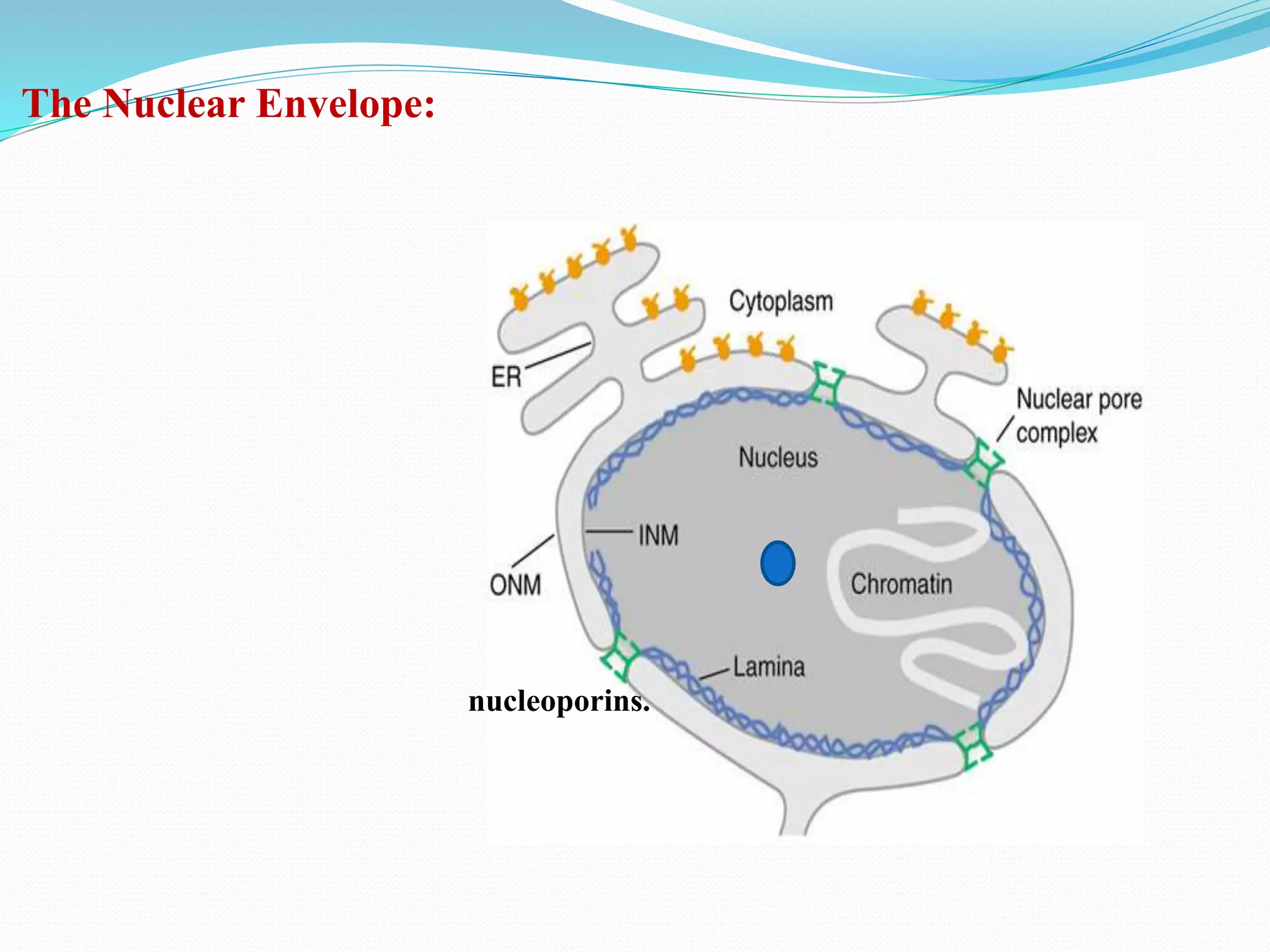
The Nuclear Envelope:
nucleoporins.
Structures:
 The nucleus is the largest cellular organelle in animal cells.
 The average diameter of the nucleus is approximately 6
micrometres (µm), which occupies about 10% of the total cell
volume.
 The viscous liquid within it is called nucleoplasm and is similar in
composition to the cytosol found outside the nucleus.
 It appears as a dense, roughly spherical or irregular organelle.
 The composition by dry weight of the nucleus is approximately:
DNA 9%, RNA 1%, Histone Proteins 11%, Acidic Proteins 65%.
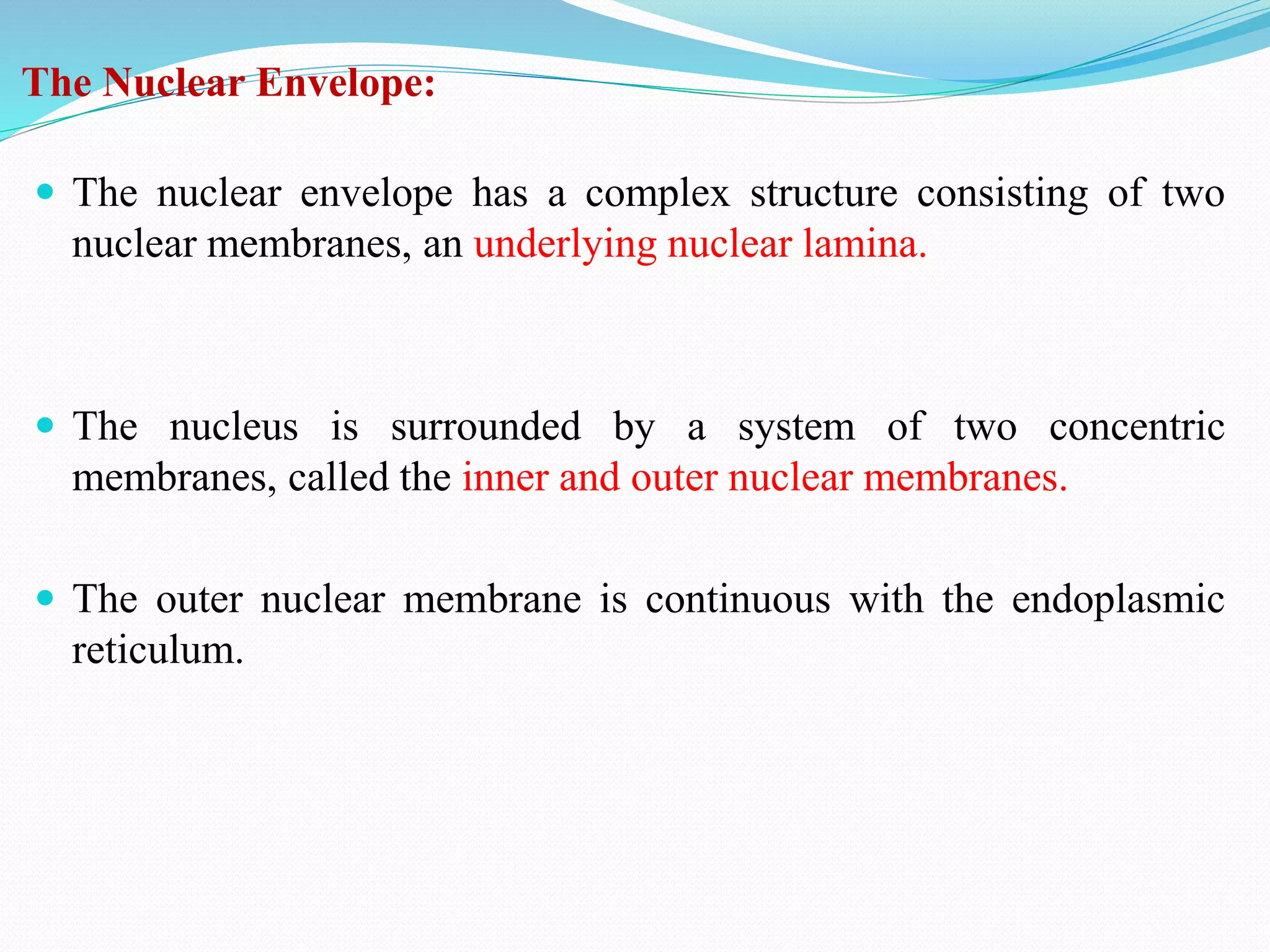
The Nuclear Envelope:
nucleoporins.
The Nuclear Envelope:
 The nuclear envelope has a complex structure consisting of two
nuclear membranes, an underlying nuclear lamina.
 The nucleus is surrounded by a system of two concentric
membranes, called the inner and outer nuclear membranes.
 The outer nuclear membrane is continuous with the endoplasmic
reticulum.
 Like other cell membranes, each nuclear membrane is a
phospholipid bilayer permeable only to small molecules.
 Outer nuclear membranes are joined at nuclear pore complexes
through which small polar molecules and macromolecules pass
through the nuclear envelope.
Nuclear lamina:
 Underlying the inner nuclear membrane is the nuclear lamina, a
fibrous net work that provides structural support to the nucleus.
 The nuclear lamina is composed of 60- to 80-kilodalton (kd) fibrous
proteins called lamins.
 Lamins are a class of intermediate filament proteins; the other
classes are found in the cytoskeleton.
 Mammalian cells have three lamin genes, designated A, B, and C.
 The two polypeptide chains are wound around each other form
Double helical structure called nuclear lamina.
 The nuclear lamina also binds to chromatin (or DNA) through
histones H2A and H2B as well as other chromatin proteins.
 Lamins also extend in a loose meshwork throughout the interior of
the nucleus.
Function of Nuclear lamina:
 Nuclear lamina provide mechanical support to nucleus, and
regulates important cellular events such as DNA replication and
cell division.
 Nuclear lamina also Participates in chromatin organization.
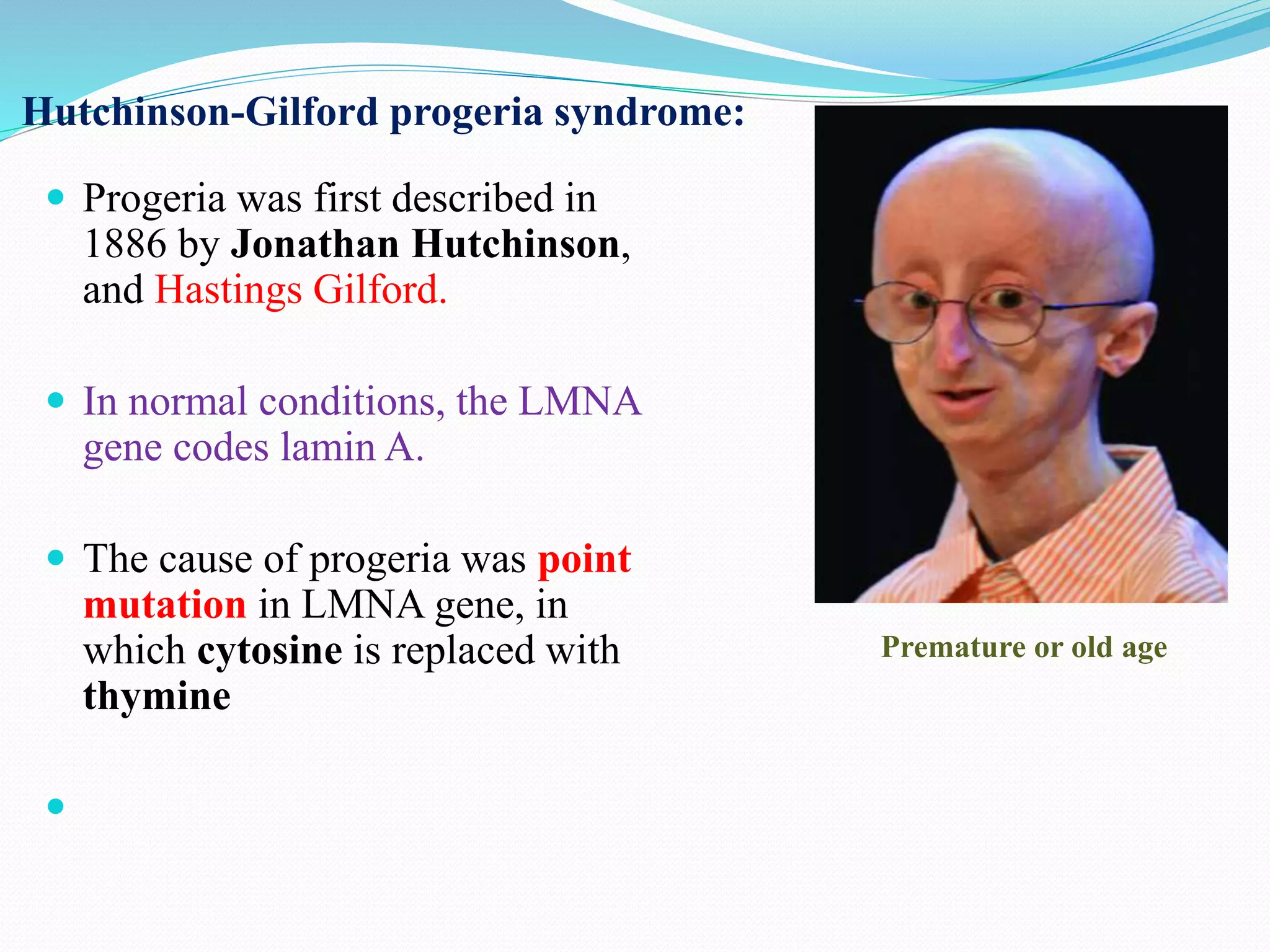
Hutchinson-Gilford progeria syndrome:
 Progeria was first described in
1886 by Jonathan Hutchinson,
and Hastings Gilford.
 In normal conditions, the LMNA
gene codes lamin A.
 The cause of progeria was point
mutation in LMNA gene, in
which cytosine is replaced with
thymine

Premature or old age
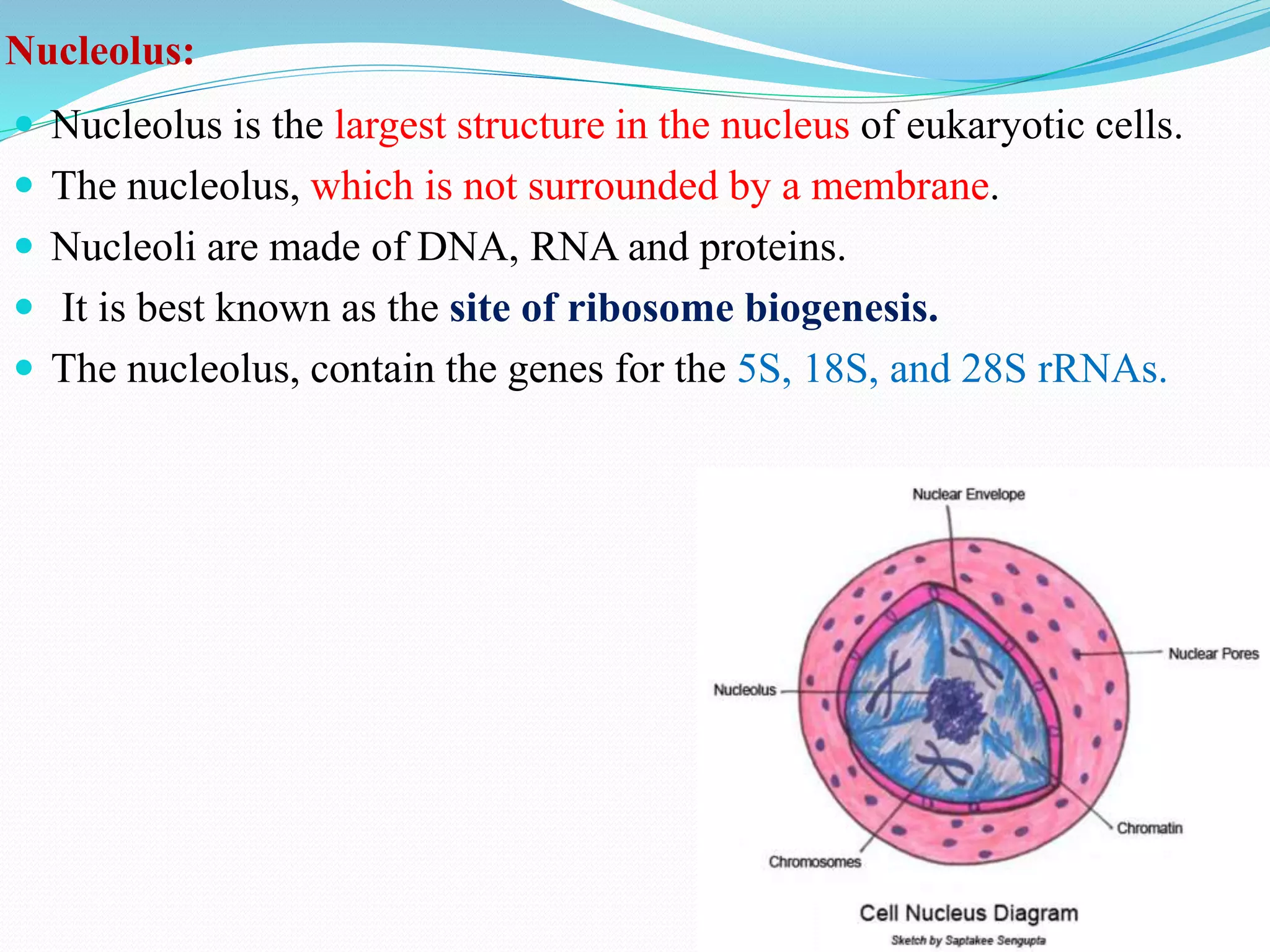
Nucleolus:
 Nucleolus is the largest structure in the nucleus of eukaryotic cells.
 The nucleolus, which is not surrounded by a membrane.
 Nucleoli are made of DNA, RNA and proteins.
 It is best known as the site of ribosome biogenesis.
 The nucleolus, contain the genes for the 5S, 18S, and 28S rRNAs.
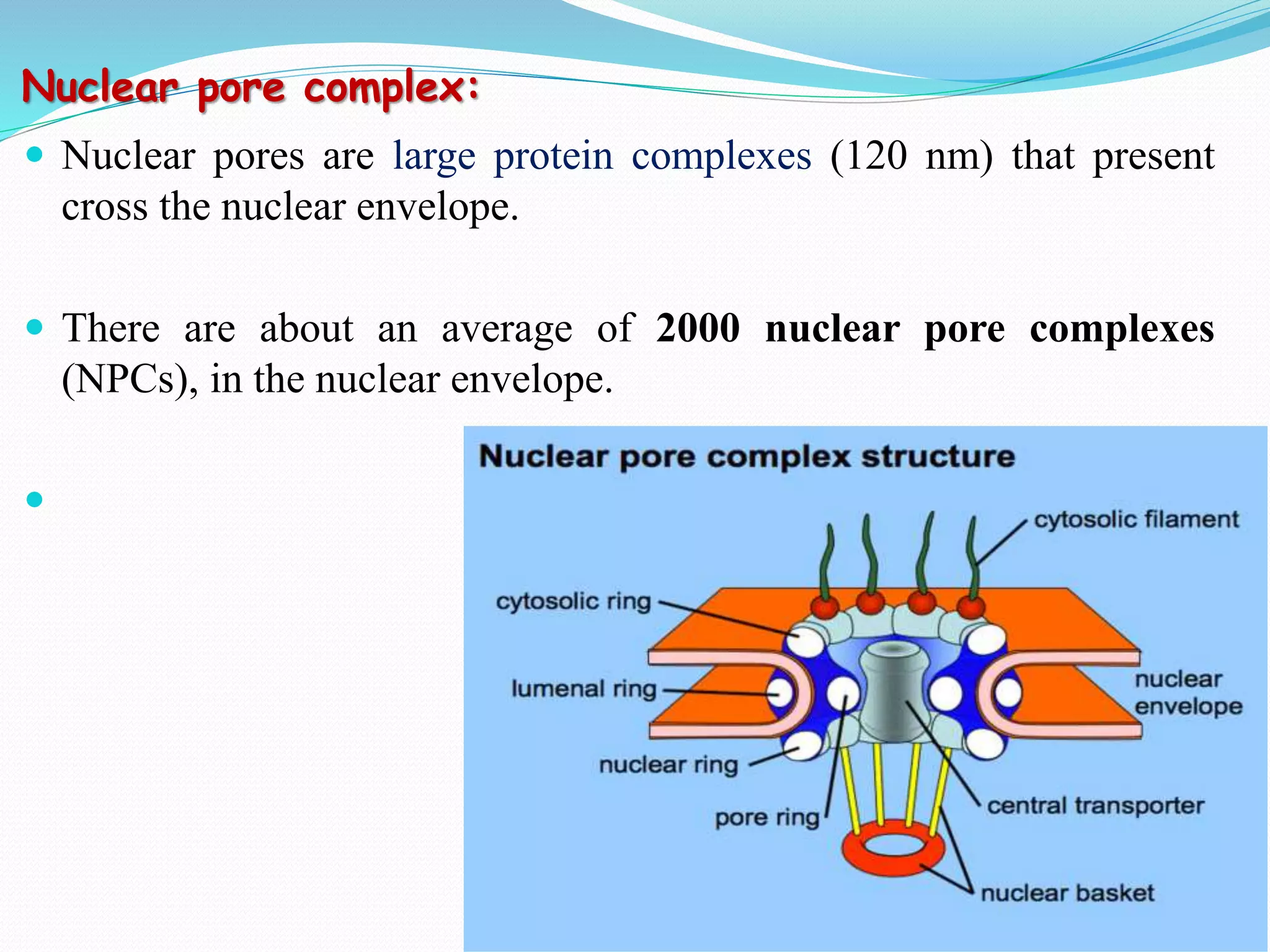
Nuclear pore complex:
 Nuclear pores are large protein complexes (120 nm) that present
cross the nuclear envelope.
 There are about an average of 2000 nuclear pore complexes
(NPCs), in the nuclear envelope.

 The proteins that make up the nuclear pore complex are known
as nucleoporins.
 The nuclear pore complexes are the only channels through
which small polar molecules, ions, and macromolecules
(proteins and RNAs) can travel between the nucleus and the
cytoplasm.
THANK UUUUUUUUUUU……

Nucleus structure and nuclear pore complex

  • 1.
    Structure of nucleusand nuclear pore complex: By Dr. Harinatha Reddy A Department of Biotechnology
  • 2.
  • 3.
  • 4.
    Structures:  The nucleusis the largest cellular organelle in animal cells.  The average diameter of the nucleus is approximately 6 micrometres (µm), which occupies about 10% of the total cell volume.
  • 5.
     The viscousliquid within it is called nucleoplasm and is similar in composition to the cytosol found outside the nucleus.  It appears as a dense, roughly spherical or irregular organelle.  The composition by dry weight of the nucleus is approximately: DNA 9%, RNA 1%, Histone Proteins 11%, Acidic Proteins 65%.
  • 6.
  • 7.
    The Nuclear Envelope: The nuclear envelope has a complex structure consisting of two nuclear membranes, an underlying nuclear lamina.  The nucleus is surrounded by a system of two concentric membranes, called the inner and outer nuclear membranes.  The outer nuclear membrane is continuous with the endoplasmic reticulum.
  • 8.
     Like othercell membranes, each nuclear membrane is a phospholipid bilayer permeable only to small molecules.  Outer nuclear membranes are joined at nuclear pore complexes through which small polar molecules and macromolecules pass through the nuclear envelope.
  • 9.
    Nuclear lamina:  Underlyingthe inner nuclear membrane is the nuclear lamina, a fibrous net work that provides structural support to the nucleus.  The nuclear lamina is composed of 60- to 80-kilodalton (kd) fibrous proteins called lamins.
  • 10.
     Lamins area class of intermediate filament proteins; the other classes are found in the cytoskeleton.  Mammalian cells have three lamin genes, designated A, B, and C.  The two polypeptide chains are wound around each other form Double helical structure called nuclear lamina.
  • 11.
     The nuclearlamina also binds to chromatin (or DNA) through histones H2A and H2B as well as other chromatin proteins.  Lamins also extend in a loose meshwork throughout the interior of the nucleus.
  • 12.
    Function of Nuclearlamina:  Nuclear lamina provide mechanical support to nucleus, and regulates important cellular events such as DNA replication and cell division.  Nuclear lamina also Participates in chromatin organization.
  • 13.
    Hutchinson-Gilford progeria syndrome: Progeria was first described in 1886 by Jonathan Hutchinson, and Hastings Gilford.  In normal conditions, the LMNA gene codes lamin A.  The cause of progeria was point mutation in LMNA gene, in which cytosine is replaced with thymine  Premature or old age
  • 14.
    Nucleolus:  Nucleolus isthe largest structure in the nucleus of eukaryotic cells.  The nucleolus, which is not surrounded by a membrane.  Nucleoli are made of DNA, RNA and proteins.  It is best known as the site of ribosome biogenesis.  The nucleolus, contain the genes for the 5S, 18S, and 28S rRNAs.
  • 15.
    Nuclear pore complex: Nuclear pores are large protein complexes (120 nm) that present cross the nuclear envelope.  There are about an average of 2000 nuclear pore complexes (NPCs), in the nuclear envelope. 
  • 16.
     The proteinsthat make up the nuclear pore complex are known as nucleoporins.  The nuclear pore complexes are the only channels through which small polar molecules, ions, and macromolecules (proteins and RNAs) can travel between the nucleus and the cytoplasm.
  • 17.