Cytoplasm
By
junaidikram
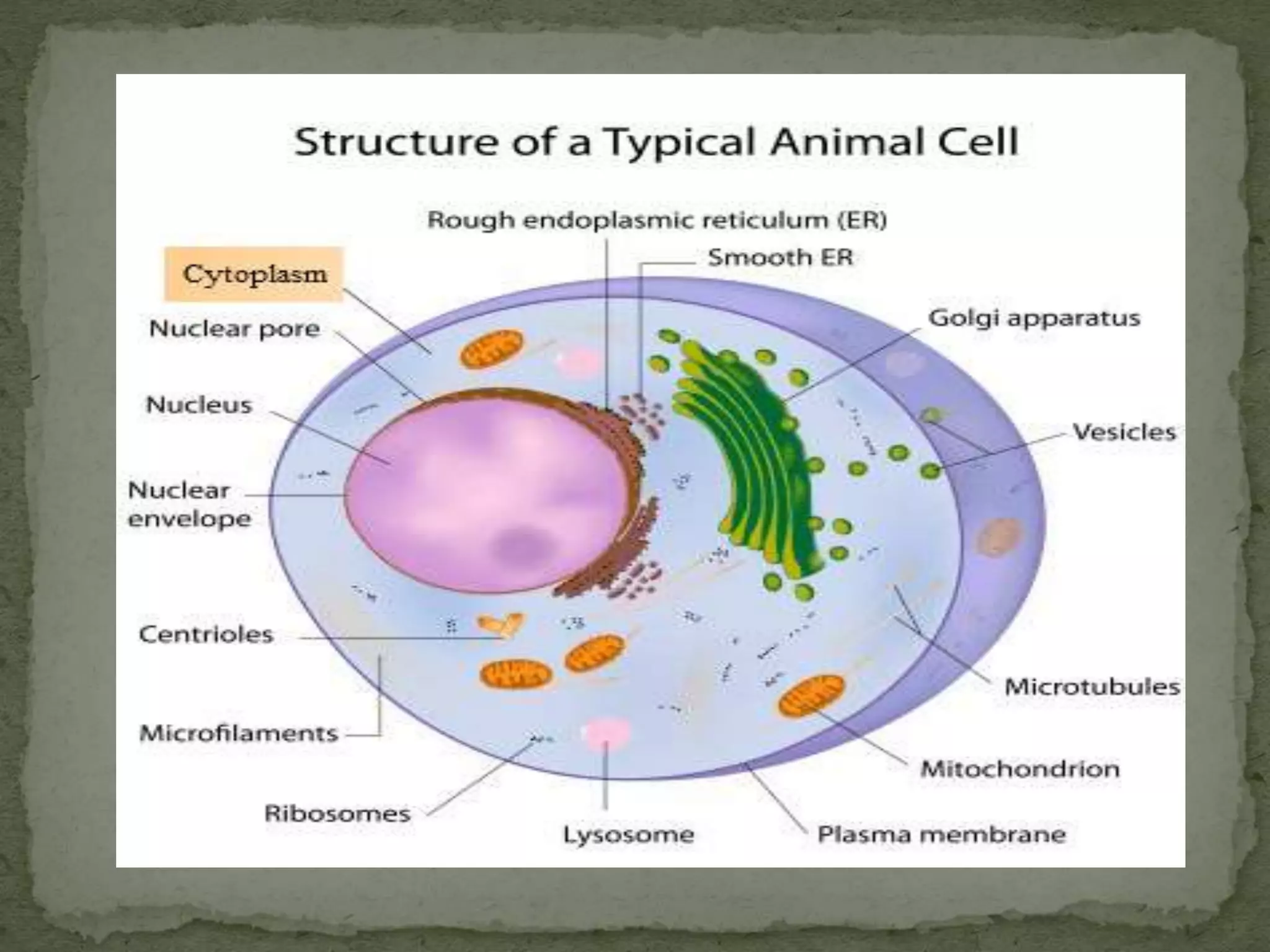
 Cytoplasm is a gel like fluid present
between the plasma membrane and the
nucleus
 Cytoplasm is the semi-fluid substance of
a cell that is present within the cellular
membrane and surrounds the nuclear
membrane
 It is sometimes described as the
nonnuclear content of the protoplasm
 All the cellular contents in a prokaryote
organisms are contained within cell's
cytoplasm
 In eukaryote organisms, the nucleus of
the cell is separated from the cytoplasm
 Cytoplasm is a thick and semi-
transparent fluid
 The cytoplasm was discovered in the
year 1835 by Robert Brown and other
scientists
 The cytoplasm is made of 70% - 90%
water and is colorless usually. Most of the
cellular activities occurs in the cytoplasm
 There are three main component of
cytoplasm
(a) Inclusion
• Cytoplasmic inclusions are small
particles seen temporarily in the
cytoplasm
 They may are may not be membrane
bound,and are metabolicaly inactive
for example lipid,droplet,glycogen
granules and pigment grales
(b) Organalelles
• are small organs within the cell which
are involved in metabolism for example
mitochondria and endoplasmic reticulum
 These are specialized cell structures with
chracteristic shape present in cytoplasm
(C) Cytosol
• It is the fluid portion. Itis about 55% 0f
the total cell volume. It various for
composition in different cells. It is 75%-
90% of water plus various dissolved and
suspended ions and molecules
 It contains different types of
ions,molecules like glucose,amino
asids, fatty acids, ATP etc
Cytoplasm Function
• Functions of cytoplasm are as follows
• Cytoplasm is the site of many
biochemical reactions that are vital and
crucial for maintaining life
 The cytoplasm is the place where the
cell expands and growth of the cell
takes place
 The cytoplasm provides a medium for
the organelles to remain suspended
 The cytoskeleton of the cytoplasm
provides shape to the cell and it also
facilitates movement
 It also aids in the movement of the
different cellular elements
 The enzymes in the cytoplasm
metabolize the macromolecules into
small parts, so that it can be easily
available for the other cellular
organelles like mitochondria
 The cytoplasm is a means of transport
for genetic material
 It also transports the products of
cellular respiration
 The cytoplasm acts as a buffer and
protects the genetic material of the cell
and also the cellular organelles from
damage caused due to movement and
collision with other cells
 The cytoplasmic organelles are
specialized structures that haves its
own functions like cellular respiration,
protein synthesis,etc
 The cytoplasmic inclusions are non-
soluble molecules, they are seen
floating in the cytoplasm, they act as
stored fats and sugars that are ready for
celllular respiration
 The cytoplasm and the proteins
prevent the grouping of organelles in
place due to gravity, that would impede
their function
Plant Cell Cytoplasm
• Plant cell cytoplasm is similar to animal
cell cytoplasm. Cytoplasm provides
mechanical support to the internal
structures. It is the medium for
suspension for the internal organelles
of the cell
• Cytoplam maintains the shape and
consistency of the cell
 It also stores many chemicals that are
vital for life
 Important metabolic reactions like the
glycolysis and synthesis of proteins
takes place in the cytoplasm
 In plants the movements of the
cytoplasm around the vacuoles, this is
known as cytoplasmic streaming
 The cytoplasm of the animal cell is a
gel-like material made of water. It fills
the cells and contains proteins and
important molecules that are necessary
for the cell
 The cytoplasm is made of proteins,
carbohydrates, salts, sugars, amino
acids and nucleotides
 Cytoplasm holds all the cellular
organelles. Cytoskeleton present in the
cytoplasm help in the movement of the
cell through cytoplasmic streaming
Cytoplasm

Cytoplasm

  • 1.
  • 2.
     Cytoplasm isa gel like fluid present between the plasma membrane and the nucleus  Cytoplasm is the semi-fluid substance of a cell that is present within the cellular membrane and surrounds the nuclear membrane  It is sometimes described as the nonnuclear content of the protoplasm
  • 3.
     All thecellular contents in a prokaryote organisms are contained within cell's cytoplasm  In eukaryote organisms, the nucleus of the cell is separated from the cytoplasm  Cytoplasm is a thick and semi- transparent fluid  The cytoplasm was discovered in the year 1835 by Robert Brown and other scientists
  • 6.
     The cytoplasmis made of 70% - 90% water and is colorless usually. Most of the cellular activities occurs in the cytoplasm  There are three main component of cytoplasm (a) Inclusion • Cytoplasmic inclusions are small particles seen temporarily in the cytoplasm
  • 7.
     They mayare may not be membrane bound,and are metabolicaly inactive for example lipid,droplet,glycogen granules and pigment grales (b) Organalelles • are small organs within the cell which are involved in metabolism for example mitochondria and endoplasmic reticulum
  • 8.
     These arespecialized cell structures with chracteristic shape present in cytoplasm (C) Cytosol • It is the fluid portion. Itis about 55% 0f the total cell volume. It various for composition in different cells. It is 75%- 90% of water plus various dissolved and suspended ions and molecules
  • 9.
     It containsdifferent types of ions,molecules like glucose,amino asids, fatty acids, ATP etc Cytoplasm Function • Functions of cytoplasm are as follows • Cytoplasm is the site of many biochemical reactions that are vital and crucial for maintaining life
  • 10.
     The cytoplasmis the place where the cell expands and growth of the cell takes place  The cytoplasm provides a medium for the organelles to remain suspended  The cytoskeleton of the cytoplasm provides shape to the cell and it also facilitates movement  It also aids in the movement of the different cellular elements
  • 11.
     The enzymesin the cytoplasm metabolize the macromolecules into small parts, so that it can be easily available for the other cellular organelles like mitochondria  The cytoplasm is a means of transport for genetic material  It also transports the products of cellular respiration
  • 12.
     The cytoplasmacts as a buffer and protects the genetic material of the cell and also the cellular organelles from damage caused due to movement and collision with other cells  The cytoplasmic organelles are specialized structures that haves its own functions like cellular respiration, protein synthesis,etc
  • 13.
     The cytoplasmicinclusions are non- soluble molecules, they are seen floating in the cytoplasm, they act as stored fats and sugars that are ready for celllular respiration  The cytoplasm and the proteins prevent the grouping of organelles in place due to gravity, that would impede their function
  • 14.
    Plant Cell Cytoplasm •Plant cell cytoplasm is similar to animal cell cytoplasm. Cytoplasm provides mechanical support to the internal structures. It is the medium for suspension for the internal organelles of the cell • Cytoplam maintains the shape and consistency of the cell
  • 15.
     It alsostores many chemicals that are vital for life  Important metabolic reactions like the glycolysis and synthesis of proteins takes place in the cytoplasm  In plants the movements of the cytoplasm around the vacuoles, this is known as cytoplasmic streaming
  • 16.
     The cytoplasmof the animal cell is a gel-like material made of water. It fills the cells and contains proteins and important molecules that are necessary for the cell  The cytoplasm is made of proteins, carbohydrates, salts, sugars, amino acids and nucleotides
  • 17.
     Cytoplasm holdsall the cellular organelles. Cytoskeleton present in the cytoplasm help in the movement of the cell through cytoplasmic streaming