Downloaded 32 times

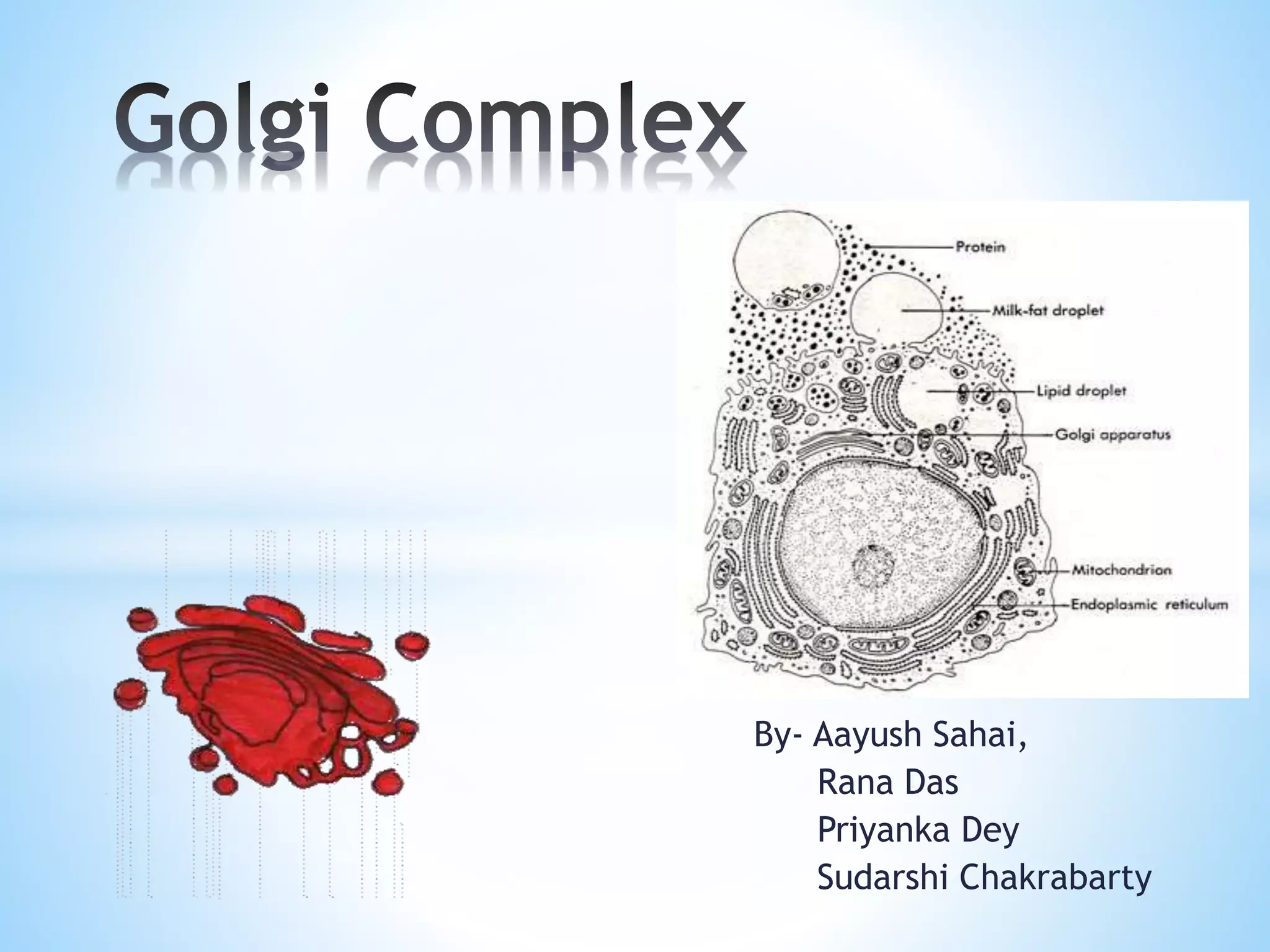
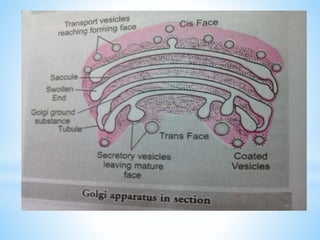
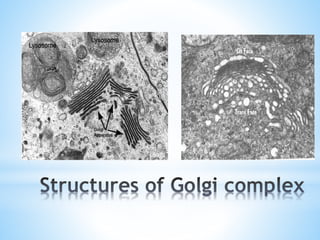
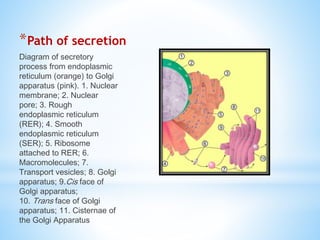
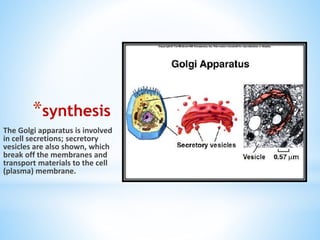


The document describes the structure and functions of the Golgi apparatus. It notes that the Golgi apparatus was discovered in 1898 by Camillo Golgi and is present in eukaryotic cells. It has a stacked structure consisting of cisternae, tubules, and vesicles. Materials enter on the cis face from the ER and are modified through secretion, synthesis, sulfation, phosphorylation, and other processes before leaving on the trans face via secretory vesicles. The Golgi apparatus plays an important role in secretion, synthesis of carbohydrates and proteoglycans, sulfation of molecules, apoptosis, and phosphorylation.


