GENE REGULATION IN
EUKARYOTES
PRESENTED BY: IQRA WAZIR
GENE REGULATION IN EUKARYOTES
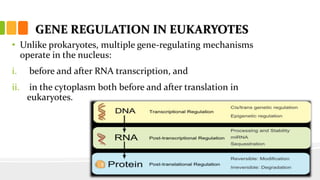
• Unlike prokaryotes, multiple gene-regulating mechanisms
operate in the nucleus:
i. before and after RNA transcription, and
ii. in the cytoplasm both before and after translation in
eukaryotes.
GENE REGULATION IN EUKARYOTES
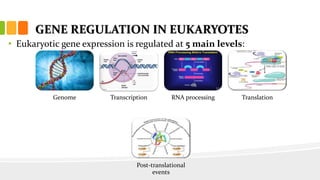
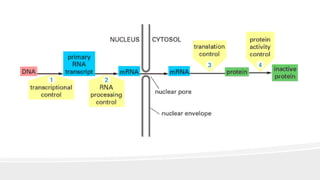
• Eukaryotic gene expression is regulated at 5 main levels:
Genome Transcription RNA processing Translation
Post-translational
events
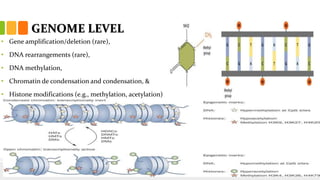
GENOME LEVEL
• Gene amplification/deletion (rare),
• DNA rearrangements (rare),
• DNA methylation,
• Chromatin de condensation and condensation, &
• Histone modifications (e.g., methylation, acetylation)
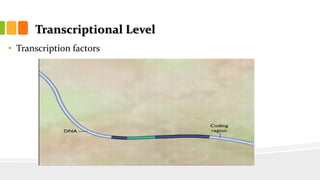
Transcriptional Level
• Transcription factors
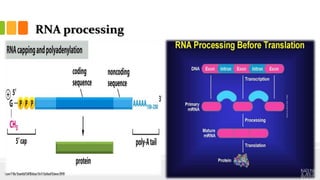
RNA processing
Translational Level
• includes targeting of some newly forming polypeptides to the ER,
• plus control of translation by initiation factors
• and translational repressors, including microRNAs
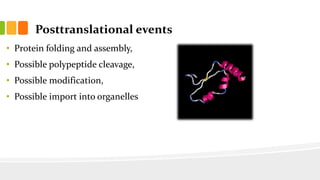
Posttranslational events
• Protein folding and assembly,
• Possible polypeptide cleavage,
• Possible modification,
• Possible import into organelles
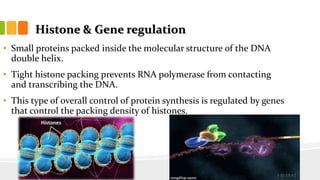
Histone & Gene regulation
• Small proteins packed inside the molecular structure of the DNA
double helix.
• Tight histone packing prevents RNA polymerase from contacting
and transcribing the DNA.
• This type of overall control of protein synthesis is regulated by genes
that control the packing density of histones.
Activator-Enhancer Complex
• Unique in eukaryotes because they normally have to be activated to begin
protein synthesis, which requires the use of transcription factors and
RNA polymerase.
• In general, the process of eukaryotic protein synthesis involves four steps:
1. Activators
2. Activator enhancer complex
3. Additional transcription factors
4. Silencers
Activator-Enhancer Complex
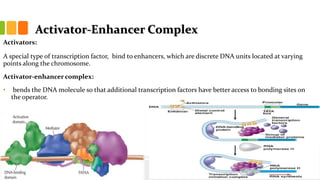
Activators:
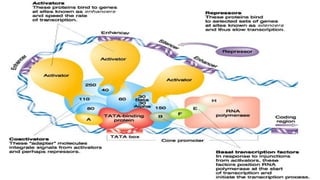
A special type of transcription factor, bind to enhancers, which are discrete DNA units located at varying
points along the chromosome.
Activator-enhancer complex:
• bends the DNA molecule so that additional transcription factors have better access to bonding sites on
the operator.
Activator-Enhancer Complex
• The bonding of additional transcription factors to the operator allows greater
access by the RNA polymerase, which then begins the process of transcription.
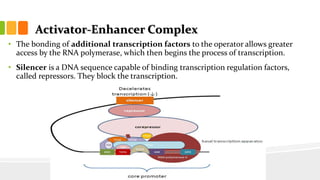
• Silencer is a DNA sequence capable of binding transcription regulation factors,
called repressors. They block the transcription.
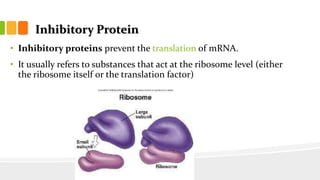
Inhibitory Protein
• Inhibitory proteins prevent the translation of mRNA.
• It usually refers to substances that act at the ribosome level (either
the ribosome itself or the translation factor)
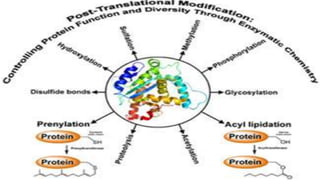
Post translational control
• "Posttranslational regulation" means regulation (of the level of active
protein product present in the cell) that takes place AFTER the protein
product is produced (by the act of translation of the mRNA).
• Post-translational regulation refers to the control of the levels of
active protein.
• There are several forms.
• It is performed either by means of reversible events
(posttranslational modifications, such as phosphorylation) or
• by means of irreversible events (proteolysis: breakdown of proteins into
smaller polypeptides or amino acids)
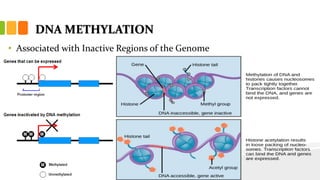
DNA METHYLATION
• Associated with Inactive Regions of the Genome
mRNA Features Due To Gene Regulation
• The longevity of the individual mRNA molecule determines how
many times it can be used and reused to create proteins.
• In eukaryotes, the mRNA tends to be stable, which means it can
be used multiple times; which is efficient, but
• It prevents eukaryotes from making rapid response changes to
environmental disruptions.
• The mRNA of prokaryotes is unstable, allowing for the creation
of new mRNA, which has more opportunities to adjust for
changing environmental conditions.
YOU CAN ASK QUESTIONS!
Gene regulation in eukaryotes

Gene regulation in eukaryotes

  • 1.
  • 2.
    GENE REGULATION INEUKARYOTES • Unlike prokaryotes, multiple gene-regulating mechanisms operate in the nucleus: i. before and after RNA transcription, and ii. in the cytoplasm both before and after translation in eukaryotes.
  • 3.
    GENE REGULATION INEUKARYOTES • Eukaryotic gene expression is regulated at 5 main levels: Genome Transcription RNA processing Translation Post-translational events
  • 4.
    GENOME LEVEL • Geneamplification/deletion (rare), • DNA rearrangements (rare), • DNA methylation, • Chromatin de condensation and condensation, & • Histone modifications (e.g., methylation, acetylation)
  • 5.
  • 6.
  • 7.
    Translational Level • includestargeting of some newly forming polypeptides to the ER, • plus control of translation by initiation factors • and translational repressors, including microRNAs
  • 8.
    Posttranslational events • Proteinfolding and assembly, • Possible polypeptide cleavage, • Possible modification, • Possible import into organelles
  • 9.
    Histone & Generegulation • Small proteins packed inside the molecular structure of the DNA double helix. • Tight histone packing prevents RNA polymerase from contacting and transcribing the DNA. • This type of overall control of protein synthesis is regulated by genes that control the packing density of histones.
  • 10.
    Activator-Enhancer Complex • Uniquein eukaryotes because they normally have to be activated to begin protein synthesis, which requires the use of transcription factors and RNA polymerase. • In general, the process of eukaryotic protein synthesis involves four steps: 1. Activators 2. Activator enhancer complex 3. Additional transcription factors 4. Silencers
  • 11.
    Activator-Enhancer Complex Activators: A specialtype of transcription factor, bind to enhancers, which are discrete DNA units located at varying points along the chromosome. Activator-enhancer complex: • bends the DNA molecule so that additional transcription factors have better access to bonding sites on the operator.
  • 12.
    Activator-Enhancer Complex • Thebonding of additional transcription factors to the operator allows greater access by the RNA polymerase, which then begins the process of transcription. • Silencer is a DNA sequence capable of binding transcription regulation factors, called repressors. They block the transcription.
  • 14.
    Inhibitory Protein • Inhibitoryproteins prevent the translation of mRNA. • It usually refers to substances that act at the ribosome level (either the ribosome itself or the translation factor)
  • 15.
    Post translational control •"Posttranslational regulation" means regulation (of the level of active protein product present in the cell) that takes place AFTER the protein product is produced (by the act of translation of the mRNA). • Post-translational regulation refers to the control of the levels of active protein. • There are several forms. • It is performed either by means of reversible events (posttranslational modifications, such as phosphorylation) or • by means of irreversible events (proteolysis: breakdown of proteins into smaller polypeptides or amino acids)
  • 17.
    DNA METHYLATION • Associatedwith Inactive Regions of the Genome
  • 18.
    mRNA Features DueTo Gene Regulation • The longevity of the individual mRNA molecule determines how many times it can be used and reused to create proteins. • In eukaryotes, the mRNA tends to be stable, which means it can be used multiple times; which is efficient, but • It prevents eukaryotes from making rapid response changes to environmental disruptions. • The mRNA of prokaryotes is unstable, allowing for the creation of new mRNA, which has more opportunities to adjust for changing environmental conditions.
  • 20.
    YOU CAN ASKQUESTIONS!