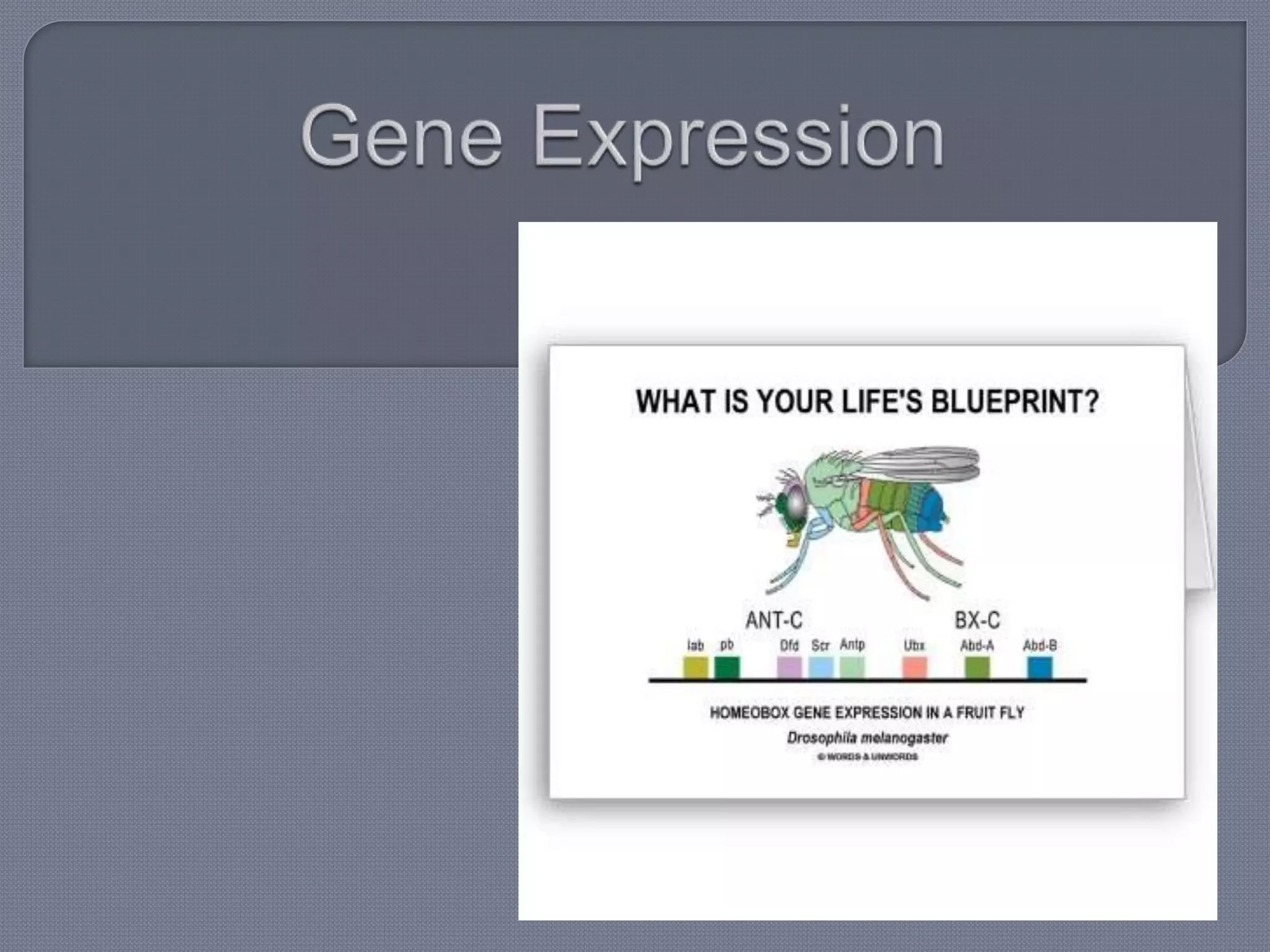
Differential Gene Expression
• Transcriptional control
• RNA processing control
• Translational control
• Post-translational control
2
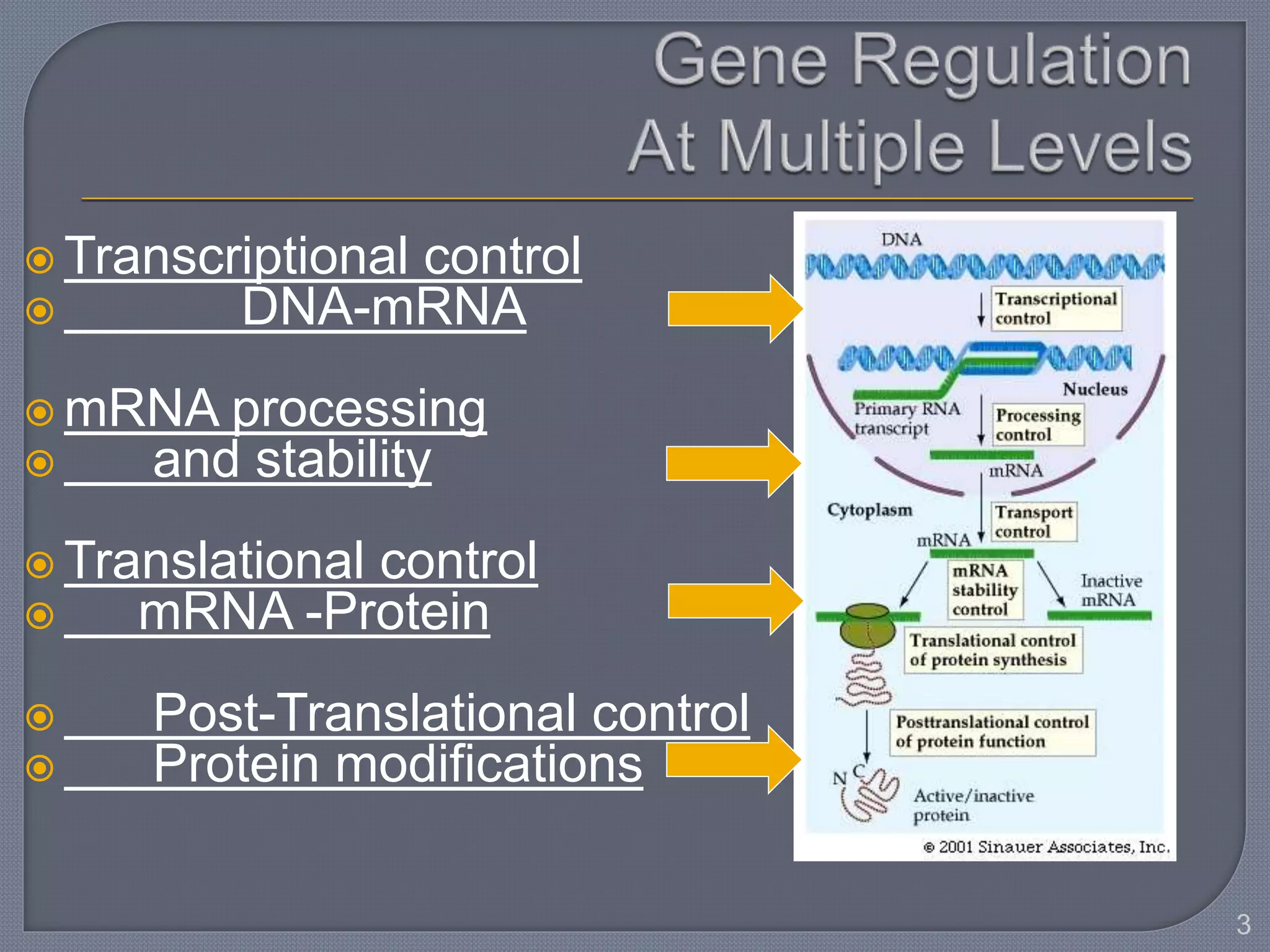
 Transcriptional control
 DNA-mRNA
 mRNA processing
 and stability
 Translational control
 mRNA -Protein
 Post-Translational control
 Protein modifications
3
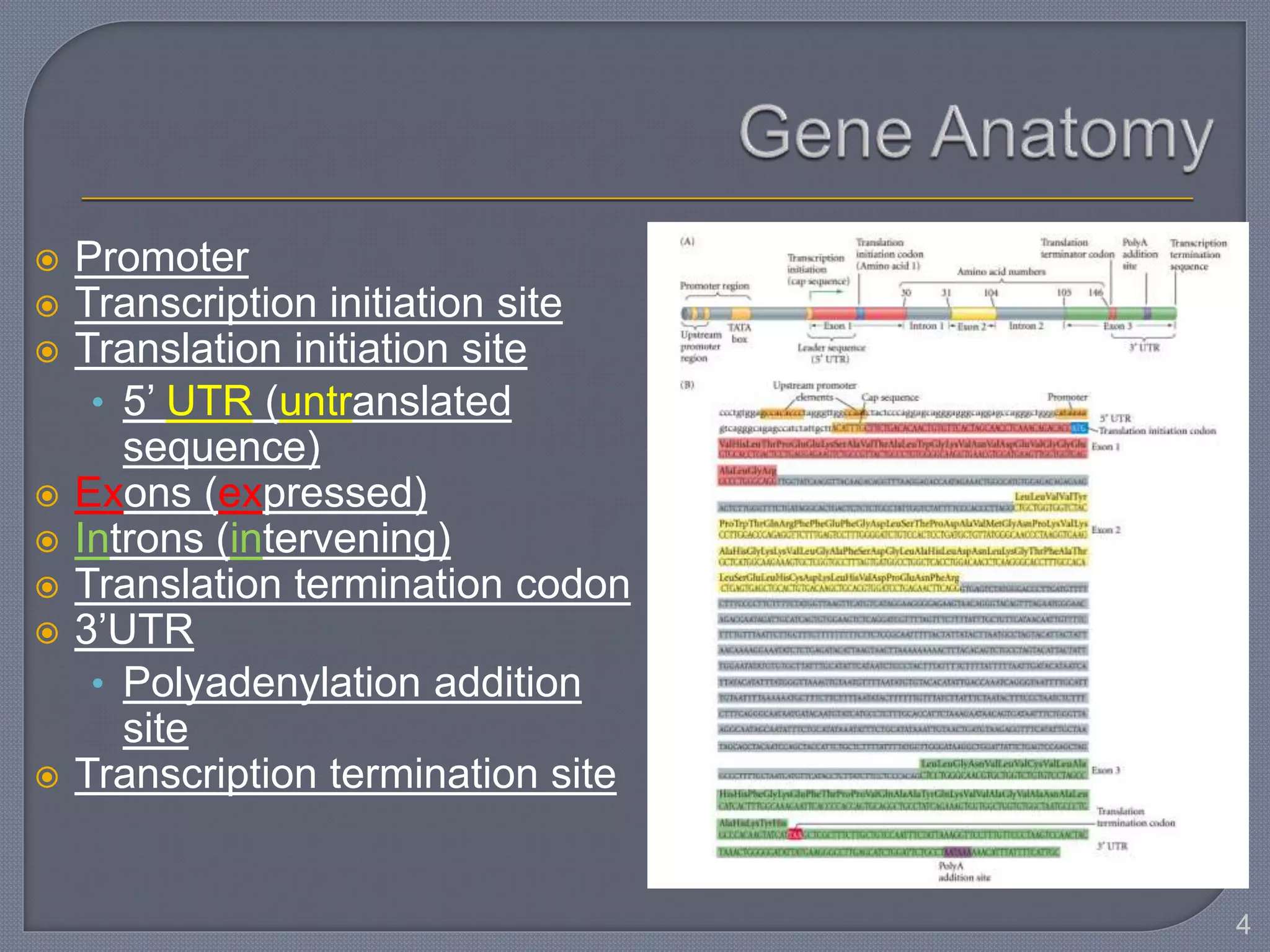
 Promoter
 Transcription initiation site
 Translation initiation site
• 5’ UTR (untranslated
sequence)
 Exons (expressed)
 Introns (intervening)
 Translation termination codon
 3’UTR
• Polyadenylation addition
site
 Transcription termination site
4
5
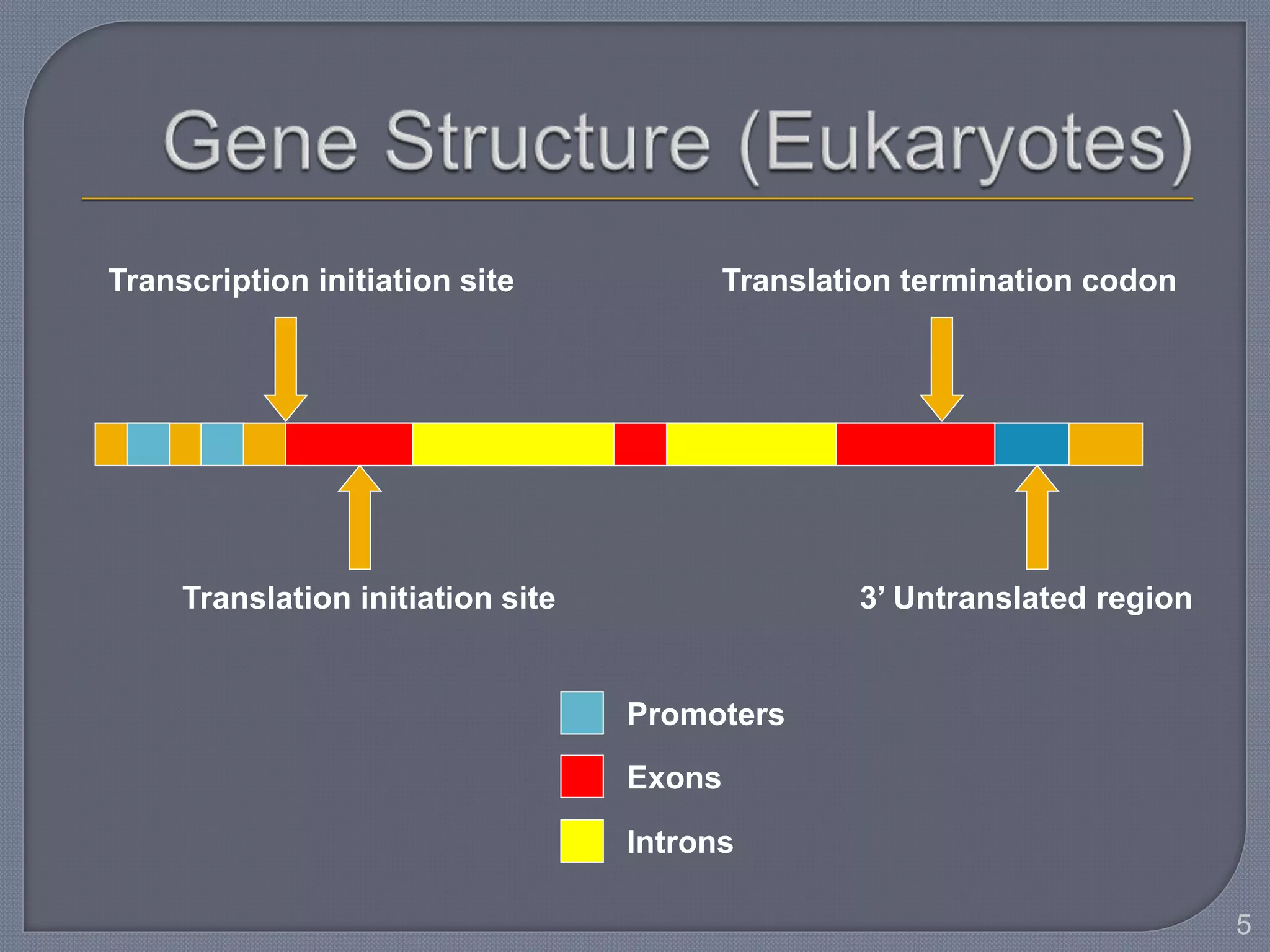
Transcription initiation site
Translation initiation site
Translation termination codon
3’ Untranslated region
Promoters
Exons
Introns
Three main regulatory agents:
• Nuclear proteins that regulate access to DNA
• Multiple, alternative promoters
• Cells differ in number or type of transcription
factors
Let’s take a look at each…..
6
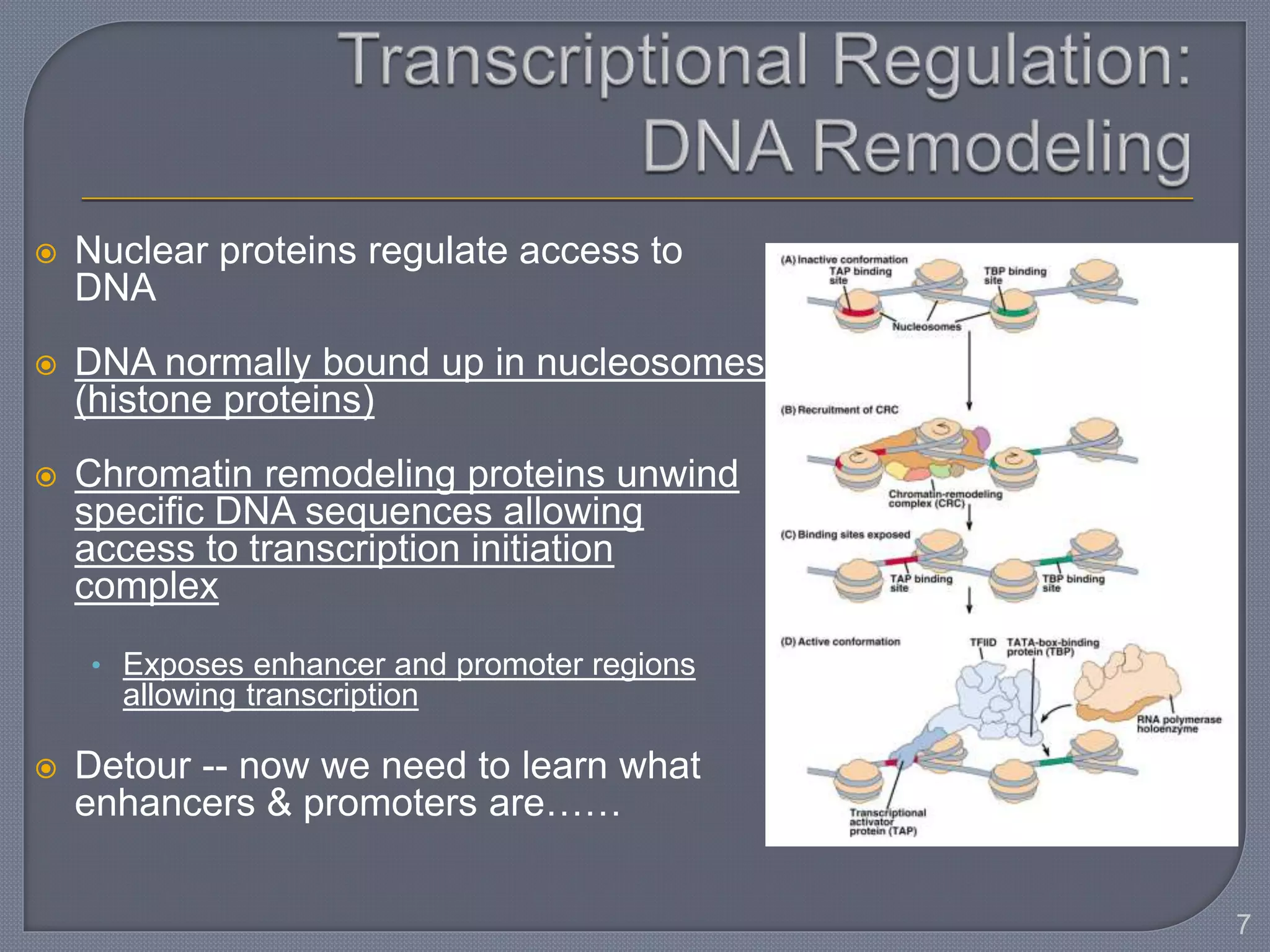
 Nuclear proteins regulate access to
DNA
 DNA normally bound up in nucleosomes
(histone proteins)
 Chromatin remodeling proteins unwind
specific DNA sequences allowing
access to transcription initiation
complex
• Exposes enhancer and promoter regions
allowing transcription
 Detour -- now we need to learn what
enhancers & promoters are……
7
Chromatin remodeling affects
• DNA replication & repair
• Apoptosis
• Chromosome segregation
• Pluropotency
Targeting chromatin remodeling pathways
is a growing field in targeting several
cancers (regulate mitosis)
 Promoter -- initiates transcription of a particular gene
(TATA box, GC islands)
 Enhancer -- short region of DNA which can be found
with proteins (TF’s) to “enhance” transcription levels in
a gene cluster
 Transcription factor -- works in conjunction with
enhancers; family of proteins; alter DNA confirmation
 Silencer -- “negative” enhancers; DNA sequence which
binds repressors preventing RNA polymerase from
initiating transcription
Know this
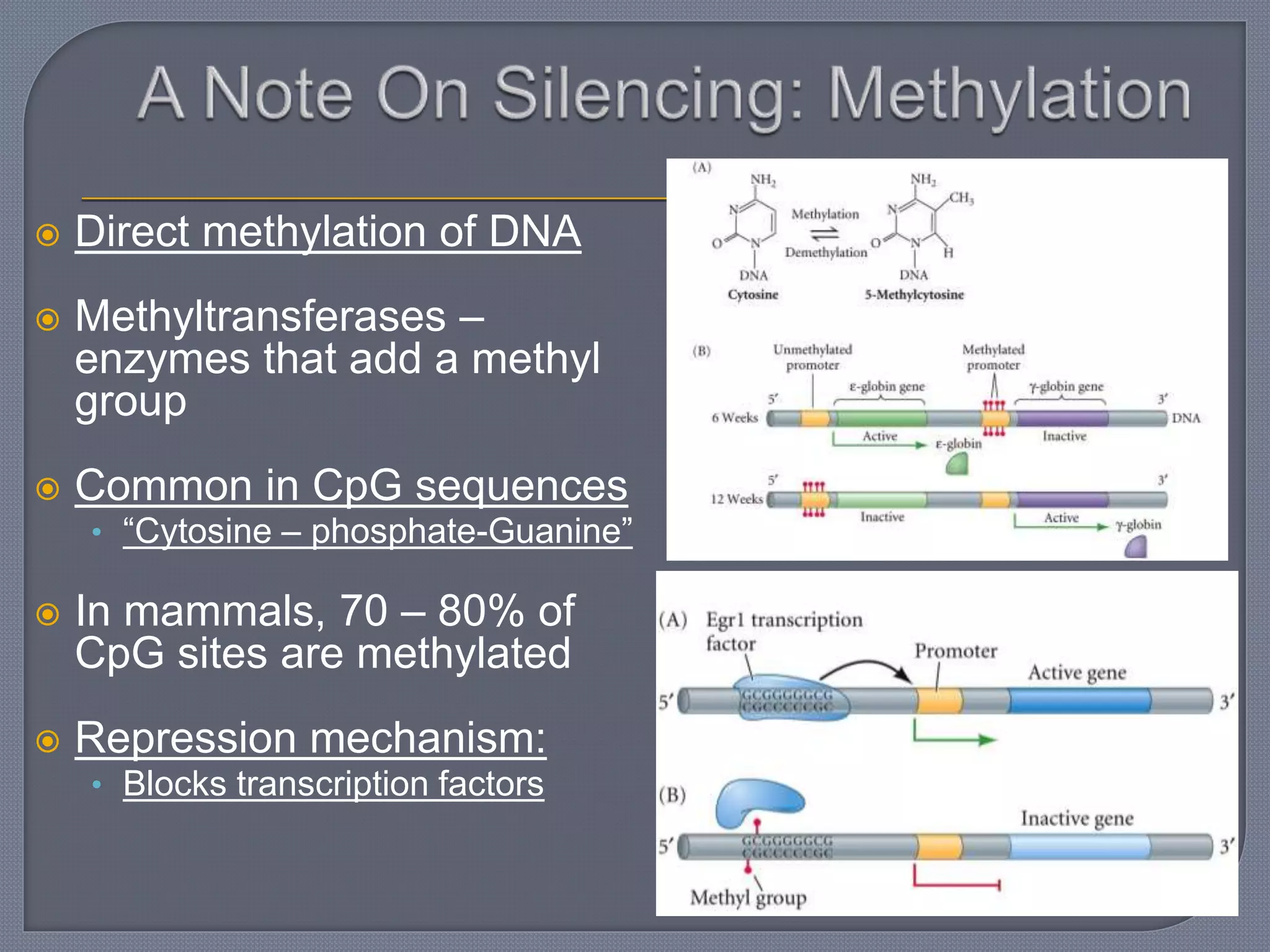
 Direct methylation of DNA
 Methyltransferases –
enzymes that add a methyl
group
 Common in CpG sequences
• “Cytosine – phosphate-Guanine”
 In mammals, 70 – 80% of
CpG sites are methylated
 Repression mechanism:
• Blocks transcription factors
 Enhancers:
• Specific sequence in DNA
• Short series of bases
• Vary in location
• Can be far away from gene regulated
• Bound by transcriptional activators (molecules from
inside or outside the cell that aid in transcription)
 Silencers
• Specific sequence of DNA
• Short series of bases
• Bind proteins that promote assembly of large protein
complexes that block transcription
11
Know qualities
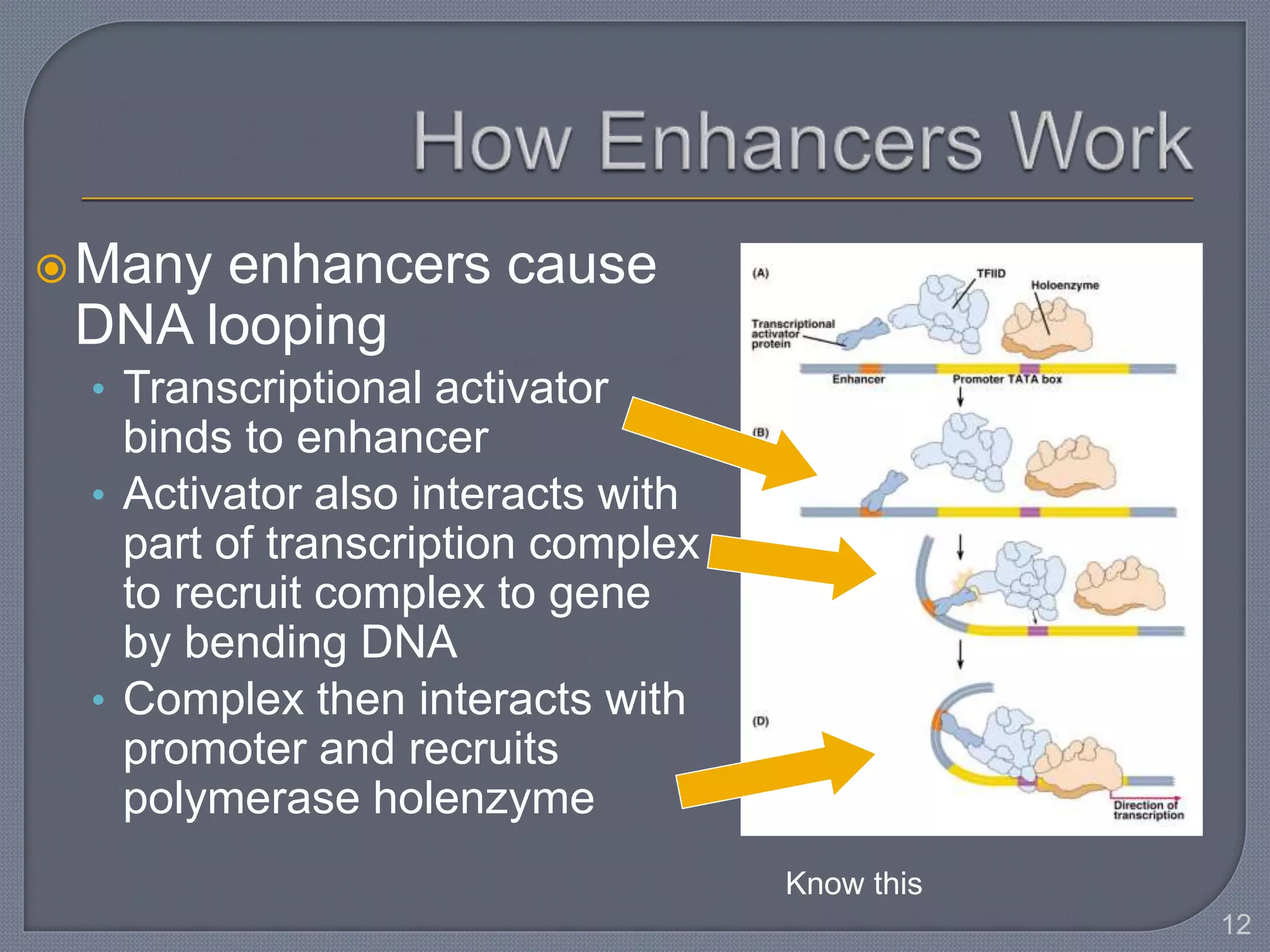
Many enhancers cause
DNA looping
• Transcriptional activator
binds to enhancer
• Activator also interacts with
part of transcription complex
to recruit complex to gene
by bending DNA
• Complex then interacts with
promoter and recruits
polymerase holenzyme
12
Know this
Enhancers are hard to find because:
• Variable in sequence from one gene to the next
• Short series of bases
• Vary in location
• Can be far away from gene regulated
So -- how do you find them?
13
 “Reporter Constructs”
• Put region of interest (with
regulatory elements) upstream
of an inducible gene (such as
lacZ)
• Modify (by deletion or
substitution) presumed
regulatory region
• Modifications that alter
expression of inducible gene
are regulatory elements
14
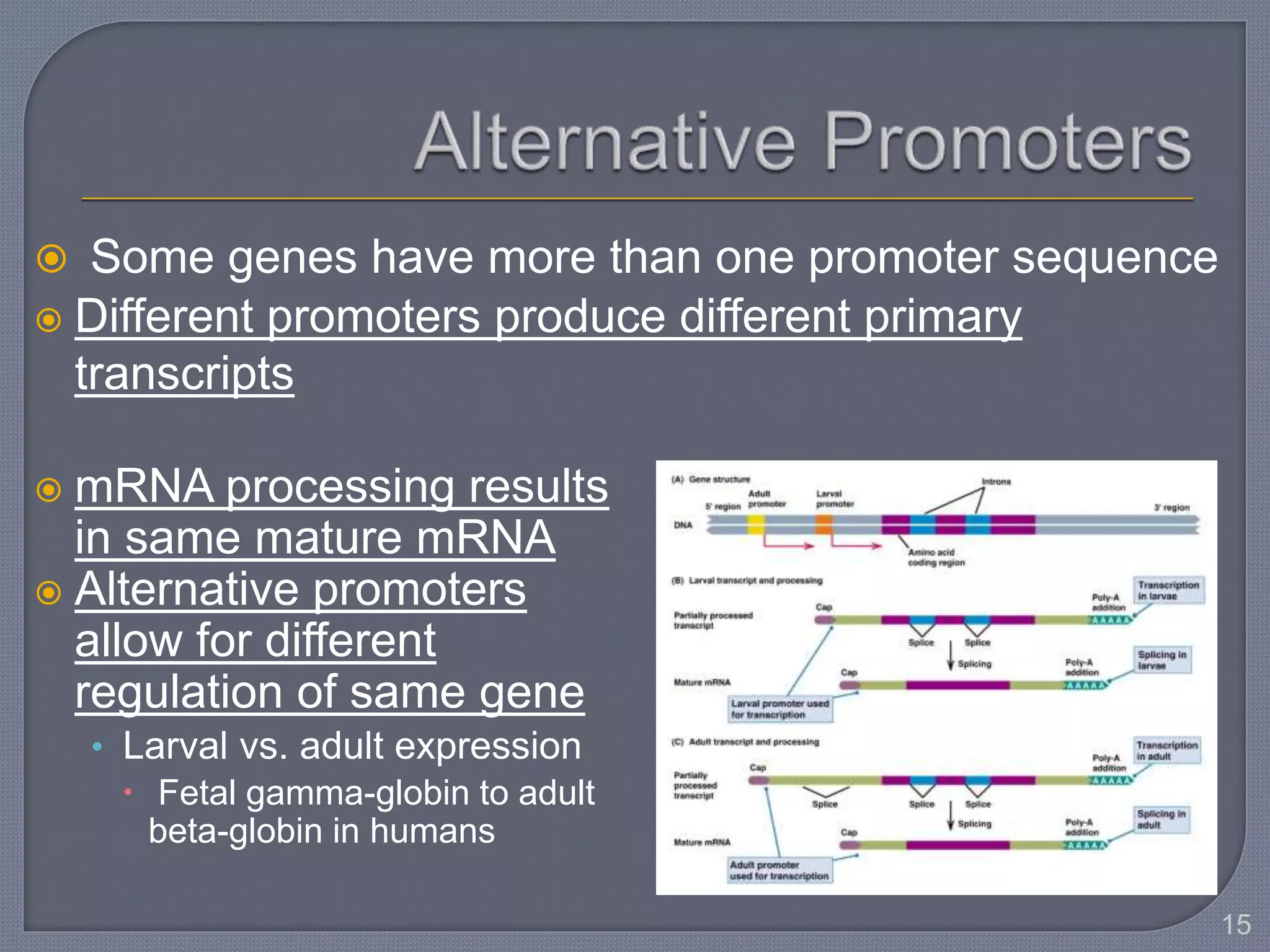
 mRNA processing results
in same mature mRNA
 Alternative promoters
allow for different
regulation of same gene
• Larval vs. adult expression
 Fetal gamma-globin to adult
beta-globin in humans
15
 Some genes have more than one promoter sequence
 Different promoters produce different primary
transcripts
 3 major domains:
• DNA binding domain
• Activating domain – interacts with initiation complex
proteins
• Protein-protein interaction domain
 Major transcription factor families
• Homeodomain – Hox genes (axis formation)
• Basic helix-loop-helix – muscle & nerve specification
• Basic leucine zipper – liver & fat cell differentiation
– Zinc Finger - segmentation, secondary sex determination,
metamorphosis, limb development
16
Know this

340 - 04 -- gene expression

  • 2.
    Differential Gene Expression •Transcriptional control • RNA processing control • Translational control • Post-translational control 2
  • 3.
     Transcriptional control DNA-mRNA  mRNA processing  and stability  Translational control  mRNA -Protein  Post-Translational control  Protein modifications 3
  • 4.
     Promoter  Transcriptioninitiation site  Translation initiation site • 5’ UTR (untranslated sequence)  Exons (expressed)  Introns (intervening)  Translation termination codon  3’UTR • Polyadenylation addition site  Transcription termination site 4
  • 5.
    5 Transcription initiation site Translationinitiation site Translation termination codon 3’ Untranslated region Promoters Exons Introns
  • 6.
    Three main regulatoryagents: • Nuclear proteins that regulate access to DNA • Multiple, alternative promoters • Cells differ in number or type of transcription factors Let’s take a look at each….. 6
  • 7.
     Nuclear proteinsregulate access to DNA  DNA normally bound up in nucleosomes (histone proteins)  Chromatin remodeling proteins unwind specific DNA sequences allowing access to transcription initiation complex • Exposes enhancer and promoter regions allowing transcription  Detour -- now we need to learn what enhancers & promoters are…… 7
  • 8.
    Chromatin remodeling affects •DNA replication & repair • Apoptosis • Chromosome segregation • Pluropotency Targeting chromatin remodeling pathways is a growing field in targeting several cancers (regulate mitosis)
  • 9.
     Promoter --initiates transcription of a particular gene (TATA box, GC islands)  Enhancer -- short region of DNA which can be found with proteins (TF’s) to “enhance” transcription levels in a gene cluster  Transcription factor -- works in conjunction with enhancers; family of proteins; alter DNA confirmation  Silencer -- “negative” enhancers; DNA sequence which binds repressors preventing RNA polymerase from initiating transcription Know this
  • 10.
     Direct methylationof DNA  Methyltransferases – enzymes that add a methyl group  Common in CpG sequences • “Cytosine – phosphate-Guanine”  In mammals, 70 – 80% of CpG sites are methylated  Repression mechanism: • Blocks transcription factors
  • 11.
     Enhancers: • Specificsequence in DNA • Short series of bases • Vary in location • Can be far away from gene regulated • Bound by transcriptional activators (molecules from inside or outside the cell that aid in transcription)  Silencers • Specific sequence of DNA • Short series of bases • Bind proteins that promote assembly of large protein complexes that block transcription 11 Know qualities
  • 12.
    Many enhancers cause DNAlooping • Transcriptional activator binds to enhancer • Activator also interacts with part of transcription complex to recruit complex to gene by bending DNA • Complex then interacts with promoter and recruits polymerase holenzyme 12 Know this
  • 13.
    Enhancers are hardto find because: • Variable in sequence from one gene to the next • Short series of bases • Vary in location • Can be far away from gene regulated So -- how do you find them? 13
  • 14.
     “Reporter Constructs” •Put region of interest (with regulatory elements) upstream of an inducible gene (such as lacZ) • Modify (by deletion or substitution) presumed regulatory region • Modifications that alter expression of inducible gene are regulatory elements 14
  • 15.
     mRNA processingresults in same mature mRNA  Alternative promoters allow for different regulation of same gene • Larval vs. adult expression  Fetal gamma-globin to adult beta-globin in humans 15  Some genes have more than one promoter sequence  Different promoters produce different primary transcripts
  • 16.
     3 majordomains: • DNA binding domain • Activating domain – interacts with initiation complex proteins • Protein-protein interaction domain  Major transcription factor families • Homeodomain – Hox genes (axis formation) • Basic helix-loop-helix – muscle & nerve specification • Basic leucine zipper – liver & fat cell differentiation – Zinc Finger - segmentation, secondary sex determination, metamorphosis, limb development 16 Know this