 Definition:
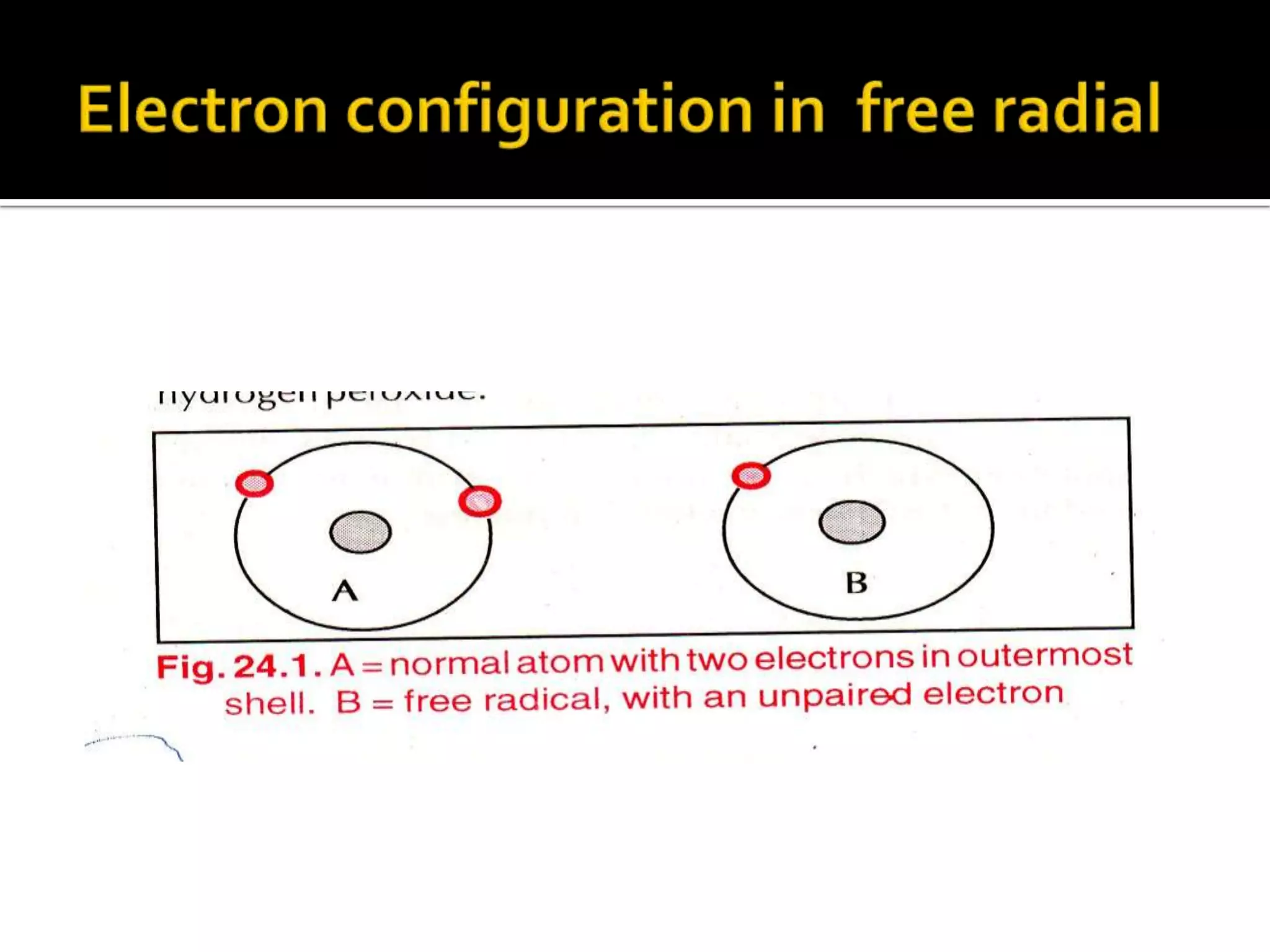
Free radical is a molecule or molecular
fragment that contains one or more
unpaired electrons in its outer orbits.
 Free radicals conventionally represented by super
script dot R•
 Characteristics of free radicals :
1 )Tendency of free radicals to acquire electrons
from other substance makes it more reactive.
2 )Short life span
3 )Generation of new free radicals by chain reaction.
4 )Damage to various tissues.
 Partial reduction of oxygen leads to
formation of free radicals called as reactive
oxygen species .The following are members
of this group.
Super oxide anion radical (O2 · )
Hydroperoxy radicals ( HOO· )
Hydroxyl radical ( OH· )
Lipid peroxyl radical ( ROO· )
Nitric oxide ( NO· ) , Peroxy nitrite (ONOO · )
H2O2 , singlet oxygen (are not free radicals)
 Free radicles are generated in oxidative
metabolism due to leak of electrons .
 Flavoprotein linked oxidases like xanthine
oxidase , L α amino acid oxidase .
 Super oxide is formed by autooxidation of
hemoglobin to methemoglobin
(approximately 3 % of the Hb has been
calculated to autooxidise per day )
 Cyclooxygenase & lipoxygenase reactions in
metabolism of eicosanoids.
 NADPH oxidase system of inflammatory cells
by process of respiratory burst during phase
of phagocytosis.
 Free iron causes increased production of free
radicals .
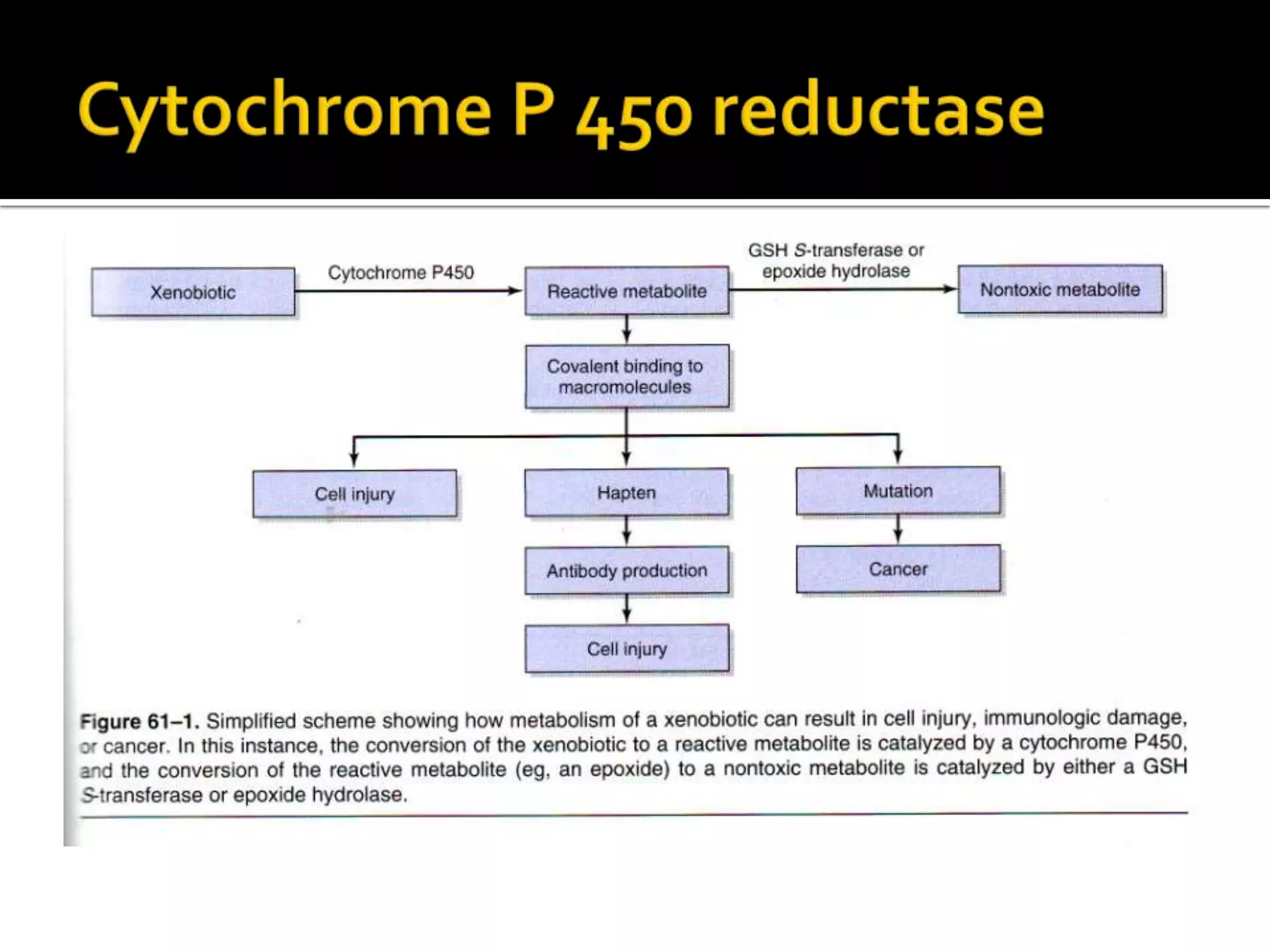
 Free radicals are formed cytochrome P450
reductase enzyme complex durinrg
metabolism of xenobiotics .
 β oxidation of very long chain fatty acids in
peroxisomes produces H2O2 .
 Transfer of 4 electrons from reduced
cytochrome C to molecular oxygen assisted
by cytochrome oxidase
 Transfer of 4 electrons lead to safe product
H2O .
 Site of electron escape appears to be
ubiquinone & cytochrome C .
 Cytochrome C oxidase does not release
partially reduced intermediates , this crucial
criterion meets by holding O2 tightly
between Fe & Cu atoms .
 Although Cyt C oxidase & other protiens that
reduce O2 are remarkably successful in not
releasing intermediates , small amounts of
super oxide & peroxyl radicals are
unavoidably formed.
 About 1-4 % of oxygen taken up in the body is
converted to free radical .
 Flavoprotien linked oxidases
1 ) Xanthine oxidase ,
2) L α amino acid oxidase ,
3 ) Aldehyde dehydrogenase .
 Reduction of isoalloxazine ring of flavin
nucleotides takes place in 2 steps via a
semiquinone ( free radical ) intermediate.
xanthine oxidase
Hypoxanthine xanthine
O2 O2 ·
acetaldehyde dehydrogenase
Acetaldehyde acetate
O2 O2 ·
 NADPH oxidase inflammatory cell produce
supere oxide anion by a process of respiratory
burst during phagocytosis.
 This is the deliberate production of free
radicals by the body .
activation of inflammatory cell
drastic increase in consumption of oxygen
(respiratory burst )
10% of oxygen uptake by macrophage is used
for free radical generation .
 In chronic granulomatous disease the NADPH
oxidase is absent in macrophages &
neutrophils .
 Streptococci & pneumococci themselves
produce H2O2 therefore they are destroyed
by myeloperoxidase system .
 Staphylococci being catalase + ve can
detoxify H2O2 in the macrophages & they are
not destroyed .
 Hence recurrent pyogenic infections by
staphylococci are common in CGD .
 Prodstaglandin H synthase & lipooxygenase
enzyme catalysed reactions produce free
radicals , by producing peroxide .
 Macrophages produce NO from arginine by
enzyme nitric oxide synthase , this is also an
important anti bacterial mechanism .
 Super oxide ion can release iron from ferritin .
 The capacity to produce tissue damage by
H2O2 is minimal because this is not a free
radical . But in the presence of free iron H2O2
can generate hydroxyl free radical (OH
·)which is highly reactive.
 Ionising radiation damages tissues by
producing hydroxylradical , H2O2 ,super
oxide anion .
 Light of appropriate wave length can cause
photolysis of oxygen to produce singlet
oxygen .
 Cigarette smoking contains high
concentrations of free radicals.
 Other toxic compounds CCl4 drugs &
inhalation of air pollutants will increase free
radical production .
 Polyunsaturated fatty acids present in cell
membranes are destroyed by peroxidation.
 This occurs by three phases.
1 )intiation phase
2 )prolangation phase
3 )termination phase
 Production of carbon centered free radical R·
( or ) ROO· (lipid peroxide radical )
1 )RH +OH· R· + H2O
metal ion
2 )ROOH ROO· + H+
R· , ROO· degraded to malon dialdehyde . It is
estimated as an indicator of fatty acid break
down by free radical .
 Carbon centered radical rapidly reacts with
molecular oxygen forms peroxyl radical
(ROO· ) which can attack another PUFA .
R· + O2 ROO·
ROO· + RH ROOH + R·
 One free radical generates another free
radical in the neighbouring molecule a chain
reaction (or) propagation is intiated .
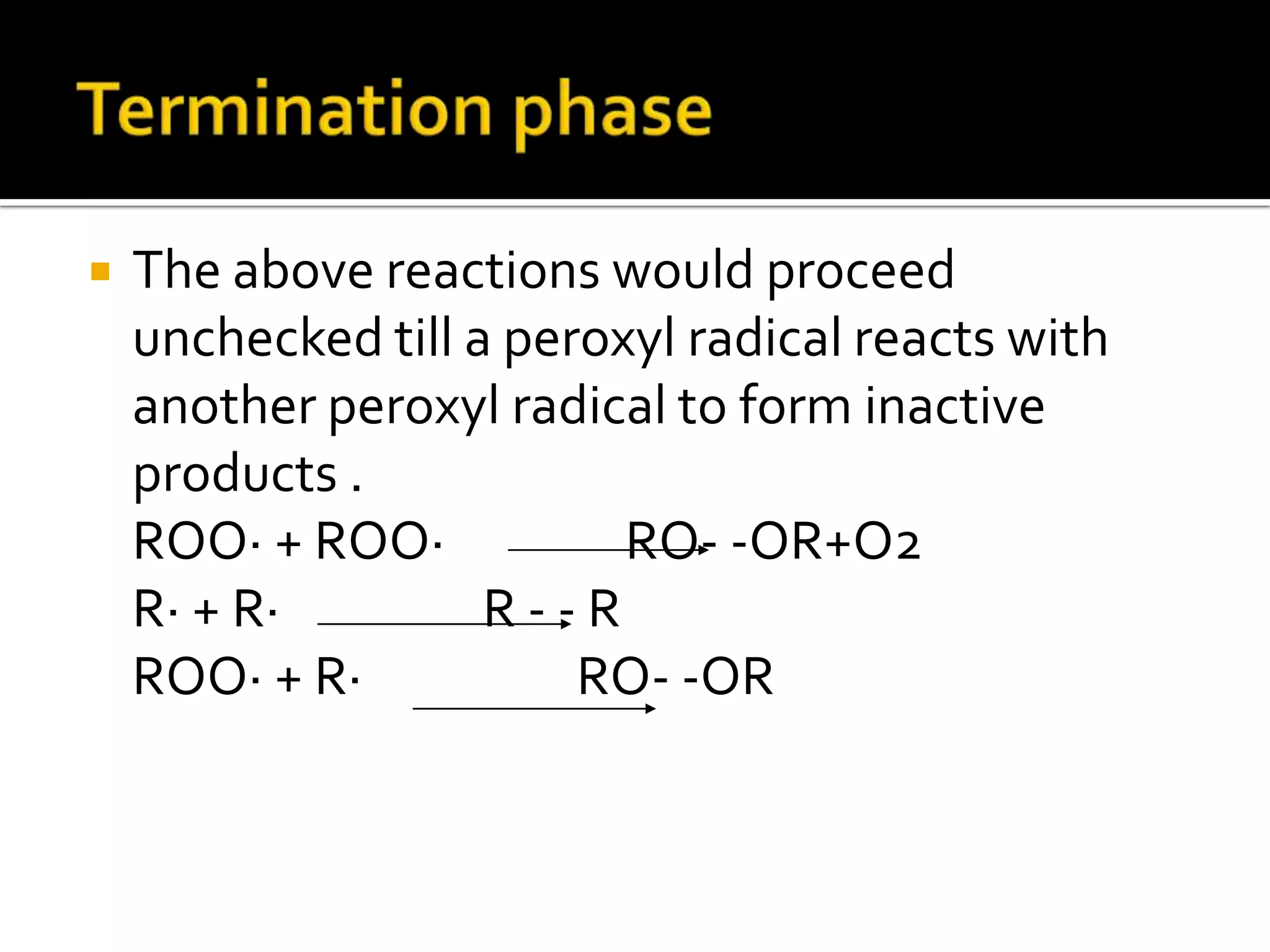
 The above reactions would proceed
unchecked till a peroxyl radical reacts with
another peroxyl radical to form inactive
products .
ROO· + ROO· RO- -OR+O2
R· + R· R - - R
ROO· + R· RO- -OR
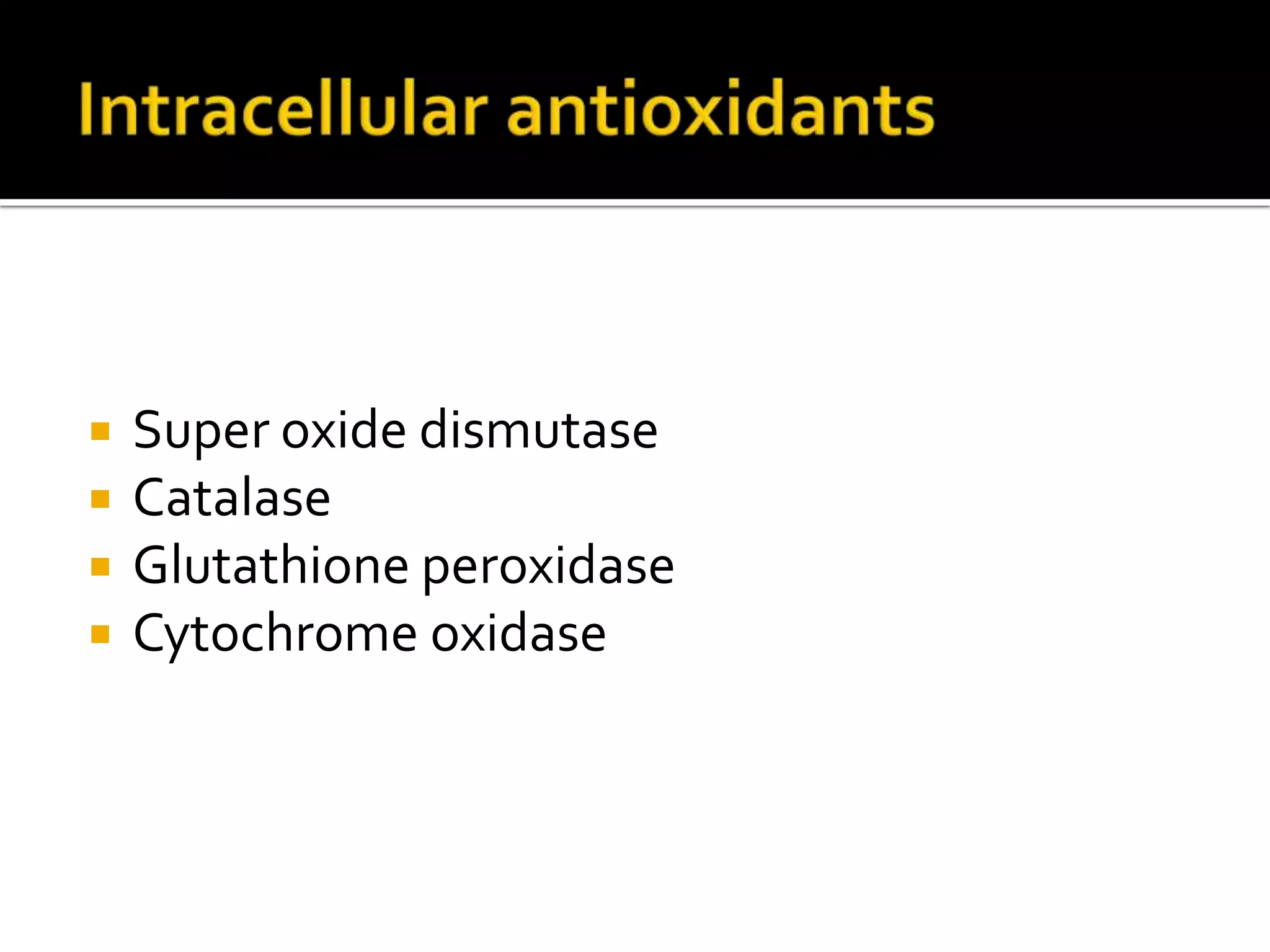
 Super oxide dismutase
 Catalase
 Glutathione peroxidase
 Cytochrome oxidase
 Chief amongst the enzymes that defense
against ROS is super oxide dismutase .
 Super oxide dismutase is present in all major
aerobic tissues .
 Eukaryote contains 2 forms of this enzyme,
1 ) Copper Zinc dependent cytosolic enzyme
2 ) manganese containing mitochondrial
enzyme .
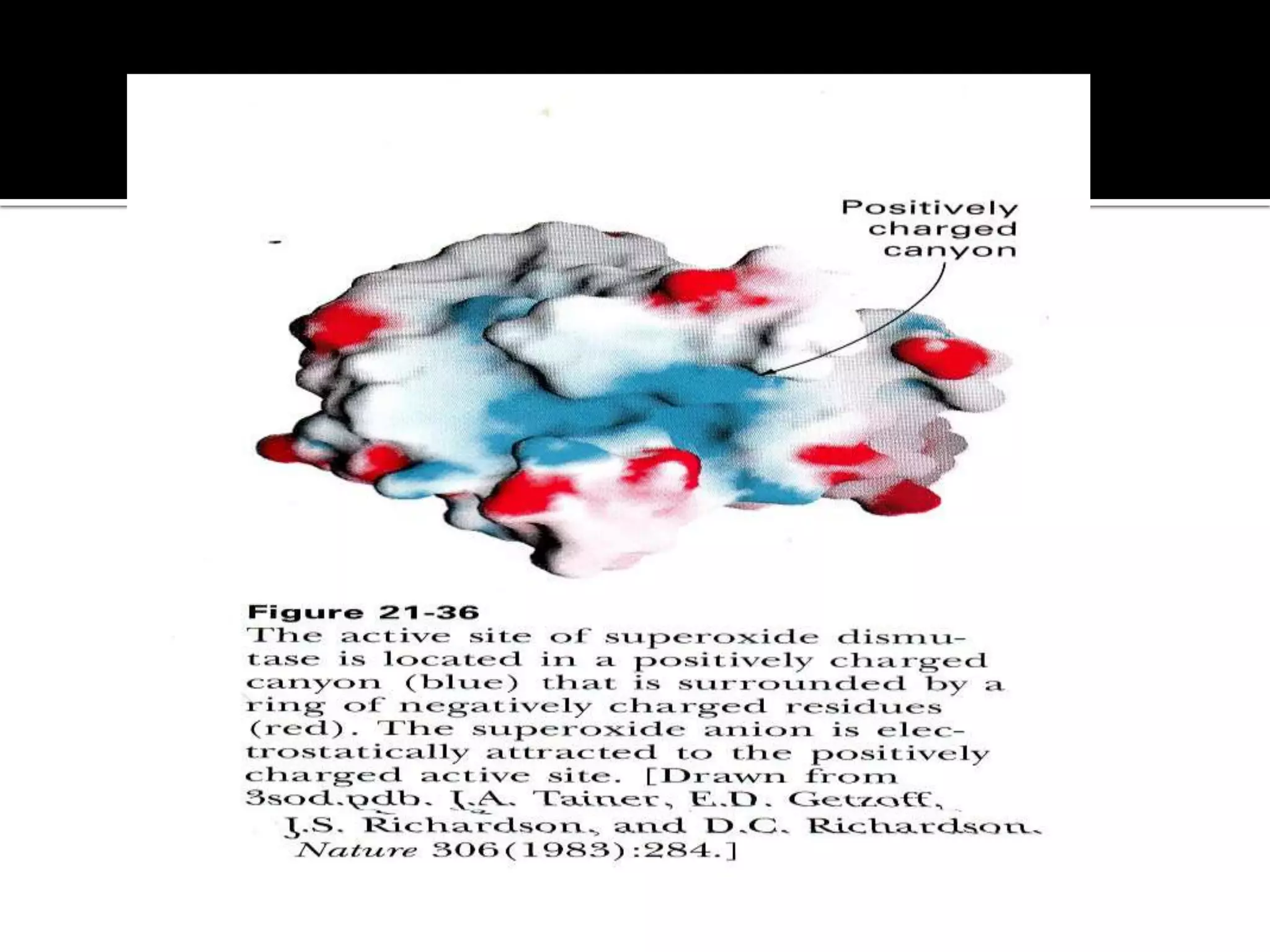
 The active site of cytosolic enzyme in
eukaryotes contains a copper ion & Zinc ion
coordinated to the side chain of a histidine
residue .
 The negatively charged superoxide is guided
electrostatically to a very positively charged
catlytic site at the bottom of the channel .
 H2O2 formed by SOD & by other processes is
scavenged by catalase ( a ubiquitous heme
protein that catalyze the dismutation of
H2O2 into H2O & O2.)
 Catalase is found in blood bone marrow
mucous membranes , liver & kidney .
 SOD & catalase are remarkably efficient ,
performing their reactions at or near the
diffusion limited rate.
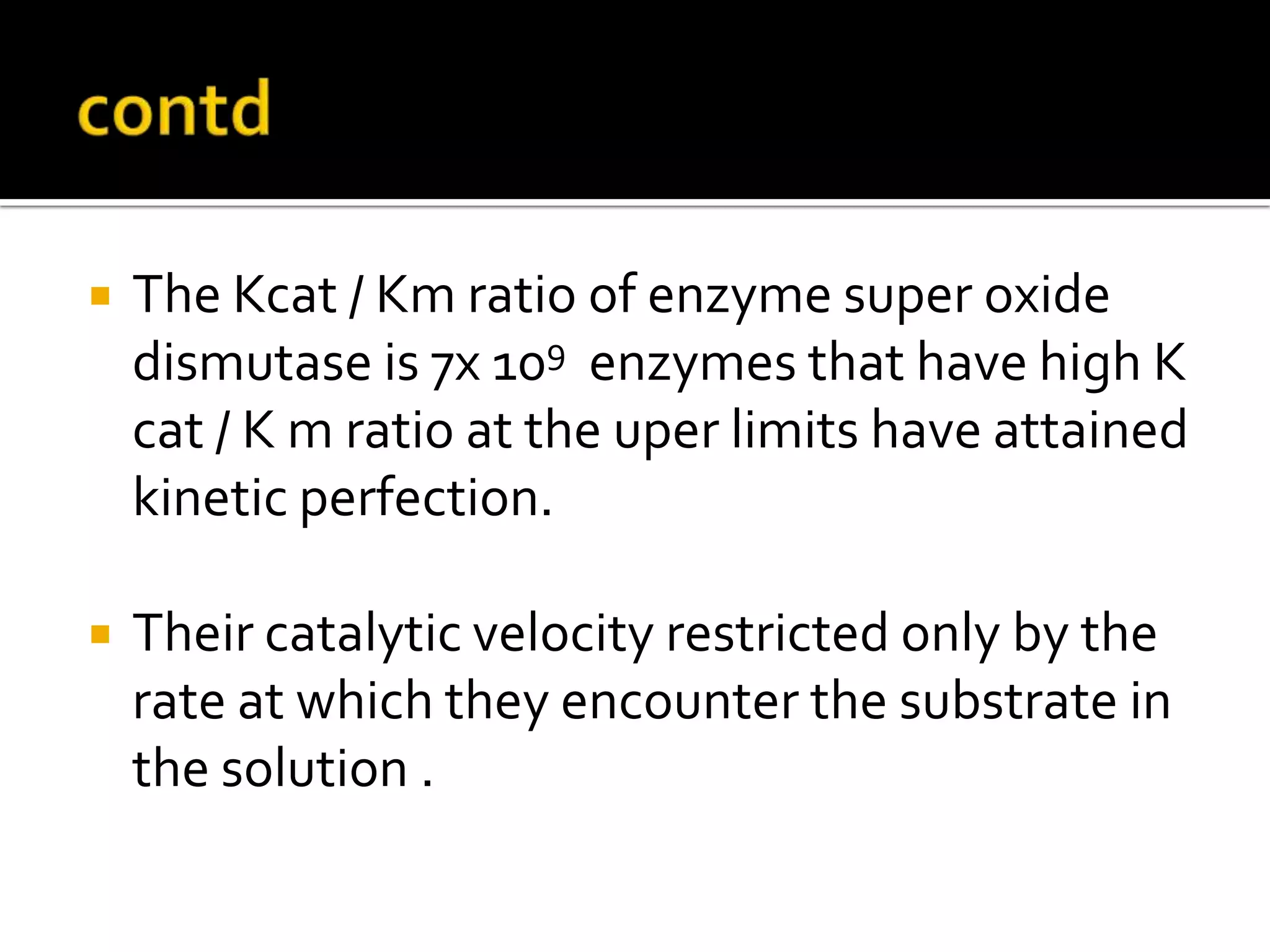
 The Kcat / Km ratio of enzyme super oxide
dismutase is 7x 10⁹ enzymes that have high K
cat / K m ratio at the uper limits have attained
kinetic perfection.
 Their catalytic velocity restricted only by the
rate at which they encounter the substrate in
the solution .
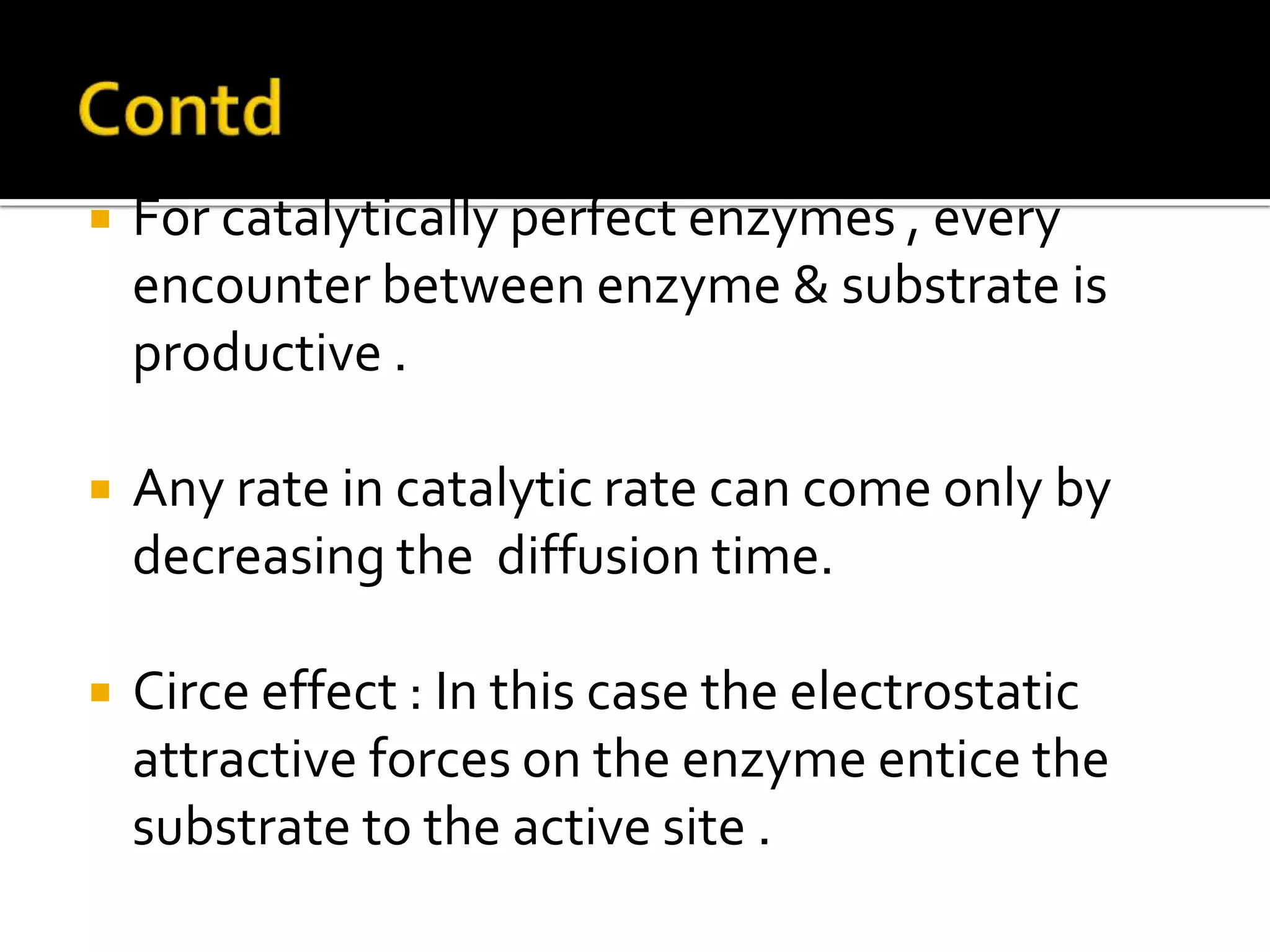
 For catalytically perfect enzymes , every
encounter between enzyme & substrate is
productive .
 Any rate in catalytic rate can come only by
decreasing the diffusion time.
 Circe effect : In this case the electrostatic
attractive forces on the enzyme entice the
substrate to the active site .
 Catalase decreases the free energy of
activation ∆G 1 of H2O2.
 In the absence of catalase ∆G1 free energy of
activation is 18Kcal / mol where as in the
presence of catalase 7 Kcal / mol .
 K cat / Km value of catalase is 4 X 10⁷.
 Catalase is a heme protein containing 4 heme
groups .
 In addition to possessing peroxidase activity ,
it is able to use one molecule of H2O2 as a
substrate electron donor & another molecule
of H2O2 as oxidant or electron acceptor .
catalase
2H2O2 2H2O+O2
 This enzyme is remarkable in containing a
modified aminoacid selenocystein at its
active site in which selenium has replaced the
sulphur .
 The enzyme catalyzes the destruction of
H2O2 & lipid hydroperoxides by reduced
glutathione , protecting the membrane lipids
& hemoglobin against oxidation by peroxides
.
 Vitamin E : lipid soluble , chain breaking
antioxidant.
 βcarotene & its anologues (lycopene & retinyl
stearate ): lipid soluble radical scavenger & singlet
oxygen quencher .
 Coenzyme Q : may acts as antioxidant in addition to
its major role in energy metabolism .
 Transferrin : binds ferric ions ( 2 per mole of
protein )
 Lactoferrin : binds ferric ions at low pH ( 2 per
mole of protein )
 Haptoglobins : binds hemoglobin
 Albumin : binds copper , heme , scavenges
OH.
 Ceruloplasmin : ferrooxidase activity –
stoichiometricO2 scavenging ,binds copper
ions utilizes H2O2 for reoxidation of copper .
 Ascorbic acid OH radical scavenger
 Bilirubin : scavenges peroxyl radicals, open
chain tetra pyrroles are effective singlet
oxygen quenchers .
 Urate : radical scavenger & metal binder
 Mucus : scavenges OH radicals
 Glucose : OH radical scavenger .
 Water soluble : urate , ascorbates ,
thiols ,bilirubin,
flavanoids.
 Lipid soluble : tocopherol ,
ubiquinol 10 ,
β carotene .
 Urate & vitamin E acts in lipid phase to trap
ROO· radicals .
 Preventive antioxidants reduces the rate of
chain intiation .
 Preventive antioxidants include
Catalase , peroxidases ,
Ceruloplasmin , transferrin , albumin.
 EDTA , DTPA acts anti xidants by chelating
metal ions .
 Vitamin E is most important natural
antioxidant .
 Vitamin E apear to be the 1st line defense
against peroxidation of PUFA contained in
cellular & subcellular membrane
phospholipids .
 The phospholipids of mitochondria,
endoplasmic reticulum & plasma membranes
possess affinities for α tocoferol &
vitamin appears to concentrate at these sites.
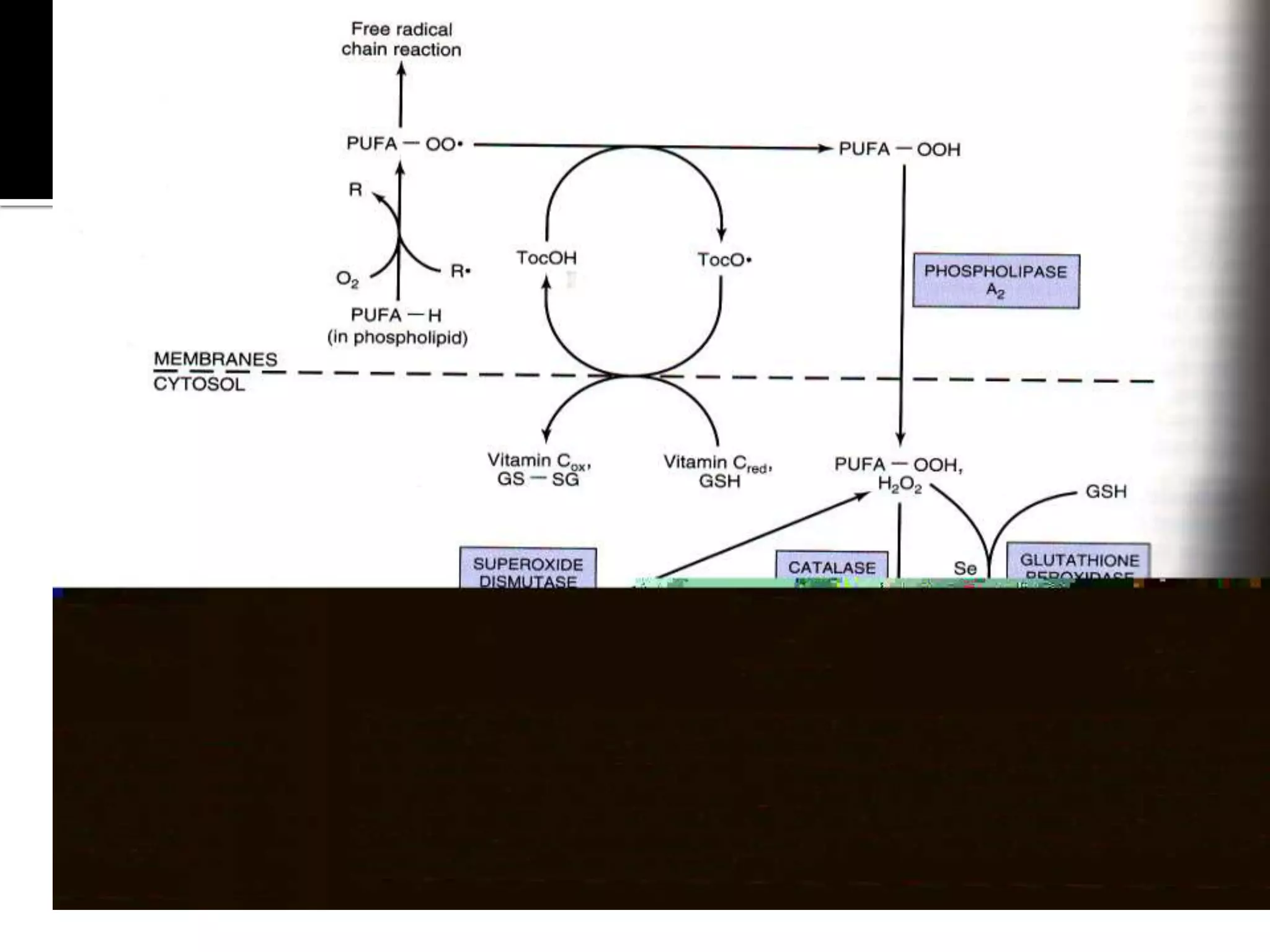
 The tocopherools acts as antioxidants by
breaking free radical chain reactions as a
result of their ability to tranfer a phenolic
hydrogen to peroxyl free radical of a
peroxidized PUFA .
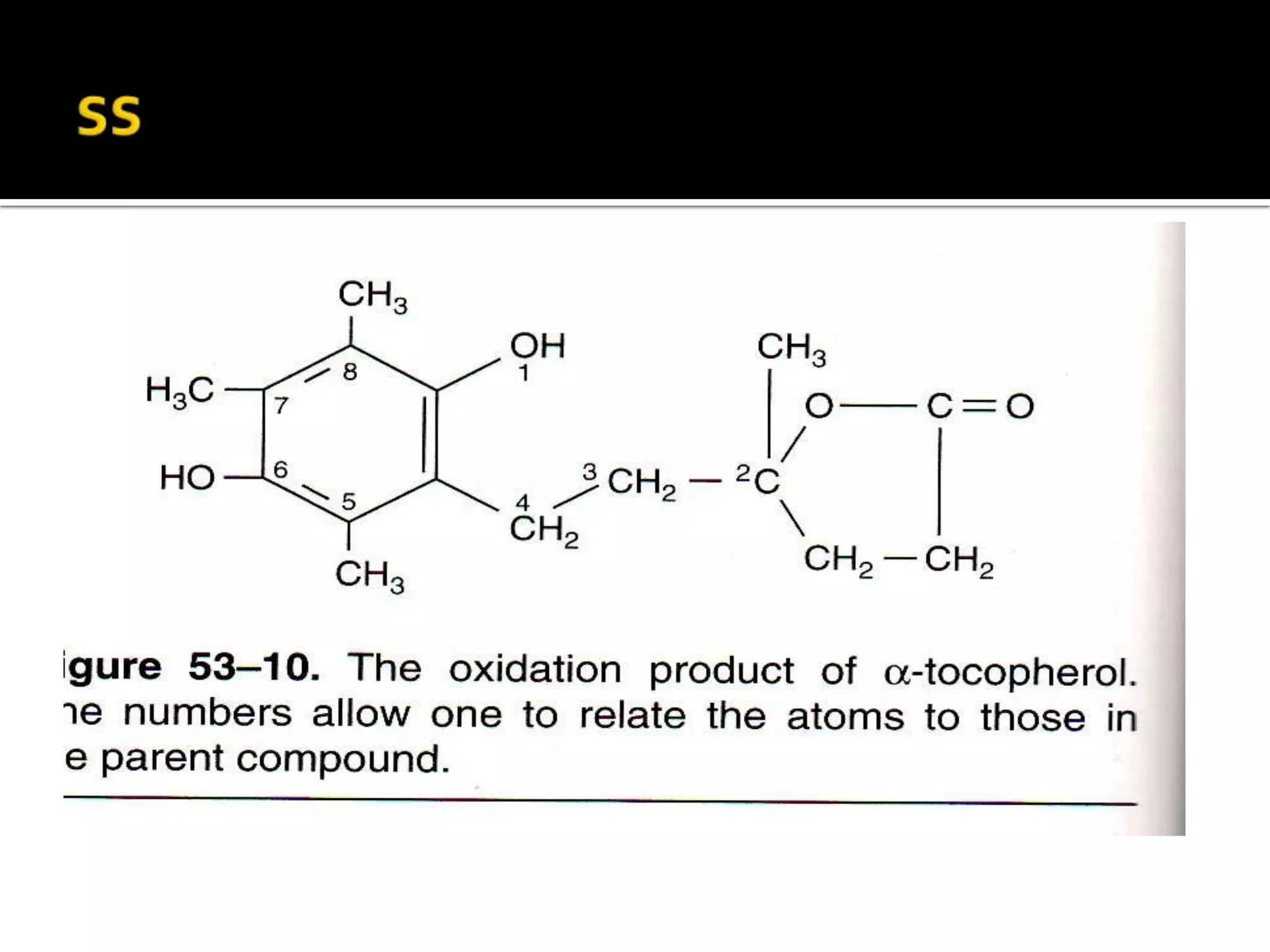
 The phenoxy free radical may react with
vitaminC to regenerate tocopherol or it react
with further peroxyl free radicl so that the
chromane ring & the side chain are oxidized
to the non free radical product.
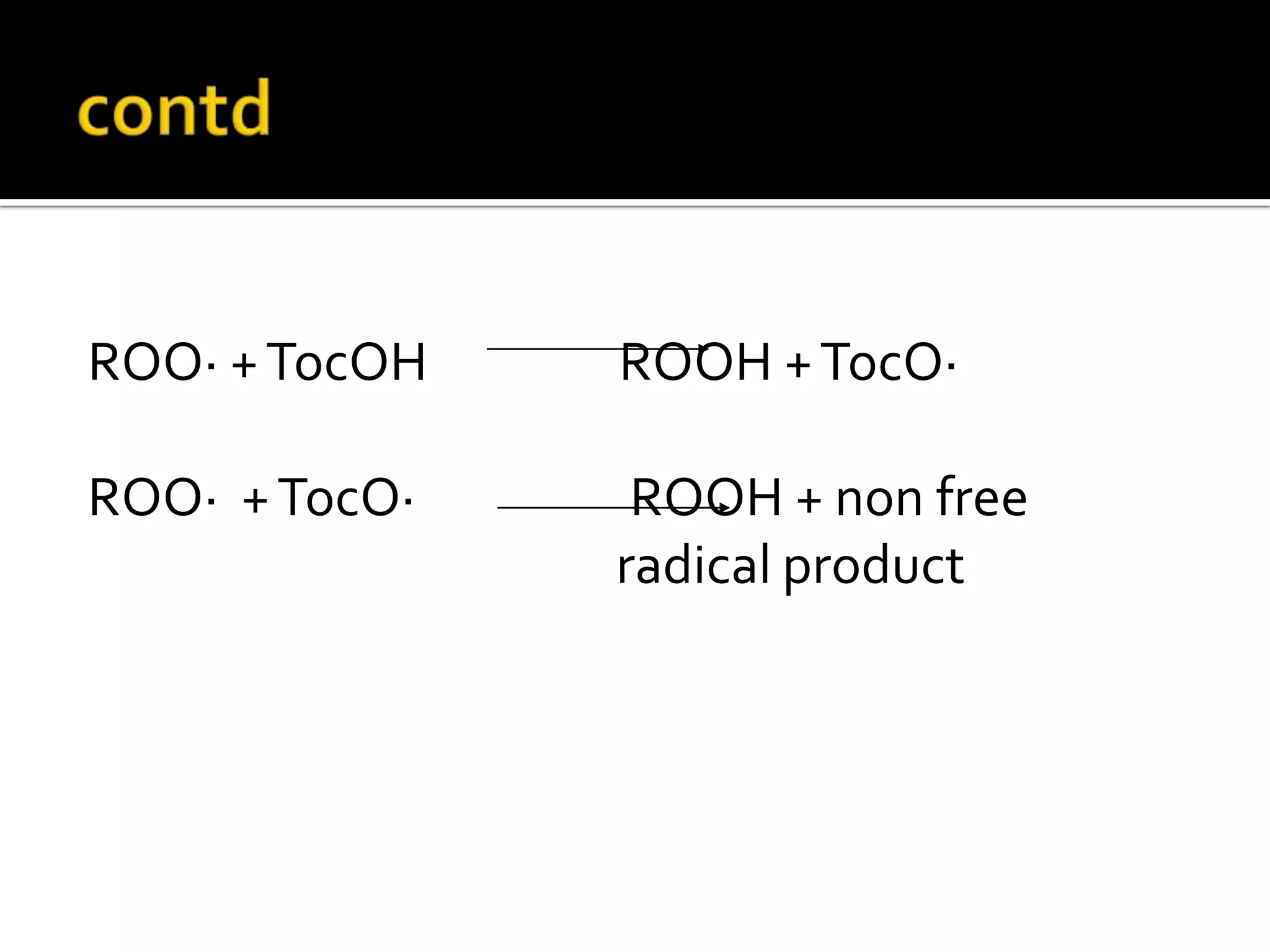
ROO· +TocOH ROOH +TocO·
ROO· +TocO· ROOH + non free
radical product
ROO· +TocOH ROOH +TocO·
ROO· +TocO· ROOH + non free
radical product
 The antioxidant action of vitamin E is
effective at high oxygen concentrations , & it
is concentrated in lipid structures exposed to
highO2 partial pressures such as the
erythrocyte membrane , membranes of
respiratory tree & the retina.
 Glutathione peroxidase contains Selenium,
provides a second line of defense against
hydroperoxides.
 Tocopherol & selenium reinforce each other
in their action against lipid peroxides.
 Selenium is required for normal pancreatic
function thus promoting absorption of lipids
& vit E.
 Vitamin E reduces selenium requirement by
preventing loss of selenium from the body or
maintaining it in an active form .
 α tocopherol appears to play a role in cellular
respiration either by stabilizing ubiquinone or
by helping transfer of electrons to ubiquinone
.
 Carotenoids are capble of quenching singlet
molecular oxygen .
 Carotenoids like lycopene ,β carotene , are
important biological molecules that can
inactivate electronically excited molecules by
process called quenching.
 βcarotene & related compounds can acts as
chain breaking antioxidant
 Can acts as preventive antioxidant by
decreasing the formation of methyl linoleate
hydroperoxide .
 βcarotene & related compounds can acts as
chain breaking antioxidant.
 Can acts as preventive antioxidant by
decreasing the formation of methyl linoleate
hydroperoxide .
 Singlet oxygen is capable of inducing damage
to the DNA
 Lycopene shows greater quenching ability
than βcarotene (double ability )
 Comparing the structures opening of the β
ionine ring increases the quenching ability.
 Quenching ability of cartenoids not only
depends on triplet energy state that is the
length of the conjugated double bond system
but also on the functional groups .
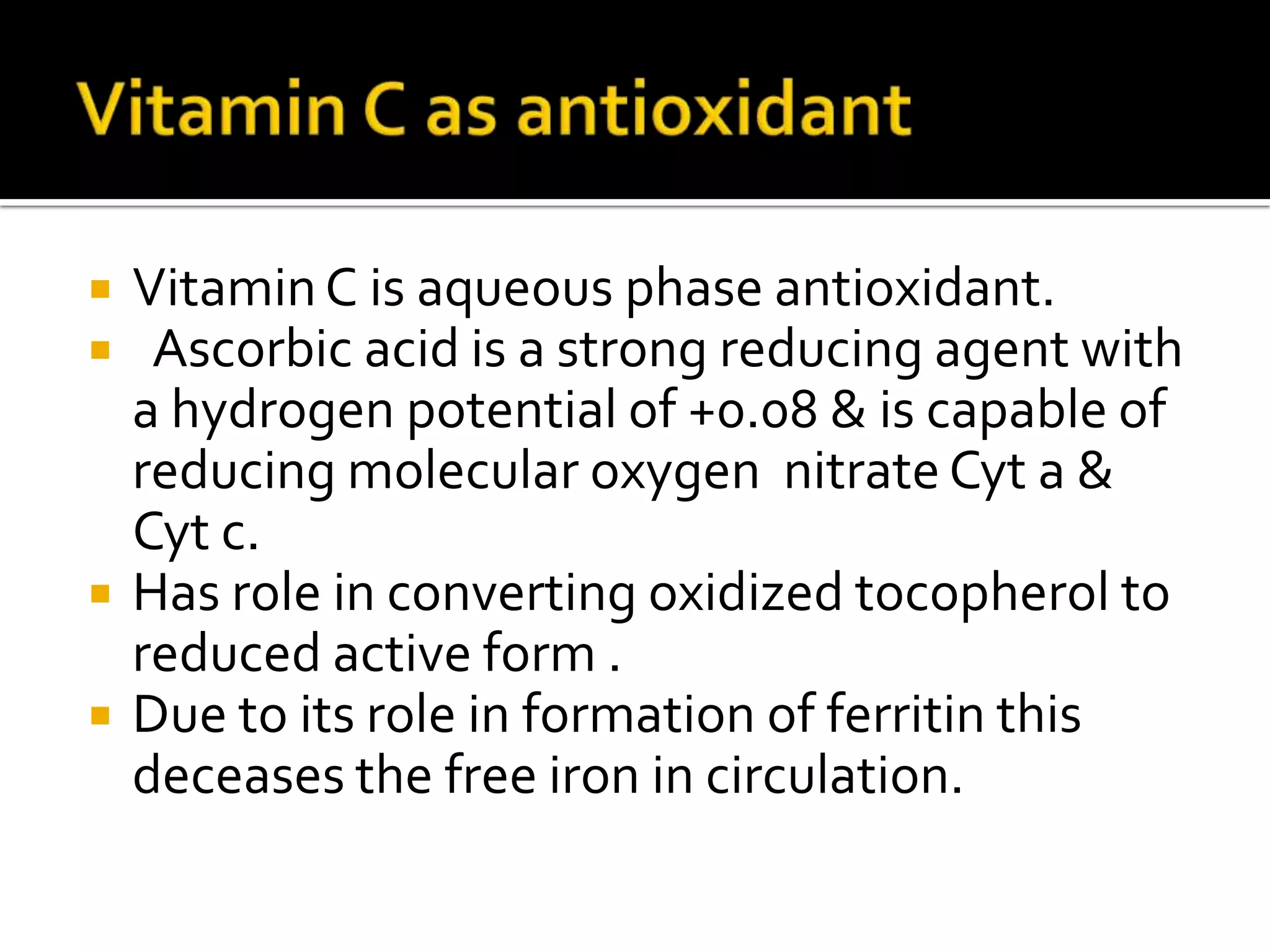
 VitaminC is aqueous phase antioxidant.
 Ascorbic acid is a strong reducing agent with
a hydrogen potential of +0.08 & is capable of
reducing molecular oxygen nitrate Cyt a &
Cyt c.
 Has role in converting oxidized tocopherol to
reduced active form .
 Due to its role in formation of ferritin this
deceases the free iron in circulation.
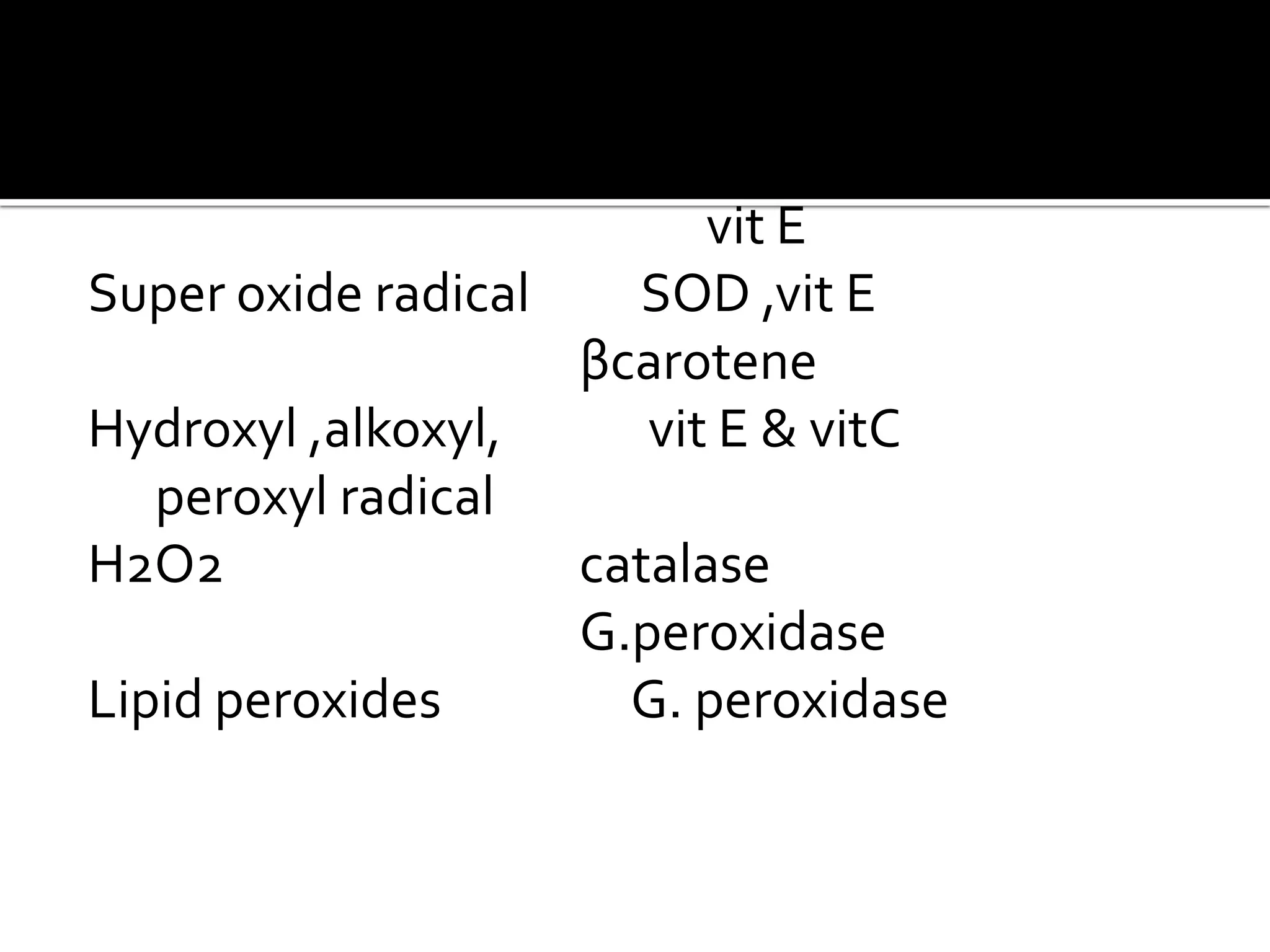
Reactivespecies antioxidant
singlet oxygen vit A , βcarotene
vit E
Super oxide radical SOD ,vit E
βcarotene
Hydroxyl ,alkoxyl, vit E & vitC
peroxyl radical
H2O2 catalase
G.peroxidase
Lipid peroxides G. peroxidase
 Free radical injury is seen in
1) Atherogenesis
2) Cerebrovascular disorders
3) Emphysema , bronchitis & ARDS
4) Chronic inflammatiion & acute inflammation
.
5) Retrolental fibroplasia (retinopathy of
prematurity ) , cataract .
6) diabetes
7) Alcoholic liver disease
8)Amyotropic lateral sclerosis
9)Ageing process & alzheimer’s disease
10)parkinson’s disease
11)Hemochromatosis
12) Cervical cancer
13)Ischemia reperfusion injury
14)Acute renal failure
15)Down syndrome
16) Shock related injury
Free radicles

Free radicles

  • 2.
     Definition: Free radicalis a molecule or molecular fragment that contains one or more unpaired electrons in its outer orbits.
  • 4.
     Free radicalsconventionally represented by super script dot R•  Characteristics of free radicals : 1 )Tendency of free radicals to acquire electrons from other substance makes it more reactive. 2 )Short life span 3 )Generation of new free radicals by chain reaction. 4 )Damage to various tissues.
  • 5.
     Partial reductionof oxygen leads to formation of free radicals called as reactive oxygen species .The following are members of this group. Super oxide anion radical (O2 · ) Hydroperoxy radicals ( HOO· ) Hydroxyl radical ( OH· ) Lipid peroxyl radical ( ROO· ) Nitric oxide ( NO· ) , Peroxy nitrite (ONOO · ) H2O2 , singlet oxygen (are not free radicals)
  • 6.
     Free radiclesare generated in oxidative metabolism due to leak of electrons .  Flavoprotein linked oxidases like xanthine oxidase , L α amino acid oxidase .  Super oxide is formed by autooxidation of hemoglobin to methemoglobin (approximately 3 % of the Hb has been calculated to autooxidise per day )
  • 7.
     Cyclooxygenase &lipoxygenase reactions in metabolism of eicosanoids.  NADPH oxidase system of inflammatory cells by process of respiratory burst during phase of phagocytosis.  Free iron causes increased production of free radicals .
  • 8.
     Free radicalsare formed cytochrome P450 reductase enzyme complex durinrg metabolism of xenobiotics .  β oxidation of very long chain fatty acids in peroxisomes produces H2O2 .
  • 9.
     Transfer of4 electrons from reduced cytochrome C to molecular oxygen assisted by cytochrome oxidase  Transfer of 4 electrons lead to safe product H2O .  Site of electron escape appears to be ubiquinone & cytochrome C .
  • 10.
     Cytochrome Coxidase does not release partially reduced intermediates , this crucial criterion meets by holding O2 tightly between Fe & Cu atoms .
  • 11.
     Although CytC oxidase & other protiens that reduce O2 are remarkably successful in not releasing intermediates , small amounts of super oxide & peroxyl radicals are unavoidably formed.  About 1-4 % of oxygen taken up in the body is converted to free radical .
  • 13.
     Flavoprotien linkedoxidases 1 ) Xanthine oxidase , 2) L α amino acid oxidase , 3 ) Aldehyde dehydrogenase .  Reduction of isoalloxazine ring of flavin nucleotides takes place in 2 steps via a semiquinone ( free radical ) intermediate.
  • 14.
    xanthine oxidase Hypoxanthine xanthine O2O2 · acetaldehyde dehydrogenase Acetaldehyde acetate O2 O2 ·
  • 16.
     NADPH oxidaseinflammatory cell produce supere oxide anion by a process of respiratory burst during phagocytosis.  This is the deliberate production of free radicals by the body .
  • 17.
    activation of inflammatorycell drastic increase in consumption of oxygen (respiratory burst ) 10% of oxygen uptake by macrophage is used for free radical generation .
  • 19.
     In chronicgranulomatous disease the NADPH oxidase is absent in macrophages & neutrophils .  Streptococci & pneumococci themselves produce H2O2 therefore they are destroyed by myeloperoxidase system .
  • 20.
     Staphylococci beingcatalase + ve can detoxify H2O2 in the macrophages & they are not destroyed .  Hence recurrent pyogenic infections by staphylococci are common in CGD .
  • 21.
     Prodstaglandin Hsynthase & lipooxygenase enzyme catalysed reactions produce free radicals , by producing peroxide .  Macrophages produce NO from arginine by enzyme nitric oxide synthase , this is also an important anti bacterial mechanism .
  • 22.
     Super oxideion can release iron from ferritin .
  • 23.
     The capacityto produce tissue damage by H2O2 is minimal because this is not a free radical . But in the presence of free iron H2O2 can generate hydroxyl free radical (OH ·)which is highly reactive.
  • 25.
     Ionising radiationdamages tissues by producing hydroxylradical , H2O2 ,super oxide anion .  Light of appropriate wave length can cause photolysis of oxygen to produce singlet oxygen .  Cigarette smoking contains high concentrations of free radicals.  Other toxic compounds CCl4 drugs & inhalation of air pollutants will increase free radical production .
  • 26.
     Polyunsaturated fattyacids present in cell membranes are destroyed by peroxidation.  This occurs by three phases. 1 )intiation phase 2 )prolangation phase 3 )termination phase
  • 27.
     Production ofcarbon centered free radical R· ( or ) ROO· (lipid peroxide radical ) 1 )RH +OH· R· + H2O metal ion 2 )ROOH ROO· + H+ R· , ROO· degraded to malon dialdehyde . It is estimated as an indicator of fatty acid break down by free radical .
  • 28.
     Carbon centeredradical rapidly reacts with molecular oxygen forms peroxyl radical (ROO· ) which can attack another PUFA . R· + O2 ROO· ROO· + RH ROOH + R·  One free radical generates another free radical in the neighbouring molecule a chain reaction (or) propagation is intiated .
  • 29.
     The abovereactions would proceed unchecked till a peroxyl radical reacts with another peroxyl radical to form inactive products . ROO· + ROO· RO- -OR+O2 R· + R· R - - R ROO· + R· RO- -OR
  • 30.
     Super oxidedismutase  Catalase  Glutathione peroxidase  Cytochrome oxidase
  • 32.
     Chief amongstthe enzymes that defense against ROS is super oxide dismutase .  Super oxide dismutase is present in all major aerobic tissues .  Eukaryote contains 2 forms of this enzyme, 1 ) Copper Zinc dependent cytosolic enzyme 2 ) manganese containing mitochondrial enzyme .
  • 35.
     The activesite of cytosolic enzyme in eukaryotes contains a copper ion & Zinc ion coordinated to the side chain of a histidine residue .  The negatively charged superoxide is guided electrostatically to a very positively charged catlytic site at the bottom of the channel .
  • 37.
     H2O2 formedby SOD & by other processes is scavenged by catalase ( a ubiquitous heme protein that catalyze the dismutation of H2O2 into H2O & O2.)  Catalase is found in blood bone marrow mucous membranes , liver & kidney .  SOD & catalase are remarkably efficient , performing their reactions at or near the diffusion limited rate.
  • 38.
     The Kcat/ Km ratio of enzyme super oxide dismutase is 7x 10⁹ enzymes that have high K cat / K m ratio at the uper limits have attained kinetic perfection.  Their catalytic velocity restricted only by the rate at which they encounter the substrate in the solution .
  • 39.
     For catalyticallyperfect enzymes , every encounter between enzyme & substrate is productive .  Any rate in catalytic rate can come only by decreasing the diffusion time.  Circe effect : In this case the electrostatic attractive forces on the enzyme entice the substrate to the active site .
  • 40.
     Catalase decreasesthe free energy of activation ∆G 1 of H2O2.  In the absence of catalase ∆G1 free energy of activation is 18Kcal / mol where as in the presence of catalase 7 Kcal / mol .  K cat / Km value of catalase is 4 X 10⁷.
  • 41.
     Catalase isa heme protein containing 4 heme groups .  In addition to possessing peroxidase activity , it is able to use one molecule of H2O2 as a substrate electron donor & another molecule of H2O2 as oxidant or electron acceptor . catalase 2H2O2 2H2O+O2
  • 43.
     This enzymeis remarkable in containing a modified aminoacid selenocystein at its active site in which selenium has replaced the sulphur .  The enzyme catalyzes the destruction of H2O2 & lipid hydroperoxides by reduced glutathione , protecting the membrane lipids & hemoglobin against oxidation by peroxides .
  • 47.
     Vitamin E: lipid soluble , chain breaking antioxidant.  βcarotene & its anologues (lycopene & retinyl stearate ): lipid soluble radical scavenger & singlet oxygen quencher .  Coenzyme Q : may acts as antioxidant in addition to its major role in energy metabolism .
  • 48.
     Transferrin :binds ferric ions ( 2 per mole of protein )  Lactoferrin : binds ferric ions at low pH ( 2 per mole of protein )  Haptoglobins : binds hemoglobin  Albumin : binds copper , heme , scavenges OH.  Ceruloplasmin : ferrooxidase activity – stoichiometricO2 scavenging ,binds copper ions utilizes H2O2 for reoxidation of copper .
  • 49.
     Ascorbic acidOH radical scavenger  Bilirubin : scavenges peroxyl radicals, open chain tetra pyrroles are effective singlet oxygen quenchers .  Urate : radical scavenger & metal binder  Mucus : scavenges OH radicals  Glucose : OH radical scavenger .
  • 50.
     Water soluble: urate , ascorbates , thiols ,bilirubin, flavanoids.  Lipid soluble : tocopherol , ubiquinol 10 , β carotene .  Urate & vitamin E acts in lipid phase to trap ROO· radicals .
  • 51.
     Preventive antioxidantsreduces the rate of chain intiation .  Preventive antioxidants include Catalase , peroxidases , Ceruloplasmin , transferrin , albumin.  EDTA , DTPA acts anti xidants by chelating metal ions .
  • 52.
     Vitamin Eis most important natural antioxidant .  Vitamin E apear to be the 1st line defense against peroxidation of PUFA contained in cellular & subcellular membrane phospholipids .  The phospholipids of mitochondria, endoplasmic reticulum & plasma membranes possess affinities for α tocoferol & vitamin appears to concentrate at these sites.
  • 53.
     The tocopheroolsacts as antioxidants by breaking free radical chain reactions as a result of their ability to tranfer a phenolic hydrogen to peroxyl free radical of a peroxidized PUFA .  The phenoxy free radical may react with vitaminC to regenerate tocopherol or it react with further peroxyl free radicl so that the chromane ring & the side chain are oxidized to the non free radical product.
  • 54.
    ROO· +TocOH ROOH+TocO· ROO· +TocO· ROOH + non free radical product
  • 55.
    ROO· +TocOH ROOH+TocO· ROO· +TocO· ROOH + non free radical product
  • 57.
     The antioxidantaction of vitamin E is effective at high oxygen concentrations , & it is concentrated in lipid structures exposed to highO2 partial pressures such as the erythrocyte membrane , membranes of respiratory tree & the retina.
  • 58.
     Glutathione peroxidasecontains Selenium, provides a second line of defense against hydroperoxides.  Tocopherol & selenium reinforce each other in their action against lipid peroxides.  Selenium is required for normal pancreatic function thus promoting absorption of lipids & vit E.
  • 59.
     Vitamin Ereduces selenium requirement by preventing loss of selenium from the body or maintaining it in an active form .  α tocopherol appears to play a role in cellular respiration either by stabilizing ubiquinone or by helping transfer of electrons to ubiquinone .
  • 60.
     Carotenoids arecapble of quenching singlet molecular oxygen .  Carotenoids like lycopene ,β carotene , are important biological molecules that can inactivate electronically excited molecules by process called quenching.  βcarotene & related compounds can acts as chain breaking antioxidant
  • 61.
     Can actsas preventive antioxidant by decreasing the formation of methyl linoleate hydroperoxide .  βcarotene & related compounds can acts as chain breaking antioxidant.  Can acts as preventive antioxidant by decreasing the formation of methyl linoleate hydroperoxide .  Singlet oxygen is capable of inducing damage to the DNA
  • 62.
     Lycopene showsgreater quenching ability than βcarotene (double ability )  Comparing the structures opening of the β ionine ring increases the quenching ability.  Quenching ability of cartenoids not only depends on triplet energy state that is the length of the conjugated double bond system but also on the functional groups .
  • 63.
     VitaminC isaqueous phase antioxidant.  Ascorbic acid is a strong reducing agent with a hydrogen potential of +0.08 & is capable of reducing molecular oxygen nitrate Cyt a & Cyt c.  Has role in converting oxidized tocopherol to reduced active form .  Due to its role in formation of ferritin this deceases the free iron in circulation.
  • 64.
    Reactivespecies antioxidant singlet oxygenvit A , βcarotene vit E Super oxide radical SOD ,vit E βcarotene Hydroxyl ,alkoxyl, vit E & vitC peroxyl radical H2O2 catalase G.peroxidase Lipid peroxides G. peroxidase
  • 65.
     Free radicalinjury is seen in 1) Atherogenesis 2) Cerebrovascular disorders 3) Emphysema , bronchitis & ARDS 4) Chronic inflammatiion & acute inflammation . 5) Retrolental fibroplasia (retinopathy of prematurity ) , cataract . 6) diabetes 7) Alcoholic liver disease
  • 66.
    8)Amyotropic lateral sclerosis 9)Ageingprocess & alzheimer’s disease 10)parkinson’s disease 11)Hemochromatosis 12) Cervical cancer 13)Ischemia reperfusion injury 14)Acute renal failure 15)Down syndrome 16) Shock related injury