
Reactive Oxygen Species,
Antioxidants and its
therapeutic implication
Dr. Rupali Arun Patil
Associate Professor,
GES’s Sir Dr. M. S. Gosavi College of
Pharmaceutical Education & Research, Nasik-5
CONTENTS
 Introduction
 Free radicals
 Reactive Oxygen Species (ROS)
 Sources of free radicals
 Mechanism of cell damage
 Antioxidant
 Natural antioxidants
 Antioxidant protection system
 Oxidative stress and human disease
 Antioxidant plants
 References
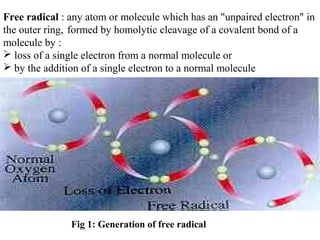
Free radical : any atom or molecule which has an "unpaired electron" in
the outer ring, formed by homolytic cleavage of a covalent bond of a
molecule by :
 loss of a single electron from a normal molecule or
 by the addition of a single electron to a normal molecule
Fig 1: Generation of free radical
 Free radicals are electrically charged molecules. i.e. they have an
unpaired electron, which cause them to seek out and capture
electron from other substance in order to neutralize themselves.
 Although the initial attack cause the free radical to become
neutralized, another free radical is formed in this process, causing a
chain reaction to occur.
 And until subsequent free radicals are deactivated, thousand of free
radical reaction can occur within second of the initial reaction.
 Antioxidants are capable of stabilizing or deactivating free radical
before they attack cells.
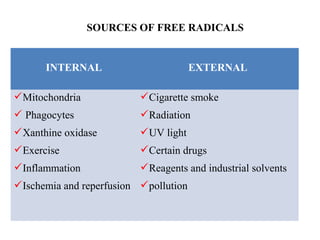
INTERNAL EXTERNAL
Mitochondria
 Phagocytes
Xanthine oxidase
Exercise
Inflammation
Ischemia and reperfusion
Cigarette smoke
Radiation
UV light
Certain drugs
Reagents and industrial solvents
pollution
SOURCES OF FREE RADICALS
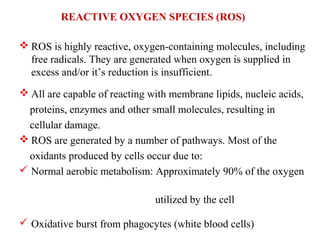
REACTIVE OXYGEN SPECIES (ROS)
 ROS is highly reactive, oxygen-containing molecules, including
free radicals. They are generated when oxygen is supplied in
excess and/or it’s reduction is insufficient.
 All are capable of reacting with membrane lipids, nucleic acids,
proteins, enzymes and other small molecules, resulting in
cellular damage.
 ROS are generated by a number of pathways. Most of the
oxidants produced by cells occur due to:
 Normal aerobic metabolism: Approximately 90% of the oxygen
utilized by the cell
 Oxidative burst from phagocytes (white blood cells)
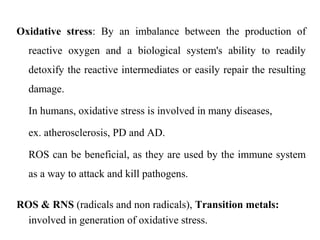
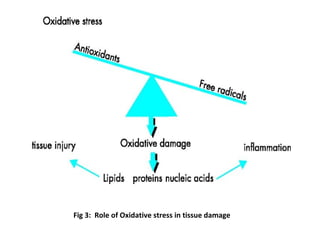
Oxidative stress: By an imbalance between the production of
reactive oxygen and a biological system's ability to readily
detoxify the reactive intermediates or easily repair the resulting
damage.
In humans, oxidative stress is involved in many diseases,
ex. atherosclerosis, PD and AD.
ROS can be beneficial, as they are used by the immune system
as a way to attack and kill pathogens.
ROS & RNS (radicals and non radicals), Transition metals:
involved in generation of oxidative stress.
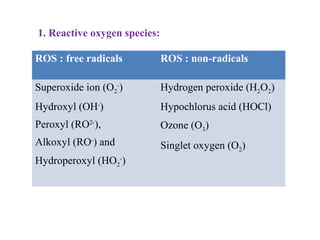
ROS : free radicals ROS : non-radicals
Superoxide ion (O2
-
)
Hydroxyl (OH-
)
Peroxyl (RO2-
),
Alkoxyl (RO-
) and
Hydroperoxyl (HO2
-
)
Hydrogen peroxide (H2O2)
Hypochlorus acid (HOCl)
Ozone (O3)
Singlet oxygen (O2)
1. Reactive oxygen species:
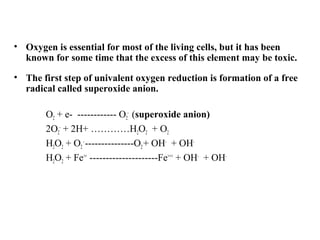
• Oxygen is essential for most of the living cells, but it has been
known for some time that the excess of this element may be toxic.
• The first step of univalent oxygen reduction is formation of a free
radical called superoxide anion.
O2 + e- ------------ O2
-
(superoxide anion)
2O2
-
+ 2H+ …………H2O2 + O2
H2O2 + O2
-
---------------O2+ OH-
+ OH-
H2O2 + Fe++
---------------------Fe+++
+ OH-
+ OH-
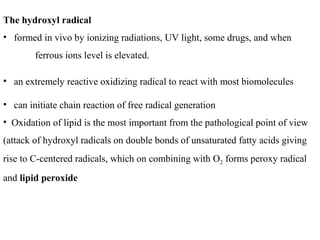
The hydroxyl radical
• formed in vivo by ionizing radiations, UV light, some drugs, and when
ferrous ions level is elevated.
• an extremely reactive oxidizing radical to react with most biomolecules
• can initiate chain reaction of free radical generation
• Oxidation of lipid is the most important from the pathological point of view
(attack of hydroxyl radicals on double bonds of unsaturated fatty acids giving
rise to C-centered radicals, which on combining with O2 forms peroxy radical
and lipid peroxide
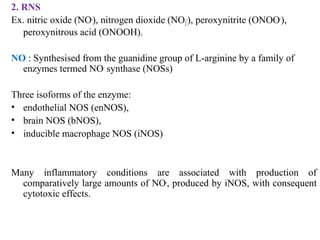
2. RNS
Ex. nitric oxide (NO.
), nitrogen dioxide (NO2
.
), peroxynitrite (ONOO-
),
peroxynitrous acid (ONOOH).
NO.
: Synthesised from the guanidine group of L-arginine by a family of
enzymes termed NO.
synthase (NOSs)
Three isoforms of the enzyme:
• endothelial NOS (enNOS),
• brain NOS (bNOS),
• inducible macrophage NOS (iNOS)
Many inflammatory conditions are associated with production of
comparatively large amounts of NO.
, produced by iNOS, with consequent
cytotoxic effects.
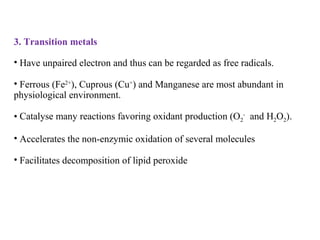
3. Transition metals
• Have unpaired electron and thus can be regarded as free radicals.
• Ferrous (Fe2+
), Cuprous (Cu+
) and Manganese are most abundant in
physiological environment.
• Catalyse many reactions favoring oxidant production (O2
-
and H2O2).
• Accelerates the non-enzymic oxidation of several molecules
• Facilitates decomposition of lipid peroxide
ANTIOXIDANTS
 A substance that prevents or slows the breakdown of another
substance by oxygen.
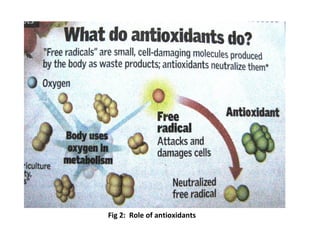
 Chemical substances that donate an electron to the free radical and
convert it to a harmless molecule & prevents the oxidation of other
chemicals.
 They are used by the body to protect itself from damage caused by
oxidation.
 Oxidation is a process that causes damage in our tissues through
the work of free radicals.
Fig 2: Role of antioxidants
Fig 3: Role of Oxidative stress in tissue damage
ANTIOXIDANT PROTECTION SYSTEM
 Endogenous Antioxidants
 Bilirubin, Thiols, e.g., glutathione, lipoic acid, N-acetyl cysteine, NADPH and
NADH, Uric acid
 Enzymes:
– Copper/Zinc and manganese-dependent superoxide dismutase (SOD)
– Iron-dependent catalase
– Selenium-dependent glutathione peroxidase
 Dietary Antioxidants
 Vitamin C, Vitamin E, Beta carotene and other carotenoids and oxycarotenoids,
e.g., Lycopene and lutein
 Polyphenols, e.g. flavonoids, flavones, flavonols and proanthocyanidins
 Metal Binding Proteins
 Albumin (copper), Ceruloplasmin (copper), Metallothionein (copper), Ferritin
(iron), Myoglobin (iron), Transferrin (iron)
NATURAL ANTIOXIDANTS
Differ in their composition, their physical and chemical properties, their mechanism
and site of action.
 Enzymes: Superoxide dismutase(SOD), Catalase(CAT), Reduced glutathione
(GSH), Glutathione peroxidase (GPx)
 High molecular weight compounds (proteins): Albumin, Transferin, Haptoglobin
 Low molecular weight compounds:
a) Lipid soluble antioxidants: Tocopherol, Carotenoids, Quinine
and some Polyphenols,
b) Water soluble antioxidants: Ascorbic acid, Uric acid and some
Polyphenols.
 Minerals: Selenium, Manganese, Copper, Zinc
 Vitamins: Vitamin A, C, and E.
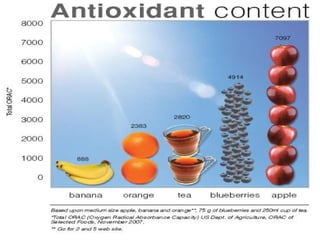
 Plants antioxidants: Soyabean, Citrus peel, Sesame seed, Grapes and
wines, Tomato, Orange, Apple, Ashwagandha, Carrot,
Liquorice, Amla.
DEFENCE AGAINST ROS:
a. Primary defense
b. Secondary defense
a. Primary defense against ROS: catalytic removal of ROS by
antioxidant enzymes
 Superoxide dismutase (SOD)
 Catalase (CAT)
 Peroxidases (ex. Lipid peroxidase)
SOD lowers the steady state level of O2
CAT and peroxidases do the same for H2O2.
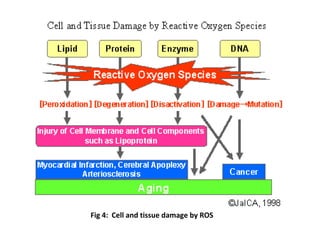
Fig 4: Cell and tissue damage by ROS
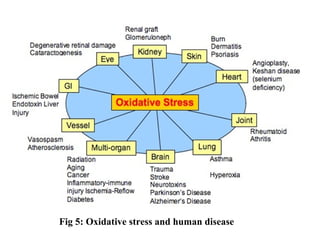
Fig 5: Oxidative stress and human disease
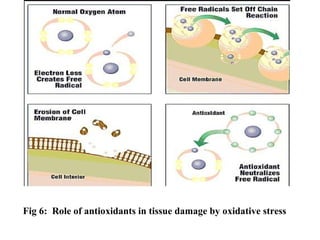
Fig 6: Role of antioxidants in tissue damage by oxidative stress
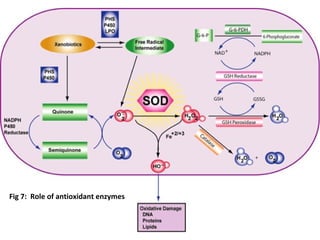
Fig 7: Role of antioxidant enzymes
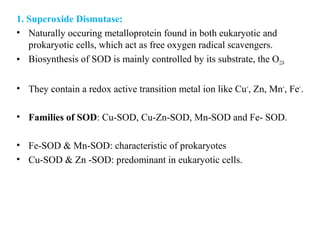
1. Superoxide Dismutase:
• Naturally occuring metalloprotein found in both eukaryotic and
prokaryotic cells, which act as free oxygen radical scavengers.
• Biosynthesis of SOD is mainly controlled by its substrate, the O224
• They contain a redox active transition metal ion like Cu+
, Zn, Mn+
, Fe+
.
• Families of SOD: Cu-SOD, Cu-Zn-SOD, Mn-SOD and Fe- SOD.
• Fe-SOD & Mn-SOD: characteristic of prokaryotes
• Cu-SOD & Zn -SOD: predominant in eukaryotic cells.
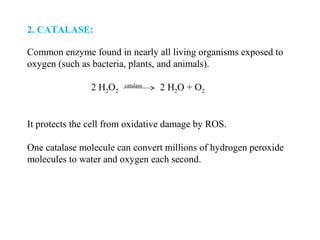
2. CATALASE:
Common enzyme found in nearly all living organisms exposed to
oxygen (such as bacteria, plants, and animals).
2 H2O2
catalase
2 H2O + O2
It protects the cell from oxidative damage by ROS.
One catalase molecule can convert millions of hydrogen peroxide
molecules to water and oxygen each second.
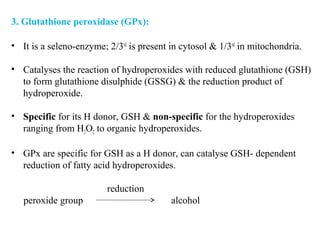
3. Glutathione peroxidase (GPx):
• It is a seleno-enzyme; 2/3rd
is present in cytosol & 1/3rd
in mitochondria.
• Catalyses the reaction of hydroperoxides with reduced glutathione (GSH)
to form glutathione disulphide (GSSG) & the reduction product of
hydroperoxide.
• Specific for its H donor, GSH & non-specific for the hydroperoxides
ranging from H2O2 to organic hydroperoxides.
• GPx are specific for GSH as a H donor, can catalyse GSH- dependent
reduction of fatty acid hydroperoxides.
reduction
peroxide group alcohol
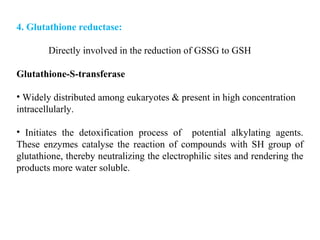
4. Glutathione reductase:
Directly involved in the reduction of GSSG to GSH
Glutathione-S-transferase
• Widely distributed among eukaryotes & present in high concentration
intracellularly.
• Initiates the detoxification process of potential alkylating agents.
These enzymes catalyse the reaction of compounds with SH group of
glutathione, thereby neutralizing the electrophilic sites and rendering the
products more water soluble.
DEFENCE AGAINST ROS:
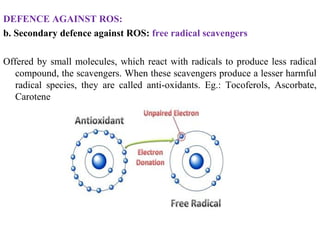
b. Secondary defence against ROS: free radical scavengers
Offered by small molecules, which react with radicals to produce less radical
compound, the scavengers. When these scavengers produce a lesser harmful
radical species, they are called anti-oxidants. Eg.: Tocoferols, Ascorbate,
Carotene
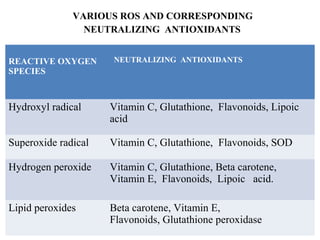
VARIOUS ROS AND CORRESPONDING
NEUTRALIZING ANTIOXIDANTS
REACTIVE OXYGEN
SPECIES
NEUTRALIZING ANTIOXIDANTS
Hydroxyl radical Vitamin C, Glutathione, Flavonoids, Lipoic
acid
Superoxide radical Vitamin C, Glutathione, Flavonoids, SOD
Hydrogen peroxide Vitamin C, Glutathione, Beta carotene,
Vitamin E, Flavonoids, Lipoic acid.
Lipid peroxides Beta carotene, Vitamin E,
Flavonoids, Glutathione peroxidase
MAJOR GROUPS OF ANTIOXIDANT 20
METABOLITES
Important groups of antioxidant activity are
 Phenol
 Phenolic acids
 Anthocyanins
 Flavones
 Flavonoids
 Flavonols
 Tannins
 Isoflavanoids
These group of compound show antioxidant activity & plant
defense mechanisms against pathogenic microoranism.
Free radical mediated diseases include-
Aging Muscular dystrophy
Rheumatoid arthritis Radiation injury
Parkinson’s dementia Retinopathy
Pulmonary fibrosis Reperfusion injury
Autoimmune diseases Liver disorders
Cancer
Cataract
Cardiovascular disorders
Atherosclerosis
Asthma
Genetic disorders
ROS & Rheumatoid arthritis
• Decreased viscosity of synovial fluids in RA patients could also be produced
by exposing synovial fluids to a system generatingO2
-
.
• The active species responsible for this damage : OH-
• An increased lipid peroxydation of synovial fluids
• The inflamed rheumatoid joint, upon movement and rest, undergoes a
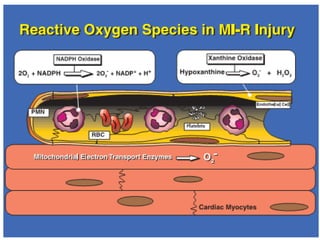
hypoxia -reperfusion cycle which results in ROS generation
• Because of a change in ATP production cycle, there occurs an increased
production of Xanthine and hypoxanthine, which are the substrates for
xanthine oxido-reductase, which in the ischemic condition of the joint, will
be converted into oxidase form and on reperfusion will generate superoxide
radicals which can dismutate to H2O2.
• The inflamed synovium is subjected to continuous micro-bleeding and there
is increased deposition of iron with ferritin which stimulates OH formation.
ROS & Liver injury
• Ethanol in the presence of cytochrome P-450 dependent systems generate
hydroxy-ethyl free radicals. This radical along with ROS triggers oxidative
damage in chronic alcohol intoxication
• As regards acute intoxication, it is likely that the excess of acetaldehyde in
the liver cytosol is oxidised by alternate pathways such as xanthine oxidase
and aldehyde oxidase with the production of superoxide radical.
Acetaldehyde undergoes reversible reactions with GSH and also with
protein (mitochondrial and plasma albumin)
• Lipid peroxidation is the most actively investigated mechanism of free
radical induced liver injury
• Ethanol poisoning enhances the oxidative breakdown of membrane lipids
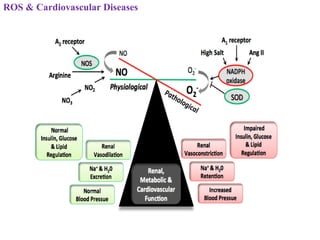
ROS & Cardiovascular Diseases
•Most of the cholesterol in the mature atherosclerotic plaque originates
from circulating LDL particles that have been ingested by sub-
endothelial macrophages.
• Oxidatively modified forms of LDL as compared to native LDL are
much more avidly taken up by macrophages which become converted to
cholesterol-laden foam cells, a characteristic histological feature of the
atherosclerotic lesion.
•Antiarrhythmic drugs have been found to inhibit the lipid peroxidation.
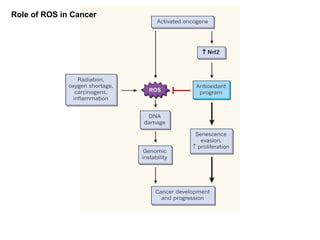
ROS and cancer
Some chemical carcinogens: act through free radical intermediates
Antioxidant molecules: intercept the carcinogenic action of a variety of
chemical carcinogens.
Hydroxyl radicals: Cause DNA damage (single strand breaks, activation
of oncogenes and inactivation of tumor suppressor genes) by
interaction of hydrogen peroxide and superoxide with transition
metals.
Role of ROS in Cancer
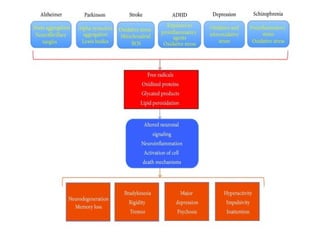
ROS and neurodegenerative disease
Oxidative stress is a key factor in various acute and chronic neurodegenerative
disease characterized by extensive cell death.
The high lipid content of the neural tissue comprises of a large number of
PUFA which are susceptible to oxidative attack. This causes changes in
membrane fluidity, permeability, and cellular metabolic function.
The high level of brain iron is essential particularly during development, but its
presence also means injury to brain cells, through iron catalyzed reaction of
ROS.
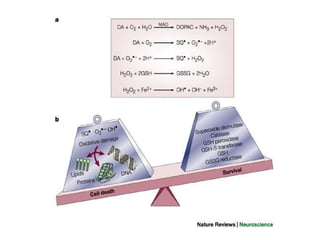
• In PD, oxidative metabolism of DA is associated with generation of
hydrogen peroxide and the formation of neurotoxin 6-OH DA.
• In PD, concentration of the antioxidant GSH in the substantia is decreased as
compared to other brain areas.
• Decreased levels of antioxidant enzyme activity and increased lipid
peroxidation has been observed in the substantia nigra.
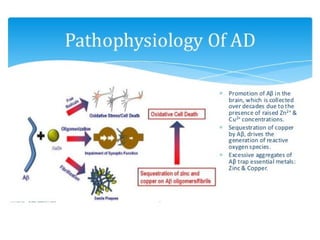
Similar increased lipid peroxidation and oxidation of DNA and proteins
are seen in AD and in Huntington’s disease.
Identification using elemental microprobes NMR analytical techniques,
of an aluminosilicate core present in senile plaques can promote the in
vitro aggregation of amyloid peptides.
Endogenous and dietary antioxidants can prevent damage to nervous
tissue from oxidative stress.
e.g. Vit E prevents cell death in rat neuron in response to hypoxia
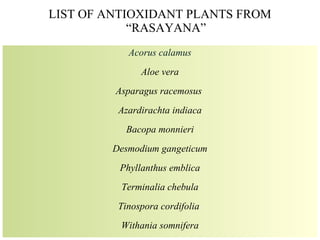
LIST OF ANTIOXIDANT PLANTS FROM
“RASAYANA”
Acorus calamus
Aloe vera
Asparagus racemosus
Azardirachta indiaca
Bacopa monnieri
Desmodium gangeticum
Phyllanthus emblica
Terminalia chebula
Tinospora cordifolia
Withania somnifera
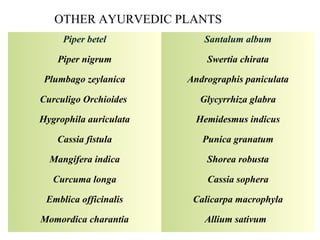
OTHER AYURVEDIC PLANTS
Piper betel Santalum album
Piper nigrum Swertia chirata
Plumbago zeylanica Andrographis paniculata
Curculigo Orchioides Glycyrrhiza glabra
Hygrophila auriculata Hemidesmus indicus
Cassia fistula Punica granatum
Mangifera indica Shorea robusta
Curcuma longa Cassia sophera
Emblica officinalis Calicarpa macrophyla
Momordica charantia Allium sativum
Bibliography:
 Chang C, Yang M, Wen H, Chern J Estimation of total flavonoid content in propolis by two
complementary colorimetric methods. J.Food Drug Anal. 2002, 10: 178-182.
 Athukorala Y, Kim KN, Jeon YJ. Antiproliferative and antioxidant properties of an enzymatic
hydrolysate from brown alga Ecklonia cava. Food Chem. Toxicol. 2006 44:1065-1074. Blois MS.
Antioxidant determinations by the use of a stable free radical. Nature 1958, 181:1199-1150
 Robak J, Gryglewski RJ. Flavonoids are scavengers of superoxide anions. Biochem. Pharmacol 1988,
37:837-841.
 Ruch RJ, Cheng SJ, Klaunig JE Prevention of cytotoxicity and inhibition of intercellular
communication by antioxidant catechins isolated from Chinese green tea. Carcinogen 1989, 10:1003-
1008.
 Green LC, Wagner DA, Glogowski J, Skipper PL, Wishnok JS,Tannenbaum SR. Analysis of nitrate,
nitrite and 15N nitrate in biological fluids. Anal Biochem 1982, 126:131-138.
 Ohkawa H, Ohishi N, YAG KI. Assay for lipid peroxides in animal tissues by Thiobarbituric acid
reaction. Analytical Biochemistry 1979 95:351-358
 Ellman GL. Tissue sulfhydryl groups. Archives of biochemistry and biophysics 1959, 82:70-77.
 Kakkar P, Das B, Viswanatha PN. A modified spectrophotometric assay of superoxide dismutase. Ind J
Biochem Biophysics 1984, 21:130-32
Reactive oxygen species

Reactive oxygen species

  • 1.
    Reactive Oxygen Species, Antioxidantsand its therapeutic implication Dr. Rupali Arun Patil Associate Professor, GES’s Sir Dr. M. S. Gosavi College of Pharmaceutical Education & Research, Nasik-5
  • 2.
    CONTENTS  Introduction  Freeradicals  Reactive Oxygen Species (ROS)  Sources of free radicals  Mechanism of cell damage  Antioxidant  Natural antioxidants  Antioxidant protection system  Oxidative stress and human disease  Antioxidant plants  References
  • 3.
    Free radical :any atom or molecule which has an "unpaired electron" in the outer ring, formed by homolytic cleavage of a covalent bond of a molecule by :  loss of a single electron from a normal molecule or  by the addition of a single electron to a normal molecule Fig 1: Generation of free radical
  • 4.
     Free radicalsare electrically charged molecules. i.e. they have an unpaired electron, which cause them to seek out and capture electron from other substance in order to neutralize themselves.  Although the initial attack cause the free radical to become neutralized, another free radical is formed in this process, causing a chain reaction to occur.  And until subsequent free radicals are deactivated, thousand of free radical reaction can occur within second of the initial reaction.  Antioxidants are capable of stabilizing or deactivating free radical before they attack cells.
  • 5.
    INTERNAL EXTERNAL Mitochondria  Phagocytes Xanthineoxidase Exercise Inflammation Ischemia and reperfusion Cigarette smoke Radiation UV light Certain drugs Reagents and industrial solvents pollution SOURCES OF FREE RADICALS
  • 6.
    REACTIVE OXYGEN SPECIES(ROS)  ROS is highly reactive, oxygen-containing molecules, including free radicals. They are generated when oxygen is supplied in excess and/or it’s reduction is insufficient.  All are capable of reacting with membrane lipids, nucleic acids, proteins, enzymes and other small molecules, resulting in cellular damage.  ROS are generated by a number of pathways. Most of the oxidants produced by cells occur due to:  Normal aerobic metabolism: Approximately 90% of the oxygen utilized by the cell  Oxidative burst from phagocytes (white blood cells)
  • 7.
    Oxidative stress: Byan imbalance between the production of reactive oxygen and a biological system's ability to readily detoxify the reactive intermediates or easily repair the resulting damage. In humans, oxidative stress is involved in many diseases, ex. atherosclerosis, PD and AD. ROS can be beneficial, as they are used by the immune system as a way to attack and kill pathogens. ROS & RNS (radicals and non radicals), Transition metals: involved in generation of oxidative stress.
  • 8.
    ROS : freeradicals ROS : non-radicals Superoxide ion (O2 - ) Hydroxyl (OH- ) Peroxyl (RO2- ), Alkoxyl (RO- ) and Hydroperoxyl (HO2 - ) Hydrogen peroxide (H2O2) Hypochlorus acid (HOCl) Ozone (O3) Singlet oxygen (O2) 1. Reactive oxygen species:
  • 9.
    • Oxygen isessential for most of the living cells, but it has been known for some time that the excess of this element may be toxic. • The first step of univalent oxygen reduction is formation of a free radical called superoxide anion. O2 + e- ------------ O2 - (superoxide anion) 2O2 - + 2H+ …………H2O2 + O2 H2O2 + O2 - ---------------O2+ OH- + OH- H2O2 + Fe++ ---------------------Fe+++ + OH- + OH-
  • 10.
    The hydroxyl radical •formed in vivo by ionizing radiations, UV light, some drugs, and when ferrous ions level is elevated. • an extremely reactive oxidizing radical to react with most biomolecules • can initiate chain reaction of free radical generation • Oxidation of lipid is the most important from the pathological point of view (attack of hydroxyl radicals on double bonds of unsaturated fatty acids giving rise to C-centered radicals, which on combining with O2 forms peroxy radical and lipid peroxide
  • 11.
    2. RNS Ex. nitricoxide (NO. ), nitrogen dioxide (NO2 . ), peroxynitrite (ONOO- ), peroxynitrous acid (ONOOH). NO. : Synthesised from the guanidine group of L-arginine by a family of enzymes termed NO. synthase (NOSs) Three isoforms of the enzyme: • endothelial NOS (enNOS), • brain NOS (bNOS), • inducible macrophage NOS (iNOS) Many inflammatory conditions are associated with production of comparatively large amounts of NO. , produced by iNOS, with consequent cytotoxic effects.
  • 12.
    3. Transition metals •Have unpaired electron and thus can be regarded as free radicals. • Ferrous (Fe2+ ), Cuprous (Cu+ ) and Manganese are most abundant in physiological environment. • Catalyse many reactions favoring oxidant production (O2 - and H2O2). • Accelerates the non-enzymic oxidation of several molecules • Facilitates decomposition of lipid peroxide
  • 13.
    ANTIOXIDANTS  A substancethat prevents or slows the breakdown of another substance by oxygen.  Chemical substances that donate an electron to the free radical and convert it to a harmless molecule & prevents the oxidation of other chemicals.  They are used by the body to protect itself from damage caused by oxidation.  Oxidation is a process that causes damage in our tissues through the work of free radicals.
  • 14.
    Fig 2: Roleof antioxidants
  • 15.
    Fig 3: Roleof Oxidative stress in tissue damage
  • 16.
    ANTIOXIDANT PROTECTION SYSTEM Endogenous Antioxidants  Bilirubin, Thiols, e.g., glutathione, lipoic acid, N-acetyl cysteine, NADPH and NADH, Uric acid  Enzymes: – Copper/Zinc and manganese-dependent superoxide dismutase (SOD) – Iron-dependent catalase – Selenium-dependent glutathione peroxidase  Dietary Antioxidants  Vitamin C, Vitamin E, Beta carotene and other carotenoids and oxycarotenoids, e.g., Lycopene and lutein  Polyphenols, e.g. flavonoids, flavones, flavonols and proanthocyanidins  Metal Binding Proteins  Albumin (copper), Ceruloplasmin (copper), Metallothionein (copper), Ferritin (iron), Myoglobin (iron), Transferrin (iron)
  • 17.
    NATURAL ANTIOXIDANTS Differ intheir composition, their physical and chemical properties, their mechanism and site of action.  Enzymes: Superoxide dismutase(SOD), Catalase(CAT), Reduced glutathione (GSH), Glutathione peroxidase (GPx)  High molecular weight compounds (proteins): Albumin, Transferin, Haptoglobin  Low molecular weight compounds: a) Lipid soluble antioxidants: Tocopherol, Carotenoids, Quinine and some Polyphenols, b) Water soluble antioxidants: Ascorbic acid, Uric acid and some Polyphenols.  Minerals: Selenium, Manganese, Copper, Zinc  Vitamins: Vitamin A, C, and E.  Plants antioxidants: Soyabean, Citrus peel, Sesame seed, Grapes and wines, Tomato, Orange, Apple, Ashwagandha, Carrot, Liquorice, Amla.
  • 18.
    DEFENCE AGAINST ROS: a.Primary defense b. Secondary defense a. Primary defense against ROS: catalytic removal of ROS by antioxidant enzymes  Superoxide dismutase (SOD)  Catalase (CAT)  Peroxidases (ex. Lipid peroxidase) SOD lowers the steady state level of O2 CAT and peroxidases do the same for H2O2.
  • 19.
    Fig 4: Celland tissue damage by ROS
  • 20.
    Fig 5: Oxidativestress and human disease
  • 21.
    Fig 6: Roleof antioxidants in tissue damage by oxidative stress
  • 22.
    Fig 7: Roleof antioxidant enzymes
  • 23.
    1. Superoxide Dismutase: •Naturally occuring metalloprotein found in both eukaryotic and prokaryotic cells, which act as free oxygen radical scavengers. • Biosynthesis of SOD is mainly controlled by its substrate, the O224 • They contain a redox active transition metal ion like Cu+ , Zn, Mn+ , Fe+ . • Families of SOD: Cu-SOD, Cu-Zn-SOD, Mn-SOD and Fe- SOD. • Fe-SOD & Mn-SOD: characteristic of prokaryotes • Cu-SOD & Zn -SOD: predominant in eukaryotic cells.
  • 24.
    2. CATALASE: Common enzymefound in nearly all living organisms exposed to oxygen (such as bacteria, plants, and animals). 2 H2O2 catalase 2 H2O + O2 It protects the cell from oxidative damage by ROS. One catalase molecule can convert millions of hydrogen peroxide molecules to water and oxygen each second.
  • 25.
    3. Glutathione peroxidase(GPx): • It is a seleno-enzyme; 2/3rd is present in cytosol & 1/3rd in mitochondria. • Catalyses the reaction of hydroperoxides with reduced glutathione (GSH) to form glutathione disulphide (GSSG) & the reduction product of hydroperoxide. • Specific for its H donor, GSH & non-specific for the hydroperoxides ranging from H2O2 to organic hydroperoxides. • GPx are specific for GSH as a H donor, can catalyse GSH- dependent reduction of fatty acid hydroperoxides. reduction peroxide group alcohol
  • 26.
    4. Glutathione reductase: Directlyinvolved in the reduction of GSSG to GSH Glutathione-S-transferase • Widely distributed among eukaryotes & present in high concentration intracellularly. • Initiates the detoxification process of potential alkylating agents. These enzymes catalyse the reaction of compounds with SH group of glutathione, thereby neutralizing the electrophilic sites and rendering the products more water soluble.
  • 27.
    DEFENCE AGAINST ROS: b.Secondary defence against ROS: free radical scavengers Offered by small molecules, which react with radicals to produce less radical compound, the scavengers. When these scavengers produce a lesser harmful radical species, they are called anti-oxidants. Eg.: Tocoferols, Ascorbate, Carotene
  • 28.
    VARIOUS ROS ANDCORRESPONDING NEUTRALIZING ANTIOXIDANTS REACTIVE OXYGEN SPECIES NEUTRALIZING ANTIOXIDANTS Hydroxyl radical Vitamin C, Glutathione, Flavonoids, Lipoic acid Superoxide radical Vitamin C, Glutathione, Flavonoids, SOD Hydrogen peroxide Vitamin C, Glutathione, Beta carotene, Vitamin E, Flavonoids, Lipoic acid. Lipid peroxides Beta carotene, Vitamin E, Flavonoids, Glutathione peroxidase
  • 29.
    MAJOR GROUPS OFANTIOXIDANT 20 METABOLITES Important groups of antioxidant activity are  Phenol  Phenolic acids  Anthocyanins  Flavones  Flavonoids  Flavonols  Tannins  Isoflavanoids These group of compound show antioxidant activity & plant defense mechanisms against pathogenic microoranism.
  • 30.
    Free radical mediateddiseases include- Aging Muscular dystrophy Rheumatoid arthritis Radiation injury Parkinson’s dementia Retinopathy Pulmonary fibrosis Reperfusion injury Autoimmune diseases Liver disorders Cancer Cataract Cardiovascular disorders Atherosclerosis Asthma Genetic disorders
  • 31.
    ROS & Rheumatoidarthritis • Decreased viscosity of synovial fluids in RA patients could also be produced by exposing synovial fluids to a system generatingO2 - . • The active species responsible for this damage : OH- • An increased lipid peroxydation of synovial fluids • The inflamed rheumatoid joint, upon movement and rest, undergoes a hypoxia -reperfusion cycle which results in ROS generation • Because of a change in ATP production cycle, there occurs an increased production of Xanthine and hypoxanthine, which are the substrates for xanthine oxido-reductase, which in the ischemic condition of the joint, will be converted into oxidase form and on reperfusion will generate superoxide radicals which can dismutate to H2O2. • The inflamed synovium is subjected to continuous micro-bleeding and there is increased deposition of iron with ferritin which stimulates OH formation.
  • 32.
    ROS & Liverinjury • Ethanol in the presence of cytochrome P-450 dependent systems generate hydroxy-ethyl free radicals. This radical along with ROS triggers oxidative damage in chronic alcohol intoxication • As regards acute intoxication, it is likely that the excess of acetaldehyde in the liver cytosol is oxidised by alternate pathways such as xanthine oxidase and aldehyde oxidase with the production of superoxide radical. Acetaldehyde undergoes reversible reactions with GSH and also with protein (mitochondrial and plasma albumin) • Lipid peroxidation is the most actively investigated mechanism of free radical induced liver injury • Ethanol poisoning enhances the oxidative breakdown of membrane lipids
  • 33.
  • 34.
    •Most of thecholesterol in the mature atherosclerotic plaque originates from circulating LDL particles that have been ingested by sub- endothelial macrophages. • Oxidatively modified forms of LDL as compared to native LDL are much more avidly taken up by macrophages which become converted to cholesterol-laden foam cells, a characteristic histological feature of the atherosclerotic lesion. •Antiarrhythmic drugs have been found to inhibit the lipid peroxidation.
  • 36.
    ROS and cancer Somechemical carcinogens: act through free radical intermediates Antioxidant molecules: intercept the carcinogenic action of a variety of chemical carcinogens. Hydroxyl radicals: Cause DNA damage (single strand breaks, activation of oncogenes and inactivation of tumor suppressor genes) by interaction of hydrogen peroxide and superoxide with transition metals.
  • 37.
    Role of ROSin Cancer
  • 39.
    ROS and neurodegenerativedisease Oxidative stress is a key factor in various acute and chronic neurodegenerative disease characterized by extensive cell death. The high lipid content of the neural tissue comprises of a large number of PUFA which are susceptible to oxidative attack. This causes changes in membrane fluidity, permeability, and cellular metabolic function. The high level of brain iron is essential particularly during development, but its presence also means injury to brain cells, through iron catalyzed reaction of ROS. • In PD, oxidative metabolism of DA is associated with generation of hydrogen peroxide and the formation of neurotoxin 6-OH DA. • In PD, concentration of the antioxidant GSH in the substantia is decreased as compared to other brain areas. • Decreased levels of antioxidant enzyme activity and increased lipid peroxidation has been observed in the substantia nigra.
  • 41.
    Similar increased lipidperoxidation and oxidation of DNA and proteins are seen in AD and in Huntington’s disease. Identification using elemental microprobes NMR analytical techniques, of an aluminosilicate core present in senile plaques can promote the in vitro aggregation of amyloid peptides. Endogenous and dietary antioxidants can prevent damage to nervous tissue from oxidative stress. e.g. Vit E prevents cell death in rat neuron in response to hypoxia
  • 43.
    LIST OF ANTIOXIDANTPLANTS FROM “RASAYANA” Acorus calamus Aloe vera Asparagus racemosus Azardirachta indiaca Bacopa monnieri Desmodium gangeticum Phyllanthus emblica Terminalia chebula Tinospora cordifolia Withania somnifera
  • 44.
    OTHER AYURVEDIC PLANTS Piperbetel Santalum album Piper nigrum Swertia chirata Plumbago zeylanica Andrographis paniculata Curculigo Orchioides Glycyrrhiza glabra Hygrophila auriculata Hemidesmus indicus Cassia fistula Punica granatum Mangifera indica Shorea robusta Curcuma longa Cassia sophera Emblica officinalis Calicarpa macrophyla Momordica charantia Allium sativum
  • 46.
    Bibliography:  Chang C,Yang M, Wen H, Chern J Estimation of total flavonoid content in propolis by two complementary colorimetric methods. J.Food Drug Anal. 2002, 10: 178-182.  Athukorala Y, Kim KN, Jeon YJ. Antiproliferative and antioxidant properties of an enzymatic hydrolysate from brown alga Ecklonia cava. Food Chem. Toxicol. 2006 44:1065-1074. Blois MS. Antioxidant determinations by the use of a stable free radical. Nature 1958, 181:1199-1150  Robak J, Gryglewski RJ. Flavonoids are scavengers of superoxide anions. Biochem. Pharmacol 1988, 37:837-841.  Ruch RJ, Cheng SJ, Klaunig JE Prevention of cytotoxicity and inhibition of intercellular communication by antioxidant catechins isolated from Chinese green tea. Carcinogen 1989, 10:1003- 1008.  Green LC, Wagner DA, Glogowski J, Skipper PL, Wishnok JS,Tannenbaum SR. Analysis of nitrate, nitrite and 15N nitrate in biological fluids. Anal Biochem 1982, 126:131-138.  Ohkawa H, Ohishi N, YAG KI. Assay for lipid peroxides in animal tissues by Thiobarbituric acid reaction. Analytical Biochemistry 1979 95:351-358  Ellman GL. Tissue sulfhydryl groups. Archives of biochemistry and biophysics 1959, 82:70-77.  Kakkar P, Das B, Viswanatha PN. A modified spectrophotometric assay of superoxide dismutase. Ind J Biochem Biophysics 1984, 21:130-32