Alcohol Dehydrogenase
Made by- Nitya Bansal
ASU2016010200104
IBT- 8th Semester
Submitted to- Dr. S. Kar
BSBT 411
Protein Designing and Engineering
Introduction
• Alcohol dehydrogenase is a 80 kDa enzyme.
• Alcohol dehydrogenases (ADH) are a group
of dehydrogenase enzymes that occur in many
organisms and facilitate the inter conversion
between alcohols and aldehydes or ketones with the
reduction of NAD+ to NADH.
• In humans, ADH exists in multiple forms as a dimer and
is encoded by at least seven different genes. There are
five classes (I-V) of alcohol dehydrogenase, but
the hepatic forms that are used primarily in humans
are class 1.
• The enzyme is present at high levels in the liver and the
lining of the stomach
• The function of this enzyme is to start the
pathway of alcohol metabolism.
• Alcohol dehydrogenase is a zinc based
enzyme that converts ethanol into
acetaldehyde.
• There are several different forms, but they all
perform the same function with the same
mechanism pathway. The different forms can
be found in the stomach and liver.
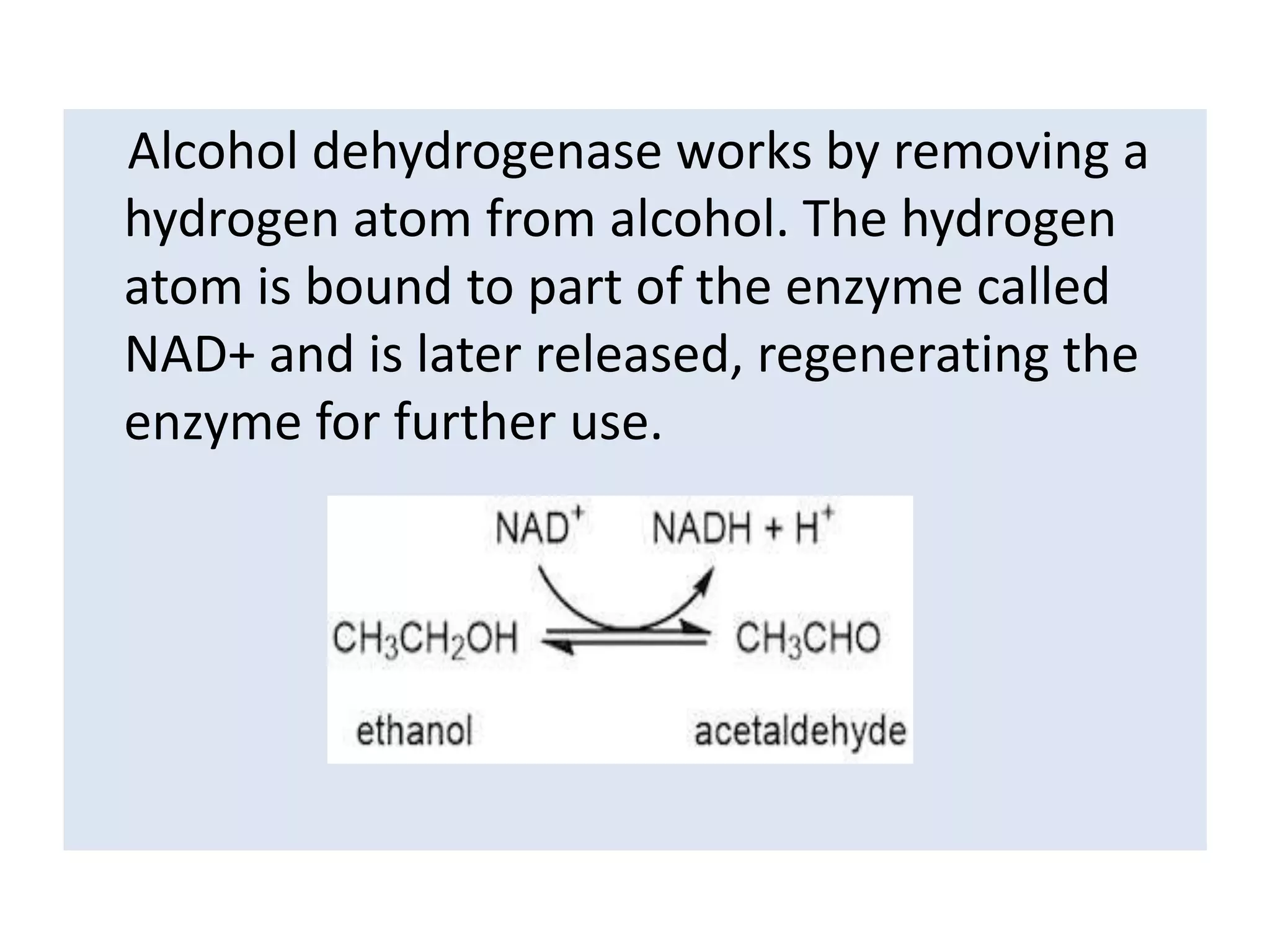
Alcohol dehydrogenase works by removing a
hydrogen atom from alcohol. The hydrogen
atom is bound to part of the enzyme called
NAD+ and is later released, regenerating the
enzyme for further use.
Structure
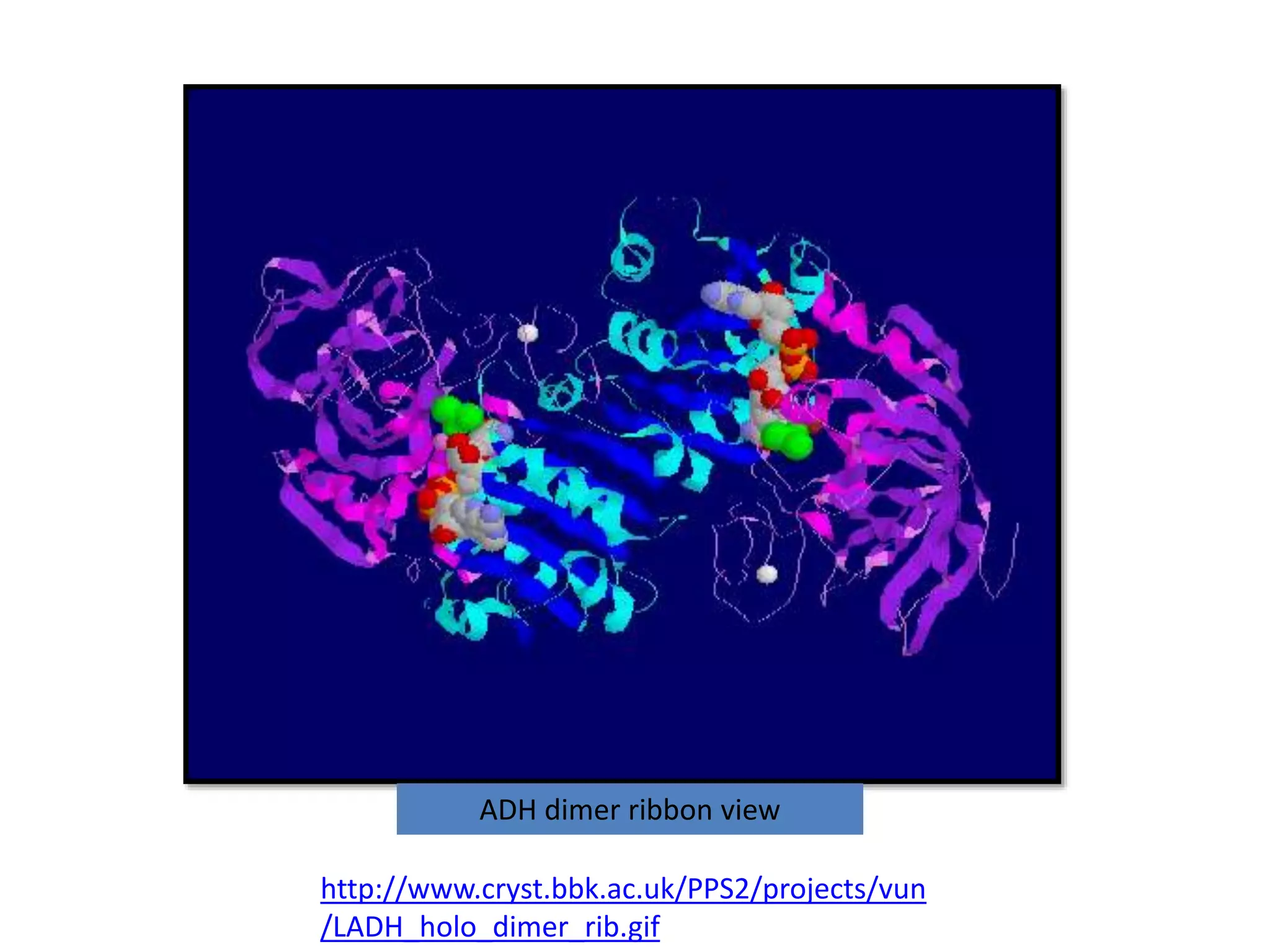
 Homodimer
 Each monomer has 374 residues with molecular weight of 74000
Da.
 There are two domains:
1. The NAD+-binding domain (residues 176-318)
2.The catalytic domain (residues 1-175, 319-374)
 The inter-domain interface forms a cleft which contains the active
catalytic site. The interface is formed by two helices, one from each
domain crossing over each other.
 There are two Zn++ cations per monomer, one at the catalytic site
being mandatory for catalysis.
 The alcohol substrate binds inside the cleft where the Zn++ cation is
present, whilst the nicotinamide ring of the NAD finds its way
pointing into the cleft.
http://www.cryst.bbk.ac.uk/PPS2/projects/vun
/LADH_holo_dimer_rib.gif
ADH dimer ribbon view
Active site
• The general mechanism is simply that ethanol is oxidized into
acetaldehyde and the hydrogen atoms are added to NAD.
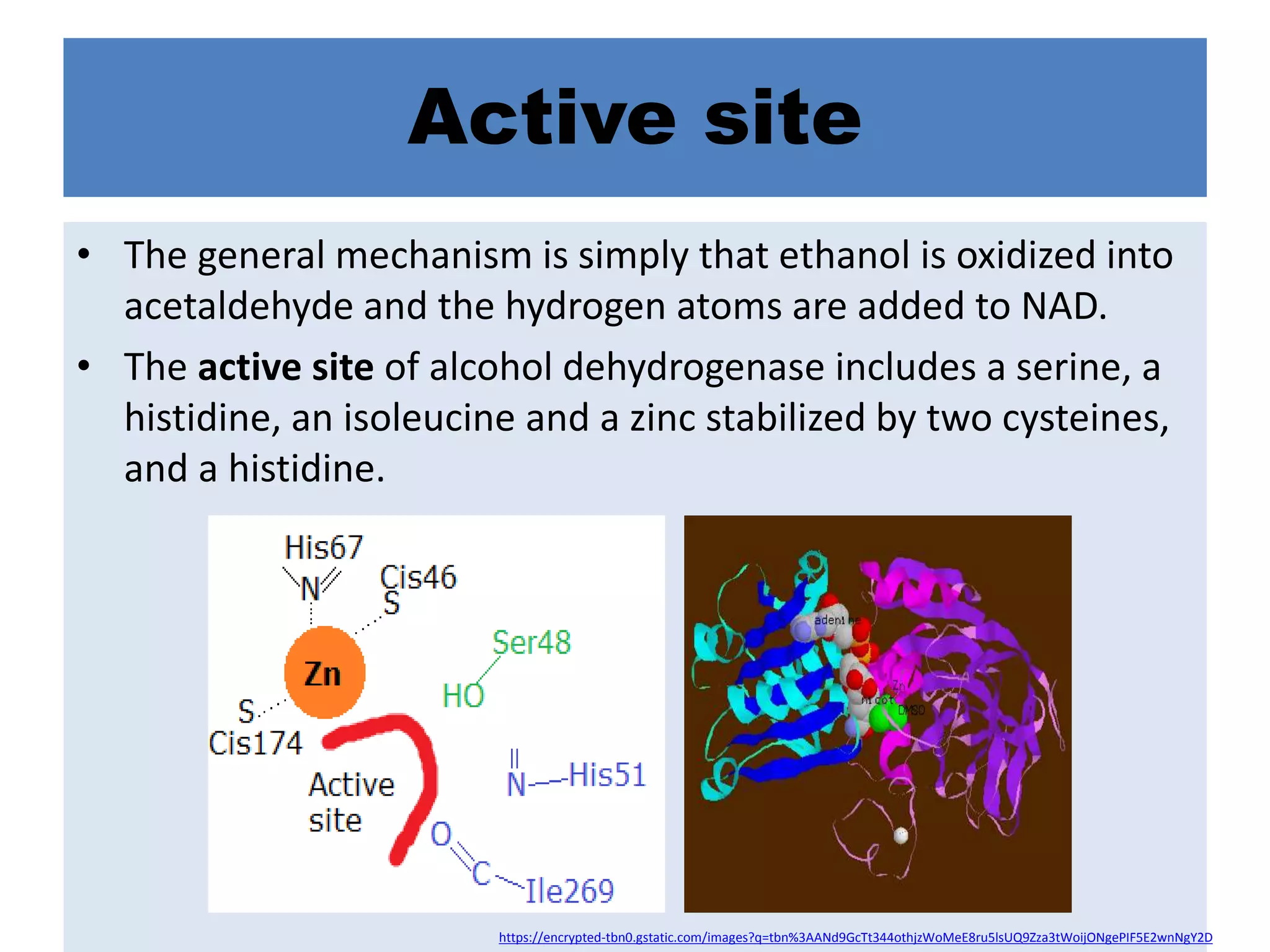
• The active site of alcohol dehydrogenase includes a serine, a
histidine, an isoleucine and a zinc stabilized by two cysteines,
and a histidine.
https://encrypted-tbn0.gstatic.com/images?q=tbn%3AANd9GcTt344othjzWoMeE8ru5lsUQ9Zza3tWoijONgePIF5E2wnNgY2D
Enzyme mechanism
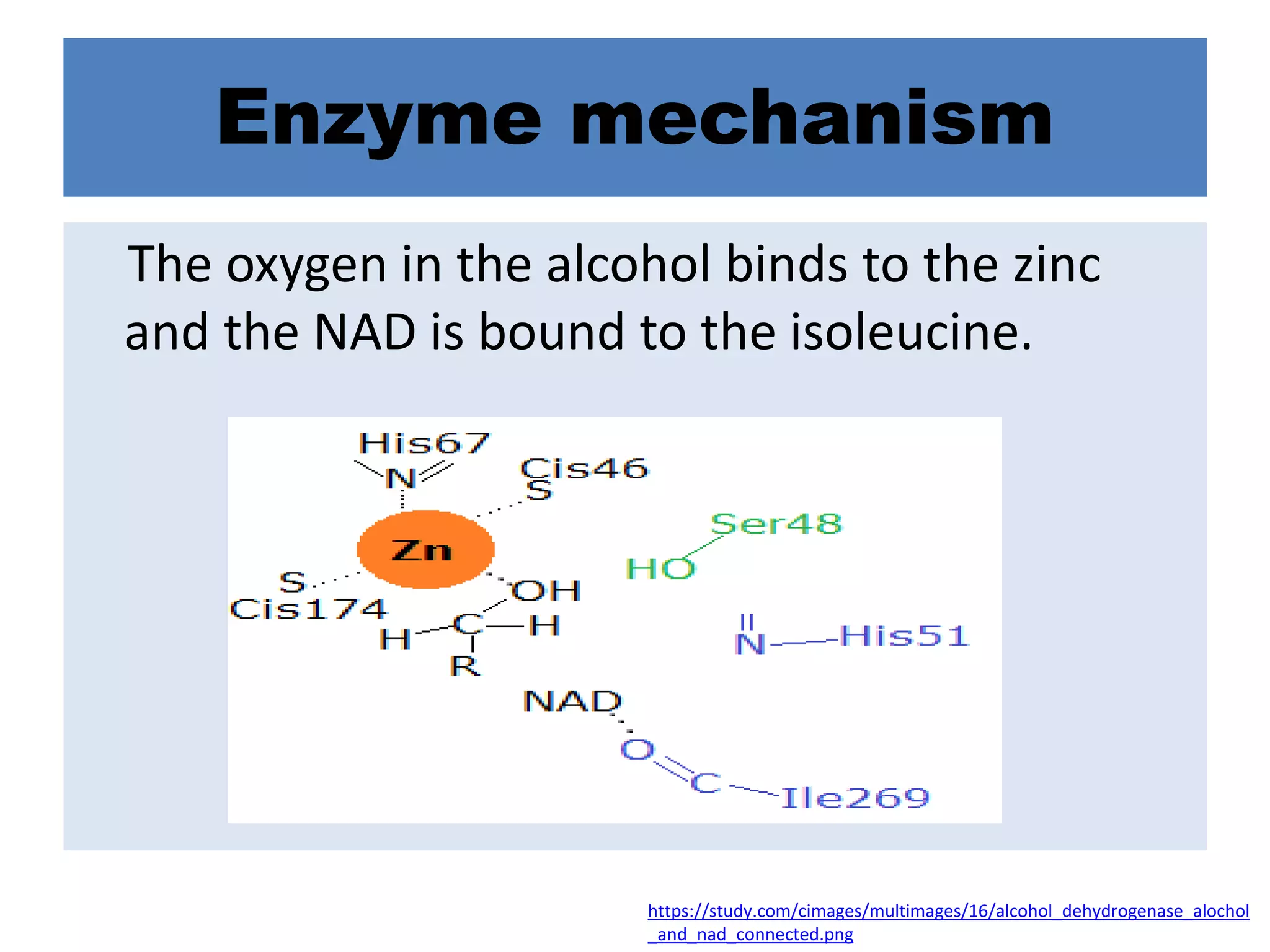
The oxygen in the alcohol binds to the zinc
and the NAD is bound to the isoleucine.
https://study.com/cimages/multimages/16/alcohol_dehydrogenase_alochol
_and_nad_connected.png
There are two main steps in the alcohol
hydrogenase mechanism:
1. Hydrogen is removed from
the OH on the alcohol.
2. A carbon-oxygen double bond
forms, hydrogen is removed from
the carbon and added to NAD to
form NADH.
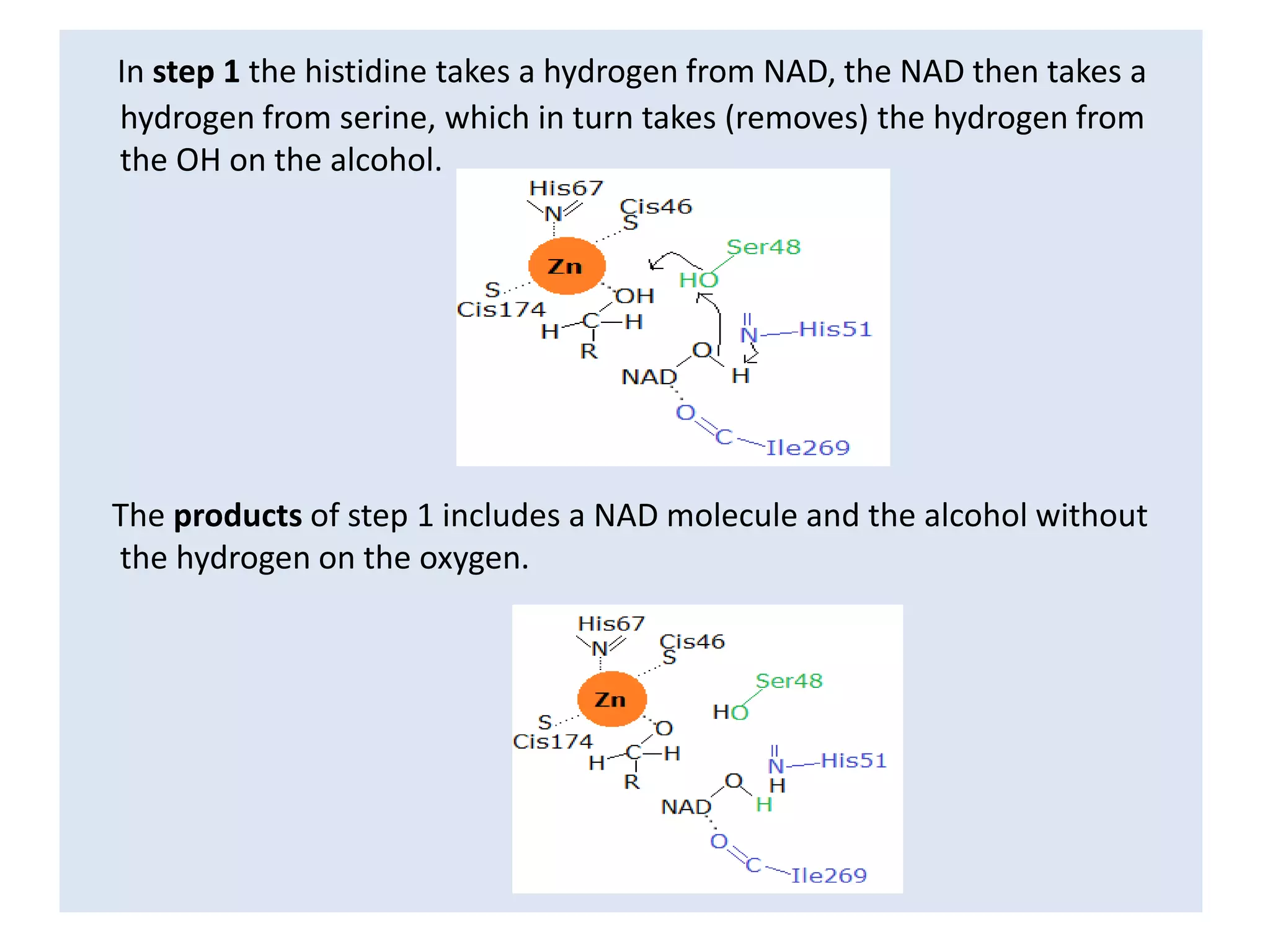
In step 1 the histidine takes a hydrogen from NAD, the NAD then takes a
hydrogen from serine, which in turn takes (removes) the hydrogen from
the OH on the alcohol.
The products of step 1 includes a NAD molecule and the alcohol without
the hydrogen on the oxygen.
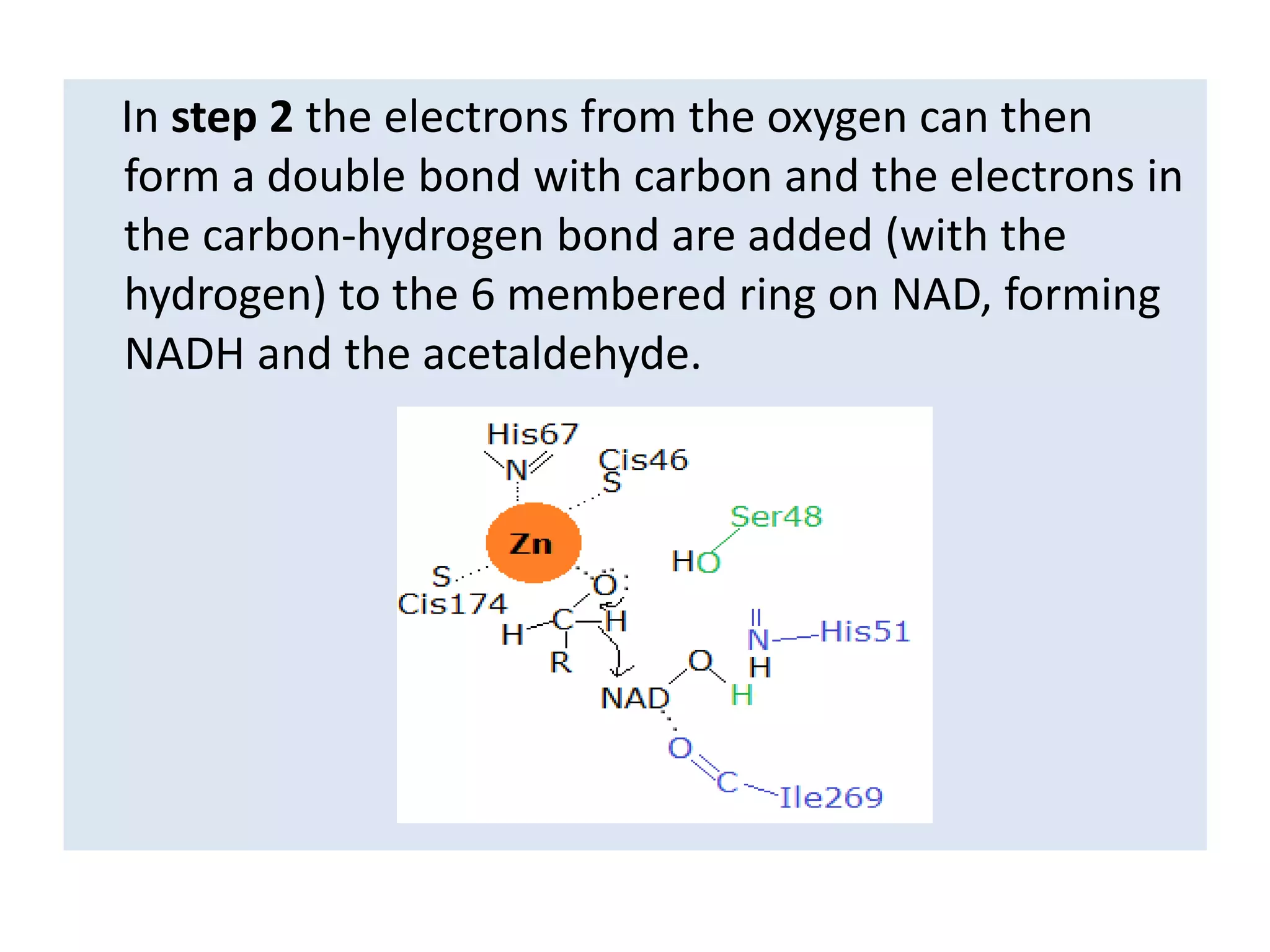
In step 2 the electrons from the oxygen can then
form a double bond with carbon and the electrons in
the carbon-hydrogen bond are added (with the
hydrogen) to the 6 membered ring on NAD, forming
NADH and the acetaldehyde.
End products acetaldehyde and NADH.
Inhibitors
• Selective inhibitors of alcohol dehydrogenases
could be useful for prevention of poisoning
due to metabolism of alcohols, such as
methanol or ethylene glycol, that lead to toxic
products.
• Fomepizole, also known as 4-methylpyrazole is a
competitive inhibitor of the enzyme alcohol
dehydrogenase, found in the liver.
• This enzyme plays a key role in the metabolism of
ethylene glycol, and of methanol.
• Fomepizole is used in ethylene glycol and
methanol poisoning. It acts to inhibit the
breakdown of these toxins into their active toxic
metabolites.
By competitively inhibiting the first enzyme,
alcohol dehydrogenase, in the metabolism of
ethylene glycol and methanol, fomepizole
slows the production of the toxic metabolites.
The slower rate of metabolite production
allows the liver to process and excrete the
metabolites as they are produced, limiting the
accumulation in tissues such as the kidney and
eye. As a result, much of the organ damage is
avoided
Kinetics
• The alcohol dehydrogenase catalyzed aldehyde-
NADH reaction show kinetics consistent with a
random-order mechanism, and the rate-limiting
step is the dissociation of the product enzyme-
NAD+ complex.
• Alcohol dehydrogenase is more effective for
smaller alcohol substrates, and it becomes less
effective as substrate size increases. It is also
more effective for primary than secondary
alcohols.
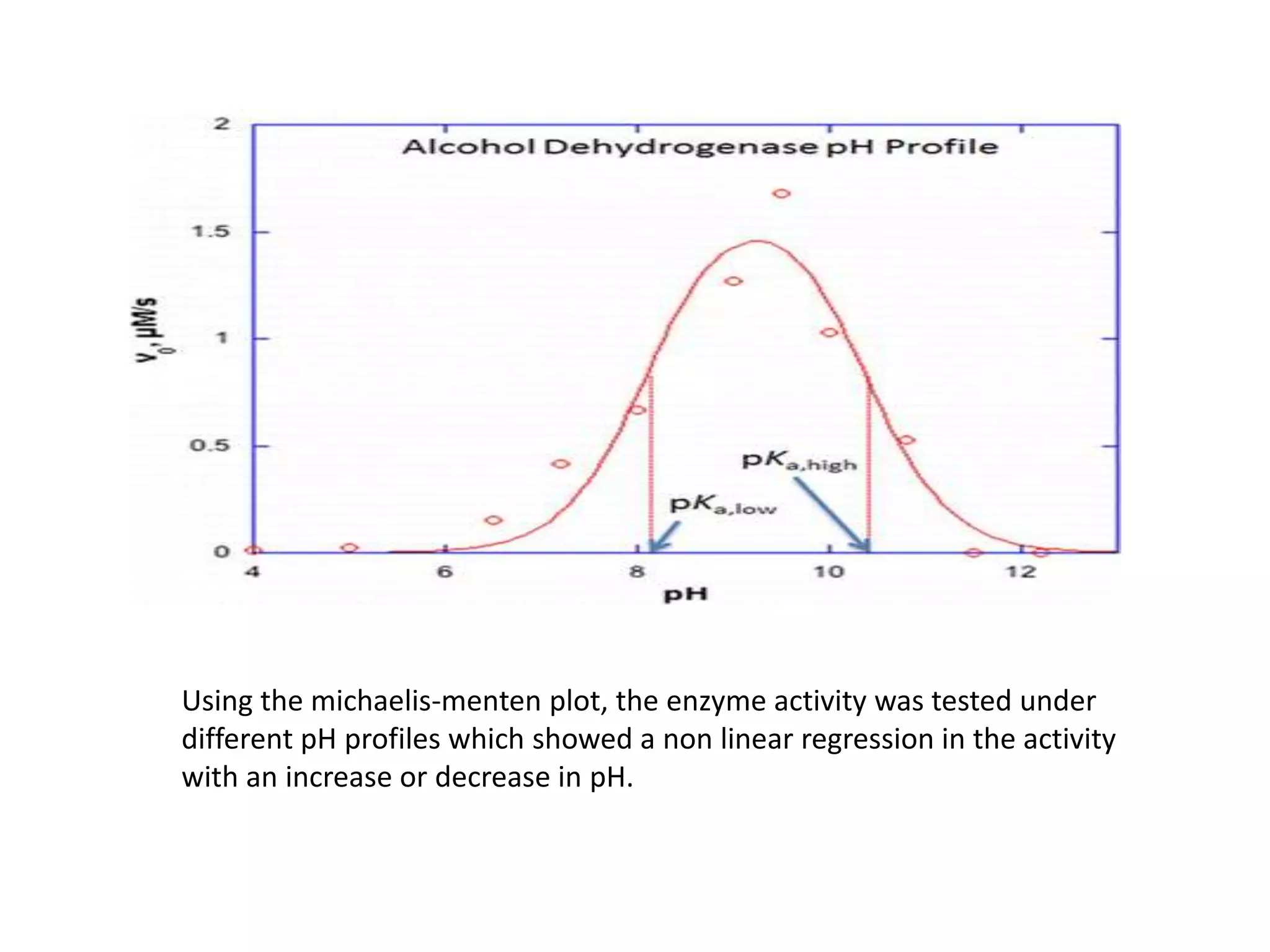
Using the michaelis-menten plot, the enzyme activity was tested under
different pH profiles which showed a non linear regression in the activity
with an increase or decrease in pH.
References
• https://study.com/academy/lesson/what-is-
alcohol-dehydrogenase-definition-function.html
• http://www.cryst.bbk.ac.uk/PPS2/projects/vun/L
ADH_master.htm
• https://study.com/academy/lesson/alcohol-
dehydrogenase-mechanism-pathway.html
• https://en.wikipedia.org/wiki/Fomepizole#Kinetic
s
• https://pubs.acs.org/doi/full/10.1021/acs.jcheme
d.5b00610
THANKYOU 

Alcohol dehydrogenase

  • 1.
    Alcohol Dehydrogenase Made by-Nitya Bansal ASU2016010200104 IBT- 8th Semester Submitted to- Dr. S. Kar BSBT 411 Protein Designing and Engineering
  • 2.
    Introduction • Alcohol dehydrogenaseis a 80 kDa enzyme. • Alcohol dehydrogenases (ADH) are a group of dehydrogenase enzymes that occur in many organisms and facilitate the inter conversion between alcohols and aldehydes or ketones with the reduction of NAD+ to NADH. • In humans, ADH exists in multiple forms as a dimer and is encoded by at least seven different genes. There are five classes (I-V) of alcohol dehydrogenase, but the hepatic forms that are used primarily in humans are class 1. • The enzyme is present at high levels in the liver and the lining of the stomach
  • 3.
    • The functionof this enzyme is to start the pathway of alcohol metabolism. • Alcohol dehydrogenase is a zinc based enzyme that converts ethanol into acetaldehyde. • There are several different forms, but they all perform the same function with the same mechanism pathway. The different forms can be found in the stomach and liver.
  • 4.
    Alcohol dehydrogenase worksby removing a hydrogen atom from alcohol. The hydrogen atom is bound to part of the enzyme called NAD+ and is later released, regenerating the enzyme for further use.
  • 5.
    Structure  Homodimer  Eachmonomer has 374 residues with molecular weight of 74000 Da.  There are two domains: 1. The NAD+-binding domain (residues 176-318) 2.The catalytic domain (residues 1-175, 319-374)  The inter-domain interface forms a cleft which contains the active catalytic site. The interface is formed by two helices, one from each domain crossing over each other.  There are two Zn++ cations per monomer, one at the catalytic site being mandatory for catalysis.  The alcohol substrate binds inside the cleft where the Zn++ cation is present, whilst the nicotinamide ring of the NAD finds its way pointing into the cleft.
  • 6.
  • 7.
    Active site • Thegeneral mechanism is simply that ethanol is oxidized into acetaldehyde and the hydrogen atoms are added to NAD. • The active site of alcohol dehydrogenase includes a serine, a histidine, an isoleucine and a zinc stabilized by two cysteines, and a histidine. https://encrypted-tbn0.gstatic.com/images?q=tbn%3AANd9GcTt344othjzWoMeE8ru5lsUQ9Zza3tWoijONgePIF5E2wnNgY2D
  • 8.
    Enzyme mechanism The oxygenin the alcohol binds to the zinc and the NAD is bound to the isoleucine. https://study.com/cimages/multimages/16/alcohol_dehydrogenase_alochol _and_nad_connected.png
  • 9.
    There are twomain steps in the alcohol hydrogenase mechanism: 1. Hydrogen is removed from the OH on the alcohol. 2. A carbon-oxygen double bond forms, hydrogen is removed from the carbon and added to NAD to form NADH.
  • 10.
    In step 1the histidine takes a hydrogen from NAD, the NAD then takes a hydrogen from serine, which in turn takes (removes) the hydrogen from the OH on the alcohol. The products of step 1 includes a NAD molecule and the alcohol without the hydrogen on the oxygen.
  • 11.
    In step 2the electrons from the oxygen can then form a double bond with carbon and the electrons in the carbon-hydrogen bond are added (with the hydrogen) to the 6 membered ring on NAD, forming NADH and the acetaldehyde.
  • 12.
  • 13.
    Inhibitors • Selective inhibitorsof alcohol dehydrogenases could be useful for prevention of poisoning due to metabolism of alcohols, such as methanol or ethylene glycol, that lead to toxic products.
  • 14.
    • Fomepizole, alsoknown as 4-methylpyrazole is a competitive inhibitor of the enzyme alcohol dehydrogenase, found in the liver. • This enzyme plays a key role in the metabolism of ethylene glycol, and of methanol. • Fomepizole is used in ethylene glycol and methanol poisoning. It acts to inhibit the breakdown of these toxins into their active toxic metabolites.
  • 15.
    By competitively inhibitingthe first enzyme, alcohol dehydrogenase, in the metabolism of ethylene glycol and methanol, fomepizole slows the production of the toxic metabolites. The slower rate of metabolite production allows the liver to process and excrete the metabolites as they are produced, limiting the accumulation in tissues such as the kidney and eye. As a result, much of the organ damage is avoided
  • 16.
    Kinetics • The alcoholdehydrogenase catalyzed aldehyde- NADH reaction show kinetics consistent with a random-order mechanism, and the rate-limiting step is the dissociation of the product enzyme- NAD+ complex. • Alcohol dehydrogenase is more effective for smaller alcohol substrates, and it becomes less effective as substrate size increases. It is also more effective for primary than secondary alcohols.
  • 17.
    Using the michaelis-mentenplot, the enzyme activity was tested under different pH profiles which showed a non linear regression in the activity with an increase or decrease in pH.
  • 18.
    References • https://study.com/academy/lesson/what-is- alcohol-dehydrogenase-definition-function.html • http://www.cryst.bbk.ac.uk/PPS2/projects/vun/L ADH_master.htm •https://study.com/academy/lesson/alcohol- dehydrogenase-mechanism-pathway.html • https://en.wikipedia.org/wiki/Fomepizole#Kinetic s • https://pubs.acs.org/doi/full/10.1021/acs.jcheme d.5b00610
  • 19.