FORMULATION AND
EVALUATION OF FAST
DISSOLVING TABLETS
By
Suryakant verma
Under the Supervision of
Dr. VIKESH KUMAR SHUKLA
Assistant Director
DEPARTMENT OF PHARMACEUTICS
IIMT COLLEGE OF MEDICAL SCIENCE
GANGA NAGAR, MAWANA ROAD, MEERUT,
UTTAR PRADESH, INDIA
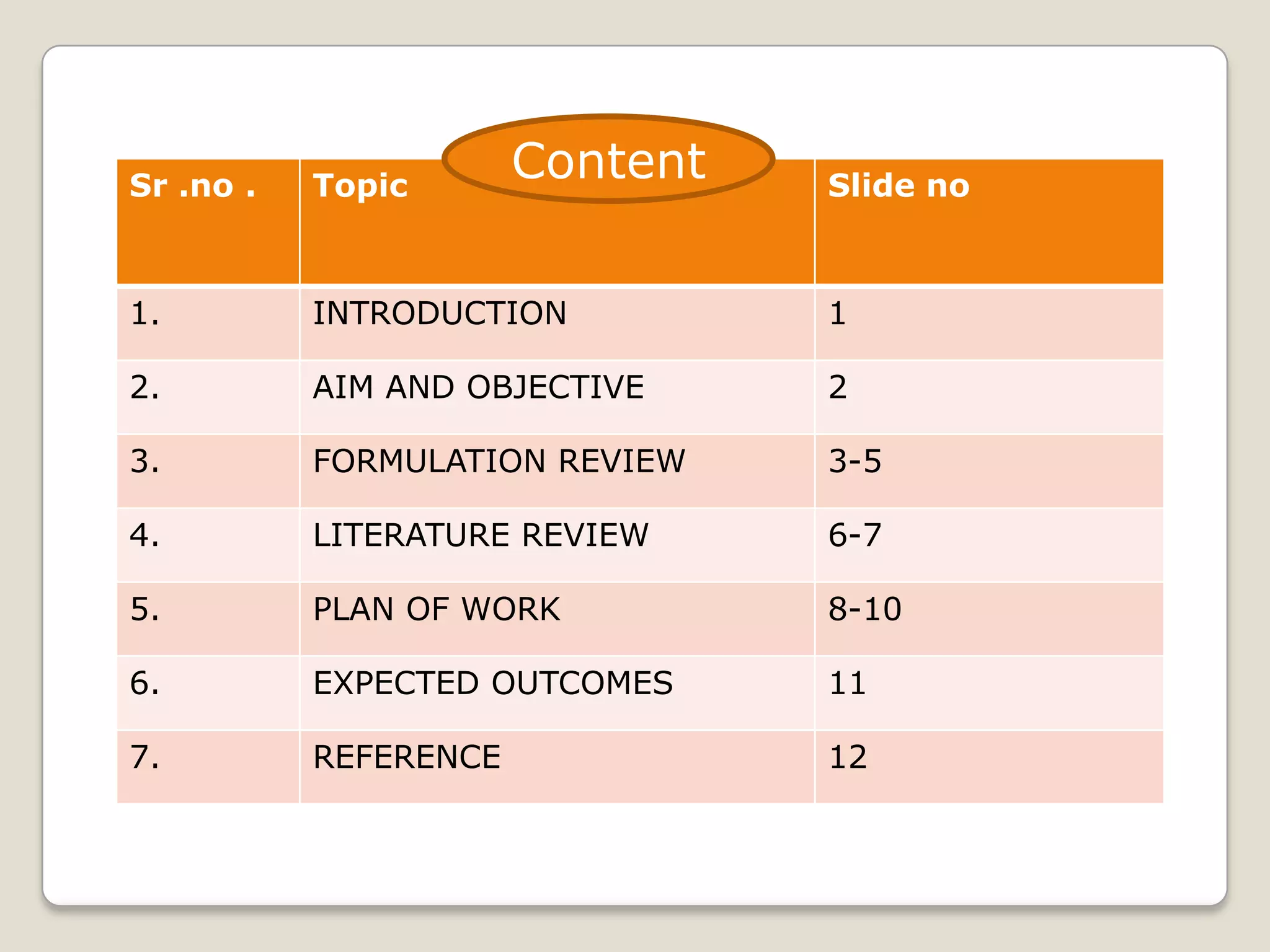
Sr .no . Topic Slide no
1. INTRODUCTION 1
2. AIM AND OBJECTIVE 2
3. FORMULATION REVIEW 3-5
4. LITERATURE REVIEW 6-7
5. PLAN OF WORK 8-10
6. EXPECTED OUTCOMES 11
7. REFERENCE 12
Content
INTRODUCTION
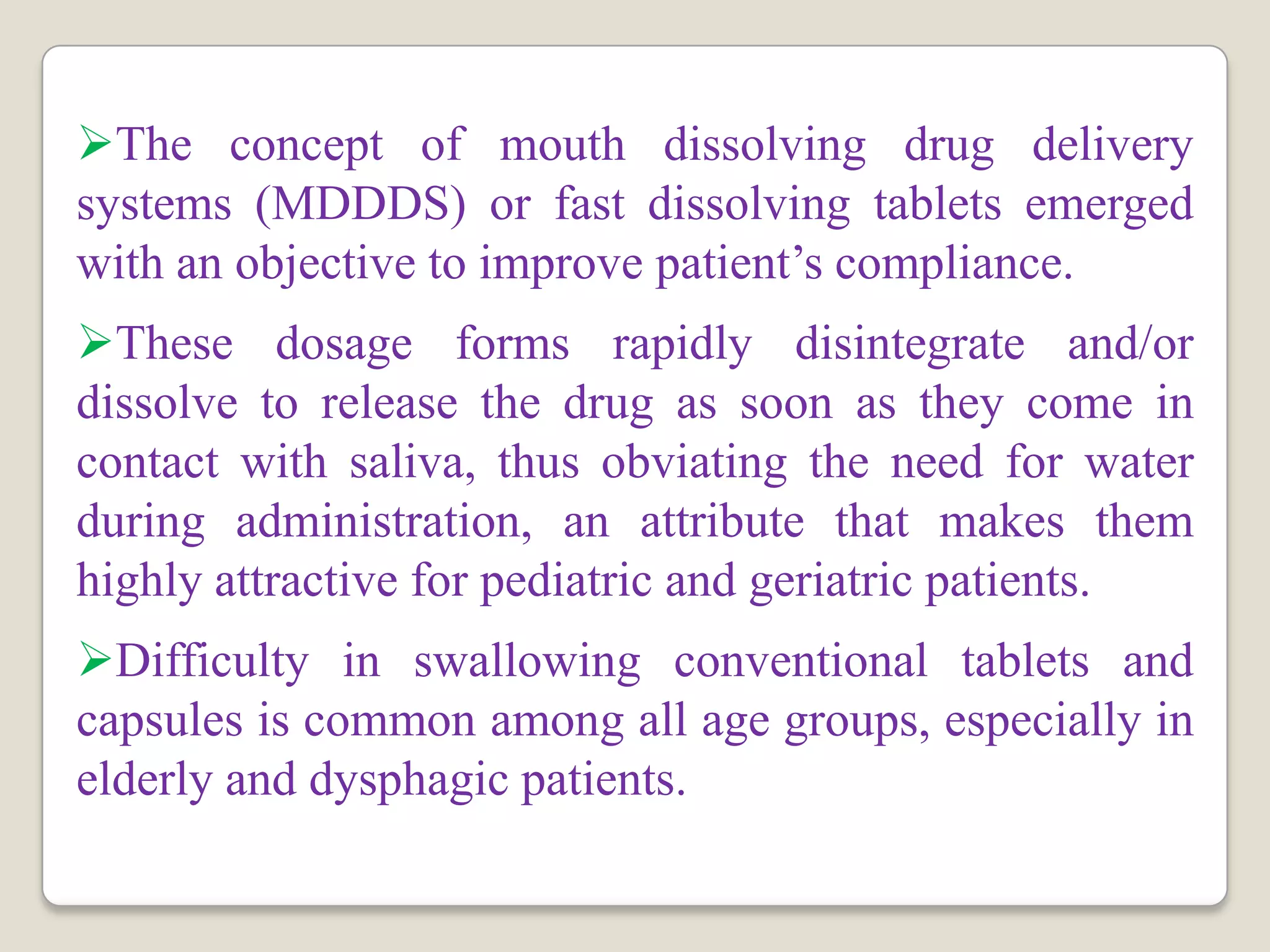
The concept of mouth dissolving drug delivery
systems (MDDDS) or fast dissolving tablets emerged
with an objective to improve patient’s compliance.
These dosage forms rapidly disintegrate and/or
dissolve to release the drug as soon as they come in
contact with saliva, thus obviating the need for water
during administration, an attribute that makes them
highly attractive for pediatric and geriatric patients.
Difficulty in swallowing conventional tablets and
capsules is common among all age groups, especially in
elderly and dysphagic patients.
AIM AND OBJECTIVE
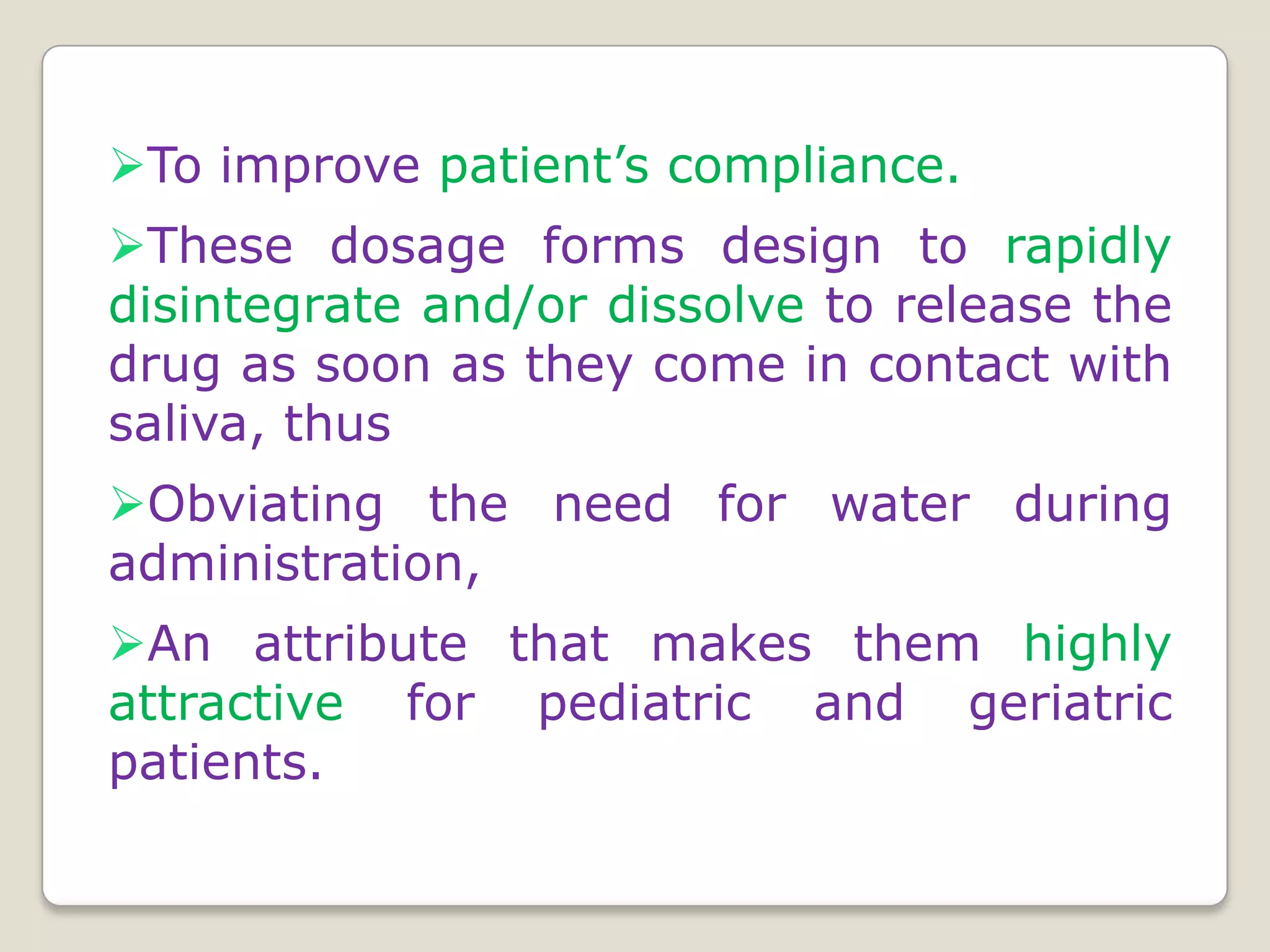
To improve patient’s compliance.
These dosage forms design to rapidly
disintegrate and/or dissolve to release the
drug as soon as they come in contact with
saliva, thus
Obviating the need for water during
administration,
An attribute that makes them highly
attractive for pediatric and geriatric
patients.
FORMULATION REVIEW
Techniques of MDT Formulation
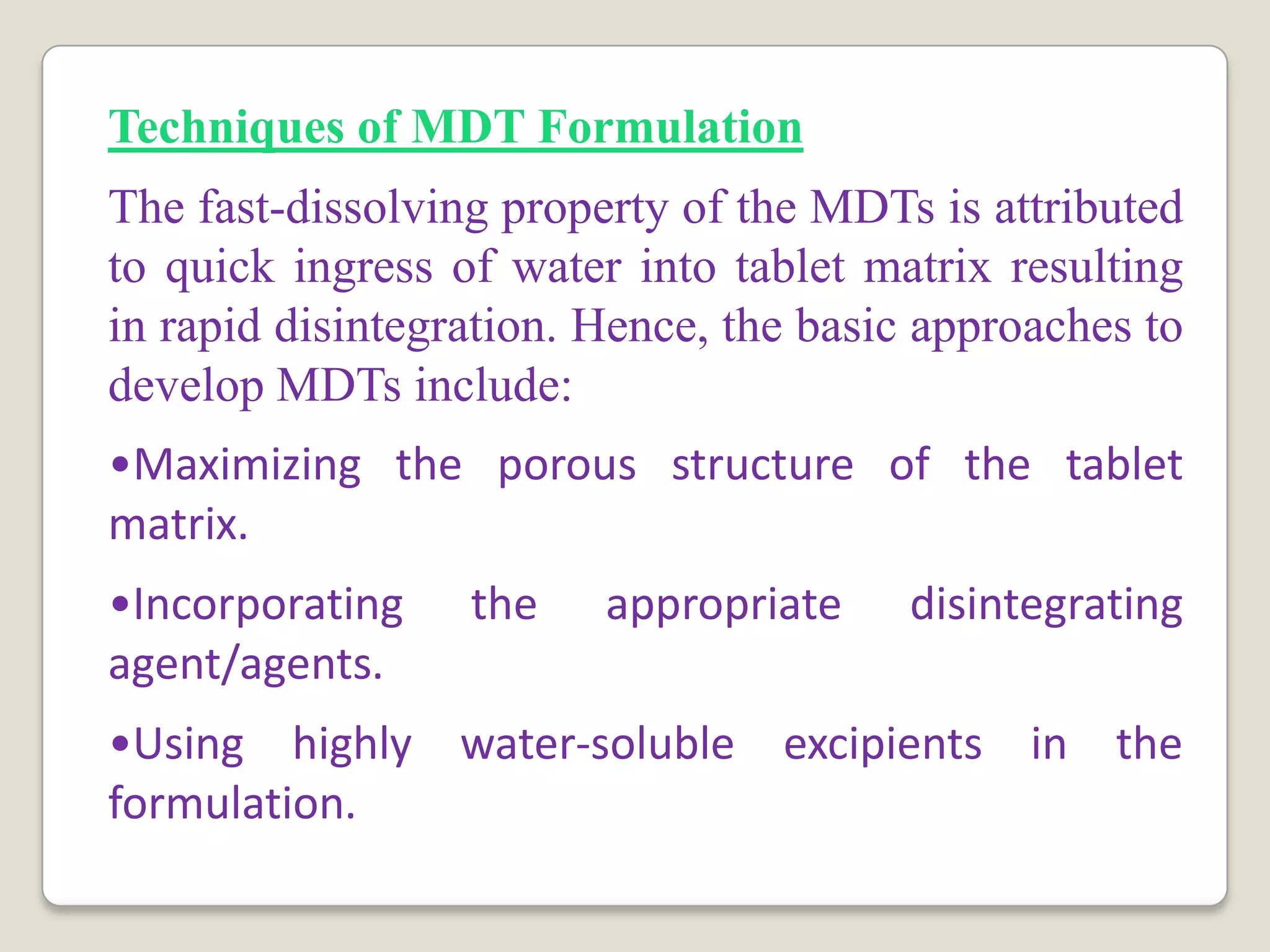
The fast-dissolving property of the MDTs is attributed
to quick ingress of water into tablet matrix resulting
in rapid disintegration. Hence, the basic approaches to
develop MDTs include:
•Maximizing the porous structure of the tablet
matrix.
•Incorporating the appropriate disintegrating
agent/agents.
•Using highly water-soluble excipients in the
formulation.
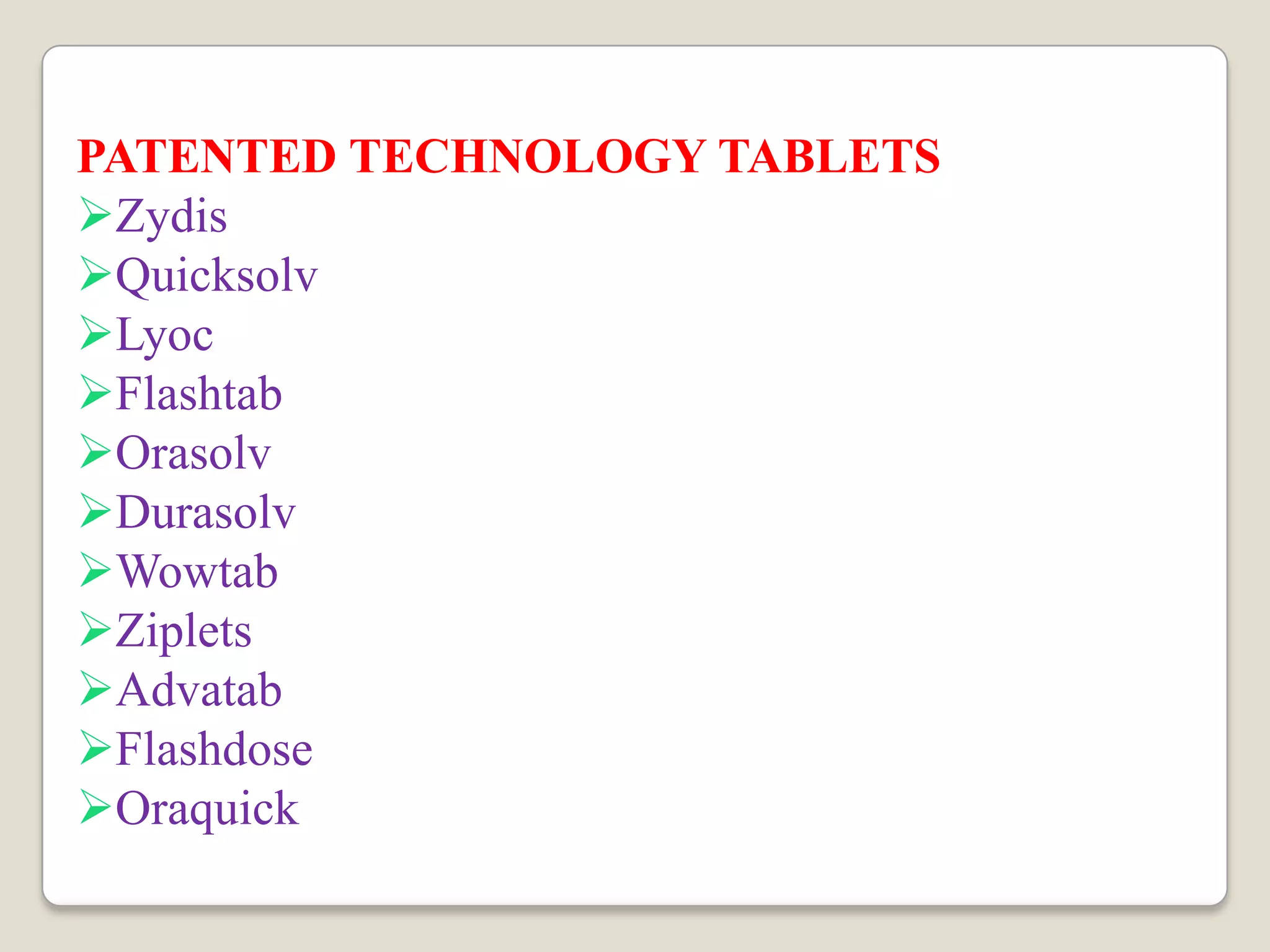
PATENTED TECHNOLOGY TABLETS
Zydis
Quicksolv
Lyoc
Flashtab
Orasolv
Durasolv
Wowtab
Ziplets
Advatab
Flashdose
Oraquick
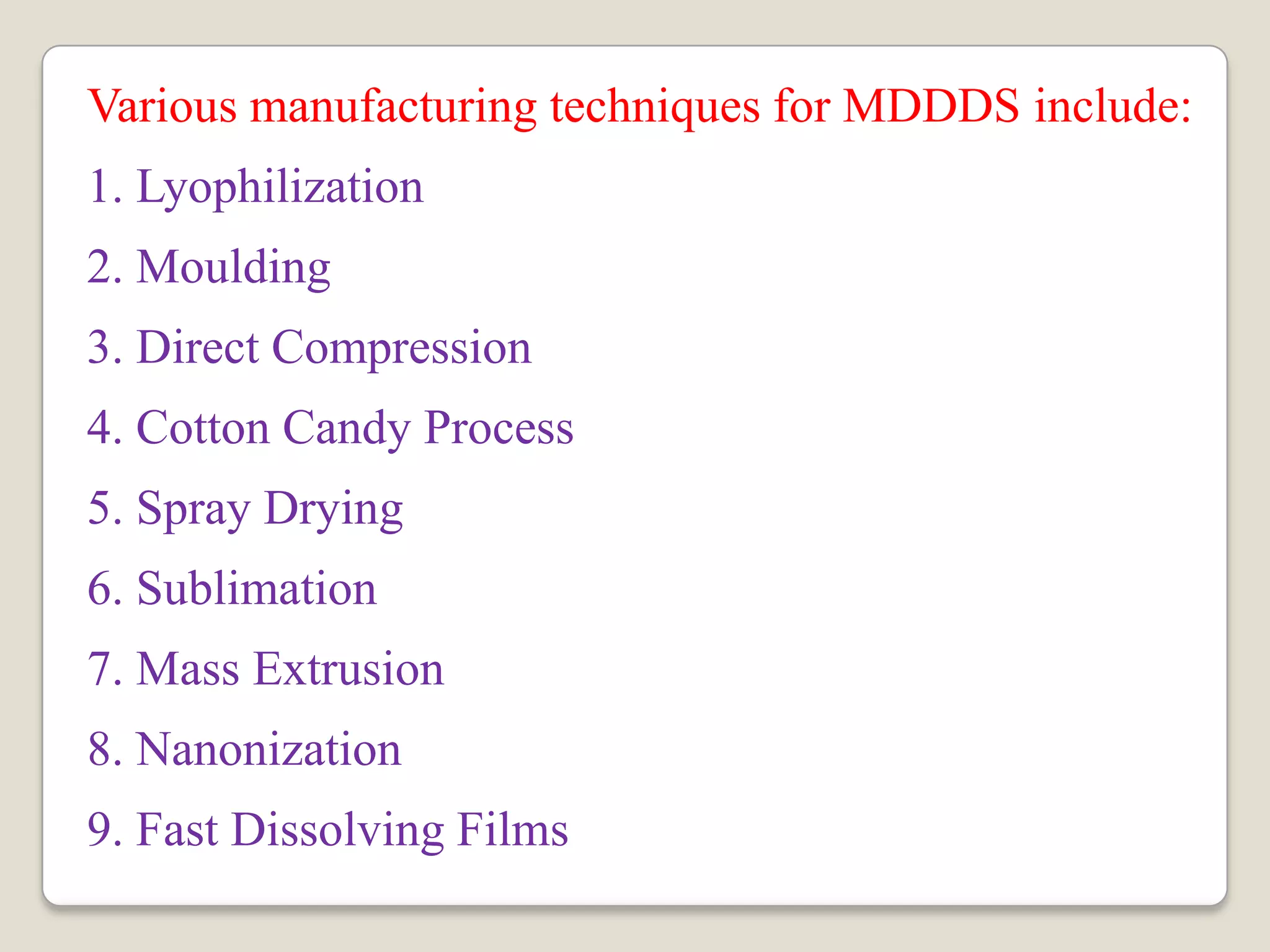
Various manufacturing techniques for MDDDS include:
1. Lyophilization
2. Moulding
3. Direct Compression
4. Cotton Candy Process
5. Spray Drying
6. Sublimation
7. Mass Extrusion
8. Nanonization
9. Fast Dissolving Films
LITERATURE REVIEW
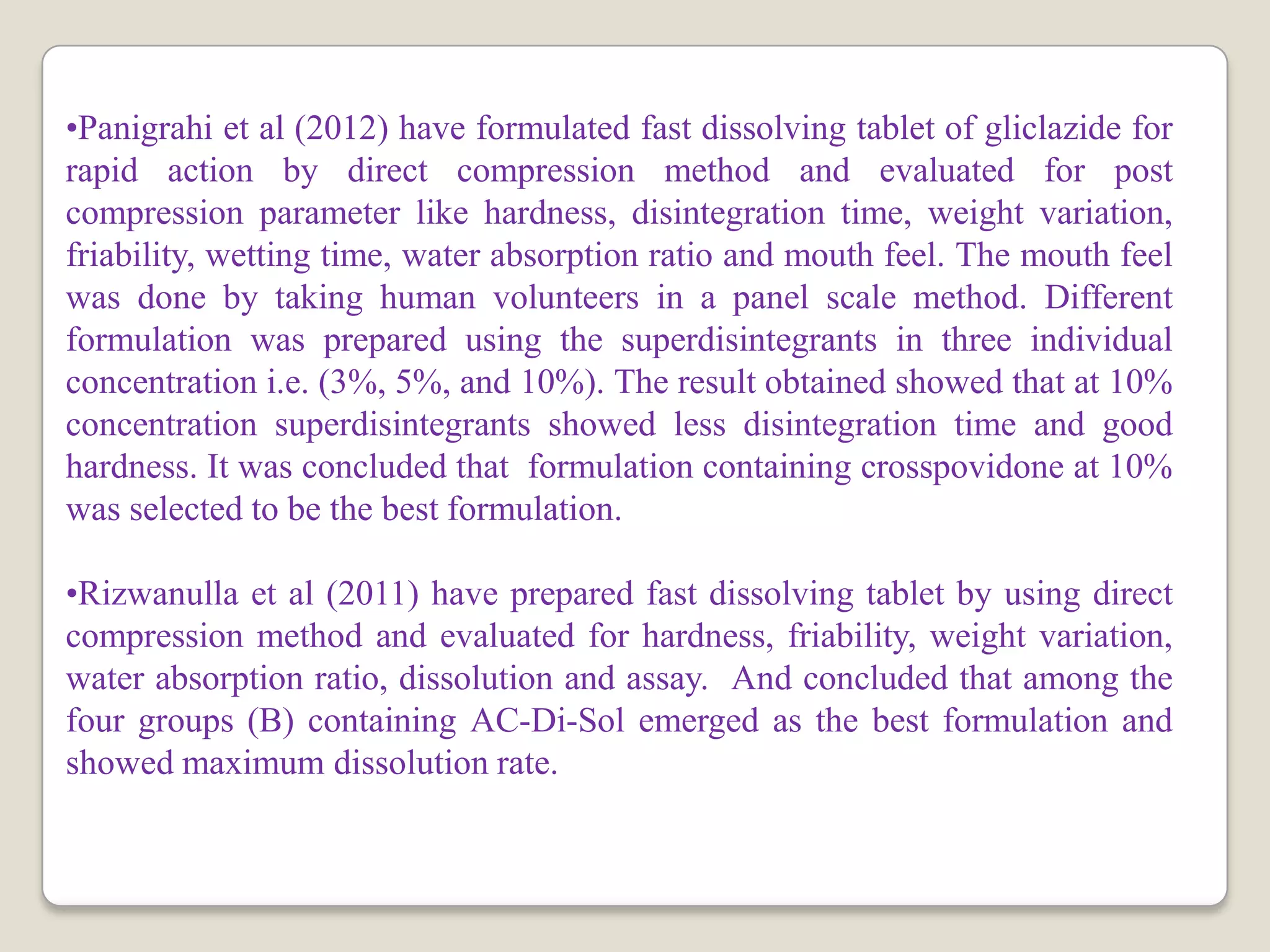
•Panigrahi et al (2012) have formulated fast dissolving tablet of gliclazide for
rapid action by direct compression method and evaluated for post
compression parameter like hardness, disintegration time, weight variation,
friability, wetting time, water absorption ratio and mouth feel. The mouth feel
was done by taking human volunteers in a panel scale method. Different
formulation was prepared using the superdisintegrants in three individual
concentration i.e. (3%, 5%, and 10%). The result obtained showed that at 10%
concentration superdisintegrants showed less disintegration time and good
hardness. It was concluded that formulation containing crosspovidone at 10%
was selected to be the best formulation.
•Rizwanulla et al (2011) have prepared fast dissolving tablet by using direct
compression method and evaluated for hardness, friability, weight variation,
water absorption ratio, dissolution and assay. And concluded that among the
four groups (B) containing AC-Di-Sol emerged as the best formulation and
showed maximum dissolution rate.
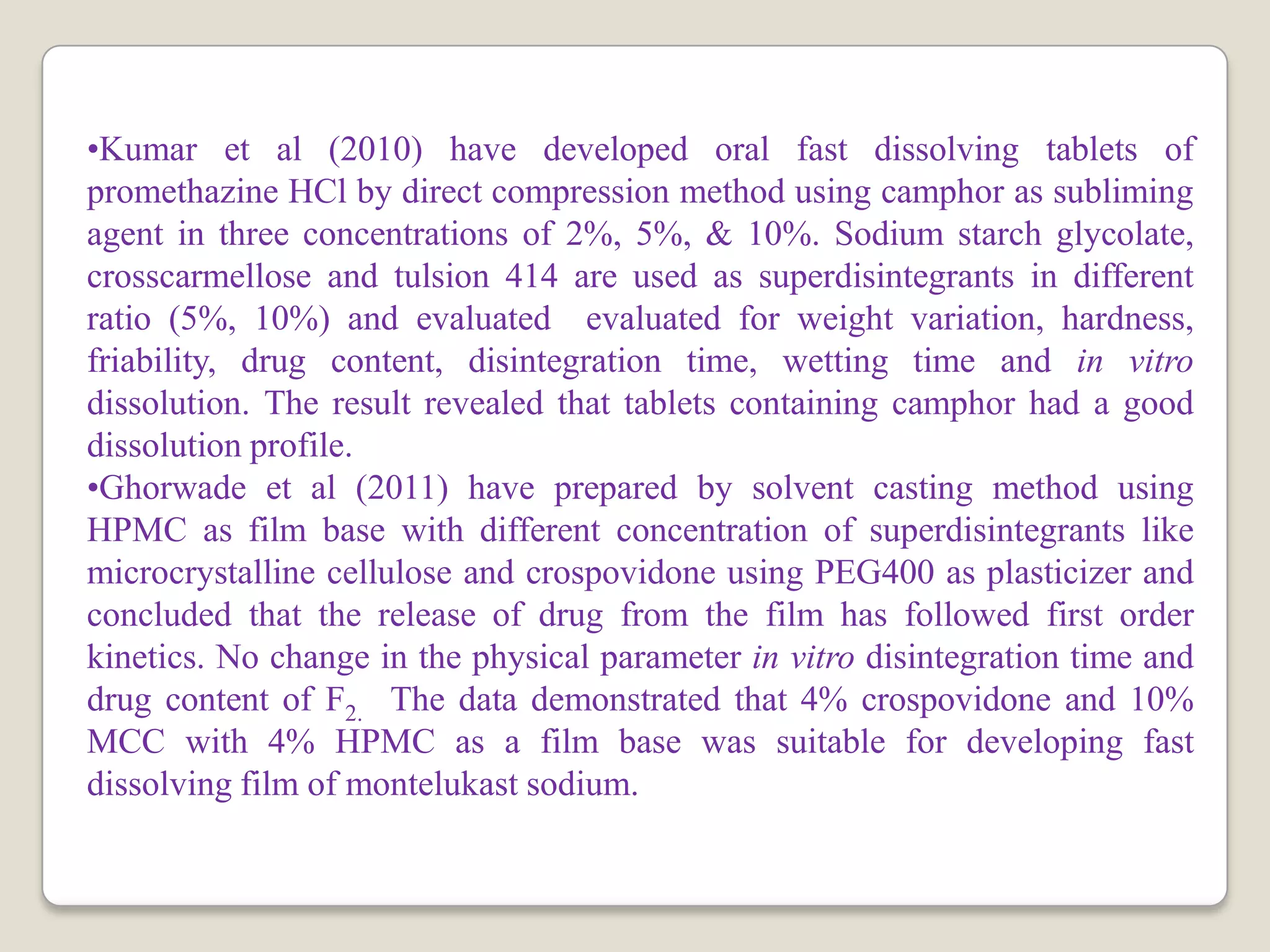
•Kumar et al (2010) have developed oral fast dissolving tablets of
promethazine HCl by direct compression method using camphor as subliming
agent in three concentrations of 2%, 5%, & 10%. Sodium starch glycolate,
crosscarmellose and tulsion 414 are used as superdisintegrants in different
ratio (5%, 10%) and evaluated evaluated for weight variation, hardness,
friability, drug content, disintegration time, wetting time and in vitro
dissolution. The result revealed that tablets containing camphor had a good
dissolution profile.
•Ghorwade et al (2011) have prepared by solvent casting method using
HPMC as film base with different concentration of superdisintegrants like
microcrystalline cellulose and crospovidone using PEG400 as plasticizer and
concluded that the release of drug from the film has followed first order
kinetics. No change in the physical parameter in vitro disintegration time and
drug content of F2. The data demonstrated that 4% crospovidone and 10%
MCC with 4% HPMC as a film base was suitable for developing fast
dissolving film of montelukast sodium.
PLAN OF WORK
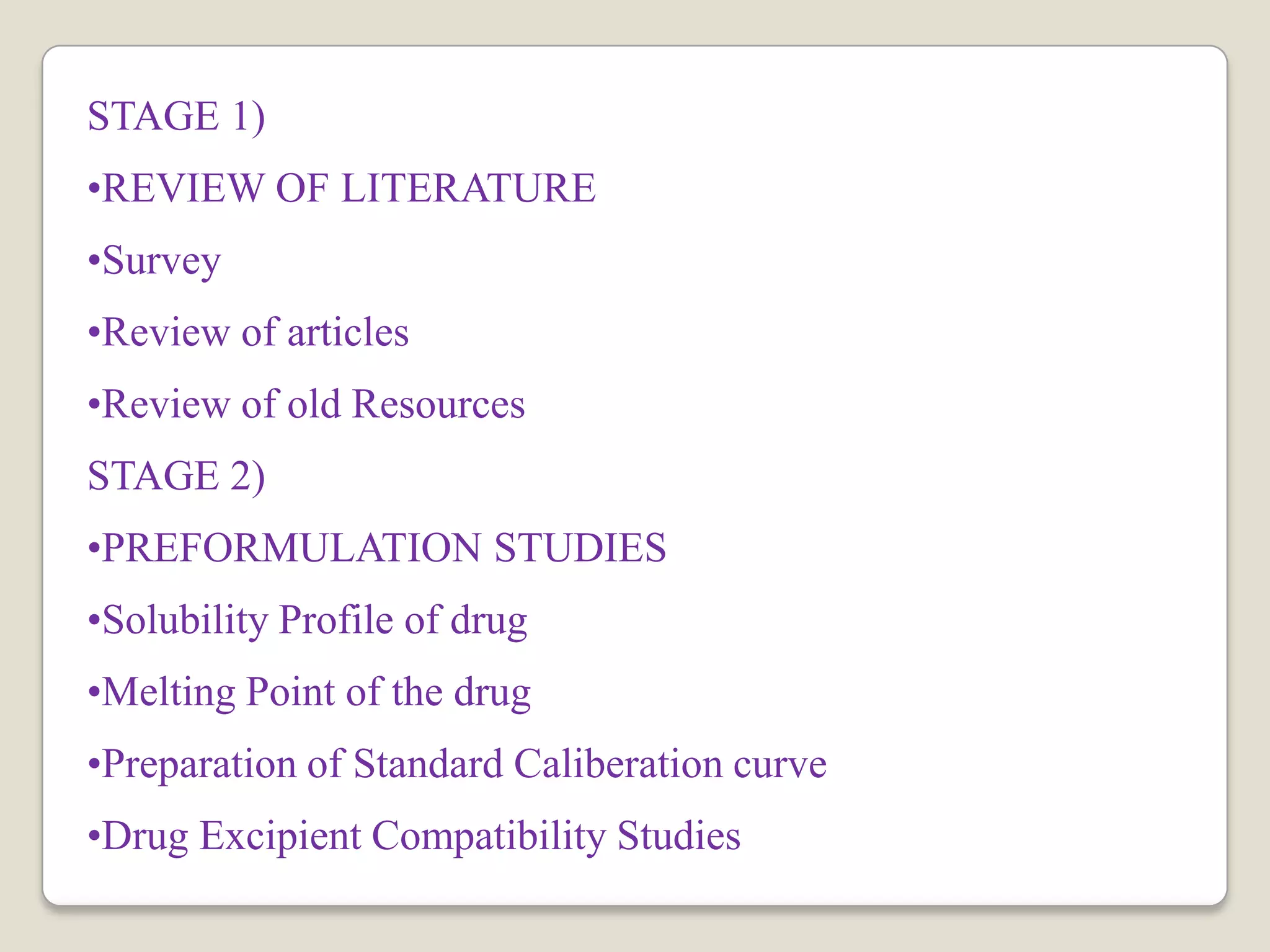
STAGE 1)
•REVIEW OF LITERATURE
•Survey
•Review of articles
•Review of old Resources
STAGE 2)
•PREFORMULATION STUDIES
•Solubility Profile of drug
•Melting Point of the drug
•Preparation of Standard Caliberation curve
•Drug Excipient Compatibility Studies
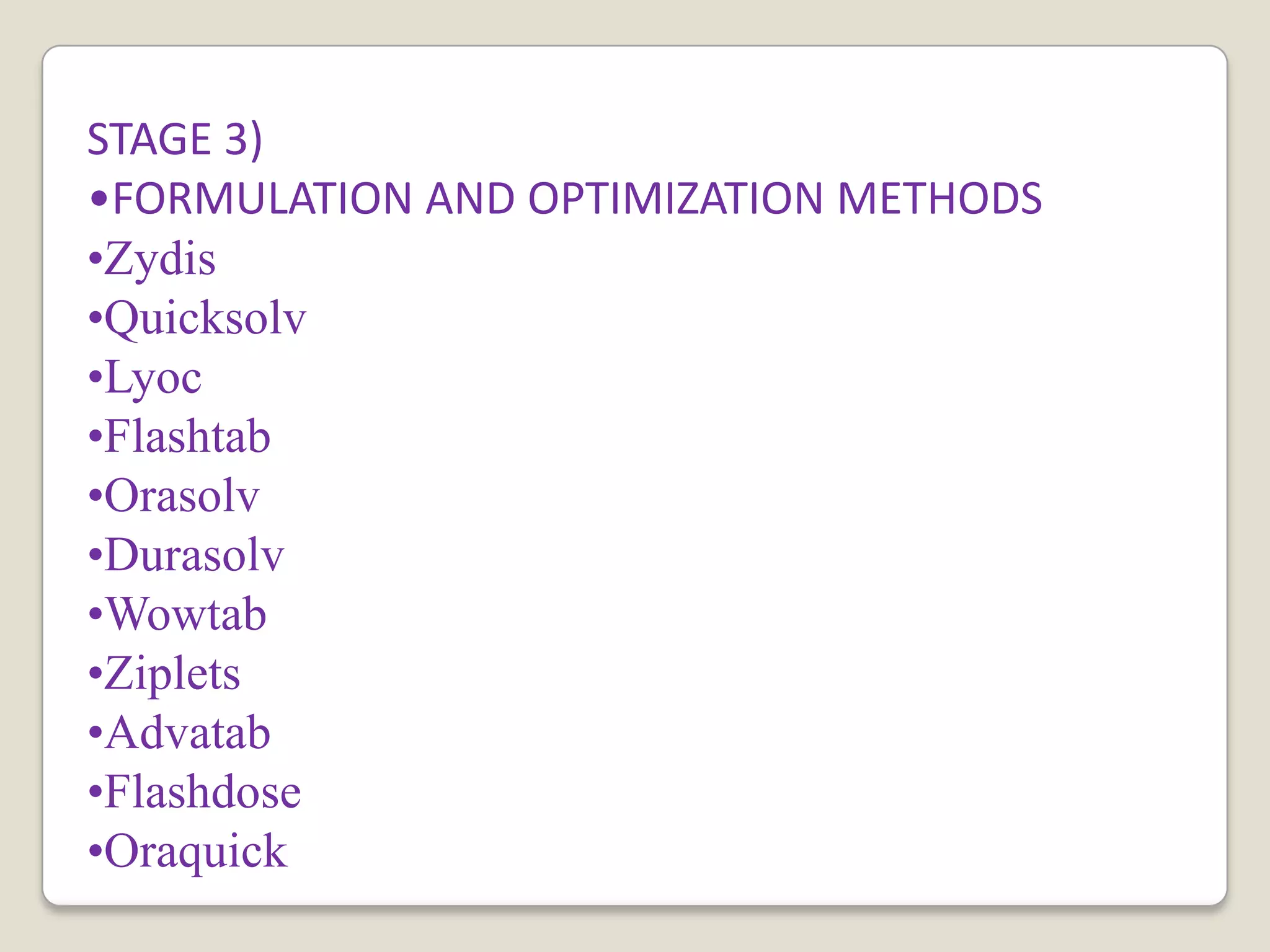
STAGE 3)
•FORMULATION AND OPTIMIZATION METHODS
•Zydis
•Quicksolv
•Lyoc
•Flashtab
•Orasolv
•Durasolv
•Wowtab
•Ziplets
•Advatab
•Flashdose
•Oraquick
STAGE 4)
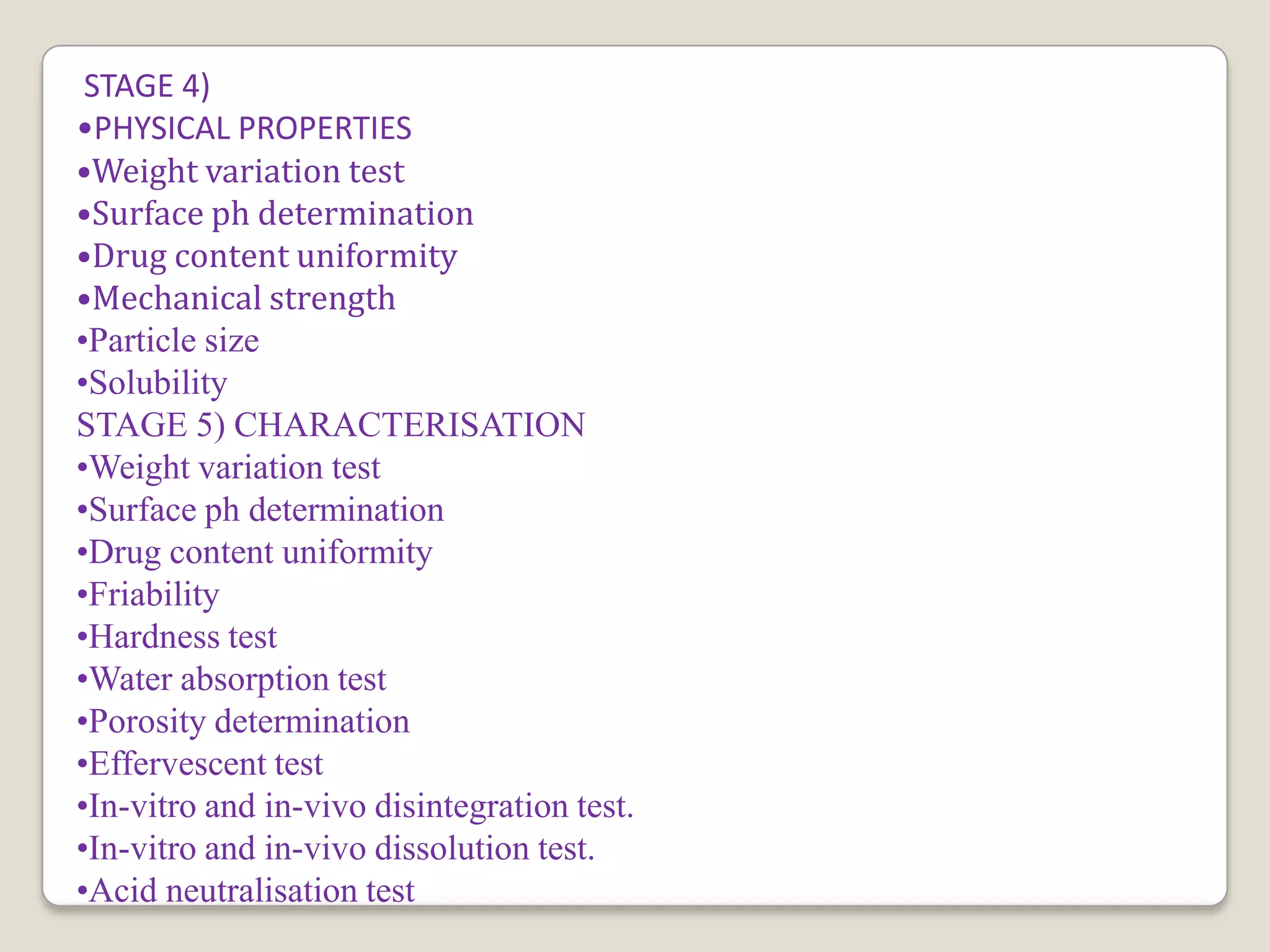
•PHYSICAL PROPERTIES
•Weight variation test
•Surface ph determination
•Drug content uniformity
•Mechanical strength
•Particle size
•Solubility
STAGE 5) CHARACTERISATION
•Weight variation test
•Surface ph determination
•Drug content uniformity
•Friability
•Hardness test
•Water absorption test
•Porosity determination
•Effervescent test
•In-vitro and in-vivo disintegration test.
•In-vitro and in-vivo dissolution test.
•Acid neutralisation test
EXPECTED OUTCOMES
With continued innovations in pharmaceutical
excipients, one can expect the emergence of more novel
technologies for FDTs in the days to come.
These innovations may involve modifying
formulation composition and processing to achieve new
performance end-points or the merger of new
technological advances with traditional pharmaceutical
processing techniques for the production of novel
mouth dissolving dosage forms.
It is reasonable to expect that future trends in
innovations of drug delivery systems will continue to
bring together different technological disciplines to
create novel technologies.
REFERENCES
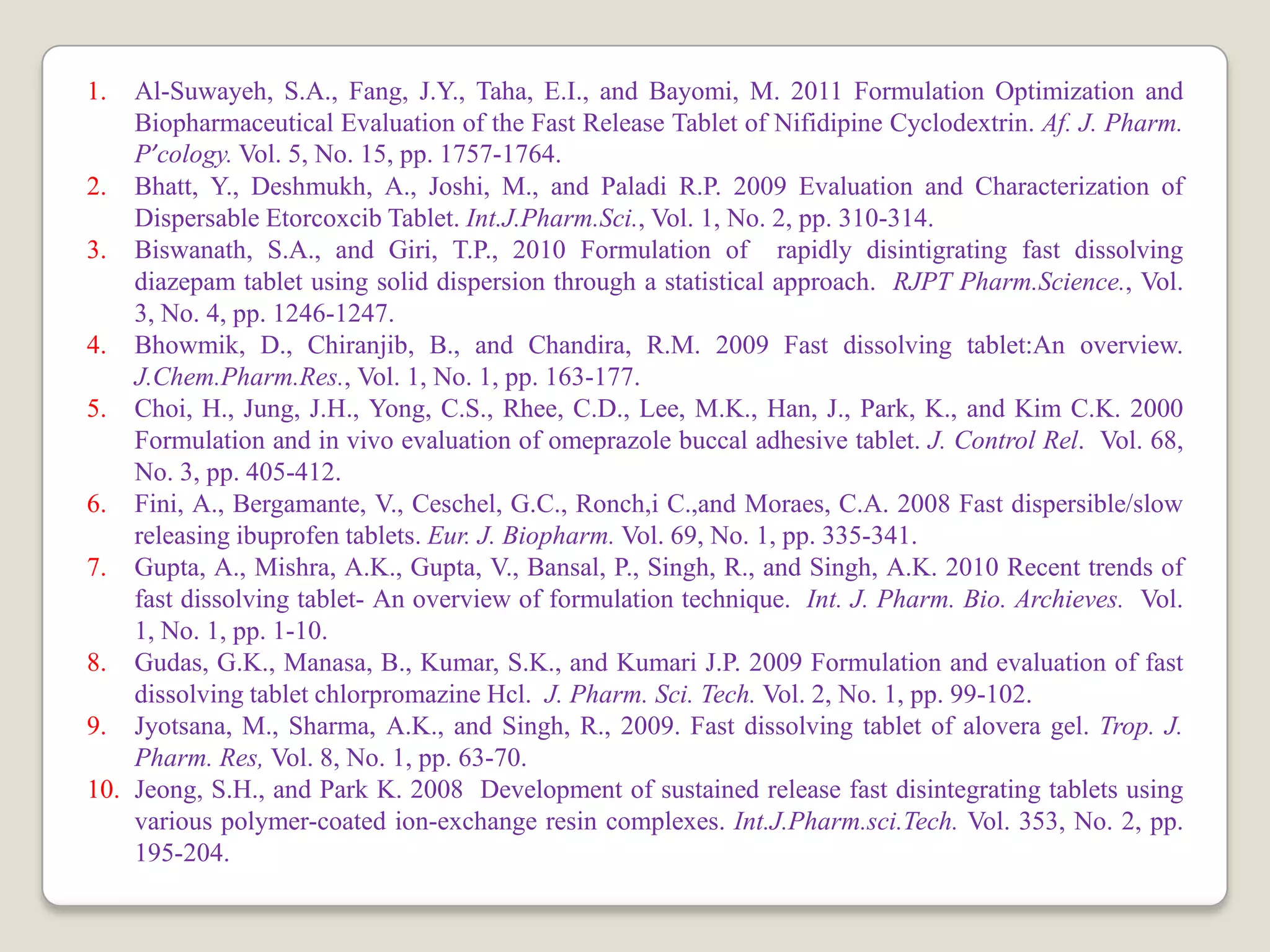
1. Al-Suwayeh, S.A., Fang, J.Y., Taha, E.I., and Bayomi, M. 2011 Formulation Optimization and
Biopharmaceutical Evaluation of the Fast Release Tablet of Nifidipine Cyclodextrin. Af. J. Pharm.
P’cology. Vol. 5, No. 15, pp. 1757-1764.
2. Bhatt, Y., Deshmukh, A., Joshi, M., and Paladi R.P. 2009 Evaluation and Characterization of
Dispersable Etorcoxcib Tablet. Int.J.Pharm.Sci., Vol. 1, No. 2, pp. 310-314.
3. Biswanath, S.A., and Giri, T.P., 2010 Formulation of rapidly disintigrating fast dissolving
diazepam tablet using solid dispersion through a statistical approach. RJPT Pharm.Science., Vol.
3, No. 4, pp. 1246-1247.
4. Bhowmik, D., Chiranjib, B., and Chandira, R.M. 2009 Fast dissolving tablet:An overview.
J.Chem.Pharm.Res., Vol. 1, No. 1, pp. 163-177.
5. Choi, H., Jung, J.H., Yong, C.S., Rhee, C.D., Lee, M.K., Han, J., Park, K., and Kim C.K. 2000
Formulation and in vivo evaluation of omeprazole buccal adhesive tablet. J. Control Rel. Vol. 68,
No. 3, pp. 405-412.
6. Fini, A., Bergamante, V., Ceschel, G.C., Ronch,i C.,and Moraes, C.A. 2008 Fast dispersible/slow
releasing ibuprofen tablets. Eur. J. Biopharm. Vol. 69, No. 1, pp. 335-341.
7. Gupta, A., Mishra, A.K., Gupta, V., Bansal, P., Singh, R., and Singh, A.K. 2010 Recent trends of
fast dissolving tablet- An overview of formulation technique. Int. J. Pharm. Bio. Archieves. Vol.
1, No. 1, pp. 1-10.
8. Gudas, G.K., Manasa, B., Kumar, S.K., and Kumari J.P. 2009 Formulation and evaluation of fast
dissolving tablet chlorpromazine Hcl. J. Pharm. Sci. Tech. Vol. 2, No. 1, pp. 99-102.
9. Jyotsana, M., Sharma, A.K., and Singh, R., 2009. Fast dissolving tablet of alovera gel. Trop. J.
Pharm. Res, Vol. 8, No. 1, pp. 63-70.
10. Jeong, S.H., and Park K. 2008 Development of sustained release fast disintegrating tablets using
various polymer-coated ion-exchange resin complexes. Int.J.Pharm.sci.Tech. Vol. 353, No. 2, pp.
195-204.
Formulation and evaluation of fast dissolving tablets

Formulation and evaluation of fast dissolving tablets

  • 1.
    FORMULATION AND EVALUATION OFFAST DISSOLVING TABLETS By Suryakant verma Under the Supervision of Dr. VIKESH KUMAR SHUKLA Assistant Director DEPARTMENT OF PHARMACEUTICS IIMT COLLEGE OF MEDICAL SCIENCE GANGA NAGAR, MAWANA ROAD, MEERUT, UTTAR PRADESH, INDIA
  • 2.
    Sr .no .Topic Slide no 1. INTRODUCTION 1 2. AIM AND OBJECTIVE 2 3. FORMULATION REVIEW 3-5 4. LITERATURE REVIEW 6-7 5. PLAN OF WORK 8-10 6. EXPECTED OUTCOMES 11 7. REFERENCE 12 Content
  • 3.
  • 4.
    The concept ofmouth dissolving drug delivery systems (MDDDS) or fast dissolving tablets emerged with an objective to improve patient’s compliance. These dosage forms rapidly disintegrate and/or dissolve to release the drug as soon as they come in contact with saliva, thus obviating the need for water during administration, an attribute that makes them highly attractive for pediatric and geriatric patients. Difficulty in swallowing conventional tablets and capsules is common among all age groups, especially in elderly and dysphagic patients.
  • 5.
  • 6.
    To improve patient’scompliance. These dosage forms design to rapidly disintegrate and/or dissolve to release the drug as soon as they come in contact with saliva, thus Obviating the need for water during administration, An attribute that makes them highly attractive for pediatric and geriatric patients.
  • 7.
  • 8.
    Techniques of MDTFormulation The fast-dissolving property of the MDTs is attributed to quick ingress of water into tablet matrix resulting in rapid disintegration. Hence, the basic approaches to develop MDTs include: •Maximizing the porous structure of the tablet matrix. •Incorporating the appropriate disintegrating agent/agents. •Using highly water-soluble excipients in the formulation.
  • 9.
  • 10.
    Various manufacturing techniquesfor MDDDS include: 1. Lyophilization 2. Moulding 3. Direct Compression 4. Cotton Candy Process 5. Spray Drying 6. Sublimation 7. Mass Extrusion 8. Nanonization 9. Fast Dissolving Films
  • 11.
  • 12.
    •Panigrahi et al(2012) have formulated fast dissolving tablet of gliclazide for rapid action by direct compression method and evaluated for post compression parameter like hardness, disintegration time, weight variation, friability, wetting time, water absorption ratio and mouth feel. The mouth feel was done by taking human volunteers in a panel scale method. Different formulation was prepared using the superdisintegrants in three individual concentration i.e. (3%, 5%, and 10%). The result obtained showed that at 10% concentration superdisintegrants showed less disintegration time and good hardness. It was concluded that formulation containing crosspovidone at 10% was selected to be the best formulation. •Rizwanulla et al (2011) have prepared fast dissolving tablet by using direct compression method and evaluated for hardness, friability, weight variation, water absorption ratio, dissolution and assay. And concluded that among the four groups (B) containing AC-Di-Sol emerged as the best formulation and showed maximum dissolution rate.
  • 13.
    •Kumar et al(2010) have developed oral fast dissolving tablets of promethazine HCl by direct compression method using camphor as subliming agent in three concentrations of 2%, 5%, & 10%. Sodium starch glycolate, crosscarmellose and tulsion 414 are used as superdisintegrants in different ratio (5%, 10%) and evaluated evaluated for weight variation, hardness, friability, drug content, disintegration time, wetting time and in vitro dissolution. The result revealed that tablets containing camphor had a good dissolution profile. •Ghorwade et al (2011) have prepared by solvent casting method using HPMC as film base with different concentration of superdisintegrants like microcrystalline cellulose and crospovidone using PEG400 as plasticizer and concluded that the release of drug from the film has followed first order kinetics. No change in the physical parameter in vitro disintegration time and drug content of F2. The data demonstrated that 4% crospovidone and 10% MCC with 4% HPMC as a film base was suitable for developing fast dissolving film of montelukast sodium.
  • 14.
  • 15.
    STAGE 1) •REVIEW OFLITERATURE •Survey •Review of articles •Review of old Resources STAGE 2) •PREFORMULATION STUDIES •Solubility Profile of drug •Melting Point of the drug •Preparation of Standard Caliberation curve •Drug Excipient Compatibility Studies
  • 16.
    STAGE 3) •FORMULATION ANDOPTIMIZATION METHODS •Zydis •Quicksolv •Lyoc •Flashtab •Orasolv •Durasolv •Wowtab •Ziplets •Advatab •Flashdose •Oraquick
  • 17.
    STAGE 4) •PHYSICAL PROPERTIES •Weightvariation test •Surface ph determination •Drug content uniformity •Mechanical strength •Particle size •Solubility STAGE 5) CHARACTERISATION •Weight variation test •Surface ph determination •Drug content uniformity •Friability •Hardness test •Water absorption test •Porosity determination •Effervescent test •In-vitro and in-vivo disintegration test. •In-vitro and in-vivo dissolution test. •Acid neutralisation test
  • 18.
  • 19.
    With continued innovationsin pharmaceutical excipients, one can expect the emergence of more novel technologies for FDTs in the days to come. These innovations may involve modifying formulation composition and processing to achieve new performance end-points or the merger of new technological advances with traditional pharmaceutical processing techniques for the production of novel mouth dissolving dosage forms. It is reasonable to expect that future trends in innovations of drug delivery systems will continue to bring together different technological disciplines to create novel technologies.
  • 20.
  • 21.
    1. Al-Suwayeh, S.A.,Fang, J.Y., Taha, E.I., and Bayomi, M. 2011 Formulation Optimization and Biopharmaceutical Evaluation of the Fast Release Tablet of Nifidipine Cyclodextrin. Af. J. Pharm. P’cology. Vol. 5, No. 15, pp. 1757-1764. 2. Bhatt, Y., Deshmukh, A., Joshi, M., and Paladi R.P. 2009 Evaluation and Characterization of Dispersable Etorcoxcib Tablet. Int.J.Pharm.Sci., Vol. 1, No. 2, pp. 310-314. 3. Biswanath, S.A., and Giri, T.P., 2010 Formulation of rapidly disintigrating fast dissolving diazepam tablet using solid dispersion through a statistical approach. RJPT Pharm.Science., Vol. 3, No. 4, pp. 1246-1247. 4. Bhowmik, D., Chiranjib, B., and Chandira, R.M. 2009 Fast dissolving tablet:An overview. J.Chem.Pharm.Res., Vol. 1, No. 1, pp. 163-177. 5. Choi, H., Jung, J.H., Yong, C.S., Rhee, C.D., Lee, M.K., Han, J., Park, K., and Kim C.K. 2000 Formulation and in vivo evaluation of omeprazole buccal adhesive tablet. J. Control Rel. Vol. 68, No. 3, pp. 405-412. 6. Fini, A., Bergamante, V., Ceschel, G.C., Ronch,i C.,and Moraes, C.A. 2008 Fast dispersible/slow releasing ibuprofen tablets. Eur. J. Biopharm. Vol. 69, No. 1, pp. 335-341. 7. Gupta, A., Mishra, A.K., Gupta, V., Bansal, P., Singh, R., and Singh, A.K. 2010 Recent trends of fast dissolving tablet- An overview of formulation technique. Int. J. Pharm. Bio. Archieves. Vol. 1, No. 1, pp. 1-10. 8. Gudas, G.K., Manasa, B., Kumar, S.K., and Kumari J.P. 2009 Formulation and evaluation of fast dissolving tablet chlorpromazine Hcl. J. Pharm. Sci. Tech. Vol. 2, No. 1, pp. 99-102. 9. Jyotsana, M., Sharma, A.K., and Singh, R., 2009. Fast dissolving tablet of alovera gel. Trop. J. Pharm. Res, Vol. 8, No. 1, pp. 63-70. 10. Jeong, S.H., and Park K. 2008 Development of sustained release fast disintegrating tablets using various polymer-coated ion-exchange resin complexes. Int.J.Pharm.sci.Tech. Vol. 353, No. 2, pp. 195-204.