Liposome preparation
and evaluation
Presented By-
Mohammad Shadab Riyaz
M.Pharm (Pharmaceutics)
BBAU Lucknow
Contents
 Introduction
 Structure of phospholipid and liposomes
 Advantages
 Disadvantages
 Classification
 Method of preparation
 Mechanism of preparation
 Applications of liposomes
 Evaluation of liposomes
 Therapeutic application of liposomes
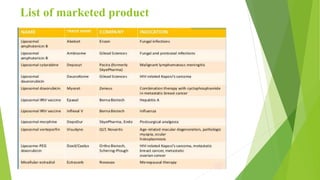
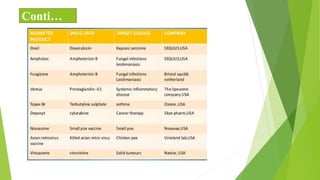
 List of marketed product
 Conclusion
 Reference
Introduction
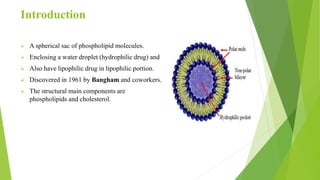
 A spherical sac of phospholipid molecules.
 Enclosing a water droplet (hydrophilic drug) and
 Also have lipophilic drug in lipophilic portion.
 Discovered in 1961 by Bangham and coworkers.
 The structural main components are
phospholipids and cholesterol.
Structure of phospholipid
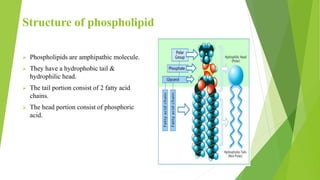
 Phospholipids are amphipathic molecule.
 They have a hydrophobic tail &
hydrophilic head.
 The tail portion consist of 2 fatty acid
chains.
 The head portion consist of phosphoric
acid.
Structure of liposomes
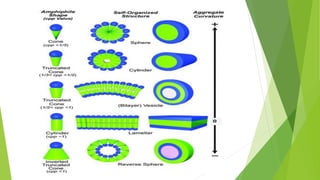
 Formation of various types of vesicles depends on CPP.
 CPP ( Critical packing parameter).
 If CPP < 0.5 than liposomes are formed by hydrophobic
effect.
 If CPP > 0.5 than liposomes are formed by hydrophilic
effect.
 If CPP value is between 0.5-1.0 than the liposomes are
formed by surfactant effect.
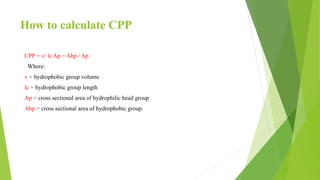
How to calculate CPP
CPP = v/ lc Ap = Ahp / Ap
Where:
v = hydrophobic group volume
lc = hydrophobic group length
Ap = cross sectional area of hydrophilic head group
Ahp = cross sectional area of hydrophobic group.
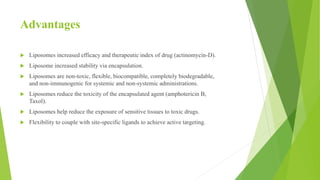
Advantages
 Liposomes increased efficacy and therapeutic index of drug (actinomycin-D).
 Liposome increased stability via encapsulation.
 Liposomes are non-toxic, flexible, biocompatible, completely biodegradable,
and non-immunogenic for systemic and non-systemic administrations.
 Liposomes reduce the toxicity of the encapsulated agent (amphotericin B,
Taxol).
 Liposomes help reduce the exposure of sensitive tissues to toxic drugs.
 Flexibility to couple with site-specific ligands to achieve active targeting.
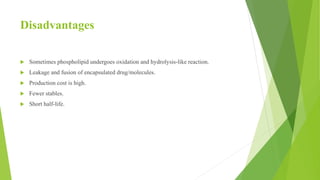
Disadvantages
 Sometimes phospholipid undergoes oxidation and hydrolysis-like reaction.
 Leakage and fusion of encapsulated drug/molecules.
 Production cost is high.
 Fewer stables.
 Short half-life.
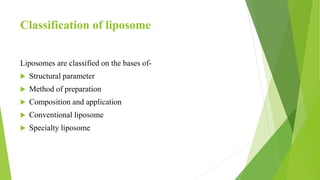
Classification of liposome
Liposomes are classified on the bases of-
 Structural parameter
 Method of preparation
 Composition and application
 Conventional liposome
 Specialty liposome
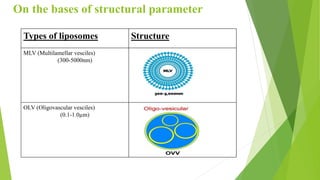
On the bases of structural parameter
Types of liposomes Structure
MLV (Multilamellar vesciles)
(300-5000nm)
OLV (Oligovascular vesciles)
(0.1-1.0µm)
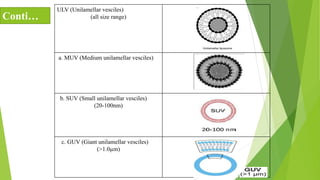
ULV (Unilamellar vesciles)
(all size range)
a. MUV (Medium unilamellar vesciles)
b. SUV (Small unilamellar vesciles)
(20-100nm)
c. GUV (Giant unilamellar vesciles)
(>1.0µm)
Conti…
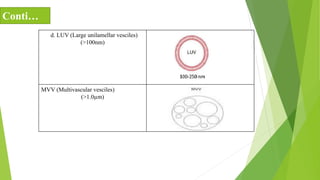
d. LUV (Large unilamellar vesciles)
(>100nm)
MVV (Multivascular vesciles)
(>1.0µm)
Conti…
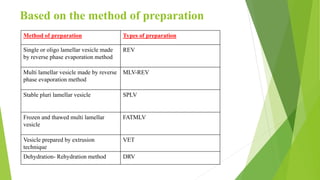
Based on the method of preparation
Method of preparation Types of preparation
Single or oligo lamellar vesicle made
by reverse phase evaporation method
REV
Multi lamellar vesicle made by reverse
phase evaporation method
MLV-REV
Stable pluri lamellar vesicle SPLV
Frozen and thawed multi lamellar
vesicle
FATMLV
Vesicle prepared by extrusion
technique
VET
Dehydration- Rehydration method DRV
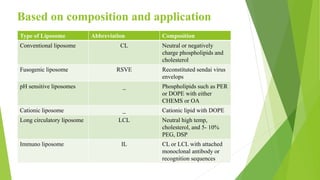
Based on composition and application
Type of Liposome Abbreviation Composition
Conventional liposome CL Neutral or negatively
charge phospholipids and
cholesterol
Fusogenic liposome RSVE Reconstituted sendai virus
envelops
pH sensitive liposomes _ Phospholipids such as PER
or DOPE with either
CHEMS or OA
Cationic liposome _ Cationic lipid with DOPE
Long circulatory liposome LCL Neutral high temp,
cholesterol, and 5- 10%
PEG, DSP
Immuno liposome IL CL or LCL with attached
monoclonal antibody or
recognition sequences
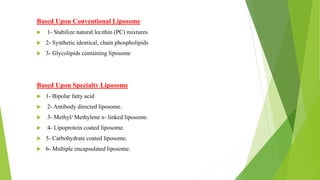
Based Upon Conventional Liposome
 1- Stabilize natural lecithin (PC) mixtures
 2- Synthetic identical, chain phospholipids
 3- Glycolipids containing liposome
Based Upon Specialty Liposome
 1- Bipolar fatty acid
 2- Antibody directed liposome.
 3- Methyl/ Methylene x- linked liposome.
 4- Lipoprotein coated liposome.
 5- Carbohydrate coated liposome.
 6- Multiple encapsulated liposome.
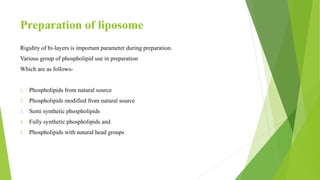
Preparation of liposome
Rigidity of bi-layers is important parameter during preparation.
Various group of phospholipid use in preparation
Which are as follows-
1. Phospholipids from natural source
2. Phospholipids modified from natural source
3. Semi synthetic phospholipids
4. Fully synthetic phospholipids and
5. Phospholipids with natural head groups
Examples of phospholipids
 Dilauryl phosphotidyl choline (DLPC)
 Dimyristoyl phosphotidyl choline (DMPC)
 Dipalmitoyl phosphotidyl choline (DPPC)
 Distearoyl phosphotidyl choline (DSPC)
 Dioleolyl phosphotidyl choline (DOPC)
 Dilauryl phosphotidyl ethanolamine (DLPE)
 Dioleoyl phosphotidyl ethanolamine (DOPE)
 Dilauryl phosphotidyl glycerol (DLPG)
 Cholestrol
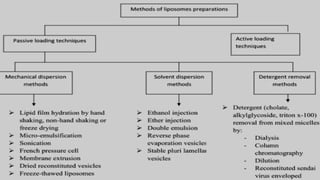
Method of preparation
Passive method
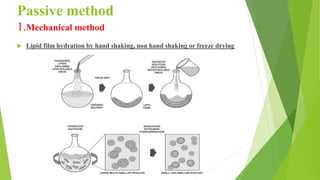
1.Mechanical method
 Lipid film hydration by hand shaking, non hand shaking or freeze drying
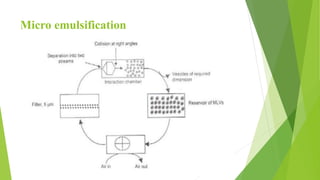
Micro emulsification
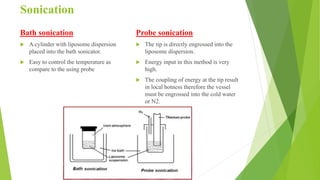
Sonication
Bath sonication
 A cylinder with liposome dispersion
placed into the bath sonicator.
 Easy to control the temperature as
compare to the using probe
Probe sonication
 The tip is directly engrossed into the
liposome dispersion.
 Energy input in this method is very
high.
 The coupling of energy at the tip result
in local hotness therefore the vessel
must be engrossed into the cold water
or N2.
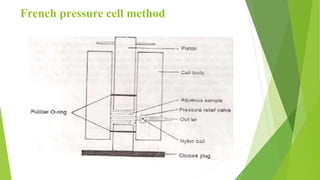
French pressure cell method
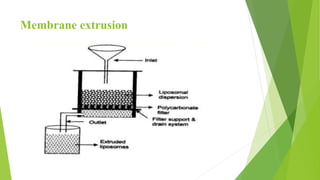
Membrane extrusion
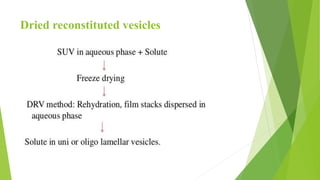
Dried reconstituted vesicles
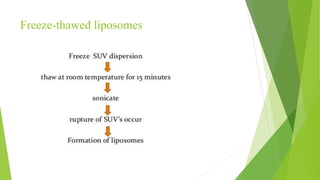
Freeze-thawed liposomes
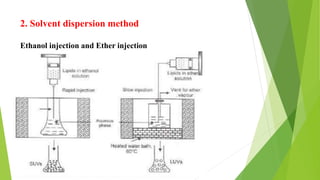
2. Solvent dispersion method
Ethanol injection and Ether injection
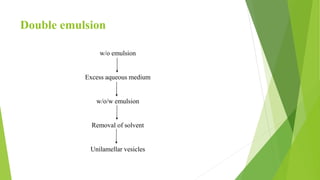
Double emulsion
w/o emulsion
Excess aqueous medium
w/o/w emulsion
Removal of solvent
Unilamellar vesicles
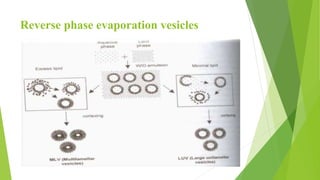
Reverse phase evaporation vesicles
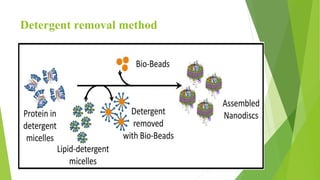
Detergent removal method
Mechanism of preparation of
liposomes
Introduction
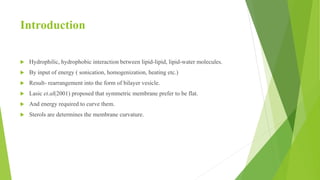
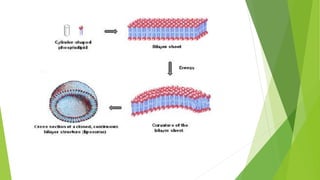
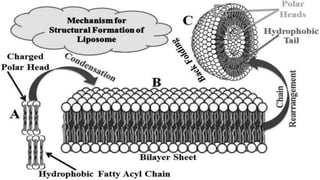
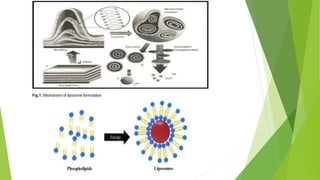
 Hydrophilic, hydrophobic interaction between lipid-lipid, lipid-water molecules.
 By input of energy ( sonication, homogenization, heating etc.)
 Result- rearrangement into the form of bilayer vesicle.
 Lasic et.al(2001) proposed that symmetric membrane prefer to be flat.
 And energy required to curve them.
 Sterols are determines the membrane curvature.
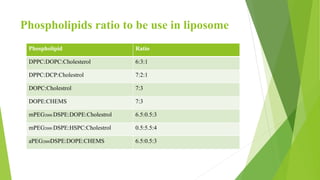
Phospholipids ratio to be use in liposome
Phospholipid Ratio
DPPC:DOPC:Cholesterol 6:3:1
DPPC:DCP:Cholestrol 7:2:1
DOPC:Cholestrol 7:3
DOPE:CHEMS 7:3
mPEG2000:DSPE:DOPE:Cholestrol 6.5:0.5:3
mPEG2000:DSPE:HSPC:Cholestrol 0.5:5.5:4
aPEG2000DSPE:DOPE:CHEMS 6.5:0.5:3
Applications of liposome
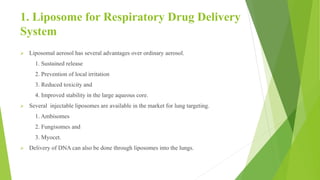
1. Liposome for Respiratory Drug Delivery
System
 Liposomal aerosol has several advantages over ordinary aerosol.
1. Sustained release
2. Prevention of local irritation
3. Reduced toxicity and
4. Improved stability in the large aqueous core.
 Several injectable liposomes are available in the market for lung targeting.
1. Ambisomes
2. Fungisomes and
3. Myocet.
 Delivery of DNA can also be done through liposomes into the lungs.
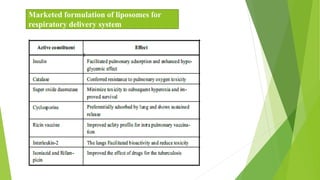
Marketed formulation of liposomes for
respiratory delivery system
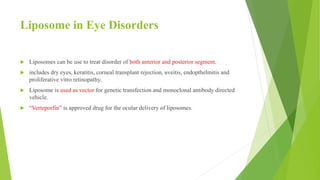
Liposome in Eye Disorders
 Liposomes can be use to treat disorder of both anterior and posterior segment.
 includes dry eyes, keratitis, corneal transplant rejection, uveitis, endopthelmitis and
proliferative vitro retinopathy.
 Liposome is used as vector for genetic transfection and monoclonal antibody directed
vehicle.
 “Verteporfin” is approved drug for the ocular delivery of liposomes.
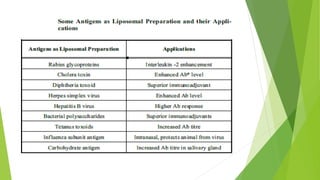
Liposome as Vaccine Adjuvant
 firmly established as immuno-adjuvant.
 Liposome acts as immuno-adjuvant by the following therapeutic points of view:
1. Liposomes as an immunological (vaccine) adjuvant
2. Liposomal vaccines
3. Liposomes as carrier of immuno modulation
4. Liposomes as a tool in immuno diagnostics.
 It act by slowly releasing antigen or by passively accumulating into the lymph node.
 It can be targeted into the lymphoid with the help of phosphotidyl serine.
Liposomes for Brain Targeting
 Liposomes with a small diameter (100 nm) as well as large diameter undergo free
diffusion through the Blood Brain Barrier (BBB).
 SUVs couples with the brain drug transport vector to cross the BBB by the absorptive
mediated transcytosis.
 cationic liposomes successfully undergo absorptive mediated endocytosis into cells.
 addition of the sulphatide (a sulphur ester of galactocerebroside) to liposome
composition increases ability to cross BBB.
 Wang et al. reported that mannose coated liposomes reach brain tissue and the mannose
coat assist transport of loaded drug through BBB.
 polysorbate 85 recognize that it enhance the significance into the brain.
eg. Amitriptylline
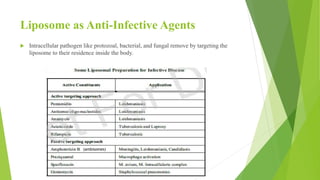
Liposome as Anti-Infective Agents
 Intracellular pathogen like protozoal, bacterial, and fungal remove by targeting the
liposome to their residence inside the body.
(ambisomes)
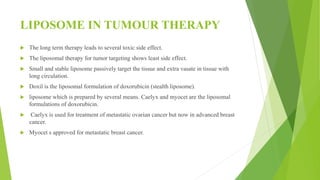
LIPOSOME IN TUMOUR THERAPY
 The long term therapy leads to several toxic side effect.
 The liposomal therapy for tumor targeting shows least side effect.
 Small and stable liposome passively target the tissue and extra vasate in tissue with
long circulation.
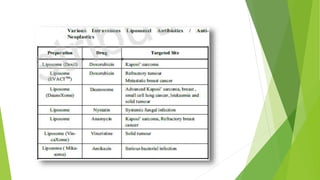
 Doxil is the liposomal formulation of doxorubicin (stealth liposome).
 liposome which is prepared by several means. Caelyx and myocet are the liposomal
formulations of doxorubicin.
 Caelyx is used for treatment of metastatic ovarian cancer but now in advanced breast
cancer.
 Myocet s approved for metastatic breast cancer.
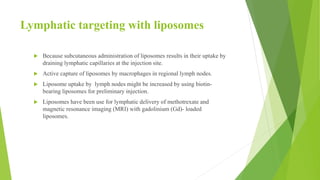
Lymphatic targeting with liposomes
 Because subcutaneous administration of liposomes results in their uptake by
draining lymphatic capillaries at the injection site.
 Active capture of liposomes by macrophages in regional lymph nodes.
 Liposome uptake by lymph nodes might be increased by using biotin-
bearing liposomes for preliminary injection.
 Liposomes have been use for lymphatic delivery of methotrexate and
magnetic resonance imaging (MRI) with gadolinium (Gd)- loaded
liposomes.
Evaluation of liposomes
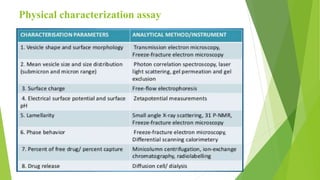
Physical characterization assay
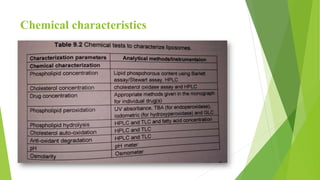
Chemical characteristics
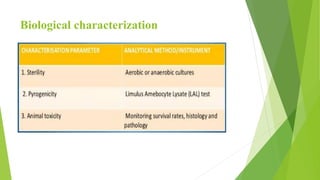
Biological characterization
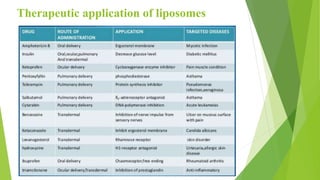
Therapeutic application of liposomes
List of marketed product
Conti…
Conclusion
 Liposomes have been used in a broad range of pharmaceutical applications.
 Liposomes are showing particular promise as intracellular delivery systems for anti-
sense molecules, ribosomes, proteins/peptides, and DNA.
 Liposomes with enhanced drug delivery to disease locations, by ability of long
circulation residence times, are now achieving clinical acceptance.
 Also, liposomes promote targeting of particular diseased cells within the disease site.
 Finally, liposomal drugs exhibit reduced toxicities and retain enhanced efficacy
compared with free complements.
 Only time will tell which of the above applications and speculations will prove to be
successful.
 However, based on the pharmaceutical applications and available products, we can say
that liposomes have definitely established their position in modern delivery systems.
Reference
 Samad et al. “Liposomal Drug Delivery Systems: An Update Review” Current Drug
Delivery, 2007, Vol. 4, No. 4 © 2007 Bentham Science Publishers Ltd.
 Mozafri, M.R & Mortzavi, S.M. (2005) “Nanoliposomes: from fundamental to recent
development” Trafford publishing ltd, Oxford, UK, ISBN 1-4120-5545-8.
 Akbarzadeh et al. “Liposome: classification, preparation, and application” Nanoscale
Research Letters20138:102 Springer. 2013.
 Vildete A.S.Carmo et al. “physichochemical characterization and study of in vitro
interactions of pH-sensitive liposomes with the complement system” Journal of
liposomes research, 18:59-70, 2008 copyright © Informa Healthcare USA, Inc. ISSN:
0898-2104 print/ 1532-2394 online.
 Cameron Montour et al. “Reproduction of a three component
(DPPC/DOPC/Cholesterol) phase diagram using coarse grained molecular dynamics”
vol. 112, issue 3, supplement 1, p74a, 3 February 2017 Biophysical journal.
 Rao Y.M, Jithan A.V “Advance in drug delivery PharmaMed Press vol. III an unit of
BSP Books Pvt., Ltd. Hyderabad.
Liposome preparation and evaluation

Liposome preparation and evaluation

  • 1.
    Liposome preparation and evaluation PresentedBy- Mohammad Shadab Riyaz M.Pharm (Pharmaceutics) BBAU Lucknow
  • 2.
    Contents  Introduction  Structureof phospholipid and liposomes  Advantages  Disadvantages  Classification  Method of preparation  Mechanism of preparation  Applications of liposomes  Evaluation of liposomes  Therapeutic application of liposomes  List of marketed product  Conclusion  Reference
  • 3.
    Introduction  A sphericalsac of phospholipid molecules.  Enclosing a water droplet (hydrophilic drug) and  Also have lipophilic drug in lipophilic portion.  Discovered in 1961 by Bangham and coworkers.  The structural main components are phospholipids and cholesterol.
  • 4.
    Structure of phospholipid Phospholipids are amphipathic molecule.  They have a hydrophobic tail & hydrophilic head.  The tail portion consist of 2 fatty acid chains.  The head portion consist of phosphoric acid.
  • 5.
    Structure of liposomes Formation of various types of vesicles depends on CPP.  CPP ( Critical packing parameter).  If CPP < 0.5 than liposomes are formed by hydrophobic effect.  If CPP > 0.5 than liposomes are formed by hydrophilic effect.  If CPP value is between 0.5-1.0 than the liposomes are formed by surfactant effect.
  • 6.
    How to calculateCPP CPP = v/ lc Ap = Ahp / Ap Where: v = hydrophobic group volume lc = hydrophobic group length Ap = cross sectional area of hydrophilic head group Ahp = cross sectional area of hydrophobic group.
  • 8.
    Advantages  Liposomes increasedefficacy and therapeutic index of drug (actinomycin-D).  Liposome increased stability via encapsulation.  Liposomes are non-toxic, flexible, biocompatible, completely biodegradable, and non-immunogenic for systemic and non-systemic administrations.  Liposomes reduce the toxicity of the encapsulated agent (amphotericin B, Taxol).  Liposomes help reduce the exposure of sensitive tissues to toxic drugs.  Flexibility to couple with site-specific ligands to achieve active targeting.
  • 9.
    Disadvantages  Sometimes phospholipidundergoes oxidation and hydrolysis-like reaction.  Leakage and fusion of encapsulated drug/molecules.  Production cost is high.  Fewer stables.  Short half-life.
  • 10.
    Classification of liposome Liposomesare classified on the bases of-  Structural parameter  Method of preparation  Composition and application  Conventional liposome  Specialty liposome
  • 11.
    On the basesof structural parameter Types of liposomes Structure MLV (Multilamellar vesciles) (300-5000nm) OLV (Oligovascular vesciles) (0.1-1.0µm)
  • 12.
    ULV (Unilamellar vesciles) (allsize range) a. MUV (Medium unilamellar vesciles) b. SUV (Small unilamellar vesciles) (20-100nm) c. GUV (Giant unilamellar vesciles) (>1.0µm) Conti…
  • 13.
    d. LUV (Largeunilamellar vesciles) (>100nm) MVV (Multivascular vesciles) (>1.0µm) Conti…
  • 14.
    Based on themethod of preparation Method of preparation Types of preparation Single or oligo lamellar vesicle made by reverse phase evaporation method REV Multi lamellar vesicle made by reverse phase evaporation method MLV-REV Stable pluri lamellar vesicle SPLV Frozen and thawed multi lamellar vesicle FATMLV Vesicle prepared by extrusion technique VET Dehydration- Rehydration method DRV
  • 15.
    Based on compositionand application Type of Liposome Abbreviation Composition Conventional liposome CL Neutral or negatively charge phospholipids and cholesterol Fusogenic liposome RSVE Reconstituted sendai virus envelops pH sensitive liposomes _ Phospholipids such as PER or DOPE with either CHEMS or OA Cationic liposome _ Cationic lipid with DOPE Long circulatory liposome LCL Neutral high temp, cholesterol, and 5- 10% PEG, DSP Immuno liposome IL CL or LCL with attached monoclonal antibody or recognition sequences
  • 16.
    Based Upon ConventionalLiposome  1- Stabilize natural lecithin (PC) mixtures  2- Synthetic identical, chain phospholipids  3- Glycolipids containing liposome Based Upon Specialty Liposome  1- Bipolar fatty acid  2- Antibody directed liposome.  3- Methyl/ Methylene x- linked liposome.  4- Lipoprotein coated liposome.  5- Carbohydrate coated liposome.  6- Multiple encapsulated liposome.
  • 17.
    Preparation of liposome Rigidityof bi-layers is important parameter during preparation. Various group of phospholipid use in preparation Which are as follows- 1. Phospholipids from natural source 2. Phospholipids modified from natural source 3. Semi synthetic phospholipids 4. Fully synthetic phospholipids and 5. Phospholipids with natural head groups
  • 18.
    Examples of phospholipids Dilauryl phosphotidyl choline (DLPC)  Dimyristoyl phosphotidyl choline (DMPC)  Dipalmitoyl phosphotidyl choline (DPPC)  Distearoyl phosphotidyl choline (DSPC)  Dioleolyl phosphotidyl choline (DOPC)  Dilauryl phosphotidyl ethanolamine (DLPE)  Dioleoyl phosphotidyl ethanolamine (DOPE)  Dilauryl phosphotidyl glycerol (DLPG)  Cholestrol
  • 19.
  • 21.
    Passive method 1.Mechanical method Lipid film hydration by hand shaking, non hand shaking or freeze drying
  • 22.
  • 23.
    Sonication Bath sonication  Acylinder with liposome dispersion placed into the bath sonicator.  Easy to control the temperature as compare to the using probe Probe sonication  The tip is directly engrossed into the liposome dispersion.  Energy input in this method is very high.  The coupling of energy at the tip result in local hotness therefore the vessel must be engrossed into the cold water or N2.
  • 24.
  • 25.
  • 26.
  • 27.
  • 28.
    2. Solvent dispersionmethod Ethanol injection and Ether injection
  • 29.
    Double emulsion w/o emulsion Excessaqueous medium w/o/w emulsion Removal of solvent Unilamellar vesicles
  • 30.
  • 31.
  • 32.
  • 33.
    Introduction  Hydrophilic, hydrophobicinteraction between lipid-lipid, lipid-water molecules.  By input of energy ( sonication, homogenization, heating etc.)  Result- rearrangement into the form of bilayer vesicle.  Lasic et.al(2001) proposed that symmetric membrane prefer to be flat.  And energy required to curve them.  Sterols are determines the membrane curvature.
  • 37.
    Phospholipids ratio tobe use in liposome Phospholipid Ratio DPPC:DOPC:Cholesterol 6:3:1 DPPC:DCP:Cholestrol 7:2:1 DOPC:Cholestrol 7:3 DOPE:CHEMS 7:3 mPEG2000:DSPE:DOPE:Cholestrol 6.5:0.5:3 mPEG2000:DSPE:HSPC:Cholestrol 0.5:5.5:4 aPEG2000DSPE:DOPE:CHEMS 6.5:0.5:3
  • 38.
  • 39.
    1. Liposome forRespiratory Drug Delivery System  Liposomal aerosol has several advantages over ordinary aerosol. 1. Sustained release 2. Prevention of local irritation 3. Reduced toxicity and 4. Improved stability in the large aqueous core.  Several injectable liposomes are available in the market for lung targeting. 1. Ambisomes 2. Fungisomes and 3. Myocet.  Delivery of DNA can also be done through liposomes into the lungs.
  • 40.
    Marketed formulation ofliposomes for respiratory delivery system
  • 41.
    Liposome in EyeDisorders  Liposomes can be use to treat disorder of both anterior and posterior segment.  includes dry eyes, keratitis, corneal transplant rejection, uveitis, endopthelmitis and proliferative vitro retinopathy.  Liposome is used as vector for genetic transfection and monoclonal antibody directed vehicle.  “Verteporfin” is approved drug for the ocular delivery of liposomes.
  • 42.
    Liposome as VaccineAdjuvant  firmly established as immuno-adjuvant.  Liposome acts as immuno-adjuvant by the following therapeutic points of view: 1. Liposomes as an immunological (vaccine) adjuvant 2. Liposomal vaccines 3. Liposomes as carrier of immuno modulation 4. Liposomes as a tool in immuno diagnostics.  It act by slowly releasing antigen or by passively accumulating into the lymph node.  It can be targeted into the lymphoid with the help of phosphotidyl serine.
  • 44.
    Liposomes for BrainTargeting  Liposomes with a small diameter (100 nm) as well as large diameter undergo free diffusion through the Blood Brain Barrier (BBB).  SUVs couples with the brain drug transport vector to cross the BBB by the absorptive mediated transcytosis.  cationic liposomes successfully undergo absorptive mediated endocytosis into cells.  addition of the sulphatide (a sulphur ester of galactocerebroside) to liposome composition increases ability to cross BBB.  Wang et al. reported that mannose coated liposomes reach brain tissue and the mannose coat assist transport of loaded drug through BBB.  polysorbate 85 recognize that it enhance the significance into the brain. eg. Amitriptylline
  • 45.
    Liposome as Anti-InfectiveAgents  Intracellular pathogen like protozoal, bacterial, and fungal remove by targeting the liposome to their residence inside the body. (ambisomes)
  • 46.
    LIPOSOME IN TUMOURTHERAPY  The long term therapy leads to several toxic side effect.  The liposomal therapy for tumor targeting shows least side effect.  Small and stable liposome passively target the tissue and extra vasate in tissue with long circulation.  Doxil is the liposomal formulation of doxorubicin (stealth liposome).  liposome which is prepared by several means. Caelyx and myocet are the liposomal formulations of doxorubicin.  Caelyx is used for treatment of metastatic ovarian cancer but now in advanced breast cancer.  Myocet s approved for metastatic breast cancer.
  • 48.
    Lymphatic targeting withliposomes  Because subcutaneous administration of liposomes results in their uptake by draining lymphatic capillaries at the injection site.  Active capture of liposomes by macrophages in regional lymph nodes.  Liposome uptake by lymph nodes might be increased by using biotin- bearing liposomes for preliminary injection.  Liposomes have been use for lymphatic delivery of methotrexate and magnetic resonance imaging (MRI) with gadolinium (Gd)- loaded liposomes.
  • 49.
  • 50.
  • 51.
  • 52.
  • 53.
  • 54.
  • 55.
  • 56.
    Conclusion  Liposomes havebeen used in a broad range of pharmaceutical applications.  Liposomes are showing particular promise as intracellular delivery systems for anti- sense molecules, ribosomes, proteins/peptides, and DNA.  Liposomes with enhanced drug delivery to disease locations, by ability of long circulation residence times, are now achieving clinical acceptance.  Also, liposomes promote targeting of particular diseased cells within the disease site.  Finally, liposomal drugs exhibit reduced toxicities and retain enhanced efficacy compared with free complements.  Only time will tell which of the above applications and speculations will prove to be successful.  However, based on the pharmaceutical applications and available products, we can say that liposomes have definitely established their position in modern delivery systems.
  • 57.
    Reference  Samad etal. “Liposomal Drug Delivery Systems: An Update Review” Current Drug Delivery, 2007, Vol. 4, No. 4 © 2007 Bentham Science Publishers Ltd.  Mozafri, M.R & Mortzavi, S.M. (2005) “Nanoliposomes: from fundamental to recent development” Trafford publishing ltd, Oxford, UK, ISBN 1-4120-5545-8.  Akbarzadeh et al. “Liposome: classification, preparation, and application” Nanoscale Research Letters20138:102 Springer. 2013.  Vildete A.S.Carmo et al. “physichochemical characterization and study of in vitro interactions of pH-sensitive liposomes with the complement system” Journal of liposomes research, 18:59-70, 2008 copyright © Informa Healthcare USA, Inc. ISSN: 0898-2104 print/ 1532-2394 online.  Cameron Montour et al. “Reproduction of a three component (DPPC/DOPC/Cholesterol) phase diagram using coarse grained molecular dynamics” vol. 112, issue 3, supplement 1, p74a, 3 February 2017 Biophysical journal.  Rao Y.M, Jithan A.V “Advance in drug delivery PharmaMed Press vol. III an unit of BSP Books Pvt., Ltd. Hyderabad.