Etching
By Deepak Rawat
GBPEC Pauri
Uttarakhand
India(246001)
(An important step in IC fabrication )
Outline
 What is Etching
 Steps preceding Etching in IC
Fabrication
 Types of Etching
 Simple Idea of Wet Etching
 Plasma Etching
 What is Plasma
 Anisotropy and Selectivity
 Advantage of Plasma Etching over
Wet Etching
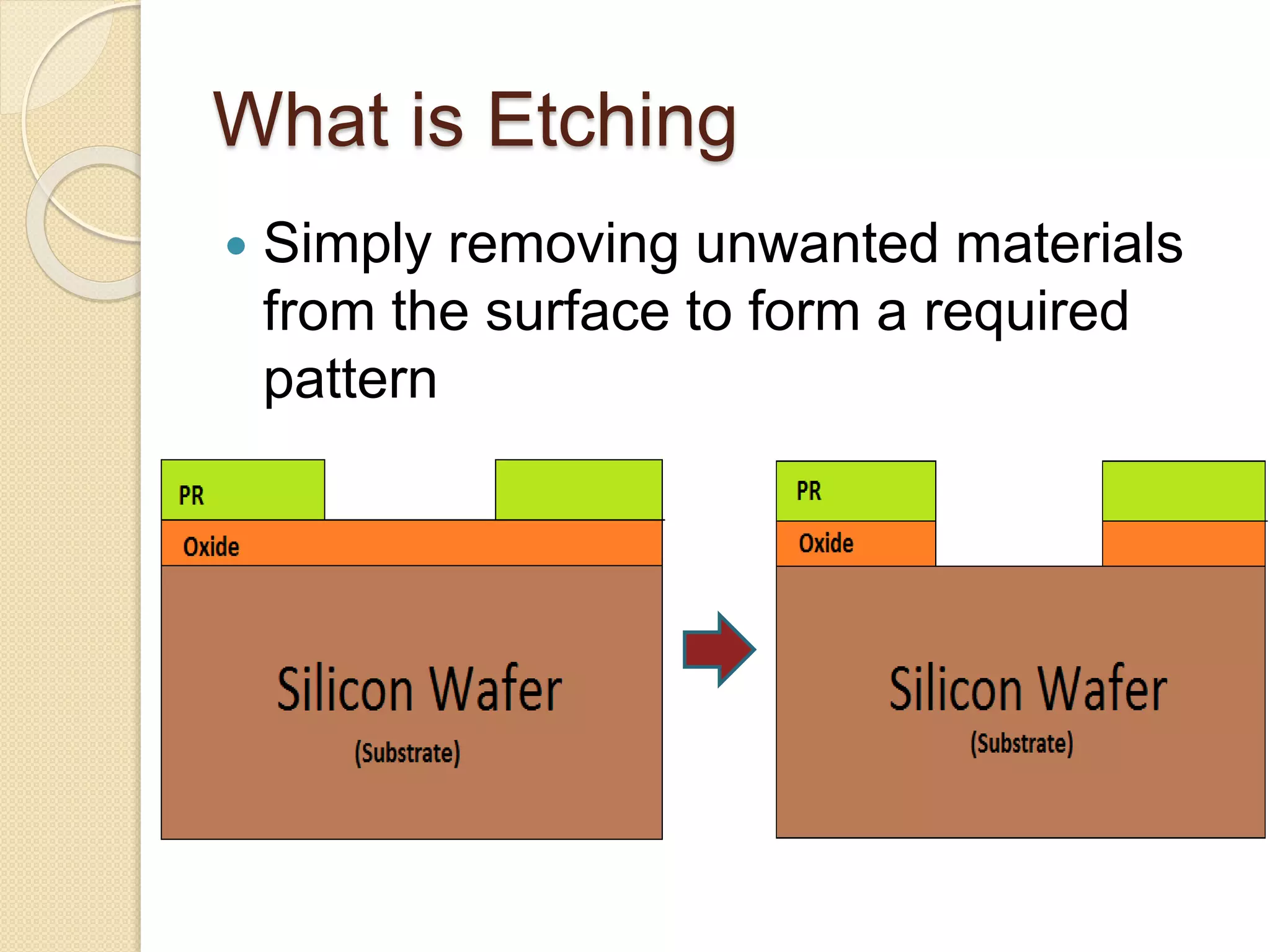
What is Etching
 Simply removing unwanted materials
from the surface to form a required
pattern
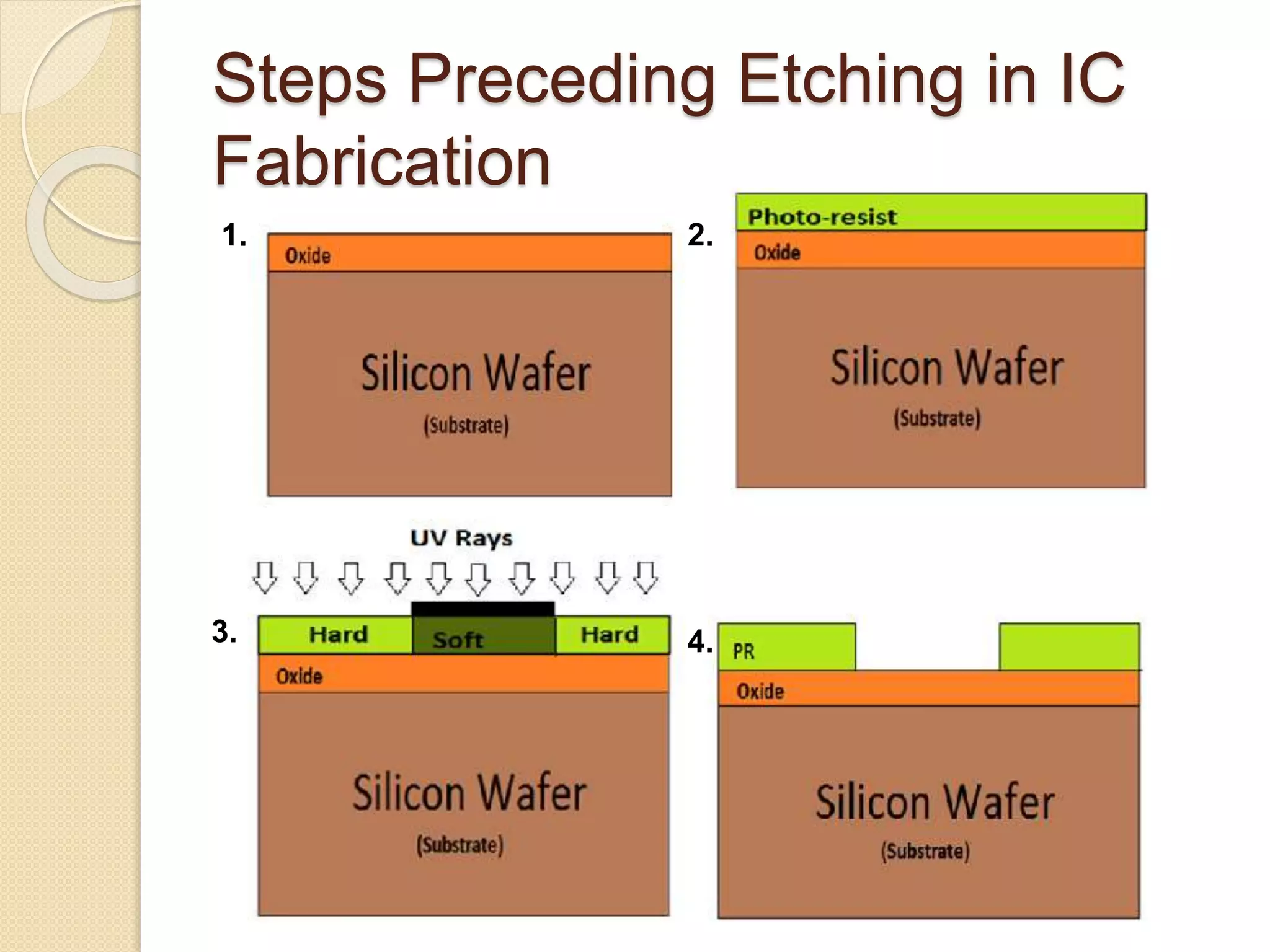
Steps Preceding Etching in IC
Fabrication
1. 2.
3. 4.
Types of Etching
 Two types of Etching
◦ Wet Etching:
◦ Etching is done by liquid chemicals
◦ Unmasked areas are etched away by the
chemical reactions (Oxidation and Reduction )
◦ Plasma Etching (Dry Etching):
◦ Etching is done exposing the material into
bombardment of ions in Plasma
Simple idea of Wet Etching
 Etchants: KOH, HF, BF6, BCl3

SiO 2 6HF  H2SiF6  2H2O
Plasma Etching (Dry Etching)
 Faster and Easier way
 Both chemical and ionic species play
the roll
What is Plasma
 State of mater which consist free
electrons and cations
 Plasma looks similar to the gases
 Plasma is also called as ionised gases
 In Plasma high number of electrons
does not move around in orbits
 Plasma is created when gas is either
exposed to high temp. Or high voltage
 Due to these free electrons and
cations Plasma easily conducts
electricity and also produce magnetic
field.
 Nature also produces plasma by
means of fire and lightning.
 What happens inside plasma
Physical Etching inside the
Plasma
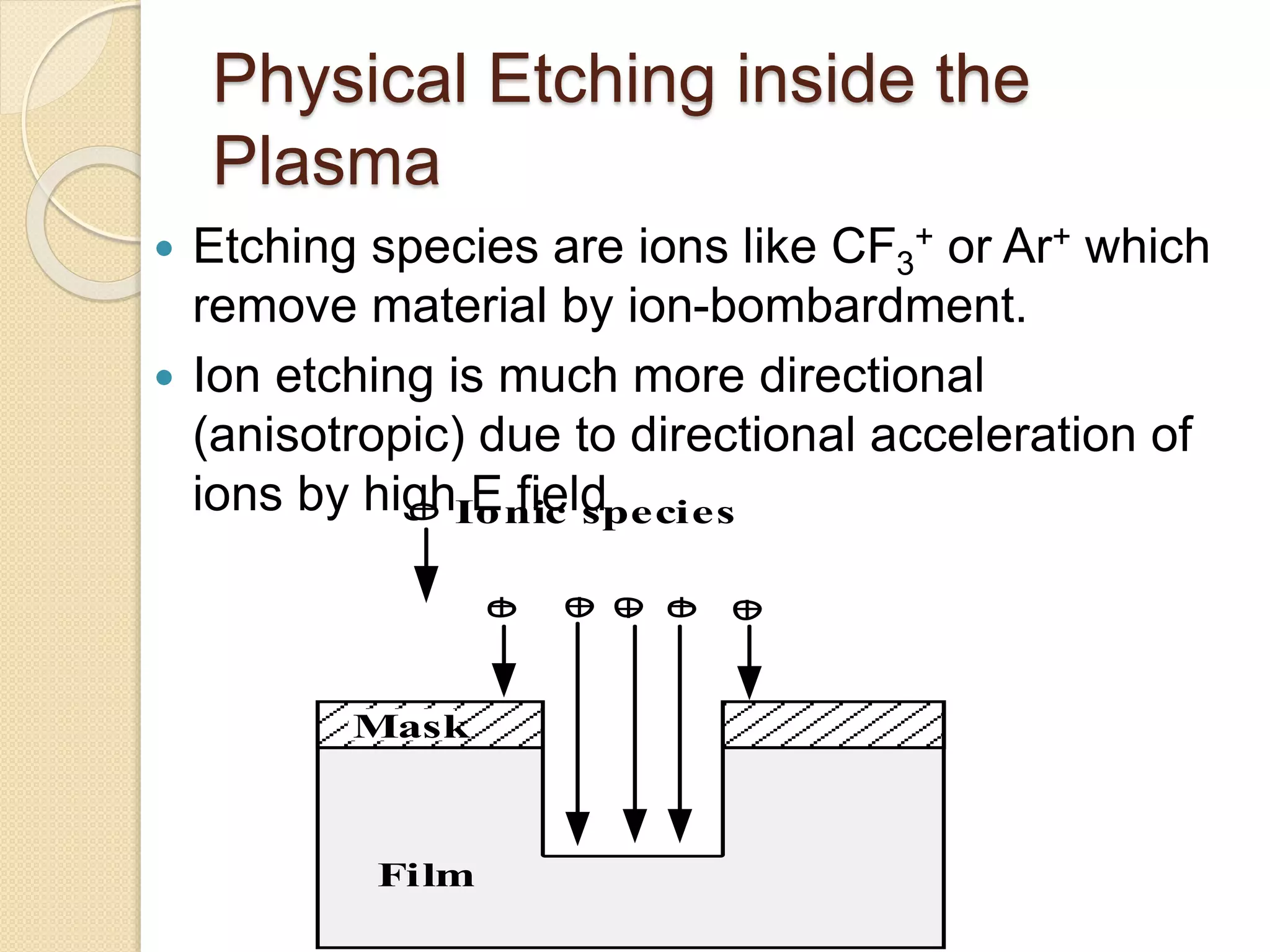
 Etching species are ions like CF3
+ or Ar+ which
remove material by ion-bombardment.
 Ion etching is much more directional
(anisotropic) due to directional acceleration of
ions by high E field
Mask
Film
+ +
Ionic species
+ + +
+
Anisotropy
 Etchant can not distinguishes b/w
vertical or horizontal dimensions
(isotropic).
 Anisotropy = 1 – dH/dV
 Wet etching is isotropic and dry etching
is anisotropic.
Selectivity
 Etchant should distinguish b/w SiO2
and Si wafer.
 Wet Etching is Selective than Dry
Etching.
Advantages of Plasma Etching
over Wet Etching
 Eliminates handling of dangerous
acids and solvents.
 Uses small amounts of chemicals.
 Anisotropic etch profiles.
 High resolution and cleanliness.
 Less undercutting.
 Better process control.
Etching

Etching

  • 1.
    Etching By Deepak Rawat GBPECPauri Uttarakhand India(246001) (An important step in IC fabrication )
  • 2.
    Outline  What isEtching  Steps preceding Etching in IC Fabrication  Types of Etching  Simple Idea of Wet Etching  Plasma Etching  What is Plasma  Anisotropy and Selectivity  Advantage of Plasma Etching over Wet Etching
  • 3.
    What is Etching Simply removing unwanted materials from the surface to form a required pattern
  • 4.
    Steps Preceding Etchingin IC Fabrication 1. 2. 3. 4.
  • 5.
    Types of Etching Two types of Etching ◦ Wet Etching: ◦ Etching is done by liquid chemicals ◦ Unmasked areas are etched away by the chemical reactions (Oxidation and Reduction ) ◦ Plasma Etching (Dry Etching): ◦ Etching is done exposing the material into bombardment of ions in Plasma
  • 6.
    Simple idea ofWet Etching  Etchants: KOH, HF, BF6, BCl3  SiO 2 6HF  H2SiF6  2H2O
  • 7.
    Plasma Etching (DryEtching)  Faster and Easier way  Both chemical and ionic species play the roll
  • 8.
    What is Plasma State of mater which consist free electrons and cations  Plasma looks similar to the gases  Plasma is also called as ionised gases
  • 9.
     In Plasmahigh number of electrons does not move around in orbits  Plasma is created when gas is either exposed to high temp. Or high voltage
  • 10.
     Due tothese free electrons and cations Plasma easily conducts electricity and also produce magnetic field.  Nature also produces plasma by means of fire and lightning.
  • 11.
     What happensinside plasma
  • 12.
    Physical Etching insidethe Plasma  Etching species are ions like CF3 + or Ar+ which remove material by ion-bombardment.  Ion etching is much more directional (anisotropic) due to directional acceleration of ions by high E field Mask Film + + Ionic species + + + +
  • 13.
    Anisotropy  Etchant cannot distinguishes b/w vertical or horizontal dimensions (isotropic).  Anisotropy = 1 – dH/dV  Wet etching is isotropic and dry etching is anisotropic.
  • 14.
    Selectivity  Etchant shoulddistinguish b/w SiO2 and Si wafer.  Wet Etching is Selective than Dry Etching.
  • 15.
    Advantages of PlasmaEtching over Wet Etching  Eliminates handling of dangerous acids and solvents.  Uses small amounts of chemicals.  Anisotropic etch profiles.  High resolution and cleanliness.  Less undercutting.  Better process control.