Membranous
Conjunctivitis
Tarun Prudvi B.
MBBS 3rd Professional Part 1
What is all about this.
In children some cases present with conjunctivitis of either unilateral or
both eyes.
There may be typical conjunctivitis signs showing presence of follicles,
papillae.
The conjunctiva may be reddened (congested) w/ itching or watering of
eye.The child may cry in pain.
By ocular observation we might find presence of discharge in the lower
fornix or at the canthus of the eye.
Though membranous conjunctivitis occur in children it might also
present in adults.
Membranous conjunctivitis
It is characterized by unilateral or bilateral
conjunctivitis of eyes with presence of either
pseudo membrane or fibrinous membrane
either on palpebral or bulbar conjunctiva which
is made-up of fibrinous exudate that may or
may not be firmly adherent to the epithelium of
conjunctiva.
Causes of membranous conjunctivitis
▪ Bacterial causes
a) Corynyebacteruim diphtheriae
b) Beta Hemolytic streptococci
c) Streptococcus pneumoniae
d) Neisseria gonorrhea
e) Staphylococcus aureus
f) Escherichia coli
 Chemical and thermal burns
 Viral.
These things need emphasis.
▪ Diphtheritic infection chiefly occurs in
children who are not immunized.
▪ Streptococcal conjunctivitis occurs in
children associated with measles,
scarlet fever, whooping cough,
influenza.
It might occur in elderly
individuals with erysipelas.
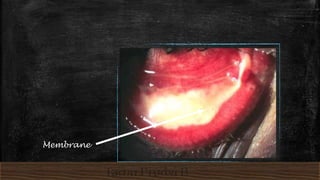
Membrane
Clinical Presentation
▪ Mild cases
– Swelling of the lids with
mucopurulent or sanguineous
discharge
– On everting the lid palpebral
conjunctiva is seen to be covered
by white membrane that is easily
peelable. This form is referred as
Pseudo membranous
conjunctivitis.
– Associated with signs of
conjunctivitis.
▪ Severe cases
– Lids are brawny (hefty)
– Conjunctiva shows semi solid exudates;
which impair mobility and prevent
formation of free discharge. And it
compresses the vessels and tend to
necrotize the cornea and underlying
conjunctiva
– Here, membrane separates less easily
and may tend to bleed.
– This form is referred as membranous
conjunctivitis
– Associated with signs of
conjunctivitis.
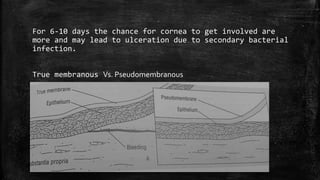
For 6-10 days the chance for cornea to get involved are
more and may lead to ulceration due to secondary bacterial
infection.
True membranous Vs. Pseudomembranous
Membrane is made-up of fibrinous exudate that may or may
not be firmly adherent to the epithelium of conjunctiva.
If adhered tightly it is membranous and vice-versa.
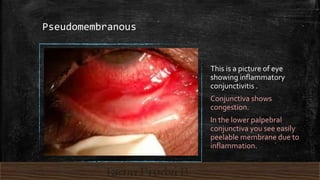
Pseudomembranous
This is a picture of eye
showing inflammatory
conjunctivitis .
Conjunctiva shows
congestion.
In the lower palpebral
conjunctiva you see easily
peelable membrane due to
inflammation.
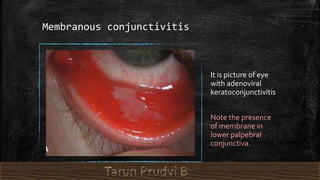
Membranous conjunctivitis
It is picture of eye
with adenoviral
keratoconjunctivitis
Note the presence
of membrane in
lower palpebral
conjunctiva.
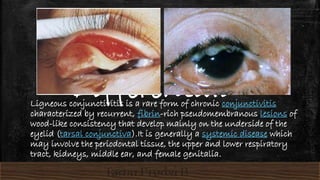
DifferentialLigneous conjunctivitis is a rare form of chronic conjunctivitis
characterized by recurrent, fibrin-rich pseudomembranous lesions of
wood-like consistency that develop mainly on the underside of the
eyelid (tarsal conjunctiva).It is generally a systemic disease which
may involve the periodontal tissue, the upper and lower respiratory
tract, kidneys, middle ear, and female genitalia.
Diagnosis:
Take a part of membrane and send for microbiological
examination.
And start with antibiotics.
Treatment
In children who are not immunized every case is treated as
diphtheritic infection unless films and cultures give negative
evidence.
Administration of freshly made topical 10,000 units/ml drops from
injectable solution. And systemic administration of penicillin along
with antidiphtheritic serum (4000-10000 units repeated 12 hourly)
In other bacterial causes antibiotic drops are prescribed. If cornea
involved the cyclopegics are given.
Complications:
If membrane is removed inadvertently it
may precipitate symblepharon. So removal
of membrane is not required.
ThankYou

Membranous conjunctivitis

  • 1.
  • 2.
    What is allabout this. In children some cases present with conjunctivitis of either unilateral or both eyes. There may be typical conjunctivitis signs showing presence of follicles, papillae. The conjunctiva may be reddened (congested) w/ itching or watering of eye.The child may cry in pain. By ocular observation we might find presence of discharge in the lower fornix or at the canthus of the eye. Though membranous conjunctivitis occur in children it might also present in adults.
  • 3.
    Membranous conjunctivitis It ischaracterized by unilateral or bilateral conjunctivitis of eyes with presence of either pseudo membrane or fibrinous membrane either on palpebral or bulbar conjunctiva which is made-up of fibrinous exudate that may or may not be firmly adherent to the epithelium of conjunctiva.
  • 4.
    Causes of membranousconjunctivitis ▪ Bacterial causes a) Corynyebacteruim diphtheriae b) Beta Hemolytic streptococci c) Streptococcus pneumoniae d) Neisseria gonorrhea e) Staphylococcus aureus f) Escherichia coli  Chemical and thermal burns  Viral.
  • 5.
    These things needemphasis. ▪ Diphtheritic infection chiefly occurs in children who are not immunized. ▪ Streptococcal conjunctivitis occurs in children associated with measles, scarlet fever, whooping cough, influenza. It might occur in elderly individuals with erysipelas.
  • 6.
  • 7.
    Clinical Presentation ▪ Mildcases – Swelling of the lids with mucopurulent or sanguineous discharge – On everting the lid palpebral conjunctiva is seen to be covered by white membrane that is easily peelable. This form is referred as Pseudo membranous conjunctivitis. – Associated with signs of conjunctivitis. ▪ Severe cases – Lids are brawny (hefty) – Conjunctiva shows semi solid exudates; which impair mobility and prevent formation of free discharge. And it compresses the vessels and tend to necrotize the cornea and underlying conjunctiva – Here, membrane separates less easily and may tend to bleed. – This form is referred as membranous conjunctivitis – Associated with signs of conjunctivitis.
  • 8.
    For 6-10 daysthe chance for cornea to get involved are more and may lead to ulceration due to secondary bacterial infection. True membranous Vs. Pseudomembranous
  • 9.
    Membrane is made-upof fibrinous exudate that may or may not be firmly adherent to the epithelium of conjunctiva. If adhered tightly it is membranous and vice-versa.
  • 10.
    Pseudomembranous This is apicture of eye showing inflammatory conjunctivitis . Conjunctiva shows congestion. In the lower palpebral conjunctiva you see easily peelable membrane due to inflammation.
  • 11.
    Membranous conjunctivitis It ispicture of eye with adenoviral keratoconjunctivitis Note the presence of membrane in lower palpebral conjunctiva.
  • 12.
    DifferentialLigneous conjunctivitis isa rare form of chronic conjunctivitis characterized by recurrent, fibrin-rich pseudomembranous lesions of wood-like consistency that develop mainly on the underside of the eyelid (tarsal conjunctiva).It is generally a systemic disease which may involve the periodontal tissue, the upper and lower respiratory tract, kidneys, middle ear, and female genitalia.
  • 13.
    Diagnosis: Take a partof membrane and send for microbiological examination. And start with antibiotics.
  • 14.
    Treatment In children whoare not immunized every case is treated as diphtheritic infection unless films and cultures give negative evidence. Administration of freshly made topical 10,000 units/ml drops from injectable solution. And systemic administration of penicillin along with antidiphtheritic serum (4000-10000 units repeated 12 hourly) In other bacterial causes antibiotic drops are prescribed. If cornea involved the cyclopegics are given.
  • 15.
    Complications: If membrane isremoved inadvertently it may precipitate symblepharon. So removal of membrane is not required.
  • 16.