ENGINE CYLINDER
&
ENGINE TYPES
MUMTAZ ALI PANHWAR
12ME69
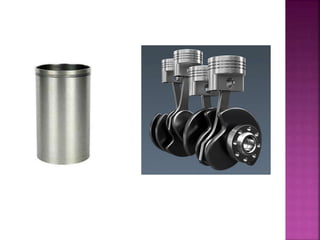
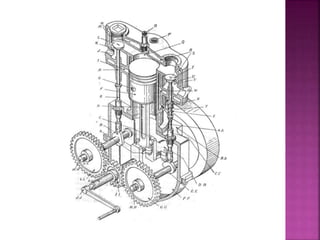
A cylinder is the central working part
of a reciprocating engine.
OR
The space in which a piston travels is
also known as Engine cylinder.
Cylinders may be sleeved(lined with a
harder metal) or sleeveless ( with a
wear resistant coating such as Nikasil).
 A piston is seated inside cylinders by several
metal piston rings .
 These piston rings are fitted around piston
outside surface in machined grooves,
typically two for compression sealing and one
to the seal oil.
Single cylinder engines
AND
Multi cylinders engines
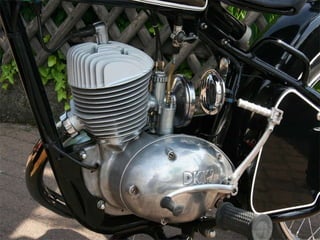
A single cylinder engine is a basic
piston engine configuration of an
internal combustion engine.
Single cylinder engines are simple
and compact and will often deliver
the maximum power possible within
a given envelop.
It often seen on motorcycles,
auto rickshaws, motor scooters ,
garden machinery , automobiles
and tractors , etc.
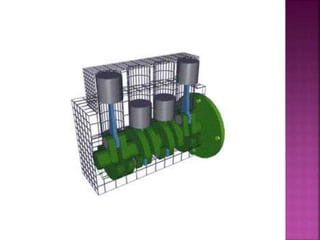
 A multi-cylinder engine is a reciprocating,
an internal combustion engine with multiple
cylinders.
 The more cylinders, the more power .
 Multiple cylinders have better torque ,
efficiency and are better balanced.
 Consider a engine containing four cylinders,
the firing order such not like that 1-2-3-4
because if we are supplying the air in
cylinder number 1, the fire is take place
inside the cylinder so for the cylinder
number 2 the air is not sufficient. So that
affects the efficiency.
 So the firing order should be 1-4-3-2 or
1-4-2-3.
 When the number of cylinders are more, the
more power will be produced but less fuel
economy and vice versa.
 It’s not all completely correct, in some case
a multi cylinder engine can have a better
fuel economy as compared to a single
cylinder engine, it depends on the capacity
of the cylinders and the size of valves and
how much they allow the fuel and air
mixture( In S.I engines or petrol engines) or
air for diesel engines.
The engine types are :
Flat
Inline
V – type
W-type
Wankel
The engine types are usually
used in the following order,
depending on the number of
cylinders: I-4, V-6, V-8, V-10,
V-12, W-16.
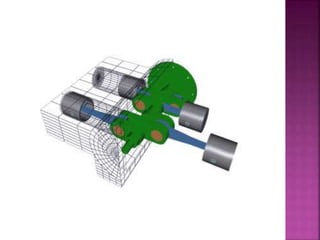
 Flat engines are called flat because that is
exactly what they are. The cylinders lie flat.
Half of the cylinders are located on one side
of the crank shaft and the other half on the
other side.
 The advantage to having your cylinders
horizontal is that the engine can be placed
lower in the car. This makes the car more
stable because of a lower center of gravity
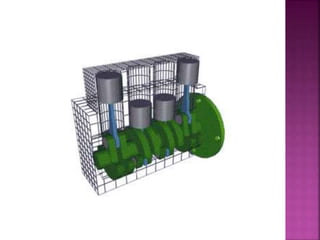
 Inline engines have cylinders on top of the crank
shaft.
 They stand inline at a vertical 90 degrees.
 Inline engines run smooth and can provide a lot
of power. The engines, though, are longer then
any other type.
 . In cars today, most inline engines have small
cylinders so length is not an issue. Above all,
Honda's and many imports of today are known
for their inline 4's today. Usually I-4 or I-6 for
cars. Some marine engines have been made that
use the I-Engine type with up to 14 cylinders.
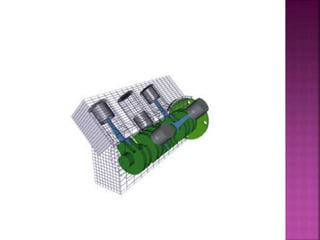
 The cylinders are arranged in a V pattern.
 V-8's and V-6's engine types exist today in
many American cars and trucks.
 The cylinders are located on oppsite sides of
the crank shaft and are elevated up a varying
amount of degrees depending on the
manufacturer.
 The V-type engine is known for using a
pushrod valve system. Usually V-6, V-8, V-10,
and V-12.
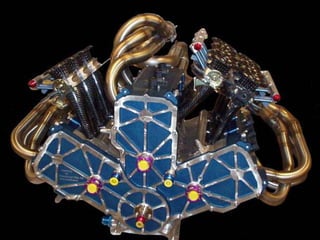
 In W-type engines, the arrangement of
cylinders are of W shape.
 W-Type engines are found in few cars.
 W-engine types work well for a large number
of cylinders because everything becomes
more compact and shorter. Though, they are
more compact, the disadvantage is that they
are hard to fix and more expensive to repair.
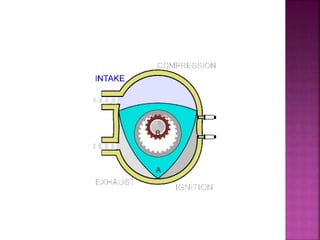
 Wankel engines are also know as rotary
engines.
 Wankel engines are completely different
from any other type of automotive engines.
 It does not have pistons.
 Rather a single triangular rotor spins around
a peanut shaped chamber. The triangular
rotor is a special type of triangle also known
as a Reuleaux triangle. This triangle has an
equal diameter relative to the center at all
times.
 . The shape it is based off of an equilateral
triangle. The reason this type of triangle is
necessary is to ensure a seal during the
triangles rotation at the center of the
housing. There is a single straight shaft
through the center of one of these engines
that serves the purpose of a crankshaft in an
Otto cycle engine, Otto cycle is the 4-stroke
cycle in a regular piston engine. Wankel
engines are found in Mazda RX-7's and RX-8's
ENGINE CYLINDER & ENGINE TYPES

ENGINE CYLINDER & ENGINE TYPES

  • 2.
  • 3.
    A cylinder isthe central working part of a reciprocating engine. OR The space in which a piston travels is also known as Engine cylinder. Cylinders may be sleeved(lined with a harder metal) or sleeveless ( with a wear resistant coating such as Nikasil).
  • 4.
     A pistonis seated inside cylinders by several metal piston rings .  These piston rings are fitted around piston outside surface in machined grooves, typically two for compression sealing and one to the seal oil.
  • 6.
  • 7.
    A single cylinderengine is a basic piston engine configuration of an internal combustion engine. Single cylinder engines are simple and compact and will often deliver the maximum power possible within a given envelop.
  • 8.
    It often seenon motorcycles, auto rickshaws, motor scooters , garden machinery , automobiles and tractors , etc.
  • 11.
     A multi-cylinderengine is a reciprocating, an internal combustion engine with multiple cylinders.  The more cylinders, the more power .  Multiple cylinders have better torque , efficiency and are better balanced.
  • 13.
     Consider aengine containing four cylinders, the firing order such not like that 1-2-3-4 because if we are supplying the air in cylinder number 1, the fire is take place inside the cylinder so for the cylinder number 2 the air is not sufficient. So that affects the efficiency.  So the firing order should be 1-4-3-2 or 1-4-2-3.
  • 14.
     When thenumber of cylinders are more, the more power will be produced but less fuel economy and vice versa.  It’s not all completely correct, in some case a multi cylinder engine can have a better fuel economy as compared to a single cylinder engine, it depends on the capacity of the cylinders and the size of valves and how much they allow the fuel and air mixture( In S.I engines or petrol engines) or air for diesel engines.
  • 15.
    The engine typesare : Flat Inline V – type W-type Wankel
  • 16.
    The engine typesare usually used in the following order, depending on the number of cylinders: I-4, V-6, V-8, V-10, V-12, W-16.
  • 17.
     Flat enginesare called flat because that is exactly what they are. The cylinders lie flat. Half of the cylinders are located on one side of the crank shaft and the other half on the other side.  The advantage to having your cylinders horizontal is that the engine can be placed lower in the car. This makes the car more stable because of a lower center of gravity
  • 19.
     Inline engineshave cylinders on top of the crank shaft.  They stand inline at a vertical 90 degrees.  Inline engines run smooth and can provide a lot of power. The engines, though, are longer then any other type.  . In cars today, most inline engines have small cylinders so length is not an issue. Above all, Honda's and many imports of today are known for their inline 4's today. Usually I-4 or I-6 for cars. Some marine engines have been made that use the I-Engine type with up to 14 cylinders.
  • 21.
     The cylindersare arranged in a V pattern.  V-8's and V-6's engine types exist today in many American cars and trucks.  The cylinders are located on oppsite sides of the crank shaft and are elevated up a varying amount of degrees depending on the manufacturer.  The V-type engine is known for using a pushrod valve system. Usually V-6, V-8, V-10, and V-12.
  • 23.
     In W-typeengines, the arrangement of cylinders are of W shape.  W-Type engines are found in few cars.  W-engine types work well for a large number of cylinders because everything becomes more compact and shorter. Though, they are more compact, the disadvantage is that they are hard to fix and more expensive to repair.
  • 25.
     Wankel enginesare also know as rotary engines.  Wankel engines are completely different from any other type of automotive engines.  It does not have pistons.  Rather a single triangular rotor spins around a peanut shaped chamber. The triangular rotor is a special type of triangle also known as a Reuleaux triangle. This triangle has an equal diameter relative to the center at all times.
  • 26.
     . Theshape it is based off of an equilateral triangle. The reason this type of triangle is necessary is to ensure a seal during the triangles rotation at the center of the housing. There is a single straight shaft through the center of one of these engines that serves the purpose of a crankshaft in an Otto cycle engine, Otto cycle is the 4-stroke cycle in a regular piston engine. Wankel engines are found in Mazda RX-7's and RX-8's