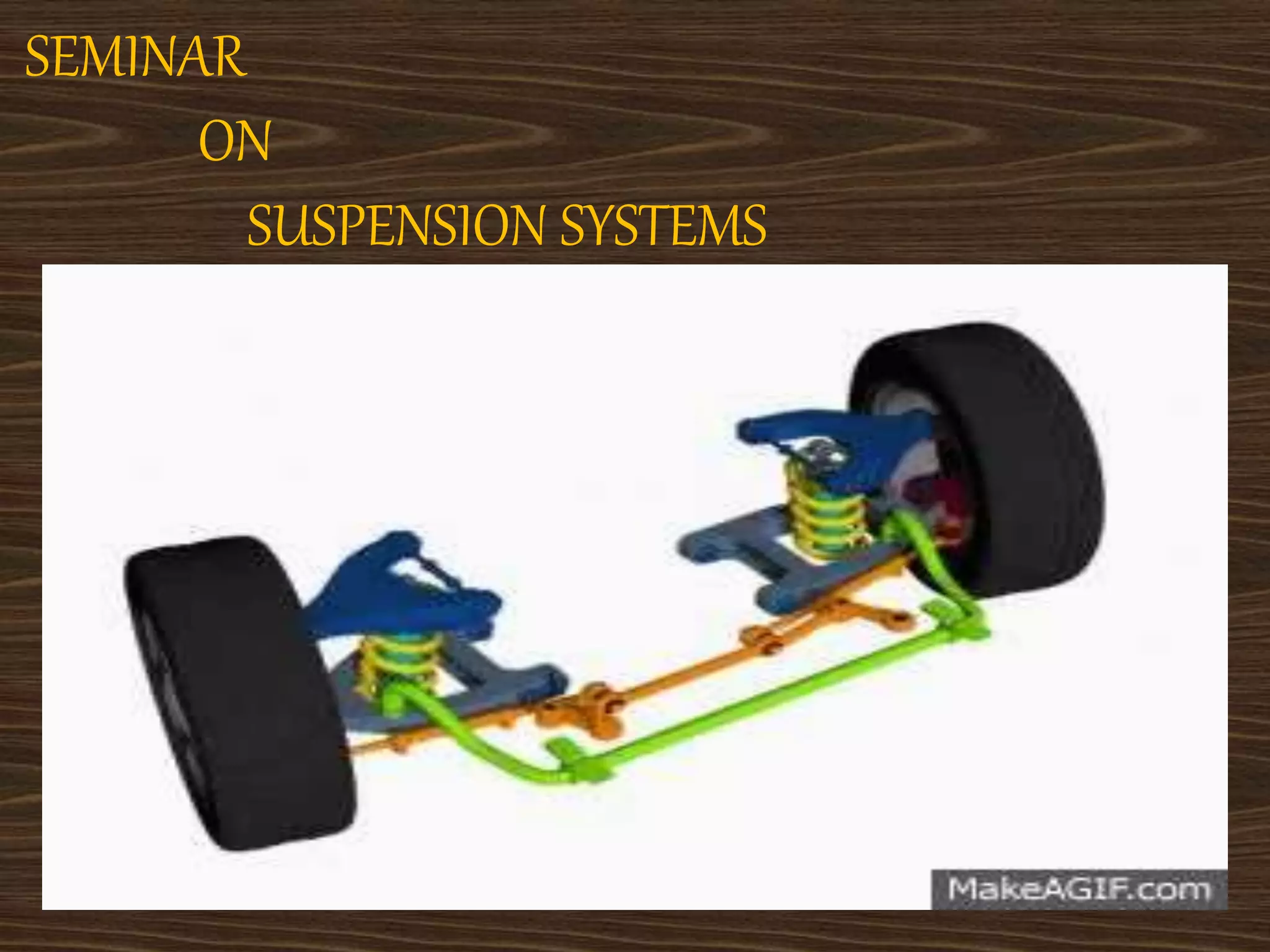
SEMINAR
ON
SUSPENSION SYSTEMS
INTRODUCTION
The automobile chassis is mounted on axles,not
direct but through some form of springs. This is
done to isolate the vehicle body from the road
shocks which may be in the form of bounce, roll or
sway &pitch. These all are gives to rise to an
uncomfortable ride and also cause to additional
stress in automobile frame and body .All the parts
which perform the function of isolating automobile
vehicle from the road shocks are collectively called
a suspension system.
To prevent the road shocks and from being
transmitted to the vehicle components.
To safeguard the occupants from road shocks.
To preserve the stability of vehicle in pitching
or rolling , vehicle in motion.
OBJECTIVES
CONCE
PT
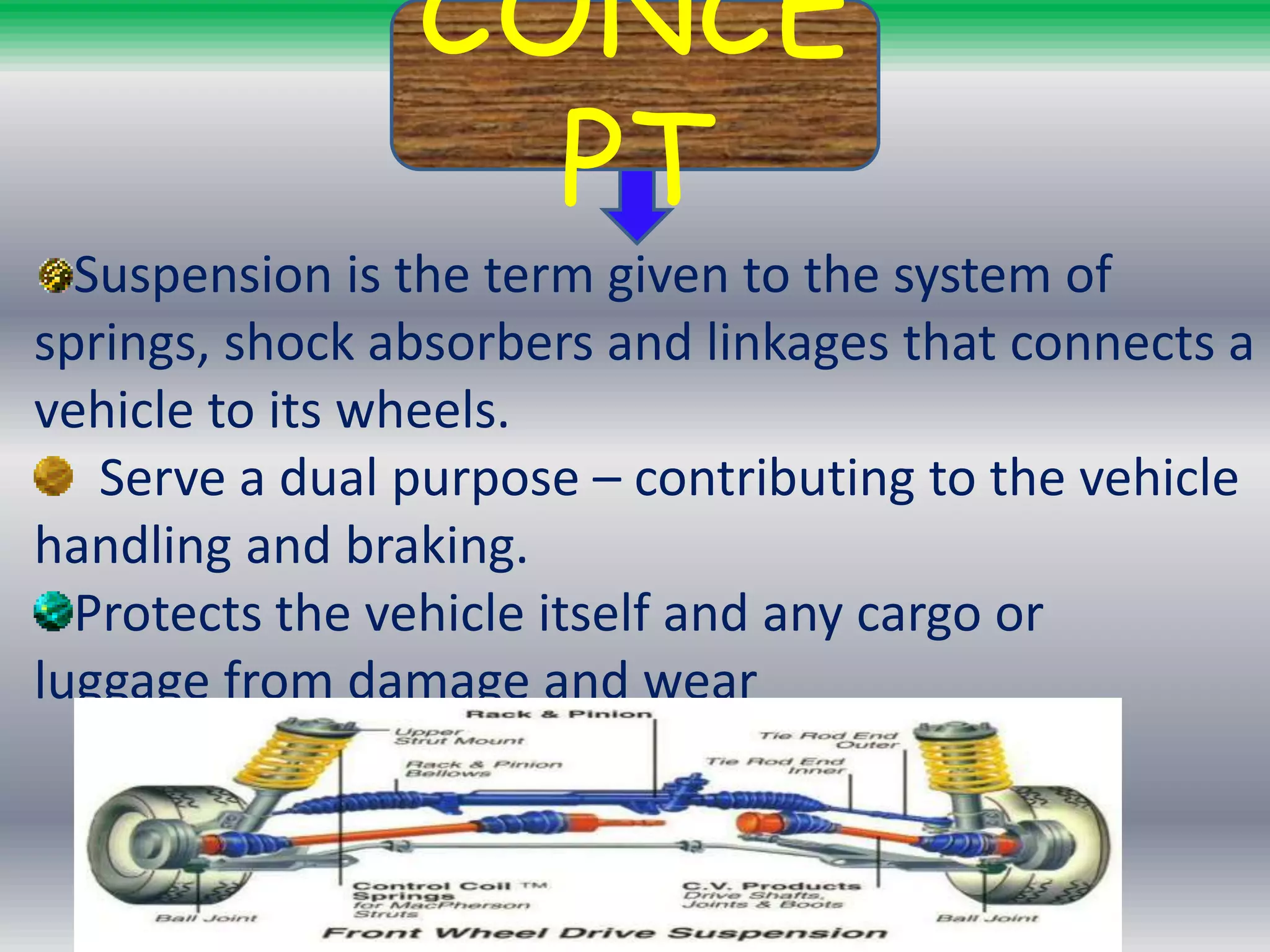
Suspension is the term given to the system of
springs, shock absorbers and linkages that connects a
vehicle to its wheels.
Serve a dual purpose – contributing to the vehicle
handling and braking.
Protects the vehicle itself and any cargo or
luggage from damage and wear
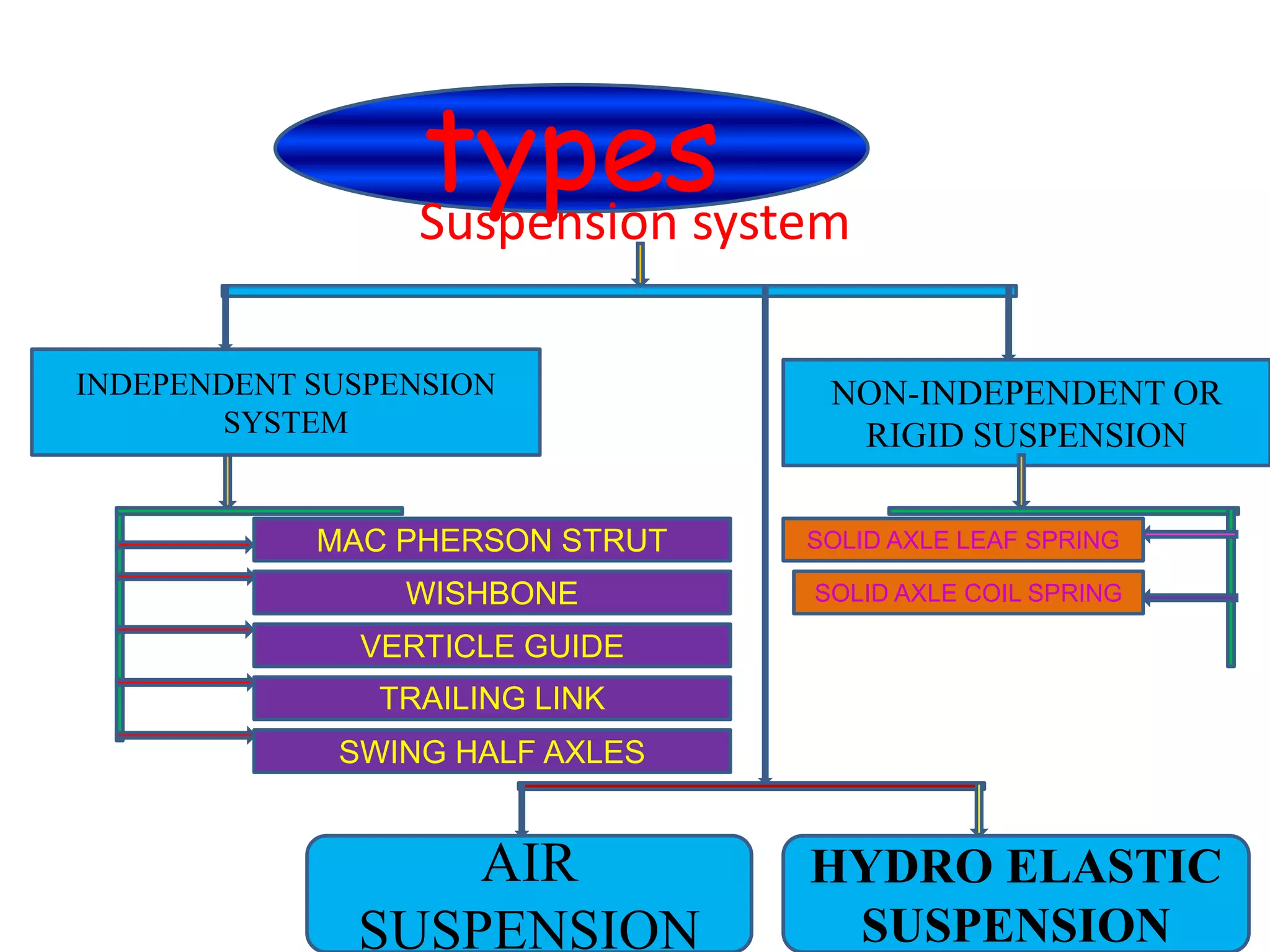
typesSuspension system
INDEPENDENT SUSPENSION
SYSTEM
NON-INDEPENDENT OR
RIGID SUSPENSION
MAC PHERSON STRUT
WISHBONE
VERTICLE GUIDE
TRAILING LINK
SWING HALF AXLES
SOLID AXLE LEAF SPRING
SOLID AXLE COIL SPRING
AIR
SUSPENSION
HYDRO ELASTIC
SUSPENSION
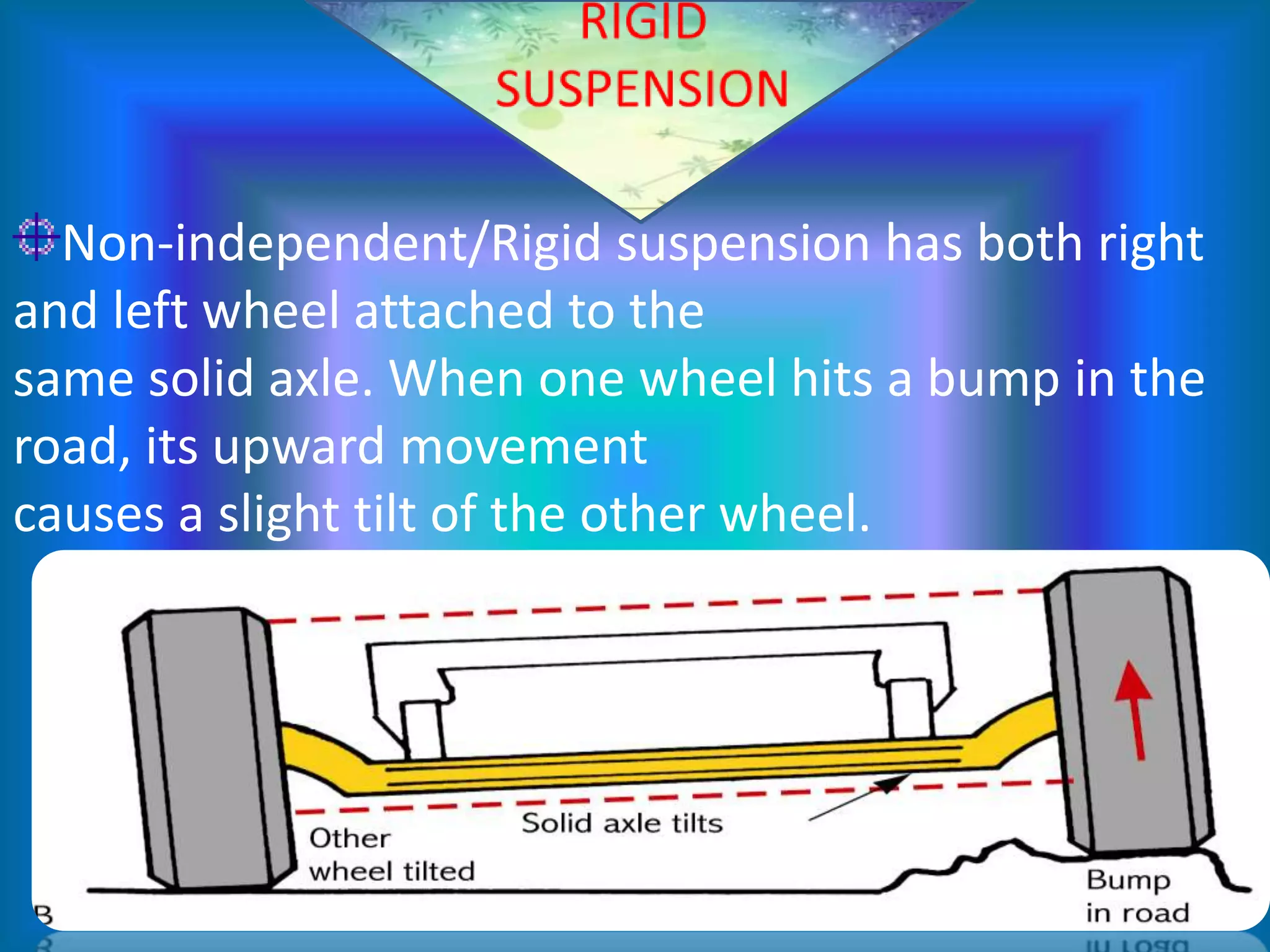
Non-independent/Rigid suspension has both right
and left wheel attached to the
same solid axle. When one wheel hits a bump in the
road, its upward movement
causes a slight tilt of the other wheel.
RIGID
SUSPENSION
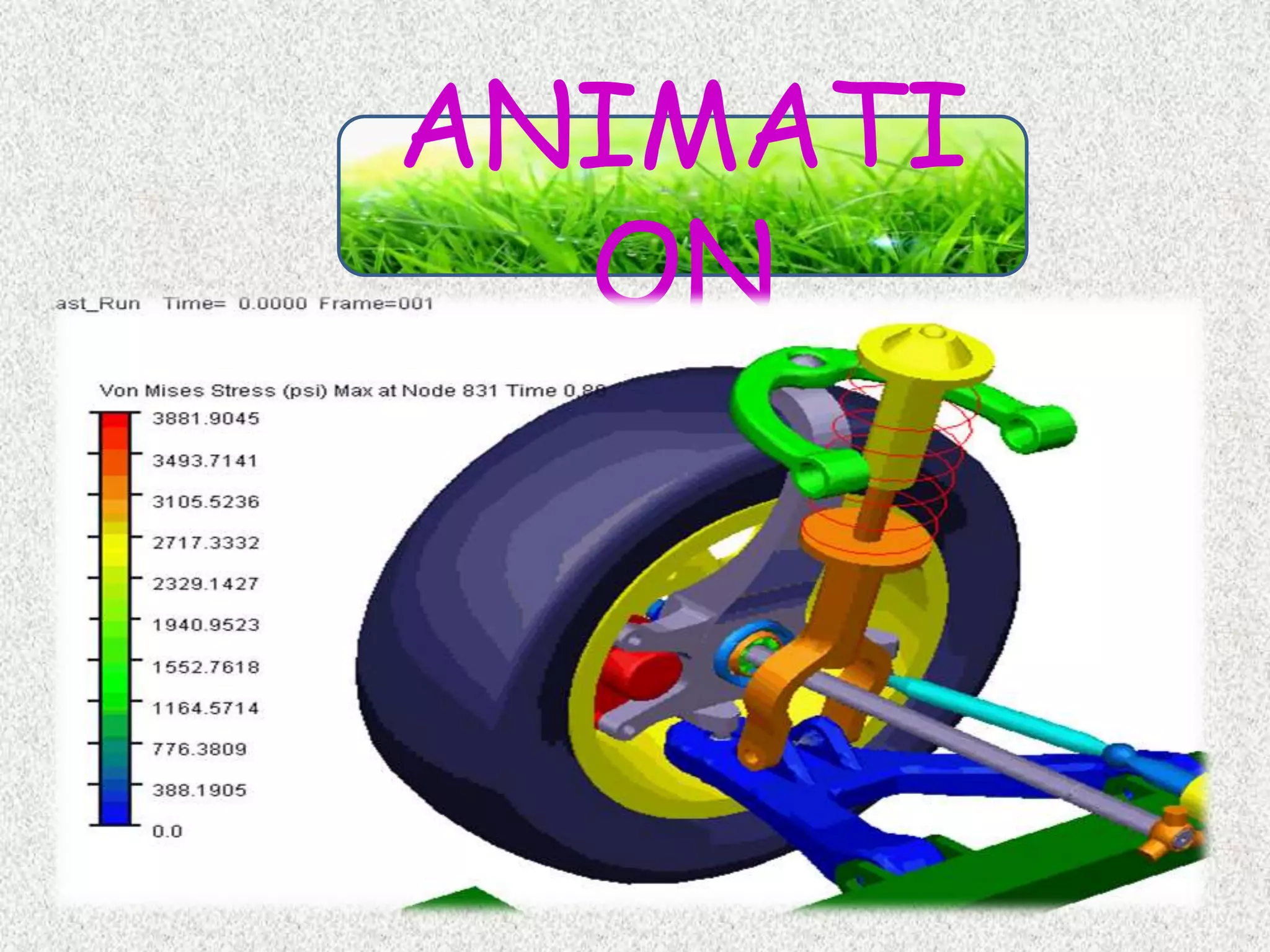
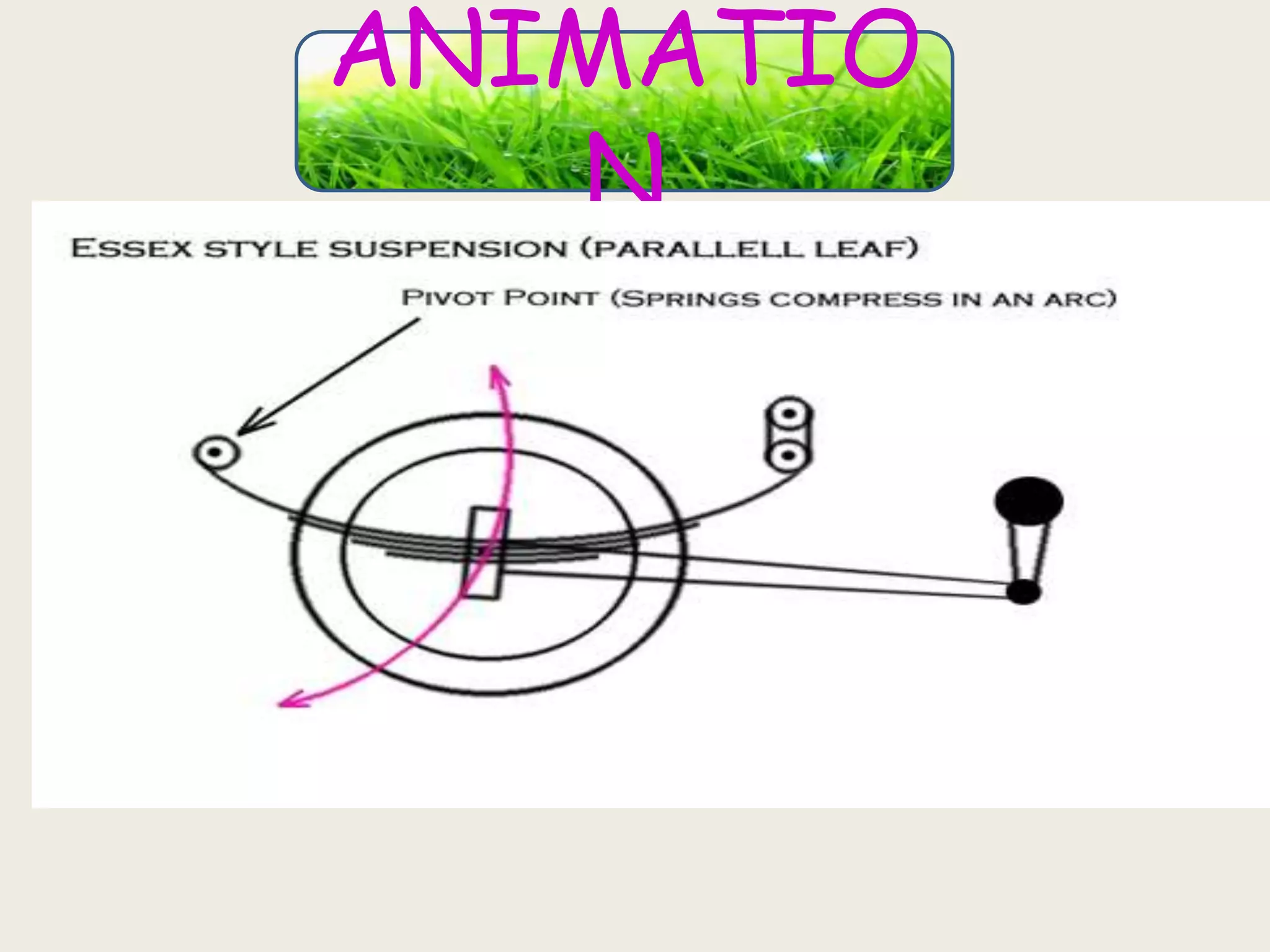
ANIMATI
ON
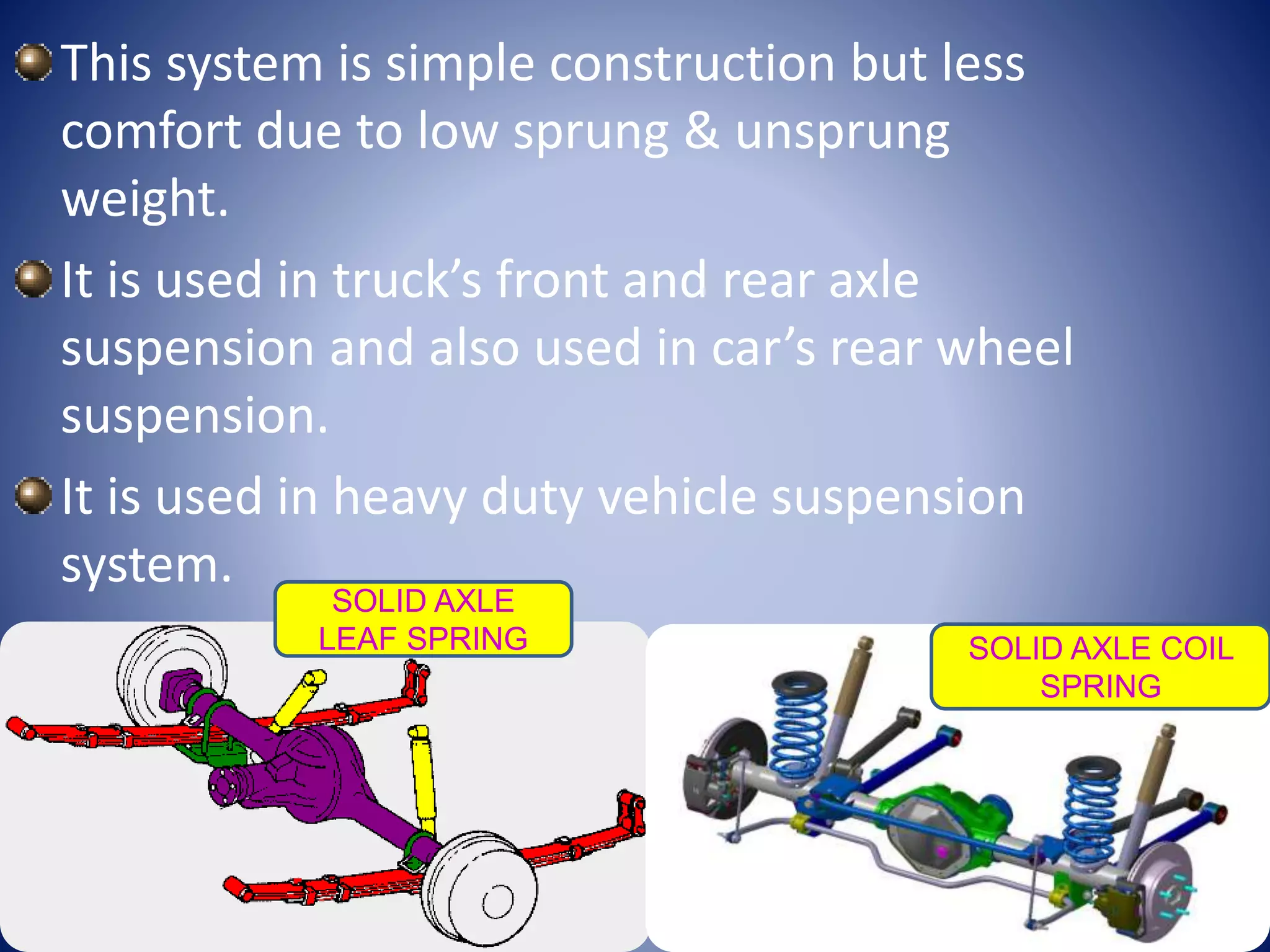
This system is simple construction but less
comfort due to low sprung & unsprung
weight.
It is used in truck’s front and rear axle
suspension and also used in car’s rear wheel
suspension.
It is used in heavy duty vehicle suspension
system.
SOLID AXLE
LEAF SPRING SOLID AXLE COIL
SPRING
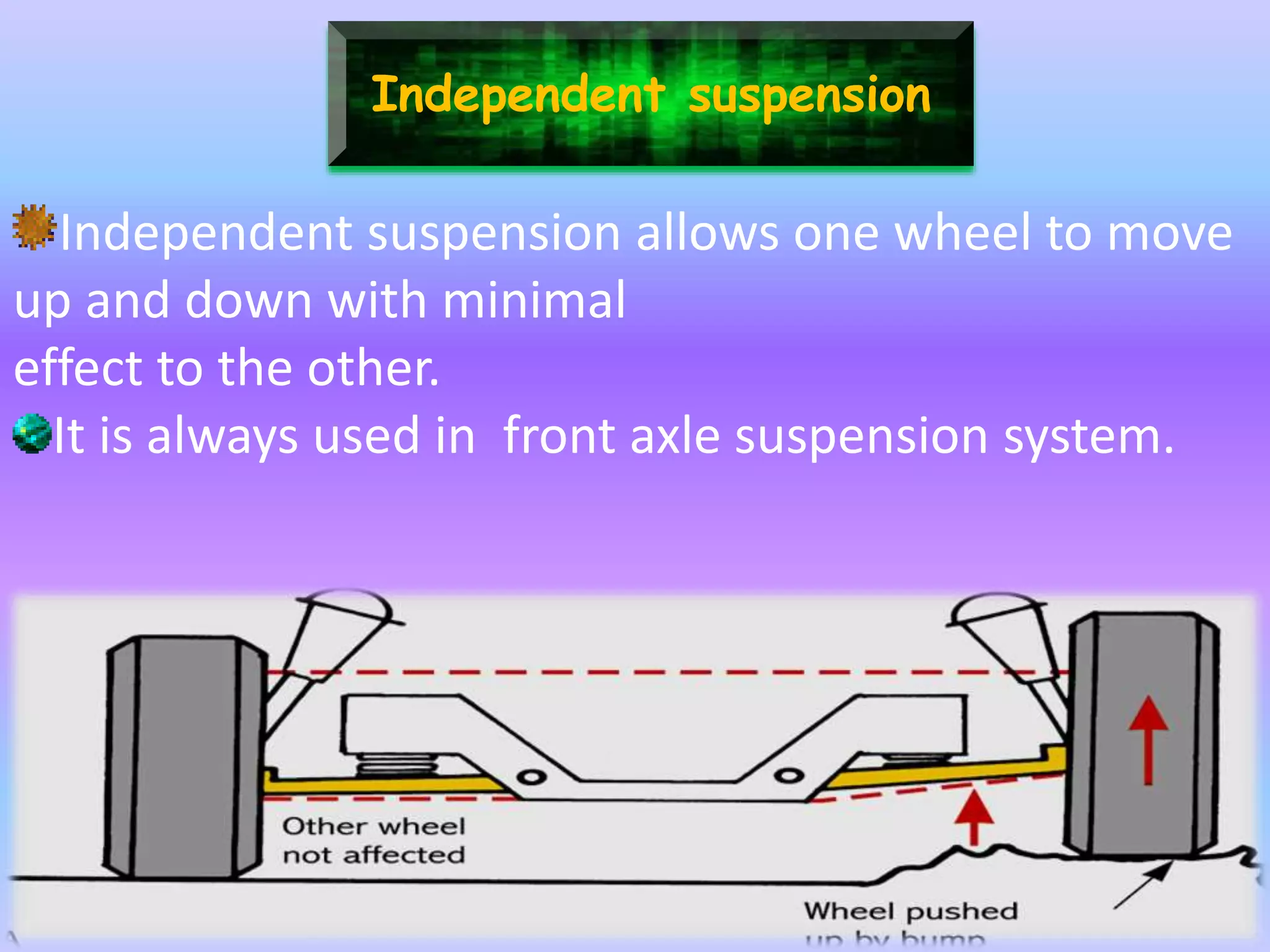
Independent suspension
Independent suspension allows one wheel to move
up and down with minimal
effect to the other.
It is always used in front axle suspension system.
ANIMATIO
N
Better stability and steering
More ride comfort
Better road holding capacity to helps to better
handling and cornering .
More complex design.
More maintenance cost.
More wear and tear.
Less overall strength.
ADVANTAG
ES
DISADVAN
TAGES
TYPES
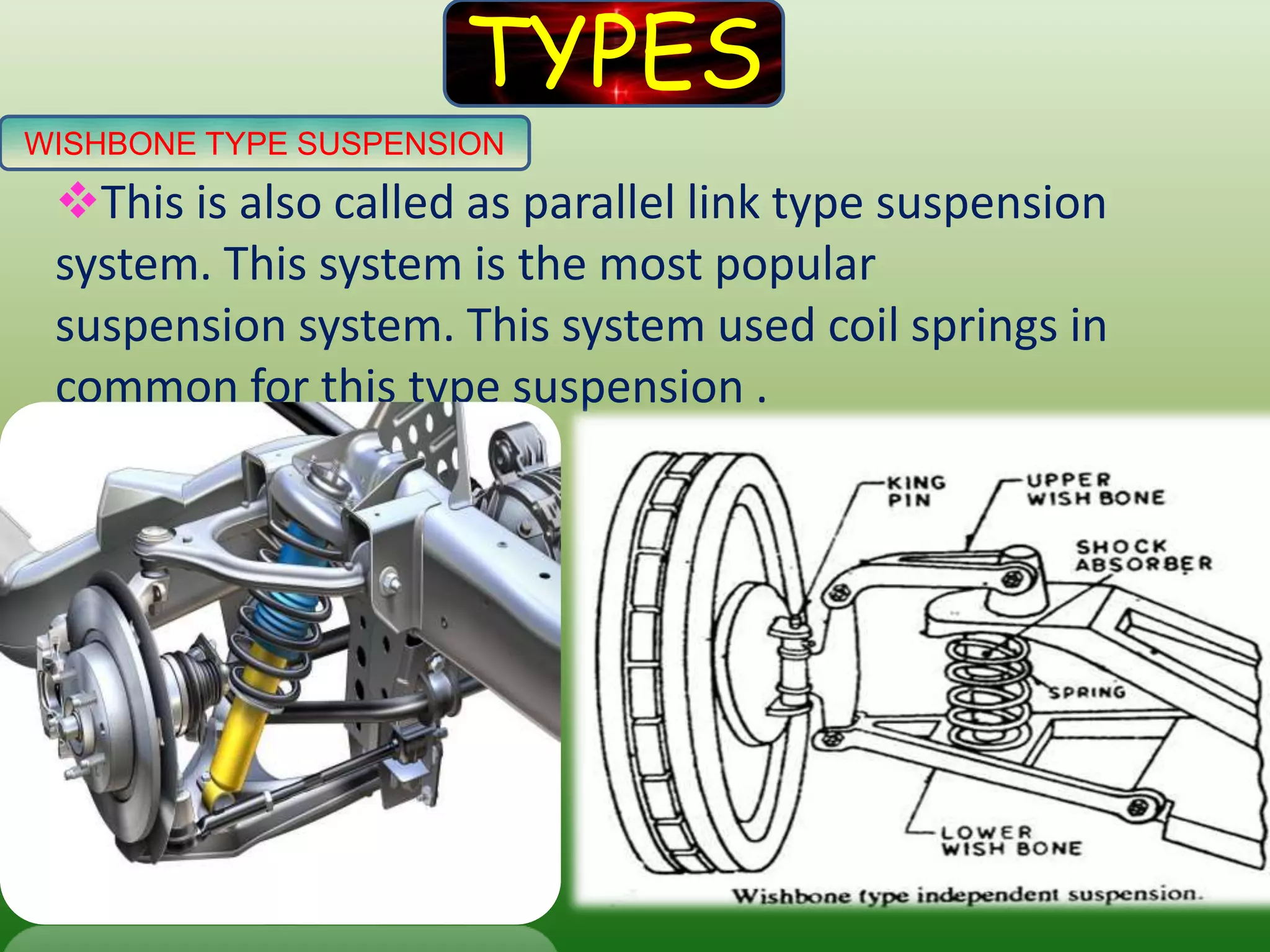
WISHBONE TYPE SUSPENSION
This is also called as parallel link type suspension
system. This system is the most popular
suspension system. This system used coil springs in
common for this type suspension .
The upper and lower wishbone arms are pivoted to
frame .
The spring is placed between the lower wishbone
and under side of the cross member.
The vehicle weight is transmitted from the body
and cross member to the coil spring through the
lower wishbone.
The shock absorber is placed inside the coil spring
and it is attached to cross member and lower
wishbone.
The upper wishbone member is shorter than the
lower wishbone member .
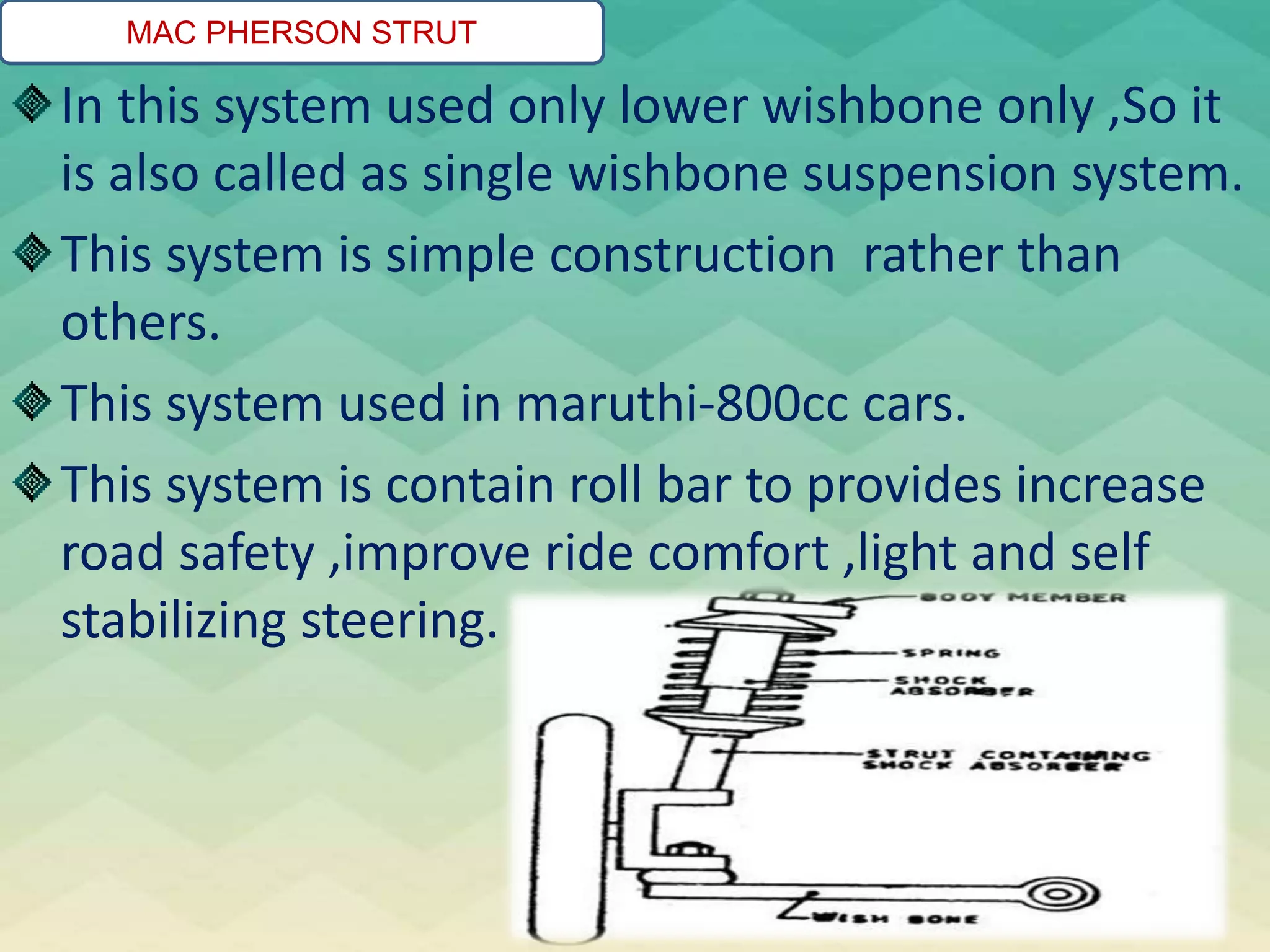
MAC PHERSON STRUT
In this system used only lower wishbone only ,So it
is also called as single wishbone suspension system.
This system is simple construction rather than
others.
This system used in maruthi-800cc cars.
This system is contain roll bar to provides increase
road safety ,improve ride comfort ,light and self
stabilizing steering.
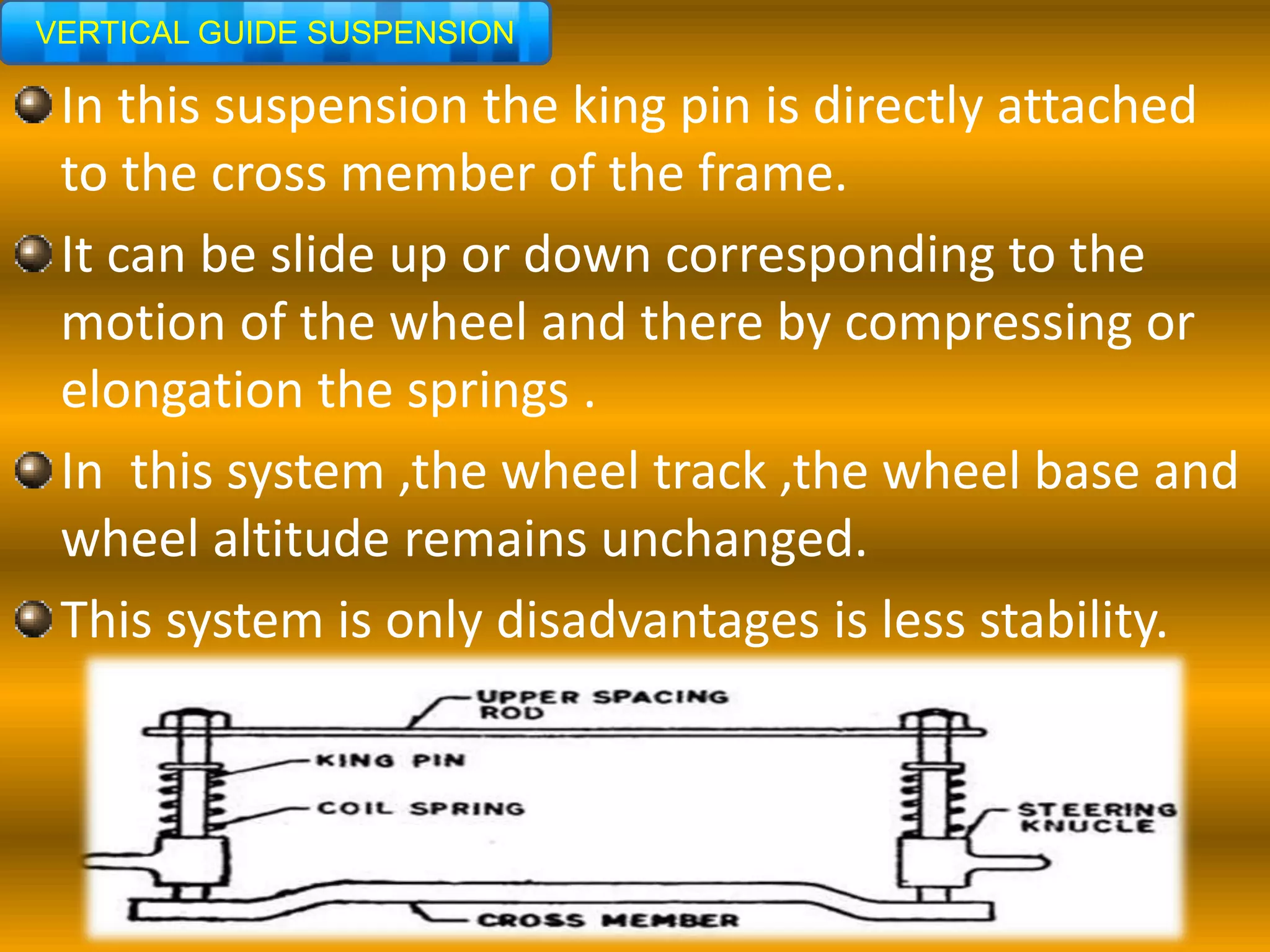
VERTICAL GUIDE SUSPENSION
In this suspension the king pin is directly attached
to the cross member of the frame.
It can be slide up or down corresponding to the
motion of the wheel and there by compressing or
elongation the springs .
In this system ,the wheel track ,the wheel base and
wheel altitude remains unchanged.
This system is only disadvantages is less stability.
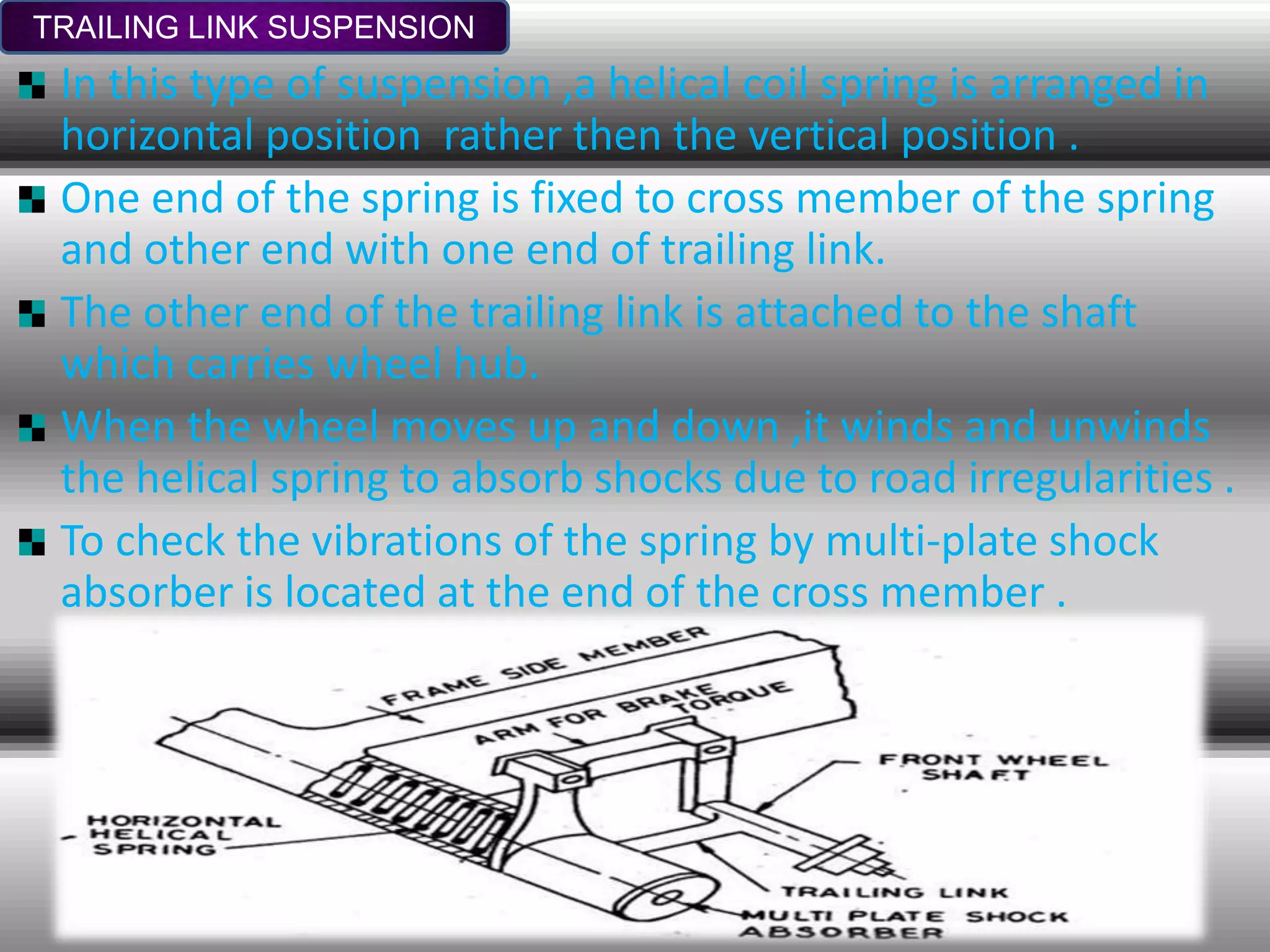
TRAILING LINK SUSPENSION
In this type of suspension ,a helical coil spring is arranged in
horizontal position rather then the vertical position .
One end of the spring is fixed to cross member of the spring
and other end with one end of trailing link.
The other end of the trailing link is attached to the shaft
which carries wheel hub.
When the wheel moves up and down ,it winds and unwinds
the helical spring to absorb shocks due to road irregularities .
To check the vibrations of the spring by multi-plate shock
absorber is located at the end of the cross member .
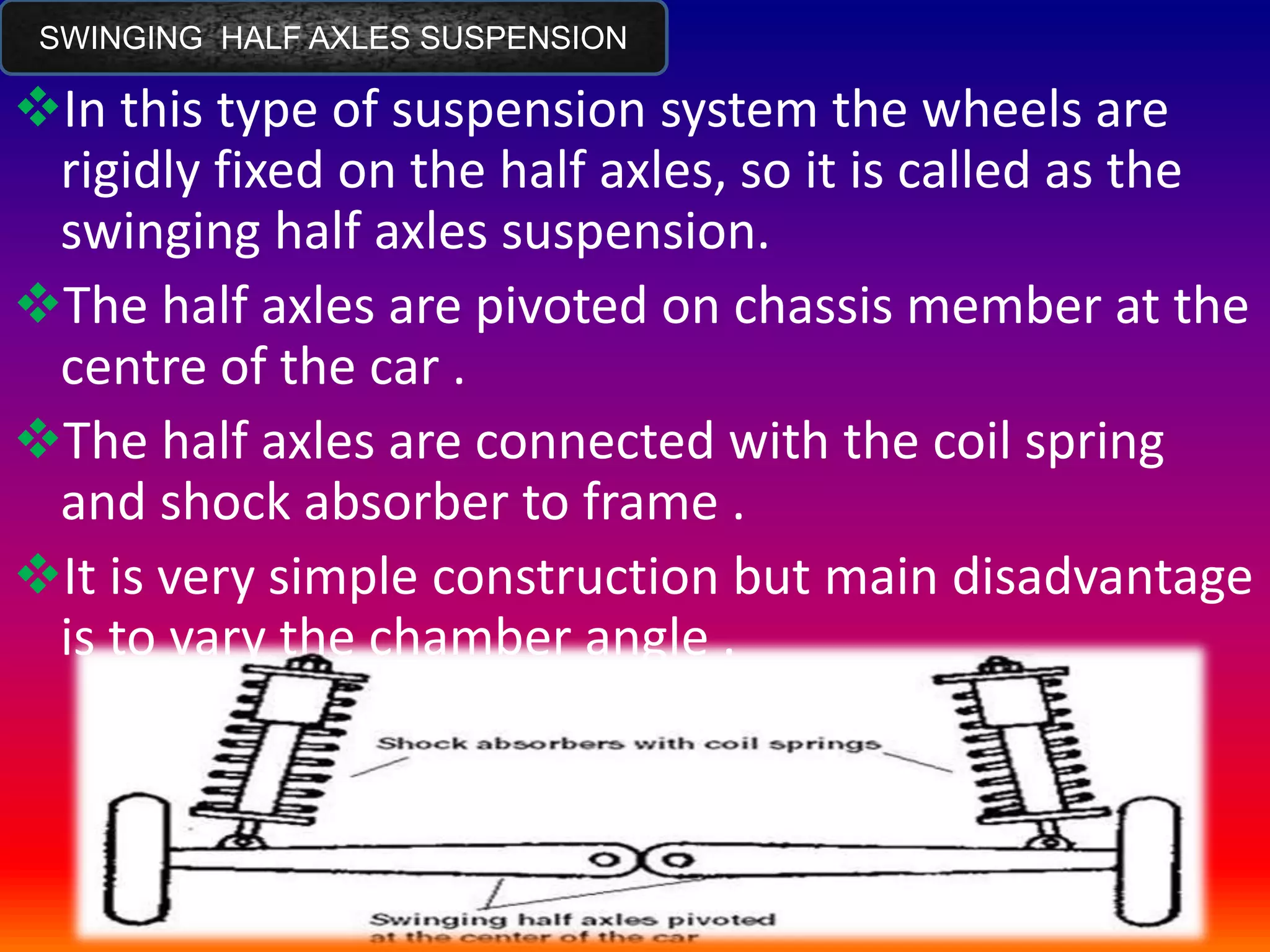
SWINGING HALF AXLES SUSPENSION
In this type of suspension system the wheels are
rigidly fixed on the half axles, so it is called as the
swinging half axles suspension.
The half axles are pivoted on chassis member at the
centre of the car .
The half axles are connected with the coil spring
and shock absorber to frame .
It is very simple construction but main disadvantage
is to vary the chamber angle .
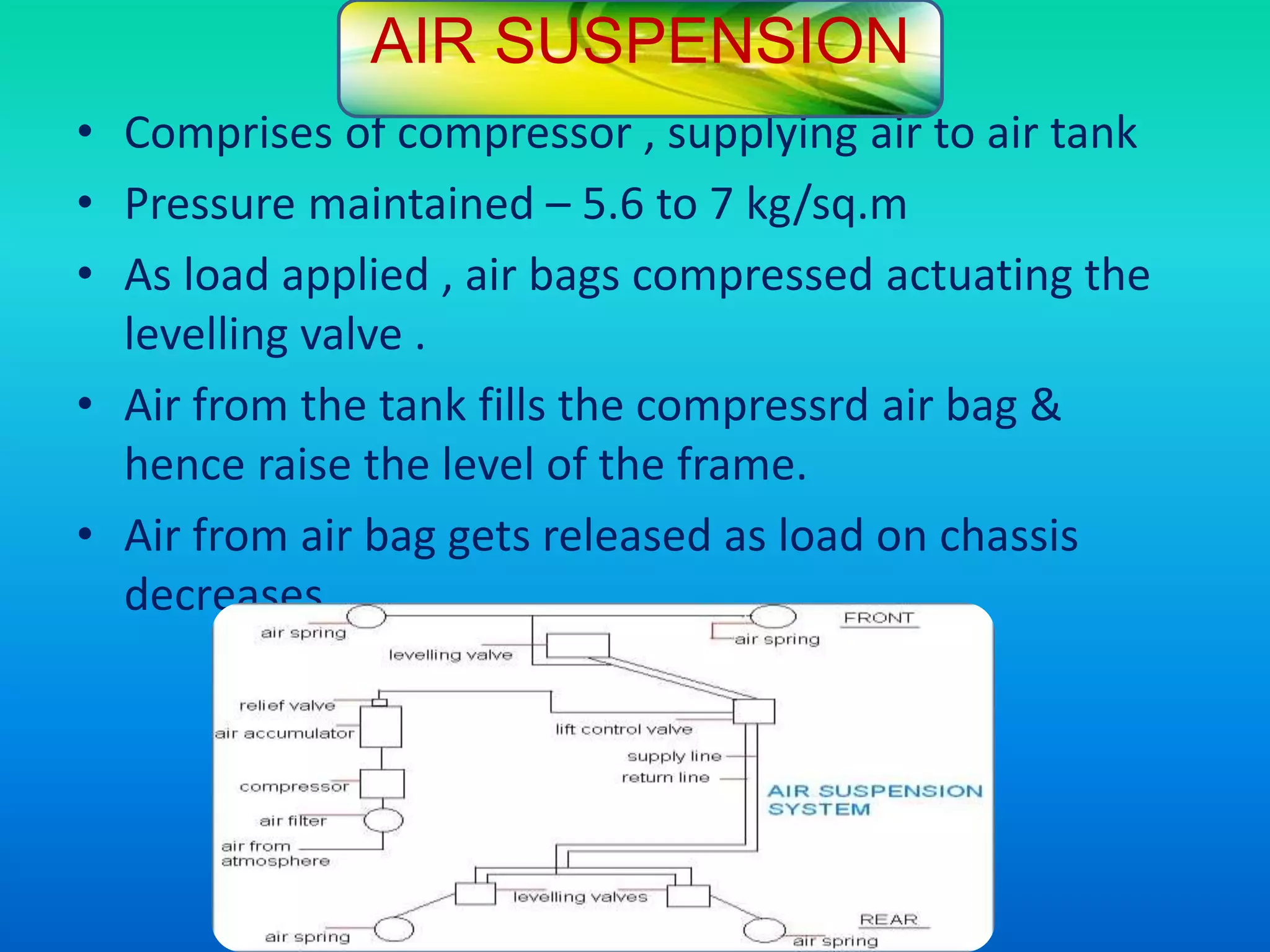
• Comprises of compressor , supplying air to air tank
• Pressure maintained – 5.6 to 7 kg/sq.m
• As load applied , air bags compressed actuating the
levelling valve .
• Air from the tank fills the compressrd air bag &
hence raise the level of the frame.
• Air from air bag gets released as load on chassis
decreases .
AIR SUSPENSION
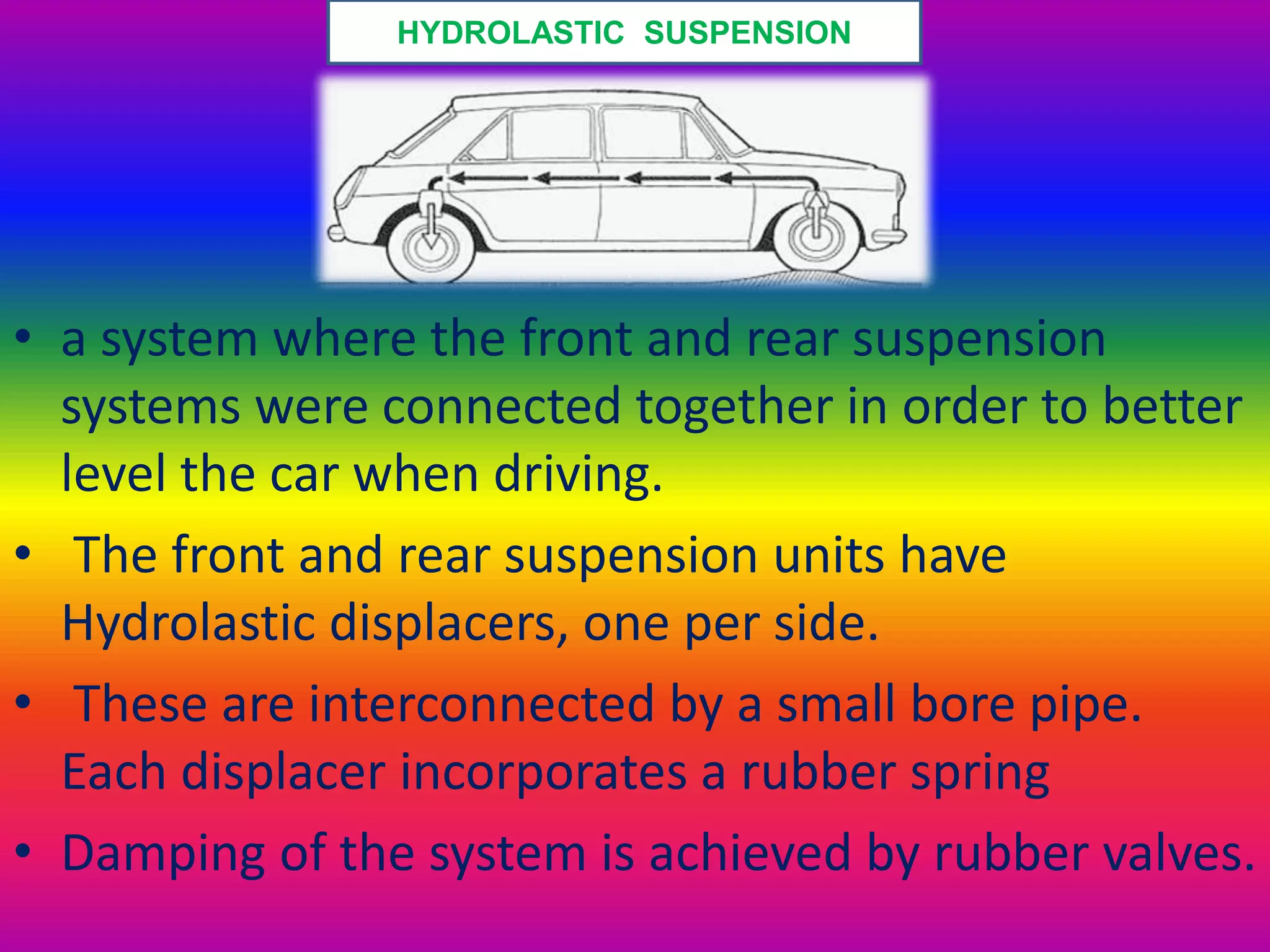
HYDROLASTIC SUSPENSION
• a system where the front and rear suspension
systems were connected together in order to better
level the car when driving.
• The front and rear suspension units have
Hydrolastic displacers, one per side.
• These are interconnected by a small bore pipe.
Each displacer incorporates a rubber spring
• Damping of the system is achieved by rubber valves.
ADVANTAGES
It provides softer motion of vehicle .
It reduces wheel wobbling (rocking motion )or
unsteady motion .
It provides more space for engine
accommodation .
During the steering operation to provide low
unsprung weight.
The movement of the spring on one wheel is
not transmitted to other wheel.
To reduce shocks of road irregularities.
DISADVANTAGE
S
Cost of the automobile vehicle is increased .
Design is complicated.
Low strength.
APPLICATIONS
Applications of the suspension system
are the automobile vehicles
CONCLUSION
Finally we conclude the suspension system is
more important for automobile vehicles .you
choose better suspension system for designing
automobile
All the best for the all design mechanical
engineers…….
Different types of suspension system

Different types of suspension system

  • 1.
  • 2.
    INTRODUCTION The automobile chassisis mounted on axles,not direct but through some form of springs. This is done to isolate the vehicle body from the road shocks which may be in the form of bounce, roll or sway &pitch. These all are gives to rise to an uncomfortable ride and also cause to additional stress in automobile frame and body .All the parts which perform the function of isolating automobile vehicle from the road shocks are collectively called a suspension system.
  • 3.
    To prevent theroad shocks and from being transmitted to the vehicle components. To safeguard the occupants from road shocks. To preserve the stability of vehicle in pitching or rolling , vehicle in motion. OBJECTIVES
  • 4.
    CONCE PT Suspension is theterm given to the system of springs, shock absorbers and linkages that connects a vehicle to its wheels. Serve a dual purpose – contributing to the vehicle handling and braking. Protects the vehicle itself and any cargo or luggage from damage and wear
  • 5.
    typesSuspension system INDEPENDENT SUSPENSION SYSTEM NON-INDEPENDENTOR RIGID SUSPENSION MAC PHERSON STRUT WISHBONE VERTICLE GUIDE TRAILING LINK SWING HALF AXLES SOLID AXLE LEAF SPRING SOLID AXLE COIL SPRING AIR SUSPENSION HYDRO ELASTIC SUSPENSION
  • 6.
    Non-independent/Rigid suspension hasboth right and left wheel attached to the same solid axle. When one wheel hits a bump in the road, its upward movement causes a slight tilt of the other wheel. RIGID SUSPENSION
  • 7.
  • 8.
    This system issimple construction but less comfort due to low sprung & unsprung weight. It is used in truck’s front and rear axle suspension and also used in car’s rear wheel suspension. It is used in heavy duty vehicle suspension system. SOLID AXLE LEAF SPRING SOLID AXLE COIL SPRING
  • 9.
    Independent suspension Independent suspensionallows one wheel to move up and down with minimal effect to the other. It is always used in front axle suspension system.
  • 10.
  • 11.
    Better stability andsteering More ride comfort Better road holding capacity to helps to better handling and cornering . More complex design. More maintenance cost. More wear and tear. Less overall strength. ADVANTAG ES DISADVAN TAGES
  • 12.
    TYPES WISHBONE TYPE SUSPENSION Thisis also called as parallel link type suspension system. This system is the most popular suspension system. This system used coil springs in common for this type suspension .
  • 13.
    The upper andlower wishbone arms are pivoted to frame . The spring is placed between the lower wishbone and under side of the cross member. The vehicle weight is transmitted from the body and cross member to the coil spring through the lower wishbone. The shock absorber is placed inside the coil spring and it is attached to cross member and lower wishbone. The upper wishbone member is shorter than the lower wishbone member .
  • 14.
    MAC PHERSON STRUT Inthis system used only lower wishbone only ,So it is also called as single wishbone suspension system. This system is simple construction rather than others. This system used in maruthi-800cc cars. This system is contain roll bar to provides increase road safety ,improve ride comfort ,light and self stabilizing steering.
  • 15.
    VERTICAL GUIDE SUSPENSION Inthis suspension the king pin is directly attached to the cross member of the frame. It can be slide up or down corresponding to the motion of the wheel and there by compressing or elongation the springs . In this system ,the wheel track ,the wheel base and wheel altitude remains unchanged. This system is only disadvantages is less stability.
  • 16.
    TRAILING LINK SUSPENSION Inthis type of suspension ,a helical coil spring is arranged in horizontal position rather then the vertical position . One end of the spring is fixed to cross member of the spring and other end with one end of trailing link. The other end of the trailing link is attached to the shaft which carries wheel hub. When the wheel moves up and down ,it winds and unwinds the helical spring to absorb shocks due to road irregularities . To check the vibrations of the spring by multi-plate shock absorber is located at the end of the cross member .
  • 17.
    SWINGING HALF AXLESSUSPENSION In this type of suspension system the wheels are rigidly fixed on the half axles, so it is called as the swinging half axles suspension. The half axles are pivoted on chassis member at the centre of the car . The half axles are connected with the coil spring and shock absorber to frame . It is very simple construction but main disadvantage is to vary the chamber angle .
  • 18.
    • Comprises ofcompressor , supplying air to air tank • Pressure maintained – 5.6 to 7 kg/sq.m • As load applied , air bags compressed actuating the levelling valve . • Air from the tank fills the compressrd air bag & hence raise the level of the frame. • Air from air bag gets released as load on chassis decreases . AIR SUSPENSION
  • 19.
    HYDROLASTIC SUSPENSION • asystem where the front and rear suspension systems were connected together in order to better level the car when driving. • The front and rear suspension units have Hydrolastic displacers, one per side. • These are interconnected by a small bore pipe. Each displacer incorporates a rubber spring • Damping of the system is achieved by rubber valves.
  • 20.
    ADVANTAGES It provides softermotion of vehicle . It reduces wheel wobbling (rocking motion )or unsteady motion . It provides more space for engine accommodation . During the steering operation to provide low unsprung weight. The movement of the spring on one wheel is not transmitted to other wheel. To reduce shocks of road irregularities.
  • 21.
    DISADVANTAGE S Cost of theautomobile vehicle is increased . Design is complicated. Low strength. APPLICATIONS Applications of the suspension system are the automobile vehicles
  • 22.
    CONCLUSION Finally we concludethe suspension system is more important for automobile vehicles .you choose better suspension system for designing automobile All the best for the all design mechanical engineers…….