


Lloyd Dean Energy Systems
Aims By the end of the lesson you should be able to: Describe the role of ATP in transferring energy Explain the ATP – PC system List the characteristics of the Anaerobic glycolysis system Highlight the key points involved within the oxidative energy system
I have an embarrassing story to tell New TV Monopoly money Wrong currency! Embarrassment! ATP is the currency for your body
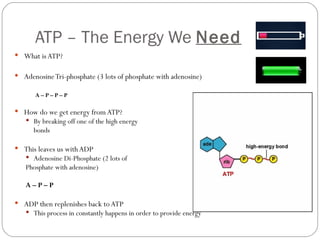
ATP – The Energy We  Need What is ATP? Adenosine Tri-phosphate (3 lots of phosphate with adenosine) A – P – P – P How do we get energy from ATP? By breaking off one of the high energy bonds This leaves us with ADP Adenosine Di-Phosphate (2 lots of  Phosphate with adenosine) A – P – P ADP then replenishes back to ATP This process in constantly happens in order to provide energy
 
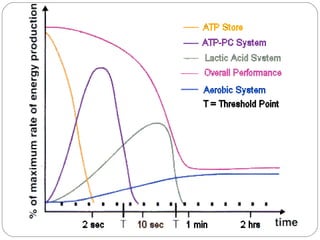
Energy Systems Your body makes ATP available for muscle contraction through 3 main energy systems The energy system used depends on the intensity and duration of the activity ATP – PC OR Phosphagen System  Anaerobic Glycolysis OR Lactic Acid System Aerobic System OR Oxidative System
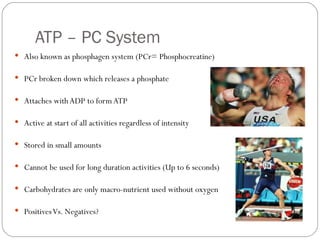
ATP – PC System Also known as phosphagen system (PCr= Phosphocreatine) PCr broken down which releases a phosphate Attaches with ADP to form ATP Active at start of all activities regardless of intensity Stored in small amounts Cannot be used for long duration activities (Up to 6 seconds) Carbohydrates are only macro-nutrient used without oxygen  Positives Vs. Negatives?
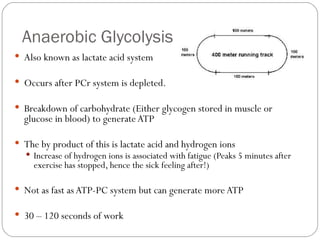
Anaerobic Glycolysis Also known as lactate acid system Occurs after PCr system is depleted. Breakdown of carbohydrate (Either glycogen stored in muscle or glucose in blood) to generate ATP The by product of this is lactate acid and hydrogen ions Increase of hydrogen ions is associated with fatigue (Peaks 5 minutes after exercise has stopped, hence the sick feeling after!) Not as fast as ATP-PC system but can generate more ATP 30 – 120 seconds of work
Aerobic System Also known as oxidative system Primary source of ATP at rest and during low intensity exercise At rest – 70% fats & 30 carbohydrates During high intensity aerobic work up to 100% of ATP can come from carbohydrates During steady state (20 minutes or more) exercise can shift towards more fats than carbohydrate for main supply of ATP Intensity will determine value “ Fat” burning zone Large amounts of ATP supplied Not as fast as Anaerobic glycolysis but can provide more ATP 3 minute – 2 hours +
 
 
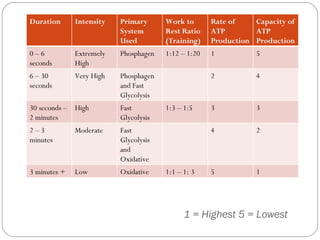
1 = Highest 5 = Lowest Duration Intensity Primary System Used Work to Rest Ratio (Training) Rate of ATP Production Capacity of ATP Production 0 – 6 seconds Extremely High Phosphagen 1:12 – 1:20 1 5 6 – 30 seconds Very High Phosphagen and Fast Glycolysis 2 4 30 seconds – 2 minutes High Fast Glycolysis 1:3 – 1:5 3 3 2 – 3 minutes Moderate Fast Glycolysis and Oxidative 4 2 3 minutes + Low Oxidative 1:1 – 1: 3 5 1
Articulate With study buddy define the words without saying what it is! Energy Lactic Acid System 100 meters  (relate to energy system as example) ADP Javelin  (relate to energy system as example) ATP – PC ATP Aerobic energy system

Energy systems

  • 1.
  • 2.
    Aims By theend of the lesson you should be able to: Describe the role of ATP in transferring energy Explain the ATP – PC system List the characteristics of the Anaerobic glycolysis system Highlight the key points involved within the oxidative energy system
  • 3.
    I have anembarrassing story to tell New TV Monopoly money Wrong currency! Embarrassment! ATP is the currency for your body
  • 4.
    ATP – TheEnergy We Need What is ATP? Adenosine Tri-phosphate (3 lots of phosphate with adenosine) A – P – P – P How do we get energy from ATP? By breaking off one of the high energy bonds This leaves us with ADP Adenosine Di-Phosphate (2 lots of Phosphate with adenosine) A – P – P ADP then replenishes back to ATP This process in constantly happens in order to provide energy
  • 5.
  • 6.
    Energy Systems Yourbody makes ATP available for muscle contraction through 3 main energy systems The energy system used depends on the intensity and duration of the activity ATP – PC OR Phosphagen System Anaerobic Glycolysis OR Lactic Acid System Aerobic System OR Oxidative System
  • 7.
    ATP – PCSystem Also known as phosphagen system (PCr= Phosphocreatine) PCr broken down which releases a phosphate Attaches with ADP to form ATP Active at start of all activities regardless of intensity Stored in small amounts Cannot be used for long duration activities (Up to 6 seconds) Carbohydrates are only macro-nutrient used without oxygen Positives Vs. Negatives?
  • 8.
    Anaerobic Glycolysis Alsoknown as lactate acid system Occurs after PCr system is depleted. Breakdown of carbohydrate (Either glycogen stored in muscle or glucose in blood) to generate ATP The by product of this is lactate acid and hydrogen ions Increase of hydrogen ions is associated with fatigue (Peaks 5 minutes after exercise has stopped, hence the sick feeling after!) Not as fast as ATP-PC system but can generate more ATP 30 – 120 seconds of work
  • 9.
    Aerobic System Alsoknown as oxidative system Primary source of ATP at rest and during low intensity exercise At rest – 70% fats & 30 carbohydrates During high intensity aerobic work up to 100% of ATP can come from carbohydrates During steady state (20 minutes or more) exercise can shift towards more fats than carbohydrate for main supply of ATP Intensity will determine value “ Fat” burning zone Large amounts of ATP supplied Not as fast as Anaerobic glycolysis but can provide more ATP 3 minute – 2 hours +
  • 10.
  • 11.
  • 12.
    1 = Highest5 = Lowest Duration Intensity Primary System Used Work to Rest Ratio (Training) Rate of ATP Production Capacity of ATP Production 0 – 6 seconds Extremely High Phosphagen 1:12 – 1:20 1 5 6 – 30 seconds Very High Phosphagen and Fast Glycolysis 2 4 30 seconds – 2 minutes High Fast Glycolysis 1:3 – 1:5 3 3 2 – 3 minutes Moderate Fast Glycolysis and Oxidative 4 2 3 minutes + Low Oxidative 1:1 – 1: 3 5 1
  • 13.
    Articulate With studybuddy define the words without saying what it is! Energy Lactic Acid System 100 meters (relate to energy system as example) ADP Javelin (relate to energy system as example) ATP – PC ATP Aerobic energy system