Made by: M. Fahd-Un-Nabi Khan
     USMAN PUBLIC SCHOOL
                         XI-O
Elements
 An element is a substance which cannot be split into
 two or more substances by chemical means

 The smallest possible particle of an Element that can
 take part in a chemical change is called an ATOM.
Compounds containing 2 or more
 Compound is substance
  elements chemically joined together.
 e.g. Magnesium is an element; oxygen is an
  element – they can only be combusted to form
  magnesium oxide (MgO) compound.
 Ions or molecules make up compounds
 Ions are atoms having electrical charge, e.g. NaCl
  made up of 2 ions; positively charged Na, negatively
  charged Cl.
Molecules
 Molecule is group of two or more atoms chemically
  joined together, e.g. chlorine molecule has 2 chlorine
  atoms.
 Molecules can be either ELEMENTS or
  COMPOUNDS.
 E.g. MgO is a compound, but Cl2 is an element
Mixtures
 2 or more substances which are not chemically joined t
  ogether e.g. Iron in Sulphur powder.
 Can consist of:
    Elements (Iron & Sulphur powder)
    Compounds (Salt in water - salt & water are both
     compounds)
    Elements + Compounds (Air; N2, O2, H2O)
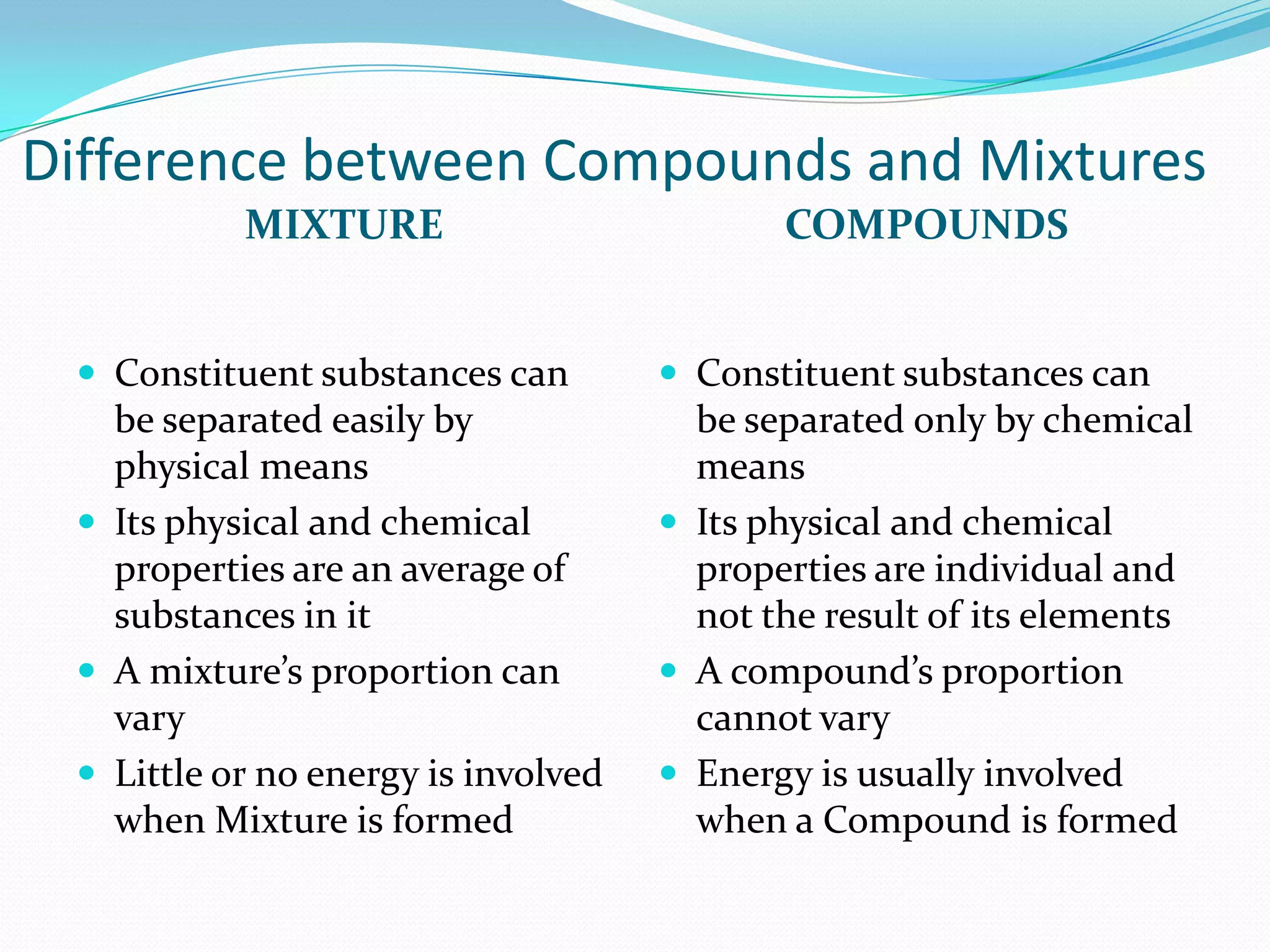
Difference between Compounds and Mixtures
           MIXTURE                          COMPOUNDS


  Constituent substances can         Constituent substances can
   be separated easily by              be separated only by chemical
   physical means                      means
  Its physical and chemical          Its physical and chemical
   properties are an average of        properties are individual and
   substances in it                    not the result of its elements
  A mixture’s proportion can         A compound’s proportion
   vary                                cannot vary
  Little or no energy is involved    Energy is usually involved
   when Mixture is formed              when a Compound is formed
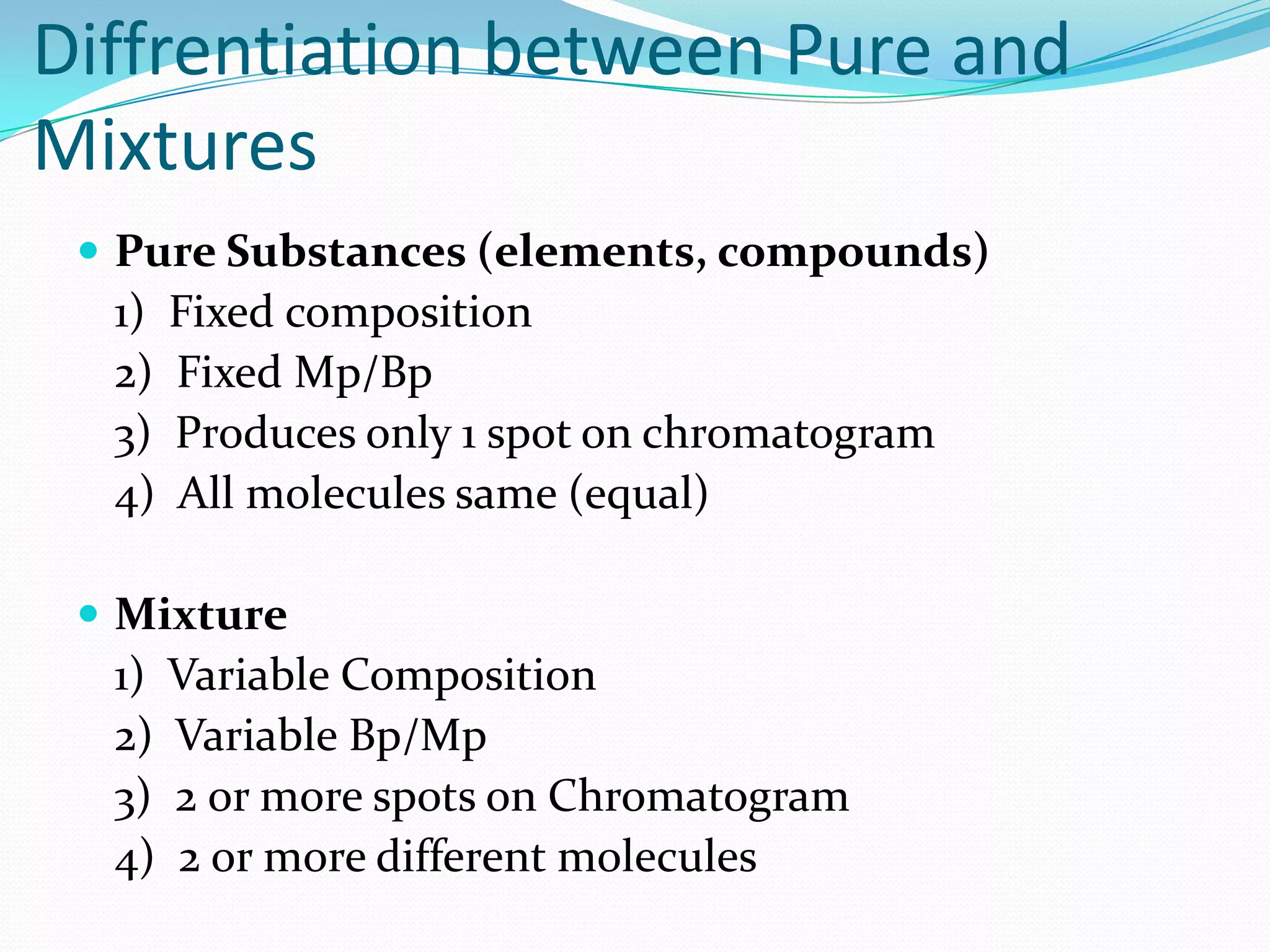
Diffrentiation between Pure and
Mixtures
  Pure Substances (elements, compounds)
  1) Fixed composition
  2) Fixed Mp/Bp
  3) Produces only 1 spot on chromatogram
  4) All molecules same (equal)

  Mixture
  1) Variable Composition
  2) Variable Bp/Mp
  3) 2 or more spots on Chromatogram
  4) 2 or more different molecules

Elements, compounds and mixtures

  • 1.
    Made by: M.Fahd-Un-Nabi Khan USMAN PUBLIC SCHOOL XI-O
  • 2.
    Elements  An elementis a substance which cannot be split into two or more substances by chemical means  The smallest possible particle of an Element that can take part in a chemical change is called an ATOM.
  • 3.
    Compounds containing 2or more  Compound is substance elements chemically joined together.  e.g. Magnesium is an element; oxygen is an element – they can only be combusted to form magnesium oxide (MgO) compound.  Ions or molecules make up compounds  Ions are atoms having electrical charge, e.g. NaCl made up of 2 ions; positively charged Na, negatively charged Cl.
  • 4.
    Molecules  Molecule isgroup of two or more atoms chemically joined together, e.g. chlorine molecule has 2 chlorine atoms.  Molecules can be either ELEMENTS or COMPOUNDS.  E.g. MgO is a compound, but Cl2 is an element
  • 5.
    Mixtures  2 ormore substances which are not chemically joined t ogether e.g. Iron in Sulphur powder.  Can consist of:  Elements (Iron & Sulphur powder)  Compounds (Salt in water - salt & water are both compounds)  Elements + Compounds (Air; N2, O2, H2O)
  • 6.
    Difference between Compoundsand Mixtures MIXTURE COMPOUNDS  Constituent substances can  Constituent substances can be separated easily by be separated only by chemical physical means means  Its physical and chemical  Its physical and chemical properties are an average of properties are individual and substances in it not the result of its elements  A mixture’s proportion can  A compound’s proportion vary cannot vary  Little or no energy is involved  Energy is usually involved when Mixture is formed when a Compound is formed
  • 7.
    Diffrentiation between Pureand Mixtures  Pure Substances (elements, compounds) 1) Fixed composition 2) Fixed Mp/Bp 3) Produces only 1 spot on chromatogram 4) All molecules same (equal)  Mixture 1) Variable Composition 2) Variable Bp/Mp 3) 2 or more spots on Chromatogram 4) 2 or more different molecules