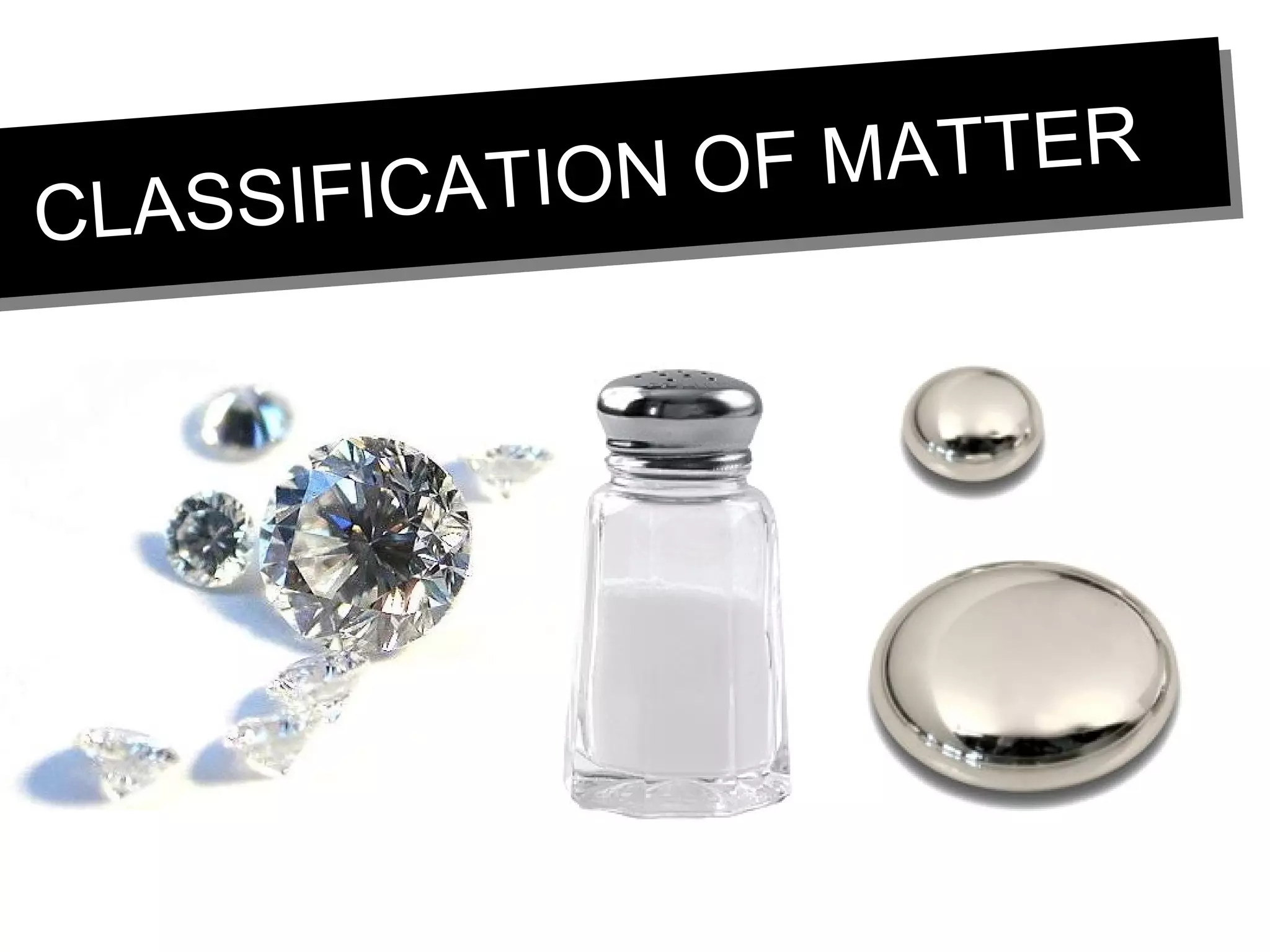
CLASSIFICATION OF MATTER
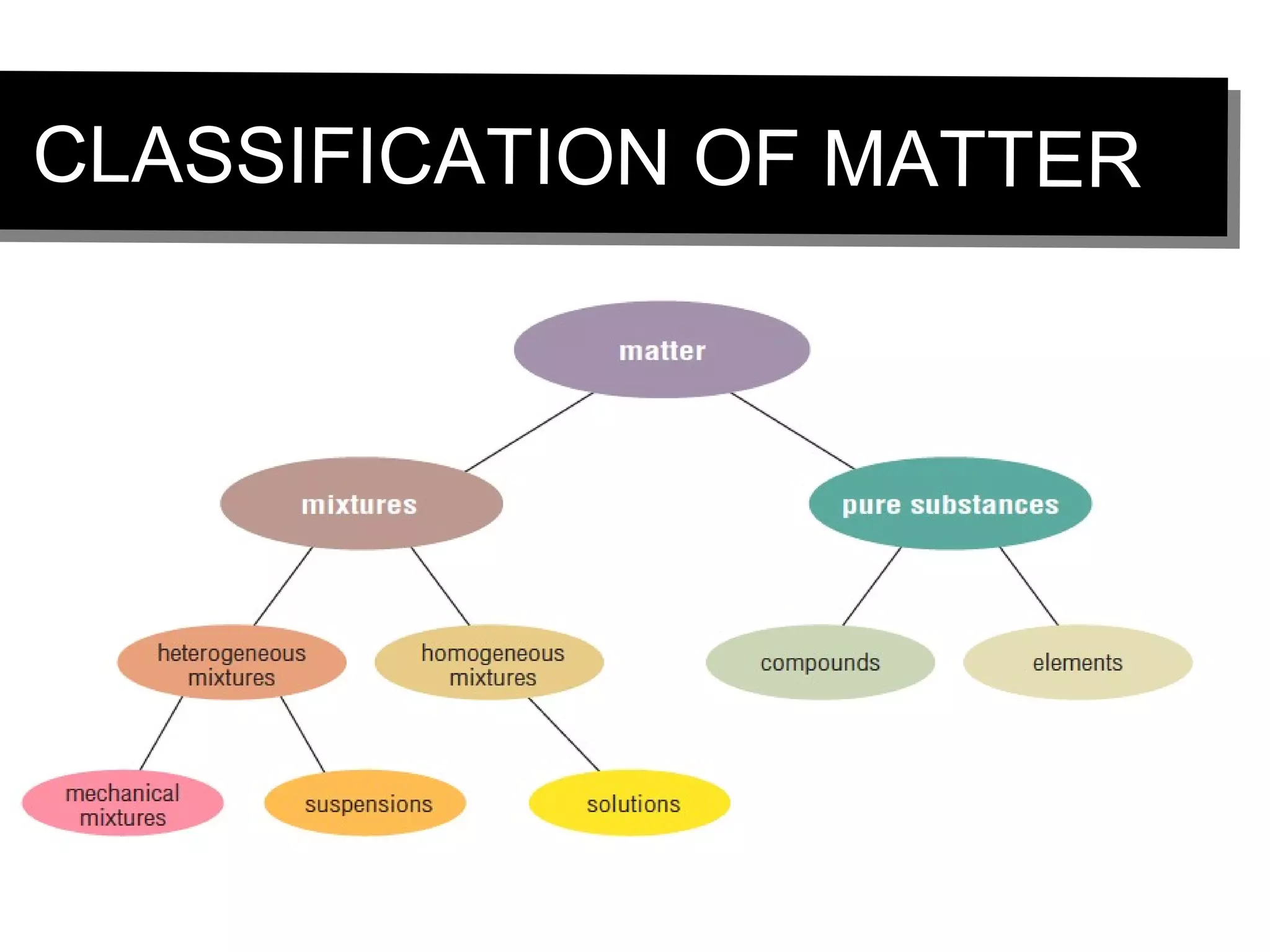
CLASSIFICATION OF MATTERCLASSIFICATION OF MATTER
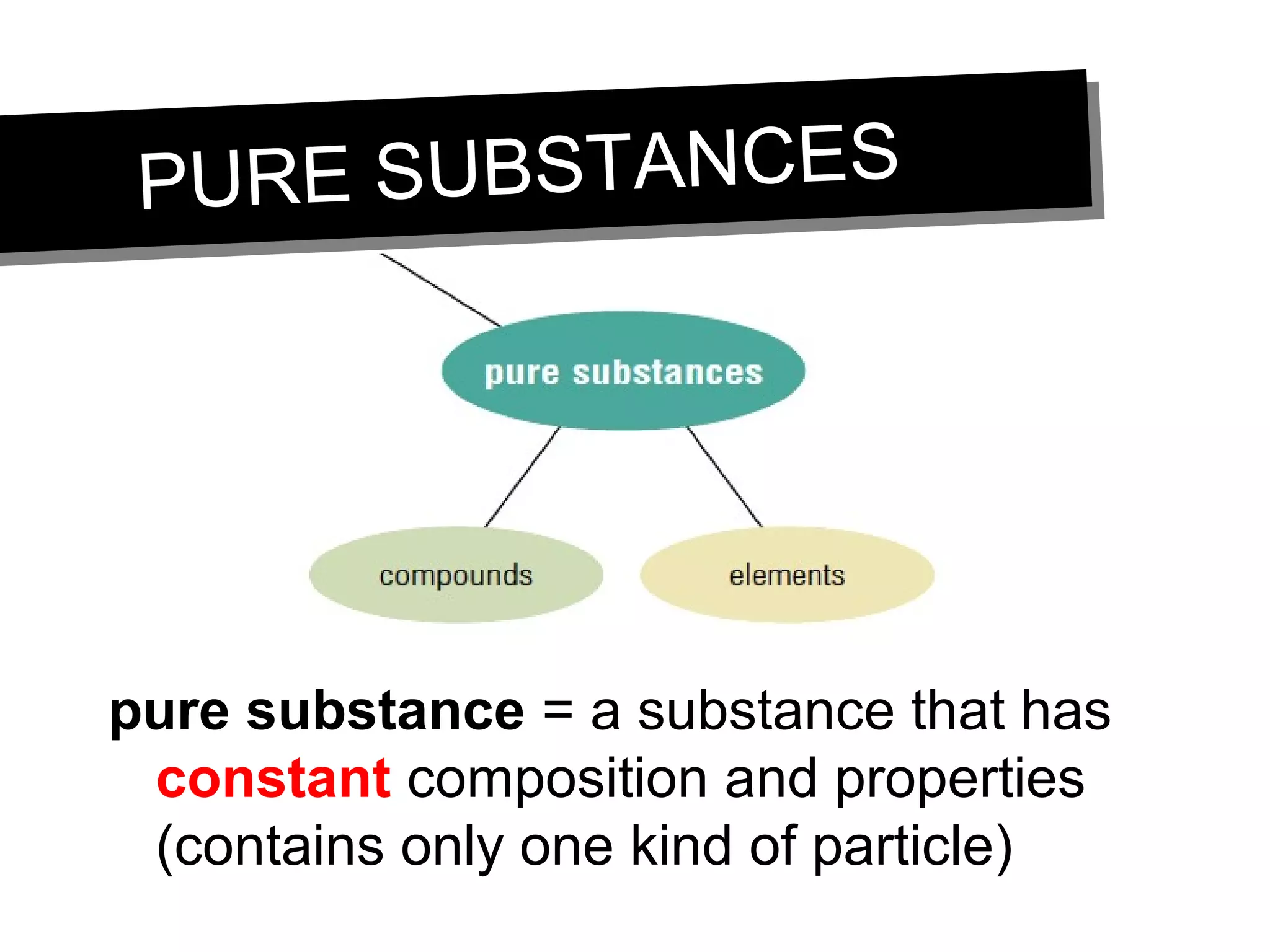
PURE SUBSTANCESPURE SUBSTANCES
pure substance = a substance that has
constant composition and properties
(contains only one kind of particle)
ELEMENTSELEMENTS
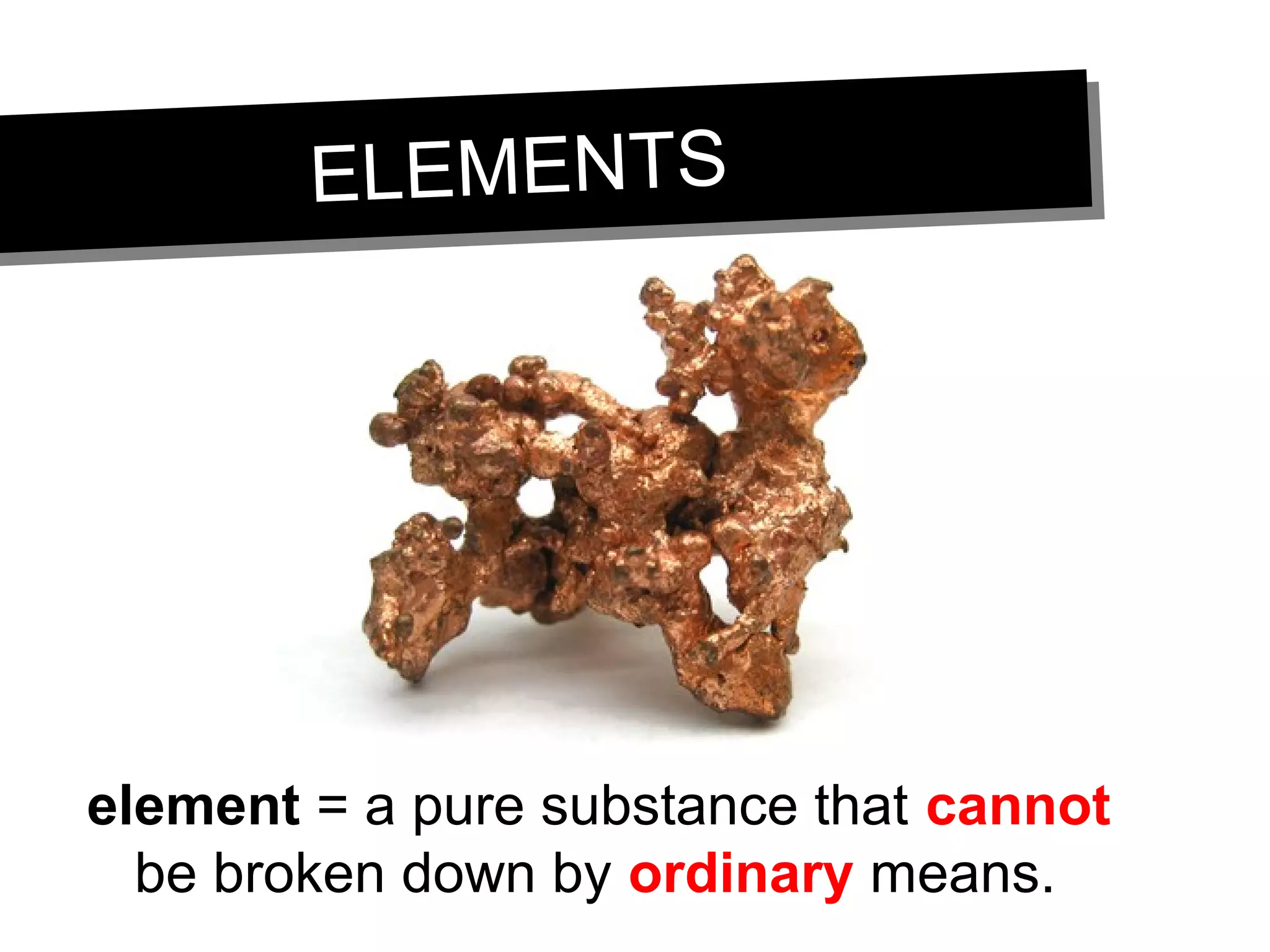
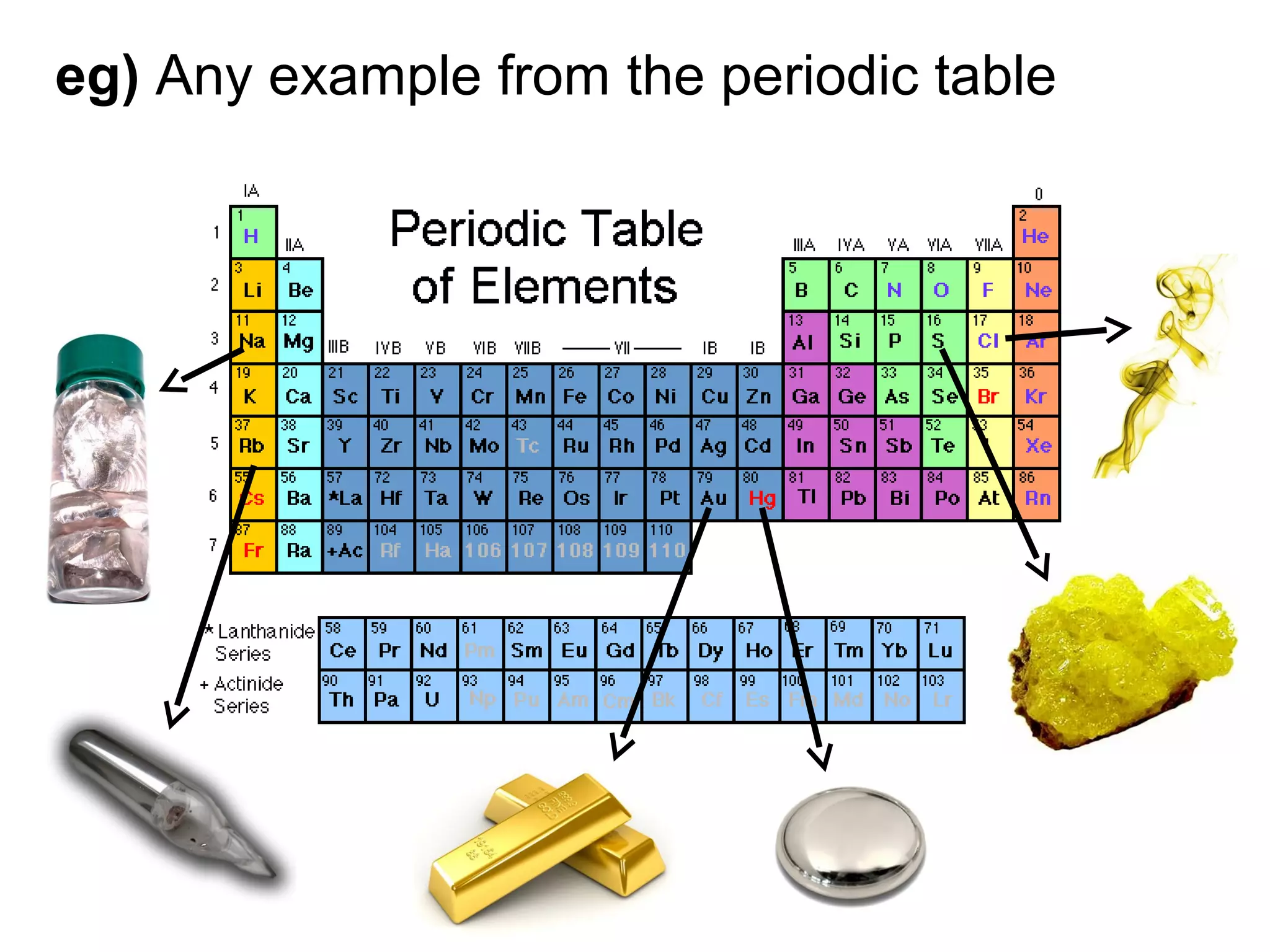
element = a pure substance that cannot
be broken down by ordinary means.
eg) Any example from the periodic table
COMPOUNDSCOMPOUNDS
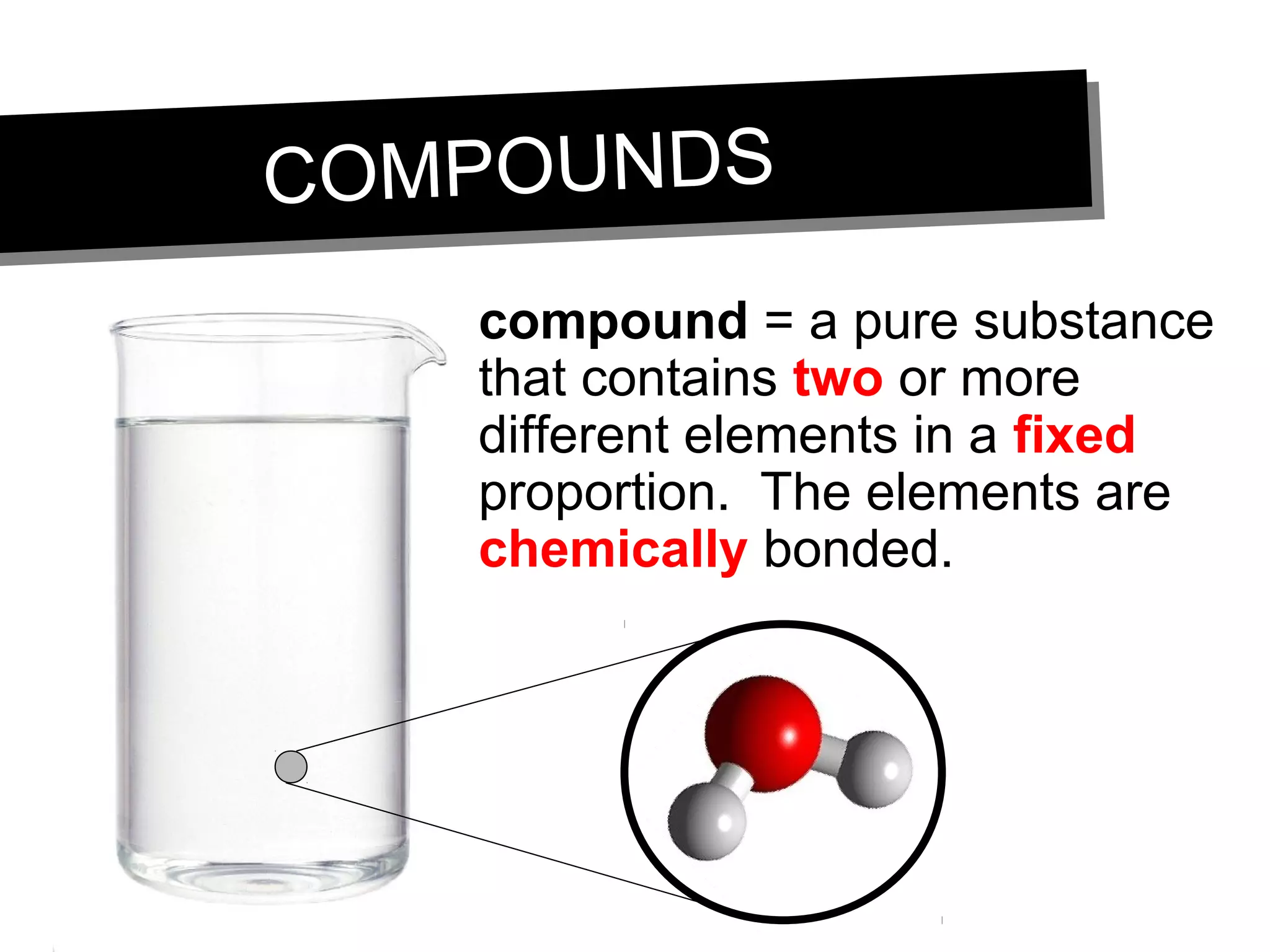
compound = a pure substance
that contains two or more
different elements in a fixed
proportion. The elements are
chemically bonded.
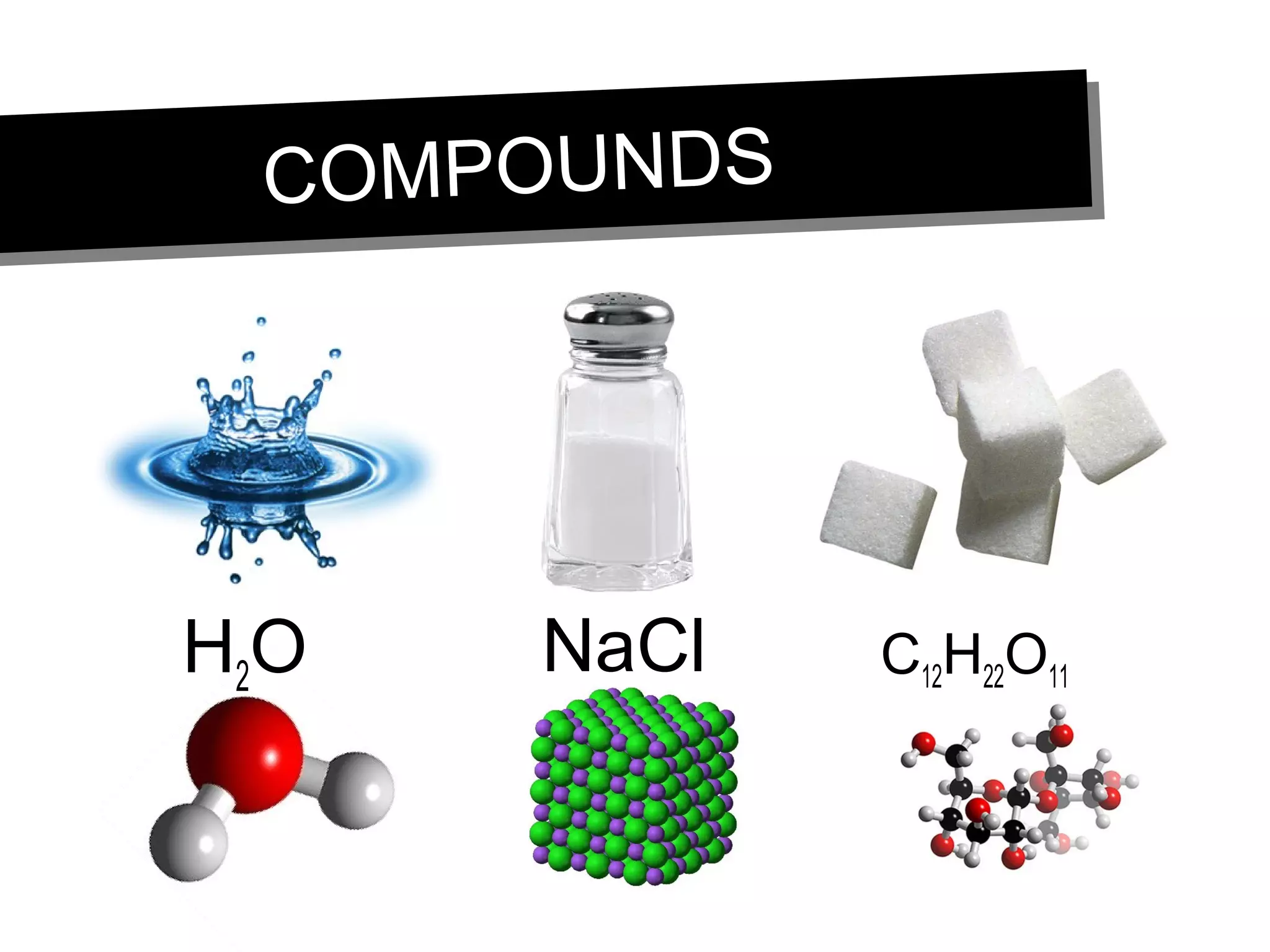
COMPOUNDSCOMPOUNDS
H2O NaCl C12H22O11
ATOMSATOMS
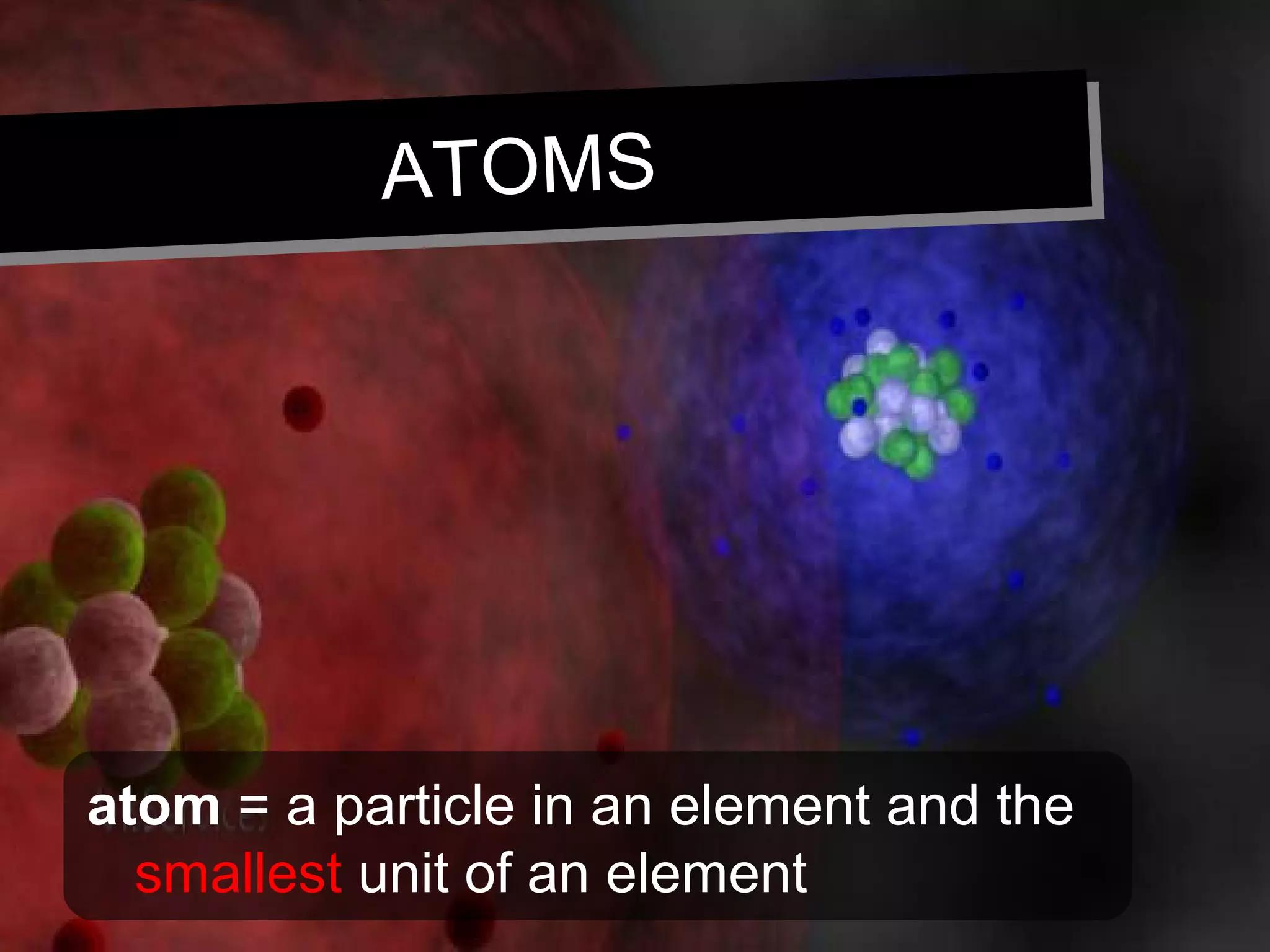
atom = a particle in an element and the
smallest unit of an element
MOLECULESMOLECULES
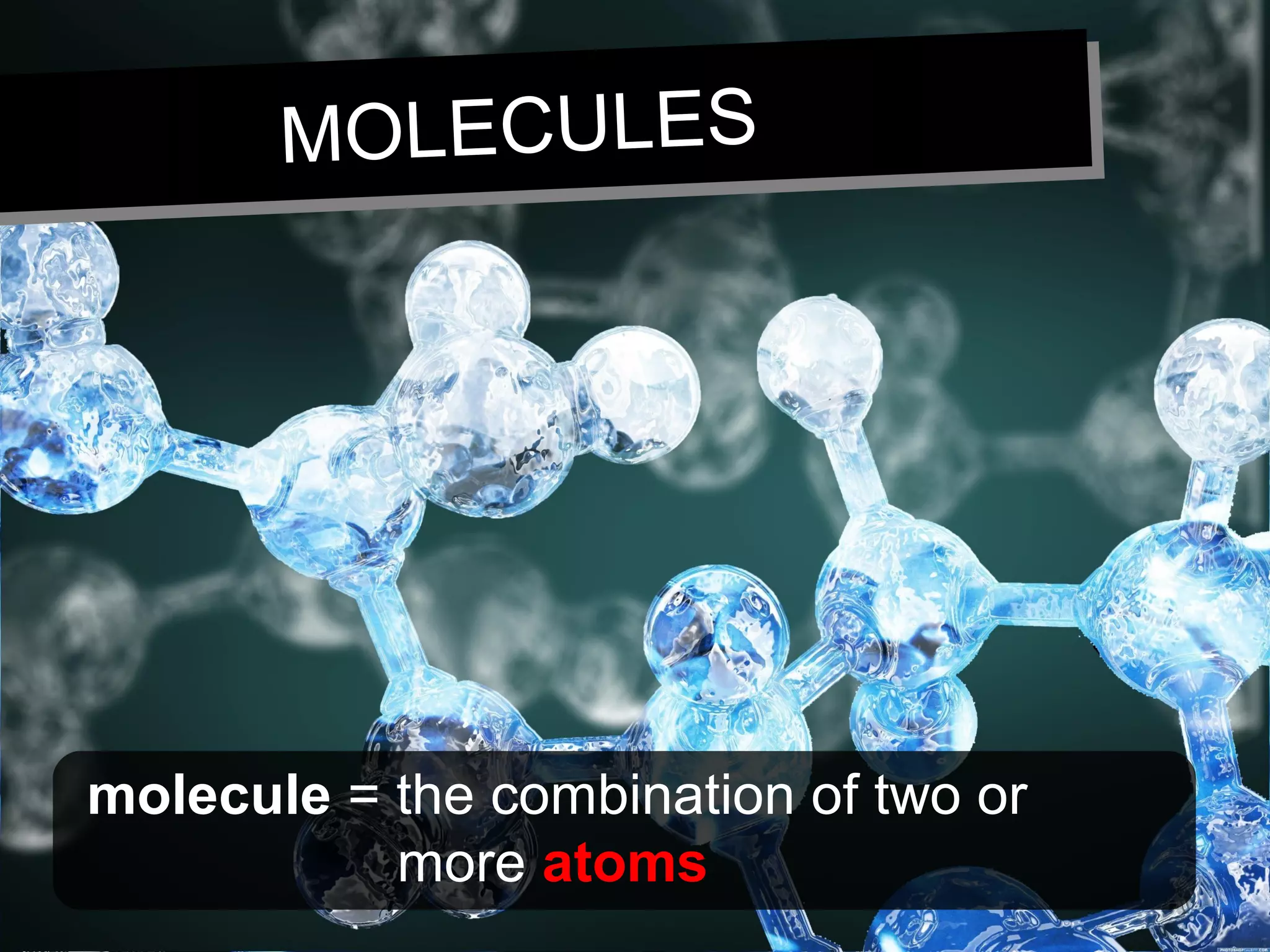
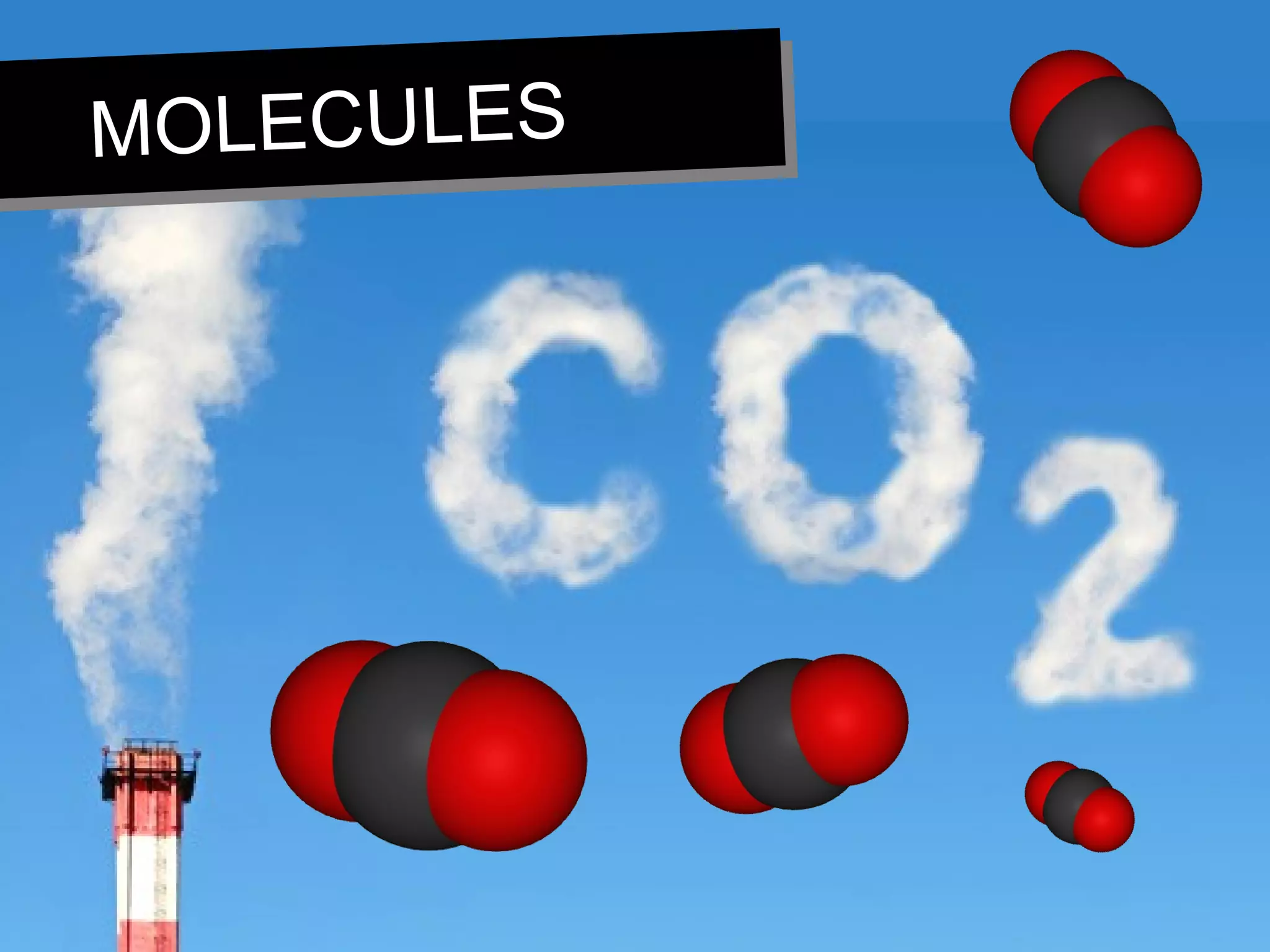
molecule = the combination of two or
more atoms
MOLECULESMOLECULES
MIXTURESMIXTURES
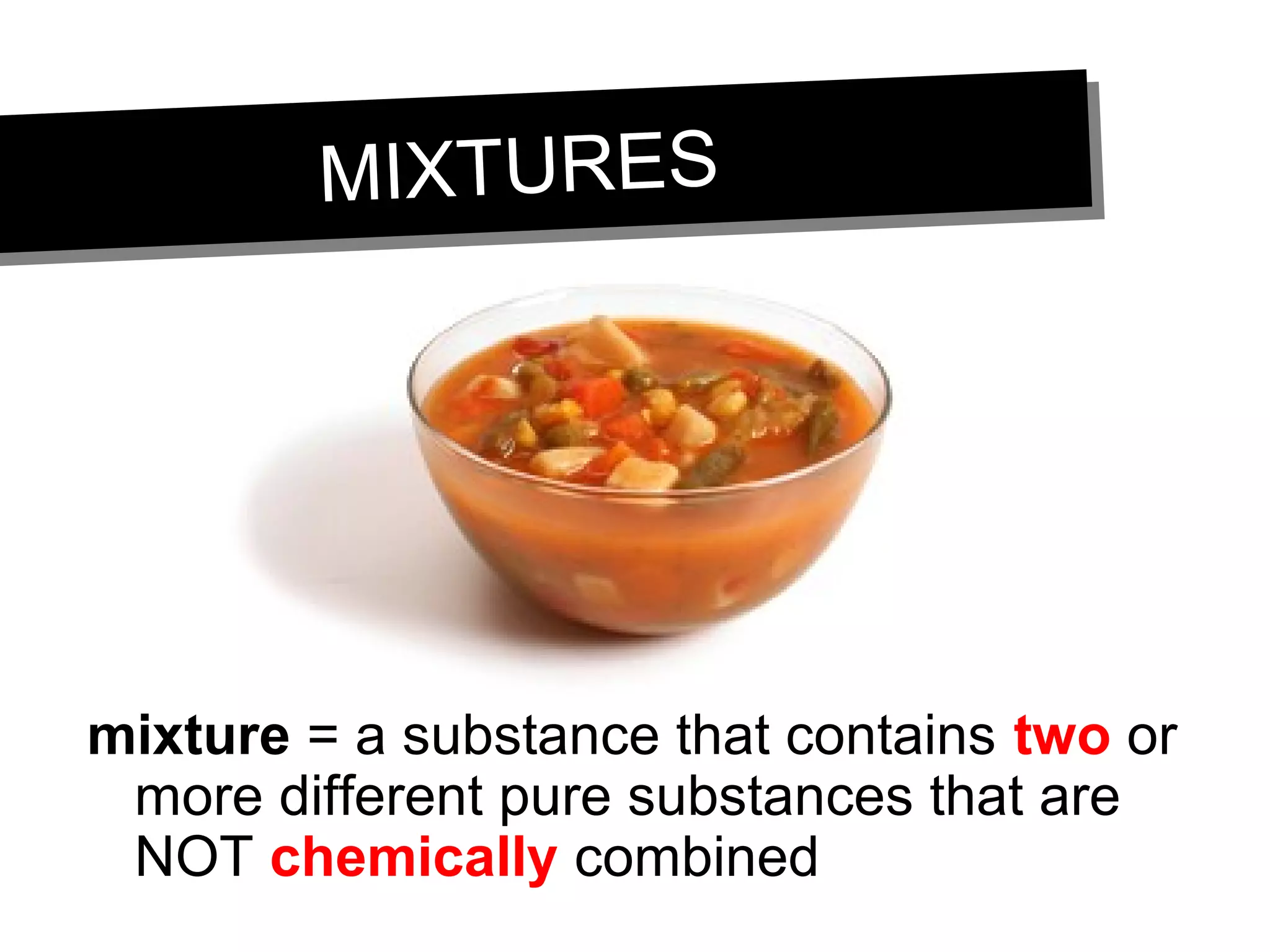
mixture = a substance that contains two or
more different pure substances that are
NOT chemically combined
MIXTURESMIXTURES
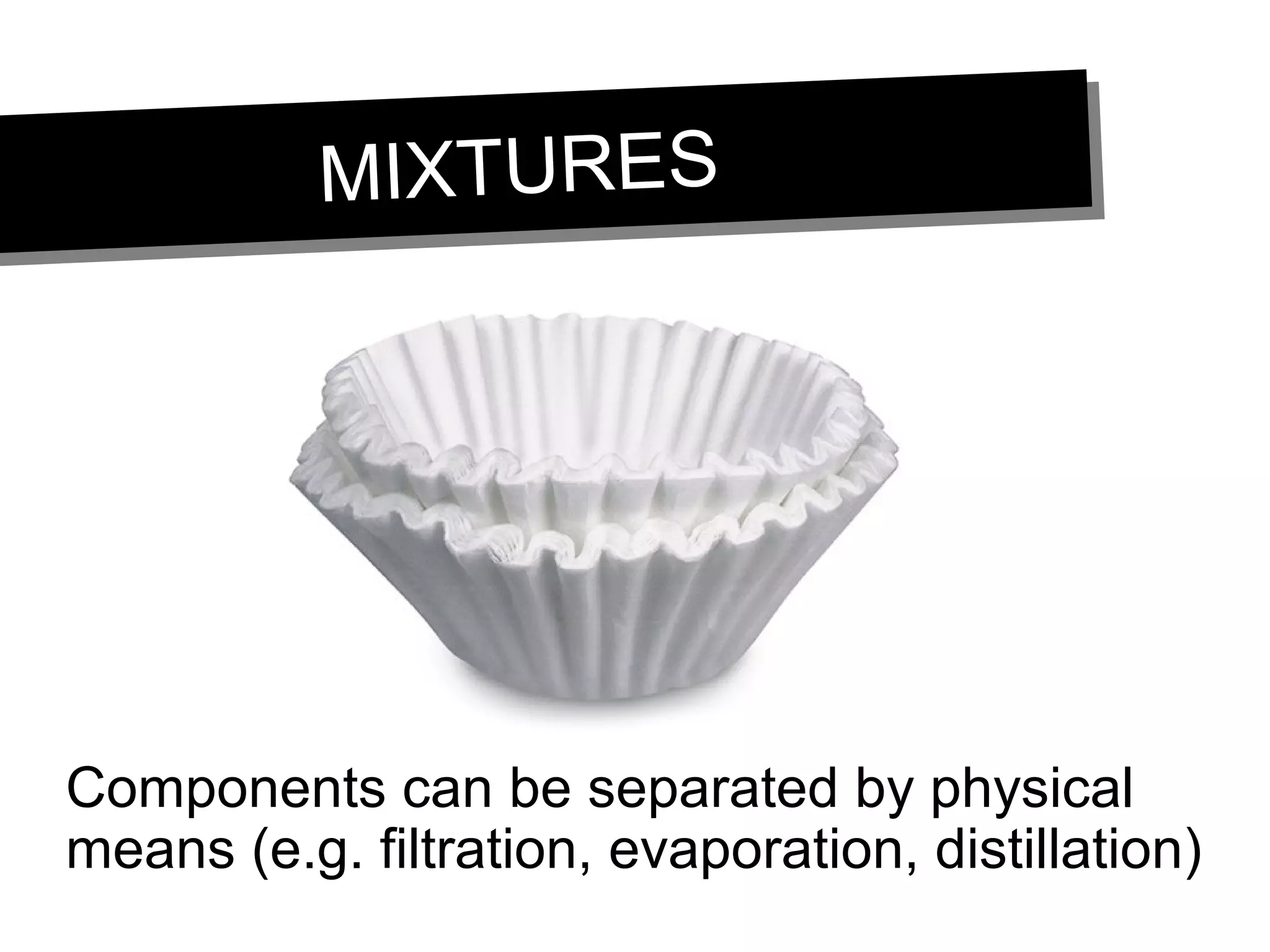
Components can be separated by physical
means (e.g. filtration, evaporation, distillation)
HOMOGENEOUS SOLUTIONHOMOGENEOUS SOLUTION
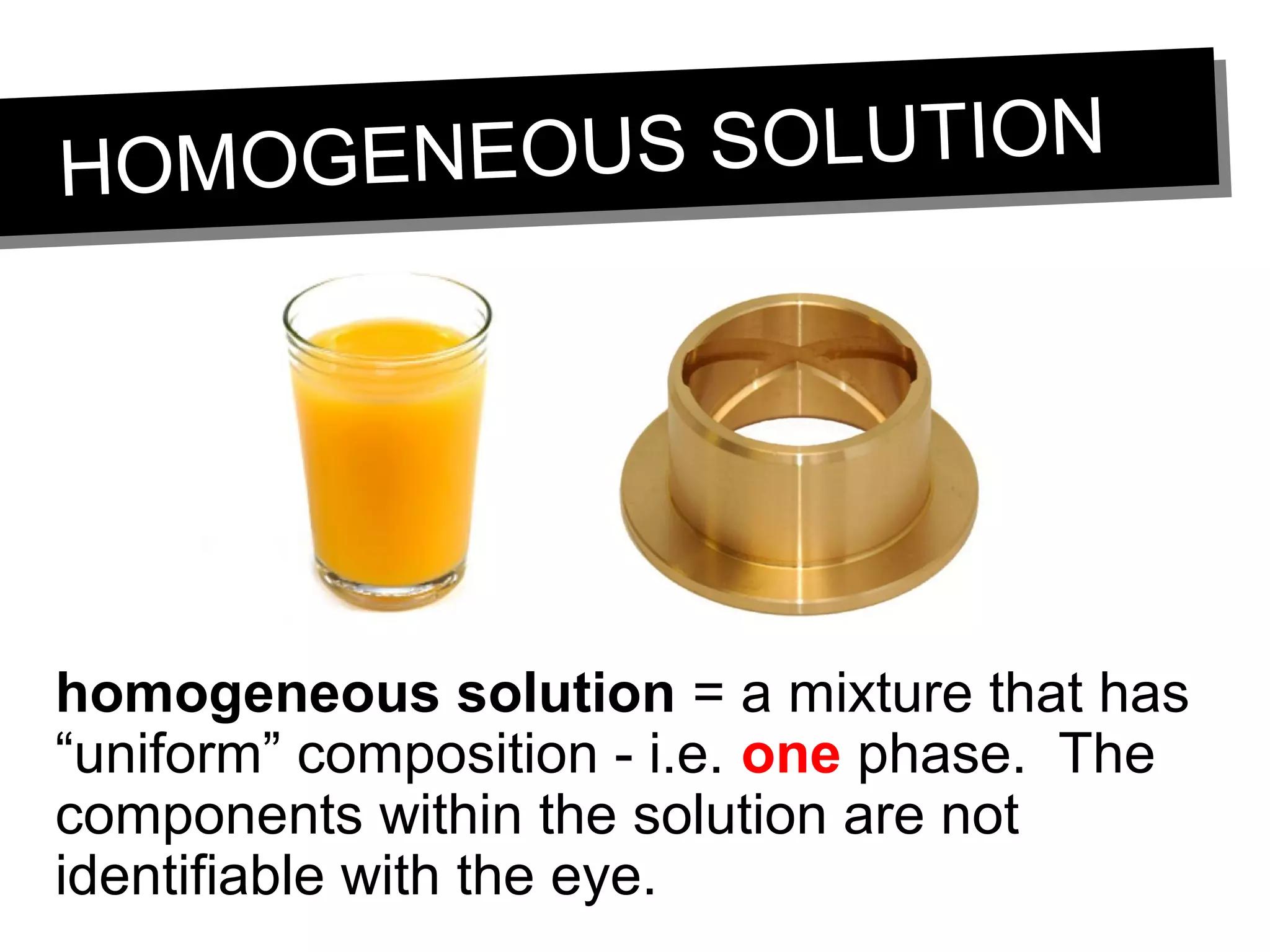
homogeneous solution = a mixture that has
“uniform” composition - i.e. one phase. The
components within the solution are not
identifiable with the eye.
SOLUTESOLUTE
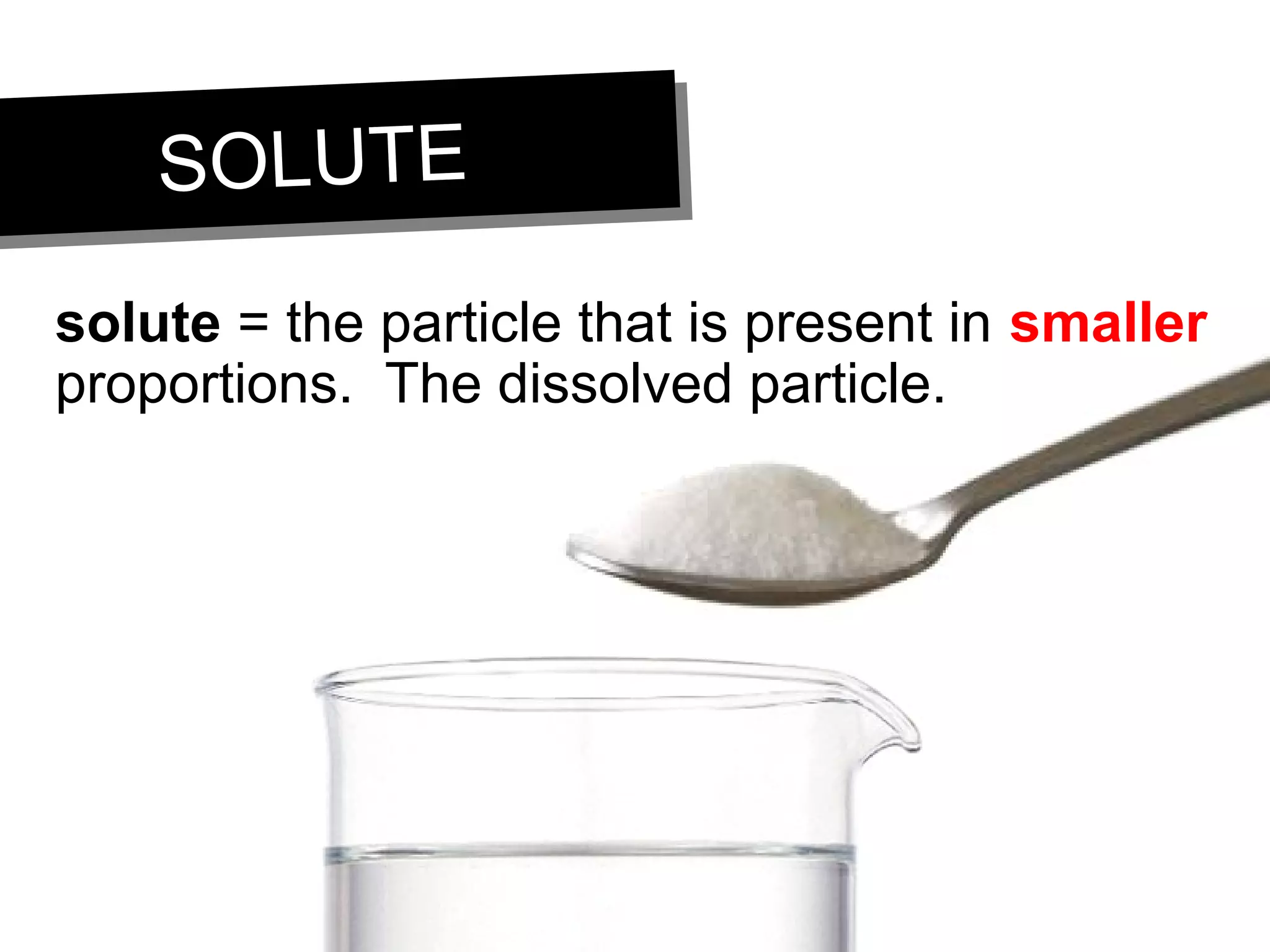
solute = the particle that is present in smaller
proportions. The dissolved particle.
SOLVENTSOLVENT
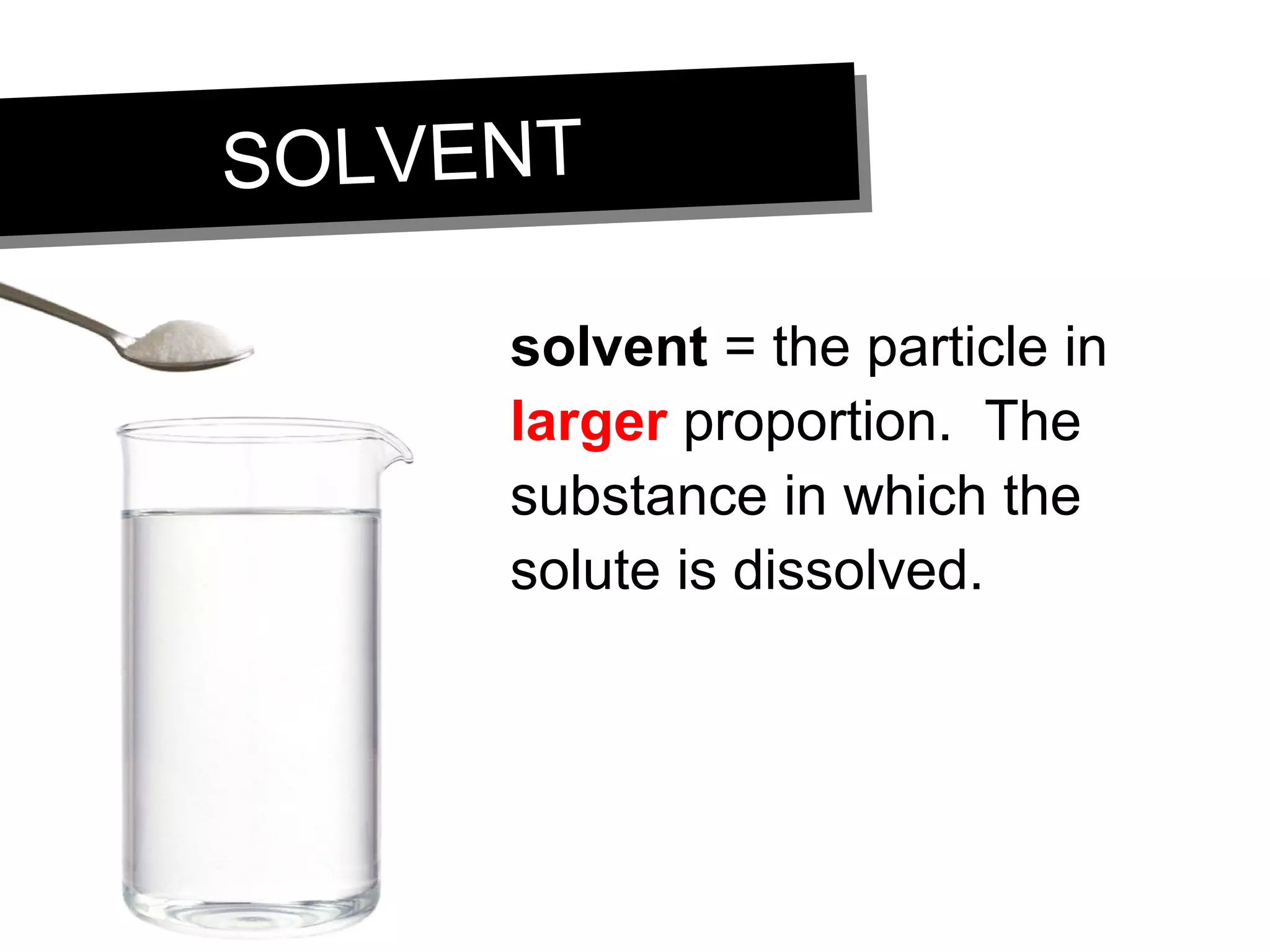
solvent = the particle in
larger proportion. The
substance in which the
solute is dissolved.
ALLOYALLOY
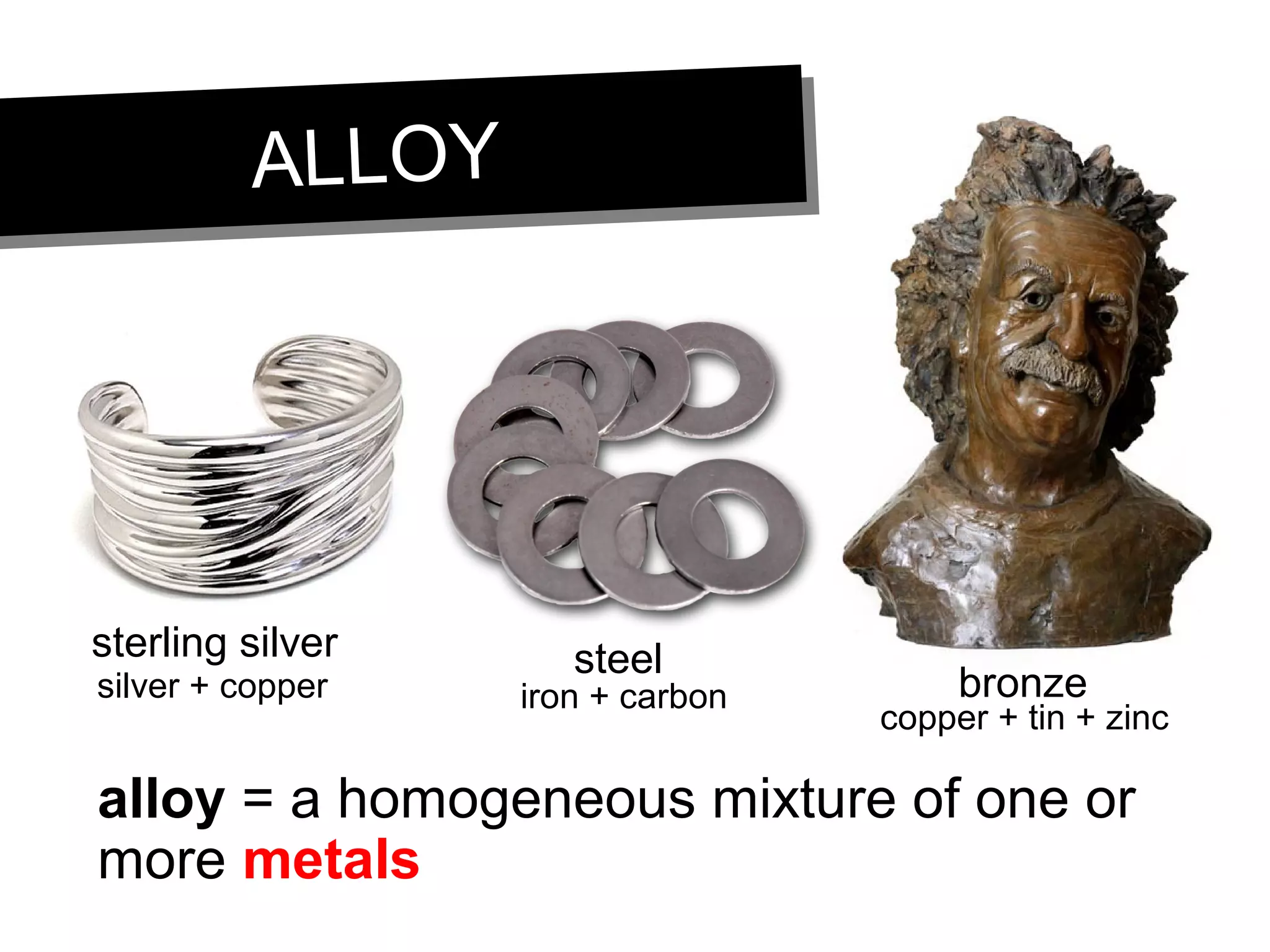
alloy = a homogeneous mixture of one or
more metals
sterling silver steel
bronzesilver + copper iron + carbon
copper + tin + zinc
HETEROGENEOUS MIXTUREHETEROGENEOUS MIXTURE
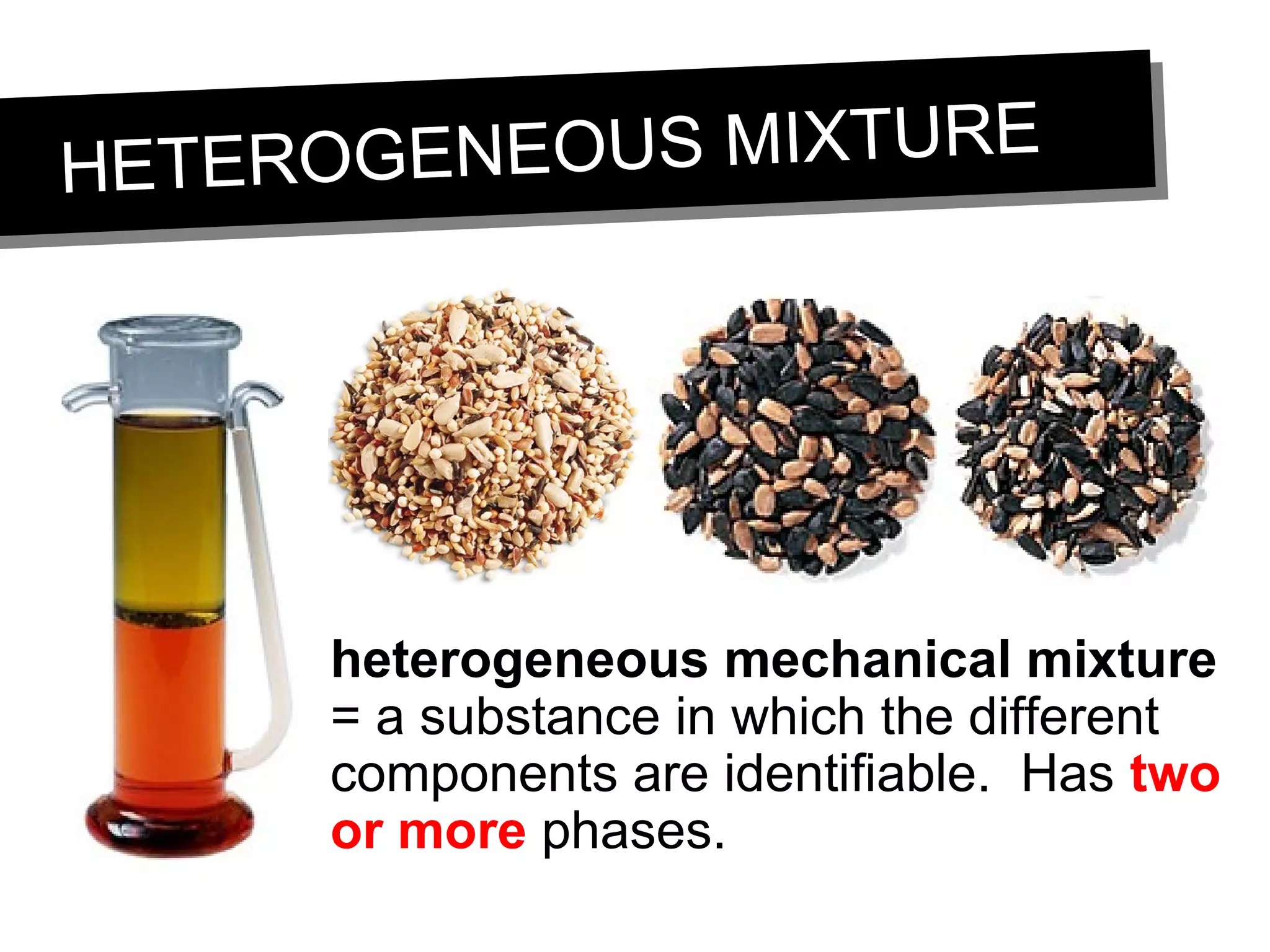
heterogeneous mechanical mixture
= a substance in which the different
components are identifiable. Has two
or more phases.
MECHANICAL MIXTUREMECHANICAL MIXTURE
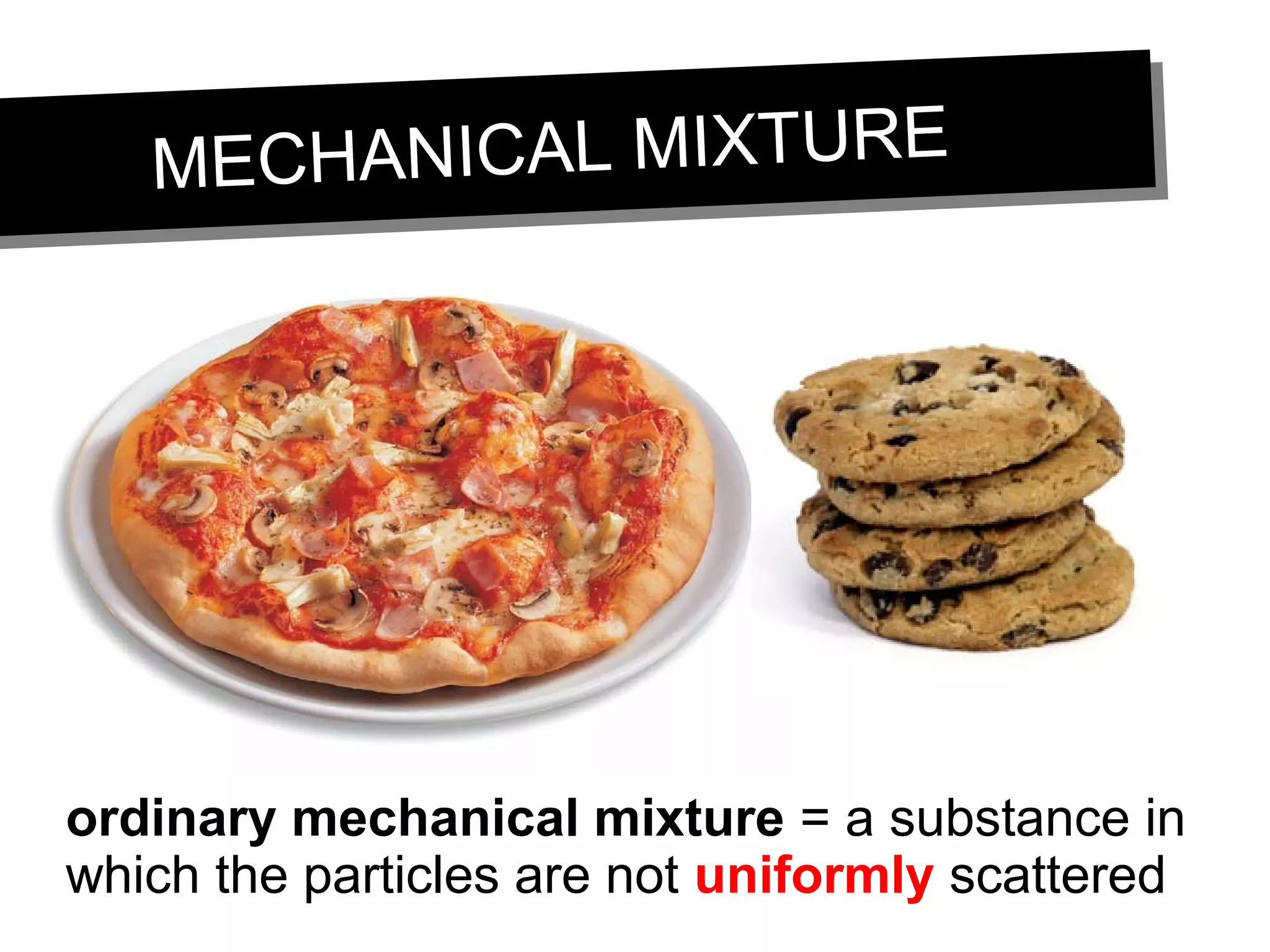
ordinary mechanical mixture = a substance in
which the particles are not uniformly scattered
SUSPENSIONSUSPENSION
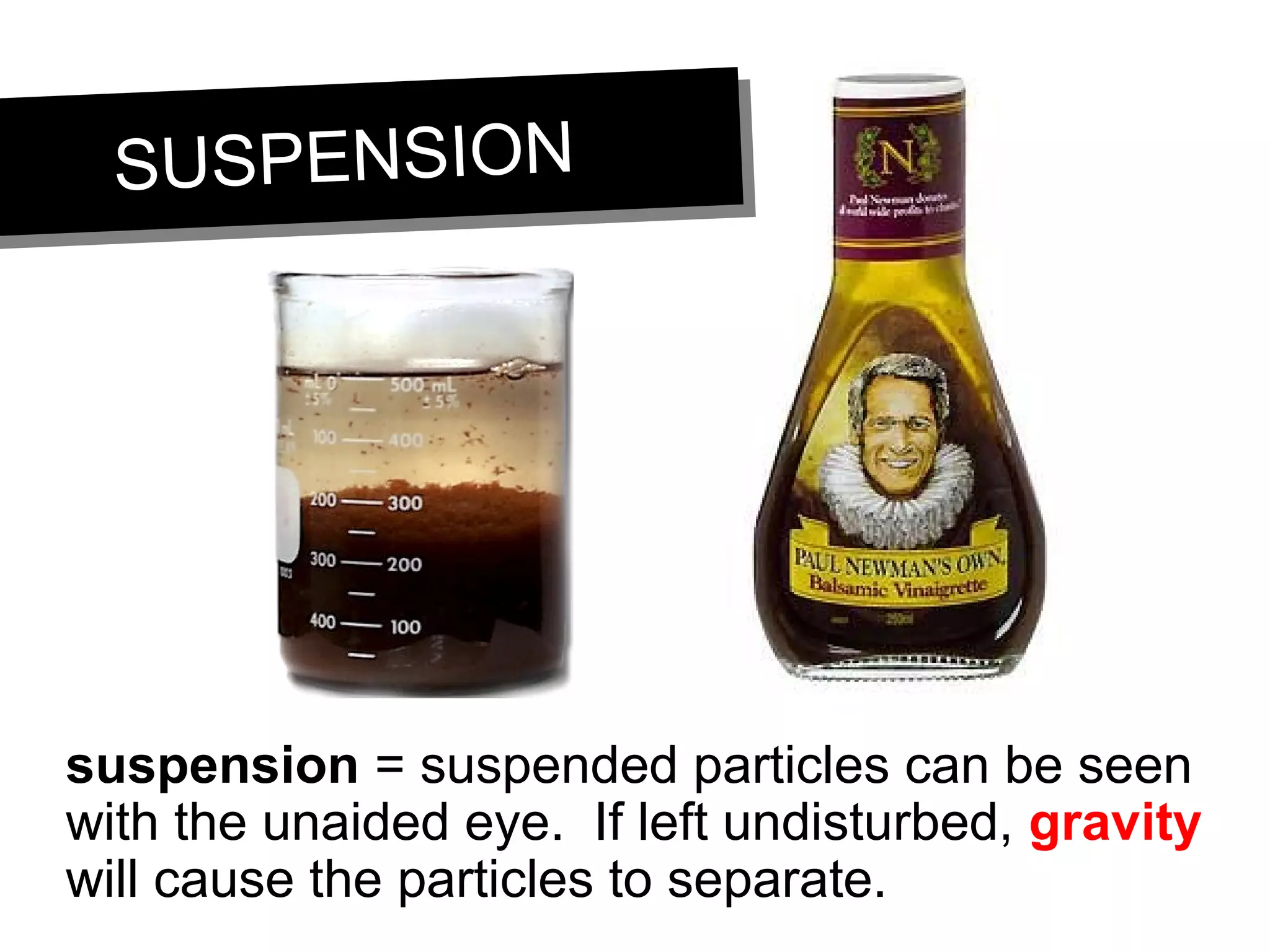
suspension = suspended particles can be seen
with the unaided eye. If left undisturbed, gravity
will cause the particles to separate.
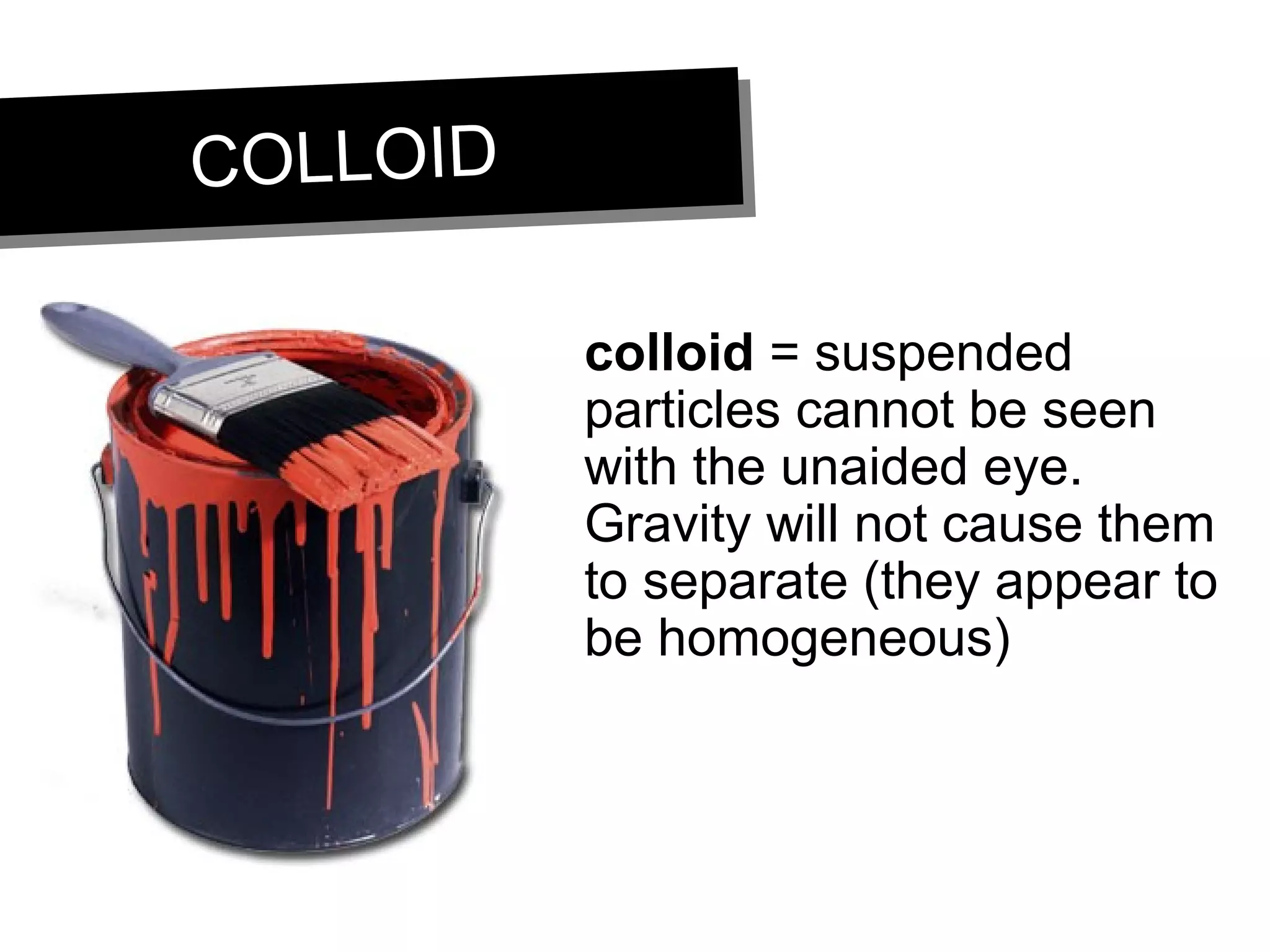
COLLOIDCOLLOID
colloid = suspended
particles cannot be seen
with the unaided eye.
Gravity will not cause them
to separate (they appear to
be homogeneous)
EMULSIONEMULSION
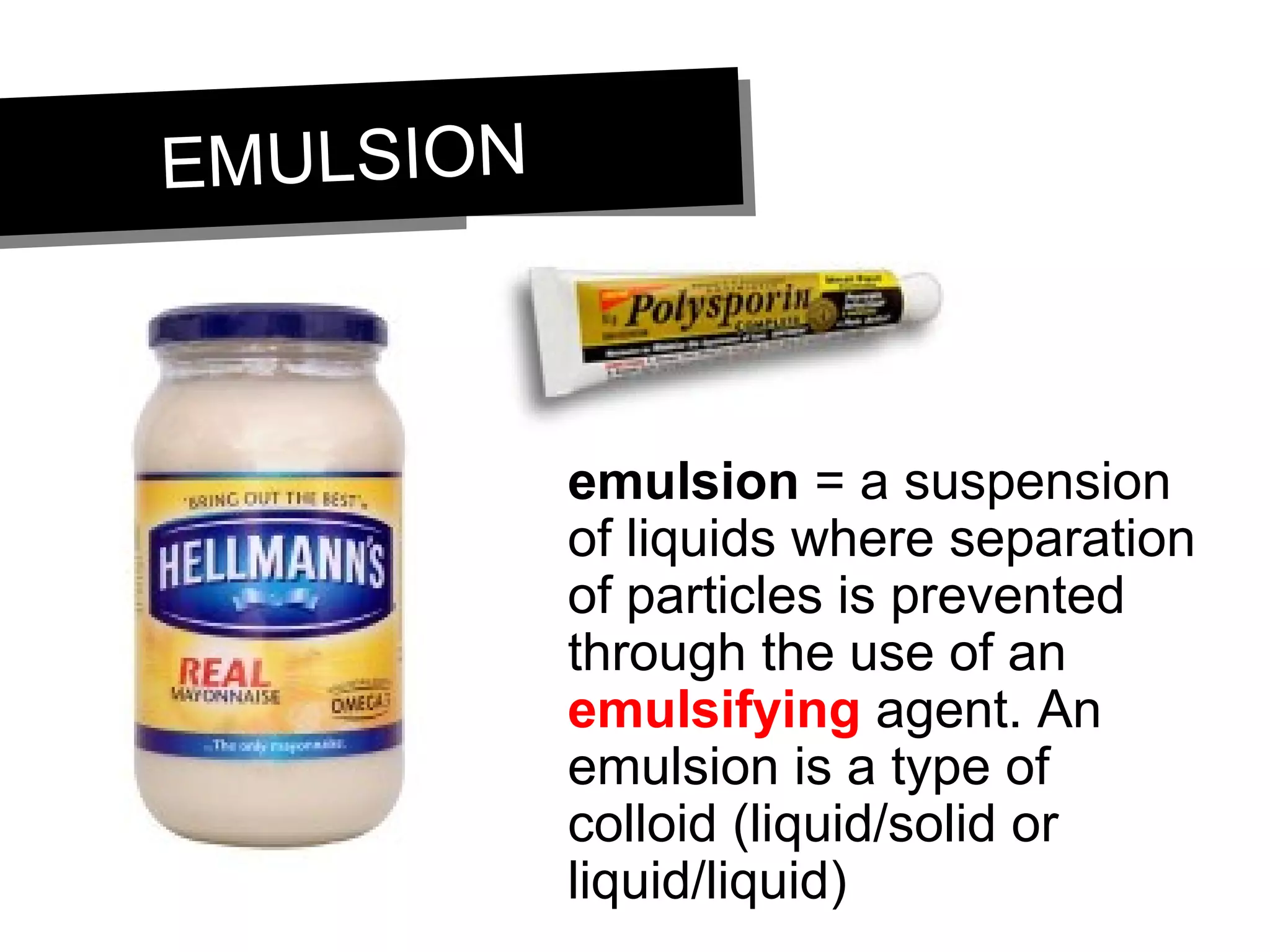
emulsion = a suspension
of liquids where separation
of particles is prevented
through the use of an
emulsifying agent. An
emulsion is a type of
colloid (liquid/solid or
liquid/liquid)
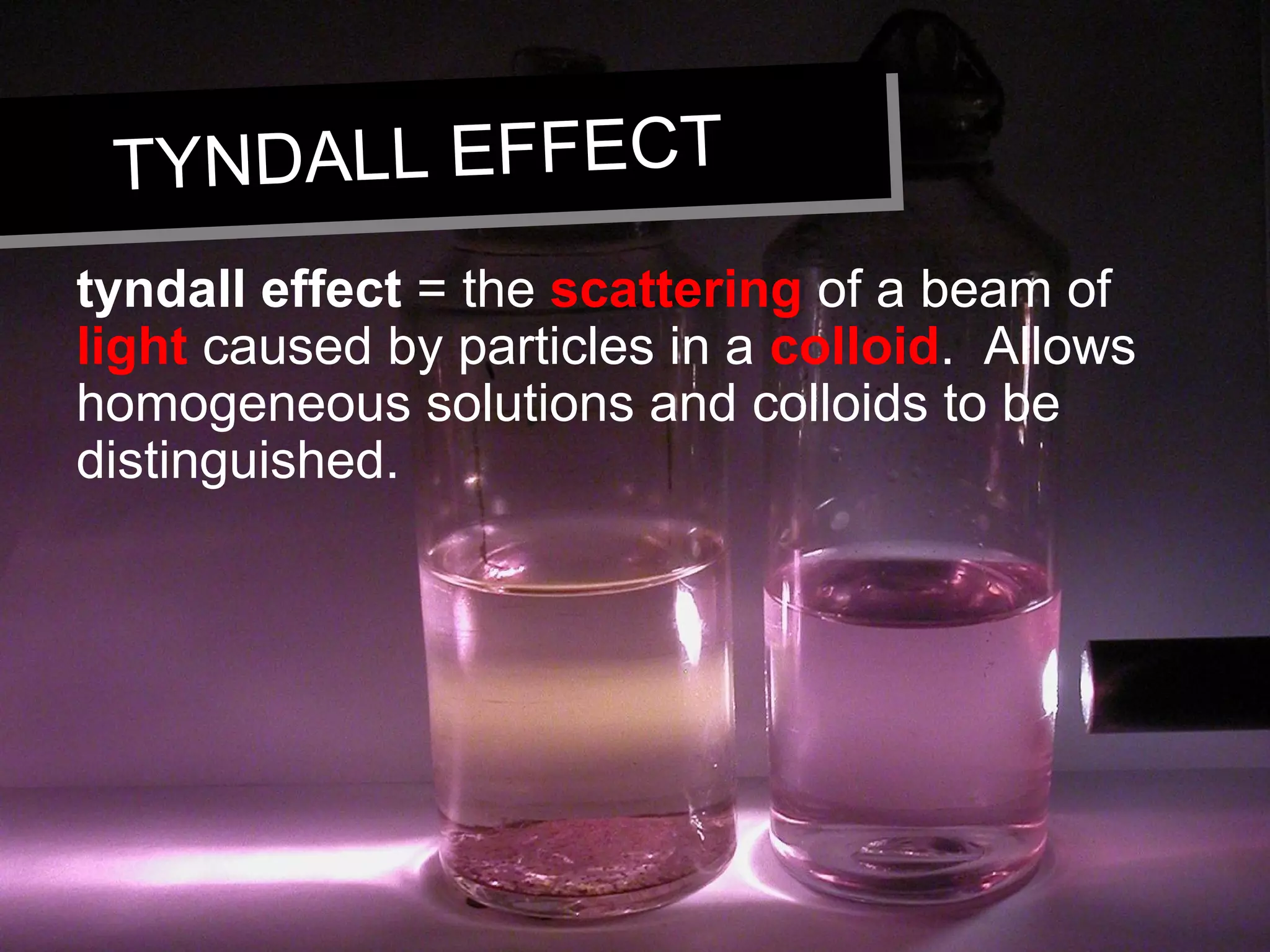
TYNDALL EFFECTTYNDALL EFFECT
tyndall effect = the scattering of a beam of
light caused by particles in a colloid. Allows
homogeneous solutions and colloids to be
distinguished.
References and Practice
Questions
Nelson Textbook Page 175-177
w/b 20/21/22

Grade9, U1 - L6-Classification of matter