Elements, Compounds and 
Mixtures 
Holt: Chapter 4 
Fusion: Unit 3, Lesson 5
Mixtures 
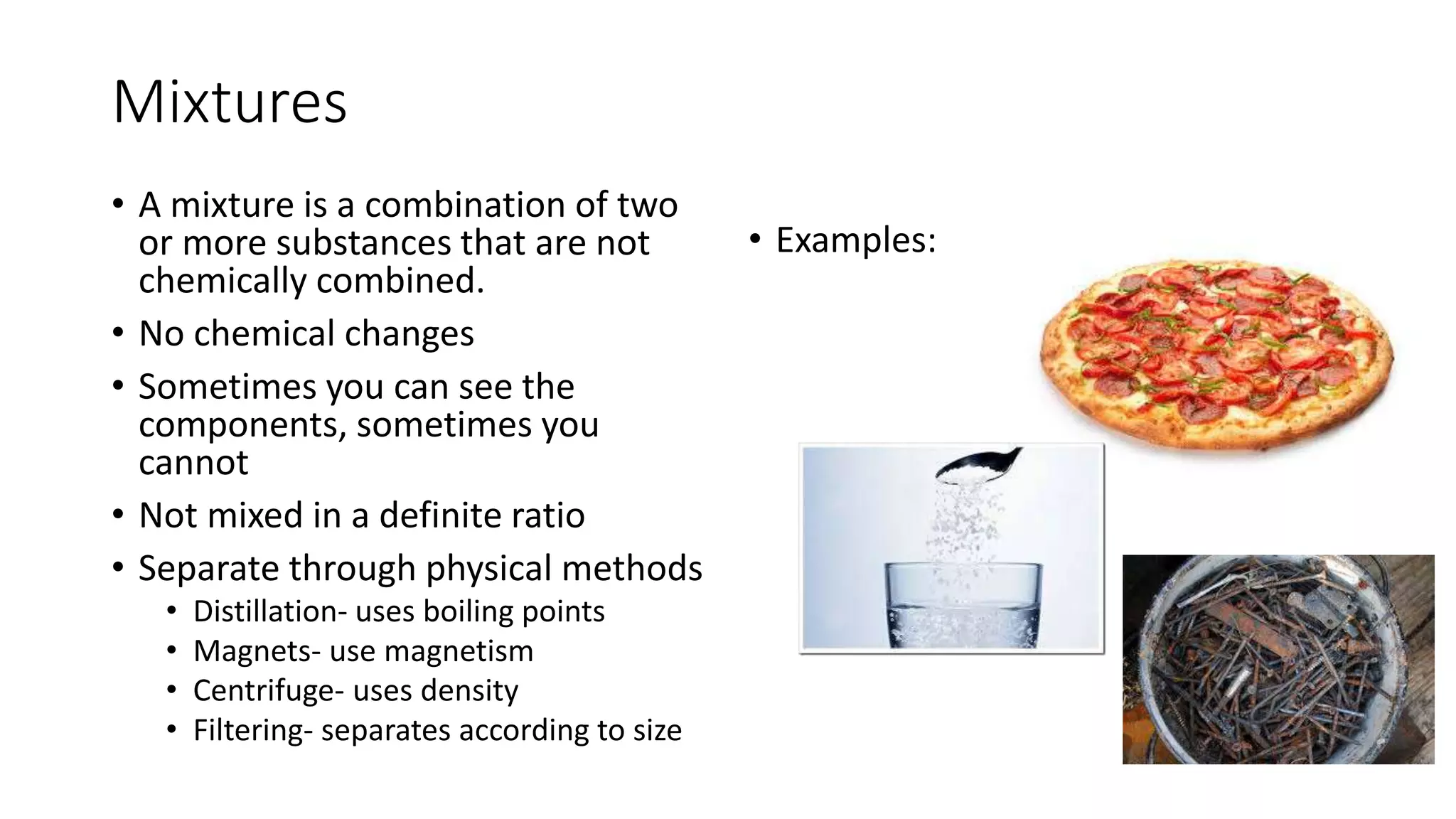
• A mixture is a combination of two 
or more substances that are not 
chemically combined. 
• No chemical changes 
• Sometimes you can see the 
components, sometimes you 
cannot 
• Not mixed in a definite ratio 
• Separate through physical methods 
• Distillation- uses boiling points 
• Magnets- use magnetism 
• Centrifuge- uses density 
• Filtering- separates according to size 
• Examples:
Types of Mixtures 
•Solutions 
•Suspensions 
•Colloids
Solutions 
• A mixture that appears to be a 
single substance 
• Process by which they spread is 
dissolving 
• Solute- the substance being 
dissolved 
• Solvent- the substance doing the 
dissolving (water is the universal 
solvent) 
• Particles never settle, cannot be 
filtered; do not scatter light 
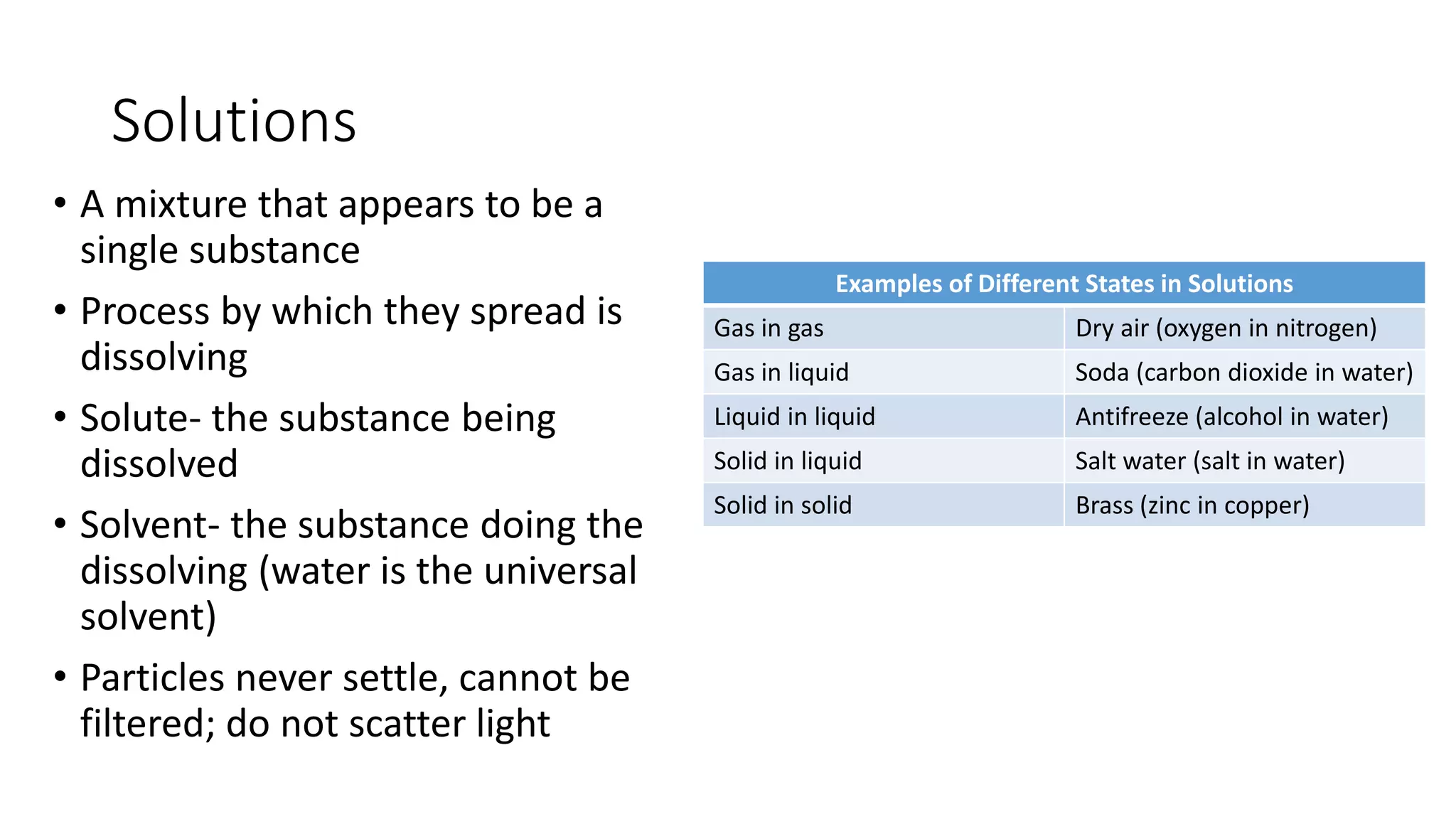
Examples of Different States in Solutions 
Gas in gas Dry air (oxygen in nitrogen) 
Gas in liquid Soda (carbon dioxide in water) 
Liquid in liquid Antifreeze (alcohol in water) 
Solid in liquid Salt water (salt in water) 
Solid in solid Brass (zinc in copper)
Concentration of Solutions 
• Concentration- the measure of the amount of solute dissolved in a 
solvent 
• Can be expressed in grams of solute per milliliter of solvent (g/mL) 
• Remember…solubility is the ability of a substance to dissolve 
• Mixing, heating and crushing can help dissolve more quickly
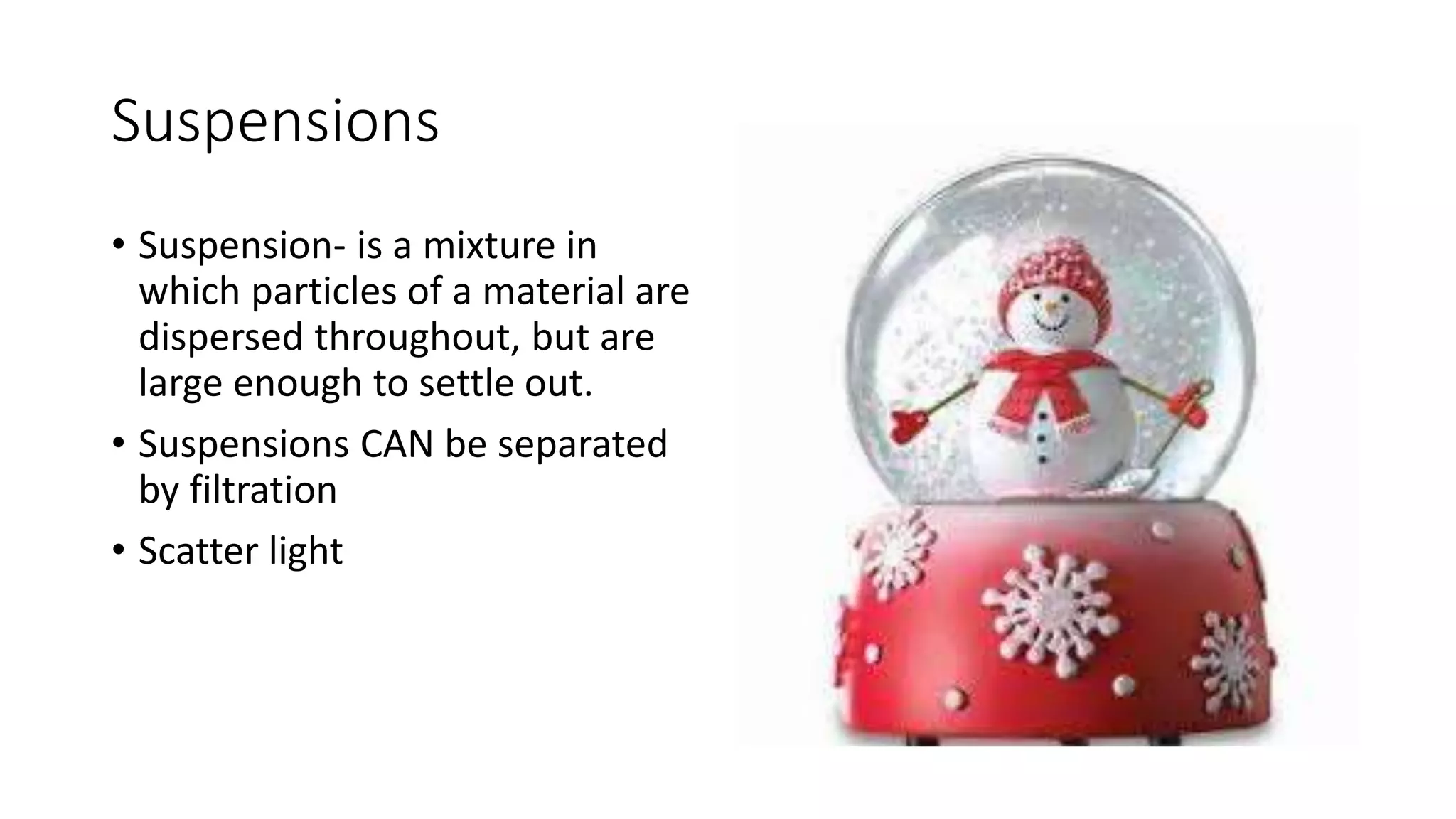
Suspensions 
• Suspension- is a mixture in 
which particles of a material are 
dispersed throughout, but are 
large enough to settle out. 
• Suspensions CAN be separated 
by filtration 
• Scatter light
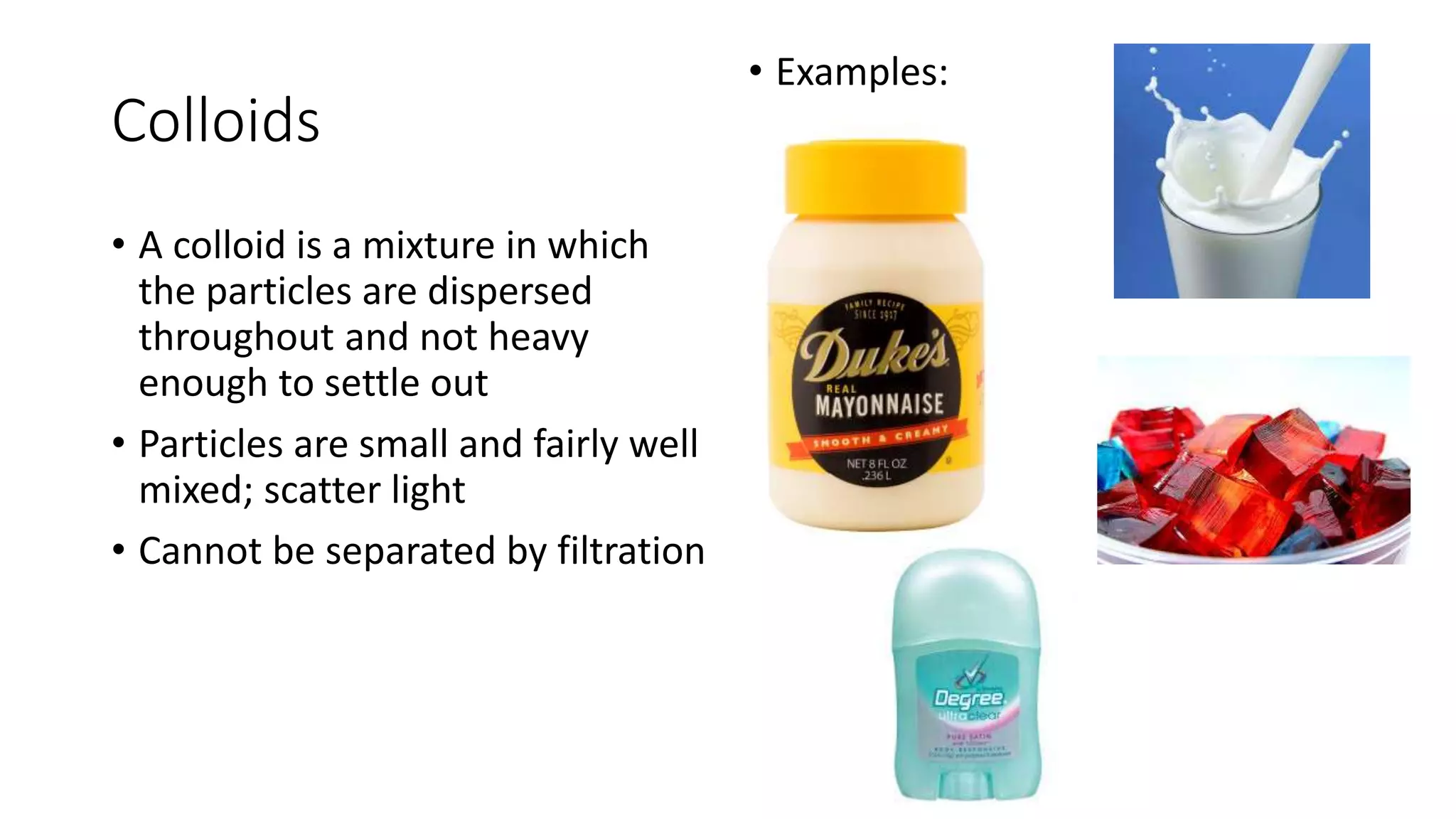
Colloids 
• A colloid is a mixture in which 
the particles are dispersed 
throughout and not heavy 
enough to settle out 
• Particles are small and fairly well 
mixed; scatter light 
• Cannot be separated by filtration 
• Examples:
Elements 
• Element- a pure substance that 
cannot be separated into simpler 
substances by chemical or 
physical means 
• Pure substance- is a substance in 
which there is only one type of 
particle 
• Particles are atoms 
• Each element has unique 
properties- not dependent on 
how much of an element you 
have 
• Remember…characteristic 
properties? Physical and 
chemical properties? 
• Elements do share some 
properties 
• Grouped on the periodic table 
by properties
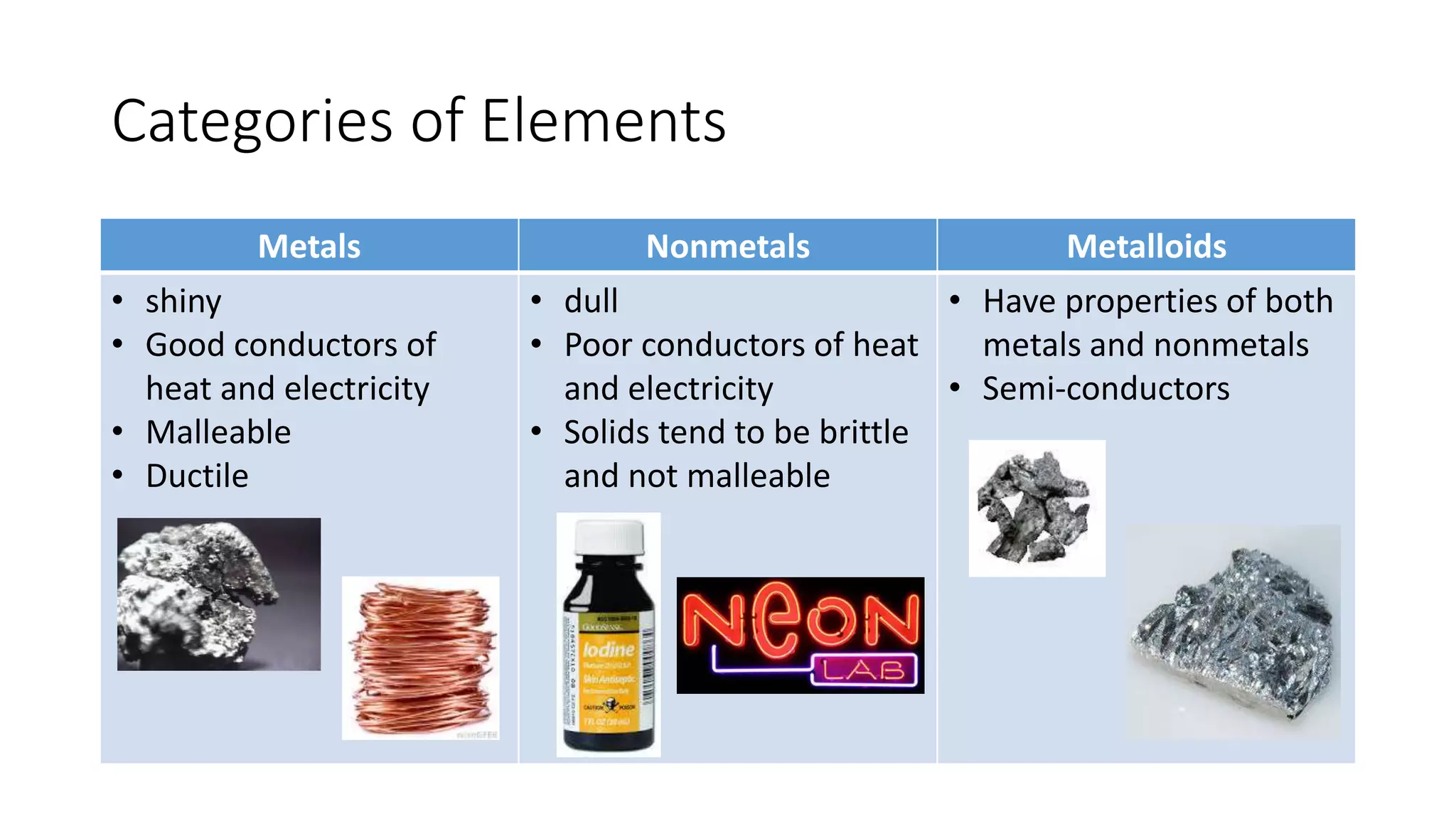
Categories of Elements 
Metals Nonmetals Metalloids 
• shiny 
• Good conductors of 
heat and electricity 
• Malleable 
• Ductile 
• dull 
• Poor conductors of heat 
and electricity 
• Solids tend to be brittle 
and not malleable 
• Have properties of both 
metals and nonmetals 
• Semi-conductors
Compounds 
• Compound- a pure substance composed of two or more elements 
that are chemically combined 
• Combine by reacting, undergoing chemical change 
• Particles are called molecules, which are formed when atoms of two 
or more elements combine 
• Compounds are DIFFERENT from the elements that make it 
• Elements join in specific mass ratios 
• Ex: H2O = 1:8
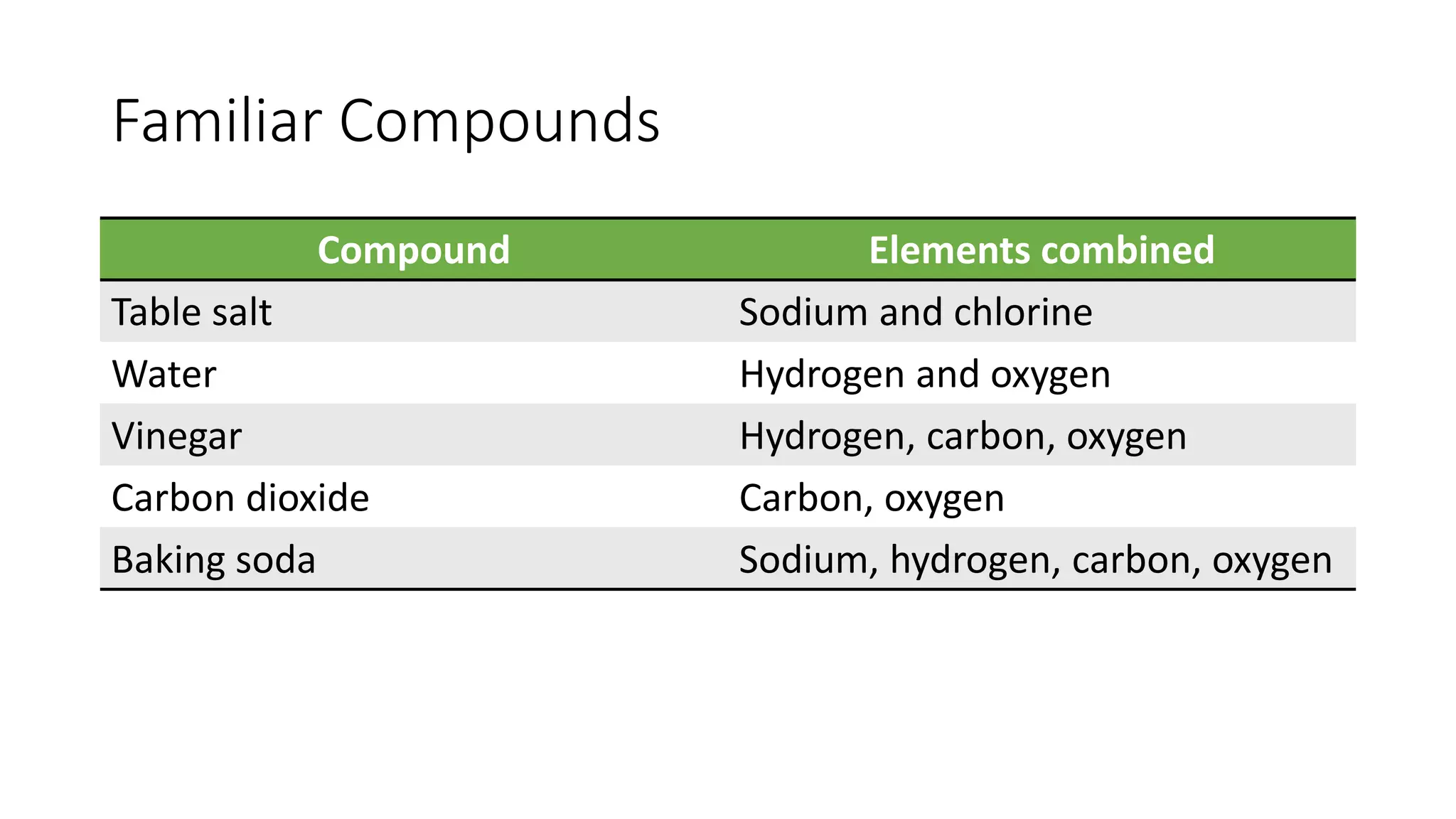
Familiar Compounds 
Compound Elements combined 
Table salt Sodium and chlorine 
Water Hydrogen and oxygen 
Vinegar Hydrogen, carbon, oxygen 
Carbon dioxide Carbon, oxygen 
Baking soda Sodium, hydrogen, carbon, oxygen
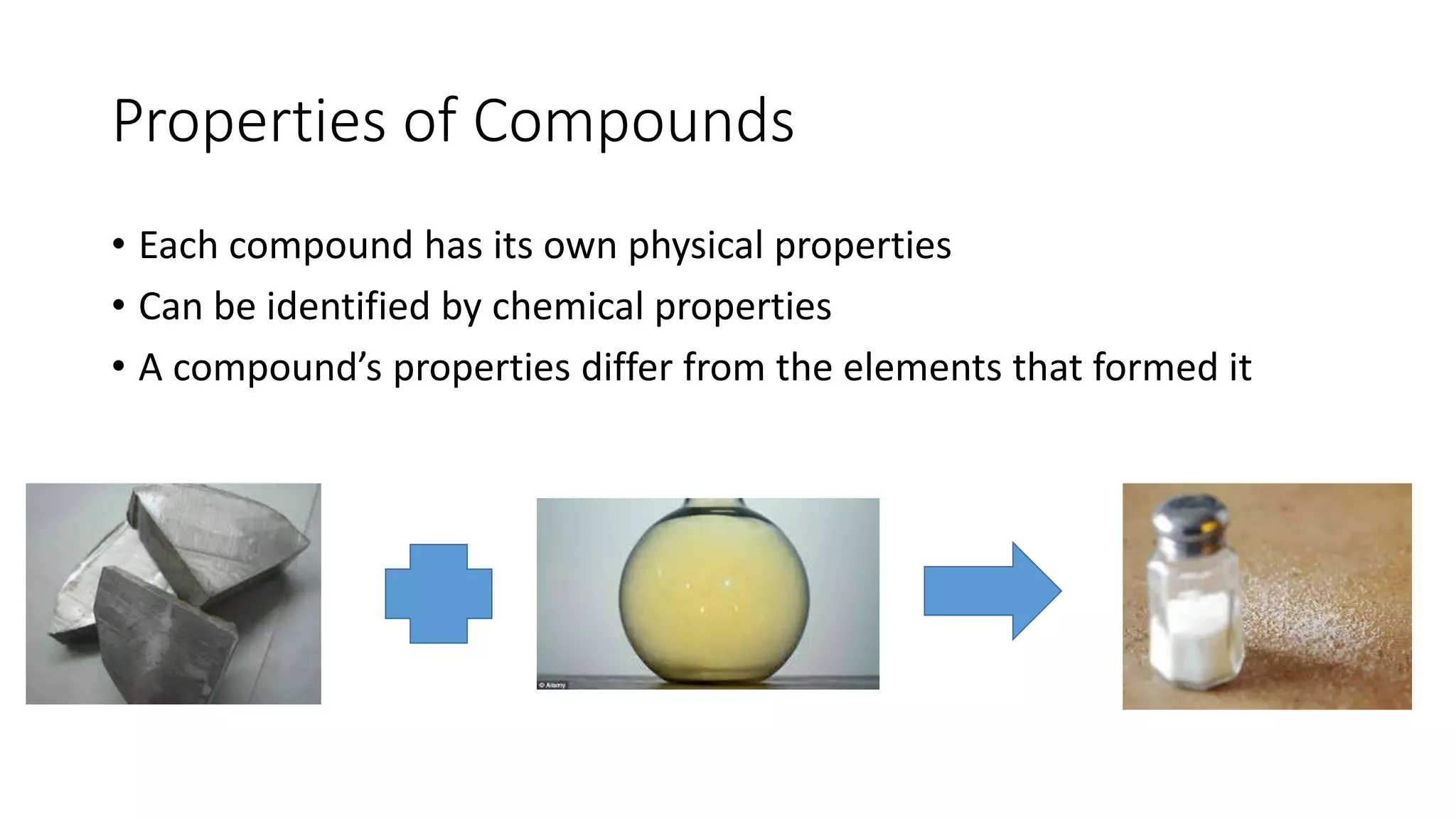
Properties of Compounds 
• Each compound has its own physical properties 
• Can be identified by chemical properties 
• A compound’s properties differ from the elements that formed it
Breaking down Compounds 
• Broken down through chemical changes 
• Sometimes have to be broken into simpler compounds, then 
elements 
• Two ways to break down: apply heat or electric current

Elements compounds and mixtures notes

  • 1.
    Elements, Compounds and Mixtures Holt: Chapter 4 Fusion: Unit 3, Lesson 5
  • 2.
    Mixtures • Amixture is a combination of two or more substances that are not chemically combined. • No chemical changes • Sometimes you can see the components, sometimes you cannot • Not mixed in a definite ratio • Separate through physical methods • Distillation- uses boiling points • Magnets- use magnetism • Centrifuge- uses density • Filtering- separates according to size • Examples:
  • 3.
    Types of Mixtures •Solutions •Suspensions •Colloids
  • 4.
    Solutions • Amixture that appears to be a single substance • Process by which they spread is dissolving • Solute- the substance being dissolved • Solvent- the substance doing the dissolving (water is the universal solvent) • Particles never settle, cannot be filtered; do not scatter light Examples of Different States in Solutions Gas in gas Dry air (oxygen in nitrogen) Gas in liquid Soda (carbon dioxide in water) Liquid in liquid Antifreeze (alcohol in water) Solid in liquid Salt water (salt in water) Solid in solid Brass (zinc in copper)
  • 5.
    Concentration of Solutions • Concentration- the measure of the amount of solute dissolved in a solvent • Can be expressed in grams of solute per milliliter of solvent (g/mL) • Remember…solubility is the ability of a substance to dissolve • Mixing, heating and crushing can help dissolve more quickly
  • 6.
    Suspensions • Suspension-is a mixture in which particles of a material are dispersed throughout, but are large enough to settle out. • Suspensions CAN be separated by filtration • Scatter light
  • 7.
    Colloids • Acolloid is a mixture in which the particles are dispersed throughout and not heavy enough to settle out • Particles are small and fairly well mixed; scatter light • Cannot be separated by filtration • Examples:
  • 8.
    Elements • Element-a pure substance that cannot be separated into simpler substances by chemical or physical means • Pure substance- is a substance in which there is only one type of particle • Particles are atoms • Each element has unique properties- not dependent on how much of an element you have • Remember…characteristic properties? Physical and chemical properties? • Elements do share some properties • Grouped on the periodic table by properties
  • 9.
    Categories of Elements Metals Nonmetals Metalloids • shiny • Good conductors of heat and electricity • Malleable • Ductile • dull • Poor conductors of heat and electricity • Solids tend to be brittle and not malleable • Have properties of both metals and nonmetals • Semi-conductors
  • 10.
    Compounds • Compound-a pure substance composed of two or more elements that are chemically combined • Combine by reacting, undergoing chemical change • Particles are called molecules, which are formed when atoms of two or more elements combine • Compounds are DIFFERENT from the elements that make it • Elements join in specific mass ratios • Ex: H2O = 1:8
  • 11.
    Familiar Compounds CompoundElements combined Table salt Sodium and chlorine Water Hydrogen and oxygen Vinegar Hydrogen, carbon, oxygen Carbon dioxide Carbon, oxygen Baking soda Sodium, hydrogen, carbon, oxygen
  • 12.
    Properties of Compounds • Each compound has its own physical properties • Can be identified by chemical properties • A compound’s properties differ from the elements that formed it
  • 13.
    Breaking down Compounds • Broken down through chemical changes • Sometimes have to be broken into simpler compounds, then elements • Two ways to break down: apply heat or electric current