 Originally defined as the study of carbon
compounds.
• Present in living organisms.
• Produced by living organisms.
 Now is expanded to include carbon compounds.
 Produced from inorganic compound.
 Synthesised outside of living things.
 An organic compound is any member of a
large class of gaseous,liquid or solid
chemical compounds whose molecules
contain carbon.
 Organic chemistry is the science concerned
with all aspects of organic compounds.
Organic synthesis is the methodology of their
preperation.
 Process of organic matter decomposition.
 Factors affecting organic matter decomposition.
 Significant to microorganisms.
 Basic plant.
 Organic compounds may be classified in a
variety of ways. One major distintion is between
natural and synthetic compounds. Organic
compounds can also be classified or subdivided
by the presence of
heteroatoms,e.g.,organometallic
compounds,which feature bonds between
carbon and a metal,and alkyl halide compounds
which feature bonds between carbon and a
halogen.
 Natural compounds is a chemical compound
or substance produced by a living organism
that is not found in nature. Examples include
most sugars,carbohudrates and proteins.
 Compounds that are prepared by reaction of
other compounds are known as “synthetic”.
They are compounds that do not occur
naturally.
 Most polymers (a category that includes all
plastics and rubbers),are organic synthetic
compounds.
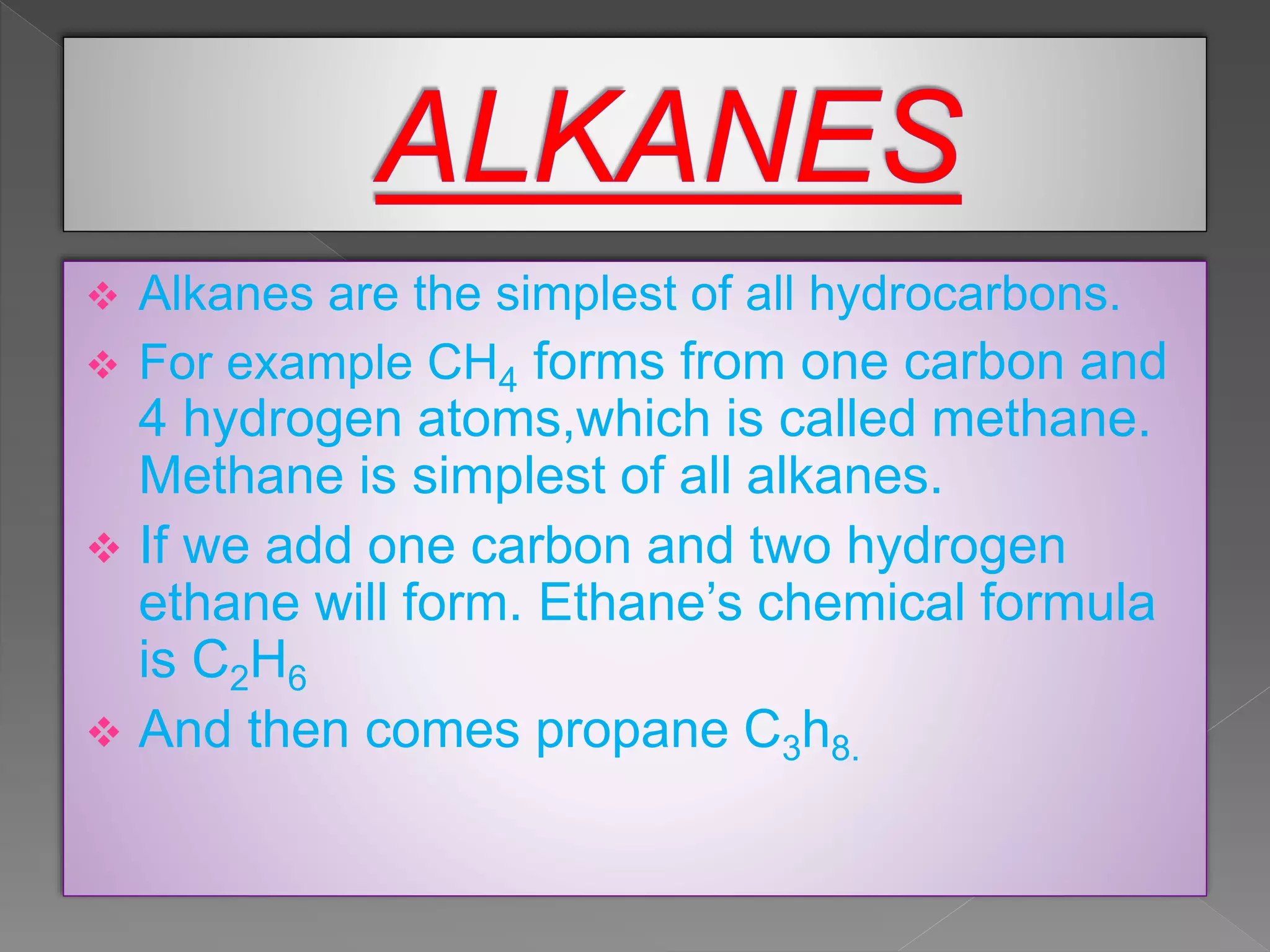
 Alkanes are the simplest of all hydrocarbons.
 For example CH4 forms from one carbon and
4 hydrogen atoms,which is called methane.
Methane is simplest of all alkanes.
 If we add one carbon and two hydrogen
ethane will form. Ethane’s chemical formula
is C2H6
 And then comes propane C3h8.
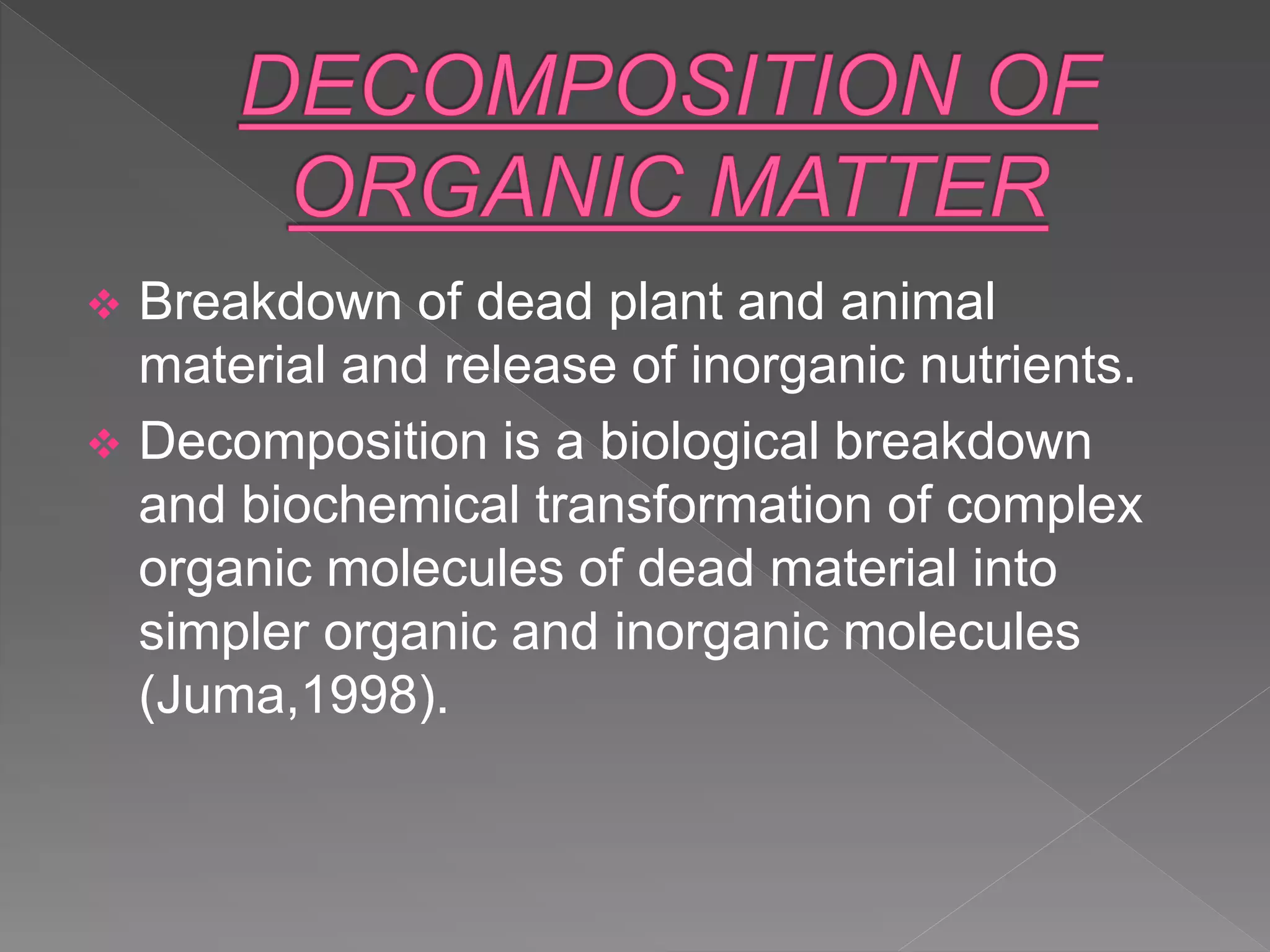
 Breakdown of dead plant and animal
material and release of inorganic nutrients.
 Decomposition is a biological breakdown
and biochemical transformation of complex
organic molecules of dead material into
simpler organic and inorganic molecules
(Juma,1998).
Organic compound ppt

Organic compound ppt

  • 2.
     Originally definedas the study of carbon compounds. • Present in living organisms. • Produced by living organisms.  Now is expanded to include carbon compounds.  Produced from inorganic compound.  Synthesised outside of living things.
  • 3.
     An organiccompound is any member of a large class of gaseous,liquid or solid chemical compounds whose molecules contain carbon.  Organic chemistry is the science concerned with all aspects of organic compounds. Organic synthesis is the methodology of their preperation.
  • 4.
     Process oforganic matter decomposition.  Factors affecting organic matter decomposition.  Significant to microorganisms.  Basic plant.
  • 5.
     Organic compoundsmay be classified in a variety of ways. One major distintion is between natural and synthetic compounds. Organic compounds can also be classified or subdivided by the presence of heteroatoms,e.g.,organometallic compounds,which feature bonds between carbon and a metal,and alkyl halide compounds which feature bonds between carbon and a halogen.
  • 6.
     Natural compoundsis a chemical compound or substance produced by a living organism that is not found in nature. Examples include most sugars,carbohudrates and proteins.
  • 7.
     Compounds thatare prepared by reaction of other compounds are known as “synthetic”. They are compounds that do not occur naturally.  Most polymers (a category that includes all plastics and rubbers),are organic synthetic compounds.
  • 8.
     Alkanes arethe simplest of all hydrocarbons.  For example CH4 forms from one carbon and 4 hydrogen atoms,which is called methane. Methane is simplest of all alkanes.  If we add one carbon and two hydrogen ethane will form. Ethane’s chemical formula is C2H6  And then comes propane C3h8.
  • 10.
     Breakdown ofdead plant and animal material and release of inorganic nutrients.  Decomposition is a biological breakdown and biochemical transformation of complex organic molecules of dead material into simpler organic and inorganic molecules (Juma,1998).