rock4less.com 
Mixing and Separating 
Sarah Jones
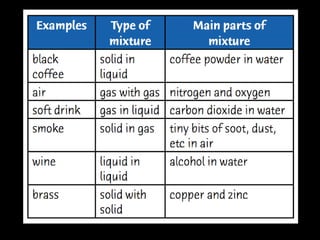
In everyday life you would only come across 
a few pure substances e.g. sugar, pure 
water, pure gold and helium gas. Most 
products that you use are a mixture of two 
or more substances e.g. lipstick, soft drink 
and air. 
www.wired.co.uk
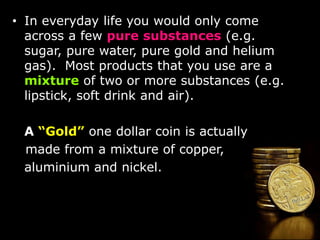
A “Gold” one dollar coin is actually made 
from a mixture of copper, aluminium and 
nickel.
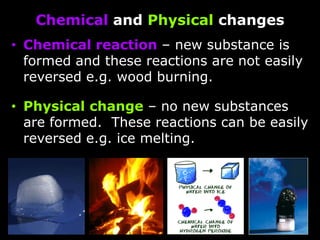
Chemical and Physical changes 
Chemical reaction – new substance is 
formed. These reactions are not easily 
reversed e.g. wood burning.
Physical change – no new substances 
are formed. These reactions can be 
easily reversed e.g. ice melting. 
coenv.washington.edu
Crystallisation 
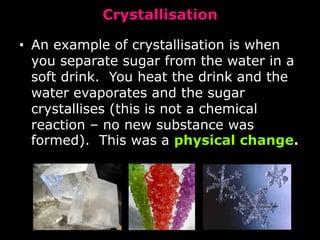
An example of crystallisation is when you 
separate sugar from water in a soft drink. 
You heat the soft drink and the water 
evaporates while the sugar crystallises. 
www.buzzillions.com
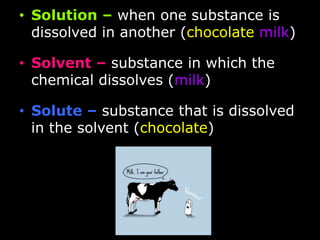
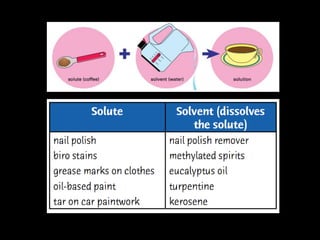
• Solution – when one substance is 
dissolved in another (chocolate milk) 
• Solvent – substance in which the 
chemical dissolves (milk) 
• Solute – substance that is dissolved 
in the solvent (chocolate)
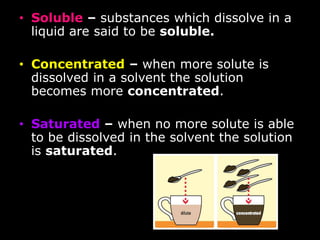
• Soluble – substances which dissolve in a 
liquid are said to be soluble. 
• Concentrated – when more solute is 
dissolved in a solvent the solution 
becomes more concentrated. 
• Saturated – when no more solute is able 
to be dissolved in the solvent the solution 
is saturated.
• Substances which do not dissolve in 
a solvent are insoluble in that 
solvent. 
• Sand is insoluble in water. The sand 
settles to the bottom of the water 
forming a sediment. 
• When the insoluble substance is 
dispersed (spread) throughout the 
liquid, it is called a suspension.
Solubility 
 There is a limit to the amount of solute 
that will dissolve in a solution. 
 When a solution will dissolve no more 
solute, it is saturated. 
 Until it reaches this point, it is 
unsaturated.
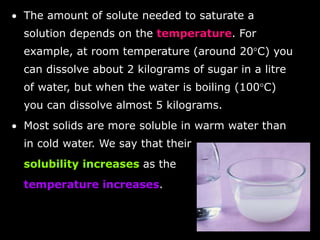
Most solids are more soluble in warm 
water than in cold water. We say that 
their solubility increases as the 
temperature increases. 
www.wikihow.com
Separating Suspensions 
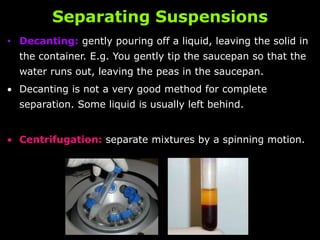
• Decanting: gently pouring off a liquid, 
leaving the solid in the container. 
• Example - You gently tip the saucepan so 
that the water runs out, leaving the peas in 
the saucepan.
Centrifugation: separate mixtures by a 
spinning motion. 
commons.wikimedia.org sarsentechnology.blogspot.com
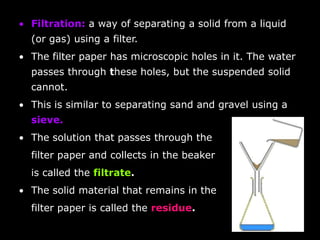
 Filtration: a way of separating a solid 
from a liquid (or gas) using a filter. 
 This is similar to separating sand and 
gravel using a sieve.
 The solution that passes through the filter 
paper and collects in the beaker is called the 
filtrate. 
 The solid material that remains in the filter 
paper is called the residue. 
www.scs.sk.ca
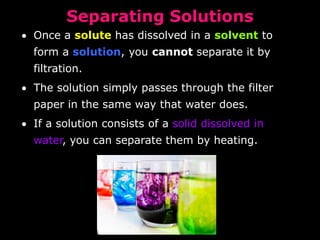
Separating Solutions 
 Once a solute has dissolved in a solvent 
to form a solution, you cannot separate it 
by filtration. 
 The solution simply passes through the 
filter paper in the same way that water 
does.
 If a solution consists of a solid dissolved in 
water, you can separate them by heating. 
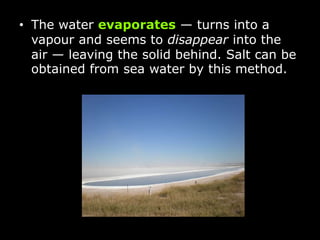
• The water evaporates — turns into a 
vapour and seems to disappear into the 
air — leaving the solid behind. Salt can be 
obtained from sea water by this method.
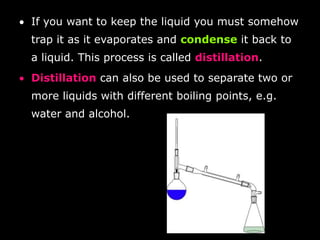
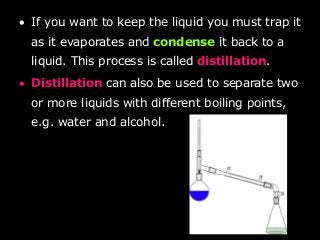
 If you want to keep the liquid you must trap it 
as it evaporates and condense it back to a 
liquid. This process is called distillation. 
 Distillation can also be used to separate two 
or more liquids with different boiling points, 
e.g. water and alcohol.
Separating Solids 
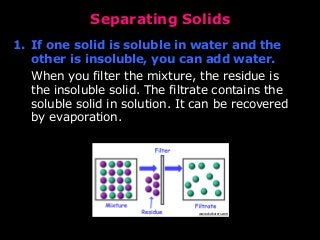
1. If one solid is soluble in water and the 
other is insoluble, you can add water. 
When you filter the mixture, the residue is 
the insoluble solid. The filtrate contains the 
soluble solid in solution. It can be recovered 
by evaporation. 
www.ducksters.com
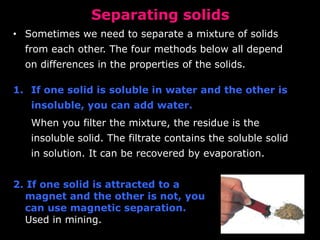
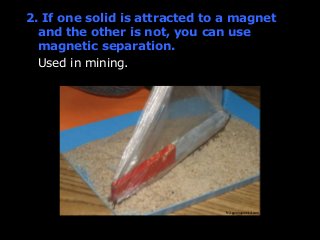
2. If one solid is attracted to a magnet 
and the other is not, you can use 
magnetic separation. 
Used in mining. 
fc2.galenaparkisd.com
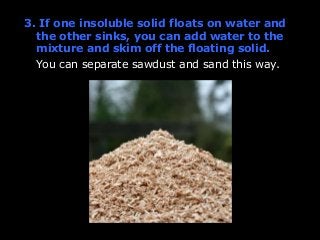
3. If one insoluble solid floats on water and 
the other sinks, you can add water to the 
mixture and skim off the floating solid. 
You can separate sawdust and sand this way.
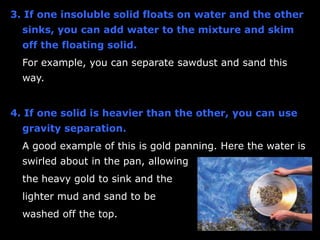
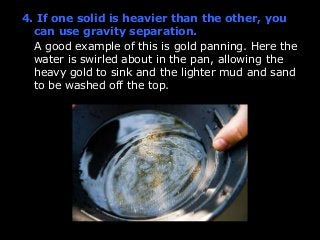
4. If one solid is heavier than the other, you 
can use gravity separation. 
A good example of this is gold panning. Here the 
water is swirled about in the pan, allowing the 
heavy gold to sink and the lighter mud and sand 
to be washed off the top.
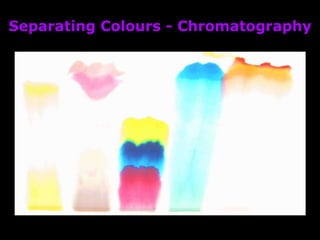
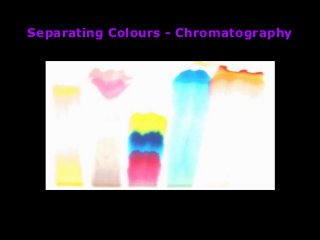
Separating Colours - Chromatography

Mixing and Separating

  • 1.
    rock4less.com Mixing andSeparating Sarah Jones
  • 2.
    In everyday lifeyou would only come across a few pure substances e.g. sugar, pure water, pure gold and helium gas. Most products that you use are a mixture of two or more substances e.g. lipstick, soft drink and air. www.wired.co.uk
  • 3.
    A “Gold” onedollar coin is actually made from a mixture of copper, aluminium and nickel.
  • 5.
    Chemical and Physicalchanges Chemical reaction – new substance is formed. These reactions are not easily reversed e.g. wood burning.
  • 6.
    Physical change –no new substances are formed. These reactions can be easily reversed e.g. ice melting. coenv.washington.edu
  • 7.
    Crystallisation An exampleof crystallisation is when you separate sugar from water in a soft drink. You heat the soft drink and the water evaporates while the sugar crystallises. www.buzzillions.com
  • 8.
    • Solution –when one substance is dissolved in another (chocolate milk) • Solvent – substance in which the chemical dissolves (milk) • Solute – substance that is dissolved in the solvent (chocolate)
  • 10.
    • Soluble –substances which dissolve in a liquid are said to be soluble. • Concentrated – when more solute is dissolved in a solvent the solution becomes more concentrated. • Saturated – when no more solute is able to be dissolved in the solvent the solution is saturated.
  • 11.
    • Substances whichdo not dissolve in a solvent are insoluble in that solvent. • Sand is insoluble in water. The sand settles to the bottom of the water forming a sediment. • When the insoluble substance is dispersed (spread) throughout the liquid, it is called a suspension.
  • 12.
    Solubility  Thereis a limit to the amount of solute that will dissolve in a solution.  When a solution will dissolve no more solute, it is saturated.  Until it reaches this point, it is unsaturated.
  • 13.
    Most solids aremore soluble in warm water than in cold water. We say that their solubility increases as the temperature increases. www.wikihow.com
  • 14.
    Separating Suspensions •Decanting: gently pouring off a liquid, leaving the solid in the container. • Example - You gently tip the saucepan so that the water runs out, leaving the peas in the saucepan.
  • 15.
    Centrifugation: separate mixturesby a spinning motion. commons.wikimedia.org sarsentechnology.blogspot.com
  • 16.
     Filtration: away of separating a solid from a liquid (or gas) using a filter.  This is similar to separating sand and gravel using a sieve.
  • 17.
     The solutionthat passes through the filter paper and collects in the beaker is called the filtrate.  The solid material that remains in the filter paper is called the residue. www.scs.sk.ca
  • 18.
    Separating Solutions Once a solute has dissolved in a solvent to form a solution, you cannot separate it by filtration.  The solution simply passes through the filter paper in the same way that water does.
  • 19.
     If asolution consists of a solid dissolved in water, you can separate them by heating. • The water evaporates — turns into a vapour and seems to disappear into the air — leaving the solid behind. Salt can be obtained from sea water by this method.
  • 20.
     If youwant to keep the liquid you must trap it as it evaporates and condense it back to a liquid. This process is called distillation.  Distillation can also be used to separate two or more liquids with different boiling points, e.g. water and alcohol.
  • 21.
    Separating Solids 1.If one solid is soluble in water and the other is insoluble, you can add water. When you filter the mixture, the residue is the insoluble solid. The filtrate contains the soluble solid in solution. It can be recovered by evaporation. www.ducksters.com
  • 22.
    2. If onesolid is attracted to a magnet and the other is not, you can use magnetic separation. Used in mining. fc2.galenaparkisd.com
  • 23.
    3. If oneinsoluble solid floats on water and the other sinks, you can add water to the mixture and skim off the floating solid. You can separate sawdust and sand this way.
  • 24.
    4. If onesolid is heavier than the other, you can use gravity separation. A good example of this is gold panning. Here the water is swirled about in the pan, allowing the heavy gold to sink and the lighter mud and sand to be washed off the top.
  • 25.
    Separating Colours -Chromatography