Electromyographic BiofeedbackCasey Christy, MA, ATC, CSCS
BiofeedbackElectromyographic Biofeedback (EB) detects and amplifies neurological activity, and then converts it to auditory and/or visual signals.
BiofeedbackEB serves as an adjunct treatment for muscle re-education, strengthening or even to encourage relaxation of a muscle group.
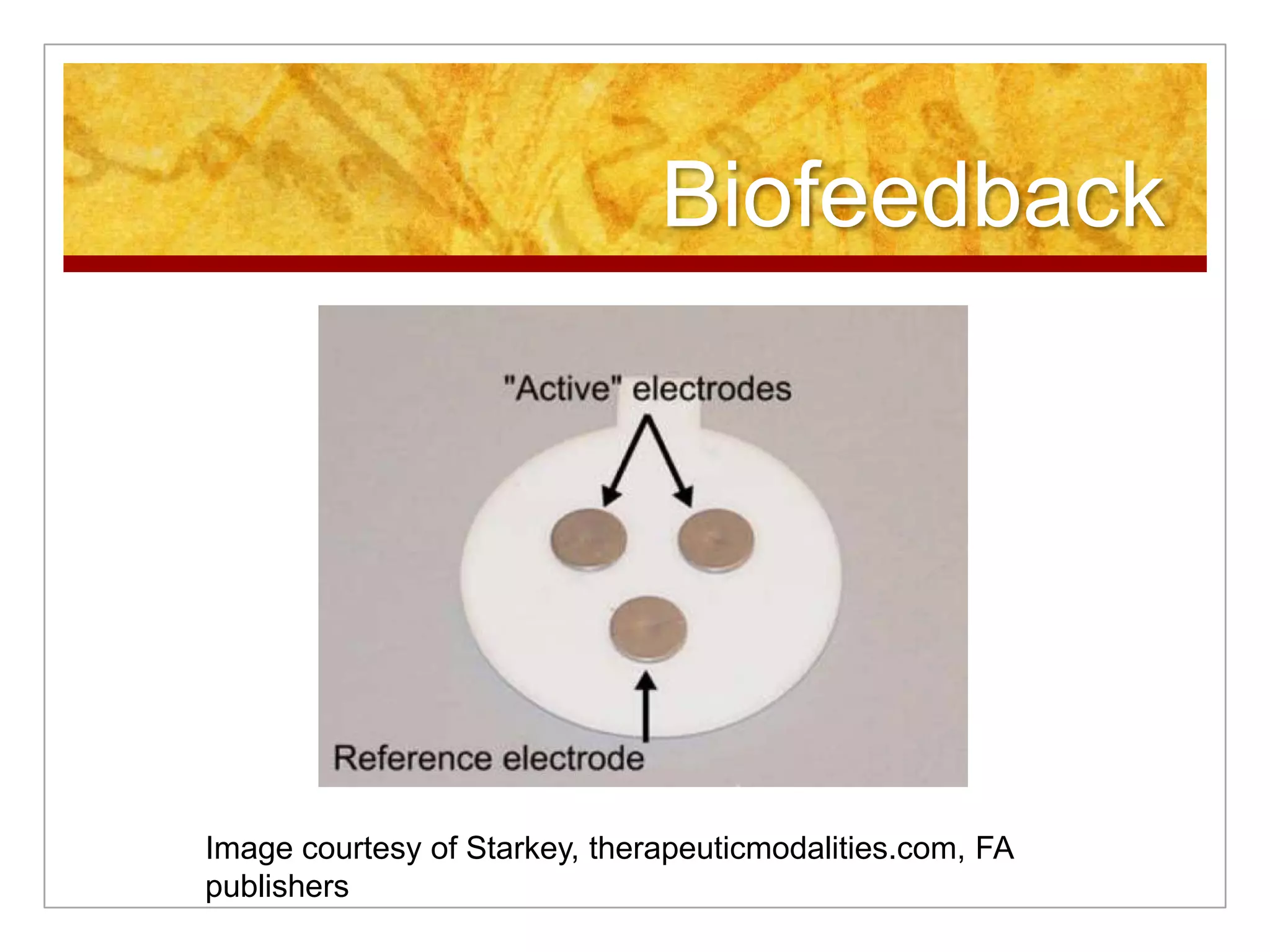
BiofeedbackBasic EB units have silver surface electrodes with three sensors grouped together as one adhesive electrode. Two of the sensors are “active electrodes” that measure electrical activity within the muscle. The other sensor is the “reference electrode,” which filters out non-meaningful electrical activity.
BiofeedbackImage courtesy of Starkey, therapeuticmodalities.com, FA publishers
BiofeedbackEdema, pain, surgery, immobilization, and decreased output from joint receptors can inhibit voluntary muscle contractions. EB can help the CN re-establish sensory-motor loops “forgotten” by the patient.
BiofeedbackBiofeedback measures the electrical activity in the muscle, not the strength of contraction.
BiofeedbackThe strength of muscle contraction is improved once normal neurological pathways are restored.
BiofeedbackTo help retain the newly learned neurological pathways, the patient should perform active muscle contractions without the EB immediately after the treatment.
BiofeedbackContraindications include conditions in which muscular contractions, joint movement or motion is contraindicated.
BiofeedbackElectrodes should be placed over the muscle’s motor point or the muscle belly.
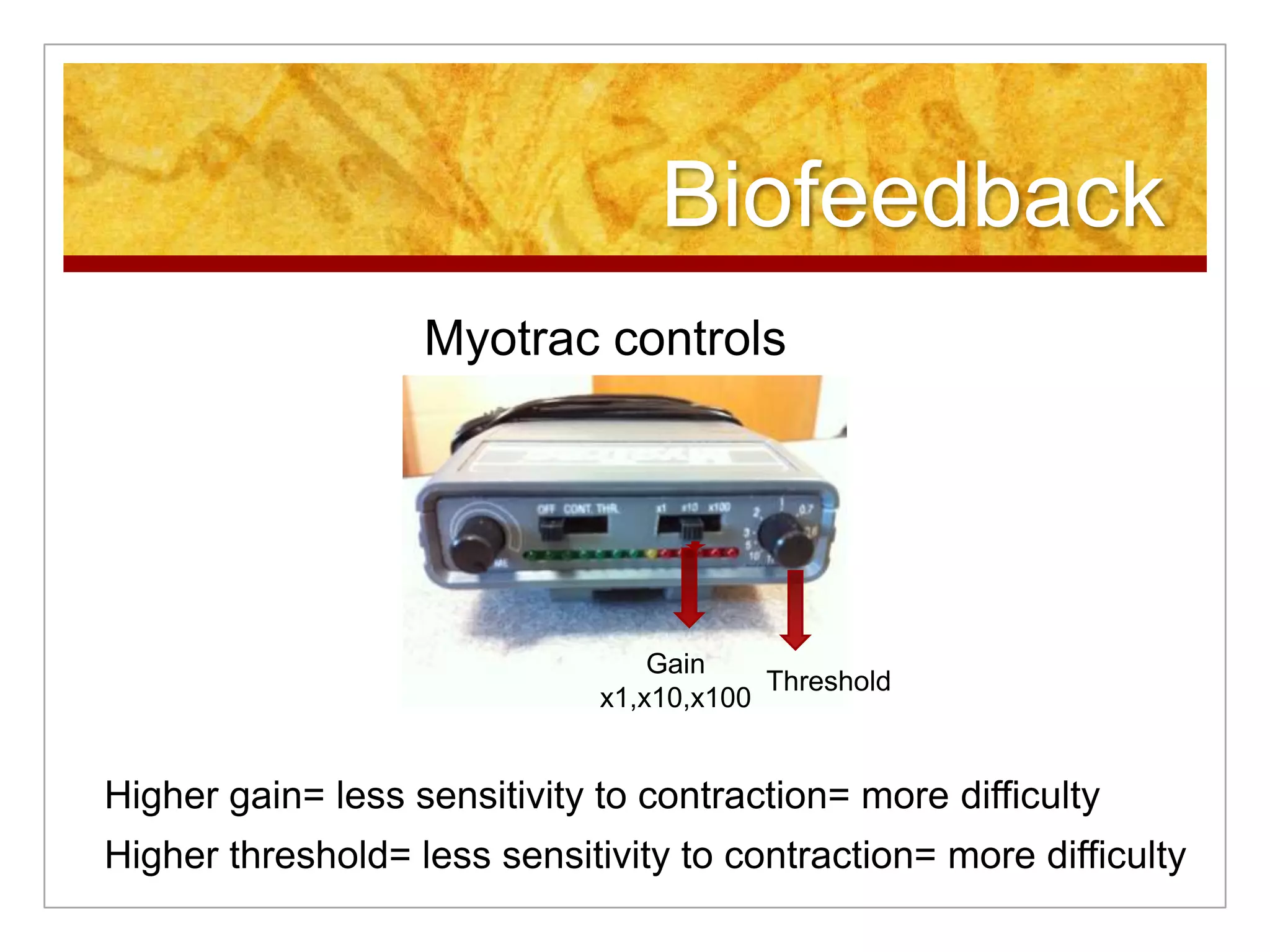
BiofeedbackMyotrac controlsGainx1,x10,x100ThresholdHigher gain= less sensitivity to contraction= more difficultyHigher threshold= less sensitivity to contraction= more difficulty
BiofeedbackClinical Application ExamplesPlace over VMO while patient performs terminal knee extensionsPlace over rhomboids while patient performs scapular retractionPlace over mid quadricep while patient performs quad setting exercises
BiofeedbackMyotrac Threshold settingPatient must hold contraction in target zone for 4 seconds in order for alarm to sound.
BiofeedbackSome biofeedback units are combined with electrical stimulation to enhance muscle re-education.Electrical simulation starts once the patient achieves a voluntary contraction beyond a set threshold or target.
ReferenceStarkey, Therapeutic Modalities, 3rd Edition.

Electromyographic Biofeedback