BIOFEEDBACK
By-
Celine Tamuk
MPT 2nd
Semester
CONTENTS
• Introduction
• Biofeedback Instrumentation
• General principles
• Limitations of Biofeedback
• Uses of Biofeedback
INTRODUCTION-
• Biofeedback is an instrumentation and technique which is used to
accurately measure process and feedback some reinforcing
information via auditory or visual signals by electronic or
electromechanical device especially for therapeutic purposes.
• It can also be simply defined as the process of furnishing an
information of his body function so as to get some control over it.
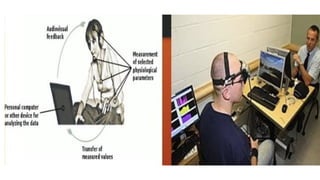
• Biofeedback can be used to assess the physiological functions and
then to improve it by having proper control over it.
• The information regarding various physiological functions like heart
rate, blood pressure, skin temperature, force generated by muscular
contraction or relaxation, range of motion of joints, etc. are recorded
and displayed in front of the patient.
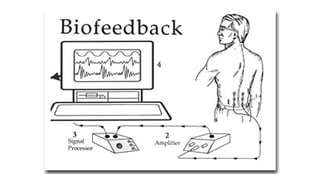
BIOFEEDBACK INSTRUMENTATION-
The instruments used in biofeedback have 3 tasks:
1.Transducer-To monitor a signal from the body by
electrodes.
2.Signal processor- To measure what is monitored by
control box.
3. Audio/Visual Display-To display what is monitored as
meaningful information: by display unit like computer,
speaker or graph machine.
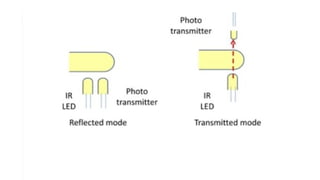
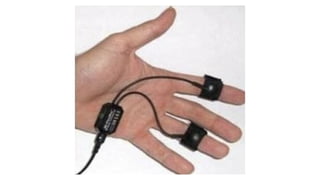
1.FINGER PHOTO TRANSMITTER-
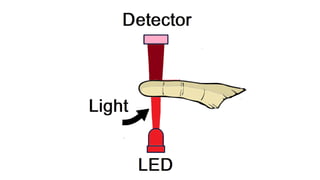
• A finger photo transmitter is a small sensor that clips softly to a
patient's fingertip and uses light to measure vasoconstriction. The
finger photo transmitter shines a small light through the finger's
blood vessels. The light is then reflected back to the sensor. And
the amount of light reflected suggests amount of blood flow.
• The amount of light reflected tells the practitioner what the blood
vessels are undergoing (vasoconstriction/dilatation). Relaxed
open vessel hold more blood, and more blood blocks more light.
The more light is blocked, the more blood is flowing in the
vessels.
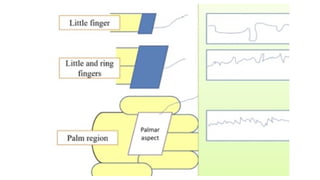
2.GALVANIC SKIN RESPONSE-
• Skin conduction activity commonly known as Galvanic skin response
monitors indicate how much a person is sweating.
• It measures how much electricity can pass through the skin, thus
understanding the skin impedance.
• Usually the monitors are connected to fingertips/palms where many
sweat glands are present.
3.EMG BIOFEEDBACK-
• EMG biofeedback is certainly the most used of all the
biofeedback modalities in a therapeutic settings.
• EMG Biofeedback uses surface electrodes to detect a change
in the electrical muscle activity.
• EMG Biofeedback can be used to either increase activity in
weak muscle or it can be used to facilitate a reduction in tone in
a spastic muscle.
• EMG biofeedback helps in the neuro-muscular re-education to
achieve normal function to inhibit the abnormal involuntary
movements.
GENERAL PRINCIPLES-
1.Providing feedback
2.User control
3.Selection of starting position
4.Shaping behavior
1.Providing Feedback-
• Feedback is directly proportional to the response. Means that
the strength of muscle contraction is directly proportional to
produce strong signal.
• Biofeedback equipment should be sensitive and specific.
• Feedback can be–
1.Intrinsic feedback- It is the body’s internal feedback
mechanism, which uses visual, auditory, vestibular and
proprioceptive mechanisms.
2. Extrinsic feedback- It is any feedback derived from an external
source (e.g. a biofeedback signal or physical therapists
comments).
2.User Control-
• As soon as the patient learns the idea and how to use the
biofeedback equipment.
• Then the user does not provide the feedback by the therapist,
related to his performance.
3.Selection of starting position-
• Starting position depends on-
• Most easy and comfortable position attained by the patient
• Goal of biofeedback treatment
• For example- if goal is relaxation, sitting or supine position is
used as it reduces general muscle activity with full support.
4.Shaping Behaviour-
• As the patient achieves the goal, the therapist resets the
threshold for the performance.
• Example- if goal is to decrease muscle activity, a level is set so
that the patient keeps level of muscle activity below, which once
achieved another level is set.
LIMITATIONS OF BIOFEEDBACK-
• The biofeedback must be relevant, accurate and rapid to
enhance motor learning. If any of these three elements is
missing, the traditional form of feedback, i.e. verbal feedback
can be used which is more convenient.
• 1.Relevancy-Useful relevant information is important for the desired
motor response .It should be neither be too short or too long.
2.Accuracy: The biofeedback device and the way it is used
should provide an accurate information.For accurate results
appropriate devices and proper technique of application should
be used.
3.Rapid information: The information used to be feedback to
patients must be accurate, relevant and rapid for effective
therapeutic use. Therapists must choose the appropriate
instrument or device that provides the most meaningful
information to the patients
USES OF BIOFEEDBACK-
1.Migraine -Muscle tension and stress can trigger migraines and
other types of headaches, and can make headache symptoms
worse.Biofeedback reduces migraine frequency and severity.
2.Raynaud’s Disease -A condition in which some areas of body
feels cold. The temperature is monitored using a spin
thermometer and patient attempts voluntary to increase
temperature.
3.Pelvic Dysfunction: EMG Biofeedback uses electrodes placed on the
body (on the perineum and/or the area around the anus) to sense how tense
or relaxed the pelvic floor muscles are and display the results on a computer
or other device. These can help patient's learn to tighten those muscles in
pelvic floor muscle weakness.
4.Urinary Incontinence - Biofeedback therapy can help people who have
trouble controlling the urge to use the bathroom. Biofeedback can help
women find and strengthen the pelvic floor muscles that control bladder
emptying along with Kegal Exercises.
5. Treating spasticity: Several spastic conditions such as
cerebral palsy,multiple sclerosis,head injury are treated with
biofeedback in order to reduce and control spasticity.
6. Postural control: Biofeedback devices are used to have
appropriate postural control. A trunk inclination monitor which
signal tilt can be used for the treatment of low back-ache.
A tilt away from normal can provide an audio feedback and thus
helps correcting posture.
8. Muscle strengthening: Muscle strength training devices have
an electronic display which indicates the strength in a muscle and
acts as a biofeedback to the exercising muscles.
It provides a feedback by display of force produced by the
contracting muscle and thus helps to strength the muscle further.
7.Hemiplegia-Biofeedback is commonly used to re-educate controlled
dorsiflexion of foot and thus to improve gait.
9. Providing relaxation-
• The electrical resistance of hand or fingers are measured and
Displayed.
• Increase or decrease in stress is reflected in the amount of sweating
that occurs which in turn determines the skin resistance.
• Pulse rate and respiratory rate is recorded by some apparatus and
findings are displayed to the patient.
• The patient tries to control and regulate the pulse and respiratory rate
and thus inducing relaxation.
REFERENCES-
• Textbook of Electrotherapy 3rd
Edition
By- Jagmohan Singh

Biofeedback copy electrotherapy bio.pptx

  • 1.
  • 2.
    CONTENTS • Introduction • BiofeedbackInstrumentation • General principles • Limitations of Biofeedback • Uses of Biofeedback
  • 3.
    INTRODUCTION- • Biofeedback isan instrumentation and technique which is used to accurately measure process and feedback some reinforcing information via auditory or visual signals by electronic or electromechanical device especially for therapeutic purposes. • It can also be simply defined as the process of furnishing an information of his body function so as to get some control over it.
  • 4.
    • Biofeedback canbe used to assess the physiological functions and then to improve it by having proper control over it. • The information regarding various physiological functions like heart rate, blood pressure, skin temperature, force generated by muscular contraction or relaxation, range of motion of joints, etc. are recorded and displayed in front of the patient.
  • 6.
    BIOFEEDBACK INSTRUMENTATION- The instrumentsused in biofeedback have 3 tasks: 1.Transducer-To monitor a signal from the body by electrodes. 2.Signal processor- To measure what is monitored by control box. 3. Audio/Visual Display-To display what is monitored as meaningful information: by display unit like computer, speaker or graph machine.
  • 8.
    1.FINGER PHOTO TRANSMITTER- •A finger photo transmitter is a small sensor that clips softly to a patient's fingertip and uses light to measure vasoconstriction. The finger photo transmitter shines a small light through the finger's blood vessels. The light is then reflected back to the sensor. And the amount of light reflected suggests amount of blood flow. • The amount of light reflected tells the practitioner what the blood vessels are undergoing (vasoconstriction/dilatation). Relaxed open vessel hold more blood, and more blood blocks more light. The more light is blocked, the more blood is flowing in the vessels.
  • 11.
    2.GALVANIC SKIN RESPONSE- •Skin conduction activity commonly known as Galvanic skin response monitors indicate how much a person is sweating. • It measures how much electricity can pass through the skin, thus understanding the skin impedance. • Usually the monitors are connected to fingertips/palms where many sweat glands are present.
  • 14.
    3.EMG BIOFEEDBACK- • EMGbiofeedback is certainly the most used of all the biofeedback modalities in a therapeutic settings. • EMG Biofeedback uses surface electrodes to detect a change in the electrical muscle activity. • EMG Biofeedback can be used to either increase activity in weak muscle or it can be used to facilitate a reduction in tone in a spastic muscle. • EMG biofeedback helps in the neuro-muscular re-education to achieve normal function to inhibit the abnormal involuntary movements.
  • 15.
    GENERAL PRINCIPLES- 1.Providing feedback 2.Usercontrol 3.Selection of starting position 4.Shaping behavior
  • 16.
    1.Providing Feedback- • Feedbackis directly proportional to the response. Means that the strength of muscle contraction is directly proportional to produce strong signal. • Biofeedback equipment should be sensitive and specific. • Feedback can be– 1.Intrinsic feedback- It is the body’s internal feedback mechanism, which uses visual, auditory, vestibular and proprioceptive mechanisms. 2. Extrinsic feedback- It is any feedback derived from an external source (e.g. a biofeedback signal or physical therapists comments).
  • 17.
    2.User Control- • Assoon as the patient learns the idea and how to use the biofeedback equipment. • Then the user does not provide the feedback by the therapist, related to his performance.
  • 18.
    3.Selection of startingposition- • Starting position depends on- • Most easy and comfortable position attained by the patient • Goal of biofeedback treatment • For example- if goal is relaxation, sitting or supine position is used as it reduces general muscle activity with full support.
  • 19.
    4.Shaping Behaviour- • Asthe patient achieves the goal, the therapist resets the threshold for the performance. • Example- if goal is to decrease muscle activity, a level is set so that the patient keeps level of muscle activity below, which once achieved another level is set.
  • 20.
    LIMITATIONS OF BIOFEEDBACK- •The biofeedback must be relevant, accurate and rapid to enhance motor learning. If any of these three elements is missing, the traditional form of feedback, i.e. verbal feedback can be used which is more convenient. • 1.Relevancy-Useful relevant information is important for the desired motor response .It should be neither be too short or too long.
  • 21.
    2.Accuracy: The biofeedbackdevice and the way it is used should provide an accurate information.For accurate results appropriate devices and proper technique of application should be used. 3.Rapid information: The information used to be feedback to patients must be accurate, relevant and rapid for effective therapeutic use. Therapists must choose the appropriate instrument or device that provides the most meaningful information to the patients
  • 22.
    USES OF BIOFEEDBACK- 1.Migraine-Muscle tension and stress can trigger migraines and other types of headaches, and can make headache symptoms worse.Biofeedback reduces migraine frequency and severity. 2.Raynaud’s Disease -A condition in which some areas of body feels cold. The temperature is monitored using a spin thermometer and patient attempts voluntary to increase temperature.
  • 23.
    3.Pelvic Dysfunction: EMGBiofeedback uses electrodes placed on the body (on the perineum and/or the area around the anus) to sense how tense or relaxed the pelvic floor muscles are and display the results on a computer or other device. These can help patient's learn to tighten those muscles in pelvic floor muscle weakness. 4.Urinary Incontinence - Biofeedback therapy can help people who have trouble controlling the urge to use the bathroom. Biofeedback can help women find and strengthen the pelvic floor muscles that control bladder emptying along with Kegal Exercises.
  • 24.
    5. Treating spasticity:Several spastic conditions such as cerebral palsy,multiple sclerosis,head injury are treated with biofeedback in order to reduce and control spasticity. 6. Postural control: Biofeedback devices are used to have appropriate postural control. A trunk inclination monitor which signal tilt can be used for the treatment of low back-ache. A tilt away from normal can provide an audio feedback and thus helps correcting posture.
  • 25.
    8. Muscle strengthening:Muscle strength training devices have an electronic display which indicates the strength in a muscle and acts as a biofeedback to the exercising muscles. It provides a feedback by display of force produced by the contracting muscle and thus helps to strength the muscle further. 7.Hemiplegia-Biofeedback is commonly used to re-educate controlled dorsiflexion of foot and thus to improve gait.
  • 26.
    9. Providing relaxation- •The electrical resistance of hand or fingers are measured and Displayed. • Increase or decrease in stress is reflected in the amount of sweating that occurs which in turn determines the skin resistance. • Pulse rate and respiratory rate is recorded by some apparatus and findings are displayed to the patient. • The patient tries to control and regulate the pulse and respiratory rate and thus inducing relaxation.
  • 27.
    REFERENCES- • Textbook ofElectrotherapy 3rd Edition By- Jagmohan Singh