Neural Tissue Mobilization
Dr. Maheshwari Harishchandre
Assistant Professor
M.P.Th (Neurosciences)
Asst. Professor
DVVPF College of Physiotherapy, Ahmednagar
Objectives
• At the end of the topic learner should be
able to describe –
1. Describe the principles
2. Techniques of NTM
3. Different tests for NTM
11-04-2018 NTM 2
Contents
• Introduction
• Precautions
• Contraindications
• Tension testing
• UL & LL
11-04-2018 NTM 3
Introduction
• A 3 part system –
- Mechanical interface – a/k/s – nerve bed
– consist of bone, tendon, muscle, Ivdisc,
ligaments, fascia, blood vessels.
- Neural structures – brain, nerve roots,
C.N, peripheral nerves, spinal cord
- Innervated tissues – all tissues which are
innervated by nervous system.11-04-2018 NTM 4
Introduction
• Anatomy – connective tissue - tissue that
connects, supports, binds or separates
other tissues or organs and including
cartilaginous, fatty, and elastic tissues.
• Neurons
• Nerve fibres – motor – AHC –NMj, sensory
– receptors
• Layers – endineurium, perineurium,
11-04-2018 NTM 5
• NS includes neural tissue in the body –
Neurons – cells that send & receive
signals & Neuroglia – cells that support &
protect neurons
11-04-2018 NTM 6
Definition
• Neural tissue mobilization is a
manipulative technique by which neural
tissues are moved & stretched either by
movement relative to their surroundings or
by tension development.
11-04-2018 NTM 7
• Primary mechanical functions of the
nervous system – tension, sliding,
compression
• Tension – 1st primary mechanical events in
the NS is generation of tension.nerves are
lengthened by elongation.
• Sliding – 2nd event is movt of NS relative to
their adjacent tissues.
• Compression- neural structures can
change their shape when pressure is
exerted on them.
11-04-2018 NTM 8
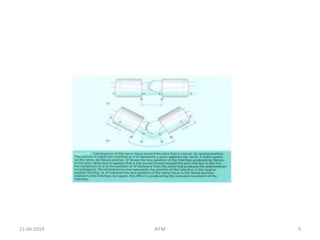
11-04-2018 NTM 9
• How nerve move - by all three mechanical
events.
• movements of joints
11-04-2018 NTM 10
Neurodynamic testing
• Cervical spine
• Upper limb
• Lower limb
• Lumbar spine
11-04-2018 NTM 11
Passive neck flexion
• Purpose: To assess the contribution of
neural tension to the patient's symptoms.
Test Position: Supine.
Performing the Test: Patient actively
performs upper cervical nod. Examiner
passively flexes lower cervical spine. A
reproduction of pain or other neural
symptoms in the thoracic spine is a positive
test. A stretching sensation is normal.11-04-2018 NTM 12
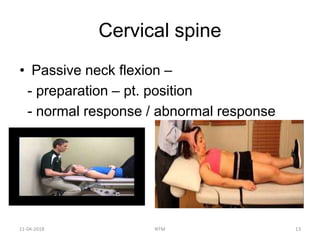
Cervical spine
• Passive neck flexion –
- preparation – pt. position
- normal response / abnormal response
11-04-2018 NTM 13
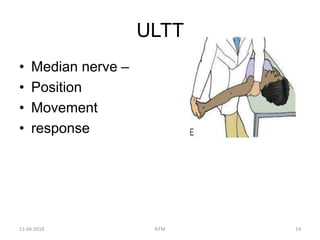
ULTT
• Median nerve –
• Position
• Movement
• response
11-04-2018 NTM 14
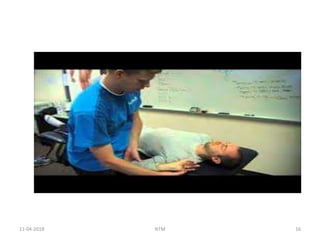
ULTT – Ulnar nerve
• Purpose: To assess the contributions of neural tension to the
patient’s symptoms.
Test Position: Supine.
Performing the Test: Stand at the side of the tested limb, facing
towards the patient’s head. Use the hand closer to patient to
depress shoulder and punch into table to keep shoulder in
depressed position. Use farther hand on patient’s hand to flex
elbow to about 115 degrees, with the forearm pronated. Keep
patient’s wrist and fingers extended. Laterally rotate the
patient’s shoulder to end range and abduct the patient’s
shoulder until neural symptoms are reproduced. Have patient
laterally flex or rotate their head away (worsens
pain/symptoms) and toward the arm (relieves pain/symptoms)
- a positive test.11-04-2018 NTM 15
11-04-2018 NTM 16
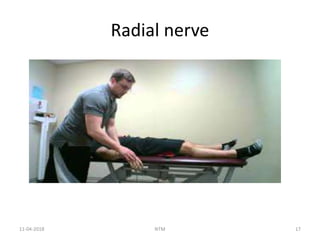
Radial nerve
11-04-2018 NTM 17
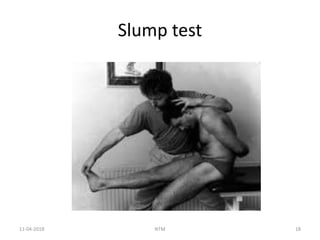
Slump test
11-04-2018 NTM 18
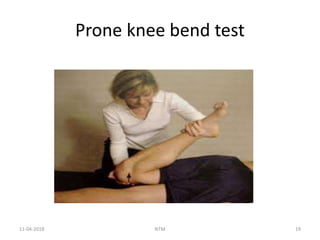
Prone knee bend test
11-04-2018 NTM 19
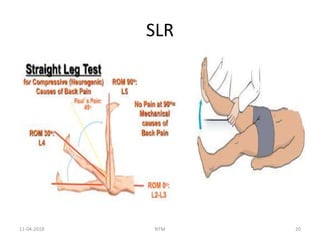
SLR
11-04-2018 NTM 20
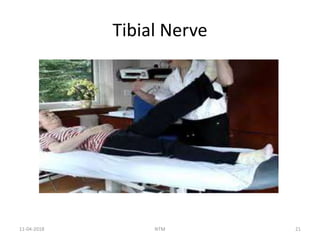
Tibial Nerve
11-04-2018 NTM 21
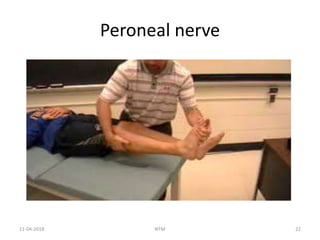
Peroneal nerve
11-04-2018 NTM 22
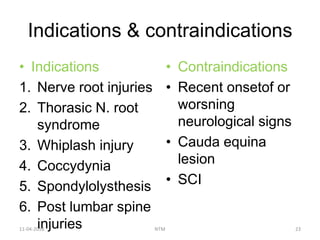
Indications & contraindications
• Indications
1. Nerve root injuries
2. Thorasic N. root
syndrome
3. Whiplash injury
4. Coccydynia
5. Spondylolysthesis
6. Post lumbar spine
injuries
• Contraindications
• Recent onsetof or
worsning
neurological signs
• Cauda equina
lesion
• SCI
11-04-2018 NTM 23
Precautions
• Irritability to nervous system
• Dizziness
• Circulatory disturbances
11-04-2018 NTM 24
Summary
• Definition
• Principles
• Tests
• Indications
• contraindications
11-04-2018 NTM 25
References
• Clinical Neurodynamics – MICHEL
HACKLOCK
• Manual Therapy Approaches in
Neurophysiotherapy – Dr. Suvarna Ganvir
11-04-2018 NTM 26
THANK YOU…….
11-04-2018 NTM 27

Neural tissue mobilization

  • 1.
    Neural Tissue Mobilization Dr.Maheshwari Harishchandre Assistant Professor M.P.Th (Neurosciences) Asst. Professor DVVPF College of Physiotherapy, Ahmednagar
  • 2.
    Objectives • At theend of the topic learner should be able to describe – 1. Describe the principles 2. Techniques of NTM 3. Different tests for NTM 11-04-2018 NTM 2
  • 3.
    Contents • Introduction • Precautions •Contraindications • Tension testing • UL & LL 11-04-2018 NTM 3
  • 4.
    Introduction • A 3part system – - Mechanical interface – a/k/s – nerve bed – consist of bone, tendon, muscle, Ivdisc, ligaments, fascia, blood vessels. - Neural structures – brain, nerve roots, C.N, peripheral nerves, spinal cord - Innervated tissues – all tissues which are innervated by nervous system.11-04-2018 NTM 4
  • 5.
    Introduction • Anatomy –connective tissue - tissue that connects, supports, binds or separates other tissues or organs and including cartilaginous, fatty, and elastic tissues. • Neurons • Nerve fibres – motor – AHC –NMj, sensory – receptors • Layers – endineurium, perineurium, 11-04-2018 NTM 5
  • 6.
    • NS includesneural tissue in the body – Neurons – cells that send & receive signals & Neuroglia – cells that support & protect neurons 11-04-2018 NTM 6
  • 7.
    Definition • Neural tissuemobilization is a manipulative technique by which neural tissues are moved & stretched either by movement relative to their surroundings or by tension development. 11-04-2018 NTM 7
  • 8.
    • Primary mechanicalfunctions of the nervous system – tension, sliding, compression • Tension – 1st primary mechanical events in the NS is generation of tension.nerves are lengthened by elongation. • Sliding – 2nd event is movt of NS relative to their adjacent tissues. • Compression- neural structures can change their shape when pressure is exerted on them. 11-04-2018 NTM 8
  • 9.
  • 10.
    • How nervemove - by all three mechanical events. • movements of joints 11-04-2018 NTM 10
  • 11.
    Neurodynamic testing • Cervicalspine • Upper limb • Lower limb • Lumbar spine 11-04-2018 NTM 11
  • 12.
    Passive neck flexion •Purpose: To assess the contribution of neural tension to the patient's symptoms. Test Position: Supine. Performing the Test: Patient actively performs upper cervical nod. Examiner passively flexes lower cervical spine. A reproduction of pain or other neural symptoms in the thoracic spine is a positive test. A stretching sensation is normal.11-04-2018 NTM 12
  • 13.
    Cervical spine • Passiveneck flexion – - preparation – pt. position - normal response / abnormal response 11-04-2018 NTM 13
  • 14.
    ULTT • Median nerve– • Position • Movement • response 11-04-2018 NTM 14
  • 15.
    ULTT – Ulnarnerve • Purpose: To assess the contributions of neural tension to the patient’s symptoms. Test Position: Supine. Performing the Test: Stand at the side of the tested limb, facing towards the patient’s head. Use the hand closer to patient to depress shoulder and punch into table to keep shoulder in depressed position. Use farther hand on patient’s hand to flex elbow to about 115 degrees, with the forearm pronated. Keep patient’s wrist and fingers extended. Laterally rotate the patient’s shoulder to end range and abduct the patient’s shoulder until neural symptoms are reproduced. Have patient laterally flex or rotate their head away (worsens pain/symptoms) and toward the arm (relieves pain/symptoms) - a positive test.11-04-2018 NTM 15
  • 16.
  • 17.
  • 18.
  • 19.
    Prone knee bendtest 11-04-2018 NTM 19
  • 20.
  • 21.
  • 22.
  • 23.
    Indications & contraindications •Indications 1. Nerve root injuries 2. Thorasic N. root syndrome 3. Whiplash injury 4. Coccydynia 5. Spondylolysthesis 6. Post lumbar spine injuries • Contraindications • Recent onsetof or worsning neurological signs • Cauda equina lesion • SCI 11-04-2018 NTM 23
  • 24.
    Precautions • Irritability tonervous system • Dizziness • Circulatory disturbances 11-04-2018 NTM 24
  • 25.
    Summary • Definition • Principles •Tests • Indications • contraindications 11-04-2018 NTM 25
  • 26.
    References • Clinical Neurodynamics– MICHEL HACKLOCK • Manual Therapy Approaches in Neurophysiotherapy – Dr. Suvarna Ganvir 11-04-2018 NTM 26
  • 27.