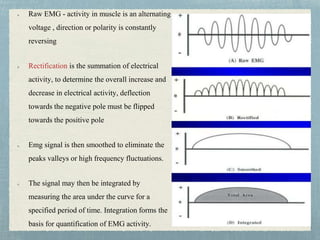
EMG biofeedback involves using equipment to accurately measure and provide visual or auditory feedback of electromyography (EMG) signals to help patients learn voluntary control of muscle activity. It has various clinical applications such as neuromuscular rehabilitation, chronic pain management, and treatment of conditions like stroke, cerebral palsy, and incontinence. EMG biofeedback works based on motor learning principles and involves setting thresholds and targets for patients to achieve. Several studies have found EMG biofeedback to be effective in improving muscle strength, relaxation, gait, and balance in patients with injuries or neurological conditions.