HEAT AND
TEMPERATURE
HEAT
--is the transfer of thermal energy from one
object to another because of a temperature
difference.
--exists as “energy in transit” or in the
process of being transferred and it is not
contained in an object.
--flows spontaneously from hot objects to
cold objects.
Why does heat
flow from a high to
a low
temperature?
Temperature
• It indicates the degree of hotness or
coldness of a body or a place.
• It is related to the average kinetic
energy of the particles in an object
due to their random motions through
space.
THERMAL ENERGY
--The energy that is actually contained
in an object due to the motion of its
particles.
--depends on the mass, temperature,
and phase (solid, liquid, or gas) of an
object.
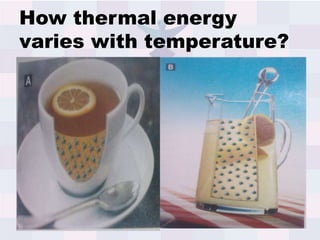
How thermal energy
varies with temperature?
THERMAL EXPANSION
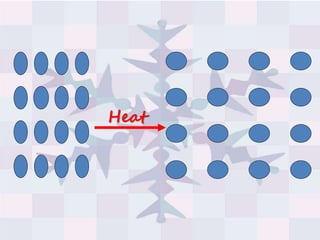
Heat
WHAT HAPPENS WHEN
MOLECULES GET MORE
ENERGY?
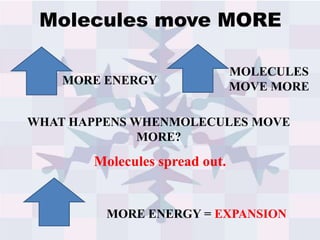
Molecules move MORE
MORE ENERGY
MOLECULES
MOVE MORE
WHAT HAPPENS WHENMOLECULES MOVE
MORE?
Molecules spread out.
MORE ENERGY = EXPANSION
WHAT HAPPENS
WHEN MOLECULES
GET LESS ENERGY?
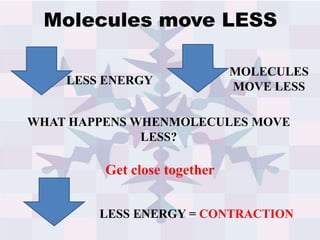
Molecules move LESS
LESS ENERGY
MOLECULES
MOVE LESS
WHAT HAPPENS WHENMOLECULES MOVE
LESS?
Get close together
LESS ENERGY = CONTRACTION
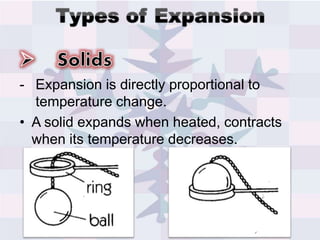
- Expansion is directly proportional to
temperature change.
• A solid expands when heated, contracts
when its temperature decreases.
PHASE CHANGE
PHASE CHANGE
Examples:
Water can change from solid (ice)
to liquid (water) or from gas (steam).
*The high temperature water
transferred more heat than water at a
lower temperature.
*A greater increase in temperature of
the object that absorbed the heat.
Some materials absorb heat
more readily than others.
When a car is heated by the
sun, the temperature of the
metal door increases more
than the temperature of the
plastic bumper. Do you know
why?
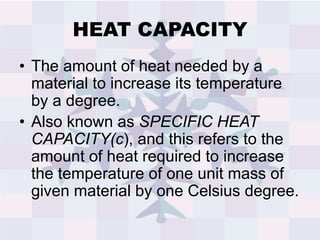
HEAT CAPACITY
• The amount of heat needed by a
material to increase its temperature
by a degree.
• Also known as SPECIFIC HEAT
CAPACITY(c), and this refers to the
amount of heat required to increase
the temperature of one unit mass of
given material by one Celsius degree.
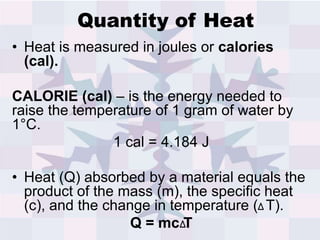
Quantity of Heat
• Heat is measured in joules or calories
(cal).
CALORIE (cal) – is the energy needed to
raise the temperature of 1 gram of water by
1°C.
1 cal = 4.184 J
• Heat (Q) absorbed by a material equals the
product of the mass (m), the specific heat
(c), and the change in temperature ( T).
Q = mc T
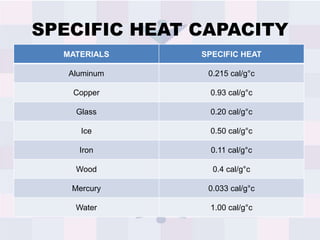
SPECIFIC HEAT CAPACITY
MATERIALS SPECIFIC HEAT
Aluminum 0.215 cal/g°c
Copper 0.93 cal/g°c
Glass 0.20 cal/g°c
Ice 0.50 cal/g°c
Iron 0.11 cal/g°c
Wood 0.4 cal/g°c
Mercury 0.033 cal/g°c
Water 1.00 cal/g°c
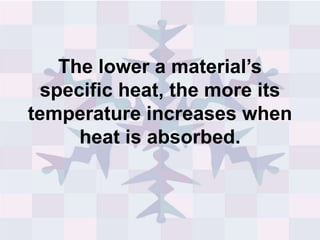
The lower a material’s
specific heat, the more its
temperature increases when
heat is absorbed.
Thank you! 

EFFECT OF HEAT

  • 1.
  • 2.
    HEAT --is the transferof thermal energy from one object to another because of a temperature difference. --exists as “energy in transit” or in the process of being transferred and it is not contained in an object. --flows spontaneously from hot objects to cold objects.
  • 3.
    Why does heat flowfrom a high to a low temperature?
  • 4.
    Temperature • It indicatesthe degree of hotness or coldness of a body or a place. • It is related to the average kinetic energy of the particles in an object due to their random motions through space.
  • 5.
    THERMAL ENERGY --The energythat is actually contained in an object due to the motion of its particles. --depends on the mass, temperature, and phase (solid, liquid, or gas) of an object.
  • 6.
    How thermal energy varieswith temperature?
  • 8.
  • 9.
  • 10.
  • 11.
    Molecules move MORE MOREENERGY MOLECULES MOVE MORE WHAT HAPPENS WHENMOLECULES MOVE MORE? Molecules spread out. MORE ENERGY = EXPANSION
  • 12.
  • 13.
    Molecules move LESS LESSENERGY MOLECULES MOVE LESS WHAT HAPPENS WHENMOLECULES MOVE LESS? Get close together LESS ENERGY = CONTRACTION
  • 15.
    - Expansion isdirectly proportional to temperature change. • A solid expands when heated, contracts when its temperature decreases.
  • 19.
  • 20.
    PHASE CHANGE Examples: Water canchange from solid (ice) to liquid (water) or from gas (steam). *The high temperature water transferred more heat than water at a lower temperature. *A greater increase in temperature of the object that absorbed the heat.
  • 21.
    Some materials absorbheat more readily than others. When a car is heated by the sun, the temperature of the metal door increases more than the temperature of the plastic bumper. Do you know why?
  • 22.
    HEAT CAPACITY • Theamount of heat needed by a material to increase its temperature by a degree. • Also known as SPECIFIC HEAT CAPACITY(c), and this refers to the amount of heat required to increase the temperature of one unit mass of given material by one Celsius degree.
  • 23.
    Quantity of Heat •Heat is measured in joules or calories (cal). CALORIE (cal) – is the energy needed to raise the temperature of 1 gram of water by 1°C. 1 cal = 4.184 J • Heat (Q) absorbed by a material equals the product of the mass (m), the specific heat (c), and the change in temperature ( T). Q = mc T
  • 24.
    SPECIFIC HEAT CAPACITY MATERIALSSPECIFIC HEAT Aluminum 0.215 cal/g°c Copper 0.93 cal/g°c Glass 0.20 cal/g°c Ice 0.50 cal/g°c Iron 0.11 cal/g°c Wood 0.4 cal/g°c Mercury 0.033 cal/g°c Water 1.00 cal/g°c
  • 25.
    The lower amaterial’s specific heat, the more its temperature increases when heat is absorbed.
  • 26.