ECTOPIA VESICAE –
  INFECTION OF THE URINARY
          BLADDER


Dr. Ali Kamal M. Sami
M.B.Ch.B. F.I.B.M.S. M.A.U.A. F.I.U.A.
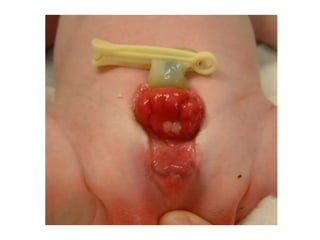
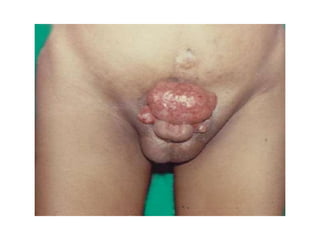
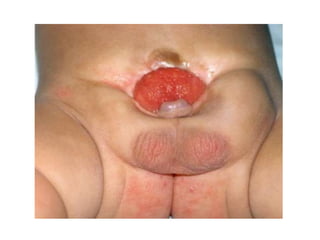
• Ectopia vesicae (exstrophy of the bladder)

• MECHANISM
•   Caused by the incomplete development of the infra-umbilical part of the anterior
    abdominal wall, with incomplete development of the anterior wall of the bladder.

• Clinical features of ectopia vesicae:
•   One in 50 000 births (four male: one female)
•   The presence of the viscera behind it
•   Edges of abdominal wall can be felt
•   Umbilicus is absent
• In the male
•   the completely epispadiac penis is broader and shorter than normal,
•   bilateral inguinal hernia .
•   the prostate and seminal vesicles are rudimentary,
•   the testes are normal and usually descended.
• In female
• the clitoris is bifid
• the labia minora are separated anteriorly, exposing the vaginal
  orifice.
• In both sexes,
•  there is separation of the pubic bones, which are connected by a
  strong ligament.
• linea alba is broad.
• In the rare, incomplete form of penile epispadias or female
  epispadias, the pubes are united and the external genitalia are almost
  normal, although in the female the clitoris is bifid.
TREATMENT
**Iliac osteotomy, closure of the bladder and closure of abdominal
wall;
In the first year of life, the bladder is closed following osteotomy of
both iliac bones just lateral to the sacroiliac joints.
 Later reconstruction of the bladder neck and sphincters is required.
In some patients, the reconstructed bladder remains small and
requires augmentation.
**Another option is urinary diversion .
Lower urinary Infection and cystitis
Infection of the bladder ‘ cystitis ’ gives rise to
symptoms of
1. Frequency,
2. Urgency,
3. Suprapubic discomfort,
4. Dysuria
5. Cloudy offensive urine.

Lower urinary tract infections (UTI) are much more
  common in women than in men, particularly in the
  under 50s.

Recurrent lower urinary infection occurs in some
  healthy women after intercourse, without any
  demonstrable abnormality of the urinary tract.
1. Repeated attacks of UTI in women,
2. A single attack in a man
3. A single attack in a child of either sex,
should always be followed by investigation to
discover and treat the predisposing cause;
sometimes, however, no cause can be found.

Asymptomatic bacteriuria is found commonly (in
5—10 per cent of cases), particularly in women,
and investigation may fail to demonstrate any
underlying cause.
Predisposing factors

1. Incomplete emptying of the bladder caused by prostatic
   obstruction, urethral stricture or meatal stenosis, bladder
   diverticulum, neurogenic bladder.
2. presence of a calculus, foreign body or neoplasm.
3. Incomplete emptying of the upper tract caused by dilatation of
   the ureters associated with pregnancy or vesico ureteric reflux.
4. Oestrogen deficiency:lowered local resistance.

5. Colonisation of the perineal skin by strains of Escherichia coli
  expressing molecules that facilitate adherence to mucosa.
1.   Ascending infection from the urethra is the
     commonest route . The organisms originate in the
     bowel, contaminate the vulva and reach the
     bladder because of the shortness of the female
     urethra.
2.   Descending infectionfrom the kidney (tuberculosis),
3.   Haematogenous spread,
4.   Lymphogenous spread.
5.   From adjoining structures (fallopian tube, vagina or gut).
Bacteriology
Escherichia coli
Proteus mirabilis,
Staphylococcus epidermidis
Streptococcus faecalis.
Pseudomonas,
Klebsiellae,
Staphylococcus aureus
and various streptococci.
Clinical features
Symptoms
The severity of the symptoms varies greatly.
Frequency. This occurs during the day and night, it may occur every few minutes
and may cause incontinence.
Pain. Pain varies from mild to severe. It may be referred to the suprapubic region,
the tip of the penis, the labia majora or the perineum.
Haematuria. The passage of a few drops of blood-stained urine or blood-stained
debris at the end of micturition is a frequent accompaniment. Less often the whole
specimen is blood stained.
Pyuria. This is usually present.
Examination
•On examination there is
tenderness over the bladder.
•midstream urine specimens
should be collected.
Investigation
Cystoscopy. This is not necessary in the acute phase.
Uroflometry (urinary flow rates )
post-void residual urine.
IVU
Difficult cases may require urodynamic investigation.
Treatment
Treatment should be commenced forthwith, and modified if necessary when
the bacteriological report is to hand.
The patient is urged to drink.
Appropriate first-line antibiotics include
trimethoprim, amoxycillin or one of the
quinolones.
Failure to respond indicates the necessity for further investigation to exclude
predisposing factors.
Special forms of lower urinary tract infection

        Acute abacterial cystitis (acute haemorrhagic cystitis)

  The patient presents with symptoms of severe UTI.
   Pus is present in the urine,
   but no organism can be cultured.
  It is sometimes associated with abacterial urethritis and is
  commonly sexually acquired.
   Tuberculous infection and carcinoma in situ must be ruled out.
  The underlying causative organism may be mycoplasma or
  herpes.
Frequency—dysuria syndrome (urethral
syndrome)
This is common in women.
symptoms of urinary infection, but with negative urine
cultures and absent pus cells.
Carcinoma in situ, tuberculosis and interstitial cystitis
should be excluded.
urologists advise patients to adopt general measures
such as wearing cotton underwear, using simple
soaps, general perineal hygiene and voiding after
intercourse. Other treatments include cystoscopy and
urethral dilatation, although the benefits remain
doubtful.
THAN
K YOU

Ectopia and cystitis

  • 1.
    ECTOPIA VESICAE – INFECTION OF THE URINARY BLADDER Dr. Ali Kamal M. Sami M.B.Ch.B. F.I.B.M.S. M.A.U.A. F.I.U.A.
  • 2.
    • Ectopia vesicae(exstrophy of the bladder) • MECHANISM • Caused by the incomplete development of the infra-umbilical part of the anterior abdominal wall, with incomplete development of the anterior wall of the bladder. • Clinical features of ectopia vesicae: • One in 50 000 births (four male: one female) • The presence of the viscera behind it • Edges of abdominal wall can be felt • Umbilicus is absent • In the male • the completely epispadiac penis is broader and shorter than normal, • bilateral inguinal hernia . • the prostate and seminal vesicles are rudimentary, • the testes are normal and usually descended.
  • 3.
    • In female •the clitoris is bifid • the labia minora are separated anteriorly, exposing the vaginal orifice. • In both sexes, • there is separation of the pubic bones, which are connected by a strong ligament. • linea alba is broad. • In the rare, incomplete form of penile epispadias or female epispadias, the pubes are united and the external genitalia are almost normal, although in the female the clitoris is bifid.
  • 4.
    TREATMENT **Iliac osteotomy, closureof the bladder and closure of abdominal wall; In the first year of life, the bladder is closed following osteotomy of both iliac bones just lateral to the sacroiliac joints. Later reconstruction of the bladder neck and sphincters is required. In some patients, the reconstructed bladder remains small and requires augmentation. **Another option is urinary diversion .
  • 8.
    Lower urinary Infectionand cystitis Infection of the bladder ‘ cystitis ’ gives rise to symptoms of 1. Frequency, 2. Urgency, 3. Suprapubic discomfort, 4. Dysuria 5. Cloudy offensive urine. Lower urinary tract infections (UTI) are much more common in women than in men, particularly in the under 50s. Recurrent lower urinary infection occurs in some healthy women after intercourse, without any demonstrable abnormality of the urinary tract.
  • 9.
    1. Repeated attacksof UTI in women, 2. A single attack in a man 3. A single attack in a child of either sex, should always be followed by investigation to discover and treat the predisposing cause; sometimes, however, no cause can be found. Asymptomatic bacteriuria is found commonly (in 5—10 per cent of cases), particularly in women, and investigation may fail to demonstrate any underlying cause.
  • 10.
    Predisposing factors 1. Incompleteemptying of the bladder caused by prostatic obstruction, urethral stricture or meatal stenosis, bladder diverticulum, neurogenic bladder. 2. presence of a calculus, foreign body or neoplasm. 3. Incomplete emptying of the upper tract caused by dilatation of the ureters associated with pregnancy or vesico ureteric reflux. 4. Oestrogen deficiency:lowered local resistance. 5. Colonisation of the perineal skin by strains of Escherichia coli expressing molecules that facilitate adherence to mucosa.
  • 12.
    1. Ascending infection from the urethra is the commonest route . The organisms originate in the bowel, contaminate the vulva and reach the bladder because of the shortness of the female urethra. 2. Descending infectionfrom the kidney (tuberculosis), 3. Haematogenous spread, 4. Lymphogenous spread. 5. From adjoining structures (fallopian tube, vagina or gut).
  • 13.
    Bacteriology Escherichia coli Proteus mirabilis, Staphylococcusepidermidis Streptococcus faecalis. Pseudomonas, Klebsiellae, Staphylococcus aureus and various streptococci.
  • 14.
    Clinical features Symptoms The severityof the symptoms varies greatly. Frequency. This occurs during the day and night, it may occur every few minutes and may cause incontinence. Pain. Pain varies from mild to severe. It may be referred to the suprapubic region, the tip of the penis, the labia majora or the perineum. Haematuria. The passage of a few drops of blood-stained urine or blood-stained debris at the end of micturition is a frequent accompaniment. Less often the whole specimen is blood stained. Pyuria. This is usually present.
  • 15.
    Examination •On examination thereis tenderness over the bladder. •midstream urine specimens should be collected.
  • 16.
    Investigation Cystoscopy. This isnot necessary in the acute phase. Uroflometry (urinary flow rates ) post-void residual urine. IVU Difficult cases may require urodynamic investigation.
  • 17.
    Treatment Treatment should becommenced forthwith, and modified if necessary when the bacteriological report is to hand. The patient is urged to drink. Appropriate first-line antibiotics include trimethoprim, amoxycillin or one of the quinolones. Failure to respond indicates the necessity for further investigation to exclude predisposing factors.
  • 18.
    Special forms oflower urinary tract infection Acute abacterial cystitis (acute haemorrhagic cystitis) The patient presents with symptoms of severe UTI. Pus is present in the urine, but no organism can be cultured. It is sometimes associated with abacterial urethritis and is commonly sexually acquired. Tuberculous infection and carcinoma in situ must be ruled out. The underlying causative organism may be mycoplasma or herpes.
  • 19.
    Frequency—dysuria syndrome (urethral syndrome) Thisis common in women. symptoms of urinary infection, but with negative urine cultures and absent pus cells. Carcinoma in situ, tuberculosis and interstitial cystitis should be excluded. urologists advise patients to adopt general measures such as wearing cotton underwear, using simple soaps, general perineal hygiene and voiding after intercourse. Other treatments include cystoscopy and urethral dilatation, although the benefits remain doubtful.
  • 20.