RAJASTHAN VIDYAPEETH HOMOEOPATHIC MEDICAL
COLLEGE AND HOSPITAL,DABOK
DEPARTMENT OF MEDICINE
Session – 2017-2018
Topic – Urinary tract infection
Submitted to:- DR.AEJAZ HUSSAIN SIR
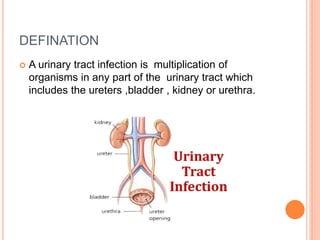
DEFINATION
 A urinary tract infection is multiplication of
organisms in any part of the urinary tract which
includes the ureters ,bladder , kidney or urethra.
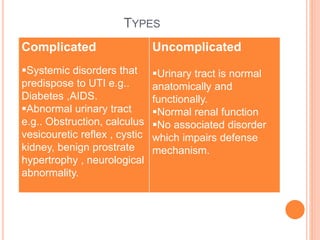
TYPES
Complicated
Systemic disorders that
predispose to UTI e.g..
Diabetes ,AIDS.
Abnormal urinary tract
e.g.. Obstruction, calculus
vesicouretic reflex , cystic
kidney, benign prostrate
hypertrophy , neurological
abnormality.
Uncomplicated
Urinary tract is normal
anatomically and
functionally.
Normal renal function
No associated disorder
which impairs defense
mechanism.
TYPES
( ANATOMICALLY)
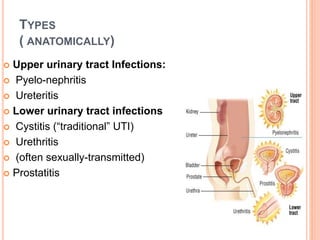
 Upper urinary tract Infections:
 Pyelo-nephritis
 Ureteritis
 Lower urinary tract infections
 Cystitis (“traditional” UTI)
 Urethritis
 (often sexually-transmitted)
 Prostatitis
SOURCE OF INFECTION
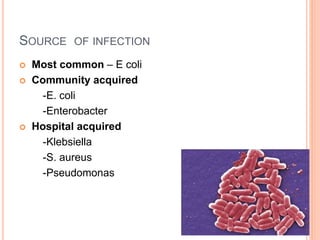
 Most common – E coli
 Community acquired
-E. coli
-Enterobacter
 Hospital acquired
-Klebsiella
-S. aureus
-Pseudomonas
ROUTES OF SPREAD
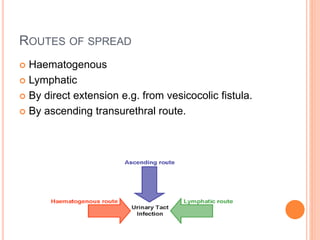
 Haematogenous
 Lymphatic
 By direct extension e.g. from vesicocolic fistula.
 By ascending transurethral route.
PATHOGENESIS
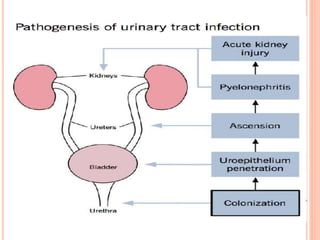
 Bacteria enters bladder through urethra. From bladder it
may reach o parenchyma resulting in parenchymal
infections.
 Females are more prone to cystitis due to
- Short urethra i.e. 4cms
- Enteric organisms residing near anal region colonize in
periurethral region
- Absence of bactericidal secretions
- Sexual intercourse
 Injuries to spinal cord
 Associated disorders like diabetic mellitus
 Susceptibility factor – uroepithelial of these patients have
more surface receptors which adhere to strains of e.coli
become attached.
 Pregnancy
-urethral tone is decreased
- urethral peristalsis is decreased
-incompetence of vesicourethral valve
 Any blockage to free flow of urine as in stricture, calculus,
BPH etc.
 Instrumentation of urinary tract cauterization ,cystosopy,
urethral dilatation.
 Vesicoureteric reflex – reflux of urine from bladder to
ureters. There is retro gate spread of bacteria
SOME OTHER CAUSES OF UTI
 Menopause Estrogen has a protective effect in the
urinary tract, but levels of this hormone drop off
significantly during menopause. Lowest estrogen
levels can make it easier for bacteria to thrive in the
vagina or urethra.
 Elders – due to weakening of bladder muscles
 -weakened immune system
 Diabetes – high blood sugar can spill in urine and
encourage the growth of bacteria.
 Also , nerve damage to diabetes can prevent
improper bladder emptying
CLINICAL PRESENTATION
•Lower urinary tract infection (affects bladder and/or
urethra):
 Fever with chills and rigor
 Cloudy urine
 The urine may have an unpleasant smell
 Hematuria
 STRANGURY
 Increased frequency and urgency
 Discomfort and sometimes pain when urinating
 Abdominal pain
 Back pain
 General malaise; generally feeling unwell
 Tenderness around the pelvic area
 •Upper urinary tract infection (affects kidneys and/or
ureters):
 Fever , usually high(atleast38Cor100.4F)
 Shivering
 Vomiting
 Nausea
 Diarrhea
 Pain on the side(flank),upper back or groin-this may
become more uncomfortable when urinating
INVESTIGATIONS
 Dip stick test – To detect nitrates and leukocyte esterase.
 Culture and sensitivity
 Gram staining and bacterial colony count
 Rectal examination to assess the prostrate
 Cystosopy in suspect bladder lesion
 Rectal ultrasonography to identify obstruction , cyst and
calculi.
 IVU – intravenous urography
TREATMENT
 Fluid intake more than 2l/day to increase urine output.
 If patient has stone, catheter or other obstruction it should
be removed
 Regular complete bladder emptying.
 Alkalinisation of urine.
 Urinary analgesics and anti spasmodics for detressor
spasm.
 In females, maintenance of adequate hygiene, empting of
bladder before and after intercourse.
 Double micturation is to be practiced if vesicoureteric reflux
is present.
HOMOEOPATHIC TREATMENT
 Cantharis
 Merc cor
 Sulphur
 Sepia
 Staphysagaria
 Apis Mel
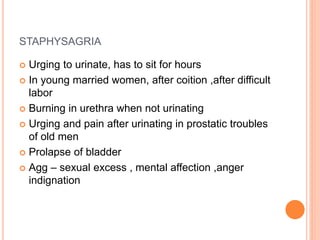
STAPHYSAGRIA
 Urging to urinate, has to sit for hours
 In young married women, after coition ,after difficult
labor
 Burning in urethra when not urinating
 Urging and pain after urinating in prostatic troubles
of old men
 Prolapse of bladder
 Agg – sexual excess , mental affection ,anger
indignation
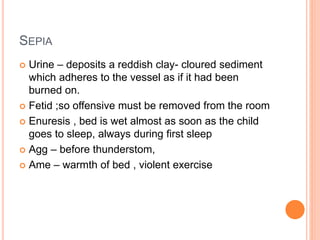
SEPIA
 Urine – deposits a reddish clay- cloured sediment
which adheres to the vessel as if it had been
burned on.
 Fetid ;so offensive must be removed from the room
 Enuresis , bed is wet almost as soon as the child
goes to sleep, always during first sleep
 Agg – before thunderstom,
 Ame – warmth of bed , violent exercise
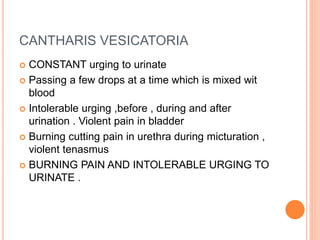
CANTHARIS VESICATORIA
 CONSTANT urging to urinate
 Passing a few drops at a time which is mixed wit
blood
 Intolerable urging ,before , during and after
urination . Violent pain in bladder
 Burning cutting pain in urethra during micturation ,
violent tenasmus
 BURNING PAIN AND INTOLERABLE URGING TO
URINATE .
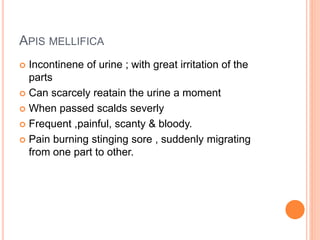
APIS MELLIFICA
 Incontinene of urine ; with great irritation of the
parts
 Can scarcely reatain the urine a moment
 When passed scalds severly
 Frequent ,painful, scanty & bloody.
 Pain burning stinging sore , suddenly migrating
from one part to other.
Thank you
A project by :-
Bhanuja Jodha

Uti project

  • 1.
    RAJASTHAN VIDYAPEETH HOMOEOPATHICMEDICAL COLLEGE AND HOSPITAL,DABOK DEPARTMENT OF MEDICINE Session – 2017-2018 Topic – Urinary tract infection Submitted to:- DR.AEJAZ HUSSAIN SIR
  • 2.
    DEFINATION  A urinarytract infection is multiplication of organisms in any part of the urinary tract which includes the ureters ,bladder , kidney or urethra.
  • 3.
    TYPES Complicated Systemic disorders that predisposeto UTI e.g.. Diabetes ,AIDS. Abnormal urinary tract e.g.. Obstruction, calculus vesicouretic reflex , cystic kidney, benign prostrate hypertrophy , neurological abnormality. Uncomplicated Urinary tract is normal anatomically and functionally. Normal renal function No associated disorder which impairs defense mechanism.
  • 4.
    TYPES ( ANATOMICALLY)  Upperurinary tract Infections:  Pyelo-nephritis  Ureteritis  Lower urinary tract infections  Cystitis (“traditional” UTI)  Urethritis  (often sexually-transmitted)  Prostatitis
  • 5.
    SOURCE OF INFECTION Most common – E coli  Community acquired -E. coli -Enterobacter  Hospital acquired -Klebsiella -S. aureus -Pseudomonas
  • 6.
    ROUTES OF SPREAD Haematogenous  Lymphatic  By direct extension e.g. from vesicocolic fistula.  By ascending transurethral route.
  • 7.
    PATHOGENESIS  Bacteria entersbladder through urethra. From bladder it may reach o parenchyma resulting in parenchymal infections.  Females are more prone to cystitis due to - Short urethra i.e. 4cms - Enteric organisms residing near anal region colonize in periurethral region - Absence of bactericidal secretions - Sexual intercourse  Injuries to spinal cord  Associated disorders like diabetic mellitus
  • 8.
     Susceptibility factor– uroepithelial of these patients have more surface receptors which adhere to strains of e.coli become attached.  Pregnancy -urethral tone is decreased - urethral peristalsis is decreased -incompetence of vesicourethral valve  Any blockage to free flow of urine as in stricture, calculus, BPH etc.  Instrumentation of urinary tract cauterization ,cystosopy, urethral dilatation.  Vesicoureteric reflex – reflux of urine from bladder to ureters. There is retro gate spread of bacteria
  • 10.
    SOME OTHER CAUSESOF UTI  Menopause Estrogen has a protective effect in the urinary tract, but levels of this hormone drop off significantly during menopause. Lowest estrogen levels can make it easier for bacteria to thrive in the vagina or urethra.  Elders – due to weakening of bladder muscles  -weakened immune system  Diabetes – high blood sugar can spill in urine and encourage the growth of bacteria.  Also , nerve damage to diabetes can prevent improper bladder emptying
  • 11.
    CLINICAL PRESENTATION •Lower urinarytract infection (affects bladder and/or urethra):  Fever with chills and rigor  Cloudy urine  The urine may have an unpleasant smell  Hematuria  STRANGURY  Increased frequency and urgency  Discomfort and sometimes pain when urinating  Abdominal pain  Back pain  General malaise; generally feeling unwell  Tenderness around the pelvic area
  • 12.
     •Upper urinarytract infection (affects kidneys and/or ureters):  Fever , usually high(atleast38Cor100.4F)  Shivering  Vomiting  Nausea  Diarrhea  Pain on the side(flank),upper back or groin-this may become more uncomfortable when urinating
  • 13.
    INVESTIGATIONS  Dip sticktest – To detect nitrates and leukocyte esterase.  Culture and sensitivity  Gram staining and bacterial colony count  Rectal examination to assess the prostrate  Cystosopy in suspect bladder lesion  Rectal ultrasonography to identify obstruction , cyst and calculi.  IVU – intravenous urography
  • 14.
    TREATMENT  Fluid intakemore than 2l/day to increase urine output.  If patient has stone, catheter or other obstruction it should be removed  Regular complete bladder emptying.  Alkalinisation of urine.  Urinary analgesics and anti spasmodics for detressor spasm.  In females, maintenance of adequate hygiene, empting of bladder before and after intercourse.  Double micturation is to be practiced if vesicoureteric reflux is present.
  • 15.
    HOMOEOPATHIC TREATMENT  Cantharis Merc cor  Sulphur  Sepia  Staphysagaria  Apis Mel
  • 16.
    STAPHYSAGRIA  Urging tourinate, has to sit for hours  In young married women, after coition ,after difficult labor  Burning in urethra when not urinating  Urging and pain after urinating in prostatic troubles of old men  Prolapse of bladder  Agg – sexual excess , mental affection ,anger indignation
  • 17.
    SEPIA  Urine –deposits a reddish clay- cloured sediment which adheres to the vessel as if it had been burned on.  Fetid ;so offensive must be removed from the room  Enuresis , bed is wet almost as soon as the child goes to sleep, always during first sleep  Agg – before thunderstom,  Ame – warmth of bed , violent exercise
  • 18.
    CANTHARIS VESICATORIA  CONSTANTurging to urinate  Passing a few drops at a time which is mixed wit blood  Intolerable urging ,before , during and after urination . Violent pain in bladder  Burning cutting pain in urethra during micturation , violent tenasmus  BURNING PAIN AND INTOLERABLE URGING TO URINATE .
  • 19.
    APIS MELLIFICA  Incontineneof urine ; with great irritation of the parts  Can scarcely reatain the urine a moment  When passed scalds severly  Frequent ,painful, scanty & bloody.  Pain burning stinging sore , suddenly migrating from one part to other.
  • 20.
    Thank you A projectby :- Bhanuja Jodha