INFLAMMATION OF 
URINARY BLADDER 
HARSHITA 
II nd YEAR 
A.B.C.O.N
INTRODUCTION 
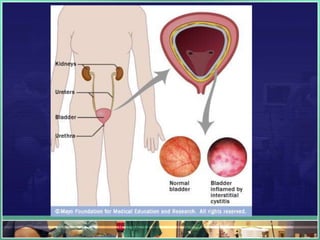
• Infection of urinary bladder is known as Cystitis. 
• It's usually caused by an infection in the bladder, 
but can also be caused by irritation or damage 
(from friction during sex). 
• It is more common in women. 
• A urinary tract infection (UTI) (also known 
as cystitis or bladder infection) is an infection that 
affects part of the urinary tract.
CAUSES 
• The most common cause of cystitis is a bacterial 
infection. If bacteria reach the bladder, they can 
multiply and irritate the bladder lining, causing the 
symptoms of cystitis. 
• Cystitis can also result from damage or irritation 
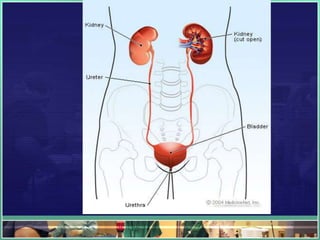
around the urethra. The urethra is the tube that 
carries urine from the bladder out of the body. In 
men, the urethral opening (where urine leaves the 
body) is at the tip of the penis. In women it's just 
below the clitoris.
BACTERIAL INFECTION 
• This happens when bacteria get into the bladder 
and multiply. It can happen if you don't empty your 
bladder properly. 
• Bacterial infection can also happen when bacteria 
from the anus are transferred to the urethra. This is 
more common in women than in men, as the 
urethra is closer to the anus in women than it is in 
men.
BACTERIAL INFECTION 
In women, transferring bacteria in this way can 
happen when you are: 
• Having sex 
• Wiping after going to the toilet (you're less likely to 
transfer bacteria in this way if you wipe from front to 
back) 
• Inserting a tampon 
• Using a diaphragm (a soft dome made of latex or 
silicone) for contraception
BACTERIAL INFECTION 
• In women who have had, or are going through, 
the menopause, the lining of the urethra and the 
bladder become thinner. This is due to a lack of the 
hormone oestrogen. The thin lining is more likely to 
become infected or damaged. Women also 
produce fewer vaginal secretions after the 
menopause, which means that bacteria are more 
likely to multiply.
DAMAGE OR IRRITATION 
Cystitis can also be caused by damage or irritation in 
the area around the urethra in both men and 
women. This could be the result of: 
• Wearing tight clothing 
• Chemical irritants – for example, in perfumed soap 
or talcum powder 
• Other bladder or kidney problems, such as a kidney 
infection or prostatitis
DAMAGE OR IRRITATION 
• Diabetes (a long-term condition caused by too 
much glucose in the blood) 
• Damage caused by a catheter (a tube inserted into 
the urethra to allow urine to flow into a drainage 
bag, which is often used after surgery)
SYMPTOMS 
Children and adults can get cystitis, and the 
symptoms can be different.
SYMPTOMS 
Symptoms in men and women: 
• Cystitis in men and women can cause: 
• pain, burning or stinging when you urinate 
• needing to urinate often and urgently but passing 
only small amounts of urine 
• urine that's dark, cloudy or strong smelling. 
• urine that contains traces of blood (haematuria) 
• pain low in your belly (directly above the pubic 
bone), or in the lower back or abdomen 
• feeling unwell, weak or feverish
SYMPTOMS 
Symptoms in children 
• Symptoms of cystitis in children may include: 
• weakness 
• irritability 
• reduced appetite 
• vomiting 
• pain when urinating 
• Cystitis is usually treated easily. Find out more 
about treating cystitis.
SYMPTOMS 
The symptoms caused by cystitis could also be 
caused by: 
• sexually transmitted infections (STIs), such as 
gonorrhoea or chlamydia 
• being infected with bacterium such as E-coli 
• vaginal thrush, also known as candida (a yeast 
infection) 
• inflammation of the urethra (urethritis) 
• urethral syndrome (women only)
SYMPTOMS 
• inflammation of the prostate gland, also known 
as prostatitis (men only)
PATHOGENESIS 
• The bacteria that cause urinary tract infections 
typically enter the bladder via the urethra. However, 
infection may also occur via the blood or lymph. It is 
believed that the bacteria are usually transmitted to 
the urethra from the bowel, with females at greater 
risk due to their anatomy. After gaining entry to the 
bladder, E. Coli are able to attach to the bladder 
wall and form a biofilm that resists the body's 
immune response.
PATHOGENESIS 
• It is the most frequent bacterial infection in women. 
• They occur most frequently between the ages of 
16 and 35 years, with 10% of women getting an 
infection yearly and 60% having an infection at 
some point in their lives. 
• Recurrences are common, with nearly half of 
people getting a second infection within a year. 
Urinary tract infections occur four times more 
frequently in females than males.
PATHOGENESIS 
• Pyelonephritis occurs between 20–30 times less 
frequently . They are the most common cause 
of hospital acquired infections accounting for 
approximately 40%. Rates of asymptomatic 
bacteria in the urine increase with age from two to 
seven percent in women of child bearing age to as 
high as 50% in elderly women in care 
homes. Rates of asymptomatic bacteria in the urine 
among men over 75 are between 7-10%.
PATHOGENESIS 
• Urinary tract infections may affect 10% of people 
during childhood. Among children urinary tract 
infections are the most common in uncircumcised 
males less than three months of age, followed by 
females less than one year. Estimates of frequency 
among children however vary widely. In a group of 
children with a fever, ranging in age between birth 
and two years, two to 20% were diagnosed with a 
UTI.
PATHOGENESIS 
• The symptoms of cystitis usually clear up without 
treatment within 4-9 days. There are some self-help 
treatments that can ease the discomfort of any 
symptoms.
Self-help treatments 
Over-the-counter (OTC) painkillers, such as 
paracetamol or ibuprofen. These can reduce pain 
and discomfort. Always read the label and check 
with your pharmacist first, particularly if you have 
any other medical condition, you are taking other 
medicines, or you're pregnant or breastfeeding. 
Drinking plenty of water is often recommended as a 
treatment for cystitis. There's no evidence that this 
is helpful, although drinking around 1.2 liters (6-8 
glasses) of water a day is generally good for your 
health. Also avoid alcohol.
Self-help treatments 
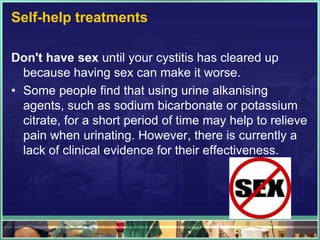
Don't have sex until your cystitis has cleared up 
because having sex can make it worse. 
• Some people find that using urine alkanising 
agents, such as sodium bicarbonate or potassium 
citrate, for a short period of time may help to relieve 
pain when urinating. However, there is currently a 
lack of clinical evidence for their effectiveness.
Antibiotics 
• This will usually involve taking a tablet 2-4 times a 
day, for three days.
PREVENTION 
It's not always possible to prevent cystitis, but 
you can take some steps to help avoid the 
condition: 
• don't use perfumed bubble bath, soap, or 
talcum powder around your genitals - use plain, 
unperfumed varieties 
• have a shower, rather than a bath, to avoid 
exposing your genitals to the chemicals in your 
cleaning products for too long
PREVENTION 
• always empty your bladder fully when you go to 
the toilet 
• don't wait to go if you need to urinate: delaying it 
can place extra stress on your bladder and could 
make it more vulnerable to infection 
• wear underwear made from cotton rather than 
synthetic material such as nylon 
• avoid wearing tight jeans and trousers
PREVENTION 
• always wipe from the front of your genital area 
to the back, not back to front, when you go to the 
toilet 
• some people find certain types of food 
and drink make their cystitis worse: for example, 
coffee, fruit juice or spicy foods. If there is anything 
that triggers your cystitis, you may wish to avoid it
NURSING MANAGEMENT 
TO REDUCE PAIN: 
• Monitor urine color changes, monitor the voiding 
pattern, input and output every 8 hours and monitor 
the results of urinalysis repeated. 
• Perineal care. 
• Catheter treatment 2 times per day.
Impaired Urinary Elimination 
• Assess the patient's pattern of elimination. 
• Encourage the patient to drink as much as possible 
and reduce drinking in the afternoon. 
• Encourage the patient to urinate every 2-3 hours 
and when it suddenly felt.
Disturbed Sleep Pattern 
• Provide a comfortable bed. 
• Increase comfort bedtime regimen, for example, a 
warm bath and a massage, a glass of warm milk. 
• Reduce noise and light.

Cystitis INFLAMMATION OF URINARY BLADDER

  • 1.
    INFLAMMATION OF URINARYBLADDER HARSHITA II nd YEAR A.B.C.O.N
  • 3.
    INTRODUCTION • Infectionof urinary bladder is known as Cystitis. • It's usually caused by an infection in the bladder, but can also be caused by irritation or damage (from friction during sex). • It is more common in women. • A urinary tract infection (UTI) (also known as cystitis or bladder infection) is an infection that affects part of the urinary tract.
  • 5.
    CAUSES • Themost common cause of cystitis is a bacterial infection. If bacteria reach the bladder, they can multiply and irritate the bladder lining, causing the symptoms of cystitis. • Cystitis can also result from damage or irritation around the urethra. The urethra is the tube that carries urine from the bladder out of the body. In men, the urethral opening (where urine leaves the body) is at the tip of the penis. In women it's just below the clitoris.
  • 6.
    BACTERIAL INFECTION •This happens when bacteria get into the bladder and multiply. It can happen if you don't empty your bladder properly. • Bacterial infection can also happen when bacteria from the anus are transferred to the urethra. This is more common in women than in men, as the urethra is closer to the anus in women than it is in men.
  • 7.
    BACTERIAL INFECTION Inwomen, transferring bacteria in this way can happen when you are: • Having sex • Wiping after going to the toilet (you're less likely to transfer bacteria in this way if you wipe from front to back) • Inserting a tampon • Using a diaphragm (a soft dome made of latex or silicone) for contraception
  • 8.
    BACTERIAL INFECTION •In women who have had, or are going through, the menopause, the lining of the urethra and the bladder become thinner. This is due to a lack of the hormone oestrogen. The thin lining is more likely to become infected or damaged. Women also produce fewer vaginal secretions after the menopause, which means that bacteria are more likely to multiply.
  • 9.
    DAMAGE OR IRRITATION Cystitis can also be caused by damage or irritation in the area around the urethra in both men and women. This could be the result of: • Wearing tight clothing • Chemical irritants – for example, in perfumed soap or talcum powder • Other bladder or kidney problems, such as a kidney infection or prostatitis
  • 10.
    DAMAGE OR IRRITATION • Diabetes (a long-term condition caused by too much glucose in the blood) • Damage caused by a catheter (a tube inserted into the urethra to allow urine to flow into a drainage bag, which is often used after surgery)
  • 11.
    SYMPTOMS Children andadults can get cystitis, and the symptoms can be different.
  • 12.
    SYMPTOMS Symptoms inmen and women: • Cystitis in men and women can cause: • pain, burning or stinging when you urinate • needing to urinate often and urgently but passing only small amounts of urine • urine that's dark, cloudy or strong smelling. • urine that contains traces of blood (haematuria) • pain low in your belly (directly above the pubic bone), or in the lower back or abdomen • feeling unwell, weak or feverish
  • 13.
    SYMPTOMS Symptoms inchildren • Symptoms of cystitis in children may include: • weakness • irritability • reduced appetite • vomiting • pain when urinating • Cystitis is usually treated easily. Find out more about treating cystitis.
  • 14.
    SYMPTOMS The symptomscaused by cystitis could also be caused by: • sexually transmitted infections (STIs), such as gonorrhoea or chlamydia • being infected with bacterium such as E-coli • vaginal thrush, also known as candida (a yeast infection) • inflammation of the urethra (urethritis) • urethral syndrome (women only)
  • 15.
    SYMPTOMS • inflammationof the prostate gland, also known as prostatitis (men only)
  • 16.
    PATHOGENESIS • Thebacteria that cause urinary tract infections typically enter the bladder via the urethra. However, infection may also occur via the blood or lymph. It is believed that the bacteria are usually transmitted to the urethra from the bowel, with females at greater risk due to their anatomy. After gaining entry to the bladder, E. Coli are able to attach to the bladder wall and form a biofilm that resists the body's immune response.
  • 17.
    PATHOGENESIS • Itis the most frequent bacterial infection in women. • They occur most frequently between the ages of 16 and 35 years, with 10% of women getting an infection yearly and 60% having an infection at some point in their lives. • Recurrences are common, with nearly half of people getting a second infection within a year. Urinary tract infections occur four times more frequently in females than males.
  • 18.
    PATHOGENESIS • Pyelonephritisoccurs between 20–30 times less frequently . They are the most common cause of hospital acquired infections accounting for approximately 40%. Rates of asymptomatic bacteria in the urine increase with age from two to seven percent in women of child bearing age to as high as 50% in elderly women in care homes. Rates of asymptomatic bacteria in the urine among men over 75 are between 7-10%.
  • 19.
    PATHOGENESIS • Urinarytract infections may affect 10% of people during childhood. Among children urinary tract infections are the most common in uncircumcised males less than three months of age, followed by females less than one year. Estimates of frequency among children however vary widely. In a group of children with a fever, ranging in age between birth and two years, two to 20% were diagnosed with a UTI.
  • 20.
    PATHOGENESIS • Thesymptoms of cystitis usually clear up without treatment within 4-9 days. There are some self-help treatments that can ease the discomfort of any symptoms.
  • 21.
    Self-help treatments Over-the-counter(OTC) painkillers, such as paracetamol or ibuprofen. These can reduce pain and discomfort. Always read the label and check with your pharmacist first, particularly if you have any other medical condition, you are taking other medicines, or you're pregnant or breastfeeding. Drinking plenty of water is often recommended as a treatment for cystitis. There's no evidence that this is helpful, although drinking around 1.2 liters (6-8 glasses) of water a day is generally good for your health. Also avoid alcohol.
  • 22.
    Self-help treatments Don'thave sex until your cystitis has cleared up because having sex can make it worse. • Some people find that using urine alkanising agents, such as sodium bicarbonate or potassium citrate, for a short period of time may help to relieve pain when urinating. However, there is currently a lack of clinical evidence for their effectiveness.
  • 23.
    Antibiotics • Thiswill usually involve taking a tablet 2-4 times a day, for three days.
  • 24.
    PREVENTION It's notalways possible to prevent cystitis, but you can take some steps to help avoid the condition: • don't use perfumed bubble bath, soap, or talcum powder around your genitals - use plain, unperfumed varieties • have a shower, rather than a bath, to avoid exposing your genitals to the chemicals in your cleaning products for too long
  • 25.
    PREVENTION • alwaysempty your bladder fully when you go to the toilet • don't wait to go if you need to urinate: delaying it can place extra stress on your bladder and could make it more vulnerable to infection • wear underwear made from cotton rather than synthetic material such as nylon • avoid wearing tight jeans and trousers
  • 26.
    PREVENTION • alwayswipe from the front of your genital area to the back, not back to front, when you go to the toilet • some people find certain types of food and drink make their cystitis worse: for example, coffee, fruit juice or spicy foods. If there is anything that triggers your cystitis, you may wish to avoid it
  • 28.
    NURSING MANAGEMENT TOREDUCE PAIN: • Monitor urine color changes, monitor the voiding pattern, input and output every 8 hours and monitor the results of urinalysis repeated. • Perineal care. • Catheter treatment 2 times per day.
  • 29.
    Impaired Urinary Elimination • Assess the patient's pattern of elimination. • Encourage the patient to drink as much as possible and reduce drinking in the afternoon. • Encourage the patient to urinate every 2-3 hours and when it suddenly felt.
  • 30.
    Disturbed Sleep Pattern • Provide a comfortable bed. • Increase comfort bedtime regimen, for example, a warm bath and a massage, a glass of warm milk. • Reduce noise and light.