Urinary Tract
Infections (UTI) and
Sexually Transmitted
Infections (STI)
By: Gena Mae D. Arroyo
What is the urinary tract?
The urinary tract makes and stores pee. It includes your:
Kidneys. Kidneys are small, bean-shaped organs on the back of your body,
above your hips. Most people have two kidneys. They filter water and waste
products from your blood, which becomes pee. Common wastes include urea
and creatinine.
Ureters. Your ureters are thin tubes that carry pee from your kidneys to your
bladder.
Bladder. Your bladder is a balloon-like organ that stores pee before it leaves
your body.
Urethra. The urethra is a tube that carries pee from your bladder to the
outside of your body.
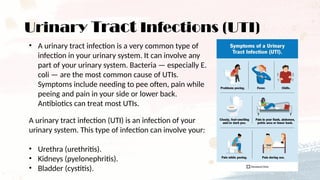
Urinary Tract Infections (UTI)
A urinary tract infection (UTI) is an infection of your
urinary system. This type of infection can involve your:
• Urethra (urethritis).
• Kidneys (pyelonephritis).
• Bladder (cystitis).
• A urinary tract infection is a very common type of
infection in your urinary system. It can involve any
part of your urinary system. Bacteria — especially E.
coli — are the most common cause of UTIs.
Symptoms include needing to pee often, pain while
peeing and pain in your side or lower back.
Antibiotics can treat most UTIs.
1. through the bloodstream, and
2. ascending infection from the lower urinary tract. The
most common route is by ascending infection.
Two routes by which bacteria can reach the
kidneys:
How common are urinary tract infections?
• UTIs are very common, especially in women and people assigned
female at birth (AFAB). About 20% of people AFAB will have a UTI at
some point during their lives. Men and people assigned male at birth
(AMAB) can also get UTIs, as well as children, though they only affect
1% to 2% of children. Healthcare providers treat 8 million to 10 million
people each year for UTIs.
How do you get a urinary tract infection?
• Microorganisms — usually bacteria — cause urinary tract infections.
They typically enter through your urethra and may infect your bladder.
The infection can also travel up from your bladder through your ureters
and eventually infect your kidneys.
Predisposing Factors to UTI
1. Gender- UTI is more common in females especially school-aged girls
and those above 60 years of age.
2. Mechanical Factors- characterization, sexual intercourse, kidney
stones, and improper use of tampons and douches contribute to
contracting UTI.
3. Metabolic Disorders – increased sugar content of urine, due to
diabetes for instance, is conducive for bacterial growth.
4. Anatomic abnormalities of the urinary tract- can lead to obstruction
or incomplete, voiding of urine or reflux of urine.
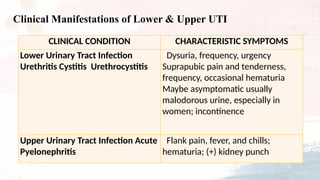
CLINICAL CONDITION CHARACTERISTIC SYMPTOMS
Lower Urinary Tract Infection
Urethritis Cystitis Urethrocystitis
Dysuria, frequency, urgency
Suprapubic pain and tenderness,
frequency, occasional hematuria
Maybe asymptomatic usually
malodorous urine, especially in
women; incontinence
Upper Urinary Tract Infection Acute
Pyelonephritis
Flank pain, fever, and chills;
hematuria; (+) kidney punch
Clinical Manifestations of Lower & Upper UTI
What is the major cause of a urinary tract infection?
• E. coli cause more than 90% of bladder infections. E. coli typically exist
in your lower intestines (large intestine).
Who is at the greatest risk of getting a urinary tract infection?
• Anyone can get a urinary tract infection, but you’re more likely to get a
UTI if you have a vagina. Among the most commonly encountered
infections are urinary tract infections. Community-acquired UTI is more
common in women and are mostly uncomplicated. This is due to the
shorter urethra and the proximity of the anal opening orifice in females.
In hospitalized patients, UTI usually develops as a complication of
prolonged urethral catheterization, making it harder to treat because
most are resistant to various antibiotics.
• Diagnosing a urinary tract infection (UTI) involves a comprehensive approach by
healthcare providers. When experiencing symptoms suggestive of a UTI, such as pain
or burning during urination, it is crucial to consult a healthcare professional. The
diagnostic process typically includes a series of inquiries about symptoms and a
review of medical history, complemented by a physical examination. To confirm the
diagnosis, various tests may be ordered.
• Firstly, a urinalysis involves providing a urine sample for laboratory examination.
Technicians assess the sample for indicators like nitrites, leukocyte esterase, and
white blood cells, which can reveal the presence of a UTI. Additionally, a urine culture
is conducted to identify any bacteria in the sample, aiding healthcare providers in
determining the most effective treatment.
Laboratory Diagosis:
It is important that an appropriate specimen be collected. Urine may be collected
through the following methods:
• 1. Clean voided mid-stream technique
• 2. suprapubic aspiration
• 3. diagnostic catheterization
• 4. from an in-dwelling catheter
• 5. during cystoscopy, ureteral catheterization or retrograde pyelography.
Laboratory Diagosis:
 If possible, the instructions should be both verbal and written. Patients should be instructed
to void the first few milliliters of urine before beginning the collection. In most cases the
patient, male or female, should gently cleanse the urethral meatus with a swab and then
rinse. Although specimens collected randomly during the day are satisfactory, the most
informative specimen is the first urine voided in the morning, overnight urine reflects a
prolonged period without fluid intake, so formed elements are concentrated.
If initial treatments are unsuccessful, further tests may be warranted to investigate
potential underlying issues within the urinary tract. These can include:
1. Ultrasound: This imaging test allows healthcare providers to non-invasively examine
internal organs for signs of disease or injury. It is painless and requires no special
preparation.
2. Computed Tomography (CT) Scan: A more precise imaging technique that involves X-
rays capturing cross-sectional images of the body, creating detailed 3D
representations. This can help identify structural abnormalities or conditions affecting
the urinary tract.
3. Cystoscopy: In cases where deeper examination is necessary, a cystoscopy may be
performed. This involves using a cystoscope, a thin instrument with a lens and light,
to inspect the interior of the bladder through the urethra.
Laboratory Diagosis:
For individuals experiencing recurrent UTIs, healthcare providers may
conduct additional tests to investigate underlying health issues
contributing to the frequent infections. These tests could involve
screening for conditions such as diabetes or abnormalities in the
urinary system. Overall, a thorough diagnostic process is essential for
accurate identification and effective management of UTIs, ensuring the
best possible outcomes for the patient's health.
Laboratory Diagosis:
• Complications arise when prompt and adequate treatment
is not instituted or when the infection is associated with
urinary tract abnormalities. These include bacteremia and
septic shock, severe renal damage, or end-stage chronic
pyelonephritis to renal failure.
Complications of UTI:
For a urinary tract infection (UTI), seeing a healthcare provider is crucial for proper
treatment with antibiotics. It's essential to follow the prescribed antibiotic regimen even
if symptoms improve, as incomplete treatment may lead to a recurrent and more
challenging infection. Individuals prone to UTIs might receive antibiotic
recommendations for daily, alternate-day, post-sex, or symptom-triggered use.
Commonly prescribed antibiotics include Nitrofurantoin, Sulfonamides (sulfa drugs),
Amoxicillin, Cephalosporins, Doxycycline, Fosfomycin, and Quinolones (e.g.,
ciprofloxacin). In some cases, low-dose antibiotics may be suggested to prevent recurring
UTIs, although this practice is not very common due to potential antibiotic resistance and
other infections. Consultation with a healthcare provider is essential for determining the
best treatment approach, especially for those with a history of frequent UTIs.
Treatment and Prevetion:
Sexually Transmitted Infections (STIs)
• STIs are infections passed through sexual contact,
caused by bacteria, viruses, or parasites. Anyone,
regardless of gender or sexual orientation, can be
affected. Common examples include chlamydia,
gonorrhea, syphilis, HPV, herpes, and HIV/AIDS.
Clinical Manifestations of STIs
A. Skin Lesions
1.Ulcerative Lesions
a. Chancre – primary lesion of syphilis; painless and well-delineated.
b. Chancroid – ulcer with ragged edges; painful
c. Genital herpes – start as a vesicle that becomes an ulcer after
rupture
2. Granulomatous reactions – typical of granuloma inguinale
3. Rashes – commonly seen in secondary syphilis, gonorrhea, and
candidiasis.
4. Warty lesions – characteristic of condylomata acuminata and
molluscum contangiosum
Discharge
1. Vaginal discharge – usually accompanied by dysuria,
dyspareunia, and vulvar irritation
a. Trichomonas vaginalis – thin, foamy, foul-
smelling
b. Neisseria gonorrhea – greenish, purulent
c. Candida albicans – thick, cheesy exudates (milk
curd-like appearance)
B. 2. Urethral discharge – in males, any urethral
discharge other than ejaculation is abnormal
Syphilis
1. Syphilis ranks third among the most common sexually
transmitted disease worldwide. It is caused by Treponema
pallidum, a spirochete with fine regular coils with tapered ends. It is
a strict human pathogen. It is sensitive to oxygen. The organism
cannot be grown in cell-free culture medium.
Modes of Transmission
Syphilis can be transmitted: (1) through direct sexual contact; (2)
congenitally; and (3) through blood transfusion
Common STIs
Clinical Findings
1. Adult Syphilis
a. Primary syphilis – a highly infectious stage with abundant organisms that can be
isolated from the ulcer. The primary lesion is called chancre which starts as a hard,
painless papule that later becomes an ulcer with smooth or well-delineated borders.
Within 2 months, the ulcer heals spontaneously even without treatment but will continue
to disseminate through the blood and lymphatics and eventually progress to secondary
syphilis.
b. Secondary syphilis – presents with flu-like symptoms, lymphadenopathy, and a
generalized mucocutaneous rash (including the palms and soles) which can be macular,
popular, or pustular. The characteristics lesion is called condyloma latum (plural:
condylomata lata) which is a painless, wart-like lesion that is highly contagious.
c. Latent syphilis – the stage where the patient is clinically inactive or asymptomatic.
The patient may have reactivation of secondary syphilis or may progress to tertiary
syphilis.
d. Tertiary (late) syphilis – characterized by granulomatous skin lesions (gummas)
that are also found in bones and other tissues as well as other organ involvement such as
2. Congenital syphilis
a. Early congenital syphilis – right after birth, the infected newborn may not present
with any clinical manifestation. Later the newborn may manifest with runny nose
(snuffles), rash, and condylomata lata as well as hepatosplenomegaly.
b. Late congenital syphilis – manifested as 8th
nerve deafness with bone and teeth
deformities (e.g., saddle nose, saber shins, Hutchinson’s teeth, and Mulberry or Moon’s
molars.
Laboratory Diagnosis
1. Darkfield microscopy
2. Serology
a. Non- specific treponemal test – VDRL (Veneral Disease Research Laboratory) and
RPR (Rapid Plasma Reagin)
b. Specific treponemal test – Flourescent Treponemal Antibody Absorption (FTA-ABS)
Treatment and Prevention
The drug of choice is penicillin. Alternative drugs cases of penicillin resistance or
allergy are tetracycline or doxycycline. There is no vaccine for syphilis. It can be
controlled through practice of safe sex and regular testing.
Gonorrhea
2. Gonorrhea is the second most common sexually
transmitted infection worldwide. It occurs only in
humans. For it has no animal reservoir. Females are
asymptomatic carries of the infection. The risk after
single exposure is higher in females (50%0 than in males
(20%). It is caused by Neisseria gonorrhea, gram-negative
diplococci. It is kidney bean-shaped when it is single and coffee
bean-shaped when in pairs. It has pili which are used for attachment
to host cell, motility, transfer of genetic materials and plays an
Clinical Findings:
Infection in Males:
• Often asymptomatic in early stages.
• Restricted to the urethra, leading to purulent urethral discharge and
dysuria.
Infection in Females:
• Primarily infects the cervix.
• Manifests with purulent vaginal discharge, dysuria, and abdominal pain.
• Risk of ascending infections (salpingitis, PID, abscesses), potentially causing
sterility.
Disseminated Infections:
• Occurs in 1%-3% of cases.
• Presents with fever, migratory arthralgia, suppurative arthritis, and pustules
with erythematous base.
• Associated diseases: perihepatitis, purulent conjunctivitis, and ophthalmia
neonatorum in newborns.
Laboratory Diagnosis
Gram-negative intracellular diplococci may be seen using
microscopy. Culture using modified Thayer-Martin medium as
selective medium allows the growth of Neisseria only.
Treatment and Prevention
For uncomplicated gonorrhea, ceftriaxone, ciprofloxacin, cefixime, or
ofloxacin are recommended. For mixed infection with Chlamydia, any of the
aforementioned drugs must be combined with doxycycline or azithromycin.
Prevention of ophthalmia neonatorum is through the use of 1% silver
nitrate or 0.5% erythromycin or tetracycline eye ointment. Education of the
public and screening of sex workers are effective control measures for all
sexually transmitted disease.
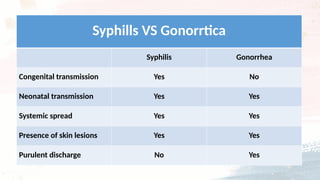
Syphills VS Gonorrtica
Syphilis Gonorrhea
Congenital transmission Yes No
Neonatal transmission Yes Yes
Systemic spread Yes Yes
Presence of skin lesions Yes Yes
Purulent discharge No Yes
3. Lymphogranuloma Venereum (LGV)
LGV is caused by Chlamydia trachomatis, obligate
intracellular bacteria that do not have cell walls. The organism
has a unique process of development involving two forms – the
elementary bodies which are the metabolically – inactive
infectious form and reticulate bodies that are metabolically-
active but non-infectious. Serotypes D to K are associated with
non-gonococcal urethritis, cervicitis, and PID while serotypes
L1, L2, and L3 are associated with lymphogranuloma
venereum.
Clinical Findings
1. Urogenital tract infections
- most are asymptomatic. If symptomatic, it may manifest as cervicitis, endometritis,
urethritis, salpingitis, bartholinitis, perihepatitis, and mucopurulent discharge.
2. Lymphogranuloma venereum
- a primary lesion appears at the site of infection, either a papule or ulcer, which is small,
painless, and heals rapidly. The second stage is manifested by enlarged lymph nodes that
are painful (buboes) and ruptures to form draining fistulas.
Laboratory Diagnosis
The organism can be visualized using Giemsa-stained specimen obtained from scrapings
from the lesion. Culture is the most specific diagnostic method.
Treatment and Prevention
Treatment of the infection involves giving of azithromycin, doxycycline, or erythromycin.
4. Chancroid
The etiologic agent is Haemophilus ducreyi, a gram-
negative coccobacillus. Haemophilus means “blood-
loving” and must grown in culture medium containing
blood. It only requires hemin (X factor)for growth which is
derived form the blood in the culture medium.
Clinical findings
Chancroid presents with a soft, painful papule with an erythematous
base that develop into an ulcer with ragged edges associated with
inguinal lymphadenopathy.
Laboratory Diagnosis
Definitive diagnosis is made through culture on at least two
kinds of enriched media containing vancomycin.
Treatment and Prevention
Antibiotics for treatment include cephalosporins, azithromycin,
erythromycin, or ciprofloxacin.
5. Genital Herpes
Genital herpes is caused by Herpes Simplex Virus
(HSV). It is a DNA virus under the family of Hman
Herpesviridae. There are two types of HSV, type 1 and type
2. The virus is capable of latency in the neurons hence the
occurrence of recurrent infections.
Modes of Transmission
The main mode of transmission is through oral secretions
or sexual contact.
Clinical Findings
Genital herpes is caused by HSV types 1 and 2, but
majority of cases by type 2. Most primary infections are
asymptomatic. The lesions are vesicular which later rupture
resulting to ulcers and are painful with inguinal
lymphadenopathy. The lesions are seen in the vulva, vagina,
cervix, or perianal area and are accompanied by pruritus
and mucoid vaginal discharge.
Recurrent infections are often of shorter duration and less
severe than the primary infection. A consequence of genital
Laboratory Diagnosis
Tzanck smear and histopathologic examination are done to
demonstrate the characteristic cytopathologic effects that includes
Cowdry type A inclusions, syncytia formation, and ballooning of
infected cells. A more specific diagnostic test is PCR or
immunofluorescence.
Treatment and Prevention
The drug of choice is acyclovir but it does not prevent recurrences.
The prevention is the same as with other sexually transmitted diseases.
No vaccine is available.
6. Condylomata Acuminata
This is caused by the Human papillomavirus (HPV) (serotypes 6
and 11). It is a DNA virus under the family of papovaviruses that is
transmitted through sexual contact. HPV is capable of immortalizing
or transforming an infected cell leading to malignancy (usually types
16 and 18).
Clinical Findings
Genital warts or condylomata acuminata occur most commonly in the
genital or perianal areas. The serotypes most commonly associated with
condylomata acuminate are serotypes 6 and 11. Infection of the genital
tract is associated with cervical and penile cancer. The serotypes
predominantly isolated in these case are serotypes 16 and 18.
Laboratory Diagnosis
Histologic examination and Papanicolaou smear.
Treatment and Prevention
Injection of interferon is the preferred and most beneficial treatment.
An HPV vaccine is already available for individuals 11 years old and
above. It is recommended for adolescents and sexually active males and
females. It is either a tetravalent vaccine containing serotypes 6,11,16,
7. Acquired Immunodeficiency Syndrome (AIDS)
AIDS is caused by an RNA virus under the family of
retroviruses called the Human Immunodeficiency Virus (HIV). The
virus possesses the enzyme reverse transcriptase that allows it to
integrate its genome into the host cell’s DNA. It possesses a
glycoprotein known as gp120 on its envelope that binds to the CD4+
receptor on helper T cells and macrophages. Another envelope
glycoprotein, gp41, facilitates the adsorption of the virus to the CD4+ T
cells.
Modes of Transmission
There are several modes of transmission for HIV, namely: (1)
sexual; (2) parenteral (blood transfusion, tattooing, ear piercing,
injections); and (3) transplacental contact. HIV is not transmitted
by kissing, coughing, sneezing, insect bites, or swimming pools.
Individuals at higher risk of developing infection include: (1)
sexually-active individuals especially those with multiple sexual
partners; (2) intravenous drug users (with sharing of needles); (3)
patients receiving blood and blood product transfusions like
hemophiliacs; and (4) newborns of HIV positive mothers.
Clinical Findings
The incubation period of AIDS ranges from less than a year to approximately 10 years, during which
patients remain asymptomatic. Initial symptoms mirror flu-like or infectious mononucleosis-like
manifestations, often accompanied by chronic diarrhea and generalized lymphadenopathy. These
symptoms emerge about a month after exposure to an AIDS patient, followed by a prolonged latency
period of around 8 years. Subsequently, patients exhibit evidence of opportunistic infections and
malignancies, coinciding with a notable decline in CD4+ T cell counts. This phase marks full-blown
AIDS, rendering individuals highly susceptible to opportunistic infections and the associated wasting
syndrome, characterized by diarrhea and weight loss. Noteworthy complications include lesions in the
tongue and mouth (hairy cell oral leukoplakia), AIDS-related dementia, and the hallmark soft tissue
cancer, Kaposi’s sarcoma. Infections with Pneumocystis jiroveci, Mycobacterium avium-intracellulare,
and severe Cytomegalovirus infections further signify a severely compromised immune system. It is
crucial to recognize that AIDS patients typically succumb to opportunistic infections rather than AIDS
itself, with pneumonia due to P. jiroveci being the most common cause of death.
Laboratory Diagnosis
There are several tests available for HIV. Among the very first tests are ELISA
(Enzyme-linked immunosorbent assay) and Western Blot assay which serve as
screening and confirmatory tests, respectively. An early marker of infection is p24
antigen determination. Polymerase chain reaction (PCR) can also be used to
confirm diagnosis.
Treatment and Prevention
Treatment encompasses reverse transcriptase inhibitors like AZT and ddC, often
combined with protease inhibitors such as indinavir or saquinavir. Modern practice
involves administering a combination of drugs to prevent drug resistance, termed
Highly Active Anti-Retroviral Treatment (HAART). Prevention strategies include
public education on transmission and control, blood donor screening, promoting
monogamous relationships and condom use, wearing protective clothing, avoiding
needle sharing, and disinfecting contaminated surfaces and laundry. Notably, due to
the constant mutation of the virus, there is currently no vaccine available for HIV.
8. Pediculosis Pubis (Pubic lice or crabs)
Phthirus pubis is the etiologic agent for pubic lice. The
organism is tiny, about 2 millimeters (mm) long, and visible to
the naked eye. It is a parasitic insect that feeds on the blood of
the host. The lice are primarily seen attached to the public hair
and in coarse hairs found in other parts of the body like the
chest, beard, moustache, and armpits.
Modes of Transmission
Pediculosis pubis is primarily spread through sexual contact. In rare
occasions, it is spread through inanimate objects like towels, linens, or
clothes.
Clinical Findings
The infestation is highly contagious and spreads easily. It is commonly
seen in jails and sexually-active individuals. They readily attach to
human hair and cause intense pruritus and red spots. Secondary
bacterial infection may occur and eczematous lesions may develop.
Diagnosis
Identification of the parasite attached to hair.
Treatment and prevention
Insecticidal creams, lotions, shampoos that contain 1% malathion or permethrin may be
used. The spread of infection can be prevented by treatment of infested individual or
mass control.

LABORATORY and-Sexually-Transmitted.pptx

  • 1.
    Urinary Tract Infections (UTI)and Sexually Transmitted Infections (STI) By: Gena Mae D. Arroyo
  • 2.
    What is theurinary tract? The urinary tract makes and stores pee. It includes your: Kidneys. Kidneys are small, bean-shaped organs on the back of your body, above your hips. Most people have two kidneys. They filter water and waste products from your blood, which becomes pee. Common wastes include urea and creatinine. Ureters. Your ureters are thin tubes that carry pee from your kidneys to your bladder. Bladder. Your bladder is a balloon-like organ that stores pee before it leaves your body. Urethra. The urethra is a tube that carries pee from your bladder to the outside of your body.
  • 3.
    Urinary Tract Infections(UTI) A urinary tract infection (UTI) is an infection of your urinary system. This type of infection can involve your: • Urethra (urethritis). • Kidneys (pyelonephritis). • Bladder (cystitis). • A urinary tract infection is a very common type of infection in your urinary system. It can involve any part of your urinary system. Bacteria — especially E. coli — are the most common cause of UTIs. Symptoms include needing to pee often, pain while peeing and pain in your side or lower back. Antibiotics can treat most UTIs.
  • 4.
    1. through thebloodstream, and 2. ascending infection from the lower urinary tract. The most common route is by ascending infection. Two routes by which bacteria can reach the kidneys:
  • 5.
    How common areurinary tract infections? • UTIs are very common, especially in women and people assigned female at birth (AFAB). About 20% of people AFAB will have a UTI at some point during their lives. Men and people assigned male at birth (AMAB) can also get UTIs, as well as children, though they only affect 1% to 2% of children. Healthcare providers treat 8 million to 10 million people each year for UTIs. How do you get a urinary tract infection? • Microorganisms — usually bacteria — cause urinary tract infections. They typically enter through your urethra and may infect your bladder. The infection can also travel up from your bladder through your ureters and eventually infect your kidneys.
  • 6.
    Predisposing Factors toUTI 1. Gender- UTI is more common in females especially school-aged girls and those above 60 years of age. 2. Mechanical Factors- characterization, sexual intercourse, kidney stones, and improper use of tampons and douches contribute to contracting UTI. 3. Metabolic Disorders – increased sugar content of urine, due to diabetes for instance, is conducive for bacterial growth. 4. Anatomic abnormalities of the urinary tract- can lead to obstruction or incomplete, voiding of urine or reflux of urine.
  • 7.
    CLINICAL CONDITION CHARACTERISTICSYMPTOMS Lower Urinary Tract Infection Urethritis Cystitis Urethrocystitis Dysuria, frequency, urgency Suprapubic pain and tenderness, frequency, occasional hematuria Maybe asymptomatic usually malodorous urine, especially in women; incontinence Upper Urinary Tract Infection Acute Pyelonephritis Flank pain, fever, and chills; hematuria; (+) kidney punch Clinical Manifestations of Lower & Upper UTI
  • 8.
    What is themajor cause of a urinary tract infection? • E. coli cause more than 90% of bladder infections. E. coli typically exist in your lower intestines (large intestine). Who is at the greatest risk of getting a urinary tract infection? • Anyone can get a urinary tract infection, but you’re more likely to get a UTI if you have a vagina. Among the most commonly encountered infections are urinary tract infections. Community-acquired UTI is more common in women and are mostly uncomplicated. This is due to the shorter urethra and the proximity of the anal opening orifice in females. In hospitalized patients, UTI usually develops as a complication of prolonged urethral catheterization, making it harder to treat because most are resistant to various antibiotics.
  • 9.
    • Diagnosing aurinary tract infection (UTI) involves a comprehensive approach by healthcare providers. When experiencing symptoms suggestive of a UTI, such as pain or burning during urination, it is crucial to consult a healthcare professional. The diagnostic process typically includes a series of inquiries about symptoms and a review of medical history, complemented by a physical examination. To confirm the diagnosis, various tests may be ordered. • Firstly, a urinalysis involves providing a urine sample for laboratory examination. Technicians assess the sample for indicators like nitrites, leukocyte esterase, and white blood cells, which can reveal the presence of a UTI. Additionally, a urine culture is conducted to identify any bacteria in the sample, aiding healthcare providers in determining the most effective treatment. Laboratory Diagosis:
  • 10.
    It is importantthat an appropriate specimen be collected. Urine may be collected through the following methods: • 1. Clean voided mid-stream technique • 2. suprapubic aspiration • 3. diagnostic catheterization • 4. from an in-dwelling catheter • 5. during cystoscopy, ureteral catheterization or retrograde pyelography. Laboratory Diagosis:  If possible, the instructions should be both verbal and written. Patients should be instructed to void the first few milliliters of urine before beginning the collection. In most cases the patient, male or female, should gently cleanse the urethral meatus with a swab and then rinse. Although specimens collected randomly during the day are satisfactory, the most informative specimen is the first urine voided in the morning, overnight urine reflects a prolonged period without fluid intake, so formed elements are concentrated.
  • 11.
    If initial treatmentsare unsuccessful, further tests may be warranted to investigate potential underlying issues within the urinary tract. These can include: 1. Ultrasound: This imaging test allows healthcare providers to non-invasively examine internal organs for signs of disease or injury. It is painless and requires no special preparation. 2. Computed Tomography (CT) Scan: A more precise imaging technique that involves X- rays capturing cross-sectional images of the body, creating detailed 3D representations. This can help identify structural abnormalities or conditions affecting the urinary tract. 3. Cystoscopy: In cases where deeper examination is necessary, a cystoscopy may be performed. This involves using a cystoscope, a thin instrument with a lens and light, to inspect the interior of the bladder through the urethra. Laboratory Diagosis:
  • 12.
    For individuals experiencingrecurrent UTIs, healthcare providers may conduct additional tests to investigate underlying health issues contributing to the frequent infections. These tests could involve screening for conditions such as diabetes or abnormalities in the urinary system. Overall, a thorough diagnostic process is essential for accurate identification and effective management of UTIs, ensuring the best possible outcomes for the patient's health. Laboratory Diagosis:
  • 13.
    • Complications arisewhen prompt and adequate treatment is not instituted or when the infection is associated with urinary tract abnormalities. These include bacteremia and septic shock, severe renal damage, or end-stage chronic pyelonephritis to renal failure. Complications of UTI:
  • 14.
    For a urinarytract infection (UTI), seeing a healthcare provider is crucial for proper treatment with antibiotics. It's essential to follow the prescribed antibiotic regimen even if symptoms improve, as incomplete treatment may lead to a recurrent and more challenging infection. Individuals prone to UTIs might receive antibiotic recommendations for daily, alternate-day, post-sex, or symptom-triggered use. Commonly prescribed antibiotics include Nitrofurantoin, Sulfonamides (sulfa drugs), Amoxicillin, Cephalosporins, Doxycycline, Fosfomycin, and Quinolones (e.g., ciprofloxacin). In some cases, low-dose antibiotics may be suggested to prevent recurring UTIs, although this practice is not very common due to potential antibiotic resistance and other infections. Consultation with a healthcare provider is essential for determining the best treatment approach, especially for those with a history of frequent UTIs. Treatment and Prevetion:
  • 15.
    Sexually Transmitted Infections(STIs) • STIs are infections passed through sexual contact, caused by bacteria, viruses, or parasites. Anyone, regardless of gender or sexual orientation, can be affected. Common examples include chlamydia, gonorrhea, syphilis, HPV, herpes, and HIV/AIDS.
  • 16.
    Clinical Manifestations ofSTIs A. Skin Lesions 1.Ulcerative Lesions a. Chancre – primary lesion of syphilis; painless and well-delineated. b. Chancroid – ulcer with ragged edges; painful c. Genital herpes – start as a vesicle that becomes an ulcer after rupture 2. Granulomatous reactions – typical of granuloma inguinale 3. Rashes – commonly seen in secondary syphilis, gonorrhea, and candidiasis. 4. Warty lesions – characteristic of condylomata acuminata and molluscum contangiosum
  • 17.
    Discharge 1. Vaginal discharge– usually accompanied by dysuria, dyspareunia, and vulvar irritation a. Trichomonas vaginalis – thin, foamy, foul- smelling b. Neisseria gonorrhea – greenish, purulent c. Candida albicans – thick, cheesy exudates (milk curd-like appearance) B. 2. Urethral discharge – in males, any urethral discharge other than ejaculation is abnormal
  • 18.
    Syphilis 1. Syphilis ranksthird among the most common sexually transmitted disease worldwide. It is caused by Treponema pallidum, a spirochete with fine regular coils with tapered ends. It is a strict human pathogen. It is sensitive to oxygen. The organism cannot be grown in cell-free culture medium. Modes of Transmission Syphilis can be transmitted: (1) through direct sexual contact; (2) congenitally; and (3) through blood transfusion Common STIs
  • 19.
    Clinical Findings 1. AdultSyphilis a. Primary syphilis – a highly infectious stage with abundant organisms that can be isolated from the ulcer. The primary lesion is called chancre which starts as a hard, painless papule that later becomes an ulcer with smooth or well-delineated borders. Within 2 months, the ulcer heals spontaneously even without treatment but will continue to disseminate through the blood and lymphatics and eventually progress to secondary syphilis. b. Secondary syphilis – presents with flu-like symptoms, lymphadenopathy, and a generalized mucocutaneous rash (including the palms and soles) which can be macular, popular, or pustular. The characteristics lesion is called condyloma latum (plural: condylomata lata) which is a painless, wart-like lesion that is highly contagious. c. Latent syphilis – the stage where the patient is clinically inactive or asymptomatic. The patient may have reactivation of secondary syphilis or may progress to tertiary syphilis. d. Tertiary (late) syphilis – characterized by granulomatous skin lesions (gummas) that are also found in bones and other tissues as well as other organ involvement such as
  • 20.
    2. Congenital syphilis a.Early congenital syphilis – right after birth, the infected newborn may not present with any clinical manifestation. Later the newborn may manifest with runny nose (snuffles), rash, and condylomata lata as well as hepatosplenomegaly. b. Late congenital syphilis – manifested as 8th nerve deafness with bone and teeth deformities (e.g., saddle nose, saber shins, Hutchinson’s teeth, and Mulberry or Moon’s molars. Laboratory Diagnosis 1. Darkfield microscopy 2. Serology a. Non- specific treponemal test – VDRL (Veneral Disease Research Laboratory) and RPR (Rapid Plasma Reagin) b. Specific treponemal test – Flourescent Treponemal Antibody Absorption (FTA-ABS) Treatment and Prevention The drug of choice is penicillin. Alternative drugs cases of penicillin resistance or allergy are tetracycline or doxycycline. There is no vaccine for syphilis. It can be controlled through practice of safe sex and regular testing.
  • 21.
    Gonorrhea 2. Gonorrhea isthe second most common sexually transmitted infection worldwide. It occurs only in humans. For it has no animal reservoir. Females are asymptomatic carries of the infection. The risk after single exposure is higher in females (50%0 than in males (20%). It is caused by Neisseria gonorrhea, gram-negative diplococci. It is kidney bean-shaped when it is single and coffee bean-shaped when in pairs. It has pili which are used for attachment to host cell, motility, transfer of genetic materials and plays an
  • 22.
    Clinical Findings: Infection inMales: • Often asymptomatic in early stages. • Restricted to the urethra, leading to purulent urethral discharge and dysuria. Infection in Females: • Primarily infects the cervix. • Manifests with purulent vaginal discharge, dysuria, and abdominal pain. • Risk of ascending infections (salpingitis, PID, abscesses), potentially causing sterility. Disseminated Infections: • Occurs in 1%-3% of cases. • Presents with fever, migratory arthralgia, suppurative arthritis, and pustules with erythematous base. • Associated diseases: perihepatitis, purulent conjunctivitis, and ophthalmia neonatorum in newborns.
  • 23.
    Laboratory Diagnosis Gram-negative intracellulardiplococci may be seen using microscopy. Culture using modified Thayer-Martin medium as selective medium allows the growth of Neisseria only. Treatment and Prevention For uncomplicated gonorrhea, ceftriaxone, ciprofloxacin, cefixime, or ofloxacin are recommended. For mixed infection with Chlamydia, any of the aforementioned drugs must be combined with doxycycline or azithromycin. Prevention of ophthalmia neonatorum is through the use of 1% silver nitrate or 0.5% erythromycin or tetracycline eye ointment. Education of the public and screening of sex workers are effective control measures for all sexually transmitted disease.
  • 24.
    Syphills VS Gonorrtica SyphilisGonorrhea Congenital transmission Yes No Neonatal transmission Yes Yes Systemic spread Yes Yes Presence of skin lesions Yes Yes Purulent discharge No Yes
  • 25.
    3. Lymphogranuloma Venereum(LGV) LGV is caused by Chlamydia trachomatis, obligate intracellular bacteria that do not have cell walls. The organism has a unique process of development involving two forms – the elementary bodies which are the metabolically – inactive infectious form and reticulate bodies that are metabolically- active but non-infectious. Serotypes D to K are associated with non-gonococcal urethritis, cervicitis, and PID while serotypes L1, L2, and L3 are associated with lymphogranuloma venereum.
  • 26.
    Clinical Findings 1. Urogenitaltract infections - most are asymptomatic. If symptomatic, it may manifest as cervicitis, endometritis, urethritis, salpingitis, bartholinitis, perihepatitis, and mucopurulent discharge. 2. Lymphogranuloma venereum - a primary lesion appears at the site of infection, either a papule or ulcer, which is small, painless, and heals rapidly. The second stage is manifested by enlarged lymph nodes that are painful (buboes) and ruptures to form draining fistulas. Laboratory Diagnosis The organism can be visualized using Giemsa-stained specimen obtained from scrapings from the lesion. Culture is the most specific diagnostic method. Treatment and Prevention Treatment of the infection involves giving of azithromycin, doxycycline, or erythromycin.
  • 27.
    4. Chancroid The etiologicagent is Haemophilus ducreyi, a gram- negative coccobacillus. Haemophilus means “blood- loving” and must grown in culture medium containing blood. It only requires hemin (X factor)for growth which is derived form the blood in the culture medium.
  • 28.
    Clinical findings Chancroid presentswith a soft, painful papule with an erythematous base that develop into an ulcer with ragged edges associated with inguinal lymphadenopathy. Laboratory Diagnosis Definitive diagnosis is made through culture on at least two kinds of enriched media containing vancomycin. Treatment and Prevention Antibiotics for treatment include cephalosporins, azithromycin, erythromycin, or ciprofloxacin.
  • 29.
    5. Genital Herpes Genitalherpes is caused by Herpes Simplex Virus (HSV). It is a DNA virus under the family of Hman Herpesviridae. There are two types of HSV, type 1 and type 2. The virus is capable of latency in the neurons hence the occurrence of recurrent infections.
  • 30.
    Modes of Transmission Themain mode of transmission is through oral secretions or sexual contact. Clinical Findings Genital herpes is caused by HSV types 1 and 2, but majority of cases by type 2. Most primary infections are asymptomatic. The lesions are vesicular which later rupture resulting to ulcers and are painful with inguinal lymphadenopathy. The lesions are seen in the vulva, vagina, cervix, or perianal area and are accompanied by pruritus and mucoid vaginal discharge. Recurrent infections are often of shorter duration and less severe than the primary infection. A consequence of genital
  • 31.
    Laboratory Diagnosis Tzanck smearand histopathologic examination are done to demonstrate the characteristic cytopathologic effects that includes Cowdry type A inclusions, syncytia formation, and ballooning of infected cells. A more specific diagnostic test is PCR or immunofluorescence. Treatment and Prevention The drug of choice is acyclovir but it does not prevent recurrences. The prevention is the same as with other sexually transmitted diseases. No vaccine is available.
  • 32.
    6. Condylomata Acuminata Thisis caused by the Human papillomavirus (HPV) (serotypes 6 and 11). It is a DNA virus under the family of papovaviruses that is transmitted through sexual contact. HPV is capable of immortalizing or transforming an infected cell leading to malignancy (usually types 16 and 18).
  • 33.
    Clinical Findings Genital wartsor condylomata acuminata occur most commonly in the genital or perianal areas. The serotypes most commonly associated with condylomata acuminate are serotypes 6 and 11. Infection of the genital tract is associated with cervical and penile cancer. The serotypes predominantly isolated in these case are serotypes 16 and 18. Laboratory Diagnosis Histologic examination and Papanicolaou smear. Treatment and Prevention Injection of interferon is the preferred and most beneficial treatment. An HPV vaccine is already available for individuals 11 years old and above. It is recommended for adolescents and sexually active males and females. It is either a tetravalent vaccine containing serotypes 6,11,16,
  • 34.
    7. Acquired ImmunodeficiencySyndrome (AIDS) AIDS is caused by an RNA virus under the family of retroviruses called the Human Immunodeficiency Virus (HIV). The virus possesses the enzyme reverse transcriptase that allows it to integrate its genome into the host cell’s DNA. It possesses a glycoprotein known as gp120 on its envelope that binds to the CD4+ receptor on helper T cells and macrophages. Another envelope glycoprotein, gp41, facilitates the adsorption of the virus to the CD4+ T cells.
  • 35.
    Modes of Transmission Thereare several modes of transmission for HIV, namely: (1) sexual; (2) parenteral (blood transfusion, tattooing, ear piercing, injections); and (3) transplacental contact. HIV is not transmitted by kissing, coughing, sneezing, insect bites, or swimming pools. Individuals at higher risk of developing infection include: (1) sexually-active individuals especially those with multiple sexual partners; (2) intravenous drug users (with sharing of needles); (3) patients receiving blood and blood product transfusions like hemophiliacs; and (4) newborns of HIV positive mothers.
  • 36.
    Clinical Findings The incubationperiod of AIDS ranges from less than a year to approximately 10 years, during which patients remain asymptomatic. Initial symptoms mirror flu-like or infectious mononucleosis-like manifestations, often accompanied by chronic diarrhea and generalized lymphadenopathy. These symptoms emerge about a month after exposure to an AIDS patient, followed by a prolonged latency period of around 8 years. Subsequently, patients exhibit evidence of opportunistic infections and malignancies, coinciding with a notable decline in CD4+ T cell counts. This phase marks full-blown AIDS, rendering individuals highly susceptible to opportunistic infections and the associated wasting syndrome, characterized by diarrhea and weight loss. Noteworthy complications include lesions in the tongue and mouth (hairy cell oral leukoplakia), AIDS-related dementia, and the hallmark soft tissue cancer, Kaposi’s sarcoma. Infections with Pneumocystis jiroveci, Mycobacterium avium-intracellulare, and severe Cytomegalovirus infections further signify a severely compromised immune system. It is crucial to recognize that AIDS patients typically succumb to opportunistic infections rather than AIDS itself, with pneumonia due to P. jiroveci being the most common cause of death.
  • 37.
    Laboratory Diagnosis There areseveral tests available for HIV. Among the very first tests are ELISA (Enzyme-linked immunosorbent assay) and Western Blot assay which serve as screening and confirmatory tests, respectively. An early marker of infection is p24 antigen determination. Polymerase chain reaction (PCR) can also be used to confirm diagnosis. Treatment and Prevention Treatment encompasses reverse transcriptase inhibitors like AZT and ddC, often combined with protease inhibitors such as indinavir or saquinavir. Modern practice involves administering a combination of drugs to prevent drug resistance, termed Highly Active Anti-Retroviral Treatment (HAART). Prevention strategies include public education on transmission and control, blood donor screening, promoting monogamous relationships and condom use, wearing protective clothing, avoiding needle sharing, and disinfecting contaminated surfaces and laundry. Notably, due to the constant mutation of the virus, there is currently no vaccine available for HIV.
  • 38.
    8. Pediculosis Pubis(Pubic lice or crabs) Phthirus pubis is the etiologic agent for pubic lice. The organism is tiny, about 2 millimeters (mm) long, and visible to the naked eye. It is a parasitic insect that feeds on the blood of the host. The lice are primarily seen attached to the public hair and in coarse hairs found in other parts of the body like the chest, beard, moustache, and armpits.
  • 39.
    Modes of Transmission Pediculosispubis is primarily spread through sexual contact. In rare occasions, it is spread through inanimate objects like towels, linens, or clothes. Clinical Findings The infestation is highly contagious and spreads easily. It is commonly seen in jails and sexually-active individuals. They readily attach to human hair and cause intense pruritus and red spots. Secondary bacterial infection may occur and eczematous lesions may develop. Diagnosis Identification of the parasite attached to hair. Treatment and prevention Insecticidal creams, lotions, shampoos that contain 1% malathion or permethrin may be used. The spread of infection can be prevented by treatment of infested individual or mass control.

Editor's Notes