• Nucleic Acids are very long, thread-like
polymers, made up of a linear array of monomers
called nucleotides.
• Nucleic acids vary in size in nature
• tRNA molecules contain as few as 80 nucleotides
• Eukaryotic chromosomes contain as many as
100,000,000 nucleotides.
Two types of nucleic acids
• Deoxyribonucleic acid (DNA)
• Ribonucleic acid (RNA)
DNA
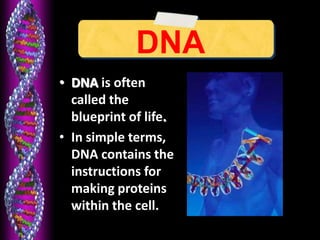
• DNA is often
called the
blueprint of life.
• In simple terms,
DNA contains the
instructions for
making proteins
within the cell.
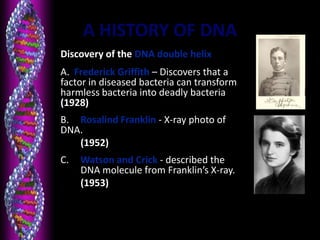
A HISTORY OF DNA
• Discovery of the DNA double helix
A. Frederick Griffith – Discovers that a
factor in diseased bacteria can transform
harmless bacteria into deadly bacteria
(1928)
B. Rosalind Franklin - X-ray photo of
DNA.
(1952)
C. Watson and Crick - described the
DNA molecule from Franklin’s X-ray.
(1953)
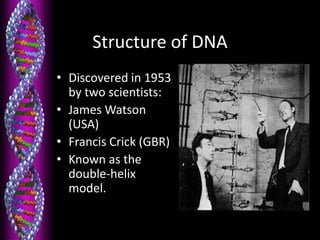
Structure of DNA
• Discovered in 1953
by two scientists:
• James Watson
(USA)
• Francis Crick (GBR)
• Known as the
double-helix
model.
RNA
RNA
ribonucleic acid
3 types of RNA in a cell
•Ribosomal RNAs (rRNA) are components of
ribosomes
•Messenger RNAs (mRNA) carry genetic
information
•Transfer RNAs (tRNA) are adapter molecules in
translation
RNA
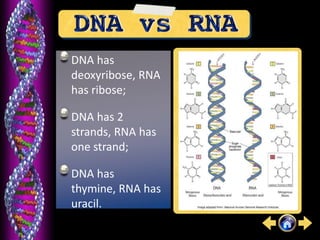
DNA has
deoxyribose, RNA
has ribose;
DNA has 2
strands, RNA has
one strand;
DNA has
thymine, RNA has
uracil.
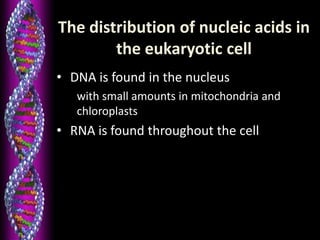
The distribution of nucleic acids in
the eukaryotic cell
• DNA is found in the nucleus
with small amounts in mitochondria and
chloroplasts
• RNA is found throughout the cell
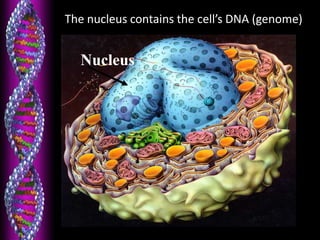
The nucleus contains the cell’s DNA (genome)
Nucleus
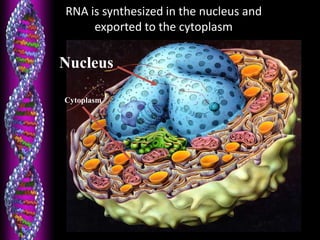
RNA is synthesized in the nucleus and
exported to the cytoplasm
Nucleus
Cytoplasm
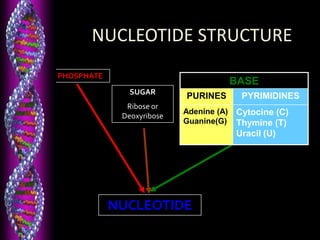
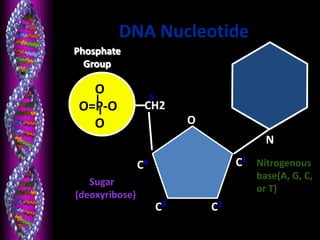
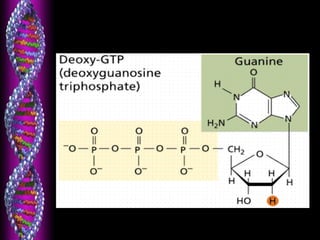
NUCLEOTIDE STRUCTURE
PHOSPHATE
SUGAR
Ribose or
Deoxyribose
NUCLEOTIDE
BASE
PURINES PYRIMIDINES
Adenine (A)
Guanine(G)
Cytocine (C)
Thymine (T)
Uracil (U)
DNA Nucleotide
O
O=P-O
O
Phosphate
Group
N
Nitrogenous
base(A, G, C,
or T)
CH2
O
C1
C4
C3 C2
5
Sugar
(deoxyribose)
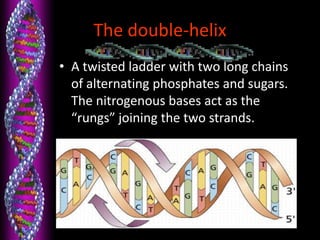
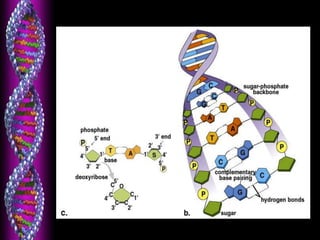
The double-helix
• A twisted ladder with two long chains
of alternating phosphates and sugars.
The nitrogenous bases act as the
“rungs” joining the two strands.
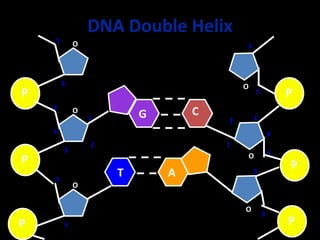
DNA Double Helix
P
P
P
O
O
O
1
2
3
4
5
5
3
3
5
P
P
P
O
O
O
1
2 3
4
5
5
3
5
3
G C
T A
17
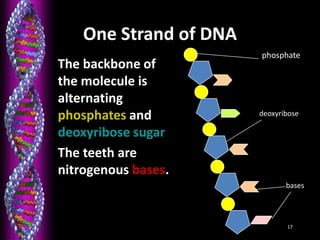
One Strand of DNA
• The backbone of
the molecule is
alternating
phosphates and
deoxyribose sugar
• The teeth are
nitrogenous bases.
phosphate
deoxyribose
bases
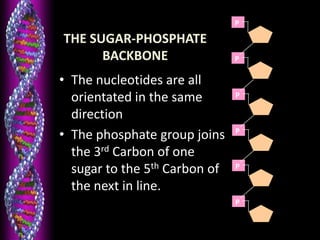
THE SUGAR-PHOSPHATE
BACKBONE
• The nucleotides are all
orientated in the same
direction
• The phosphate group joins
the 3rd Carbon of one
sugar to the 5th Carbon of
the next in line.
P
P
P
P
P
P
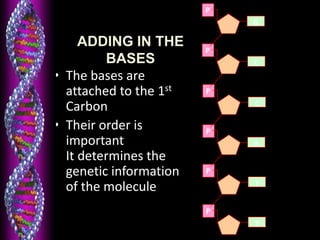
ADDING IN THE
BASES
• The bases are
attached to the 1st
Carbon
• Their order is
important
It determines the
genetic information
of the molecule
P
P
P
P
P
P
G
C
C
A
T
T
20
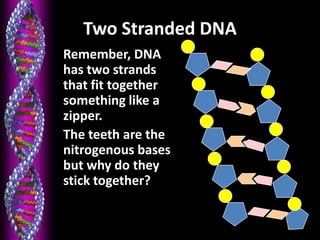
Two Stranded DNA
• Remember, DNA
has two strands
that fit together
something like a
zipper.
• The teeth are the
nitrogenous bases
but why do they
stick together?
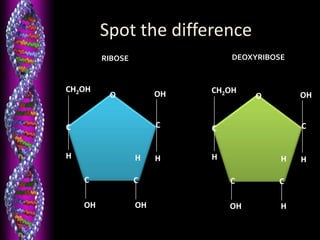
RIBOSE DEOXYRIBOSE
CH2OH
H
OH
C
C
OH OH
C
O
H HH
C
CH2OH
H
OH
C
C
OH H
C
O
H HH
C
Spot the difference
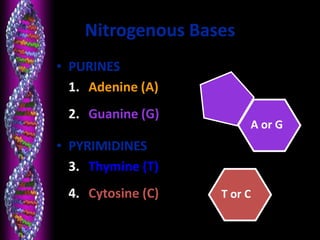
Nitrogenous Bases
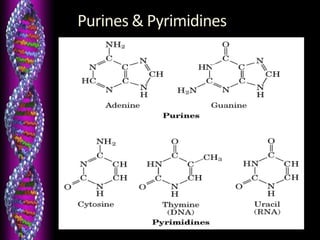
• PURINES
1. Adenine (A)
2. Guanine (G)
• PYRIMIDINES
3. Thymine (T)
4. Cytosine (C) T or C
A or G
23
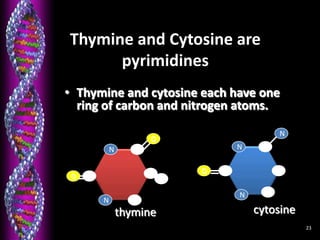
Thymine and Cytosine are
pyrimidines
• Thymine and cytosine each have one
ring of carbon and nitrogen atoms.
C
N
N
O
N
cytosine
C
N
N
O
O
thymine
C
C
C
C
C
C
C
24
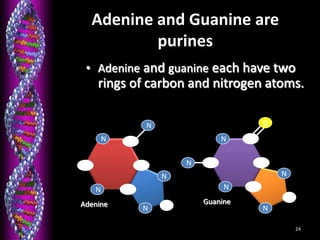
Adenine and Guanine are
purines
• Adenine and guanine each have two
rings of carbon and nitrogen atoms.
C
C
C
C
N
N
N
Adenine
N
N
C
C
C
C
C
N
N
O
N
Guanine
N
N
C
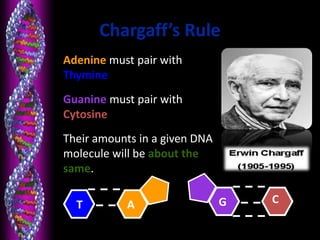
Chargaff’s Rule
• Adenine must pair with
Thymine
• Guanine must pair with
Cytosine
• Their amounts in a given DNA
molecule will be about the
same.
G CT A
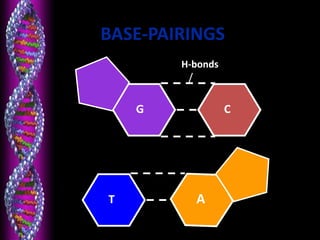
BASE-PAIRINGS
CG
H-bonds
T A
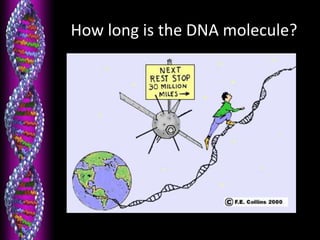
How long is the DNA molecule?
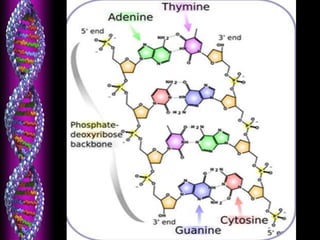
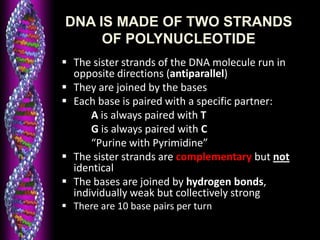
DNA IS MADE OF TWO STRANDS
OF POLYNUCLEOTIDE
 The sister strands of the DNA molecule run in
opposite directions (antiparallel)
 They are joined by the bases
 Each base is paired with a specific partner:
A is always paired with T
G is always paired with C
“Purine with Pyrimidine”
 The sister strands are complementary but not
identical
 The bases are joined by hydrogen bonds,
individually weak but collectively strong
 There are 10 base pairs per turn
Structure of Nucleotide Bases
Purines & Pyrimidines
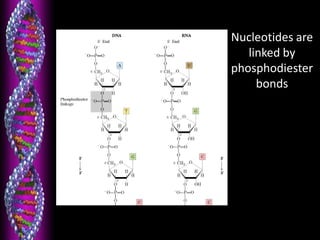
Nucleotides are
linked by
phosphodiester
bonds
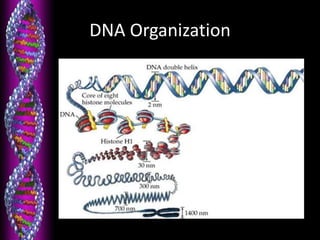
DNA Organization
1. Try the problem from this link:
http://www.dnaftb.org/dnaftb/19/concept/index.html
Self-test
2. Use the questions on the following
slides
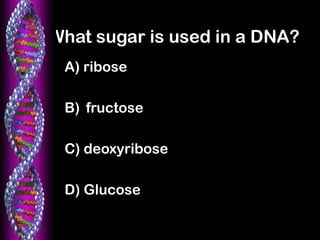
What sugar is used in a DNA?
A) ribose
B) fructose
C) deoxyribose
D) Glucose
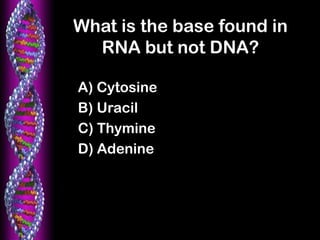
What is the base found in
RNA but not DNA?
A) Cytosine
B) Uracil
C) Thymine
D) Adenine
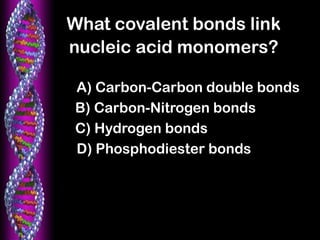
What covalent bonds link
nucleic acid monomers?
A) Carbon-Carbon double bonds
B) Carbon-Nitrogen bonds
C) Hydrogen bonds
D) Phosphodiester bonds
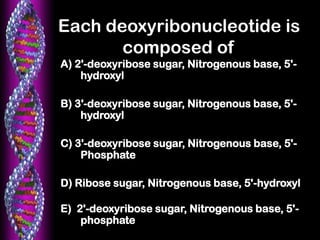
Each deoxyribonucleotide is
composed of
A) 2'-deoxyribose sugar, Nitrogenous base, 5'-
hydroxyl
B) 3'-deoxyribose sugar, Nitrogenous base, 5'-
hydroxyl
C) 3'-deoxyribose sugar, Nitrogenous base, 5'-
Phosphate
D) Ribose sugar, Nitrogenous base, 5'-hydroxyl
E) 2'-deoxyribose sugar, Nitrogenous base, 5'-
phosphate
Deoxyribonucleic Acid ppt

Deoxyribonucleic Acid ppt

  • 2.
    • Nucleic Acidsare very long, thread-like polymers, made up of a linear array of monomers called nucleotides. • Nucleic acids vary in size in nature • tRNA molecules contain as few as 80 nucleotides • Eukaryotic chromosomes contain as many as 100,000,000 nucleotides.
  • 3.
    Two types ofnucleic acids • Deoxyribonucleic acid (DNA) • Ribonucleic acid (RNA)
  • 4.
    DNA • DNA isoften called the blueprint of life. • In simple terms, DNA contains the instructions for making proteins within the cell.
  • 5.
    A HISTORY OFDNA • Discovery of the DNA double helix A. Frederick Griffith – Discovers that a factor in diseased bacteria can transform harmless bacteria into deadly bacteria (1928) B. Rosalind Franklin - X-ray photo of DNA. (1952) C. Watson and Crick - described the DNA molecule from Franklin’s X-ray. (1953)
  • 6.
    Structure of DNA •Discovered in 1953 by two scientists: • James Watson (USA) • Francis Crick (GBR) • Known as the double-helix model.
  • 7.
    RNA RNA ribonucleic acid 3 typesof RNA in a cell •Ribosomal RNAs (rRNA) are components of ribosomes •Messenger RNAs (mRNA) carry genetic information •Transfer RNAs (tRNA) are adapter molecules in translation RNA
  • 8.
    DNA has deoxyribose, RNA hasribose; DNA has 2 strands, RNA has one strand; DNA has thymine, RNA has uracil.
  • 9.
    The distribution ofnucleic acids in the eukaryotic cell • DNA is found in the nucleus with small amounts in mitochondria and chloroplasts • RNA is found throughout the cell
  • 10.
    The nucleus containsthe cell’s DNA (genome) Nucleus
  • 11.
    RNA is synthesizedin the nucleus and exported to the cytoplasm Nucleus Cytoplasm
  • 12.
    NUCLEOTIDE STRUCTURE PHOSPHATE SUGAR Ribose or Deoxyribose NUCLEOTIDE BASE PURINESPYRIMIDINES Adenine (A) Guanine(G) Cytocine (C) Thymine (T) Uracil (U)
  • 13.
    DNA Nucleotide O O=P-O O Phosphate Group N Nitrogenous base(A, G,C, or T) CH2 O C1 C4 C3 C2 5 Sugar (deoxyribose)
  • 15.
    The double-helix • Atwisted ladder with two long chains of alternating phosphates and sugars. The nitrogenous bases act as the “rungs” joining the two strands.
  • 16.
  • 17.
    17 One Strand ofDNA • The backbone of the molecule is alternating phosphates and deoxyribose sugar • The teeth are nitrogenous bases. phosphate deoxyribose bases
  • 18.
    THE SUGAR-PHOSPHATE BACKBONE • Thenucleotides are all orientated in the same direction • The phosphate group joins the 3rd Carbon of one sugar to the 5th Carbon of the next in line. P P P P P P
  • 19.
    ADDING IN THE BASES •The bases are attached to the 1st Carbon • Their order is important It determines the genetic information of the molecule P P P P P P G C C A T T
  • 20.
    20 Two Stranded DNA •Remember, DNA has two strands that fit together something like a zipper. • The teeth are the nitrogenous bases but why do they stick together?
  • 21.
    RIBOSE DEOXYRIBOSE CH2OH H OH C C OH OH C O HHH C CH2OH H OH C C OH H C O H HH C Spot the difference
  • 22.
    Nitrogenous Bases • PURINES 1.Adenine (A) 2. Guanine (G) • PYRIMIDINES 3. Thymine (T) 4. Cytosine (C) T or C A or G
  • 23.
    23 Thymine and Cytosineare pyrimidines • Thymine and cytosine each have one ring of carbon and nitrogen atoms. C N N O N cytosine C N N O O thymine C C C C C C C
  • 24.
    24 Adenine and Guanineare purines • Adenine and guanine each have two rings of carbon and nitrogen atoms. C C C C N N N Adenine N N C C C C C N N O N Guanine N N C
  • 25.
    Chargaff’s Rule • Adeninemust pair with Thymine • Guanine must pair with Cytosine • Their amounts in a given DNA molecule will be about the same. G CT A
  • 26.
  • 28.
    How long isthe DNA molecule?
  • 30.
    DNA IS MADEOF TWO STRANDS OF POLYNUCLEOTIDE  The sister strands of the DNA molecule run in opposite directions (antiparallel)  They are joined by the bases  Each base is paired with a specific partner: A is always paired with T G is always paired with C “Purine with Pyrimidine”  The sister strands are complementary but not identical  The bases are joined by hydrogen bonds, individually weak but collectively strong  There are 10 base pairs per turn
  • 31.
    Structure of NucleotideBases Purines & Pyrimidines
  • 32.
  • 33.
  • 34.
    1. Try theproblem from this link: http://www.dnaftb.org/dnaftb/19/concept/index.html Self-test 2. Use the questions on the following slides
  • 35.
    What sugar isused in a DNA? A) ribose B) fructose C) deoxyribose D) Glucose
  • 36.
    What is thebase found in RNA but not DNA? A) Cytosine B) Uracil C) Thymine D) Adenine
  • 37.
    What covalent bondslink nucleic acid monomers? A) Carbon-Carbon double bonds B) Carbon-Nitrogen bonds C) Hydrogen bonds D) Phosphodiester bonds
  • 38.
    Each deoxyribonucleotide is composedof A) 2'-deoxyribose sugar, Nitrogenous base, 5'- hydroxyl B) 3'-deoxyribose sugar, Nitrogenous base, 5'- hydroxyl C) 3'-deoxyribose sugar, Nitrogenous base, 5'- Phosphate D) Ribose sugar, Nitrogenous base, 5'-hydroxyl E) 2'-deoxyribose sugar, Nitrogenous base, 5'- phosphate