
Diverticulitis
At the end of this lecture the students should be
able to:----
• Definition
• Pathophysiology
• Epidemiology
• Clinical presentation
• Differential
• Imaging
• Laboratory
• Treatment
• Reasons for surgery
Learning objectives
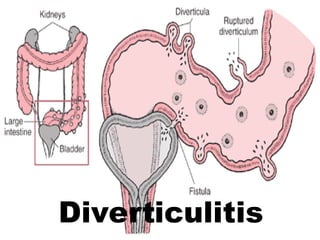
Diverticulitis
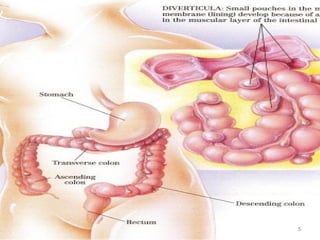
• Many people have small pouches in their
colons that bulge outward through weak
spots, like an inner tube that pokes
through weak places in a tire. Each pouch
is called a diverticulum (pl. diverticula).
• Usually 5-10mm in size
Definition
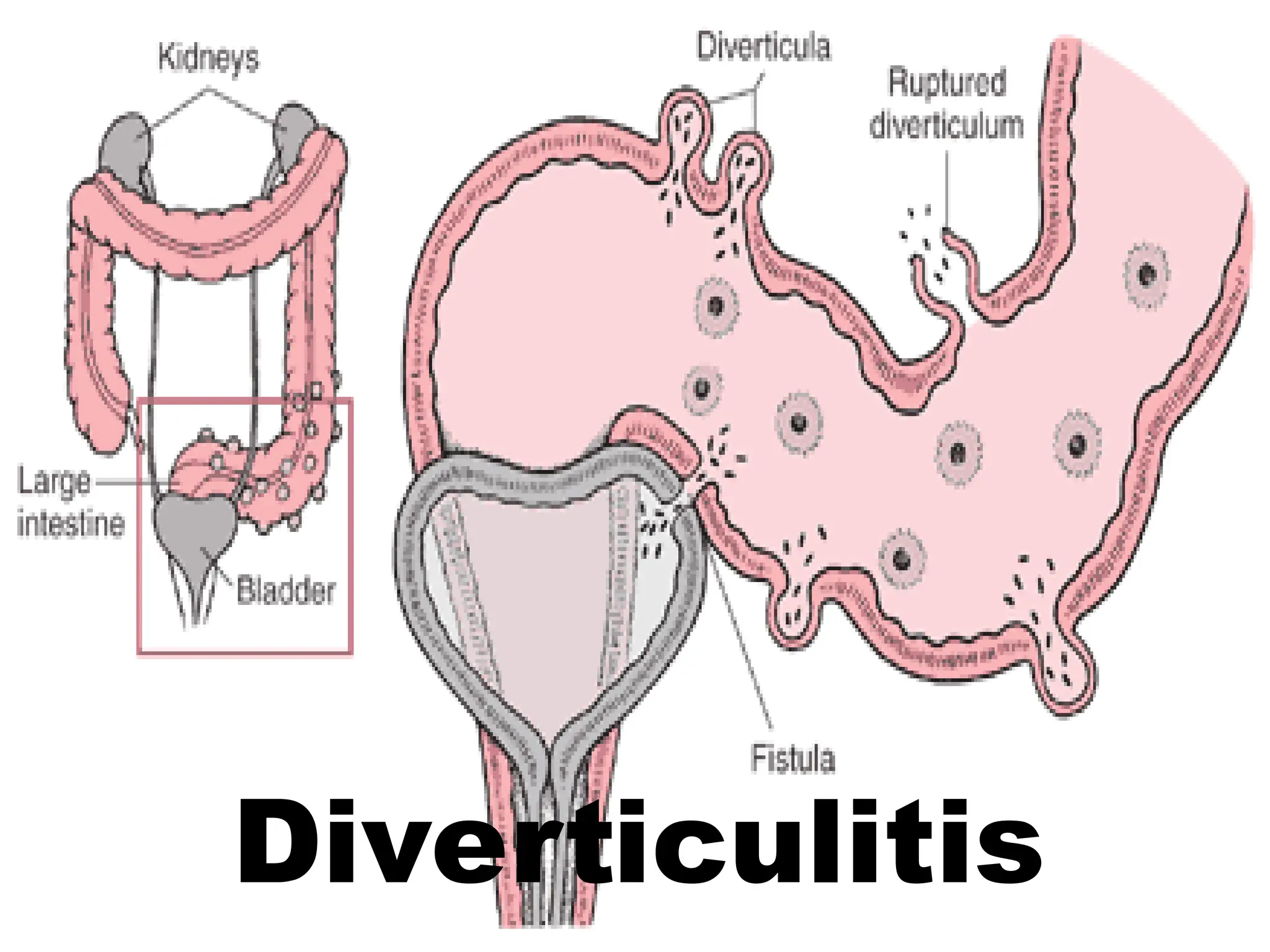
• Diverticulitis is out pouching of the
mucosal lining of the GIT that is inflammed
and infection caused by trapped fecal
material and bacteria, commonly in the
colon
5
Causes and risk factors
• Obesity
• Low fiber diet
• Certain medication (corticosteroids, NSAIDs)
• Age – more than 50 yrs
• Spasm or straining
• Smoking
• Diet in high meat
6
• Heavy alcohol use
• Lack of exercise
• Low vitamin D level
• Hereditary
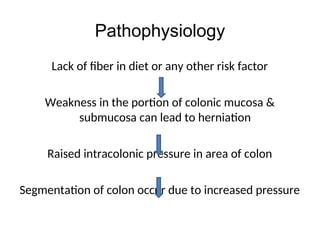
Pathophysiology
Lack of fiber in diet or any other risk factor
Weakness in the portion of colonic mucosa &
submucosa can lead to herniation
Raised intracolonic pressure in area of colon
Segmentation of colon occur due to increased pressure
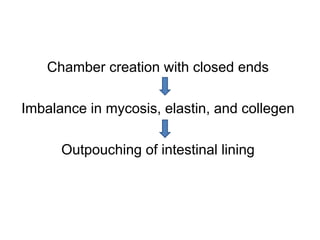
Chamber creation with closed ends
Imbalance in mycosis, elastin, and collegen
Outpouching of intestinal lining
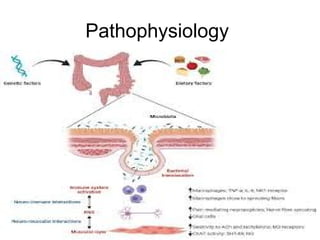
Pathophysiology
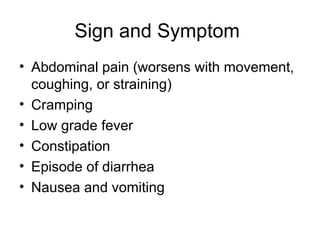
Sign and Symptom
• Abdominal pain (worsens with movement,
coughing, or straining)
• Cramping
• Low grade fever
• Constipation
• Episode of diarrhea
• Nausea and vomiting
• Abdominal distention
• Occult bleeding
Diagnostic evaluation
• Medical History
• Physical/digital exam of the rectum
• X-rays
• Barium enema
• Ct scan
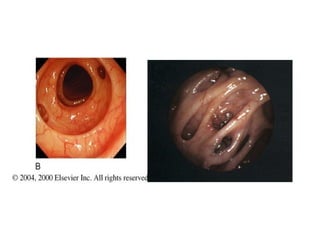
• Sigmoidoscopy or colonoscopy
• Blood test
• Guiaic testing of stool
13
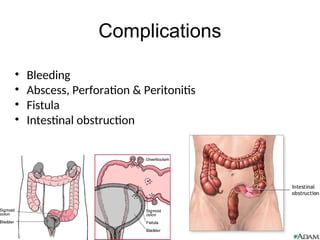
Complications
• Bleeding
• Abscess, Perforation & Peritonitis
• Fistula
• Intestinal obstruction
15
Treatment of Diverticular
Disease
• Collaborative management
–Diet
 High fiber diet
 Fluid intake of 2500-3000ml/day
 Avoids nuts and seeds that can trapped in
diverticula
–Bed rest
–NPO, then clear liquids to rest the colon
16
–Antibiotics (ciprofloxacin, metronidazole,
doxycycline, cephalexine)
–Analgesic (aspirin, ibuprofen, naproxen)
–Blood transfusion if needed
–Bulk forming laxatives
–NG tube insertion to relieve distention
–Weight management
Surgical management
• One stage resection: resection of inflamed
area is excised and end to end
anastomosis is done
• Hartmann procedure (multistage):
resection of the colon followed by
colostomy creation and then distal stump
is swen
Nursing management
• Impaired tissue integrity related to colon
obstruction
• Acute pain related to out pouching colon
and abdominal contraction
• Anxiety related to surgical procedure
• Risk for nutritional imbalance: less than
body requirement related to impaired
nutritional absorption
SUMMARY
In this class we discussed the :-
• Definition of diverticulitis
• Epidemiology of diverticulitis
• Pathophysiology of diverticulitis
• Clinical presentation of diverticulitis
• Investigation of diverticulitis
• Treatment of diverticulitis
BIBLIOGRAPHY
• Black, J.M. & Hawks, J.H. (2009). Medical-Surgical
Nursing: Clinical Management for Positive Outcomes
(8th ed.). Philadelphia: Elsevier/Saunders.
• Smeltzer, S.C., Bare, B.G., Hinkle, J.L., & Cheever,
K.H. (2010). Brunner & Suddarth’s Textbook of
Medical-Surgical Nursing (12th ed.). Philadelphia:
Lippincott Williams & Wilkins.
• Roberts, D. (Ed.). (2008). Medical–Surgical Nursing
Review Questions (2nd ed.). Pitman, NJ: Academy
of Medical Surgical Nurses.
Thank you!!!

Diverticulitis and its nursing management.ppt

  • 1.
  • 2.
    At the endof this lecture the students should be able to:---- • Definition • Pathophysiology • Epidemiology • Clinical presentation • Differential • Imaging • Laboratory • Treatment • Reasons for surgery Learning objectives
  • 3.
    Diverticulitis • Many peoplehave small pouches in their colons that bulge outward through weak spots, like an inner tube that pokes through weak places in a tire. Each pouch is called a diverticulum (pl. diverticula). • Usually 5-10mm in size
  • 4.
    Definition • Diverticulitis isout pouching of the mucosal lining of the GIT that is inflammed and infection caused by trapped fecal material and bacteria, commonly in the colon
  • 5.
  • 6.
    Causes and riskfactors • Obesity • Low fiber diet • Certain medication (corticosteroids, NSAIDs) • Age – more than 50 yrs • Spasm or straining • Smoking • Diet in high meat 6
  • 7.
    • Heavy alcoholuse • Lack of exercise • Low vitamin D level • Hereditary
  • 8.
    Pathophysiology Lack of fiberin diet or any other risk factor Weakness in the portion of colonic mucosa & submucosa can lead to herniation Raised intracolonic pressure in area of colon Segmentation of colon occur due to increased pressure
  • 9.
    Chamber creation withclosed ends Imbalance in mycosis, elastin, and collegen Outpouching of intestinal lining
  • 10.
  • 11.
    Sign and Symptom •Abdominal pain (worsens with movement, coughing, or straining) • Cramping • Low grade fever • Constipation • Episode of diarrhea • Nausea and vomiting
  • 12.
  • 13.
    Diagnostic evaluation • MedicalHistory • Physical/digital exam of the rectum • X-rays • Barium enema • Ct scan • Sigmoidoscopy or colonoscopy • Blood test • Guiaic testing of stool 13
  • 15.
    Complications • Bleeding • Abscess,Perforation & Peritonitis • Fistula • Intestinal obstruction 15
  • 16.
    Treatment of Diverticular Disease •Collaborative management –Diet  High fiber diet  Fluid intake of 2500-3000ml/day  Avoids nuts and seeds that can trapped in diverticula –Bed rest –NPO, then clear liquids to rest the colon 16
  • 17.
    –Antibiotics (ciprofloxacin, metronidazole, doxycycline,cephalexine) –Analgesic (aspirin, ibuprofen, naproxen) –Blood transfusion if needed –Bulk forming laxatives –NG tube insertion to relieve distention –Weight management
  • 18.
    Surgical management • Onestage resection: resection of inflamed area is excised and end to end anastomosis is done • Hartmann procedure (multistage): resection of the colon followed by colostomy creation and then distal stump is swen
  • 19.
    Nursing management • Impairedtissue integrity related to colon obstruction • Acute pain related to out pouching colon and abdominal contraction • Anxiety related to surgical procedure • Risk for nutritional imbalance: less than body requirement related to impaired nutritional absorption
  • 20.
    SUMMARY In this classwe discussed the :- • Definition of diverticulitis • Epidemiology of diverticulitis • Pathophysiology of diverticulitis • Clinical presentation of diverticulitis • Investigation of diverticulitis • Treatment of diverticulitis
  • 21.
    BIBLIOGRAPHY • Black, J.M.& Hawks, J.H. (2009). Medical-Surgical Nursing: Clinical Management for Positive Outcomes (8th ed.). Philadelphia: Elsevier/Saunders. • Smeltzer, S.C., Bare, B.G., Hinkle, J.L., & Cheever, K.H. (2010). Brunner & Suddarth’s Textbook of Medical-Surgical Nursing (12th ed.). Philadelphia: Lippincott Williams & Wilkins. • Roberts, D. (Ed.). (2008). Medical–Surgical Nursing Review Questions (2nd ed.). Pitman, NJ: Academy of Medical Surgical Nurses.
  • 22.