OTITIS MEDIA
DEPARTMENT
OF
MEDICAL SURGICAL NURSING
Learning Objectives
At the end of this lecture, students
should be able to :
• define otitis media
• enlist the causes
• explain the pathophysiology
• enumerate the clinical manifestation
• describe the management
Introduction
• otitis media refers to an inflammation
of the middle auditory canal which is
normally filled with air behind the ear
drum.
• It is an inflammation of middle ear that
most often occur in infant but can
occur at any age
Definition
• Otitis media
(OM)is the
inflammation
of the middle
ear, space
between
tympanic
membrane
and inner ear
Incidence
• Otitis media is the second most
common disease in child hood after
upper respiratory tract infection
• Repetitive episodes of otitis media can
leads to a chronic otitis media which
can occur in later life or at any age
group
Classification of otitis media
Sr.
no
.
Otitis media Characteristic
1. Acute otitis media
•inflammation of the medial ear and can heal
with shortly
•Rapid onset of symptom
• < 3 weeks
2.
Chronic otitis
media
•inflammation of the medial ear due to
repetitive episode of AOM
•Symptom worsen with time
• > 3weeks to 3 month or more
Causes
• Age: due to shorter eustachin tube in child
occurrence in childhood is most common
• water in the ear canal
• Trauma to the skin of the ear canal,
• pathogenic bacteria
• Sinusitis, Allergic reaction(rhinitis,
pharyngitis)
• streptococcus pneumoniae, haemophilus
influenzae and moraxella catarrhalis
• Trauma to the tympanic membrane
• Head injury
• Gender : boys are more affected
then girls
• Craniofacial abnormalities (cleft
palate)
• Passive smoking
• Down syndrome
• Poor air quality
• Seasonal factor
PATHOPHYSIOLOGY
Due to infection
inflammation occur and exudates edema
in eustachian tube of middle ear
Serious exudation in the middle ear.
thickened, purulent and pus
formation
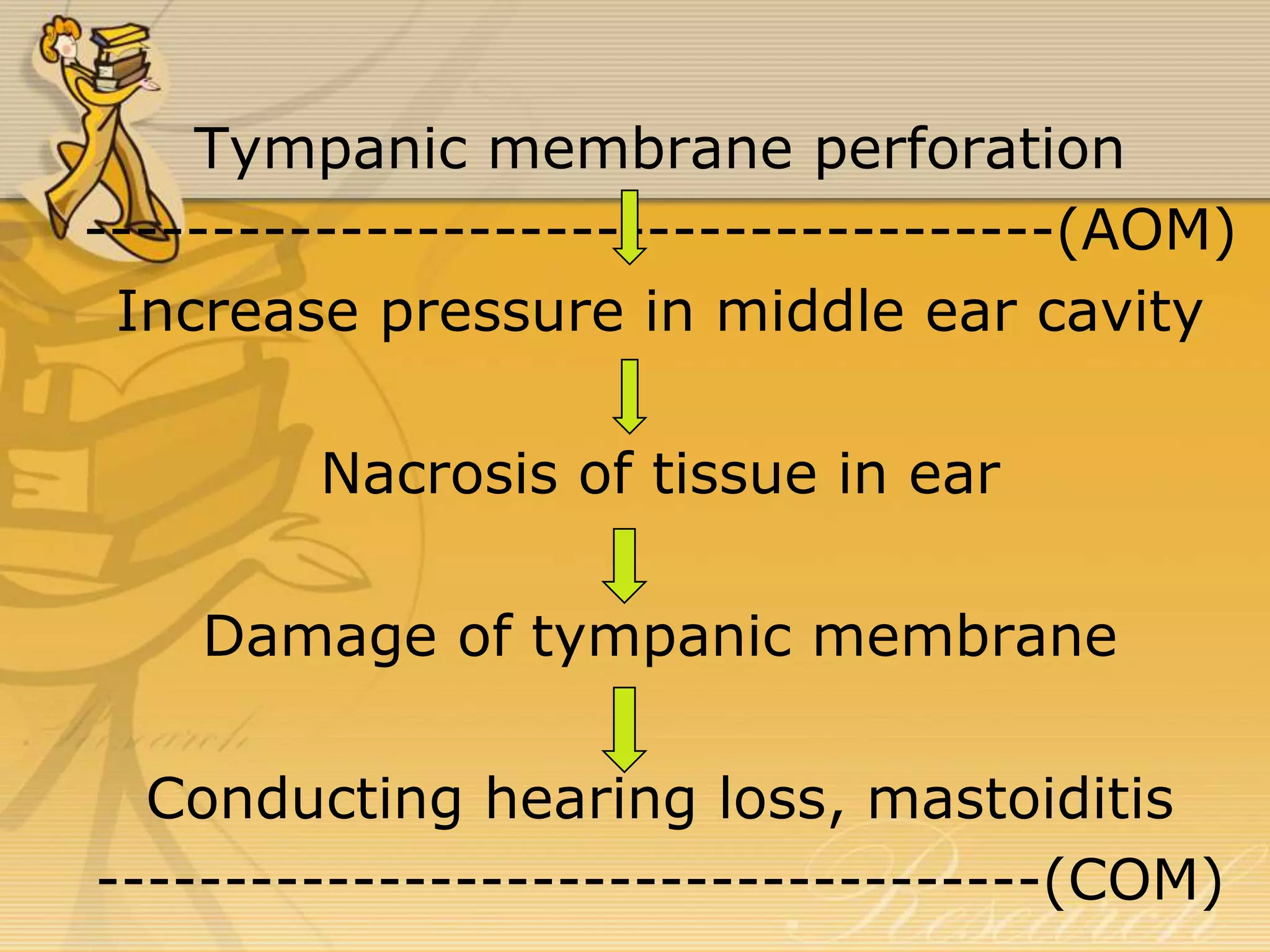
Tympanic membrane perforation
--------------------------------------(AOM)
Increase pressure in middle ear cavity
Nacrosis of tissue in ear
Damage of tympanic membrane
Conducting hearing loss, mastoiditis
-------------------------------------(COM)
Sign and symptoms
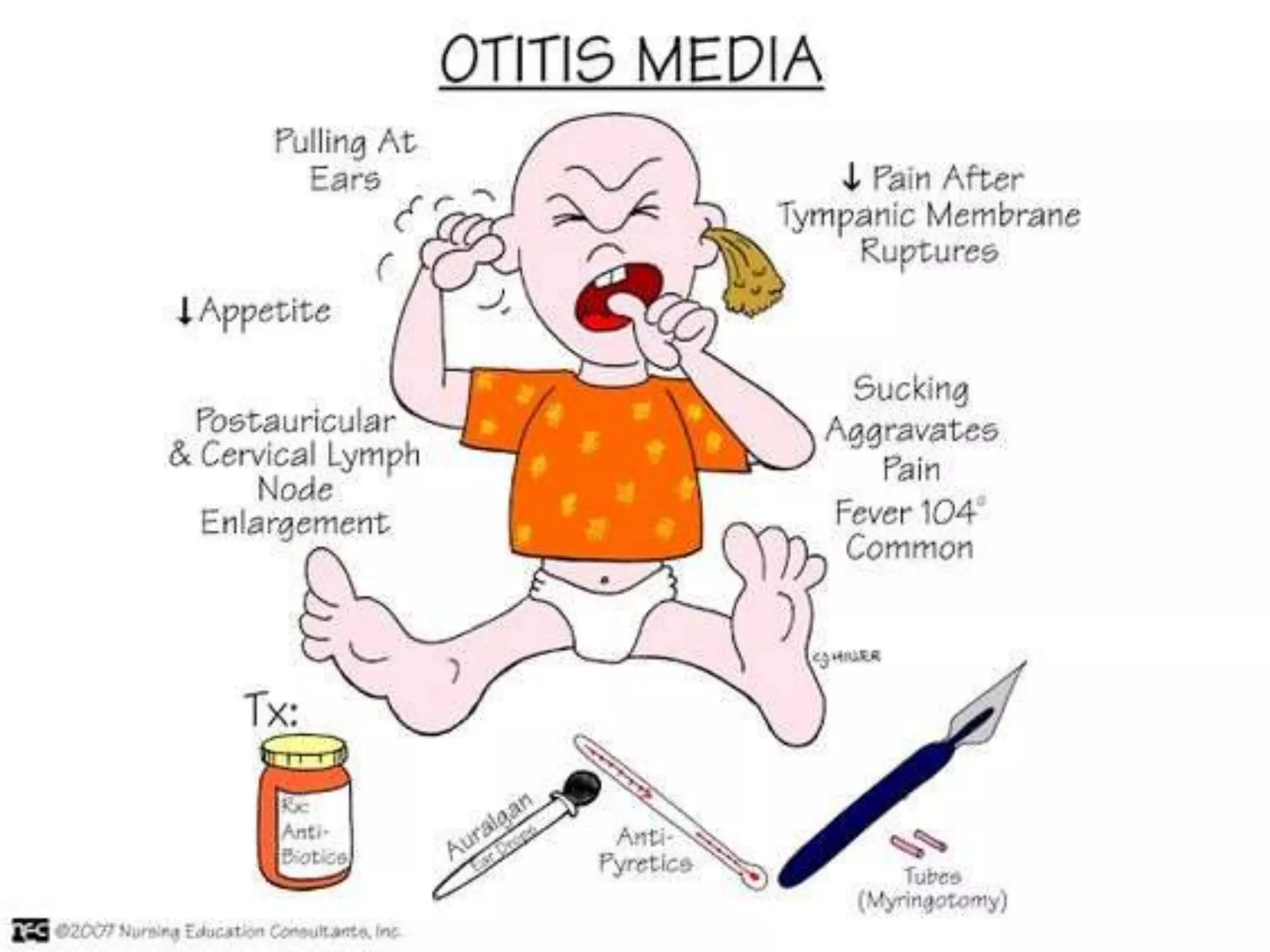
• Pain in and about the ear(otalgia),
espacially when lying down
• Fever & drainage from the ear
• Tympanic membrane become
erythematous
• Conductive hearing loss
• Change in behavior
• Irritability
• Decrease appitite
• Noise in ear
• Fullness in ear
• Tugging or pulling at an ear
• Loss of balance
• Trouble sleeping
• Vomiting
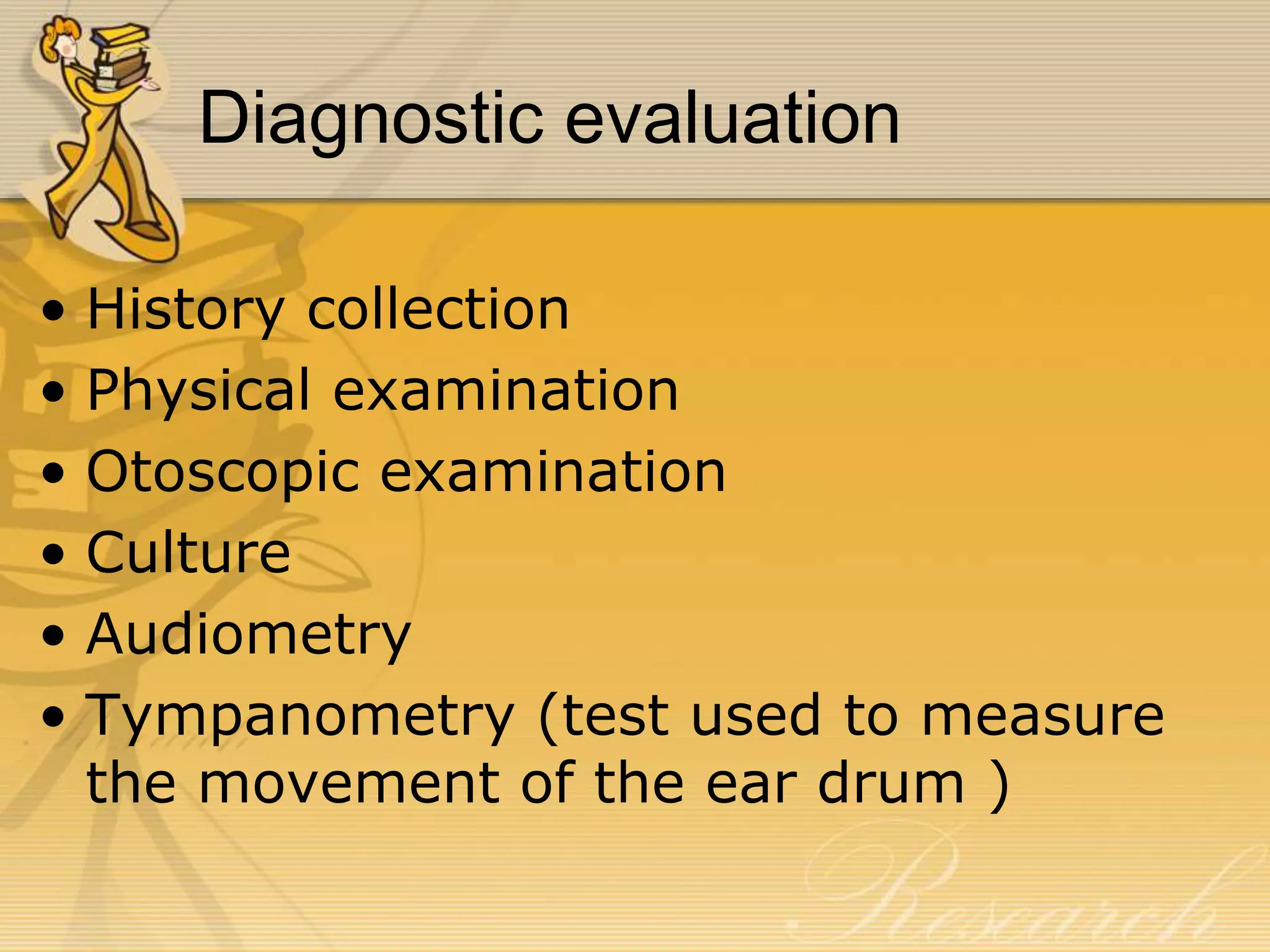
Diagnostic evaluation
• History collection
• Physical examination
• Otoscopic examination
• Culture
• Audiometry
• Tympanometry (test used to measure
the movement of the ear drum )
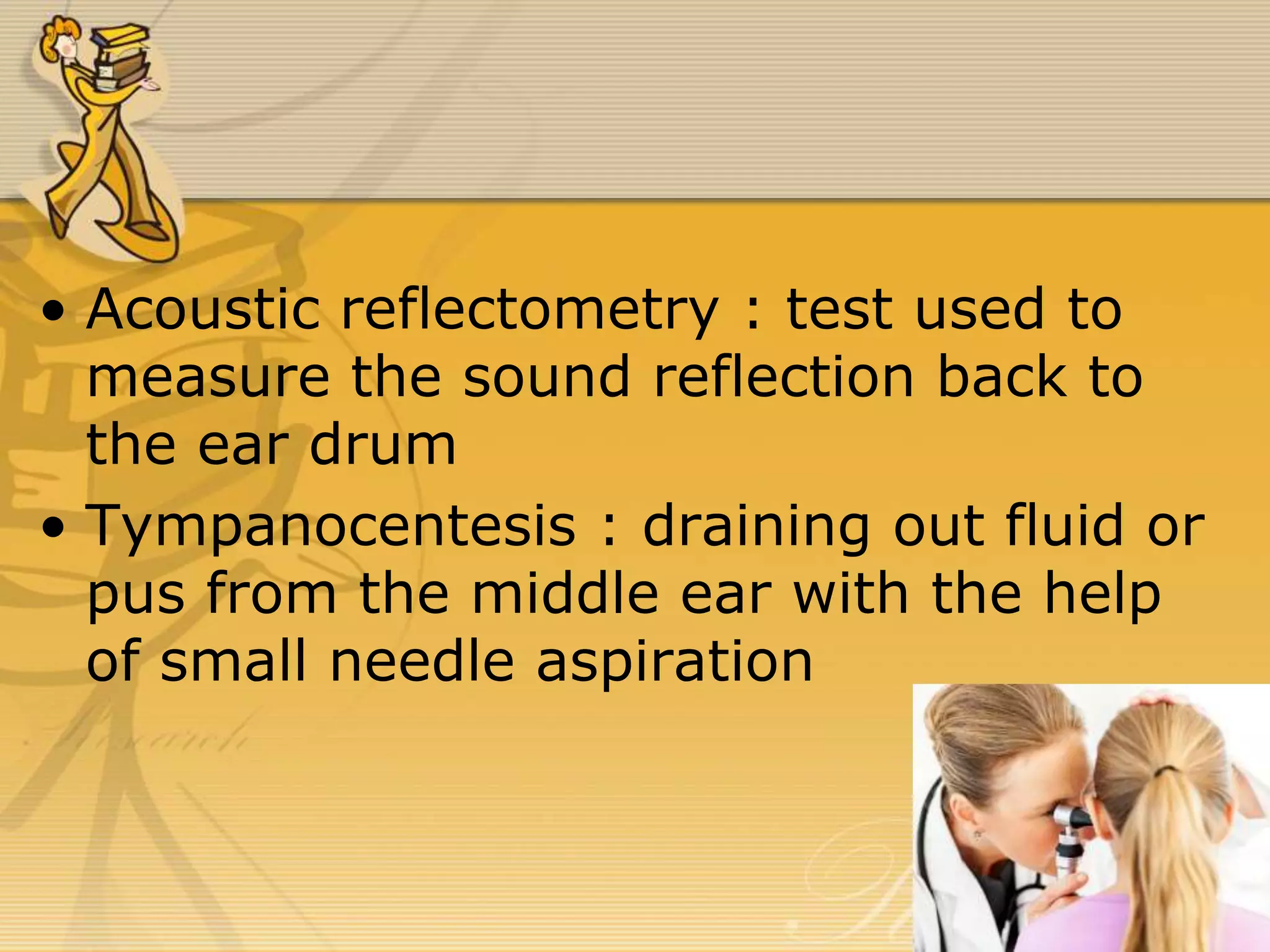
• Acoustic reflectometry : test used to
measure the sound reflection back to
the ear drum
• Tympanocentesis : draining out fluid or
pus from the middle ear with the help
of small needle aspiration
Complication
• TM perforation
• Mastoiditis
• Meningitis
• Hearing loss
• Chronic ottitis media
• Facial nerve palsy
• Brain abscess
Medical Management
• Although most tympanic membrane
perforations heal spontaneously
• Antibiotic :-
1. Amoxicillin: 20-40 mg/kg/day, TDS, for 10-
14 days or
2. Augmentin : 45 mg/kg/day, BD, for 10-14
days or
3. Broad spectrum antibiotic therapy (penicillin)
• Analgesic (NSAIDs)
• Antipyratic
• Prevent entry of water in ear
• Drainage if fluid collection is max.
• Hearing aid
SURGICAL MANAGEMENT
• Perforations that do not heal on their
own may require surgery.
• Tympanoplasty: surgical repair of
tympanic membrane by grafting
• Myringotomy: incision through ear
drum to create an artificial opening to
drain fluid
Nursing management
• PREVENTION
• Prevent common cold and other
illnesses
• Avoid second hand smoking
• Proper nutrition
• Avoid water irrigation of ear
• Protect ear during swimming
Nursing diagnosis
• Acute pain related to fluid filled in ear or
infection
• Altered auditory sensation perception related
to fluid accumulation in middle ear
• Imbalance nutritional status less then body
requirement related to vomiting
• Risk for infection related to decrease immune
response
• Knowledge deficit related to disease process
and response
Nursing Interventions
• Apply hot water bag over the ear with the
child lying on the affected side may reduce
the discomfort (applied during the attack of
pain)
• Put ice bag over the affected area may also
be beneficial to reduce edema (between pain
attacks)
• For drained ear : external canal may be
frequently cleaned using sterile cotton swab
(dry or soaked in hydrogenperoxide)
• Excoriation of the outer ear should be
prevented by frequent cleaning and
application of zinc oxide to the area of
oxidate
• Give special attention to the
tympanostomy tube i.e. avoid water
entering the middle ear and introducing
bacteria
• Educate family about care of child &
keep them aware with the complication
of the acute otitis media e.g. hearing
loss
• Preventing from Altered Sensory Perception
by providing all the needed article of objects
near them
• Avoiding keeping patient alone as it leads to
fall or head injury
• Promoting Wound Healing by giving all
medication in time, dose, frequency and ear
care
• Provide emotional support to the child and his
Summary
So far we have discussed about
definition, etiology,
physiopathology, clinical
manifestations,, and managements
of otitis media.
Bibliography
• Lewis et al, Medical Surgical Nursing,
Mosby Elsevier,7th edition.
• Joyce.M.Black et al, Medical Surgical
Nursing, Saunders publication.
• Brunner and Siddhartha, Medical
Surgical Nursing, Lippincott Williams
and Wilkins.
Thank You

Otitis Media (common)

  • 1.
  • 2.
    Learning Objectives At theend of this lecture, students should be able to : • define otitis media • enlist the causes • explain the pathophysiology • enumerate the clinical manifestation • describe the management
  • 3.
    Introduction • otitis mediarefers to an inflammation of the middle auditory canal which is normally filled with air behind the ear drum. • It is an inflammation of middle ear that most often occur in infant but can occur at any age
  • 4.
    Definition • Otitis media (OM)isthe inflammation of the middle ear, space between tympanic membrane and inner ear
  • 6.
    Incidence • Otitis mediais the second most common disease in child hood after upper respiratory tract infection • Repetitive episodes of otitis media can leads to a chronic otitis media which can occur in later life or at any age group
  • 7.
    Classification of otitismedia Sr. no . Otitis media Characteristic 1. Acute otitis media •inflammation of the medial ear and can heal with shortly •Rapid onset of symptom • < 3 weeks 2. Chronic otitis media •inflammation of the medial ear due to repetitive episode of AOM •Symptom worsen with time • > 3weeks to 3 month or more
  • 9.
    Causes • Age: dueto shorter eustachin tube in child occurrence in childhood is most common • water in the ear canal • Trauma to the skin of the ear canal, • pathogenic bacteria • Sinusitis, Allergic reaction(rhinitis, pharyngitis) • streptococcus pneumoniae, haemophilus influenzae and moraxella catarrhalis
  • 10.
    • Trauma tothe tympanic membrane • Head injury • Gender : boys are more affected then girls • Craniofacial abnormalities (cleft palate) • Passive smoking • Down syndrome • Poor air quality • Seasonal factor
  • 11.
    PATHOPHYSIOLOGY Due to infection inflammationoccur and exudates edema in eustachian tube of middle ear Serious exudation in the middle ear. thickened, purulent and pus formation
  • 12.
    Tympanic membrane perforation --------------------------------------(AOM) Increasepressure in middle ear cavity Nacrosis of tissue in ear Damage of tympanic membrane Conducting hearing loss, mastoiditis -------------------------------------(COM)
  • 13.
    Sign and symptoms •Pain in and about the ear(otalgia), espacially when lying down • Fever & drainage from the ear • Tympanic membrane become erythematous • Conductive hearing loss • Change in behavior
  • 14.
    • Irritability • Decreaseappitite • Noise in ear • Fullness in ear • Tugging or pulling at an ear • Loss of balance • Trouble sleeping • Vomiting
  • 17.
    Diagnostic evaluation • Historycollection • Physical examination • Otoscopic examination • Culture • Audiometry • Tympanometry (test used to measure the movement of the ear drum )
  • 18.
    • Acoustic reflectometry: test used to measure the sound reflection back to the ear drum • Tympanocentesis : draining out fluid or pus from the middle ear with the help of small needle aspiration
  • 19.
    Complication • TM perforation •Mastoiditis • Meningitis • Hearing loss • Chronic ottitis media • Facial nerve palsy • Brain abscess
  • 20.
    Medical Management • Althoughmost tympanic membrane perforations heal spontaneously • Antibiotic :- 1. Amoxicillin: 20-40 mg/kg/day, TDS, for 10- 14 days or 2. Augmentin : 45 mg/kg/day, BD, for 10-14 days or 3. Broad spectrum antibiotic therapy (penicillin)
  • 21.
    • Analgesic (NSAIDs) •Antipyratic • Prevent entry of water in ear • Drainage if fluid collection is max. • Hearing aid
  • 22.
    SURGICAL MANAGEMENT • Perforationsthat do not heal on their own may require surgery. • Tympanoplasty: surgical repair of tympanic membrane by grafting • Myringotomy: incision through ear drum to create an artificial opening to drain fluid
  • 23.
    Nursing management • PREVENTION •Prevent common cold and other illnesses • Avoid second hand smoking • Proper nutrition • Avoid water irrigation of ear • Protect ear during swimming
  • 24.
    Nursing diagnosis • Acutepain related to fluid filled in ear or infection • Altered auditory sensation perception related to fluid accumulation in middle ear • Imbalance nutritional status less then body requirement related to vomiting • Risk for infection related to decrease immune response • Knowledge deficit related to disease process and response
  • 25.
    Nursing Interventions • Applyhot water bag over the ear with the child lying on the affected side may reduce the discomfort (applied during the attack of pain) • Put ice bag over the affected area may also be beneficial to reduce edema (between pain attacks) • For drained ear : external canal may be frequently cleaned using sterile cotton swab (dry or soaked in hydrogenperoxide)
  • 26.
    • Excoriation ofthe outer ear should be prevented by frequent cleaning and application of zinc oxide to the area of oxidate • Give special attention to the tympanostomy tube i.e. avoid water entering the middle ear and introducing bacteria • Educate family about care of child & keep them aware with the complication of the acute otitis media e.g. hearing loss
  • 27.
    • Preventing fromAltered Sensory Perception by providing all the needed article of objects near them • Avoiding keeping patient alone as it leads to fall or head injury • Promoting Wound Healing by giving all medication in time, dose, frequency and ear care • Provide emotional support to the child and his
  • 28.
    Summary So far wehave discussed about definition, etiology, physiopathology, clinical manifestations,, and managements of otitis media.
  • 29.
    Bibliography • Lewis etal, Medical Surgical Nursing, Mosby Elsevier,7th edition. • Joyce.M.Black et al, Medical Surgical Nursing, Saunders publication. • Brunner and Siddhartha, Medical Surgical Nursing, Lippincott Williams and Wilkins.
  • 30.